




World Economic Forum 2026: Global Leaders Converge in Davos Amid Major Economic and Geopolitical Challenges

WORLD World Economic Forum 2026: Global Leaders Converge in Davos Amid Major Economic and Geopolitical Challenges Newsyaar January 22, 2026 5:04 pm The World Economic Forum (WEF) Annual Meeting 2026 took place from January 19 to 23 in Davos-Klosters, Switzerland, bringing together leaders from government, business, international organisations and civil society to discuss the most pressing global issues of the moment. Now in its 56th year, the forum — commonly referred to simply as “Davos” — is a flagship platform for public-private cooperation on economic policy, technology governance, sustainability and global security. The meeting’s official theme, “A Spirit of Dialogue,” underscored a widely recognised need for renewed cooperation in an era marked by geopolitical tensions, slowing economic growth, technological disruption and environmental risk. Organisers, delegates and analysts alike framed the discussions around the idea that dialogue — even amid disagreement — is essential for addressing interconnected global challenges. Scale of Participation and Global Profile The WEF 2026 drew thousands of participants from over 100 countries, including government ministers, heads of state, central bankers, chief executives of major corporations, academics and representatives of international institutions. The meeting’s scale and diversity reflect its enduring role as a central venue for high-level engagement on global policy priorities. Among the most notable attendees was United States President Donald Trump, whose presence drew significant media attention and marked a return to Davos for a leader of his stature. Delegations also included major European figures, leaders from Asia, Africa and Latin America, and senior representatives from international organisations and think tanks. Economic Priorities and Global Growth Concerns Economic issues formed a core pillar of the 2026 agenda. Discussions highlighted uneven global growth, persistent inflationary pressures and heightened uncertainty in financial markets. Organisers and speakers emphasised that sluggish expansions in major economies, coupled with high debt levels, pose risks to stability and investment confidence. According to WEF research and policy discussions at Davos, cooperation on economic policy, trade facilitation and investment frameworks remains essential to navigate these headwinds. Investments in human capital, innovation and sustainable growth models were also highlighted as central to unlocking new sources of economic opportunity. Technology, Innovation and Governance Technological advancement — particularly artificial intelligence (AI) — was a prominent topic throughout the meeting. Delegates debated how to harness innovation responsibly while addressing associated risks such as workforce displacement, data protection, ethical use cases and the broader social impact of AI deployment. Speakers noted the absence of globally coordinated regulatory frameworks for emerging technologies, emphasising the need for international dialogue to manage both the opportunities and risks of rapid digital transformation. Geopolitics and International Security Geopolitical tensions and international security issues shaped several panels and bilateral discussions. The ongoing conflict in Ukraine, instability in parts of the Middle East, and great-power competition in regions such as the Indo-Pacific were recurring themes. In this context, world leaders discussed the importance of resilient supply chains, energy security and strategic partnerships while acknowledging that geopolitical fragmentation continues to complicate efforts toward shared economic and diplomatic goals. A particularly high-profile moment at the forum involved exchanges around NATO and Arctic security, with debates over territorial issues such as the strategic role of Greenland drawing media attention and highlighting how security concerns intersect with economic and environmental priorities. Climate, Sustainability and Emerging Risks Climate change and sustainable development remained central to Davos discussions, but delegates acknowledged the gap between global climate commitments and action on the ground. Energy transition strategies, climate finance for developing economies and nature-based risk frameworks were all debated, often in conjunction with economic policy and innovation priorities. A distinctive focus this year was on water systems and planetary stability, with experts warning that imbalances in the global water cycle — including drought, flood extremes and freshwater scarcity — require urgent collective action. These discussions, sometimes referred to as part of the “Blue Davos” agenda, highlighted water as a foundational element of global resilience. Outcomes and Forward Agenda Unlike treaty negotiations or binding international agreements, the World Economic Forum does not issue enforceable resolutions. Instead, its role is to shape the global conversation, build networks of cooperation and catalyse voluntary initiatives. At the conclusion of the 2026 meeting, several partnerships, memoranda of understanding and investment dialogues were announced, particularly in areas such as clean energy, digital infrastructure and sustainable finance. For example, global and regional delegations highlighted collaborative efforts to expand green growth and industrial innovation, reflecting businesses and states seeking resilient growth pathways amid global uncertainty. Beyond formal sessions, the informal interactions in Davos — from bilateral talks between heads of state to private sector strategy meetings — often influence policy choices throughout the year. These engagements are frequently cited by governments and corporations as contributing to priority setting and risk assessment in economic and geopolitical planning. Why World Economic Forum 2026 Matters The World Economic Forum Annual Meeting remains significant because it brings together diverse decision-makers at a time when coordination on global issues has become more fragmented. As geopolitical tensions rise and economic risks persist, forums like Davos offer a rare structured environment where dialogues between competing interests can occur. In 2026, the emphasis on dialogue — even amid disagreement on trade, security, technology and climate policy — reflected a shared recognition that global challenges cannot be addressed in isolation. While the outcomes of Davos are not always immediately visible, the convergence of leaders and ideas continues to shape international conversations and influence public and private sector strategies in the months and years that follow. About the Author World Reporter Share via Copied Comments Post Comment
Bagurumba Dwhou 2026 in Guwahati: A Historic Celebration of Bodo Culture
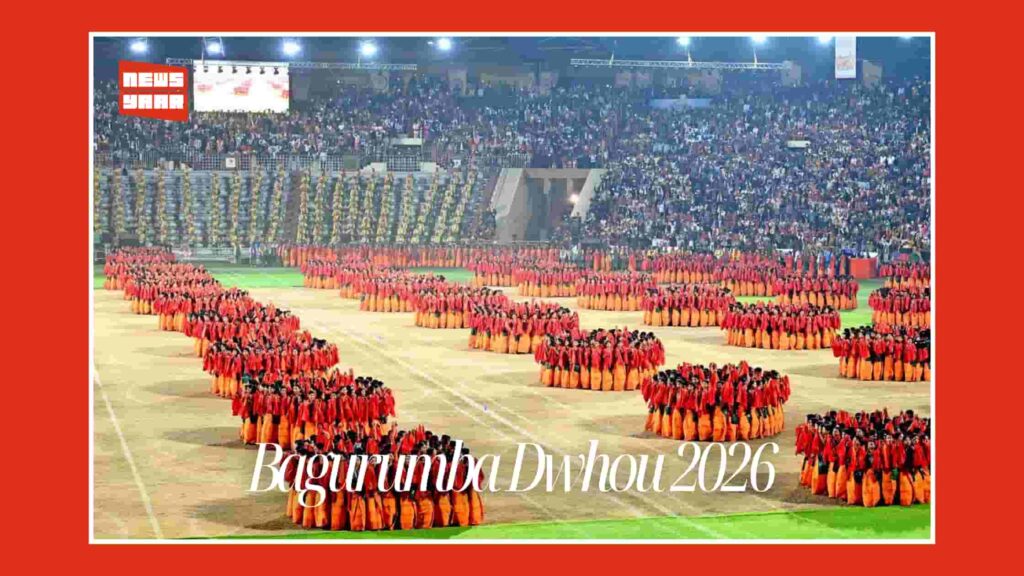
EVENT Bagurumba Dwhou 2026 in Guwahati: A Historic Celebration of Bodo Culture Newsyaar January 22, 2026 4:50 pm Guwahati played host to one of the most significant cultural events in recent memory on January 17, 2026, when the Bagurumba Dwhou 2026 programme brought together more than 10,000 artistes from across Assam to perform the iconic Bagurumba dance of the Bodo community in a large-scale presentation at the Arjun Bhogeswar Baruah Sports Complex, Sarusajai, Guwahati. The event was held in the presence of Prime Minister Narendra Modi, senior state leaders and cultural representatives, marking a landmark moment for the recognition and celebration of indigenous heritage. What Is Bagurumba Dwhou? Bagurumba is a traditional folk dance of the Bodo community, one of Assam’s oldest and most culturally rich indigenous groups. Often referred to as the “butterfly dance,” this art form draws inspiration from nature — its gentle, flowing movements mimic butterflies, birds, leaves and flowers — and symbolises peace, fertility, joy and collective harmony. Traditionally performed by young Bodo women, with men providing musical accompaniment on instruments such as the kham (drum) and sifung (flute), Bagurumba features dancers in vibrant, hand-woven attire including Dokhona, Jwmgra and Aronai. The term Dwhou in the event’s name refers to a wave or surge, and in this context signifies a grand, synchronised display that takes the traditional dance to an unprecedented scale. Date, Venue and Programme Details Date: January 17, 2026 Venue: Arjun Bhogeswar Baruah Sports Complex (Sarusajai Stadium), Guwahati, Assam The event was preceded by extensive preparations and rehearsals that began in early January, involving hundreds of master trainers and thousands of dancers from across 23 districts of Assam. Participants were brought to Guwahati in the days leading up to the event, with rehearsals starting from January 12 to ensure a coordinated and visually compelling performance. Scale and Artistic Participation Bagurumba Dwhou 2026 was remarkable for its scale. Organisers confirmed that over 10,000 Bodo artistes took part in a single, synchronised performance of Bagurumba, making it one of the largest cultural gatherings of its kind. The dancers represented all 81 Legislative Assembly constituencies across Assam, reflecting the dance’s pan-state cultural reach and unifying spirit. Musical accompaniment was provided by traditional instruments including: Kham (drum) Sifung (bamboo flute) Serja Jatha and Japshring These instruments added rhythmic depth to the choreography and underscored the event’s authenticity and traditional roots. Prime Minister’s Participation and Remarks Prime Minister Narendra Modi attended Bagurumba Dwhou 2026 as part of his official visit to Assam, which also included infrastructure inaugurations and other cultural programmes. On the sidelines of the event, he actively participated, including trying his hand at traditional musical instruments and being felicitated by organisers and artists. In his address, the Prime Minister described the performance as a vibrant celebration of Bodo identity and Assam’s rich cultural heritage. He emphasised that Bagurumba Dwhou was not just a dance festival but a medium to honour the longstanding traditions of the Bodo community and remember its eminent leaders. He paid tribute to figures such as Bodofa Upendra Nath Brahma, Gurudev Kalicharan Brahma, Rupnath Brahma and others, noting their roles in social reform, cultural renaissance and political awakening. The Prime Minister observed that efforts to promote Assamese and Bodo art forms have helped bring the region’s cultural expressions to national and global prominence, noting social media traction and national viewership of the event. Cultural Significance and Tourism Potential Officials and cultural advocates highlighted Bagurumba Dwhou 2026 as a milestone in Assam’s cultural narrative. According to Assam’s Cultural Affairs Minister, the mass performance was executed with structured training involving 25 experts and 400 master trainers, who prepared the dancers for the synchronised choreography that awaited them on the main stage. The event was expected to attract a large audience, with around 14,000 entry passes distributed and arrangements made for LED screens outside the stadium to accommodate additional viewers. Beyond its immediate spectacle, Bagurumba Dwhou 2026 was promoted as a potential draw for cultural tourism. By showcasing one of Assam’s most distinctive traditional art forms on a massive platform, organisers hoped to boost interest in the state’s broader heritage offerings, further enriching tourism prospects. Broader Context of Cultural Promotion The Bagurumba Dwhou follows other major cultural showcases supported by central and state efforts, such as large-scale Bihu and Jhumoir performances in recent years. These have been part of a broader initiative to position Assam’s diverse dance traditions — from the globally recognised Bihu to indigenous forms like Jhumoir and Bagurumba — as symbols of cultural identity and pride. What Bagurumba Represents Bagurumba is more than a dance; it is a visual representation of the Bodo community’s deep connection to nature, harmony and collective joy. Its choreography evokes natural elements — fluttering butterflies, rolling leaves, flowing rivers — and symbolises themes of peace, fertility and community cohesion. While traditionally associated with festivals like Bwisagu (Bodo New Year) and Domasi, the 2026 Dwhou elevated the form from local festivities to a nationwide cultural spectacle. Looking Ahead Bagurumba Dwhou 2026 set a new benchmark for cultural showcases in Assam, demonstrating how traditional art forms can be celebrated at scale and introduced to broader audiences. With global interest in the dance increasing — partly driven by social media engagement and official promotion — the event is likely to spur further presentations of indigenous performing arts from the Northeast. About the Author Government Reporter Share via Copied Comments Post Comment
Iran in Crisis: Economic Collapse Triggers Unprecedented Nationwide Protests
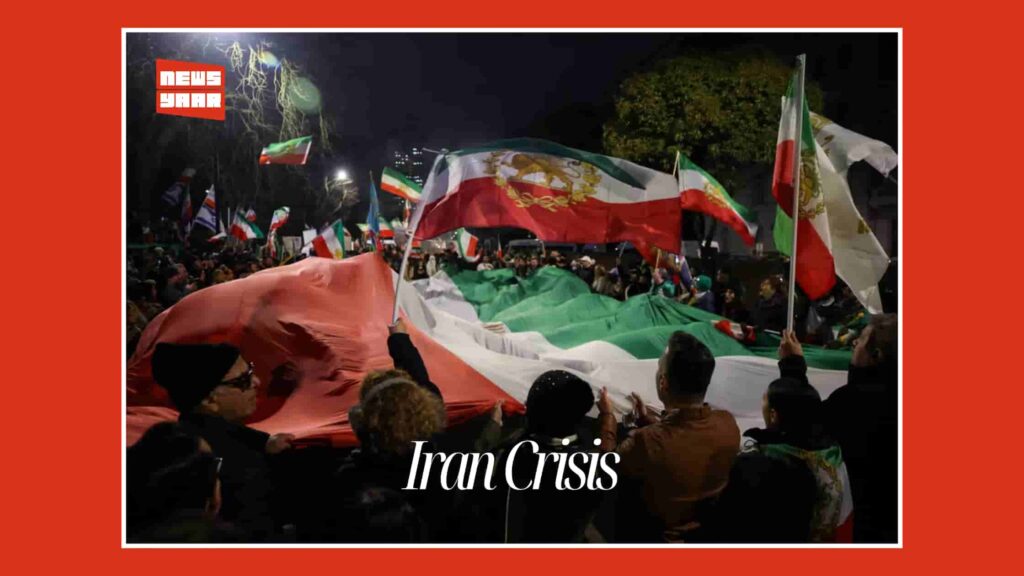
WORLD Iran in Crisis: Economic Collapse Triggers Unprecedented Nationwide Protests Newsyaar January 22, 2026 4:32 pm Iran is facing one of the most intense periods of civil unrest in decades as nationwide protests continue to spread, driven by a deepening economic crisis, rampant inflation, a collapsing currency and widespread public dissatisfaction with the government. The demonstrations, which began in late December 2025, have quickly escalated into the largest wave of unrest since the 1979 Islamic Revolution, encompassing cities across all 31 provinces and challenging the country’s political status quo. What Sparked the Protests? The immediate trigger was Iran’s economic meltdown, particularly the freefall of the Iranian rial. On 29 December 2025, the rial plummeted to historic lows of roughly 1.45 million to 1 US dollar on unofficial markets, eroding citizens’ purchasing power and fuelling anger among merchants, workers, students and ordinary families. Inflation soared past 40 per cent, with food prices, basic goods and essential services becoming increasingly unaffordable. By late 2025, staples such as rice, fruits, vegetables and meat rose dramatically in price, compounding daily hardship for households already strained by rising costs and stagnant wages. How the Unrest Spread The unrest began in Tehran’s historic Grand Bazaar, where shopkeepers closed their businesses in protest of the economic conditions and the deteriorating currency. From there, demonstrations rapidly spread nationwide to cities including Isfahan, Shiraz, Mashhad, Tabriz, Kermanshah, Hamadan and Qeshm, among others, with protests intensifying and crossing demographic lines. What began as an economic protest quickly adopted broader political dimensions, with many demonstrators chanting anti-government slogans and demanding structural reform. In some areas, slogans connected economic hardship to broader critiques of the political leadership and foreign policy priorities. Scale and Intensity of the Protests According to independent human rights organisations and local news agencies, the unrest has been widespread and intense: Protests have taken place in hundreds of locations across all 31 provinces. National internet and phone networks were shut down in early January 2026 in an attempt to curb information flow and limit coordination among demonstrators. Participation expanded from shopkeepers to students, labourers, youth and urban professionals. Government Response and Crackdown The Iranian government’s response has been forceful. Security forces, including the Islamic Revolutionary Guard Corps (IRGC) and paramilitary Basij units, have been deployed to disperse crowds and quell unrest. Independent reporting suggests that live ammunition, tear gas and mass arrests have been used in some cities. Information about casualties and arrests remains difficult to verify due to restricted media access and the internet blackout, but human rights groups have reported thousands of deaths. Human Rights Activists News Agency (HRANA) has documented a death toll exceeding 4,500, including protesters, bystanders and minors, although exact numbers vary by source and verification difficulty remains high due to restricted access. Economic Roots of the Crisis Iran’s economic woes did not arise overnight. While the rial’s collapse provided the immediate spark, deeper structural factors have been building over years: Sanctions: The re-imposition and intensification of international sanctions, particularly after the collapse of the 2015 nuclear deal and renewed restrictions in late 2025, severely restricted Iran’s oil revenue, foreign currency inflows and economic flexibility. Inflation and Currency Devaluation: Chronic inflation — estimated at 40 – 48 per cent by late 2025 — has eroded savings and suppressed wage value, while the currency’s steep devaluation made imports costlier and further strained purchasing power. Economic Mismanagement: Analysts also point to long-standing internal policy challenges, including fiscal mismanagement, restricted private sector growth and a reliance on state subsidies that have not kept pace with rising living costs. Water and Basic Services Shortages: Iran is simultaneously grappling with severe water scarcity, drought and utility shortages, particularly in major cities like Tehran and Mashhad, compounding public frustration with daily life hardships. Broader Political and Social Dimensions While economics was the initial spark, the protests have taken on a broader political character. Some crowds have shifted from purely economic grievances to explicit critiques of the current political system, including calls against the ruling structure and leadership priorities. In parallel, regional geopolitics and recent tensions — including Iran’s confrontations with the United States and Israel — have influenced internal narratives. Government figures have at times attributed unrest to foreign interference, though such claims lack independent verification and are rejected by many protesters. Human Impact and Daily Hardship For ordinary Iranians, the cost of living crisis has tangible consequences: food staples have become unaffordable for many families, small businesses face collapse, and unemployment and wage stagnation leave once-stable households struggling to make ends meet. The internet shutdown has had a severe impact on daily life and business activity, particularly for enterprises reliant on digital platforms — from online commerce to social communications — deepening economic pain even for sectors not directly tied to protests. International and Geopolitical Repercussions Iran’s internal turmoil has attracted global attention, with world powers monitoring the situation closely amid concerns about regional stability. Western governments have called for restraint and respect for human rights, while some leaders have hinted at diplomatic or economic pressure options should violence escalate further. Meanwhile, Tehran has emphasised sovereignty and condemned what it describes as external interference. The interplay between domestic unrest and external diplomatic pressure adds a complex layer to an already volatile situation. What This Means for Iran’s Future The combination of economic collapse, popular protest and political confrontation places Iran at a critical juncture. Unlike past protest waves that were episodic or confined to symbolic issues, the current unrest is rooted in widespread economic despair affecting broad segments of society. If the government cannot swiftly stabilise the economy and respond to popular demands, the protests could evolve into a longer-term movement with profound implications for Iran’s internal governance, social cohesion and regional posture. Key Facts at a Glance Protests began:
Guwahati’s New Airport Terminal Marks a Turning Point for Assam and the Northeast
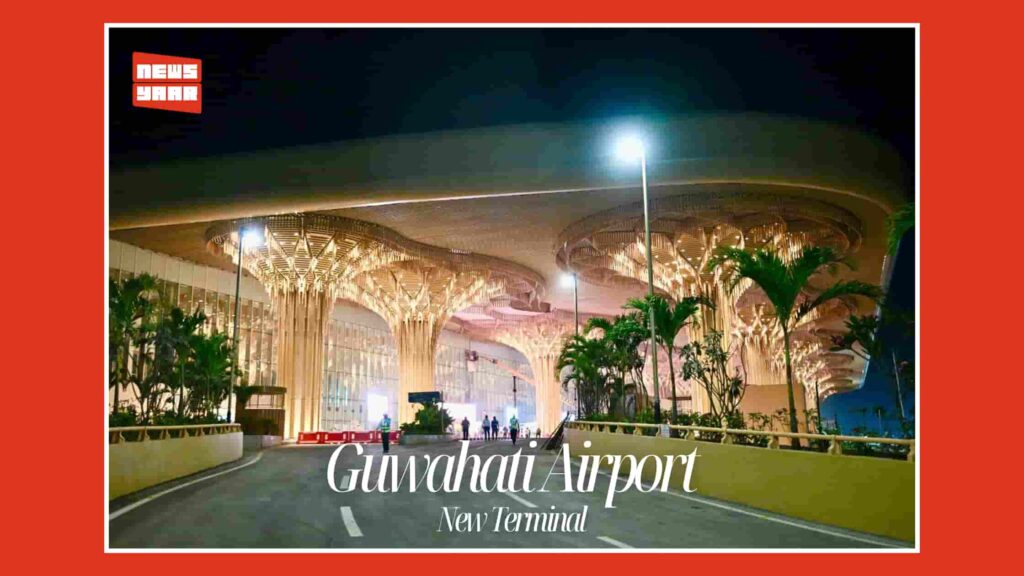
GOVERNMENT Guwahati’s New Airport Terminal Marks a Turning Point for Assam and the Northeast Newsyaar January 22, 2026 4:19 pm The inauguration of the new terminal at Lokpriya Gopinath Bordoloi International Airport (LGBIA) in Guwahati marks one of the most significant infrastructure upgrades in Assam in recent years, expanding the airport’s capacity and reinforcing its role as the Northeast’s primary aviation gateway. The terminal was inaugurated by Prime Minister Narendra Modi and is designed to handle over 13 million passengers annually, nearly doubling the airport’s earlier capacity of around 6 million passengers per year. Built at an estimated cost of Rs 1,200 crore, the expansion reflects a broader push to modernise transport infrastructure across eastern and northeastern India. What Has Changed at LGBIA The new terminal adds substantial scale and modern facilities to the airport: Terminal area expanded to approximately 167,000 square metres Designed to handle both domestic and international passengers Equipped with 64 check-in counters, automated baggage handling systems and expanded security lanes Integrated energy-efficient systems and passenger-friendly layouts to reduce congestion during peak travel hours With the upgrade, LGBIA now ranks among the larger airports in eastern India, both in terms of passenger handling and operational capacity. A Cultural Statement Alongside Infrastructure Unlike many airport expansions that focus purely on efficiency, Guwahati’s new terminal places visible emphasis on regional identity. Architectural elements draw from Assamese culture, with bamboo-inspired design features, local motifs and open spaces that reflect the state’s natural landscape. The installation of an 80-foot statue of Lokpriya Gopinath Bordoloi, Assam’s first Chief Minister, further anchors the project in historical and cultural context. The symbolism is deliberate — positioning the airport not only as a transport hub, but as a representation of Assam’s legacy and aspirations. Why the Expansion Was Necessary Passenger traffic at Guwahati airport has grown steadily over the past decade, driven by: Rising tourism to Assam and neighbouring states Increased business travel linked to infrastructure and energy projects Growing defence and logistics movement in the region Despite this growth, the airport’s infrastructure struggled to keep pace, often leading to congestion and delays. The new terminal addresses these constraints and prepares LGBIA for future demand, particularly as air connectivity to smaller northeastern cities improves. Strategic Importance Beyond Assam LGBIA functions as the main aviation hub for the entire Northeast, serving travellers from Arunachal Pradesh, Meghalaya, Nagaland, Mizoram and parts of Manipur. Improved capacity and passenger experience in Guwahati directly impact accessibility for the wider region. The airport also plays a role in India’s Act East policy, strengthening connectivity with Southeast Asia through potential international routes. Enhanced infrastructure makes Guwahati better positioned to support future cross-border travel and trade. Economic Impact and Future Plans The expansion is expected to generate ripple effects across multiple sectors: Tourism and hospitality, with increased visitor footfall Cargo and perishables transport, supporting regional agriculture and exports Employment in airport operations, ground handling and allied services Additionally, plans for a Maintenance, Repair and Overhaul (MRO) facility at Guwahati signal long-term ambitions to develop aviation-related services in the region, reducing dependence on metro cities for aircraft servicing. Why This Matters Now Guwahati’s new airport terminal arrives at a moment when the Northeast is no longer on the margins of India’s growth story. Infrastructure investment, regional stability and economic activity have reached a point where connectivity is no longer optional — it is essential. This expansion is not simply about accommodating more passengers. It reflects a broader recognition that Assam and the Northeast require infrastructure that matches their strategic, economic and cultural significance. As air travel continues to shape how regions connect with the rest of the country and the world, Lokpriya Gopinath Bordoloi International Airport stands as a clear signal that the Northeast’s gateway is finally being built at scale. About the Author Government Reporter Share via Copied Comments Post Comment