




India Energy Week 2026: Mapping India’s Energy Transition in a Fragmented World
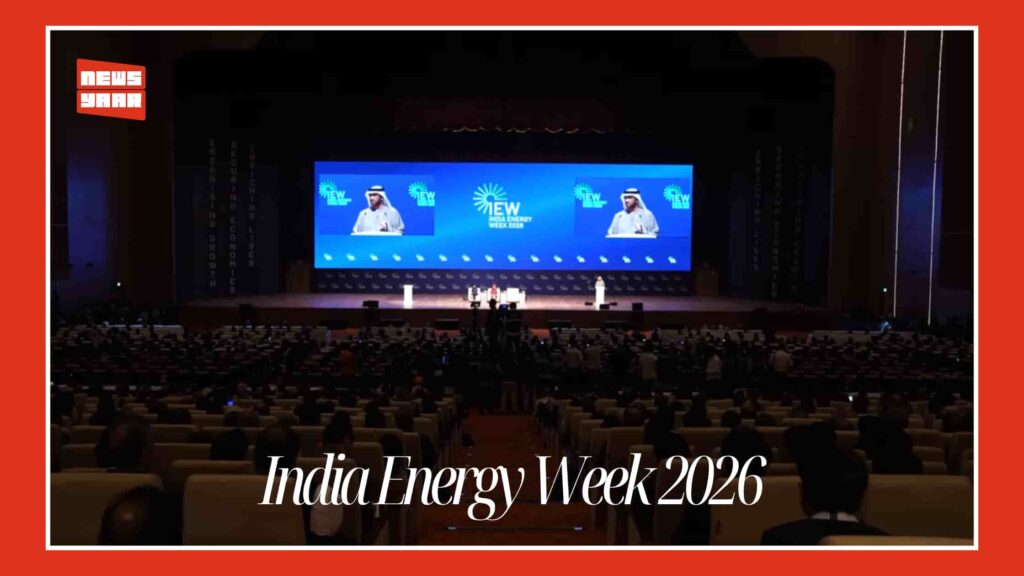
EVENTS India Energy Week 2026: Mapping India’s Energy Transition in a Fragmented World Newsyaar February 1, 2026 11:15 pm New Delhi: India Energy Week (IEW) 2026 emerged as a pivotal platform for India to articulate its energy priorities at a time when global energy systems are undergoing rapid transition amid geopolitical uncertainty, climate imperatives and shifting technology landscapes. Bringing together policymakers, industry leaders, innovators and global stakeholders, the event reinforced India’s ambition to position itself as a key driver of the global energy transition while safeguarding energy security and affordability. Held with a sharp focus on collaboration and execution, India Energy Week 2026 underscored the idea that India’s energy journey will be defined not by a single fuel or technology, but by a balanced, multi-pathway approach. Why India Energy Week Matters India Energy Week is designed as India’s flagship international energy forum, aimed at bridging dialogue between government, global energy companies, clean-tech innovators and investors. As one of the world’s fastest-growing energy consumers, India sits at the centre of global energy conversations, both as a market and as a solutions provider. With India targeting net-zero emissions by 2070, while simultaneously meeting the needs of a growing population and industrial base, the event plays a crucial role in aligning policy intent with industry execution. IEW 2026 continued this mandate by spotlighting policy clarity, investment opportunities and technological pathways across conventional and clean energy sectors. Central Themes and Focus Areas India Energy Week 2026 revolved around a few clear pillars: Energy Security in an Uncertain World: Discussions highlighted the need for diversified supply chains, domestic production and strategic reserves to shield economies from global disruptions. Accelerating the Clean Energy Transition: Renewable energy, green hydrogen, biofuels and energy storage were central to conversations, with India positioning itself as a scalable clean-energy hub rather than just a consumer of imported technologies. Technology, Innovation and Digitalisation: Artificial intelligence, smart grids and digital monitoring systems were presented as key enablers for improving efficiency, reducing losses and optimising energy distribution. Just and Inclusive Transition: Policymakers stressed that India’s energy shift must remain affordable and inclusive, ensuring that growth, employment and access are not compromised in the pursuit of sustainability. Key Highlights from India Energy Week 2026 A major highlight of IEW 2026 was the strong participation from both domestic and global energy players across oil & gas, renewables, power, hydrogen and emerging technologies. The event featured: Policy Dialogues: Senior government representatives outlined India’s evolving energy roadmap, emphasising reforms, infrastructure expansion and investor-friendly frameworks. Investment Conversations: India showcased opportunities across upstream and downstream energy, renewable manufacturing, electric mobility and green hydrogen ecosystems, reinforcing confidence in long-term capital deployment. Hydrogen and Bioenergy Push: India’s ambitions under the National Green Hydrogen Mission were discussed in detail, alongside progress in ethanol blending and bioenergy adoption to reduce import dependence. Energy Transition Showcases: Technology exhibitions and innovation zones demonstrated advancements in storage solutions, clean fuels and digital energy platforms. Global and Domestic Voices on the Same Stage India Energy Week 2026 featured participation from a wide range of stakeholders, including senior Indian ministers, global energy executives, international organisations and climate experts. The presence of global industry leaders reinforced India’s growing relevance in shaping future energy markets. International delegates engaged in dialogues on climate finance, technology transfer and collaborative innovation, while Indian public sector enterprises and private companies presented transition-ready business models aligned with sustainability goals. Strategic Significance for India The significance of India Energy Week 2026 lies in its timing and context. As global energy systems face volatility, from supply disruptions to policy shifts, India is positioning itself as a stable, predictable and scalable energy partner. The event highlighted India’s dual strength: Its ability to anchor traditional energy markets responsibly, and Its growing leadership in renewables and low-carbon solutions. By aligning policy, capital and innovation under one platform, IEW 2026 strengthened India’s narrative as a country that is not choosing between growth and sustainability, but integrating both. Looking Ahead: The Final Insights While India Energy Week 2026 focused heavily on ideas, partnerships and vision, the underlying message was clear: execution will define success. The emphasis on infrastructure readiness, regulatory clarity and market depth suggests a shift from aspirational announcements to delivery-oriented outcomes. As India advances towards becoming a $5 trillion economy, energy will remain at the core of its growth story. India Energy Week 2026 reaffirmed that India’s approach, pragmatic, inclusive and forward-looking, could well serve as a blueprint for other emerging economies navigating similar transitions. In a world searching for balanced energy solutions, India is increasingly positioning itself not just as a participant, but as a shaper of the global energy future. About the Author Events Reporter Share via Copied Comments Post Comment
Economic Survey 2025–26: Know the key highlights of Stable Growth & Inflation
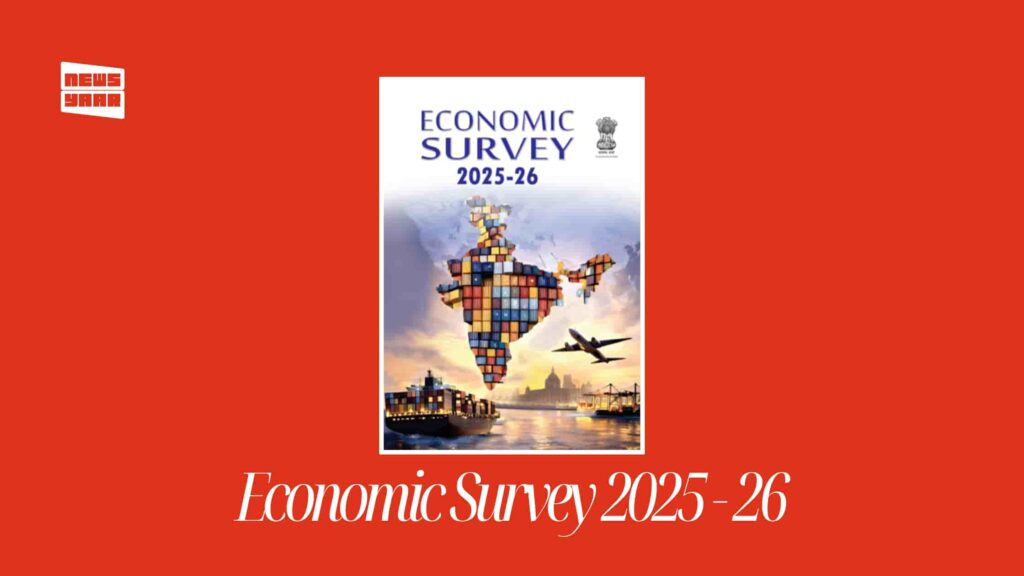
GOVERNMENT Economic Survey 2025–26: Know the key highlights of Stable Growth & Inflation Newsyaar February 1, 2026 10:41 pm New Delhi: The Economic Survey 2025–26, tabled in Parliament on January 29 ahead of the Union Budget, presents a picture of an Indian economy that remains resilient amid global uncertainty, while urging policymakers and businesses to proceed with caution rather than pessimism. Prepared by the Department of Economic Affairs under Chief Economic Adviser (CEA) V. Anantha Nageswaran, the document sets the tone for the government’s economic thinking going into FY27. At its core, the Survey projects real GDP growth in the range of 6.8% to 7.2% for FY27, signalling steady momentum despite a challenging external environment marked by trade tensions, tariff pressures, and geopolitical risks. Growth Outlook: Steady, but Not Without Risks According to the Survey, India’s domestic economy is on a stable footing, supported by strong macro fundamentals. For FY26, growth is estimated at 7.4% as per the first advance estimates. Looking ahead, the government expects India to remain one of the fastest-growing major economies globally. The Survey notes that while domestic drivers such as consumption resilience, public investment, and improving private investment intentions continue to support growth, global conditions remain fragile. Trade conflicts, particularly tariff-related disruptions, could weigh on exports and investor sentiment intermittently. Importantly, the Survey introduces a nuanced stance: growth prospects are steady, but policymakers must maintain buffers and credibility. As the document puts it, the outlook requires “caution, but not pessimism.” Inflation: At Historic Lows, With Firming Ahead One of the most notable takeaways from the Economic Survey is the sharp moderation in inflation. Retail inflation has remained well below the Reserve Bank of India’s target of 4%, aided by food price corrections and improved supply conditions. The RBI has estimated CPI inflation at 2% for FY26, with projections of 0.6% for the December quarter and 2.9% for the March quarter. While inflation is expected to firm up gradually in FY27, it is likely to remain within the targeted range. Healthier balance sheets across households, firms, and banks, combined with controlled inflation, have helped preserve macroeconomic stability, the Survey notes. Global Context: Headwinds Persist The Survey flags a dim medium-term outlook for the global economy, citing modest growth, lingering geopolitical tensions, and risks related to global financial markets. It warns that if the much-hyped AI boom fails to deliver productivity gains, it could trigger corrections in asset markets. Despite these risks, India’s economy has demonstrated resilience. Total exports, including goods and services, reached a record $825.3 billion in FY25, even as merchandise exports faced tariff-related pressures, particularly from the United States. Investment, Reforms, and Deregulation The Economic Survey places renewed emphasis on systematic deregulation as the next phase of reforms under what it calls Ease of Doing Business 2.0. It argues that small, targeted deregulation efforts can trigger a “butterfly effect”, leading to entrepreneurship, investment, and innovation. Public capital expenditure continues to play a critical role, with Centre-led infrastructure spending acting as a key growth driver. At the same time, private investment intentions are improving, though the Survey stresses the need for regulatory certainty to translate intent into execution. Social Sectors and Emerging Themes Beyond macroeconomics, the Survey reviews progress across employment, health, education and agriculture. It reiterates the importance of skill development as services now account for over 55% of India’s Gross Value Added. The document also raises concerns over excessive social media use among younger populations, suggesting that age-based access limits may need consideration. On artificial intelligence, the Survey proposes the creation of an AI Economic Council to calibrate the pace of adoption and balance innovation with societal risks. Setting the Stage for Budget 2026 Presented just days before the Union Budget, the Economic Survey serves as a crucial backdrop for upcoming fiscal decisions. It highlights FY26 as an “unusually challenging year,” but frames FY27 as a year of adjustment, where firms and households adapt to regulatory changes and global shifts. In sum, the Economic Survey 2025–26 paints a picture of an economy that is resilient, reform-oriented and cautiously optimistic, positioning India to navigate uncertainty without losing growth momentum. About the Author Government Reporter Share via Copied Comments Post Comment
Serendipity Arts Festival 2025 Marks a Decade With Its Most Expansive Edition Across Panjim

ENTERTAINMENT Serendipity Arts Festival 2025 Marks a Decade With Its Most Expansive Edition Across Panjim Newsyaar February 1, 2026 10:24 pm Panjim, Goa: As it completes ten years, the Serendipity Arts Festival (SAF) returns to Panjim with its largest, most ambitious and accessible edition yet, reaffirming its place as one of India’s most significant multidisciplinary cultural platforms. Running from December 12 to 21, 2025, the festival will feature over 250 projects, led by 35+ curators, spread across 12 venues across the Goan capital. What makes this tenth anniversary especially significant is that SAF’s celebrations began months before its official opening—spanning cities across India and even reaching overseas, signalling how far the Goa-born festival has travelled since its inception. A Year-Long Prelude to a Landmark Edition The tenth-year celebrations kicked off in May 2025 with a Mini Edition in Birmingham, UK, marking SAF’s growing global footprint. Over the following months, the festival made artistic interventions across the country: an evocative performance at Ahmedabad Cultural Week, a ghazal evening at Delhi’s Safdarjung Tomb, the much-loved River Raag sunset cruise in Varanasi, a curated celebration of Tamil culture in Chennai, and electronic B-Side Sessions in Gurugram. “These were not standalone events,” curators emphasised, “but preludes to a much larger artistic takeover.” Panjim as a Living, Breathing Cultural Canvas From riverfronts and promenades to beaches, parks, jetties and historic buildings, Panjim itself becomes the festival’s canvas. The Old GMC building at Campal—now dominated by artist Diptej Vernekar’s towering Narakasur installation, acts as SAF’s nerve centre, anchoring the festival’s visual identity. The festival officially opened with large-scale concerts by Clay Play and Palette(s) at The Arena, Nagali Hills Ground, with Motown Madness and The Revisit Project headlining subsequent nights. While music sets the tone, exhibitions and experiential venues open to the public from December 14, inviting visitors into a multi-sensorial, cross-cultural exploration of art, craft, performance, and food. SAF 2025’s performance programming spans continents and centuries, reconstructing Mumbai’s early jalsa music clubs, tracing divine feminine energies through Goddess Bhagavathy, revisiting 180 years of Marathi theatre, and reimagining puppetry traditions. Artists from across South Asia and beyond blur disciplinary boundaries, creating unexpected collaborations. Yet, Goa remains at the heart of the festival. Highlights include Goa’s Smallest Big Tradition: The Mini Narkasur Archive, the Terra-Grove terracotta pavilion crafted from kulhads at Miramar Beach by architect Vinu Daniels, and Not a Shore, Neither a Ship, But the Sea, an exhibition curated by Sahil Naik exploring Goa’s oceanic and maritime histories through intergenerational voices. Food as Memory, Culture and Performance Food takes centre stage as both art and archive. The Culinary Odyssey of Goa, curated by Odette Mascarenhas, traces the state’s layered culinary history, from Hindu artisans and Gaud Saraswat Brahmins to Muslim descendants of the Bijapur dynasty, Indo–Luso influences and Christian kitchens. Meanwhile, Goa is a Bebinca, curated by chef Manu Chandra with sensorial design by paChaak, offers an immersive dining experience where food, sound and memory unfold together. In a first since 2017, a docked barge at the Captain of Ports Jetty, Old Goa, has been transformed into a floating gallery, curated by Veerangana Solanki, encouraging slow, mindful engagement with art against the rhythm of the Mandovi river. Craft, Memory and the Museums of Making At the Old GMC Complex, exhibitions foreground craft as living knowledge. Hands, Tools, and the Living Thread, curated by Sandeep Sangaru, offers an intimate look into Kashmiri craft ateliers, presenting everyday tools, sketches and materials as carriers of generational wisdom. Complementary workshops introduce visitors to Namda felting, papier-mâché, and Kari-Kalamdani Naqqashi, led by master artisans. Other highlights include Home is Where the Heart Is, curated by Kristine Michael, exploring memory and migration through handmade materials, and Stepwells: Poetry in Craft, curated by Anjana Somany, which immerses audiences in the mythic and architectural worlds of Gujarat and Rajasthan’s stepwells. Designer Rashmi Varma’s Infinite Drape reimagines sari draping as an evolving, living craft, while The Voice of Fashion, SAF’s art partner, will host guided craft walkthroughs led by editor Shefalee Vasudev. An Inclusive Festival by Design Inclusivity remains central to SAF’s vision. Therefore I Am, curated by disability campaigner Salil Chaturvedi, features seven artists from across India working across media to document how disability shapes creative practice. The programme also includes performances in Indian Sign Language, bird-watching trails for blind audiences, operatic satire on Ambedkarite youth experiences, and Cinema for Every Sense, enabling blind and low-vision audiences to experience Hindi cinema through audio descriptions. With participation from leading artists, musicians, chefs, thinkers and craftspeople, Serendipity Arts Festival 2025 is not merely a celebration of a decade, it is a statement of intent, positioning Panjim as a global crossroads of art, culture and lived experience. About the Author Entertainment Reporter Share via Copied Share via Copied
Oscar Nominations 2026 Announced: ‘Sinners’ Makes History With Record 16 Nods

ENTERTAINMENT Oscar Nominations 2026 Announced: ‘Sinners’ Makes History With Record 16 Nods Newsyaar February 1, 2026 10:12 pm Beverly Hills: The nominations for the 98th Academy Awards were officially announced on Thursday, January 22, 2026, setting the stage for one of the most competitive Oscar races in recent memory. Actors Lewis Pullman and Danielle Brooks revealed the nominees early morning in Beverly Hills, California. The Academy Awards ceremony will take place on March 15, 2026, and will be hosted by Conan O’Brien, airing live on ABC and streaming on Hulu. ‘Sinners’ Dominates the 2026 Oscar Race Ryan Coogler’s ambitious horror drama Sinners emerged as the biggest standout, securing a record-breaking 16 nominations, the highest ever for a single film. Set in 1930s Mississippi, the film stars Michael B. Jordan in a dual role as twins Smoke and Stack, earning him his first-ever Oscar nomination. The film received nominations across major categories, including Best Picture, Best Director, Best Original Screenplay, and multiple acting and technical categories, cementing its place as the frontrunner this year. Close behind is One Battle After Another, which picked up 13 nominations, including Best Picture and Best Actor for Leonardo DiCaprio. First-Time Nominees Shine The 2026 nominations also spotlight a strong wave of first-time acting nominees. Among them are Jacob Elordi (Frankenstein), Delroy Lindo and Wunmi Mosaku (Sinners), Teyana Taylor (One Battle After Another), and several cast members from the Norwegian drama Sentimental Value, including Elle Fanning, Renate Reinsve, and Stellan Skarsgård. Key Oscar Nominations 2026 Best Picture Bugonia F1 Frankenstein Hamnet Marty Supreme One Battle After Another The Secret Agent Sentimental Value Sinners Train Dreams Best Actor (Leading Role) Timothée Chalamet – Marty Supreme Leonardo DiCaprio – One Battle After Another Ethan Hawke – Blue Moon Michael B. Jordan – Sinners Wagner Moura – The Secret Agent Best Actress (Leading Role) Jessie Buckley – Hamnet Rose Byrne – If I Had Legs I’d Kick You Kate Hudson – Song Sung Blue Renate Reinsve – Sentimental Value Emma Stone – Bugonia Best Director Chloé Zhao – Hamnet Josh Safdie – Marty Supreme Paul Thomas Anderson – One Battle After Another Joachim Trier – Sentimental Value Ryan Coogler – Sinners Best Animated Feature Arco Elio KPop Demon Hunters Little Amélie or the Character of Rain Zootopia 2 Best International Feature Film The Secret Agent (Brazil) It Was Just an Accident (France) Sentimental Value (Norway) Sirāt (Spain) The Voice of Hind Rajab (Tunisia) Technical Excellence and Global Storytelling Films like Avatar: Fire and Ash, Frankenstein, and F1 dominated technical categories such as visual effects, sound, costume design, and production design. Meanwhile, documentaries tackling global politics, war, and social change found strong representation in both feature and short documentary categories. Looking Ahead to Oscar Night With blockbuster franchises, intimate international dramas, and politically charged narratives competing side by side, the 2026 Oscars promise a ceremony that reflects both cinematic ambition and cultural relevance. As the countdown to March 15 begins, all eyes will be on whether Sinners can convert its historic nominations into equally historic wins, or if a dark horse emerges on Hollywood’s biggest night. About the Author Entertainment Reporter Share via Copied Comments Post Comment
India-EU Free Trade Agreement: Full Breakdown, Numbers, Timeline and Economic Impact
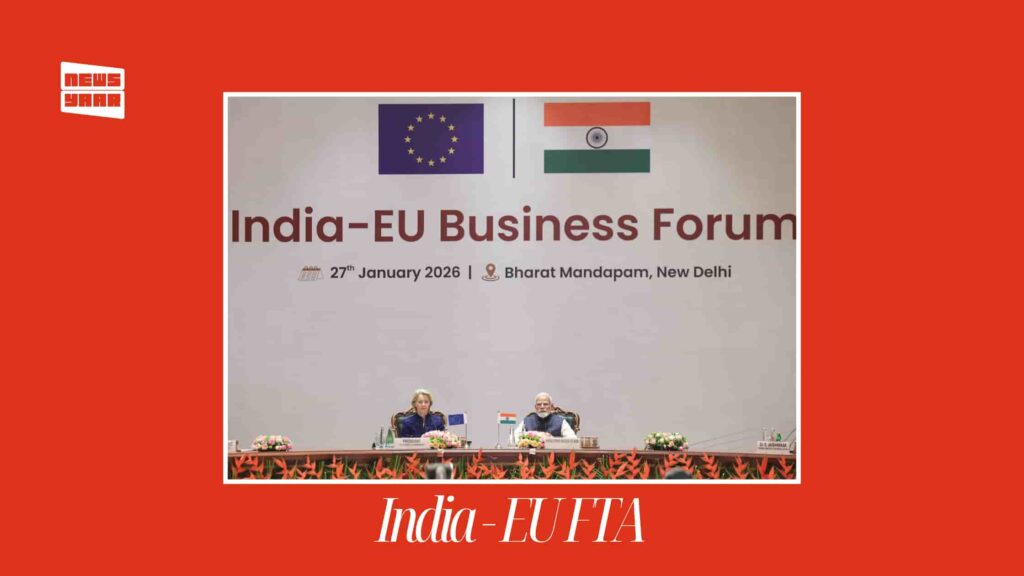
GOVERNMENT India-EU Free Trade Agreement: Full Breakdown, Numbers, Timeline and Economic Impact Newsyaar February 1, 2026 2:22 pm India and the European Union (EU) are intensifying negotiations on a Free Trade Agreement (FTA) that could reshape bilateral commerce, investment flows and economic strategy in the decades ahead. Officially referred to as the EU-India Trade and Investment Agreement (TIA), the proposed pact aims to reduce tariff and non-tariff barriers, deepening economic cooperation between India — one of the world’s fastest-growing major economies — and the world’s largest trading bloc. Negotiations for the FTA have been ongoing for over a decade, and recent diplomatic momentum suggests both sides are serious about concluding a “high-ambition, high-standards” agreement in the medium term. Analysts and industry leaders see this as a strategic priority, especially as global supply chains and geopolitical alignments evolve. Bilateral Trade at a Glance: Current Numbers and Potential Growth Trade data underscores the scale of the economic relationship: Two-way merchandise trade between **India and the EU stood at around ₹11 trillion (approximately $130 billion) in 2024-25. India’s goods exports to the EU reached close to $70 billion, while EU exports to India were around $60 billionin the same period. Services trade adds another significant dimension, with India exporting approximately $30–35 billion in services to the EU annually, driven by IT, professional and business services. Under an effective FTA, many experts believe this bilateral trade could grow substantially. Some projections suggest India-EU trade could double to $250–300 billion by 2030, contingent on market access, tariff elimination and regulatory alignment. Specific forecasts also indicate that India’s exports to the EU could touch $100 billion or more by decade end, helping India pursue its broader goal of achieving $2 trillion in total exports by 2030. What the India-EU FTA Will Cover This proposed FTA is not merely about reducing import duties. It is expected to encompass a broad range of modules: Tariff liberalisation: Both sides are discussing phased or immediate elimination of customs duties on a significant share of goods. For India, priority sectors include textiles and apparel, chemicals, pharmaceuticals and engineering goods. The EU has emphasised its interest in greater access for agricultural and processed food products, wines and spirits. Services trade: The EU seeks greater market access in professional services, financial services, digital services and movement of skilled professionals. India’s services competitiveness, particularly in IT and business process services, stands to benefit substantially if barriers are eased. Investment and business facilitation: The pact is expected to include investor protection clauses, dispute settlement mechanisms and provisions to promote cross-border investment in sectors such as renewable energy, infrastructure, logistics and manufacturing. Regulatory cooperation: Reducing non-tariff barriers — including technical standards, sanitary and phytosanitary (SPS) measures, testing and certification procedures — is a central objective. Regulatory alignment or mutual recognition agreements in key sectors could significantly lower trade costs. Sustainable development and labour standards: The EU traditionally incorporates provisions related to environmental protection, climate commitments, labour rights and responsible corporate behaviour; India has indicated support while seeking flexibility in implementation timelines. Key Sectors Impacted Textiles and Garments India’s apparel and textile industry is one of the largest globally, with exports worth around $40–45 billion annually. Preferential access to the EU market could boost textile shipments by making Indian products more cost-competitive against competitors in Bangladesh, Vietnam and Turkey. Pharmaceuticals and Chemicals India’s pharmaceutical industry — valued at over $50 billion in domestic turnover — is a key exporter of generics, active pharmaceutical ingredients (APIs) and bulk drugs. EU market access could lower costs for Indian exporters by reducing duties (currently up to 6–7% on some products) and harmonising regulatory standards. Engineering Goods and Auto Components Engineering goods and auto parts — long recognised as India’s strength — could see enhanced export growth. Engineering exports to the EU were already around $25–30 billion annually, and an FTA could further these shipments by reducing tariffs and facilitating supply chain integration. Services India exports a large volume of services to the EU, particularly IT and corporate/business services. Improved mobility and mutual recognition for professional services could significantly increase services trade, which already accounts for roughly 25–30% of India-EU trade. Challenges in Negotiations Despite clear benefits, several key differences remain: Agricultural market access: The EU wants greater access for its dairy, meat and processed food products. India, in turn, seeks protection for its small farmers and tariff safeguards that prevent a surge in imports that could disrupt local agriculture. Rules of origin: Determining how much production must occur within India or the EU to qualify for tariff benefits is a sensitive issue. Strict rules may limit benefit realisation, while more flexible rules could risk diversion. Services and labour mobility: The EU emphasises liberalisation in professional services and easier movement for skilled professionals. India supports services access but remains cautious about commitments on short-term mobility and domestic regulatory autonomy. Standards and compliance: The EU has stringent regulatory standards across multiple sectors. Indian industry seeks mutual recognition, capacity building and technical cooperation to meet those norms without prolonged delays. Geopolitical and Strategic Dimensions The India-EU FTA is also significant beyond economics. It aligns with both partners’ strategic imperatives as global trade patterns evolve: Diversification and resilience: For India, the FTA represents a diversification of export destinations beyond traditional partners such as the US and Middle East. For the EU, it enhances engagement with a rapidly growing market in Asia. Strategic autonomy: Deeper economic ties with the EU support India’s broader foreign policy objective of strategic autonomy — maintaining balanced relations with multiple global powers. Global standards and reform: Negotiations with the EU could encourage India to further align with international best practices in digital trade, data flows, sustainability commitments and IP frameworks — strengthening its global integration. Business and Industry Reactions Industry bodies in India — including
Parakram Diwas 2026: Remembering Netaji Subhas Chandra Bose and the Spirit of Fearless Nationalism
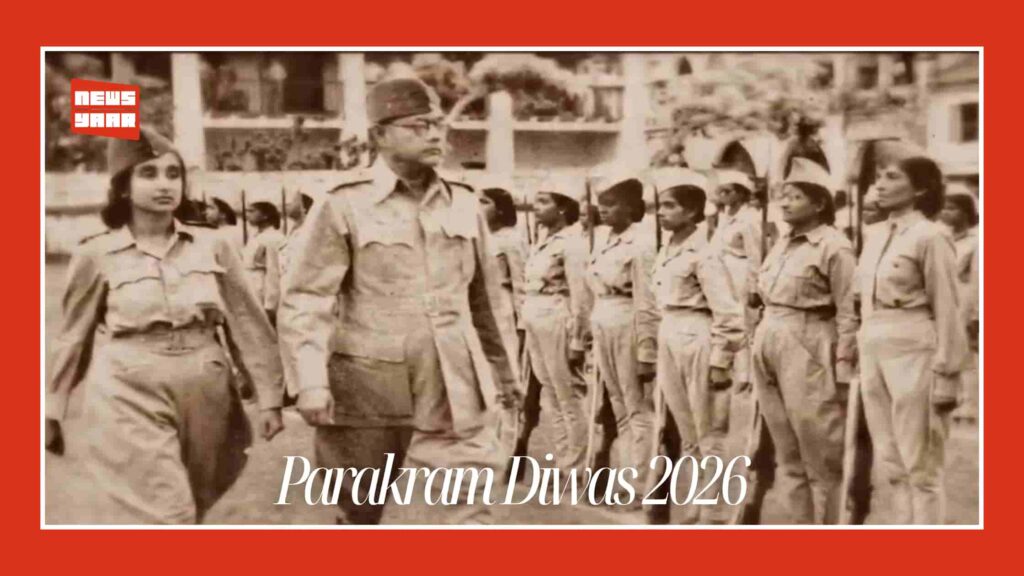
EVENTS Parakram Diwas 2026: Remembering Netaji Subhas Chandra Bose and the Spirit of Fearless Nationalism Newsyaar February 1, 2026 2:07 pm Parakram Diwas, observed every year on January 23, marks the birth anniversary of Netaji Subhas Chandra Bose, one of India’s most formidable freedom fighters. As India commemorates Parakram Diwas 2026, the day serves not merely as a tribute to a historical figure but as a reminder of an uncompromising vision of freedom, courage, and self-reliance that continues to resonate with the nation. Born on January 23, 1897, in Cuttack, Odisha, Subhas Chandra Bose was a brilliant student who topped the Indian Civil Services (ICS) examination in England. Yet, in an act that defined his life, he resigned from the prestigious service to dedicate himself entirely to India’s freedom struggle. His decision reflected a core belief: freedom could not be negotiated; it had to be seized. Unlike many leaders of his time, Bose believed that political independence required direct action, not prolonged compromise. His ideological differences with the Indian National Congress leadership eventually led him to chart his own path, driven by urgency and revolutionary resolve. The Formation of the Indian National Army (INA) Netaji’s most defining contribution was the revival and leadership of the Indian National Army (Azad Hind Fauj). With the iconic call of “Give me blood, and I will give you freedom,” Bose mobilised thousands of Indians across Southeast Asia to take up arms against British rule. The INA was not merely a military force, it was a symbol of defiance. It challenged the myth of British invincibility and ignited a powerful sense of national pride among Indians, including those serving within the British Indian Army. Historians widely agree that the INA trials played a significant role in accelerating the British decision to leave India. The word “Parakram” means courage, valour, and decisive action, qualities Bose embodied throughout his life. Parakram Diwas was officially instituted by the Government of India to honour these values and inspire citizens, especially the youth, to act with conviction in nation-building. In 2026, as India navigates complex global challenges, economic uncertainty, technological transformation, and geopolitical shifts, Netaji’s ideas on self-reliance, unity, and national confidence feel strikingly relevant. His emphasis on discipline, leadership, and sacrifice offers a counterpoint to complacency and apathy. Bose’s vision extended beyond the mere end of colonial rule. He envisioned a strong, socially just, and industrially advanced India, where freedom translated into dignity for every citizen. His advocacy for women’s participation in the freedom struggle, exemplified by the Rani of Jhansi Regiment, was far ahead of its time. Even today, his ideas provoke thought, about leadership that demands accountability, patriotism that requires action, and freedom that comes with responsibility. Parakram Diwas 2026: A Call to Reflect and Act Parakram Diwas is not just about remembering Netaji Subhas Chandra Bose; it is about questioning ourselves. Are we bold enough to stand by our principles? Are we willing to act when circumstances demand courage? As India observes Parakram Diwas 2026, Netaji’s life stands as a reminder that history is shaped not by comfort, but by conviction. His legacy urges the nation to move forward, not cautiously, but courageously. About the Author Events Reporter Share via Copied Comments Post Comment