




India-US Trade Deal 2026: Comprehensive Framework, Key Terms and Strategic Implications
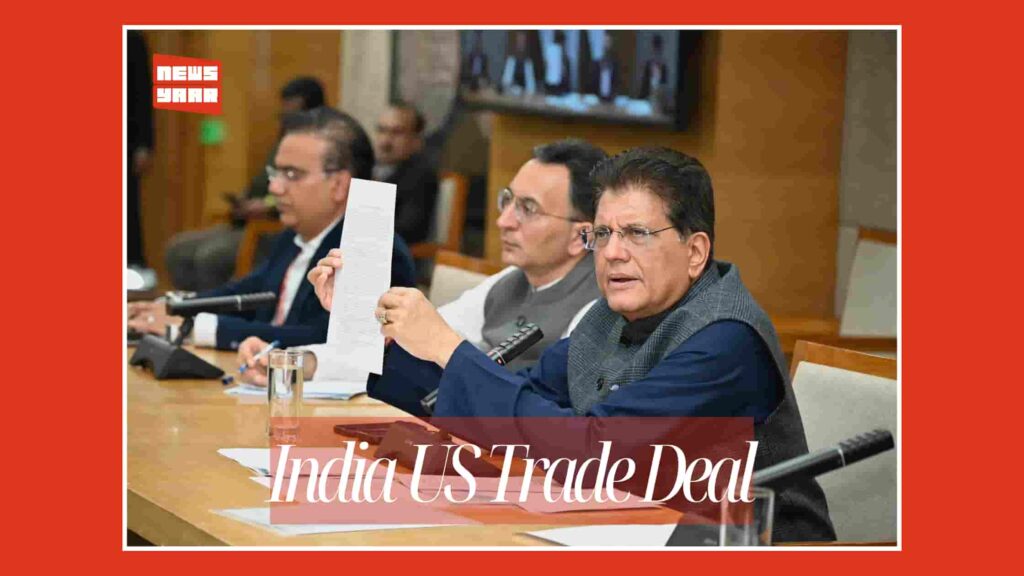
India and the United States have announced a framework for an interim trade agreement aimed at deepening economic ties, expanding market access, and strengthening bilateral cooperation on trade and investment. The trade deal represents progress in long-running negotiations between the two largest democracies and is viewed by New Delhi and Washington as a step toward a broader Bilateral Trade Agreement (BTA). The framework was unveiled following discussions between Prime Minister Narendra Modi and U.S. President Donald J. Trump, who first launched formal talks on a comprehensive India-U.S. trade arrangement in February 2025. Interim Framework OverviewUnder the interim framework, both countries have agreed to substantial tariff reductions and preferential market access commitments, while also embedding safeguards for politically sensitive and strategic sectors in their respective economies. The agreement stops short of a full free-trade agreement but sets out structured commitments that could be built upon in future negotiations. According to the joint statement issued by India and the U.S., the interim agreement emphasises mutual and reciprocal market access, rule-based trade enhancement, and sustained cooperation in areas of economic interest. It also commits both sides to work on non-tariff barriers to facilitate smoother trade flows. Tariff Reductions and Market AccessOne of the central features of the deal is reduction of mutually imposed tariffs on a wide range of goods:The United States will reduce its **reciprocal tariffs on Indian exports to 18 per cent from previous levels that reached up to 50 per cent on certain products, significantly improving access to the U.S. market. Tariffs will also be entirely eliminated for select Indian exports, including generic pharmaceuticals, gems and diamonds, and aircraft parts. India has agreed to eliminate or reduce tariffs on all U.S. industrial goods and a broad spectrum of American food and agricultural products, including dried distillers’ grains (DDGs), red sorghum for animal feed, tree nuts, fresh and processed fruits, soybean oil, wine and spirits. The reciprocal tariff arrangement is expected to open up significant opportunities for Indian exporters in traditional and emerging sectors, while also making a range of American products more competitive within India’s markets.Agriculture and Sensitive Sector ProtectionsA major concern throughout negotiations has been safeguarding India’s agricultural and rural economy, which supports a vast portion of the population. Commerce and Industry Minister Piyush Goyal has repeatedly emphasised that the deal will fully protect sensitive agricultural and dairy products from tariff concessions. Products explicitly shielded include:Staple crops such as maize, wheat, rice and soyaDairy and poultry products including milk, cheese and meatOther items critical to rural livelihoods such as ethanol (fuel), tobacco and certain vegetablesThese protections are intended to prevent adverse impacts on the livelihoods of farmers, smallholder producers and rural communities, who form the backbone of India’s agricultural economy. At the same time, India has offered zero-duty access for its farm products entering the U.S. market, including items such as spices, tea, coffee, coconut and coconut oil, cashew nuts, certain fruits like mangoes, bananas and pineapples, bakery products and vegetable waxes. This is expected to enhance export earnings for agricultural producers and MSMEs. Sectoral Gains and Strategic OutcomesThe interim framework includes sectoral provisions designed to boost trade and cooperation across diverse industries:Pharmaceuticals and Medical Devices: Zero tariffs on generic drugs and improved regulatory alignment are expected to bolster India’s strong position in the U.S. pharmaceutical market. Aerospace and Defence: Eliminating tariffs on aircraft parts and securing Section 232 exemptions are expected to benefit aerospace trade and support defence and commercial aircraft manufacturing. Manufacturing and ICT Goods: Commitments to address non-tariff barriers and streamline standards are expected to facilitate trade in information and communication technology (ICT) products and select machinery. Auto Components and Heavy Industry: The agreement anticipates tariff rate quotas for auto parts and preferential access for certain manufactured goods, enhancing industrial trade cooperation. Combined, these measures aim to reduce supply chain friction, attract investment, and support India’s Make in Indiainitiative by integrating domestic production more closely with global value chains.Energy and Long-term Procurement CommitmentsAs part of the broader economic engagement, India has signalled intentions to import approximately USD 500 billion worth of goods from the United States over the next five years. These imports include energy products such as crude oil, liquefied natural gas (LNG) and liquefied petroleum gas (LPG), along with aircraft and aircraft parts, technology products, precious metals and coking coal. These procurement commitments align with India’s strategy of diversifying its energy sources and deepening strategic economic ties with the U.S. . Expected Economic ImpactCommerce Minister Goyal has described the interim framework as a “historic and equitable agreement” that could potentially open a US$ 30 trillion market for Indian exporters. This expanded access is expected to deliver significant benefits for micro, small and medium enterprises (MSMEs), artisans, agricultural producers and women- and youth-led businesses by removing tariff barriers in the U.S. market. Key economic gains envisaged include:Boost to Indian exports in textiles, leather and footwear, plastic and rubber products, organic chemicals, home decor, artisanal goods and select machinery. Increased competitiveness for Indian pharmaceutical and aerospace sectors through zero tariff access. Enhancement of India’s MSME ecosystem through sustained preferential access and reduced non-tariff barriers. Political and Analytical PerspectivesThe trade framework has drawn both support and criticism within India. Proponents highlight its potential to create jobs, expand market reach for diverse sectors and attract foreign direct investment. Several state leaders have welcomed the deal as a step forward for economic growth and industrial development. Critics — including farmer unions and opposition figures — argue that the framework lacks sufficient detail and may expose certain sectors to unfair competition, particularly if tariff reductions are asymmetric. Concerns have been raised about the long-term impact on domestic agriculture and industrial policies. Why the Deal MattersThe interim India-U.S. trade deal is significant on multiple fronts:It marks a milestone in trade relations between the world’s two largest democracies, anchoring economic cooperation alongside strategic and defense ties. It represents a shift in India’s trade policy, balancing openness with protection for sensitive sectors while pursuing broader market access. For the United States, it strengthens economic engagement with a high-growth market and supports bilateral cooperation on technology, supply chains and industrial standards. The interim framework is
Grammy Awards 2026: Historic Wins, Major Moments and Full Winners List
ENTERTAINMENTGrammy Awards 2026: Historic Wins, Major Moments and Full Winners List Newsyaar February 9, 2026 8:31 am The 68th Annual Grammy Awards — the most prestigious honours in the global music industry — were held on February 1, 2026, at the Crypto.com Arena in Los Angeles, California, celebrating outstanding achievements in music released between August 31, 2024, and August 30, 2025. The ceremony was broadcast live on CBS and streamed on Paramount+, marking the final year on these platforms before the broadcast moves to new partners under a long-term agreement beginning in 2027. South African comedian Trevor Noah hosted the event for the sixth and final time, closing a defining chapter in Grammy hosting history. The Grammys are presented annually by the Recording Academy, recognising excellence in recordings, performances, compositions and technical artistry across widespread genres. This year’s event drew major global attention for its historic milestones, genre diversity and broad musical representation spanning rap, pop, Latin, R&B, rock, country and international music. Big Night, Big Winners: Major Awards and Historic Firsts One of the most notable outcomes of the 2026 ceremony was the Album of the Year award going to Bad Bunny for Debí Tirar Más Fotos, marking the first time a primarily Spanish-language album has won the Grammys’ most coveted prize. The triumph was widely viewed as a cultural milestone, illustrating the expanding global influence of Latin urban music. Record of the Year, which honours the performance and production of a single recording, went to “luther” by Kendrick Lamar and SZA, highlighting one of the year’s most acclaimed songs. Song of the Year, awarded to songwriters, was won by Billie Eilish and Finneas O’Connell for “Wildflower”. Meanwhile, Olivia Dean was named Best New Artist, acknowledging a breakthrough year in her career. Leadership in Nominations and Awards Rap powerhouse Kendrick Lamar led all nominees with nine nominations heading into the night, tying with artists such as Lady Gaga, Jack Antonoff and producer Cirkut in multiple categories. Lamar went on to capture five Grammy wins, the most of any artist at the ceremony, including Best Rap Album for GNX and a second consecutive win for Record of the Year. His victories also extended his standing as the most awarded rapper in Grammy history, surpassing previous record holders through sustained artistic excellence. Full Winners Snapshot: Major Categories While the Grammys encompass 95 categories covering both popular and specialised areas, the following represents a condensed overview of key awards and winners from the 2026 ceremony: Album of the Year — Debí Tirar Más Fotos (Bad Bunny)Record of the Year — “luther” (Kendrick Lamar & SZA)Song of the Year — “Wildflower” (Billie Eilish & Finneas)Best New Artist — Olivia DeanBest Pop Vocal Album — Mayhem (Lady Gaga)Best Pop Solo Performance — “Messy” (Lola Young)Best Pop Duo/Group Performance — “Defying Gravity” (Cynthia Erivo & Ariana Grande)Best Rap Album — GNX (Kendrick Lamar)Best R&B Album — MUTT (Leon Thomas)Best Rock Album — Songs of a Lost World (The Cure)Best Country Solo Performance — “Bad As I Used to Be” (Chris Stapleton)Best African Music Performance — “Water” (Tyla)(Other winners and full lists are available from Recording Academy sources.) Diverse Recognition Across Genres The 2026 Grammys celebrated genre diversity and global music influence. Lady Gaga secured wins in both Best Pop Vocal Album and Best Dance Pop Recording for Abracadabra, while artists like Tyler, The Creator and Turnstile were recognised in rock and alternative categories. R&B and hip-hop saw standout wins for Kehlani and Leon Thomas, reinforcing the continued crossover appeal of those genres. Latin, African and reggae music also featured in winners’ circles, reflecting the Recording Academy’s broader emphasis on inclusivity within music’s evolving landscape. Notable moments also emerged outside typical categories; the documentary Music by John Williams, produced by Steven Spielberg and collaborators, earned a win for Best Music Film, crowning him an EGOT recipient — an artist who has collectively won an Emmy, Grammy, Oscar and Tony Award. Additionally, the song “Golden” from KPop Demon Hunters captured Best Song Written for Visual Media, marking a landmark moment for Korean pop integration into major Grammy recognition. Performances, Red Carpet and Broader Cultural Impact The 2026 ceremony featured a lineup of performances and presentations spanning multiple music styles and eras. High-profile artists such as Lady Gaga, Justin Bieber, Sabrina Carpenter and others took to the stage, bridging mainstream pop with experimental and genre-blending sounds. The red carpet was equally vibrant, with nominees and attendees showcasing fashion and expression that added to the cultural resonance of the event. While the Grammys are inherently competitive, the 2026 edition was marked by artist statements and moments that transcended music alone, with some performers using their acceptance speeches to touch on social commentary and advocacy, underlining the intersection of art and contemporary issues. Why the 2026 Grammys Matter The 68th Annual Grammy Awards reaffirmed the ceremony’s position as a bellwether for global music trends, celebrating both commercial success and artistic innovation. From Bad Bunny’s historic Spanish-language Album of the Year to Kendrick Lamar’s record-setting achievements, the event highlighted the industry’s dynamic evolution and the broadening reach of diverse musical voices. As the music world looks ahead, the 2026 Grammys will be remembered for its blend of historic wins, genre-crossing recognition and cultural expression — a testament to the ever-expanding landscape of global music.https://www.youtube.com/watch?v=gil4hcn9loI&t=13129sVideo credit: YT@/Recording Academy / GRAMMYshttps://www.youtube.com/watch?v=20RneK7DnhoVideo credit: YT@/Recording Academy / GRAMMYs About the AuthorEntertainment Reporter Share via Copied Comments Post Comment
Epstein Files: All You Need To Know
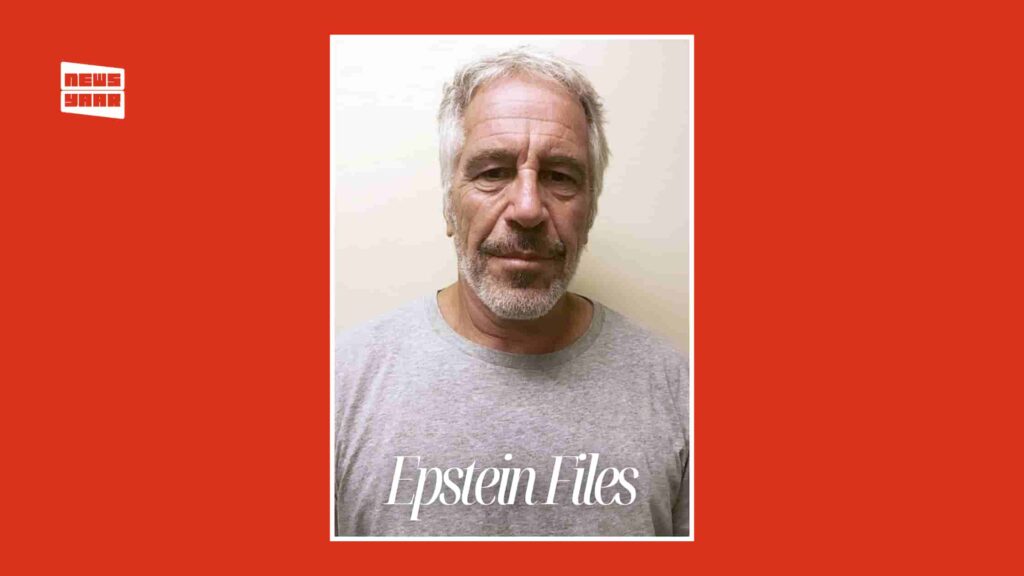
WORLDEpstein Files: All You Need To Know Newsyaar February 9, 2026 8:20 am Jeffrey Epstein’s case spans decades of allegations, lenient deals, and high-profile scrutiny. It began with early reports of abuse in the 2000s, escalated through his 2019 arrest and death, and continues unfolding via mandated file releases today. Jeffrey Epstein’s files, a massive trove of emails, documents, and records from the US Department of Justice, expose the financier’s web of connections to power, science, and controversy. Released under the 2025 Epstein Transparency Act, these files, totaling over three million items, detail his funding of elite projects and interactions with prominent figures, though most mentions do not imply criminality. Who Was Jeffrey Epstein? Epstein, a convicted sex offender, built a fortune as a financier and cultivated ties with scientists, politicians, and celebrities. Arrested in 2019 on federal sex trafficking charges, he died by suicide in a New York jail cell that August, sparking endless speculation. His associate Ghislaine Maxwell was convicted in 2021 and is serving 20 years for her role in recruiting victims. Early History (2002–2008) Abuse allegations surfaced in March 2005 when Palm Beach police probed Epstein for paying a 14-year-old girl for a “massage” at his mansion, uncovering claims from dozens more minors dating back to 2002.’ In 2006, he faced multiple unlawful sex act charges, but a grand jury indicted only on one minor count of solicitation. Federal involvement grew via the FBI’s “Operation Leap Year.” By June 2008, Epstein secured a controversial non-prosecution deal from U.S. Attorney Alexander Acosta: pleading guilty to state solicitation charges, 18 months in jail (mostly work release), sex offender registration, and victim restitution, sparing him federal time despite 36 identified victims. The Epstein Files 2026 Less than 1% of files are public; redactions shield victims, with more expected. No “client list” or conspiracy proof; DOJ upholds suicide ruling, lists ~10 co-conspirators (some subpoenaed). Revelations fuel global probes (Norway politics shaken) and speculation (e.g., “Cody Rudland” email), but focus remains on Epstein’s science/power ties without broad prosecutions. Online tools like Jmail drive public analysis, sustaining debate. Recent Document Releases The US Department of Justice’s January 31, 2026, release—over three million pages, 180,000 images, and 2,000 videos—marks the biggest batch yet under the Epstein Transparency Act. It includes Epstein’s jail evaluations, Ghislaine Maxwell details, and searchable emails via Jmail. These files highlight Epstein’s post-2008 conviction dealings, like his $800,000 MIT donations that triggered resignations and probes. No “client list” or blackmail evidence emerged, per a July 2025 DOJ memo confirming his death as suicide. Prominent Associates in Files Files name ~150 from lawsuits, emails, flight logs; many social/financial ties, no proven criminality. Bill Clinton: Frequent flyer on Epstein’s jet (post-presidency); denied island visits or knowledge of crimes.Donald Trump: Early friendship (banned Epstein from Mar-a-Lago); Maxwell emails reference “girls,” denied by White House.Prince Andrew: Giuffre alleged abuse (settled 2022 civil suit); stripped of titles.Leon Black: Paid $158M for advice; files allege coerced massages Lawrence Krauss: $250K funding; emails on his scandals.Lisa Randall: Island visit, house arrest joke emailMartin Nowak: $6.5M Harvard center funding.Nathan Wolfe: Pitched “horny virus” study.Corina Tarnita: Facilitated Romanian scholarships Harvey Weinstein: One victim alleged a paid encounter via Maxwell Other Notables Files reference ~10 potential co-conspirators (FBI list, some subpoenaed) plus 25 unnamed with secret settlements per Maxwell. Scientists, politicians (Norwegian fallout), Bill Gates (odd emails). About the AuthorWorld Reporter Share via Copied Comments Post Comment
UGC Equity Rules Ignite Campus Fury: Protests, Court Stay, and a Divided Nation
EDUCATIONUGC Equity Rules Ignite Campus Fury: Protests, Court Stay, and a Divided Nation Newsyaar February 9, 2026 8:06 am On a chilly January morning in 2026, 22-year-old Amit Mishra from Ballia led 60 fellow students on a 3-km march across Lucknow University, from the faculty of law to gate number 3. Their banners bore no party logos, just raw demands for “Equity for All.” This scene, amid policy’s collision with identity, captures the explosive backlash against the University Grants Commission (Promotion of Equity in Higher Education Institutions) Regulations, 2026, notified January 13. Aimed at curbing caste-based discrimination, especially against SCs, STs, OBCs, disabled persons, and women, the rules have sparked protests, a Supreme Court stay, and fierce political divides. Notified to repeal 2012 guidelines and align with the National Education Policy 2020’s equity focus, the regulations mandate Equity Committees, Equal Opportunity Centres, helplines, Campus Level Committees, and even “Equity Squads” for campus vigilance. They define discrimination broadly, covering religion, race, gender, caste, birthplace, and disability, but spotlight caste-based harm against reserved categories. Institutions must enforce these under the head’s oversight, with appeals to an Ombudsperson. Born from 2019 PILs by mothers of Rohith Vemula (died 2016) and Payal Tadvi, students alleging caste harassment, the rules address a 118% surge in UGC-reported complaints over five years. Campus Clashes Erupt Delhi University’s North Campus boiled over on Wednesday as general-category students breached police barricades near the Vice-Chancellor’s office, placards screaming “Kaala Kanoon Vaapas Lo,” “Equity for All, Not for Few.” Protester Satvik Sharma decried vague definitions and misuse risks, vowing to Parliament if unmet. Akhilesh Tiwari slammed the exclusion of general students from redressal, demanding natural justice amendments over the 2013 grievance system. Patna’s Dinkar Golambar turned chaotic: Hundreds from All Bihar Students Union and Savarna Ekta Manch burned effigies, announcing a February 1 Bharat Bandh. Leaders like Vishal Kumar cried upper-caste targeting, “Unity or destruction!”, while Suryadev Kumar called it divisive caste politics. UP protests echoed with “Bantenge Toh Katenge,” Lucknow and Kanpur seeing head-shaving vows; even a BJP Kisan Morcha office-bearer and Bareilly magistrate resigned in Rae Bareli. Sangh Parivar student wings protested at UGC offices; Karni Sena joined the bandh call. SFI countered with pro-rules marches, citing systemic bias. Court Steps In, Politics Splits January 29, Chief Justice Surya Kant and Justice Joymalya Bagchi stayed implementation, calling rules “prima facie vague,” misuse-prone, and overly caste-focused, excluding ragging, ignoring non-caste bias. Notices issued to UGC and government for March 19 replies; bench urged eminent jurists’ review. Petitions claim violations of Articles 14, 15(1), 21, seeking caste-neutral access. Tamil Nadu CM M.K. Stalin hailed it as “welcome” against “deep-rooted discrimination,” linking to SC/ST suicides and south/Kashmiri attacks, but flagged weak independence (heads chair committees). He urged strengthening, evoking Mandal resistance. CPI(M) backed expansion to IITs/IIMs; BSP’s Mayawati, Shiv Sena (UBT)’s Priyanka Chaturvedi welcomed stay for upper-caste inclusion. BJP’s Dharmendra Pradhan assured no misuse. Deeper Flaws Exposed Critics decry admin-controlled squads as “moral policing,” no systemic policy checks, and stakeholder ambiguity, faculty/staff covered but Ombudsperson student-only. Pro-rules voices see exclusionary protection as vital; opponents, a general-category witch hunt. Pre-election timing fuels suspicions. From streets to the Supreme Court, this “masterclass or mug’s game” tests equity’s meaning. As February 1 looms, India’s campuses teeter, Will the judicial system refine or dismantle? About the AuthorEducation Reporter Share via Copied Comments Post Comment
Pravasi Bharatiya Divas 2026: Celebrating the Diaspora’s Enduring Bond with India
GOVERNMENTPravasi Bharatiya Divas 2026: Celebrating the Diaspora’s Enduring Bond with India Newsyaar February 9, 2026 7:56 am Pravasi Bharatiya Divas (PBD), observed annually on January 9, honors the pivotal contributions of the Indian diaspora to India’s progress, marking Mahatma Gandhi’s return from South Africa in 1915 after 21 years, a moment that fueled India’s independence movement. While 2026 marks a non-convention year following the 18th biennial PBD Convention in Bhubaneswar, Odisha (January 8-10, 2025), themed “Diaspora’s Contribution to a Viksit Bharat,” global events and local initiatives continue to strengthen ties with over 35 million Non-Resident Indians (NRIs) and Persons of Indian Origin (PIOs) across 200+ countries. Launched in 2003 by the Government of India, PBD has evolved into a flagship platform since 2015 in its biennial convention format, promoting engagement amid India’s position as home to the world’s largest diaspora. Valued at more than 35 million strong, this community drives diplomacy, trade, technology transfer, and cultural exchange, channeling over USD 120 billion in annual remittances, making India the global top recipient. Objectives and Impact PBD 2026 emphasizes reconnecting overseas Indians with their roots while leveraging their potential for national growth. Key goals include building trust through direct interactions with Indian leaders and policymakers, encouraging investments in startups, infrastructure, healthcare, and education, and promoting skill-sharing from global experiences. It preserves Indian culture, languages, and traditions among second- and third-generation diaspora members while recognizing achievements through the Pravasi Bharatiya Samman Awards. The impact resonates deeply: it bolsters the diaspora’s global identity, enhances economic participation, and provides grievance redressal forums. By honoring their role in nation-building, PBD motivates sustained contributions, from business ventures to cultural preservation, positioning the diaspora as a bridge for a “Viksit Bharat” (Developed India). Dubai’s Vibrant Celebration In the UAE, home to one of the largest Indian communities, the Indian Business and Professional Council (IBPC) Dubai, alongside the Consulate General of India, hosted a standout cultural and thought-leadership evening blending World Hindi Day and PBD observances. The event drew Pravasi Bharatiya Award recipients like IBPC Chairman Siddharth Balachandran and veteran leader Vasu Shroff, highlighting Dubai’s stature as a hub for Indian professional excellence and exchange. Balachandran underscored the UAE’s diverse Indian tapestry, advocating for appreciation of regional languages alongside Arabic to foster coexistence. IBPC Vice Chairman Sunil Sinha stressed language in heritage preservation, while Consul Sunil Kumar urged youth involvement in cultural safeguarding. Dr. Sahitya Chaturvedi, IBPC Secretary General, addressed in Sanskrit, sharing his passion for linguistic promotion. The evening featured poetry recitals, an IBPC member Kavi Sammelan, and musical tributes to Hindi poetry, capturing the diaspora’s vibrant spirit. Looking Ahead As a non-convention year, 2026 relies on embassy-led events worldwide for reflection and dialogue, with the next major gathering slated for the 19th PBD in 2027. Smaller regional interactions may emerge, though official Ministry of External Affairs details remain pending. Amid cricket’s dominance and emerging sports like cycling (e.g., Pune Grand Tour), PBD uniquely spotlights the diaspora’s quiet power in remittances, innovation, and soft diplomacy. This observance reaffirms India’s strategic embrace of its global family, turning historical homecomings into modern partnerships for progress. About the AuthorGovernment Reporter Share via Copied Comments Post Comment