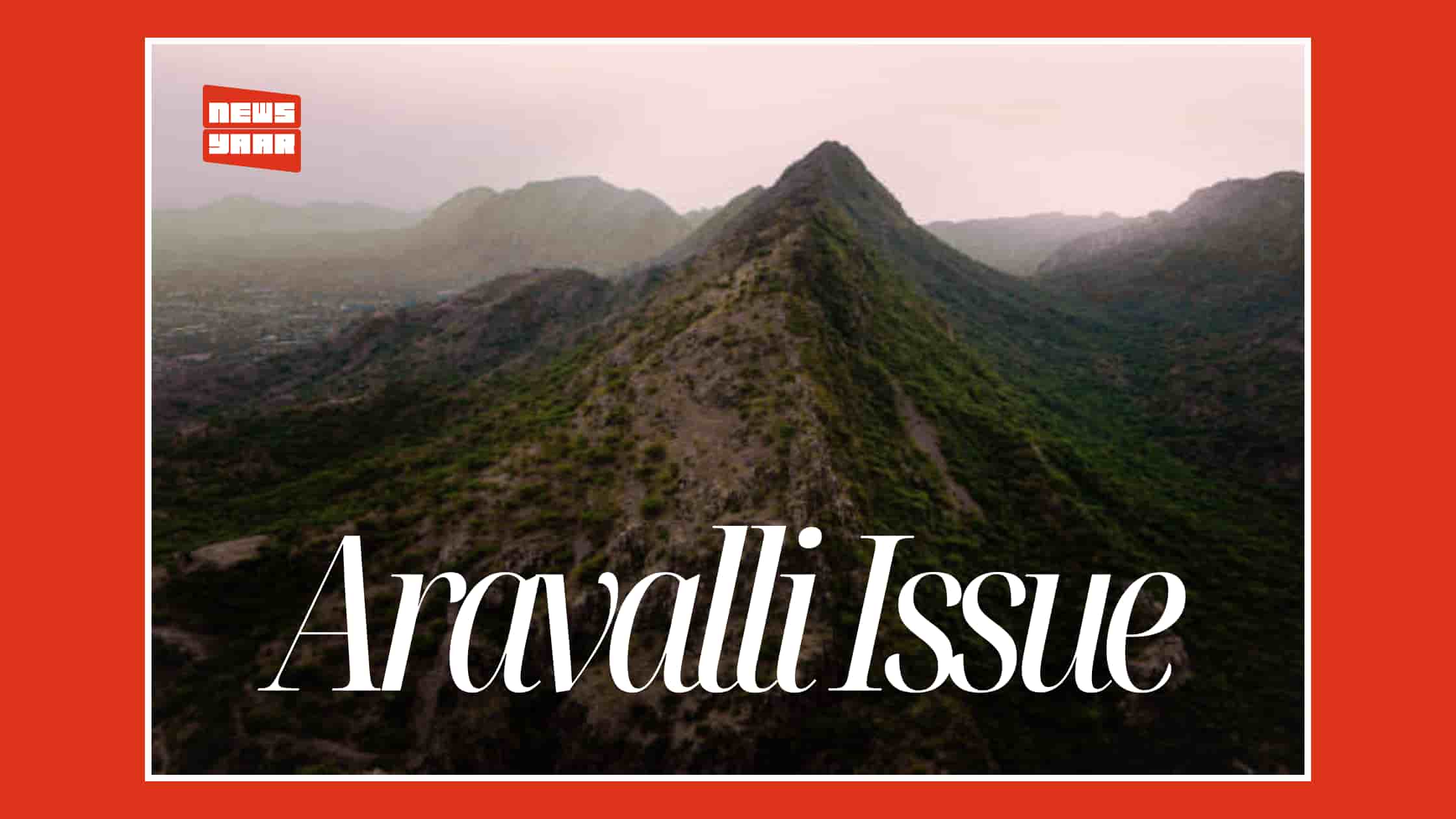
Stretching across Rajasthan, Haryana, and Delhi, the Aravalli range is among the oldest mountain systems in the world. For centuries, it has acted as a natural shield against desertification, helped regulate groundwater, and supported diverse ecosystems.
Yet today, the Aravallis are facing an existential threat, one that has intensified following a recent Supreme Court judgement.
What Triggered the Current Aravalli Debate?
The Aravalli issue has resurfaced as a major public concern after the Supreme Court approved a new, stricter definition of the Aravalli Hills. According to this ruling, only landforms rising 100 metres or more above the local relief will now qualify as Aravallis. This reclassification effectively removes legal protection from over 90% of areas that were previously considered part of the Aravalli range.
The judgment has sparked widespread criticism from environmentalists, scientists, and civil society groups, who argue that the decision ignores geological realities and decades of conservation efforts. Protests and public campaigns have since emerged, demanding stronger protection for the fragile ecosystem.
Mining, Construction, and Urban Pressure
Even before the judgment, the Aravallis were under severe pressure from illegal mining, real estate development, and deforestation. The new definition is feared to further open vast stretches of land to mining and construction, particularly around the National Capital Region (NCR), where urban expansion is already aggressive.
Experts warn that narrowing the legal definition provides a loophole that could legitimize activities earlier deemed illegal, accelerating environmental degradation.
Impact on Climate and Water Resources
The consequences of Aravalli degradation are far-reaching. The range plays a crucial role in groundwater recharge, especially in semi-arid regions. Its destruction has been linked to declining water tables, rising temperatures, dust storms, and worsening air pollution across North India.
Environmentalists caution that weakening protections could worsen climate vulnerability in cities like Delhi, Gurugram, and Jaipur.
Legal Battles and Policy Challenges
Over the years, multiple court orders and environmental regulations sought to safeguard the Aravallis. However, ambiguous land classifications, conflicting state policies, and weak enforcement have consistently diluted these protections.
The recent Supreme Court ruling has further complicated the legal landscape, prompting calls for a review and clearer conservation-focused policies.
What Needs to Be Done?
Experts stress that protecting the Aravallis requires scientifically sound definitions, stronger enforcement, and coordinated policy action across states. Public participation and transparency are equally critical.
As protests grow louder, the debate is no longer just environmental; it is about sustainable development and the future of millions who depend on this ancient mountain range.