


Parakram Diwas 2026: Remembering Netaji Subhas Chandra Bose and the Spirit of Fearless Nationalism
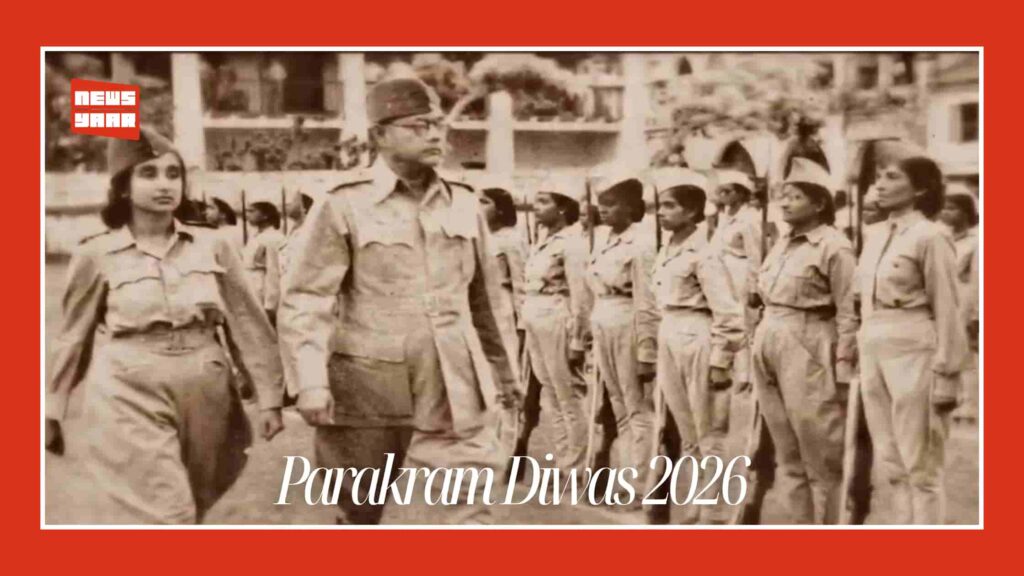
Parakram Diwas, observed every year on January 23, marks the birth anniversary of Netaji Subhas Chandra Bose, one of India’s most formidable freedom fighters. As India commemorates Parakram Diwas 2026, the day serves not merely as a tribute to a historical figure but as a reminder of an uncompromising vision of freedom, courage, and self-reliance that continues to resonate with the nation. Born on January 23, 1897, in Cuttack, Odisha, Subhas Chandra Bose was a brilliant student who topped the Indian Civil Services (ICS) examination in England. Yet, in an act that defined his life, he resigned from the prestigious service to dedicate himself entirely to India’s freedom struggle. His decision reflected a core belief: freedom could not be negotiated; it had to be seized. Unlike many leaders of his time, Bose believed that political independence required direct action, not prolonged compromise. His ideological differences with the Indian National Congress leadership eventually led him to chart his own path, driven by urgency and revolutionary resolve. The Formation of the Indian National Army (INA) Netaji’s most defining contribution was the revival and leadership of the Indian National Army (Azad Hind Fauj). With the iconic call of “Give me blood, and I will give you freedom,” Bose mobilised thousands of Indians across Southeast Asia to take up arms against British rule. The INA was not merely a military force, it was a symbol of defiance. It challenged the myth of British invincibility and ignited a powerful sense of national pride among Indians, including those serving within the British Indian Army. Historians widely agree that the INA trials played a significant role in accelerating the British decision to leave India. The word “Parakram” means courage, valour, and decisive action, qualities Bose embodied throughout his life. Parakram Diwas was officially instituted by the Government of India to honour these values and inspire citizens, especially the youth, to act with conviction in nation-building. In 2026, as India navigates complex global challenges, economic uncertainty, technological transformation, and geopolitical shifts, Netaji’s ideas on self-reliance, unity, and national confidence feel strikingly relevant. His emphasis on discipline, leadership, and sacrifice offers a counterpoint to complacency and apathy. Bose’s vision extended beyond the mere end of colonial rule. He envisioned a strong, socially just, and industrially advanced India, where freedom translated into dignity for every citizen. His advocacy for women’s participation in the freedom struggle, exemplified by the Rani of Jhansi Regiment, was far ahead of its time. Even today, his ideas provoke thought, about leadership that demands accountability, patriotism that requires action, and freedom that comes with responsibility. Parakram Diwas 2026: A Call to Reflect and Act Parakram Diwas is not just about remembering Netaji Subhas Chandra Bose; it is about questioning ourselves. Are we bold enough to stand by our principles? Are we willing to act when circumstances demand courage? As India observes Parakram Diwas 2026, Netaji’s life stands as a reminder that history is shaped not by comfort, but by conviction. His legacy urges the nation to move forward, not cautiously, but courageously.
PM Modi’s Mann Ki Baat – Episode: 130th
GOVERNMENTPM Modi’s Mann Ki Baat – Episode: 130th Newsyaar January 25, 2026 6:15 pm https://www.youtube.com/watch?v=ehO3BjjTQgM&t=28sVideo credit: YT@/NaMo My dear countrymen, Namaskar. This is the first ‘Mann Ki Baat’ of the year 2026. Tomorrow, on the 26th of January, we shall all celebrate our Republic Day. Our Constitution came into effect on this very day. This day; the 26th of January, gives us an opportunity to pay homage to the founding fathers of our Constitution. Today, the 25th of January, is also a very significant day. Today is National Voter’s Day… Matadata Diwas. A voter is the soul of democracy. Friends, Usually, when someone turns 18, becomes a voter, it is considered a normal milestone in life. However, this occasion is actually a major milestone in any Indian’s life. Therefore, it is very important that we celebrate becoming a voter in our country. Just as we wish and celebrate birthdays… similarly, whenever a young person becomes a voter for the first time, the entire neighbourhood, village, or city should come together to congratulate them and distribute sweets. That would raise awareness about voting and strengthen the feeling of how important it is to be a voter. Friends, I would like to express my deep appreciation to all those people in the country who are involved in the electoral process and work at the grassroots level to keep our democracy vibrant. Today, on ‘Voter’s Day’, I would once again urge my young friends to register themselves as voters upon turning 18. This will fulfil the sense of duty that the Constitution expects of every citizen and will also strengthen India’s democracy. My dear countrymen, These days I am seeing an interesting trend on social media. People are reliving their memories of the year 2016. In the same spirit, today I too would like to share one of my memories with you. Ten years ago, in January 2016, we embarked upon an ambitious journey. We had realised then, that even if it were a small one, it was very important for the future of the country for the young generation. At that time, some people could not understand what it was all about, after all! Friends, the journey I am referring to is the journey of Start-up India. The heroes of this amazing journey are our young friends. The innovations they came up with by stepping out of their comfort zones are being recorded in history. Friends, Today India has turned into the third largest Start-ups ecosystem in the world. These Start-ups are out of the box; they are working in sectors that were unimaginable even 10 years ago. AI, Space, Nuclear Energy, Semiconductors, Mobility, Green Hydrogen, Biotechnology… you name it and you’ll find one Indian Start-up or the other working in that sector. I salute all my young friends who are associated with one Start-up or the other or want to start one of their own. Friends, Today through ‘Mann Ki Baat’, I want to urge my countrymen; especially the youth associated with industry and Start-ups. India’s economy is progressing rapidly. The world is watching India. At such a juncture, we all shoulder a huge responsibility. That responsibility is to emphasize on quality. The era of ‘it just happens… it works… it will go through somehow’ is over. Come, let us prioritize quality with all our might this year. Let our only mantra be quality, quality and only quality. Better quality today than what it was yesterday. Let us resolve to improve the quality of whatever we manufacture. Be it our textiles, technology or electronics… even packaging; the connotation of an Indian product should become – ‘top quality’. Come, let us make excellence our benchmark. Let us resolve that there will be no laxity on quality, nor will there be any compromise on quality. And I had expressed from Red Fort – ‘Zero Defect Zero Effect’. Only by doing this shall we be able to accelerate the journey towards a ‘Viksit Bharat’. My dear countrymen, The people of our country are very innovative. Seeking solutions to problems is part of our countrymen’s nature. Some do this through start-ups; while others try to find a solution through the collective strength of society. One such effort has emerged in Azamgarh, Uttar Pradesh. The People there have lent life anew to the Tamsa River that flows through this place. The Tamsa is not just a river; it’s a Live continuum of our cultural and spiritual heritage. This river, which crosses Ayodhya and merges with the Ganga, was once the axis of life for the people of this region. However, on account of pollution, its uninterrupted flow was obstructed. Silt, garbage and filth had blocked the flow of this river. After that, the people here started a campaign to give it a new lease of life. The river was cleaned, and shady, fruit-bearing trees were planted along its banks. Local people engaged themselves at the task with a sense of duty… and through everyone’s efforts, the river was revived. Friends, A similar endeavour of public participation has also been witnessed in Ananthapur, Andhra Pradesh. This is a region that has been grappling with a severe drought. The soil here is red and sandy, which is why people face water shortages. Many areas here do not receive rain over long periods. People sometimes even compare Anantapur to a desert drought.Friends, to address this problem, locals resolved to clean the reservoirs. After that, with the support of the administration, the ‘Ananta Neeru Sanrakshanam Project’ was launched. Under this effort, more than 10 reservoirs have been revived. These reservoirs are filling with water now. Simultaneously, more than 7,000 trees have been planted. This means that along with water conservation, the green cover in Anantapur has also increased. Children now, can also enjoy swimming here. In a way, the entire ecosystem here has been revitalized. Friends, Whether it’s Azamgarh, Ananthapur,
International Theatre Festival of Kerala 2026: Thrissur Set to Transform into a Global Stage for Theatre

The 16th International Theatre Festival of Kerala (ITFoK) is set to take place from 25 January to 1 February 2026 in Thrissur city, Kerala, reaffirming its position as one of India’s most significant international cultural events. Organised by the Kerala Sangeetha Nataka Akademi under the Cultural Department of the Government of Kerala, the festival will bring together theatre practitioners, scholars and audiences from across the world to celebrate performance, dialogue and storytelling in its many forms.The week-long festival will be hosted across multiple venues in Thrissur, with the Kerala Sangeetha Nataka Akademi complex serving as the focal point. Key performance spaces will include the Murali Outdoor Theatre, K. T. Muhammed Regional Theatre, and other designated cultural venues across the city, transforming Thrissur into a vibrant, open stage for global theatre.Dates, Theme and StructureEvent: International Theatre Festival of Kerala (ITFoK) 2026 Edition: 16th Dates: 25 January to 1 February 2026 Venue: Thrissur, Kerala Organiser: Kerala Sangeetha Nataka Akademi, Government of KeralaThe 2026 edition will be presented under the theme “Voices in the Silence”, a concept that reflects theatre’s enduring ability to articulate unspoken realities through movement, dialogue, visual language and performance. The theme highlights ITFoK’s emphasis on theatre as both artistic expression and social commentary, especially in a time marked by global uncertainty, conflict and transformation.Performances and International ParticipationITFoK 2026 will feature 23 plays across approximately 46 performances, showcasing a carefully curated mix of international and Indian productions. Theatre groups from Argentina, Brazil, Armenia, Palestine, Slovakia, Spain, Japan and Denmark are scheduled to participate, presenting works that span classical theatre, contemporary experimentation and cross-cultural collaboration.Indian theatre will be represented by productions from Kerala, Rajasthan, Assam, Maharashtra and Tamil Nadu, offering audiences exposure to diverse linguistic traditions, regional aesthetics and evolving performance practices. The programme aims to place Indian theatre in dialogue with global narratives, encouraging comparative engagement and artistic exchange.Several international productions are expected to address themes such as identity, memory, political conflict, displacement and social change, reinforcing ITFoK’s reputation as a festival that privileges substance, experimentation and intellectual depth.Organisation and AccessibilitySince its inception in 2008, the International Theatre Festival of Kerala has grown into one of Asia’s most respected theatre festivals. The event is fully organised and curated by the Kerala Sangeetha Nataka Akademi, with institutional support from the state’s cultural machinery.For the 2026 edition, organisers have expanded the number of plays compared to previous years, reflecting renewed focus on diversity and scale. In addition to stage performances, the festival will also include cultural interactions, informal discussions and academic engagements, fostering dialogue between artists, scholars and audiences.While tickets are required for major performances, several associated programmes and discussions will remain open to the public, ensuring wider access and community participation.Cultural Importance of ITFoKThe International Theatre Festival of Kerala occupies a distinctive place in India’s cultural landscape. It functions not merely as a performance showcase, but as a space for cultural diplomacy, artistic exchange and critical reflection. By bringing global theatre traditions to a regional Indian audience, ITFoK contributes to expanding cultural literacy and deepening engagement with contemporary global issues.The festival also reinforces Thrissur’s identity as a cultural capital of Kerala, complementing the city’s long-standing association with classical arts, festivals and literary traditions. Each edition attracts theatre enthusiasts, students and visitors from across India, adding to the city’s cultural and intellectual vibrancy.Looking AheadAs ITFoK 2026 prepares to open on 25 January, expectations are high for a festival that continues to push the boundaries of performance while remaining rooted in dialogue and inclusivity. With its expanded programme, strong international presence and thematic focus on unheard voices, the festival is poised to reaffirm its relevance in both Indian and global theatre circuits.By sustaining conversations across borders, languages and artistic traditions, the International Theatre Festival of Kerala continues to position theatre as a living, evolving medium — one that reflects society, questions power and invites audiences to engage more deeply with the world around them.
Bagurumba Dwhou 2026 in Guwahati: A Historic Celebration of Bodo Culture
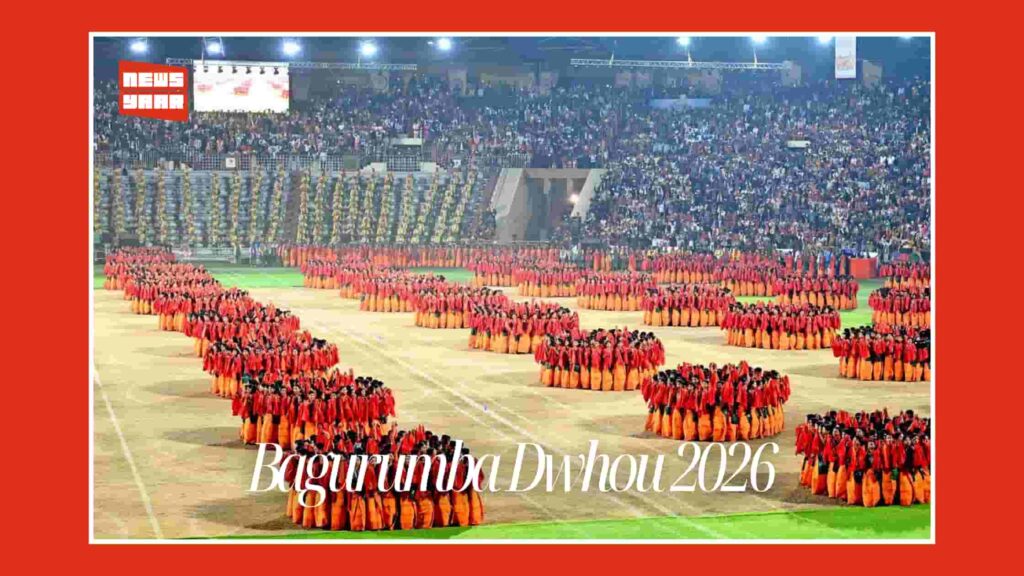
Guwahati played host to one of the most significant cultural events in recent memory on January 17, 2026, when the Bagurumba Dwhou 2026 programme brought together more than 10,000 artistes from across Assam to perform the iconic Bagurumba dance of the Bodo community in a large-scale presentation at the Arjun Bhogeswar Baruah Sports Complex, Sarusajai, Guwahati. The event was held in the presence of Prime Minister Narendra Modi, senior state leaders and cultural representatives, marking a landmark moment for the recognition and celebration of indigenous heritage. What Is Bagurumba Dwhou? Bagurumba is a traditional folk dance of the Bodo community, one of Assam’s oldest and most culturally rich indigenous groups. Often referred to as the “butterfly dance,” this art form draws inspiration from nature — its gentle, flowing movements mimic butterflies, birds, leaves and flowers — and symbolises peace, fertility, joy and collective harmony. Traditionally performed by young Bodo women, with men providing musical accompaniment on instruments such as the kham (drum) and sifung (flute), Bagurumba features dancers in vibrant, hand-woven attire including Dokhona, Jwmgra and Aronai. The term Dwhou in the event’s name refers to a wave or surge, and in this context signifies a grand, synchronised display that takes the traditional dance to an unprecedented scale. Date, Venue and Programme Details Date: January 17, 2026 Venue: Arjun Bhogeswar Baruah Sports Complex (Sarusajai Stadium), Guwahati, Assam The event was preceded by extensive preparations and rehearsals that began in early January, involving hundreds of master trainers and thousands of dancers from across 23 districts of Assam. Participants were brought to Guwahati in the days leading up to the event, with rehearsals starting from January 12 to ensure a coordinated and visually compelling performance. Scale and Artistic Participation Bagurumba Dwhou 2026 was remarkable for its scale. Organisers confirmed that over 10,000 Bodo artistes took part in a single, synchronised performance of Bagurumba, making it one of the largest cultural gatherings of its kind. The dancers represented all 81 Legislative Assembly constituencies across Assam, reflecting the dance’s pan-state cultural reach and unifying spirit. Musical accompaniment was provided by traditional instruments including: Kham (drum) Sifung (bamboo flute) Serja Jatha and Japshring These instruments added rhythmic depth to the choreography and underscored the event’s authenticity and traditional roots. Prime Minister’s Participation and Remarks Prime Minister Narendra Modi attended Bagurumba Dwhou 2026 as part of his official visit to Assam, which also included infrastructure inaugurations and other cultural programmes. On the sidelines of the event, he actively participated, including trying his hand at traditional musical instruments and being felicitated by organisers and artists. In his address, the Prime Minister described the performance as a vibrant celebration of Bodo identity and Assam’s rich cultural heritage. He emphasised that Bagurumba Dwhou was not just a dance festival but a medium to honour the longstanding traditions of the Bodo community and remember its eminent leaders. He paid tribute to figures such as Bodofa Upendra Nath Brahma, Gurudev Kalicharan Brahma, Rupnath Brahma and others, noting their roles in social reform, cultural renaissance and political awakening. The Prime Minister observed that efforts to promote Assamese and Bodo art forms have helped bring the region’s cultural expressions to national and global prominence, noting social media traction and national viewership of the event. Cultural Significance and Tourism Potential Officials and cultural advocates highlighted Bagurumba Dwhou 2026 as a milestone in Assam’s cultural narrative. According to Assam’s Cultural Affairs Minister, the mass performance was executed with structured training involving 25 experts and 400 master trainers, who prepared the dancers for the synchronised choreography that awaited them on the main stage. The event was expected to attract a large audience, with around 14,000 entry passes distributed and arrangements made for LED screens outside the stadium to accommodate additional viewers. Beyond its immediate spectacle, Bagurumba Dwhou 2026 was promoted as a potential draw for cultural tourism. By showcasing one of Assam’s most distinctive traditional art forms on a massive platform, organisers hoped to boost interest in the state’s broader heritage offerings, further enriching tourism prospects. Broader Context of Cultural Promotion The Bagurumba Dwhou follows other major cultural showcases supported by central and state efforts, such as large-scale Bihu and Jhumoir performances in recent years. These have been part of a broader initiative to position Assam’s diverse dance traditions — from the globally recognised Bihu to indigenous forms like Jhumoir and Bagurumba — as symbols of cultural identity and pride. What Bagurumba Represents Bagurumba is more than a dance; it is a visual representation of the Bodo community’s deep connection to nature, harmony and collective joy. Its choreography evokes natural elements — fluttering butterflies, rolling leaves, flowing rivers — and symbolises themes of peace, fertility and community cohesion. While traditionally associated with festivals like Bwisagu (Bodo New Year) and Domasi, the 2026 Dwhou elevated the form from local festivities to a nationwide cultural spectacle. Looking Ahead Bagurumba Dwhou 2026 set a new benchmark for cultural showcases in Assam, demonstrating how traditional art forms can be celebrated at scale and introduced to broader audiences. With global interest in the dance increasing — partly driven by social media engagement and official promotion — the event is likely to spur further presentations of indigenous performing arts from the Northeast.
AP Dhillon’s “One of One India Tour” Sweeps the Country, Turning Concerts into Cultural Events
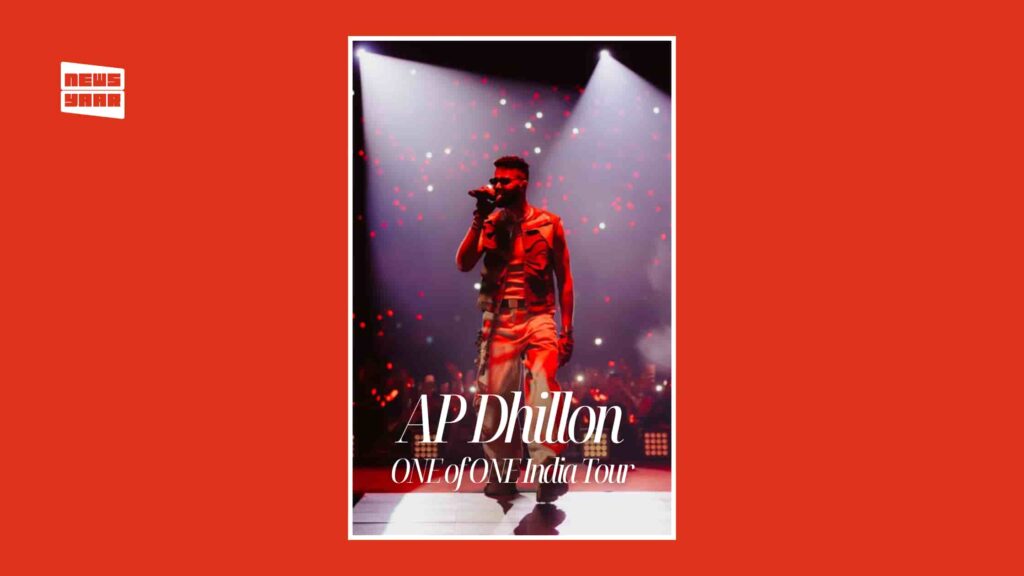
Punjabi-Canadian global star AP Dhillon wrapped up his ambitious “One of One India Tour” after a multi-city run that cut across regions, languages and fan cultures, reaffirming his status as one of the most influential live performers in India’s contemporary music scene. Spanning metros and emerging cultural hubs alike, the tour transformed concert venues into shared spaces of music, identity and youthful expression.More than a string of sold-out shows, the tour unfolded as a pan-India cultural movement, reflecting how Dhillon’s sound — rooted in Punjabi music yet shaped by global hip-hop and R&B — has found resonance far beyond linguistic boundaries. A Nationwide Tour with City-Specific Energy The One of One India Tour 2025–26 covered multiple states and major cities, each responding to Dhillon’s music in its own distinct way.In Mumbai, one of the tour’s most high-profile stops, the concert drew a dense mix of music lovers, industry figures and celebrities. Actress Tara Sutaria’s presence at the Mumbai show added to the buzz, underlining the tour’s crossover appeal beyond music circles. The city’s crowd responded with near-constant sing-alongs, turning tracks like Excuses and Insane into collective anthems.Delhi-NCR witnessed one of the loudest receptions of the tour, with fans arriving hours early and filling the venue to capacity. The capital’s stop stood out for its raw energy and intense fan interaction, with Dhillon frequently pausing to acknowledge placards, flags and fan chants.In Bengaluru, the show reflected the city’s cosmopolitan character, attracting a diverse audience that mirrored Dhillon’s global following. The performance leaned heavily into production finesse — lighting, visuals and sound — creating an immersive experience that resonated strongly with the city’s young, tech-savvy crowd.Hyderabad and Pune saw packed venues as well, reinforcing Dhillon’s growing footprint in India’s non-traditional Punjabi music markets. Fans in these cities responded enthusiastically to both his chartbusters and newer material, underscoring how his appeal has moved well beyond niche audiences.The eastern leg of the tour, particularly Kolkata, stood out for its emotional intensity. Fans from neighbouring states travelled to attend the show, turning it into a regional gathering. Dhillon’s engagement with the crowd here became one of the most shared moments on social media during the tour.The tour concluded in Jaipur, where the finale took on a celebratory tone. The Rajasthan capital witnessed one of the tour’s most talked-about moments when Indian cricketer Abhishek Sharma made a surprise appearance on stage, blending sport and music fandom into a single spectacle and amplifying the concert’s cultural reach.Other cities on the tour included Ahmedabad, Chandigarh and select regional hubs, each adding to the tour’s geographic and cultural spread. Music, Performance and Fan Connection At the heart of the tour was Dhillon’s ability to convert studio hits into high-impact live experiences. Setlists featured fan favourites such as Brown Munde, Summer High, Dil Nu and With You, delivered through tightly choreographed lighting, sharp visuals and controlled stagecraft.Yet what truly distinguished the tour was its fan engagement. Dhillon repeatedly acknowledged the role of Indian audiences in shaping his career, often addressing crowds directly and responding to fan-led chants and moments. This mutual exchange — rather than a one-way performance — gave the concerts a sense of intimacy despite their scale. Digital Buzz and Cultural Visibility The One of One India Tour dominated social media timelines throughout its run. Clips from Mumbai, Delhi, Kolkata and Jaipur trended across platforms, while fan-shot videos, outfit recreations and live reactions extended the tour’s impact far beyond the venues themselves.This digital amplification reinforced Dhillon’s role in normalising Punjabi-led global pop culture within India’s mainstream youth ecosystem, where language barriers increasingly matter less than authenticity and sound. Economic and Cultural Ripple Effect Beyond music, the tour contributed to local event economies, driving footfall for hotels, transport services and nightlife in host cities. For many fans, concerts became weekend travel plans, blending music with urban exploration.Culturally, the tour highlighted how contemporary Indian audiences are embracing artists who operate at the intersection of diaspora identity and homegrown culture, signalling a shift in how Indian pop culture defines success and relevance. A Defining Chapter in AP Dhillon’s India Story By the time the final notes rang out in Jaipur, the One of One India Tour had firmly established itself as more than a promotional run. It stood as a statement of scale, influence and connection — a reminder that live music, when executed with intent, can still create moments that feel personal even in packed arenas. As AP Dhillon looks ahead to new music and future global tours, the India leg of One of One will be remembered as a defining chapter — one that captured a country singing back, city after city, in its own voice.
Davos 2026: World Economic Forum Annual Meeting Begins in Switzerland

The 56th Annual Meeting of the World Economic Forum (WEF) — widely known as Davos 2026 — is underway in the Alpine resort town of Davos-Klosters, Switzerland, bringing together a wide spectrum of global leaders from government, business, civil society, academia and civil organisations. The Annual Meeting is the flagship event of the Forum and serves as a strategic platform for dialogue and collaboration on pressing global issues. The summit is scheduled to take place from 19 January to 23 January 2026. Venue, Dates and Participation Event: World Economic Forum Annual Meeting 2026 Location: Davos-Klosters, Switzerland Dates: 19–23 January 2026 Expected Participants: Around 3,000 leaders from over 130 countries, including heads of state and government, global CEOs, chief policymakers, experts and representatives from civil society and academia. This year’s edition of Davos is notable for its scale and diversity of participation. Organisers expect around 400 top political leaders, including approximately 65 heads of state and government, nearly 850 chief executives and chairs, and close to 100 leading unicorn founders and technology innovators attending sessions across multiple themes. Theme and Agenda: ‘A Spirit of Dialogue’ The overarching theme for Davos 2026 is “A Spirit of Dialogue”, reflecting the Forum’s emphasis on multilateral communication, cooperation and trust building among diverse global stakeholders. The theme underscores the need for open discussion at a time of heightened geopolitical fragmentation, technological disruption and economic uncertainty. Under this theme, sessions are structured to address a set of interconnected global priorities, including cooperation in a more contested world, unlocking new sources of inclusive growth, investing in people and workforce transformation, deploying innovation at scale and responsibly, and building prosperity within planetary boundaries. These priorities reflect both current and long-term global challenges spanning geopolitics, economies, technology, health and sustainability. Key Sessions and Public Engagement While most sessions at Davos are invitation-only, a subset of discussions is available to the public through Open Forum Davos 2026, which runs from 19 to 22 January 2026 under the sub-theme “Visions of 2050: Tomorrow Starts Now”. These sessions encompass topics such as the future of space exploration, quantum science, food systems, medicine, and climate-affected mountain regions. Most of these sessions are livestreamed for global audiences. The Annual Meeting also features a robust media and analyst presence, with over 400 journalists and reporters on site to cover proceedings, announcements, panel discussions and bilateral talks. Who’s Attending and What’s on the Radar Davos has attracted an unusually wide spectrum of influential attendees in 2026. Among expected speakers and delegates are top political leaders from major economies, including leaders from the United States, Europe and emerging markets, as well as CEOs from global corporations. According to reports, U.S. President Donald Trump is attending the World Economic Forum Annual Meeting 2026 and is leading a large U.S. delegation, reflecting the political significance of this year’s agenda. In addition to geopolitical representation, major industry figures — particularly from technology, finance and energy sectors — are participating in discussions on the future of AI, finance, sustainability and industrial transformation. Corporate engagement also includes private sector panels, roundtables and multi-stakeholder dialogues. Key Issues and Global Context Davos 2026 comes at a time of complex global challenges. A range of issues are dominating discussions. Economic uncertainty, marked by slowing global growth, rising tariff pressures and evolving trade dynamics, remains a key concern for policymakers and business leaders. Technology and innovation debates are focused on harnessing artificial intelligence, digital transformation and frontier technologies responsibly, especially given their implications for jobs, productivity and equity. Climate and sustainability priorities, including climate risk management, carbon pricing, clean energy transitions and resilient infrastructure, feature prominently across agenda sessions. Global health preparedness is also part of the discourse, with discussions highlighting the need for stronger pandemic readiness and more resilient health systems in light of recent global health crises. Geopolitical dynamics continue to shape conversations at Davos, with leaders engaging in dialogue on security challenges, regional conflicts and cooperation frameworks that influence global stability and economic integration. Format and Structure The Annual Meeting employs a mix of session formats including keynote addresses, panel discussions, private roundtables, bilateral meetings, press briefings, and networking forums. Participants can engage in both structured agenda sessions and more informal exchanges across designated WEF venues in Davos-Klosters. Numerous country-specific and sector-focused meetings also take place on the sidelines, facilitating high-level public-private partnerships. How to Follow While much of the Davos experience remains invitation-only, the World Economic Forum is livestreaming select sessions and providing official summaries, press briefings and digital updates through its website and social media platforms using hashtags such as #WEF26. This enables global audiences to follow key discussions and outcomes from the meeting. The World Economic Forum Annual Meeting 2026 in Davos, Switzerland (19–23 January 2026) convenes world leaders, policymakers and business influencers to address pressing global challenges under the theme “A Spirit of Dialogue.” With nearly 3,000 participants from over 130 countries, the summit focuses on cooperation, innovation, inclusive growth, future technologies, climate resilience and social investment, positioning Davos 2026 as a pivotal platform shaping global economic and geopolitical discourse in the year ahead.
Jaipur Literature Festival 2026 Reinforces Jaipur’s Global Cultural Identity

The Jaipur Literature Festival (JLF) 2026 concluded earlier this month, reaffirming its status as the world’s largest free literary gathering and one of India’s most influential cultural events. Held at the historic Diggi Palace in Jaipur, the five-day festival brought together authors, poets, thinkers, artists and performers from across the world, transforming the Pink City into a vibrant hub of ideas, debate and artistic expression. Over the years, JLF has grown beyond a literary festival into a cultural phenomenon, and its 2026 edition once again reflected that evolution by blending literature with music, dance, storytelling and public discourse. When and Where JLF 2026 Took Place The Jaipur Literature Festival 2026 was held from January 15 to January 19, 2026, at Diggi Palace, a heritage venue in the heart of Jaipur. The centrally located venue allowed easy access for both domestic and international visitors and offered a unique setting where historical architecture met contemporary dialogue. What Is the Jaipur Literature Festival? Founded in 2006, the Jaipur Literature Festival is an annual celebration of books, ideas and free speech. Known for its open-access format, the festival brings together voices from diverse backgrounds including fiction and non-fiction writers, historians, journalists, poets, philosophers, economists, policymakers and artists. JLF has earned global recognition for encouraging open debate, cultural exchange and intellectual engagement while remaining accessible to the general public. Key Highlights of JLF 2026 The 2026 edition featured a packed programme of panel discussions, book launches, readings and conversations covering themes such as global politics, history, climate change, gender, technology, identity and contemporary society. Prominent Indian and international authors shared stages with emerging voices, creating a balance between established thought leadership and new perspectives. One of the defining features of JLF 2026 was its emphasis on cross-cultural dialogue. Sessions explored the intersection of literature with global events, regional narratives and evolving social realities. Music, Dance and Cultural Performances Beyond literature, JLF 2026 offered an immersive cultural experience. The Jaipur Music Stage attracted large crowds with performances by celebrated Indian and international artists. From folk and classical music to contemporary fusion and independent bands, the music programme added a festive dimension to the event. Dance performances, spoken-word poetry and visual storytelling further enriched the festival, making it appealing not just to readers but to cultural enthusiasts and tourists alike. Tourism and Economic Impact The festival significantly boosted tourism in Jaipur, with hotels, local markets and heritage sites witnessing increased footfall throughout the event. Visitors combined festival attendance with sightseeing, exploring Jaipur’s forts, bazaars and culinary offerings. Cultural tourism linked to JLF continues to play an important role in promoting Rajasthan as a destination for heritage-driven experiences, especially among international travellers. How Visitors Reached Jaipur Jaipur is well connected by air, rail and road, making it easily accessible for festival attendees. By Air: Jaipur International Airport connects the city with major Indian cities and select international destinations. By Rail: Jaipur Junction serves as a major railhead with frequent trains from Delhi, Mumbai, Kolkata and other metros. By Road: National highways and state transport buses connect Jaipur with Delhi, Agra, Udaipur and other key cities. Local transport options including cabs, autos and app-based services made commuting to Diggi Palace convenient during the festival. Why JLF Matters The Jaipur Literature Festival continues to stand out for its commitment to free expression, inclusivity and cultural dialogue. At a time when public discourse globally is often polarised, JLF provides a rare platform for nuanced conversations and respectful exchange of ideas. As one participating author noted during the festival, “Jaipur remains one of the few places where literature still feels like a public celebration rather than a closed-door conversation.” Conclusion As Jaipur Literature Festival 2026 came to a close, it left behind more than just packed auditoriums and headline sessions. The festival once again demonstrated how literature, music and culture can coexist as powerful tools of connection, drawing people across borders, languages and generations. By turning Jaipur into a living canvas of ideas and creativity, JLF 2026 reinforced the city’s position as a global cultural destination and highlighted the enduring relevance of literature in shaping conversations that extend far beyond the festival grounds.
Tata Mumbai Marathon 2026: Date, Winners, Route, Celebrities, Elite Runners and Why the Race Matters
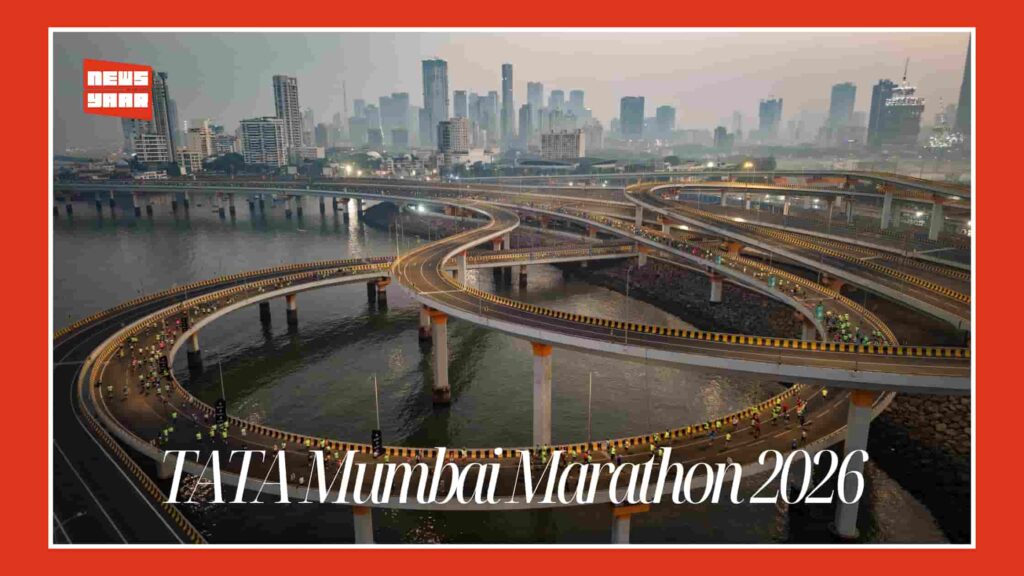
The Tata Mumbai Marathon 2026, one of Asia’s largest and most prestigious road races, was held on January 18, 2026, transforming Mumbai’s streets into a celebration of endurance, inclusivity and city pride. Thousands of runners from India and abroad participated across multiple categories, while elite athletes, celebrities and civic leaders reinforced the marathon’s position as a landmark sporting and cultural event. Organised by Procam International in association with the Tata Group, the Mumbai Marathon continues to be a key fixture on the global long-distance running calendar and a flagship event in India’s sports ecosystem. Tata Mumbai Marathon 2026: Race Categories and Distances The 2026 edition featured a wide range of race formats, allowing participation from professional athletes as well as first-time runners: 42.195 km Full Marathon (Elite & Open Category) 21.097 km Half Marathon 10 km Timed Run 5 km Run for All Senior Citizens’ Run This structure ensured that the Tata Mumbai Marathon remained both highly competitive and mass-participative, a defining feature of the event since its inception. Mumbai Marathon 2026 Route, Venue and Course Highlights The race commenced in the early hours near Chhatrapati Shivaji Maharaj Terminus (CSMT), with the route spanning some of Mumbai’s most recognisable landmarks. Runners passed through Marine Drive, Nariman Point and key arterial roads, experiencing a course that blends urban intensity with coastal beauty. The early morning schedule and sea-facing stretches helped maintain favourable running conditions, while strict traffic and safety protocols ensured smooth execution across the city. Elite Race at Tata Mumbai Marathon 2026: International and Indian Athletes The elite field at the Tata Mumbai Marathon 2026 featured top runners from Kenya, Ethiopia and other East African nations, continuing their strong presence in global distance running. Indian athletes also made their mark, with Kartik Karkera emerging as a notable performer in the men’s elite race. His effort was widely viewed as a significant step for Indian long-distance running, highlighting growing domestic competitiveness against established international runners. The elite races delivered tactical battles, fast pacing and strong finishes, reinforcing Mumbai Marathon’s standing as a serious international athletic contest. Celebrities at Tata Mumbai Marathon 2026: Aamir Khan Joins the Run Bollywood actor Aamir Khan joined thousands of runners on the streets of Mumbai, lending star presence to the event. Speaking during the marathon, Khan described the experience as a reflection of Mumbai’s resilience and collective spirit, praising participants for their enthusiasm and discipline. Celebrity participation has become an important element of the Mumbai Marathon, helping bridge the gap between elite sport and popular culture while motivating wider public participation. Sponsors and Support System: Bisleri and Event Infrastructure Bisleri, the Official Hydration Partner for Tata Mumbai Marathon 2026, ensured uninterrupted hydration support across the route. The event also featured: Medical aid and emergency response teams Volunteer-managed hydration and energy stations Live entertainment zones On-ground crowd and traffic coordination These measures played a crucial role in maintaining runner safety and enhancing the overall experience. Public Participation and Social Impact of Mumbai Marathon 2026 Beyond competition, the Tata Mumbai Marathon continues to function as a social movement. Corporate teams, schools, NGOs, fitness groups and charity runners participated in large numbers, using the platform to raise awareness for causes ranging from health and education to environmental sustainability. The Run for All and Senior Citizens’ Run segments underlined the marathon’s inclusive philosophy, making it accessible to participants across age groups and fitness levels. Tourism, Culture and the Mumbai Experience For international and out-of-city participants, the marathon doubled as a gateway to exploring Mumbai. Many runners extended their visits to experience the city’s heritage sites, coastal promenades and diverse cuisine. Spectators along the route added to the festive atmosphere with music, cheering zones and local flavour, turning the race into a city-wide celebration rather than a closed sporting event. Why the Tata Mumbai Marathon Is Important for India The Tata Mumbai Marathon plays a vital role in India’s sporting and civic landscape by: Promoting fitness and long-distance running culture Providing a global platform for Indian athletes Supporting charitable fundraising initiatives Strengthening Mumbai’s international sporting profile Encouraging community participation and inclusivity Its consistent growth reflects India’s increasing engagement with endurance sports and large-scale civic events. Conclusion The Tata Mumbai Marathon 2026 once again demonstrated why it is regarded as one of Asia’s premier road races. By seamlessly blending elite competition, mass participation, celebrity engagement and social purpose, the event captured the essence of Mumbai — energetic, resilient and inclusive. As runners crossed finish lines against the backdrop of the city’s skyline, the marathon reaffirmed its place not just as a sporting event, but as a symbol of India’s evolving fitness culture and global sporting ambition.
NDRF Raising Day 2026: Recent Operations and Observations

India on January 19 observed NDRF Raising Day, marking 20 years since the formation of the National Disaster Response Force (NDRF), a specialised force that has become synonymous with courage, speed and professionalism during disasters. Established in 2006 under the Disaster Management Act, 2005, the NDRF was created to strengthen India’s preparedness and response mechanism against natural and man-made calamities.From devastating floods and cyclones to earthquakes, landslides, industrial accidents and building collapses, the NDRF has played a crucial role in saving lives across the country. Over the past two decades, the force has evolved into a highly trained, multi-skilled unit capable of responding to complex emergencies both in India and abroad.On Raising Day, tributes poured in from across the political spectrum. Prime Minister Narendra Modi lauded the NDRF for its “professionalism, courage and unwavering resolve,” while Home Minister Amit Shah described the force as a “pillar of trust for citizens during disasters,” paying homage to personnel who lost their lives in the line of duty.The NDRF operates under the Ministry of Home Affairs and currently comprises multiple battalions deployed strategically across the country to ensure rapid response. Each battalion is trained in specialised disaster response skills such as flood rescue, collapsed structure search and rescue, chemical, biological, radiological and nuclear (CBRN) emergencies, and medical first response.What sets the NDRF apart is not just its response capability but also its focus on community awareness and capacity building. The force regularly conducts mock drills, school safety programmes and training sessions for civilians, local authorities and first responders to minimise loss of life during emergencies.In recent years, the NDRF has been at the forefront of major rescue operations, including flood relief missions, cyclone response along India’s eastern and western coasts, and urban rescue operations following infrastructure failures. Its personnel often work in extreme conditions, navigating submerged villages, unstable debris and hazardous environments, to reach those in distress.Beyond national borders, NDRF teams have also represented India in international humanitarian assistance missions, reinforcing the country’s image as a responsible global responder.The 2026 Raising Day was marked by ceremonial parades, award presentations and social initiatives across NDRF battalions. Senior officials and state leaders used the occasion to highlight the growing importance of disaster resilience in an era marked by climate change and extreme weather events. Emphasis was laid on technology adoption, advanced training and inter-agency coordination to further strengthen India’s disaster response framework.As disasters grow more frequent and complex, the role of the NDRF continues to expand. The Raising Day serves as a reminder of the silent sacrifices made by its personnel, often away from their families, operating under intense pressure, with one mission at heart: saving lives.Twenty years on, the National Disaster Response Force remains one of India’s most trusted institutions, standing ready at the nation’s call when disaster strikes.
National Startup Day 2026: India Celebrates a Decade of Entrepreneurial Transformation
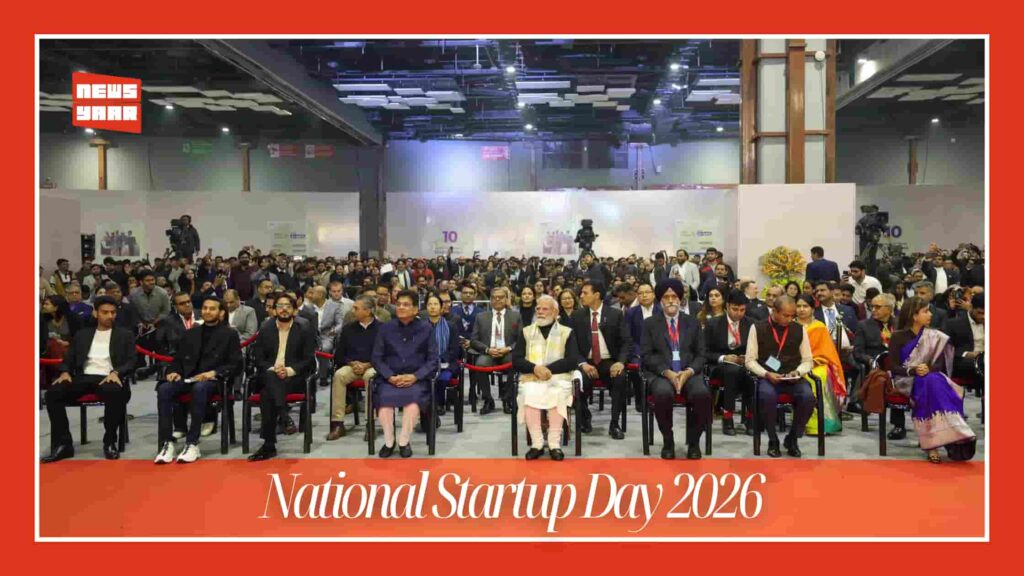
New Delhi, 16 January 2026: India marked National Startup Day 2026 with grand celebrations highlighting ten years of the government’s Startup India initiative and its transformative impact on the nation’s innovation landscape. The event drew founders, investors, policymakers, and ecosystem leaders from across the country to reflect on the journey of entrepreneurship and chart the path ahead.At a flagship event held in New Delhi, Prime Minister Narendra Modi joined startup founders and industry stakeholders to commemorate the milestone. Addressing the gathering, he emphasized the courage and innovative spirit of India’s youth, calling startups engines of economic growth and societal change. His remarks underscored how risk–taking and problem-solving have become mainstream within the entrepreneurial community.Over the past decade since the launch of Startup India, more than 200,000 startups have been recognised across sectors such as technology, healthcare, climate solutions, logistics, fintech, and education. These ventures have collectively generated millions of jobs and helped India emerge as one of the world’s largest and most dynamic startup ecosystems.The celebrations showcased a broad shift in the startup narrative—from chasing rapid valuations to focusing on sustainable growth and real-world impact. Industry experts highlighted that Indian startups are increasingly building deep-tech and AI-driven solutions tailored to local challenges, with a rising emphasis on climate tech, healthcare innovation, and sovereign AI platforms.A notable trend highlighted during the day was the geographical diversification of entrepreneurship. Recent data suggests that over half of registered startups now originate from Tier-2 and Tier-3 cities, signalling a decentralisation of innovation beyond traditional metropolitan hubs.Panel discussions and keynote sessions throughout the event brought to light how startups are contributing to India’s economic resilience, job creation, and technological advancement. Speakers also discussed policy priorities for the next decade, including a renewed push into manufacturing, deep-tech research, and global market expansion.Celebrations were not limited to New Delhi alone. Across states and regions, local startup communities hosted meetups, pitch events, and mentoring sessions, reinforcing a nationwide commitment to empowering entrepreneurs.As National Startup Day 2026 concluded, the startup ecosystem stood not only proud of its achievements over the last ten years but also energized for future challenges, firmly anchored in innovation, inclusivity, and impact.