


Dhurandhar’s Box Office Success: Ranveer Singh Starrer Rewrites Hindi Cinema Records

Aditya Dhar’s Dhurandhar, starring Ranveer Singh and Akshaye Khanna, has emerged as one of the biggest box office success stories in Indian cinema, continuing its remarkable theatrical run well into its seventh week. Released on December 5, the film has not only sustained audience interest but has also rewritten multiple box office benchmarks, particularly for single-language Hindi releases.After a historic opening week collection of ₹207.25 crore, Dhurandhar witnessed an even stronger performance in its second week, amassing a staggering ₹253.25 crore. While collections naturally dipped in the following weeks, the film maintained impressive momentum, earning ₹172 crore in week three, followed by ₹106.5 crore in week four.Even in weeks five and six, when most films faded out, Dhurandhar managed respectable figures of ₹51.25 crore and ₹26.35 crore respectively.What has surprised trade analysts is the film’s resilience in week seven.Despite beginning the week with its lowest single-day collection, early estimates indicate a strong Saturday surge, pushing the week-seven total to approximately ₹4.75 crore in just two days. This places Dhurandhar among the top three highest seventh-week collections in Hindi cinema history, behind only Stree 2 and Chhaava.Domestically, the film’s net collection now stands at an estimated ₹821.35 crore, making it the highest-earning Hindi-only release ever. Its all-India gross has climbed to around ₹985 crore, bringing it within touching distance of the coveted ₹1,000 crore milestone. This achievement positions *Dhurandhar* alongside cinematic giants like KGF: Chapter 2, Baahubali 2, and Pushpa 2 in the list of India’s highest-grossing films.Internationally, the film has performed exceptionally well, particularly in North America and other overseas markets, contributing approximately ₹293 crore. With this, Dhurandhar’s worldwide box office total has reached an estimated ₹1,278.8 crore, further cementing its blockbuster status.Despite competition from newer releases and multilingual films, Dhurandhar has held its ground, often outperforming fresh titles at the box office. The sustained success has also amplified anticipation for Dhurandhar Part 2, officially slated for a March 19 release, as confirmed by director Aditya Dhar.With its blend of strong storytelling, mass appeal, and repeat value, Dhurandhar stands as a defining theatrical phenomenon of modern Bollywood, setting new standards for box office longevity and scale.
New Delhi Book Fair 2026: A Literary Celebration Bringing Readers and Writers Together
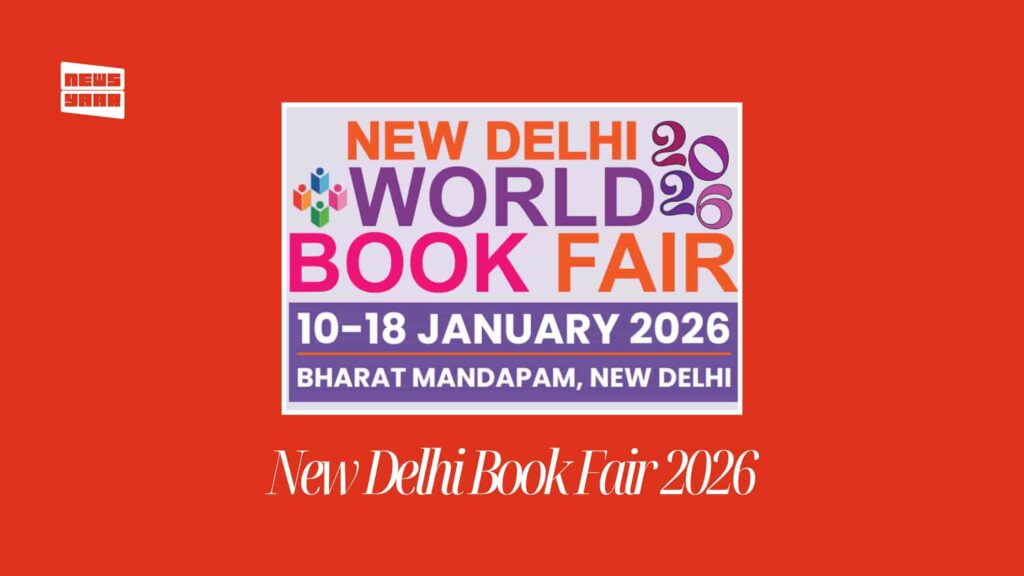
The Delhi Book Fair once again transformed the national capital into a vibrant hub of literature, ideas, and storytelling. Known as one of India’s most loved literary events, the fair attracted book lovers, authors, publishers, and students from across the country, reaffirming Delhi’s place as a cultural and intellectual centre. Event Details Dates: January 10–18, 2026 (9 days) Venue: Bharat Mandapam (Halls 2–6), Pragati Maidan, New Delhi Timings: 11:00 AM – 8:00 PM daily Entry: Free for all visitors Stepping into the fair felt like entering a world woven from stories, ideas, and imagination. The event showcased an incredible variety of books across genres, from fiction and non-fiction to academic texts, children’s books, self-help, and regional language publications, catering to readers of all ages and interests.An iconic venue, the fair offered a rich mix of books across genres, ranging from fiction, non-fiction, academic texts, children’s literature, self-help, and regional language publications. A Paradise for Book Lovers Walking into the Delhi Book Fair felt like stepping into a world made entirely of stories. Hundreds of stalls showcased books in English, Hindi, and several Indian languages, ensuring there was something for every reader. From bestselling novels and classic literature to competitive exam guides and research material, the fair catered to readers of all ages.Special sections dedicated to children remained a major attraction, with colourful books, comics, and activity corners encouraging young minds to develop a love for reading. Authors, Discussions, and Cultural Exchange Beyond book shopping, the Delhi Book Fair served as a platform for author interactions, panel discussions, and book launches. Renowned writers, emerging voices, and publishers engaged in conversations around literature, education, publishing trends, and the future of reading in a digital age.These sessions provided readers with a chance to connect directly with authors, understand their creative journeys, and gain insights into the evolving literary landscape.In a time when online content dominates, the fair stood as a reminder of the lasting value of printed books and structured learning. Keeping the Reading Culture Alive Despite the rise of e-books and digital platforms, the Delhi Book Fair highlighted that the charm of physical books remains strong. The event brought together people from diverse backgrounds, united by a shared love for reading, learning, and storytelling.Publishers also offered attractive discounts, making books more accessible and encouraging readers to build personal libraries. Delhi Book Fair: More Than Just an Event The Delhi Book Fair is not just about buying books; it is about celebrating ideas, creativity, and knowledge. It continues to inspire curiosity, promote literacy, and strengthen India’s reading culture.As the fair concludes, it leaves behind shelves full of new books and minds filled with fresh perspectives, proving once again that stories still matter, and always will.
CES 2026: From Dexterous Robots to Smart Living, A Glimpse Into the Future of Technology
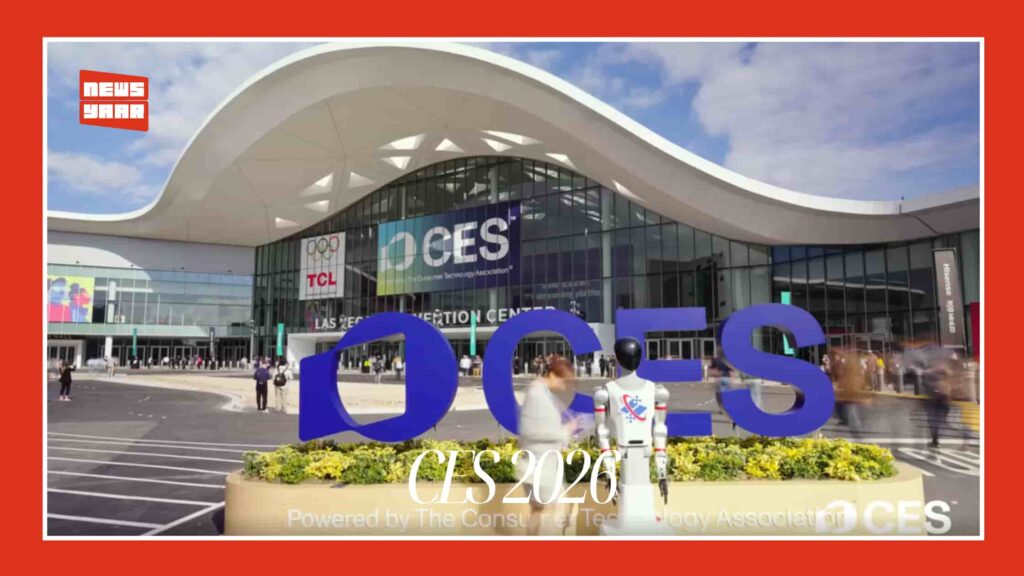
The Consumer Electronics Show (CES) 2026 once again proved why it is considered the world’s biggest stage for innovation. Held in Las Vegas, the annual tech showcase brought together global technology leaders, startups, and innovators to present ideas that could shape how people live, work, and interact with machines in the coming years.This year’s edition marked a clear shift in focus, from flashy concepts to practical, usable technologies that address real-world needs.Robots Get Smarter, Not Just TallerOne of the most talked-about highlights of CES 2026 was the rapid evolution of robotic technology. Unlike earlier years that focused on full humanoid robots, this time the spotlight was on dexterous robotic hands.These advanced systems demonstrated delicate tasks such as folding laundry, playing musical instruments, and even origami, showing how precision and control have improved significantly.Experts noted a strong presence from South Korean and Chinese companies, signalling growing competition in the robotics sector. The progress suggests robots are moving closer to assisting humans in homes, healthcare, and manufacturing environments.AI Takes Centre Stage Across CategoriesArtificial Intelligence was everywhere at CES 2026, not just as a feature, but as the foundation of innovation. From AI-powered home ecosystems to health monitoring devices, companies showcased how machine learning is being integrated seamlessly into daily life.HealthTech innovations stood out, including wearable devices that track vital signs, AI-driven wellness tools, and smart systems designed to improve long-term health outcomes. Industry experts estimate that AI-driven healthcare could become a multi-trillion-dollar market in the coming years.Smarter Homes, Cleaner LivingSmart home technology saw major upgrades at CES 2026. Brands showcased AI-powered cleaning systems, automated home management platforms, and energy-efficient appliances designed to reduce human effort while improving sustainability.Several companies also showcased whole-home ecosystems, where lighting, security, climate control, and cleaning devices communicate with each other through a single intelligent platform. This signals a future where homes don’t just respond, but anticipate needs.Displays, Gadgets, and the Rise of E-PaperDisplay technology also evolved, with innovations in e-paper and flexible screens drawing attention. Lightweight, energy-efficient displays are expected to redefine how information is consumed, especially in portable devices and smart signage.Meanwhile, consumer gadgets, from compact chargers to next-generation laptops, balanced futuristic design with immediate usability, reflecting a trend toward tech that consumers can adopt right away.CES 2026 Sets the Tone for the Year AheadCES 2026 highlighted a clear message: technology is becoming more human-centric. Instead of focusing solely on speed or power, innovation is now centred on usability, accessibility, and meaningful impact.As industries continue to adopt AI, robotics, and smart systems, CES 2026 has set the tone for a future where technology quietly blends into everyday life, making it smarter, simpler, and more connected than ever before.
Lohri 2026: What You Need to Know About Punjab’s Lohri
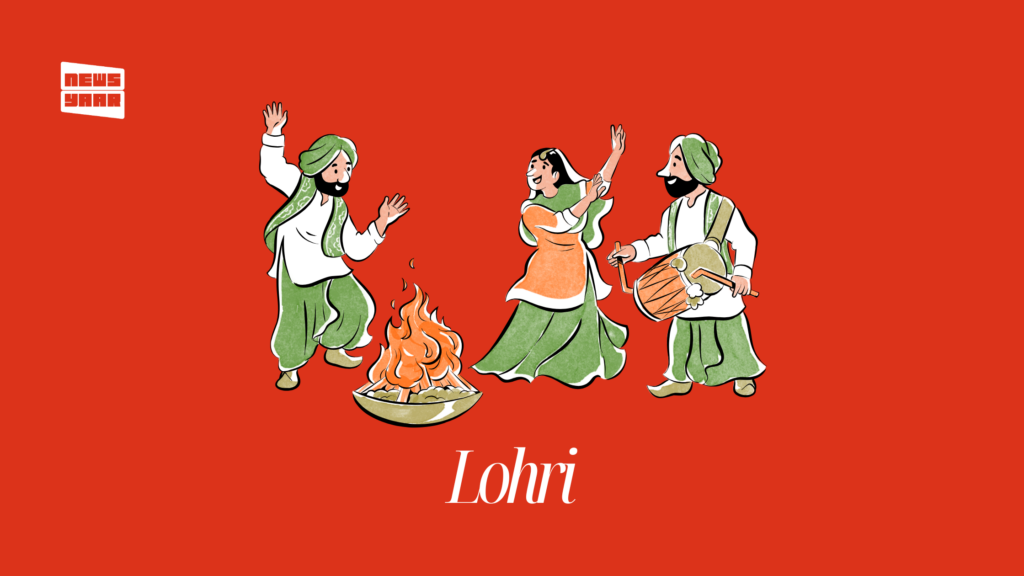
Lohri is one of the most vibrant and culturally rich festivals of North India, especially celebrated with great enthusiasm in Punjab, Haryana, Himachal Pradesh, and parts of Delhi.Observed every year on January 13, Lohri marks the end of winter and the arrival of longer days. Deeply rooted in Punjabi traditions, the festival is a celebration of warmth, harvest, community bonding, and gratitude. Why is Lohri celebrated? Lohri is closely associated with the harvest of rabi crops, particularly sugarcane and wheat. For farmers, it is a time to thank nature for a good harvest and pray for prosperity in the coming season.The festival also coincides with the solar movement before Makar Sankranti, symbolising the transition from cold, dark days to brighter and warmer times.Historically, Lohri is linked to folklore and legends, most notably the tale of Dulla Bhatti, remembered for helping young girls during difficult times. Folk songs sung around the bonfire often mention his bravery, keeping oral traditions alive across generations. The Bonfire: Heart of Lohri Celebrations The bonfire is the centrepiece of Lohri celebrations. Families and communities gather around it in the evening, offering rewri, gajak, peanuts, popcorn, and til to the fire. This ritual symbolises gratitude to the Sun God and the elements of nature.People walk around the fire, sing traditional songs, and offer prayers for happiness, good health, and abundance. The warmth of the fire reflects the spirit of togetherness that defines Lohri. Punjabi Traditions and Cultural Celebrations Lohri is incomplete without Punjabi folk music and dance. Men perform bhangra, while women dance gidda, dressed in colourful traditional attire. The beats of the dhol set the mood for celebration, turning villages and cities into lively cultural spaces.The festival holds special significance for newlyweds and newborns, as their first Lohri is celebrated with extra joy and rituals, symbolising new beginnings and blessings. More Than a Festival Lohri is more than just a seasonal celebration; it is a reflection of Punjabi identity, resilience, and joy. It brings people together, strengthens social bonds, and keeps cultural heritage alive in a rapidly modernising world.As Lohri approaches, the festival continues to remind communities of the importance of gratitude, unity, and celebrating life’s simple joys.
Makar Sankranti 2026: Know the Importance of the Festival
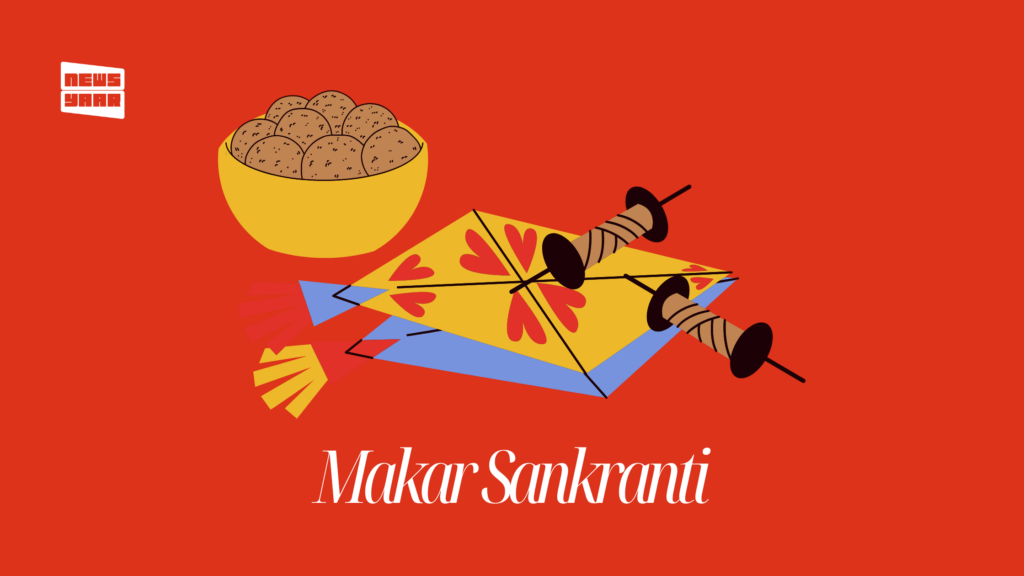
Makar Sankranti, one of India’s most widely celebrated harvest festivals, will be observed on January 14, 2026.Unlike many Hindu festivals that follow the lunar calendar, Makar Sankranti is based on the solar cycle, making its date largely fixed every year. The festival marks a significant event and holds deep cultural, spiritual, and agricultural importance across the country. Why Makar Sankranti Is Celebrated? Makar Sankranti signifies the Sun’s transition into the zodiac sign Capricorn (Makara). This movement marks the beginning of Uttarayan, the sun’s northward journey, which is considered highly auspicious in Hindu tradition.According to ancient beliefs, the period of Uttarayan symbolises light, positivity, and spiritual progress, while the previous phase, Dakshinayan, is associated with darkness and inactivity.The festival also marks the end of the winter solstice and the gradual lengthening of days, bringing warmth and renewed energy. Farmers across India celebrate it as a harvest festival, thanking nature for its bounty and welcoming a new agricultural cycle. Cultural Significance Across India Makar Sankranti is celebrated under different names in different regions, reflecting India’s cultural diversity.In Punjab, it is celebrated as Lohri, marked by bonfires and folk songs. Tamil Nadu observes it as Pongal, a four-day harvest festival. In Assam, it is known as Magh Bihu, while Gujarat celebrates with vibrant kite-flying festivals that fill the sky with colour.Despite regional variations, the essence of the festival remains the same: gratitude, renewal, and togetherness. Rituals and Traditions One of the most common rituals associated with Makar Sankranti is taking a holy dip in rivers such as the Ganga, Yamuna, and Godavari. It is believed that bathing on this day cleanses sins and brings spiritual merit.Another key tradition is the exchange of til (sesame) and jaggery sweets, symbolising unity, warmth, and harmony. The phrase “til-gud ghya ani god-god bola” reflects the spirit of speaking kindly and maintaining sweet relationships. Spiritual and Health Importance Makar Sankranti is not only spiritually significant but also aligned with seasonal health practices. Sesame seeds and jaggery, commonly consumed during this time, help generate warmth in the body and strengthen immunity during winter.Spiritually, the festival encourages people to move away from negativity and embrace discipline, charity, and self-reflection. Donating food, clothes, and essentials to the needy is considered highly auspicious. A Festival of Hope and Positivity As Makar Sankranti 2026 approaches, the festival serves as a reminder of the balance between nature, faith, and human life.It celebrates new beginnings, collective joy, and the timeless bond between tradition and daily living, making it one of the most meaningful festivals in India’s cultural calendar.
Historic Army Day Parade in Jaipur: A Public Spectacle of Pride

Jaipur is up for a historic celebration as the 78th Army Day Parade & is set to take place on January 15, 2026.The event along Mahal Road in Jagatpura is one of the most inclusive tributes to the Indian Army.Army Day is observed every year on January 15 to honour Field Marshal Kodandera M. Cariappa, who became the first Indian Commander-in-Chief of the Indian Army in 1949 following independence.A Parade Like Never BeforeAuthorities have organised open rehearsals on January 9, 11, and 13, allowing thousands of residents to witness military precision, disciplined marching contingents, and displays of modern weapons well ahead of the main parade.Public enthusiasm has been palpable, with crowds gathering early along Mahal Road to watch tanks, missile systems, and advanced defence technologies.Patriotism on DisplayOfficials have emphasised the parade’s role in reinforcing civil-military harmony and national pride. Thousands of audiences, including school and college students, women’s groups, ex-servicemen, and families, are expected to attend under a registration system implemented by the Rajasthan government.The excitement has translated into public participation during rehearsals, with residents capturing performances on mobile phones and cheering the march-past and military bands. More Than a Parade: The Final InsightsAlongside the main event, Jaipur will host a variety of complementary programs, including a “Know Your Army” exhibition, which showcases armoured vehicles, missile systems, and interactive displays aimed at deepening public awareness of India’s defence forces.A special evening event, Shaurya Sandhya 2026, featuring cultural performances, light and sound shows, and a tribute to families of martyrs, will take place as part of the broader celebration.The 78th Army Day Parade stands as a celebration of military tradition and discipline, but also as a powerful symbol of national unity, pride, and collective respect for the service of the Indian Army.Video credit: DD News
Madhavi Latha: The Engineer Behind the World’s Highest Rail Bridge
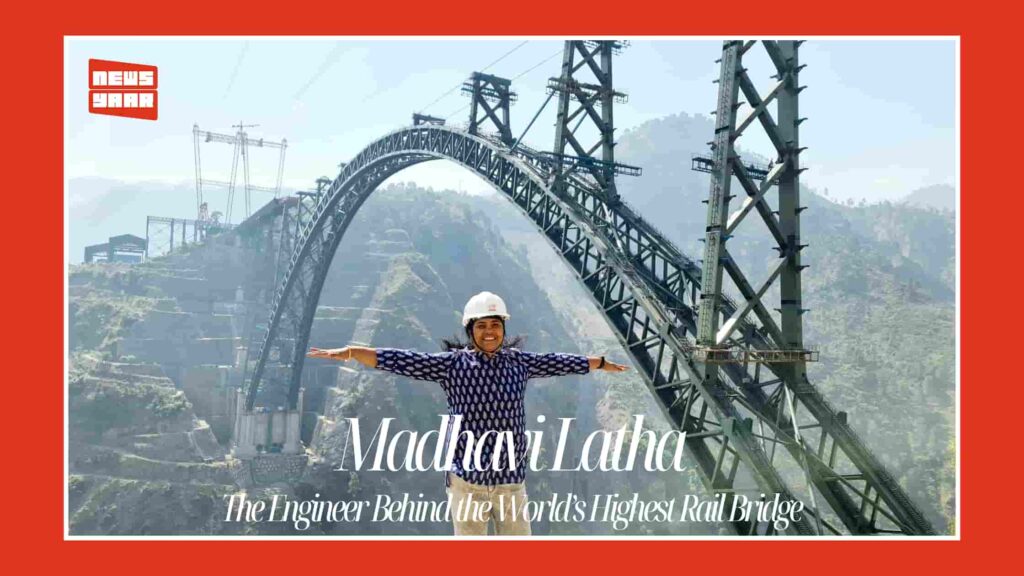
When the Chenab Rail Bridge, the world’s highest railway bridge, stands tall amid the rugged Himalayas, it represents more than an engineering marvel. It tells the story of Dr. G. Madhavi Latha, the engineer whose expertise and vision played a pivotal role in turning an impossible idea into reality. She has also been awarded the NDTV Science Icon of the Year Award.Towering at 359 metres above the Chenab River in Jammu and Kashmir, the bridge is higher than the Eiffel Tower and is one of India’s most ambitious infrastructure projects. Designed to withstand extreme winds, earthquakes, and challenging geological conditions, the Chenab Bridge is a symbol of modern India’s engineering strength, and Dr. Madhavi Latha was at the heart of it.A professor at IIT Madras, Dr. Madhavi Latha, served as the geotechnical consultant for the project. Her role was crucial: the bridge stands in a highly seismic zone with fragile rock formations and unpredictable terrain. Traditional construction methods were not enough. Innovative geotechnical solutions were required to stabilise slopes, design foundations, and ensure long-term safety in one of the most hostile environments imaginable.Dr. Latha and her team worked extensively on slope stabilisation, foundation design, and rock reinforcement, addressing landslide risks and geological uncertainties. What made the challenge even greater was the remoteness of the site, harsh weather conditions, and limited accessibility. Despite these obstacles, her scientific approach and practical problem-solving ensured that the bridge could safely support high-speed trains while enduring nature’s extremes.Beyond its technical brilliance, Dr. Madhavi Latha’s contribution carries deep symbolic value. In a field traditionally dominated by men, her leadership and expertise have made her an inspiration for young engineers across India. She has often spoken about how the project demanded patience, collaboration, and unwavering commitment, qualities as critical as technical knowledge.The Chenab Rail Bridge is a vital link in the Udhampur–Srinagar–Baramulla Rail Line (USBRL) project, aimed at improving connectivity, mobility, and development in Jammu and Kashmir. Its completion marks a major milestone in India’s infrastructure journey.Dr. Madhavi Latha’s story reminds us that behind every iconic structure lies human effort, intellect, and resilience. As trains begin to cross the world’s highest rail bridge, they carry with them not just passengers, but the legacy of an engineer who redefined what was possible.
India Greenlights 3 New Airlines: Transforming Domestic Aviation

India’s aviation landscape is up for a major shake-up with the Ministry of Civil Aviation granting no-objection certificates (NOCs) to three new domestic carriers, Shankh Air, Al Hind Air, and FlyExpress, signaling steps toward increased competition, enhanced regional connectivity, and more affordable travel options in 2026.The approvals come amid growing calls to diversify the aviation market, which has long been dominated by IndiGo and the Air India Group, together controlling more than 90 % of domestic flights. Recent operational disruptions at one of the country’s largest carriers underscored the risks of such concentration and prompted regulators to clear the way for fresh capacity. Shankh Air: Uttar Pradesh’s New Player Shankh Air is expected to be one of the first among the three to begin operations, with plans to launch flight services in early 2026. Based in Uttar Pradesh, the airline aims to connect north and central Indian cities, initially linking Lucknow with major metros such as Delhi and Mumbai while expanding to Varanasi, Gorakhpur, and other destinations.The carrier, led by founder Shravan Kumar Vishwakarma, plans to start with an initial fleet of Airbus aircraft and gradually expand, including potential international operations by the late 2020s. Its mission underscores making air travel more accessible to middle-class and first-time flyers while strengthening intrastate connectivity. Al Hind Air: Regional Focus from Kerala Al Hind Air, headquartered in Kozhikode, Kerala, will initially operate as a regional commuter airline under the UDAN scheme. With a focus on connecting smaller cities and underserved markets in southern India, it plans to begin services using ATR turboprop aircraft.The airline emerges from the established Alhind Group, which brings travel and tourism sector experience to its aviation venture. While it has faced early financial strain, including unpaid leave for some staff, the carrier is advancing toward operational readiness pending its Air Operator Certificate (AOC). FlyExpress: Low-Cost Connectivity & Cargo Potential FlyExpress, a Hyderabad-based startup, has also received its NOC and intends to serve both passengers and freight across India’s regional markets as a low-cost carrier.It joins the other two new entrants in targeting a balance between affordability and broader market access. What’s Ahead for Indian Aviation? While securing NOCs is an important regulatory milestone, these airlines must still complete technical requirements, including proving flights, crew training, and DGCA-issued Air Operator Certificates, before selling commercial tickets.If successful, the trio could destabilize the market dominance, competitive pricing, boost connectivity to Tier-II and Tier-III cities, and make flying more accessible for millions of Indians. As they take shape in 2026, the aviation sector will be watching closely to see whether this trio can break into a market long held by a few major carriers.
Mahindra XUV 3XO EV Launch: Affordable Electric SUV for Indian Roads

Mahindra & Mahindra has expanded its electric vehicle portfolio with the launch of the Mahindra XUV 3XO EV in India, underlining its strategic push into electrified mobility. The electric variant of the popular sub-compact SUV was unveiled with prices starting at ₹13.89 lakh (ex-showroom) for the base AX5 variant, while the top-end AX7L is priced at around ₹14.96 lakh, positioning it as one of the most accessible electric SUVs in the Indian market. Powertrain, Performance, and RangePowered by a 39.4 kWh battery pack paired with a single electric motor, the XUV 3XO EV produces 110 kW of power and 310 Nm of torque, enabling brisk performance and responsiveness tailored for everyday driving. The SUV delivers a claimed real-world range of up to 285 km on a single charge, making it suitable for urban and peri-urban commutes.Mahindra rates the electric SUV’s 0–100 km/h sprint at around 8.3 seconds, a performance figure that rivals or surpasses many competitors in the segment. Quick DC fast-charging capability allows the battery to be charged from 0 to 80% in around 50 minutes using a 50 kW charger.Features, Safety, and ConnectivityThe XUV 3XO EV arrives with a strong feature set that includes Level 2 Advanced Driver Assistance Systems (ADAS) in the top variant, offering adaptive cruise control, lane assist, forward collision warning, and autonomous emergency braking, enhancing both safety and convenience.Interior features include a panoramic sunroof, dual-zone automatic climate control, and premium infotainment with Harman Kardon audio systems in higher trims. Mahindra’s Adrenox connected tech provides over 80 connected car features, including built-in Alexa support, remote vehicle control, and onboard navigation.Additional comfort amenities include passive keyless entry, electronic parking brake, wireless Android Auto and Apple CarPlay, and a 360-degree surround-view camera, making the 3XO EV a compelling package for urban families and EV adopters. Market Impact: The Final Review The launch of the XUV 3XO EV builds on the success of the ICE XUV 3XO lineup, which has sold nearly 1.8 lakh units since its debut. With deliveries slated to begin from February 23, 2026, Mahindra is betting that the combination of value pricing, daily usability, and advanced tech will attract first-time EV buyers and strengthen its foothold in India’s electrifying automotive landscape.With rapid growth in EV adoption driven by government incentives and expanding charging infrastructure, the XUV 3XO EV is poised to be a key contender in the mass-market electric SUV segment, challenging rivals like the Tata Nexon EV and MG Windsor EV.Video credit: Mahindra
Why Gold and Silver Prices Are Rising: Key Reasons Behind the Metals Surge

As global markets continue to face uncertainty, gold and silver prices have been witnessing a steady upward trend, reinforcing their long-standing status as safe-haven assets.From geopolitical tensions to economic slowdowns, multiple factors are pushing investors toward precious metals, making gold and silver increasingly attractive in both domestic and international markets. Safe-Haven Demand Amid Global Uncertainty One of the primary reasons behind the rising prices of gold and silver is growing global uncertainty. Ongoing geopolitical conflicts, trade tensions, and instability in key regions have made investors cautious about riskier assets like equities. In such times, precious metals are seen as a store of value, leading to higher demand and, consequently, rising prices. Inflation and Currency Fluctuations Persistent inflation across major economies has also played a crucial role. When inflation erodes the purchasing power of money, investors turn to gold and silver as hedges against rising prices.Additionally, fluctuations in major currencies, particularly the US dollar, influence metal prices. A weaker dollar often makes gold and silver cheaper for global buyers, boosting demand. Central Bank Policies and Interest Rates Monetary policies adopted by central banks worldwide significantly impact precious metal markets. Expectations of interest rate cuts or a pause in tightening cycles make non-yielding assets like gold and silver more attractive.When interest rates remain low or are expected to decline, investors are less inclined toward fixed-income instruments and more inclined toward commodities. Industrial Demand for Silver While gold is largely driven by investment and jewellery demand, silver benefits from strong industrial usage as well.Silver is a key component in sectors such as electronics, renewable energy, electric vehicles, and solar panel manufacturing. With the global push toward green energy and technological advancement, industrial demand for silver has grown, contributing to its price rise. Strong Domestic Demand and Festive Buying In countries like India, cultural and festive demand also plays an important role. Weddings, festivals, and traditional investments lead to consistent buying of gold and silver, especially during auspicious periods. Rising demand during these seasons often adds upward pressure on prices.With India being one of the world’s largest consumers of gold, any movement in international prices quickly reflects in local bullion markets. Conclusion The growing prices of gold and silver reflect a complex mix of global economic trends, investor sentiment, and industrial demand.Whether for investment, jewellery, or industrial use, precious metals remain central to financial strategies in uncertain times. As markets evolve, gold and silver are expected to continue shining as reliable assets in diversified portfolios.