




What Happened in Parliament’s Winter Session 2025: Key Takeaways
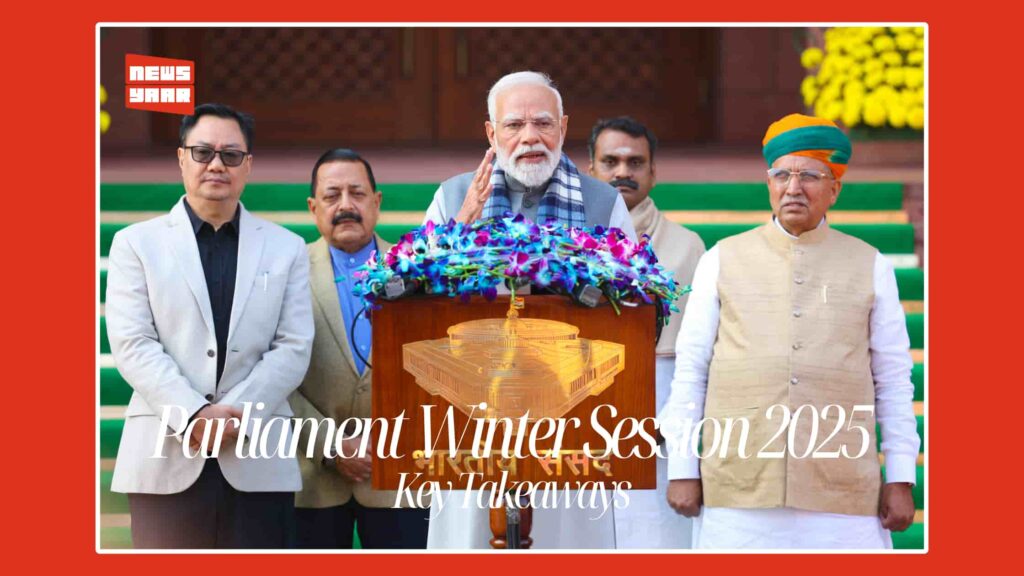
GOVERNMENT What Happened in Parliament’s Winter Session 2025: Key Takeaways The Winter Session of the Indian Parliament, held from December 1 to December 19, 2025, concluded this week with both Houses, Lok Sabha and Rajya Sabha, adjourned sine die after a packed legislative agenda and spirited debates. Across 15 sittings in each house, lawmakers debated, deliberated, and passed several bills with far-reaching implications for India’s governance, economy, and social fabric. Legislative Activity and Major Bills Passed One of the most significant outcomes of the session was the passage of eight key bills covering agriculture and rural employment, economic reforms, financial legislation, and sectoral development. At the forefront was the Viksit Bharat Guarantee for Rozgar and Ajeevika Mission (Gramin) Act, 2025, popularly known as the VB-G RAM G Bill. This legislation replaces the two-decade-old MGNREGA framework with a revised rural employment guarantee, offering 125 days of statutory work to eligible rural households and aligning with the government’s Viksit Bharat 2047 goals. Another cornerstone was the Sustainable Harnessing and Advancement of Nuclear Energy for Transforming India (SHANTI) Bill, 2025, which opens up the previously state-controlled civil nuclear sector to private participation and foreign investment, a structural shift in India’s energy policy. The Sabka Bima Sabki Raksha (Amendment of Insurance Laws) Bill, 2025, also gained Parliamentary approval, raising the FDI cap in the insurance sector from 74% to 100% and aiming to attract global capital, deepen insurance penetration, and enhance consumer choice. Other bills passed included the Appropriation (No. 4) Bill, 2025, authorising additional government spending for the current fiscal cycle, and the Repealing and Amending Bill, 2025, which repeals outdated laws and amends several existing statutes to streamline legal frameworks. Taxation adjustments were addressed through the Central Excise (Amendment) Bill, 2025, and the Manipur Goods and Services Tax (Second Amendment) Bill, 2025, while the Health Security and National Security Cess Bill, 2025, sought to replace the compensation cess on pan masala with a broader cess aimed at funding health and security needs. Debates and Political Dynamics The session saw intense political exchanges. The VB-G RAM G Bill, in particular, sparked opposition protests, with several parliamentarians objecting to the repeal of MGNREGA and the shift in funding arrangements. There were heated interventions in both Houses as lawmakers debated the future of rural employment schemes. Apart from legislative business, members also spotlighted social issues, national song Vande Mataram discussions, and challenges such as air pollution and infrastructure concerns, reflecting Parliament’s role as a platform for diverse public concerns. Session Takeaways The 2025 Winter Session underscored the government’s push towards economic reforms, rural employment restructuring, and opening strategic sectors like nuclear energy. Increased insurance sector liberalisation and the repeal of obsolete laws additionally signal a legislative drive toward modernisation. Yet, the session’s political temperature also highlighted the contentious nature of major reforms, with opposition parties raising questions about their socio-economic impacts. As Parliament adjourned, it left behind both substantive legislative change and an ongoing debate on India’s policy priorities in the years ahead. https://www.youtube.com/watch?v=jEjKon5GubM Video credit: Sansad TV About the Author Government Reporter Share via Copied Comments Post Comment
PM Modi Inaugurates Rashtra Prerna Sthal in Lucknow: Atal Bihari Vajpayee’s 101st Birth Anniversary
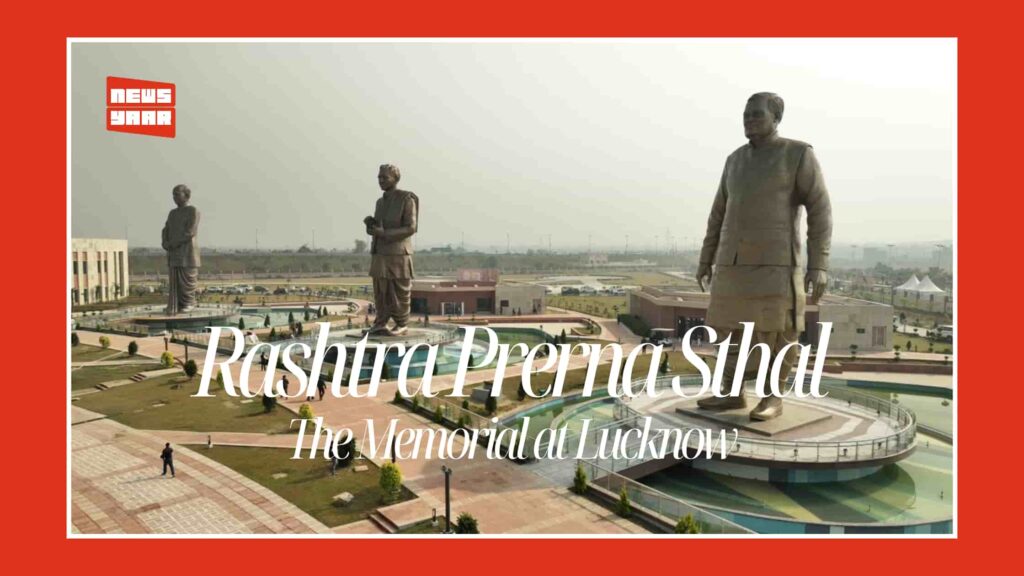
GOVERNMENT PM Modi Inaugurates Rashtra Prerna Sthal in Lucknow: Atal Bihari Vajpayee’s 101st Birth Anniversary Prime Minister Narendra Modi on Wednesday inaugurated the Rashtra Prerna Sthal in Lucknow, Uttar Pradesh, a national memorial dedicated to the life, ideals, and legacy of former Prime Minister Atal Bihari Vajpayee. The inauguration coincided with Vajpayee’s 101st birth anniversary, marking December 25 as a day of national remembrance and inspiration. Symbol of Unity, Self-Respect and Service Addressing the gathering, the Prime Minister said the Rashtra Prerna Sthal symbolises a vision that guided India towards self-respect, unity, and service. He emphasised that the spirit of Sabka Prayas, collective effort, would play a crucial role in achieving the goal of a developed India. Extending Christmas greetings to the people of India and the world, the Prime Minister acknowledged that millions of Christian families across the country were celebrating the festival. He expressed hope that the occasion would bring happiness, peace, and goodwill to all. Highlighting the significance of December 25, Prime Minister Modi paid tribute to several eminent personalities born on this day, including Bharat Ratna Atal Bihari Vajpayee, Bharat Ratna Mahamana Madan Mohan Malaviya, and Maharaja Bijli Pasi. He said their contributions strengthened India’s unity, cultural identity, and nation-building efforts. The Prime Minister noted that the Rashtra Prerna Sthal has been developed on land that previously housed a massive garbage dump spread across more than 30 acres. Over the past three years, the area has been completely cleared and transformed into a modern national memorial. He congratulated the workers, planners, and the Uttar Pradesh government for converting a neglected site into a space of inspiration and national pride. Ideals That Continue to Guide the Nation Remembering to the contributions of Dr Syama Prasad Mookerjee, Pandit Deendayal Upadhyaya, and Atal Bihari Vajpayee, the Prime Minister said their ideals continue to guide the nation. He recalled Dr Mookerjee’s role in strengthening India’s unity and said the abrogation of Article 370 ensured the full implementation of the Constitution in Jammu and Kashmir. He further highlighted Pandit Deendayal Upadhyaya’s philosophy of Antyodaya, stating that it has been strengthened through the saturation of welfare schemes to ensure benefits reach every eligible citizen without discrimination. Over the past decade, crores of people have received houses, toilets, tap water connections, electricity, free ration, and healthcare, he said. The Prime Minister also spoke about the expansion of social security coverage, which has increased from around 25 crore beneficiaries before 2014 to nearly 95 crore people today. He cited schemes such as the Pradhan Mantri Jeevan Jyoti Bima Yojana and Pradhan Mantri Suraksha Bima Yojana as key contributors. Recalling Atal Bihari Vajpayee’s tenure, the Prime Minister credited his government with laying the foundation for digital identity, telecom reforms, highway expansion, and metro connectivity. He noted that India is now the world’s second-largest mobile phone manufacturer, with Uttar Pradesh emerging as the leading manufacturing state. Final insights Highlighting Uttar Pradesh’s transformation, he said the state is now known for development, infrastructure, and tourism, with projects such as expressways, defence manufacturing corridors, and the Ram Mandir in Ayodhya shaping its new identity. The event was attended by Uttar Pradesh Governor Anandiben Patel, Chief Minister Yogi Adityanath, Union Ministers Rajnath Singh and Pankaj Chaudhary, along with other dignitaries. https://www.youtube.com/watch?v=oRj9tLyxhH4 Video credit: Narendra Modi About the Author Government Reporter Share via Copied Comments Post Comment
Nitin Nabin Appointed BJP National Working President in Major Leadership Move
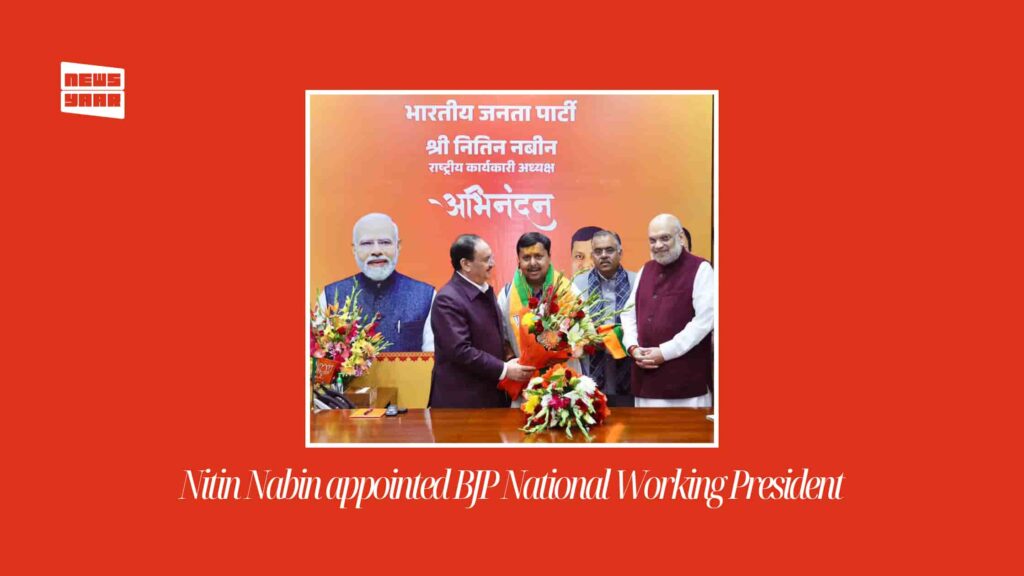
POLITICS Nitin Nabin Appointed BJP National Working President in Major Leadership Move In a significant organisational shift, the Bharatiya Janata Party (BJP) has appointed Nitin Nabin as its National Working President, marking a key moment in the party’s leadership strategy as India approaches a politically important period. The appointment was made by the BJP Parliamentary Board on 14 December 2025, and Nabin formally assumed charge at the party’s headquarters in New Delhi in the presence of senior leaders, including Home Minister Amit Shah and outgoing national president J.P. Nadda. A Generational Change in BJP Leadership At 45 years of age, Nitin Nabin becomes one of the youngest leaders to hold the post of National Working President, signalling a deliberate generational shift within the party’s top ranks. The BJP has described the appointment as recognition of his long organisational experience and grassroots work. Nabin is a five-term MLA from the Bankipur Assembly constituency in Patna and has held multiple ministerial portfolios in the Bihar government, including road construction and urban development. Shortly after taking on his national role, he resigned from his Bihar cabinet positions, adhering to the BJP’s “one person, one post” policy, reinforcing his full-time commitment to the party organisation. Political Outreach and Organisational Work Since his appointment, Nitin Nabin has embarked on an active outreach programme. He was recently seen leading a large roadshow in Patna, where thousands of party workers and supporters greeted him with slogans and flower showers, highlighting his strong support base in his home state. He has also travelled to Assam as part of the BJP’s national campaign to strengthen grassroots engagement under the party’s “Mera Booth Sabse Majboot” initiative, a key organisational push ahead of upcoming state elections. New Delhi Moves and Status In New Delhi, Nitin Nabin has also been allocated a government bungalow in the prestigious Lutyens’ Delhi area, underlining his elevated status within the party and the central leadership’s support. His visibility has risen sharply, with meetings reported with senior political figures and government dignitaries. Within a short span in his new role, he has been actively engaging with party workers and planning organisational strategy for future electoral battles. Future Prospects and Party Direction Political analysts see Nitin Nabin’s appointment as part of the BJP’s broader strategy to strengthen organisational coherence and nurture younger leadership ahead of major elections. There is also speculation that he could be elevated further within the party structure in early 2026, potentially positioning him as a future BJP national president. As Nabin settles into the role, party insiders say his blend of experience, organisational work, and ground presence will be central to the BJP’s efforts to reinforce its political footprint across India. About the Author Politics Reporter Share via Copied Comments Post Comment
Special Intensive Revision: Why Electoral Rolls Are Being Rechecked
GOVERNMENT Special Intensive Revision: Why Electoral Rolls Are Being Rechecked Every democracy depends on a simple but powerful foundation: the right list of voters. To protect that foundation, election authorities periodically undertake an exercise known as the Special Intensive Revision (SIR) of the electoral rolls process that may appear routine on paper but carries deep significance for free and fair elections. Unlike regular updates, which happen continuously through the year, a Special Intensive Revision is a focused, time-bound effort to comprehensively verify and correct voter lists in a particular area. It is usually undertaken ahead of major elections or when concerns arise about inaccuracies, duplication, or demographic changes that may affect electoral integrity. At its core, SIR is about accuracy and inclusion. Over time, electoral rolls naturally become outdated. People move homes, migrate for work, change names, or pass away. New voters turn 18 and become eligible, while others may no longer meet the criteria to remain on the list. If these changes are not addressed systematically, voter rolls risk becoming cluttered with errorspotentially disenfranchising genuine voters or allowing misuse. The Special Intensive Revision seeks to address this by going beyond desk-based corrections. Booth Level Officers (BLOs) are often tasked with physical verification, visiting households to confirm voter details. Citizens are encouraged to check their entries, submit claims for inclusion, request corrections, or file objections against incorrect listings. Draft rolls are published, feedback is invited, and final rolls are prepared only after this public scrutiny. This participatory nature is what makes SIR especially important. It places responsibility not just on election officials, but also on voters themselves. A clean electoral roll is not created in isolation relies on citizens taking the time to verify their information and report inaccuracies. In recent years, SIR exercises have gained added relevance due to increased urban migration and rapid population shifts. Cities expand, rural populations relocate, and entire neighbourhoods transform within a few years. Without intensive revision, voter lists may fail to reflect these realities, leading to confusion on polling day and, in some cases, allegations of unfair practices. Technology has also reshaped how SIR is conducted. Digital databases, online forms, and mobile applications have made it easier for voters to check their status and submit requests. However, physical verification remains a critical component, particularly in areas with limited digital access. The balance between technology and on-ground outreach ensures that no voter is left out due to the digital divide. Critics sometimes raise concerns that intensive revisions could lead to wrongful deletions if not handled carefully. Election authorities, therefore, emphasise transparency and due process. Deletions are not meant to be arbitrary; they follow clear guidelines, documented verification, and opportunities for appeal. The goal is correction, not exclusion. From a democratic standpoint, SIR serves as a preventive measure. Clean electoral rolls reduce disputes, build trust in the election process, and strengthen the credibility of outcomes. When voters see their details accurately reflected, confidence in the system grows. When political parties operate with the same verified data, the playing field becomes more level. Ultimately, the Special Intensive Revision is not just an administrative exercise; it is a democratic safeguard. It reminds citizens that voting rights come with civic responsibility, and that democracy requires regular maintenance, not blind faith. As elections approach in different parts of the country, SIR exercises will continue to play a quiet but crucial role behind the scenes. Their success depends on meticulous execution by officials and active participation by voters. In that partnership lies the assurance that every legitimate voice is counted and counted correctly. https://www.youtube.com/watch?v=v3jwbffAJrE Video credit: Election Commission of India About the Author Government Reporter Share via Copied Comments Post Comment
Aravalli Issue: The Slow Disappearance of India’s Oldest Mountain Range

Newsyaar 9:55 am December 31, 2025 ENVIRONMENT Aravalli Issue: The Slow Disappearance of India’s Oldest Mountain Range Stretching across Rajasthan, Haryana, and Delhi, the Aravalli range is among the oldest mountain systems in the world. For centuries, it has acted as a natural shield against desertification, helped regulate groundwater, and supported diverse ecosystems. Yet today, the Aravallis are facing an existential threat, one that has intensified following a recent Supreme Court judgement. What Triggered the Current Aravalli Debate? The Aravalli issue has resurfaced as a major public concern after the Supreme Court approved a new, stricter definition of the Aravalli Hills. According to this ruling, only landforms rising 100 metres or more above the local relief will now qualify as Aravallis. This reclassification effectively removes legal protection from over 90% of areas that were previously considered part of the Aravalli range. The judgment has sparked widespread criticism from environmentalists, scientists, and civil society groups, who argue that the decision ignores geological realities and decades of conservation efforts. Protests and public campaigns have since emerged, demanding stronger protection for the fragile ecosystem. Mining, Construction, and Urban Pressure Even before the judgment, the Aravallis were under severe pressure from illegal mining, real estate development, and deforestation. The new definition is feared to further open vast stretches of land to mining and construction, particularly around the National Capital Region (NCR), where urban expansion is already aggressive. Experts warn that narrowing the legal definition provides a loophole that could legitimize activities earlier deemed illegal, accelerating environmental degradation. Impact on Climate and Water Resources The consequences of Aravalli degradation are far-reaching. The range plays a crucial role in groundwater recharge, especially in semi-arid regions. Its destruction has been linked to declining water tables, rising temperatures, dust storms, and worsening air pollution across North India. Environmentalists caution that weakening protections could worsen climate vulnerability in cities like Delhi, Gurugram, and Jaipur. Legal Battles and Policy Challenges Over the years, multiple court orders and environmental regulations sought to safeguard the Aravallis. However, ambiguous land classifications, conflicting state policies, and weak enforcement have consistently diluted these protections. The recent Supreme Court ruling has further complicated the legal landscape, prompting calls for a review and clearer conservation-focused policies. What Needs to Be Done? Experts stress that protecting the Aravallis requires scientifically sound definitions, stronger enforcement, and coordinated policy action across states. Public participation and transparency are equally critical. As protests grow louder, the debate is no longer just environmental; it is about sustainable development and the future of millions who depend on this ancient mountain range. About the Author Environment Reporter Share via Copied Comments Post Comment
PM Modi’s 129th Mann Ki Baat – Listen to the Full Episode.
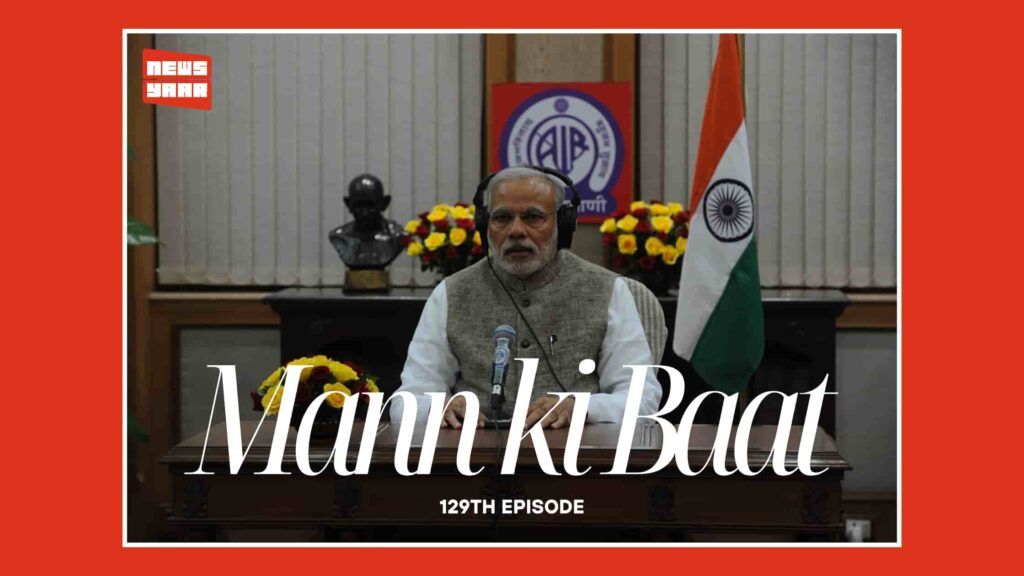
POLITICS PM Modi’s 129th Mann Ki Baat – Listen to the Full Episode. https://www.youtube.com/watch?v=xD64_6cgK64 Video credit: Narendra Modi My dear countrymen, Namaskar. Welcome back to ‘Mann Ki Baat’, greetings to you. The year 2026 is knocking at the door, and today, as I speak to you, memories of an entire year are swirling in my mind – myriad images, many discussions, many achievements that bound the nation together. 2025 gave us many moments that made every Indian proud. From national security to the sports field, from science laboratories to the world’s biggest platforms, India left a strong mark everywhere. This year, ‘Operation Sindoor’ became a symbol of pride for every Indian. The world clearly saw that today’s India does not compromise on its security. During ‘Operation Sindoor’, images of love and devotion towards Maa Bharati emerged from every corner of the country. People expressed their feelings in their own unique ways. Friends, the same spirit was also visible when ‘Vande Mataram’ completed 150 years. I had requested you to send your messages and suggestions with ‘#VandeMataram150’. The countrymen participated enthusiastically in this campaign. Friends, 2025 was also a memorable year in terms of sports. Our men’s cricket team won the ICC Champions Trophy. The women’s cricket team won the World Cup for the first time. India’s daughters created history by winning the Women’s Blind T20 World Cup. The tricolour also fluttered high with pride in the Asia Cup T20. In the World Championship Para-athletes proved by winning several medals that no obstacle can come in the way of zeal & determination. India also took a big leap in the field of Science and Space. Shubhanshu Shukla became the first Indian to reach the International Space Station. Many efforts related to environmental conservation and wildlife protection also became the hallmark of 2025. The number of cheetahs in India has now increased to more than 30. In 2025, faith, culture, and India’s unique heritage all came together. The Prayagraj Mahakumbh organized at the beginning of the year astonished the entire world. At the end of the year, the Dhwajarohan ceremony at the Ram Mandir in Ayodhya filled every Indian with pride. The excitement towards Swadeshi was also evident among one & all. People are purchasing only those goods that bear the sweat of an Indian and the fragrance of Indian soil. Today, we can proudly say that 2025 has given India even greater confidence. It is also true that this year we had to face natural disasters, at very many places. Now, the country is ready to move forward in 2026 with new hopes and new resolutions. My dear countrymen, today the world is looking at India with great hope. The biggest reason for hope in India is our youth power. Our achievements in the field of science, new innovations, and the expansion of technology have greatly impressed countries around the world. Friends, the youth of India always have a passion for something new and they are equally aware. My young friends often ask me how they can further contribute to nation-building. How can they share their ideas? Many among them enquire as to how they can present their ideas to me. The answer to this curiosity of our young colleagues is the ‘Viksit Bharat Young Leaders Dialogue’. Its first edition was held last year, and now its second edition is scheduled in a few days’ time. On the 12th of next month, ‘National Youth Day’ will be celebrated on the occasion of Swami Vivekananda’s birth anniversary. A ‘Young Leaders Dialogue’ will also be held on this day, and I will certainly participate in that. In this, our youth will share their ideas on important topics like innovation, fitness, startups, and agriculture. I am very eager about this program. Friends, I am pleased to see the rising participation of our youth in this program. A quiz competition related to this was held a few days ago. More than 50 lakh youth participated in it. An essay competition was also held, in which students expressed their views on various topics. Tamil Nadu stood first and Uttar Pradesh second in this competition. Friends, today the youth in the country are getting new opportunities to showcase their talent. Many platforms are being developed where youth can showcase their talent as per their abilities and interests. One such platform is ‘Smart India Hackathon’; another medium where ideas are turned into action. Friends, the ‘Smart India Hackathon 2025’ concluded this month. During this Hackathon, students worked on more than 270 problems of more than 80 government departments. Students offered solutions which were related to real life challenges like traffic related problems. Related to this, the youth shared very interesting perspectives on ‘Smart Traffic Management’. The youth also put forward their ideas on solutions to challenges like Financial Frauds and Digital Arrests. Suggestions were extended on Cyber Security Framework for digital banking in villages. Many youth remained engaged in solving the challenges in the agriculture sector. Friends, over 13 lakh students and over 6,000 institutes have participated in the ‘Smart India Hackathon’ in the last 7 to 8 years. The youth have also provided accurate solutions to hundreds of problems. Such Hackathons are organized from time to time. I urge my young friends to certainly be a part of these Hackathons. Friends, today’s life is becoming tech-driven, and the changes that used to happen over centuries; we are seeing them happen over a few years. At times, some people express concern whether robots are going to replace humans! In such changing times, it is very important to stay connected to our roots for human development. I am very happy to see that our next generation is holding on to the roots of our culture well – with new thinking and new methods. Friends, you must have heard the name of the Indian Institute of Science. Research and innovation are the hallmarks of this institute. A few years ago, some students there felt that there should
Census 2027: India Prepares to Count Itself Again, This Time, Digitally
GOVERNMENT Census 2027: India Prepares to Count Itself Again, This Time, Digitally After a silence that lasted longer than any in independent India’s history, the country is finally preparing to count itself again. On December 12, 2025, the Union Cabinet, chaired by Prime Minister Narendra Modi, approved the scheme for conducting the Census of India 2027, allocating ₹11,718.24 crore for what will be the largest administrative and statistical exercise in the world. More than a routine headcount, Census 2027 marks a reset of data, of governance, and of how India understands itself. A 16-Year Pause and a Long-Awaited Restart India’s census tradition dates back to 1872, when the first synchronised census was conducted under British rule. Since Independence, the country has followed a strict decennial rhythm, conducting censuses every ten years starting in 1951. That rhythm broke in 2021. Originally scheduled to begin in April 2020, the census was postponed due to the COVID-19 pandemic. What followed were years of disruption, lockdowns, vaccination drives, stretched administrative machinery and shifting priorities. The result is a 16-year gap between censuses, the longest since Independence. In that time, India changed dramatically. Cities expanded, migration patterns shifted, new welfare schemes rolled out, and digital infrastructure deepened, yet policymaking continued to rely on 2011 population data. Census 2027 is expected to finally bridge that gap. India’s First Fully Digital Census For the first time in its history, India will conduct a digital census. Gone are paper schedules and hand-drawn maps. Instead, data will be collected using mobile applications compatible with Android and iOS, deployed across the country by nearly 30 lakh field functionaries. These enumerators—mostly government teachers and officials appointed by states—will visit every household, armed with smartphones instead of registers. At the heart of this transformation is the Census Management and Monitoring System (CMMS), a centralised digital portal that will allow real-time tracking of progress across districts, states and Union Territories. Another major shift is the introduction of self-enumeration. Citizens will have the option to fill in their census details online through a secure portal, generating a QR code or reference number that enumerators can later verify. Two Phases, One Massive Operation The Census of India 2027 will be conducted in two distinct phases: Phase I: Houselisting and Housing Census Scheduled between April and September 2026, this phase will collect data on housing conditions, household assets, sanitation, drinking water, cooking fuel and amenities. Each state and Union Territory will select a 30-day window within this period. Phase II: Population Enumeration The main headcount will take place in February 2027, with a reference date of March 1, 2027. For snow-bound regions such as Ladakh, parts of Jammu & Kashmir, Himachal Pradesh and Uttarakhand, enumeration will be conducted earlier, in September 2026, with a reference date of October 1, 2026. Together, these phases will capture granular data down to the village and ward level, covering demography, religion, language, literacy, migration, fertility and economic activity. The Return of Caste Enumeration One of the most significant, and debated features of Census 2027 is the inclusion of caste enumeration. In April 2025, the Cabinet Committee on Political Affairs approved the decision to collect caste data electronically during the Population Enumeration phase. This will be the first full caste census since 1931, going beyond the Scheduled Castes and the Scheduled Tribes to include all communities. Enumerators will use a state-specific coded directory, presented as a drop-down menu within the app, to ensure consistency and accuracy in data collection. Data as a Service, Not Just a Report Census 2027 is also reimagining how data is used. Under a new “Census as a Service” (CaaS) model, census data will be delivered to ministries and departments in a clean, machine-readable and actionable format. Instead of static tables released years later, policymakers will be able to access query-based data through digital systems—supporting faster, evidence-based decision-making. The government has promised improved data dissemination with customised visualisation tools, allowing access to information down to the lowest administrative units. Privacy, Law and Public Trust With digitisation comes concern, and the government has emphasised safeguards. The census continues to operate under the Census Act, 1948, and Census Rules, 1990, which guarantee confidentiality. Individual data cannot be shared, published or used as evidence in civil or criminal proceedings. Only aggregated data will be released. Census 2027 will be India’s 16th census and the 8th since Independence, but its significance goes beyond counting people. It is an attempt to realign governance with reality, to replace assumptions with evidence, and to modernise a system that shapes everything from welfare schemes to parliamentary constituencies. As India prepares for this massive exercise, its success will depend not just on technology or budgets, but on participation, trust and accuracy. After sixteen long years, the country is finally ready to count itself again. And this time, every click matters. About the Author Government Reporter Share via Copied Comments Post Comment
Putin in Delhi: A Big Push for India-Russia
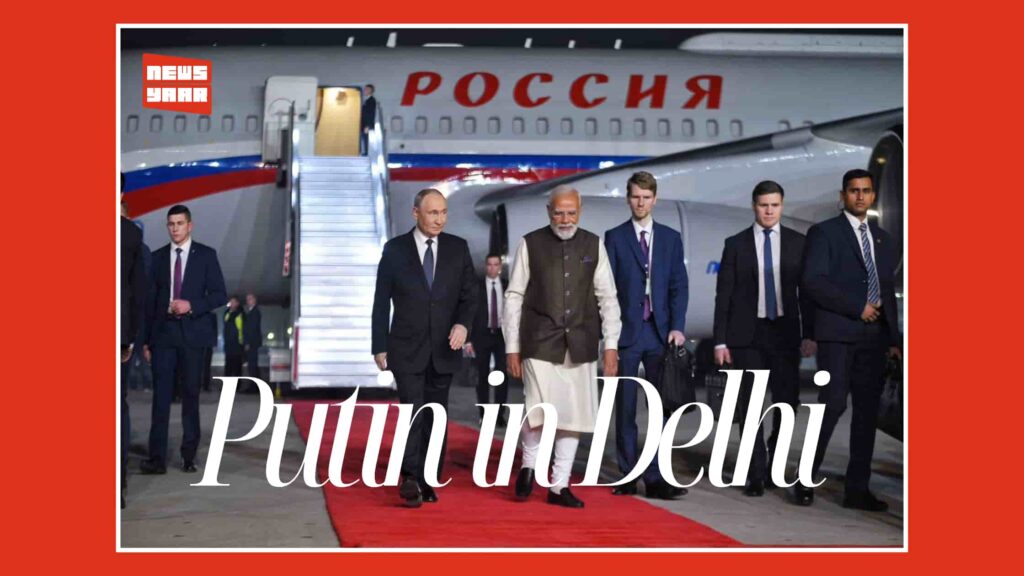
POLITICS Putin in Delhi: A Big Push for India-Russia Link to the Narendra Modi receiving Vladimir Putin at Delhi Airport video In early December 2025, Russian President Vladimir Putin arrived in New Delhi for his first visit in four years. Prime Minister Narendra Modi welcomed him warmly, and the visit was treated as a major moment for both countries. A Partnership Built Over Decades India and Russia have shared a strong bond for many years, known as their “Special and Privileged Strategic Partnership.” During this visit, both sides agreed to make the relationship even stronger. They discussed cooperation in defence, energy, science, technology, trade, and diplomacy. At a time when global politics is shifting, and Russia faces sanctions, the visit showed that India still values Russia as an important partner. It also highlighted India’s ability to balance relations with different major powers. Big Trade Plans for the Future One of the major outcomes was a new Economic Cooperation Programme that will guide both countries until 2030. The aim is to increase the current trade value of about $68.7 billion to $100 billion. India and Russia want to go beyond buying and selling oil or defence equipment. They’re looking to expand into areas like manufacturing, clean energy, minerals, pharma, agriculture, food processing, and new technology collaborations. There’s also fresh momentum to sign a Free Trade Agreement between India and the Eurasian Economic Union, which could make it easier for Indian products to enter Russian and Eurasian markets. Energy & Defence: Still the Backbone Energy remained one of the main discussion points. Putin assured India that Russia will continue supplying oil and fuel without interruption, despite global sanctions. This promise is crucial for India’s energy security. On the defence front, both sides agreed to deepen cooperation, focusing on joint manufacturing, co-production, sharing technology, and strengthening military ties. These steps aim to reduce India’s dependency on imports and build capabilities within the country. A Balanced Approach in a Complicated World What makes this visit important is India’s clear message: it will continue to follow an independent foreign policy. Despite pressure from Western countries to reduce ties with Russia, India maintained its balanced approach, keeping strong relations with both Russia and the West. For Russia, the visit helped reinforce partnerships outside the Western sphere. For India, it strengthened its trade, energy, and defence needs while preparing for a more uncertain global future. The Bottom Line Putin’s visit wasn’t just a diplomatic event. It created a fresh roadmap for India–Russia ties, focusing on stronger trade, reliable energy, deep defence cooperation, and long-term strategic trust. The visit marks a new chapter in a partnership that has stood firm for decades. https://www.youtube.com/watch?v=-oRdrsLAv1o Video credit: Narendra Modi’s Youtube Video https://www.youtube.com/watch?v=lDts5BTpyFc Video credit: Narendra Modi’s Youtube Video https://www.youtube.com/watch?v=rANa23Pxxo0 Video credit: President of India Youtube Video https://www.youtube.com/watch?v=o3_gk2xIv38 Video credit: DD News About the Author Politics Reporter Share via Copied Comments Post Comment
New Labour Codes 2025: Opportunity or Outcry?

GOVERNMENT New Labour Codes 2025: Opportunity or Outcry? On 21 November 2025, India’s labour landscape changed forever: the government replaced 29 older laws with four comprehensive new labour codes, covering wages, industrial relations, social security, and workplace safety. What does that mean for workers? For many, it sounded like a win, especially for contract and fixed-term workers, who, under the updated rules, now qualify for gratuity after just one year of service, instead of the previous five. Add to that expanded definitions for “wage” (so allowances count more), protections for health, social security, and more inclusive job norms, and it seems like a long-awaited step toward modern labour reform. For many gig, contract, and temporary workers, long excluded from benefits, this appears to be a landmark shift. Suddenly, some of the perks traditionally reserved only for permanent staff are extended to a much larger pool. It is social security made more inclusive. The Political Backlash: Protests Outside Parliament But this reform didn’t sail smoothly. The moment the new codes were notified, alarm bells rang for many union leaders and opposition parties. On December 2, MPs, including Sonia Gandhi and Mallikarjun Kharge, staged a protest outside the Parliament complex, raising placards and slogans demanding that he new laws be rolled back. Their argument? These codes benefit corporations more than workers, allowing easier layoffs, diluting job security, and undermining collective bargaining rights. Trade unions across the country echo similar fears: what if “flexibility” becomes “exploitation”? What if temporary jobs, previously light on benefits, become even more vulnerable under the cloak of new definitions and frequent hiring-firing cycles? For them, this isn’t reform, it’s a disguised rollback of worker rights. Between Reform and Risk: What’s the Verdict? The new labour codes walk a tightrope. On one side, there’s a needed push toward inclusivity, protection for informal workers, and flexibility for modern businesses. On the other, a legitimate fear that under relaxed labour norms, job security and worker welfare might take a back seat. For contract workers, the cut in gratuity eligibility from five years to one is a game-changer. For millions of India’s unorganised workforce, it might mean a combination of dignity and safety. But for many unions and opposition leaders, the same laws signal a slippery slope. As politics rages on and protests echo through Parliament corridors, the real test will be in implementation, whether the laws reflect worker protection or corporate convenience. For now, the 2025 labour reforms remain India’s most ambitious overhaul in decades: hopeful for some, controversial for many, and undoubtedly the biggest labour conversation in recent memory. https://www.youtube.com/watch?v=aA6wgQnumDc Video credit: DD News About the Author Government Reporter Share via Copied Comments Post Comment
Bihar Election Results 2025: A Clear Mandate, A Loud Message
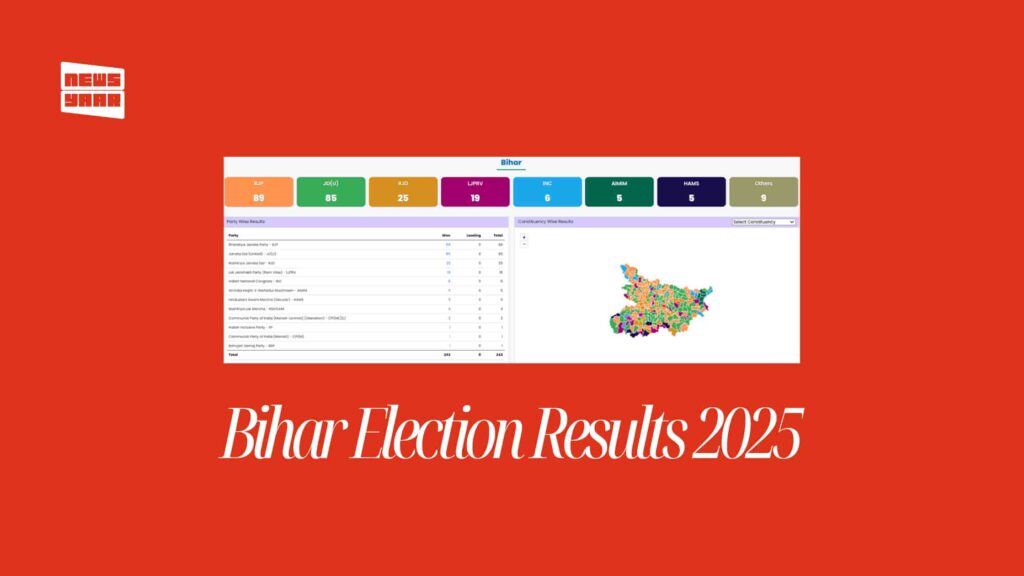
POLITICS Bihar Election Results 2025: A Clear Mandate, A Loud Message Link to the Bihar Election Results Live video The dust has settled, and the verdict is out: National Democratic Alliance (NDA) has secured a landslide victory in Bihar’s 2025 assembly elections, winning a whopping majority in a show that left rival alliances reeling. Heading the charge was Bharatiya Janata Party (BJP), which emerged as the single-largest party with 89 seats, closely followed by its partner Janata Dal (United) (JD(U)), which bagged 85 seats, together sealing what many are calling a “tsunami” of support. Image credit: Election Commission of India On the other side, Rashtriya Janata Dal (RJD) and the broader opposition, despite winning large vote shares in some pockets, failed to translate that into seats. Their dispersed votes and strategic vote-splits under the “First Past the Post” system cost them dearly. What Made the Difference? The Bihar Election Results 2025 were shaped by a mix of strategy, voter behaviour, and political arithmetic that worked in the NDA’s favour. Their strong coalition strategy, tight coordination between the BJP and JD(U), smart seat-sharing, and aggressive grassroots outreach helped them consolidate votes in key battleground constituencies. On the other side, the election saw strong voter turnout, with an especially notable rise in female participation, which, as reported by multiple outlets like The Indian Express and PIB, played a crucial role in shifting the electoral balance. Women voters showed a preference for stability, welfare continuity, and governance credibility, adding momentum to the NDA’s campaign. Meanwhile, the opposition struggled with fragmentation; their votes were spread thin across several parties, leading to many second-place finishes but very few actual wins, a classic case of the “vote-split penalty,” noted by political analysts and outlets like The Times of India. In a tight electoral battlefield like Bihar, this scattering of anti-NDA votes proved costly, allowing the ruling alliance to convert even marginal leads into decisive victories. Together, these factors created the perfect conditions for the sweeping mandate delivered in 2025. What This Means for Bihar? This verdict gives the NDA, and likely Nitish Kumar, a strong mandate to govern. With comfortable numbers in the assembly, the government can push its agenda without the constant threat of instability. For the opposition, the message is loud and clear: vote consolidation matters. Winning hearts is not enough; you need votes to translate to seats. For political strategists, this result may spark a rethinking of alliances, messaging, and outreach strategies. For citizens, especially in Bihar, it’s a moment of expectation. Promises of development, governance, and social welfare now carry weight. The next few months will show if this electoral mandate leads to real change. Final Thoughts Bihar Election 2025 wasn’t just another polling season; it turned into a lesson on political arithmetic, coalition strength, and the power of effective campaigning. The NDA’s dominant win is a clear mandate: the people spoke, and the message is loud. But for democracy, the real test begins now, whether the government delivers, and whether the opposition recalibrates. For voters across India, Bihar’s result will likely become a blueprint for what works, and what doesn’t, in today’s political arena. https://www.youtube.com/watch?v=WXZuRzWV5PA Video credit: DD News https://www.youtube.com/watch?v=C0LnV3qa-JQ Video credit: BJP About the Author Politics Reporter Share via Copied Comments Post Comment