




Report says, India beats Japan to become world’s 4th largest economy
GOVERNMENT Report says, India beats Japan to become world’s 4th largest economy Newsyaar January 20, 2026 9:29 am In a milestone moment for the Indian economy, official data and projections indicate that India has surpassed Japan to become the world’s fourth-largest economy, a result of strong growth momentum, robust domestic demand, and strategic economic reforms. With a nominal Gross Domestic Product (GDP) estimated at around USD 4.18 trillion in 2025, India is now ranked fourth globally, trailing only the United States, China, and Germany in size. The shift in rankings reflects decades of economic transformation driven by liberalisation, digital and manufacturing reforms, and one of the world’s most dynamic young labour forces. India’s rise in the global economic order has been steady, moving from the eleventh largest economy in 1990 to the fifth in recent years, ahead of major developed countries such as the United Kingdom before overtaking Japan. According to government releases and international forecasts, the Indian economy’s recent performance has been marked by accelerating GDP growth. Official figures show that India’s real GDP expanded by 8.2 per cent in the second quarter of the 2025–26 fiscal year, up from 7.8 per cent in the previous quarter and 7.4 per cent in the final quarter of 2024–25, led by resilient domestic consumption and expanding services and industrial activity. The government’s year-end economic review highlighted that with a GDP valued at USD 4.18 trillion, India has overtaken Japan and is poised to move into the third spot globally in the next 2.5 to 3 years if current growth continues. Projections suggest India’s GDP could reach as high as USD 7.3 trillion by 2030, potentially placing it above Germany and reinforcing its position as a dominant economic power. India’s ascent has drawn wide attention from business leaders and economists. Industry figures such as Anand Mahindra noted that overtaking Japan, long considered an economic powerhouse, is “no small achievement,” underlining the country’s rapid rise driven by entrepreneurial energy and large-scale reforms. He also stressed that while the milestone is significant, continued focus on per capita income and inclusive development will be critical for sustained progress. The achievement also reflects broader global economic shifts. Japan’s economy has faced challenges from demographic decline and slower growth rates, while India’s younger population, expanding middle class, and increasing integration into global trade and technology supply chains have helped boost its economic trajectory. International agencies, including the International Monetary Fund (IMF), World Bank, and rating agencies like Moody’s and Fitch, have projected continued GDP growth for India over the next several years. Despite this success, some analysts caution that headline GDP figures do not fully capture underlying economic welfare, such as per capita income, where India still lags significantly behind Japan. They argue that while India’s total economic output now ranks fourth, focus on quality of growth, productivity improvements, and equitable income distribution remains essential. For now, India’s leap past Japan into the fourth position underscores a transformative economic journey and a rapidly evolving role in global economic leadership. As India continues to expand its industrial base, innovate in technology and services, and enhance global trade relations, its trajectory toward becoming one of the world’s top three economies appears increasingly plausible. About the Author Government Reporter Share via Copied Comments Post Comment
U.S. Arrest of Venezuelan President Nicolás Maduro: A Comprehensive Overview
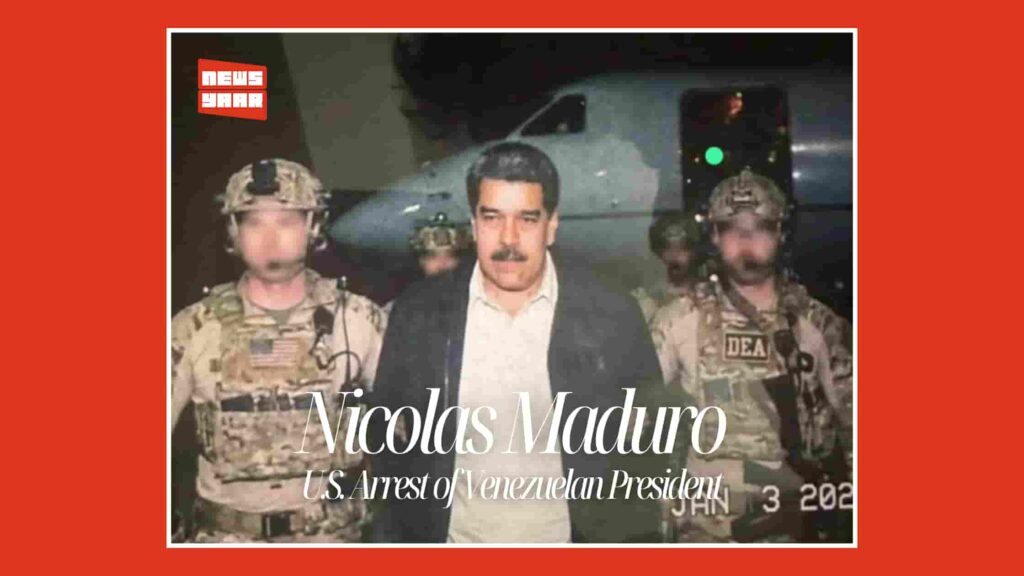
WORLD U.S. Arrest of Venezuelan President Nicolás Maduro: A Comprehensive Overview Newsyaar January 19, 2026 5:56 pm In one of the most dramatic international developments of 2026, the United States military captured Venezuelan President Nicolás Maduro in a large-scale operation on January 3, 2026, removed him from power, and brought him to the United States to face criminal charges. The operation has had far-reaching political, legal and diplomatic implications for Venezuela, the United States, and global geopolitics. What Happened and When In the early hours of January 3, 2026, U.S. forces launched a major military operation in Caracas, Venezuela’s capital, known as “Operation Absolute Resolve.” Using air strikes and special operations units, U.S. troops seized President Nicolás Maduro and his wife, Cilia Flores, in what Washington described as the execution of arrest warrants related to drug trafficking and narco-terrorism. Maduro and Flores were transported to the United States, where they appeared in federal court in Manhattan, New York, on January 5, 2026, and pleaded not guilty to multiple serious charges, including leading a corrupt government and involvement in extensive drug trafficking. Why the U.S. Acted The Trump administration has long accused Maduro’s government of corruption, human rights abuses and facilitating large-scale drug trafficking into the United States. The U.S. Department of Justice had prosecuted Maduro in absentia on these charges and the U.S. issued a series of increasing bounties for information leading to his arrest. In November 2025, Washington designated the shadowy criminal network linked to the Venezuelan regime — often referred to as the “Cartel of the Suns” — as a Foreign Terrorist Organization, amplifying pressure on the Maduro government. A detailed U.S. government timeline shows the operation followed months of military buildup off the Venezuelan coast, where warships, aircraft and strike groups were deployed, signaling escalating tensions and intent. How It Happened According to experts and official accounts, the operation involved: U.S. Army and special forces units engaged in strikes and capture operations in Caracas. Initial detainment aboard a U.S. Navy ship before transfer to New York. Charges brought in a federal court linked to narcotics trafficking, weapons, and narco-terrorism. The Trump administration framed the seizure as a law enforcement action supported by military force, although critics argue it constitutes a direct intervention in a sovereign state. Legal Charges and Court Proceedings Maduro and his wife were charged with multiple federal crimes in the Southern District of New York. These included: Narcotics trafficking Conspiracy to import large quantities of cocaine Narco-terrorism and organized crime offenses. In court, Maduro maintained he was still Venezuela’s legitimate leader and repeatedly insisted on his innocence, describing himself as a victim of U.S. political action rather than a criminal defendant. Who Is Nicolás Maduro? Nicolás Maduro first became president of Venezuela in 2013 after the death of Hugo Chávez and consolidated power through increasingly authoritarian measures. His rule has been marked by widespread economic crisis, allegations of election manipulation, suppression of opposition, and mass migration from Venezuela. Despite winning a third term in a disputed election in July 2024, recognized by Maduro’s government but denounced as illegitimate by many nations, criticism of his leadership and accusations of corruption and repression continued. Immediate Aftermath in Venezuela Following Maduro’s removal, Venezuela’s Supreme Court appointed Vice President Delcy Rodríguez as interim president for 90 days. Rodríguez has sought to consolidate power amid internal factional tensions. Various military and political elites remain influential, notably Interior Minister Diosdado Cabello, who has not been detained despite prior U.S. warnings. Rodríguez, a long-time Maduro ally, has moved quickly to reorganize government leadership while maintaining resistance to U.S. intervention. Her rise has intensified internal political divisions and raised concerns about stability. International and Regional Reactions The operation elicited a wide range of reactions: Supporters: Some U.S. lawmakers and allied leaders hailed the capture as a victory against corruption and narco-terrorism. Critics: Many Latin American governments and international legal experts condemned the U.S. action as a violation of international law and Venezuelan sovereignty, arguing the U.S. had no legal justification without Security Council authorization. Countries like Russia explicitly criticized the operation as destabilizing, while some regional governments warned of broader geopolitical consequences. Impact on Oil and Economy Venezuela sits atop some of the world’s largest proven oil reserves, and control of these resources has long been a major strategic focus. Following Maduro’s ouster, the U.S. has moved to sell Venezuelan oil assets, starting with a $500 million sale aimed at benefiting both U.S. and Venezuelan citizens while stabilizing markets. The U.S. plans further sales with revenues held under U.S. oversight. This shift underscores the interplay of energy strategy with geopolitical goals and highlights the economic stakes involved in the crisis. Legal and International Law Debate The U.S. Department of Justice released internal memos asserting that international law compliance was not required for the operation, given domestic authority — a position sharply criticized by legal scholars who argue a foreign head of state’s forcible capture violates the United Nations Charter prohibitions on use of force without Security Council approval. Humanitarian and Domestic Concerns Venezuela’s population has endured a profound humanitarian crisis for years, with severe shortages of food, medicine, and basic services, resulting in one of the largest migrations in the Western Hemisphere in recent history. The removal of Maduro has sparked mixed reactions domestically — some Venezuelans see it as a hopeful moment, while others fear renewed instability and uncertainty about future governance. What’s Next Maduro’s next court date is scheduled, keeping international attention on his criminal case. Political transition plans remain unsettled, with Rodríguez’s interim leadership drawing scrutiny. U.S. involvement in Venezuelan governance, including oil and economic reconstruction, is likely to continue to be a major issue in diplomatic and regional politics. International opposition and legal challenges could shape the broader geopolitical fallout of
Udaipur Turns Wedding Capital as Netra Mantena–Vamsi Gadiraju’s Lavish Nuptials Take Over Social Media

LUXURY Udaipur Turns Wedding Capital as Netra Mantena–Vamsi Gadiraju’s Lavish Nuptials Take Over Social Media Newsyaar January 19, 2026 5:01 pm Udaipur: For three days, Udaipur wasn’t just the City of Lakes, it was the epicentre of India’s most talked-about wedding. The wedding of Netra Mantena and Vamsi Gadiraju transformed the historic Rajasthani city into a high-profile celebration zone, drawing massive attention on social media and setting new benchmarks for destination weddings in India. From celebrity performances and royal venues to viral dance reels, the Mantena–Gadiraju wedding dominated Instagram and YouTube feeds, momentarily eclipsing memories of other high-profile celebrity weddings. What began as a private family celebration quickly turned into a nationwide spectacle, with every function unfolding like a curated visual extravaganza. While the wedding brought them into the public spotlight, the families behind the celebration are no strangers to success. Netra Mantena is the daughter of NRI pharmaceutical entrepreneur Rama Raju Mantena, Chairman and CEO of Ingenus Pharmaceuticals. Originally from Vijayawada, Andhra Pradesh, Mantena built his business across the US, Switzerland and India after moving abroad in the 1980s. The groom, Vamsi Gadiraju, is a tech entrepreneur and the co-founder and Chief Technology Officer of Superorder, a platform that enables multi-location restaurants to manage delivery and takeaway operations more efficiently. In 2024, Gadiraju and his co-founder, Raghav Poddar, earned a spot on the prestigious Forbes 30 Under 30 list under the Food and Drink category. The destination wedding unfolded entirely in Udaipur, with the city witnessing heightened security arrangements, restricted access around key tourist zones, and luxury hotels booked exclusively for guests. Reports suggested limited access to Lake Pichola during the celebrations, underlining the scale of the event. Chartered flights ferried guests, while traditional folk performances blended seamlessly with modern entertainment, offering a fusion of royal heritage and contemporary luxury. The wedding festivities were hosted across some of Udaipur’s most iconic landmarks. The main wedding ceremony took place at Jagmandir Island Palace, the 17th-century marble palace located in the middle of Lake Pichola. The sangeet was hosted at Zenana Mahal within the City Palace complex, while the haldi ceremony unfolded at the opulent Taj Lake Palace. The celebrations continued with grand party nights at The Leela Palace, which also hosted the reception. Each venue showcased elaborate décor inspired by royal aesthetics, adding to the fairytale-like appeal of the celebrations. Clips of choreographed dance performances, celebrity sightings and behind-the-scenes moments flooded social platforms, turning the wedding into a viral phenomenon. Industry observers note that the event reflects a growing trend of ultra-luxury destination weddings in India that blend heritage venues with global-scale production. As the celebrations concluded, the Mantena–Gadiraju wedding left behind more than memories, it set social media abuzz, boosted Udaipur’s image as a global wedding destination, and reaffirmed India’s enduring love for grand, larger-than-life weddings. About the Author Luxury Reporter Share via Copied Comments Post Comment
BRICS India 2026: New Logo, Theme and Website Launched as Chairship Preparations Get Underway
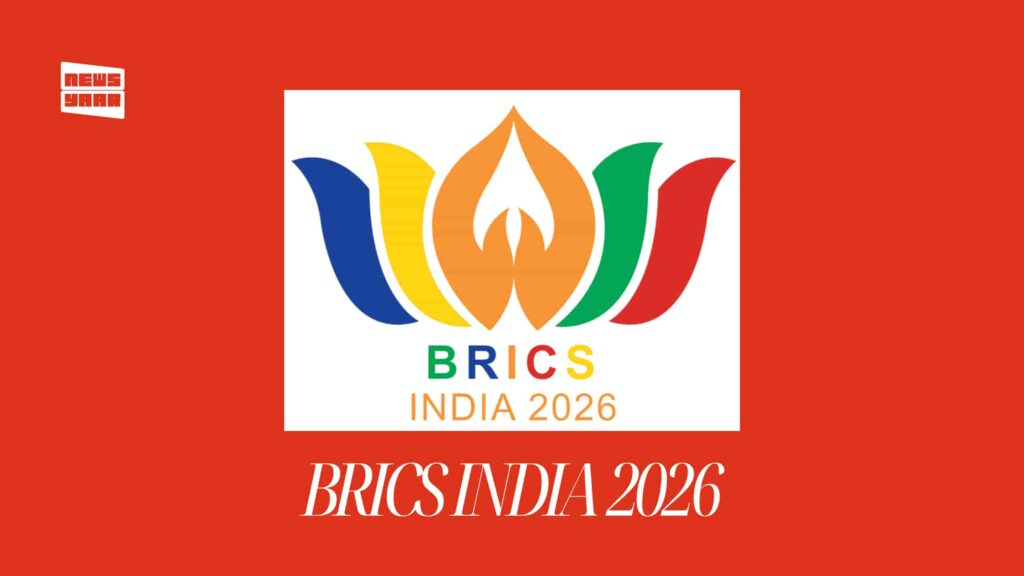
GOVERNMENT BRICS India 2026: New Logo, Theme and Website Launched as Chairship Preparations Get Underway Newsyaar January 17, 2026 12:57 pm New Delhi, India, has officially launched the logo, theme and official website for its year-long BRICS Chairship in 2026, marking the start of its leadership of the influential multilateral grouping that brings together emerging markets and developing economies. The unveiling took place in New Delhi on January 13, 2026, with External Affairs Minister Dr S. Jaishankar presiding over the ceremony. A Symbol of Unity and Shared Aspirations The newly showcased BRICS India 2026 logo draws its inspiration from the lotus flower, a symbol deeply rooted in Indian culture and widely associated with resilience, renewal and cultural heritage. The design incorporates petals in the vibrant colours of all BRICS member countries, highlighting the unity of diverse nations under a common purpose. At the centre of the emblem is the Namaste gesture, symbolising respect, warmth of partnership and a commitment to harmonious collaboration among nations. Accompanying the visual identity is the official theme for India’s chairship: “Building for Resilience, Innovation, Cooperation and Sustainability”. The theme reflects a people-centric and humanity-first approach, emphasising inclusive development, practical cooperation and mutual support. “The Indian government has said this vision is inspired by broader goals of shared growth and equitable progress across regions.” A Central Digital Platform Alongside the logo and theme, India also launched the official BRICS 2026 website, brics2026.gov.in. The digital platform is expected to serve as a central source of information on BRICS initiatives, meetings, official documents and events scheduled during India’s chairship. The website is designed to enhance transparency, engagement and communication both among member countries and with the global public. Officials highlighted that the platform’s easy access and regular updates will allow stakeholders from across member nations, partner states and civil society to stay informed about key developments and collaborative efforts under the BRICS framework. Context and Significance India assumed the BRICS Chairship on January 1, 2026, coinciding with the 20th anniversary of the BRICS grouping, which was first formed in 2006 to foster cooperation among key emerging economies. Over the years, BRICS has expanded beyond its five founding members, Brazil, Russia, India, China and South Africa, to include Egypt, Ethiopia, Iran, the United Arab Emirates and Indonesia as full members, significantly broadening its global footprint. The launch ceremony in New Delhi was attended by senior officials from the Ministry of External Affairs and representatives from diplomatic missions, underlining the importance India places on using its chairship to strengthen global dialogue and cooperation. Looking Ahead: The Final Insight With its theme focused on resilience and sustainability, India’s BRICS agenda in 2026 is expected to tackle key global challenges, including economic recovery, technological innovation, climate action and people-to-people exchanges. As preparations continue, the logo and website launch mark a pivotal early step in shaping India’s leadership year and the broader narrative of BRICS cooperation on the world stage. https://www.youtube.com/watch?v=WP8v54_xXR8 Video credit: YT@/MEA About the Author Government Reporter Share via Copied Comments Post Comment
CES 2026: From Dexterous Robots to Smart Living, A Glimpse Into the Future of Technology
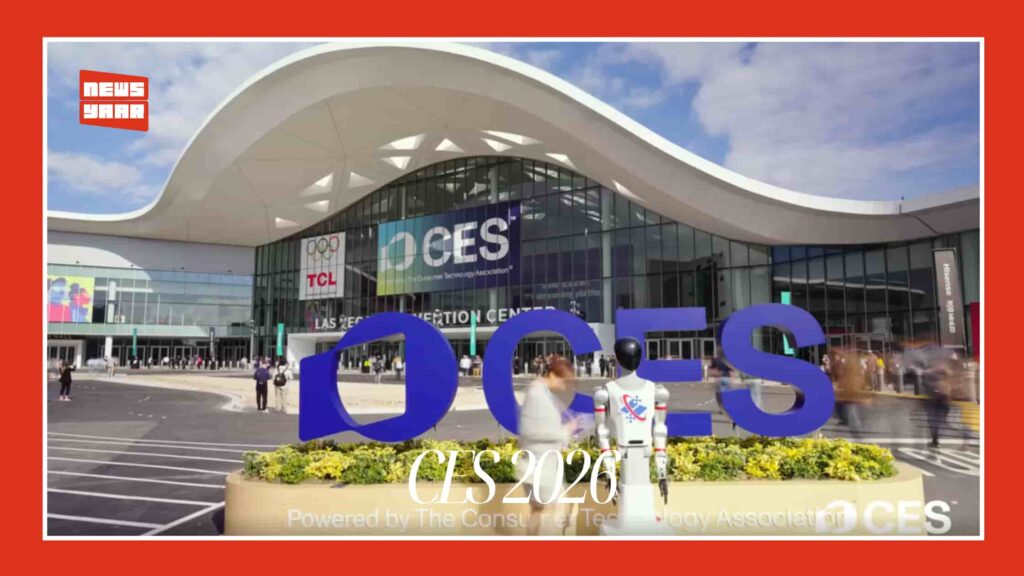
EVENTS CES 2026: From Dexterous Robots to Smart Living, A Glimpse Into the Future of Technology Newsyaar January 17, 2026 5:32 am The Consumer Electronics Show (CES) 2026 once again proved why it is considered the world’s biggest stage for innovation. Held in Las Vegas, the annual tech showcase brought together global technology leaders, startups, and innovators to present ideas that could shape how people live, work, and interact with machines in the coming years. This year’s edition marked a clear shift in focus, from flashy concepts to practical, usable technologies that address real-world needs. Robots Get Smarter, Not Just Taller One of the most talked-about highlights of CES 2026 was the rapid evolution of robotic technology. Unlike earlier years that focused on full humanoid robots, this time the spotlight was on dexterous robotic hands. These advanced systems demonstrated delicate tasks such as folding laundry, playing musical instruments, and even origami, showing how precision and control have improved significantly. Experts noted a strong presence from South Korean and Chinese companies, signalling growing competition in the robotics sector. The progress suggests robots are moving closer to assisting humans in homes, healthcare, and manufacturing environments. AI Takes Centre Stage Across Categories Artificial Intelligence was everywhere at CES 2026, not just as a feature, but as the foundation of innovation. From AI-powered home ecosystems to health monitoring devices, companies showcased how machine learning is being integrated seamlessly into daily life. HealthTech innovations stood out, including wearable devices that track vital signs, AI-driven wellness tools, and smart systems designed to improve long-term health outcomes. Industry experts estimate that AI-driven healthcare could become a multi-trillion-dollar market in the coming years. Smarter Homes, Cleaner Living Smart home technology saw major upgrades at CES 2026. Brands showcased AI-powered cleaning systems, automated home management platforms, and energy-efficient appliances designed to reduce human effort while improving sustainability. Several companies also showcased whole-home ecosystems, where lighting, security, climate control, and cleaning devices communicate with each other through a single intelligent platform. This signals a future where homes don’t just respond, but anticipate needs. Displays, Gadgets, and the Rise of E-Paper Display technology also evolved, with innovations in e-paper and flexible screens drawing attention. Lightweight, energy-efficient displays are expected to redefine how information is consumed, especially in portable devices and smart signage. Meanwhile, consumer gadgets, from compact chargers to next-generation laptops, balanced futuristic design with immediate usability, reflecting a trend toward tech that consumers can adopt right away. CES 2026 Sets the Tone for the Year Ahead CES 2026 highlighted a clear message: technology is becoming more human-centric. Instead of focusing solely on speed or power, innovation is now centred on usability, accessibility, and meaningful impact. As industries continue to adopt AI, robotics, and smart systems, CES 2026 has set the tone for a future where technology quietly blends into everyday life, making it smarter, simpler, and more connected than ever before. About the Author Events Reporter Share via Copied Comments Post Comment
Sergio Gor Takes Charge as U.S. Ambassador to India: What His Appointment Means for India-US Trade Relations
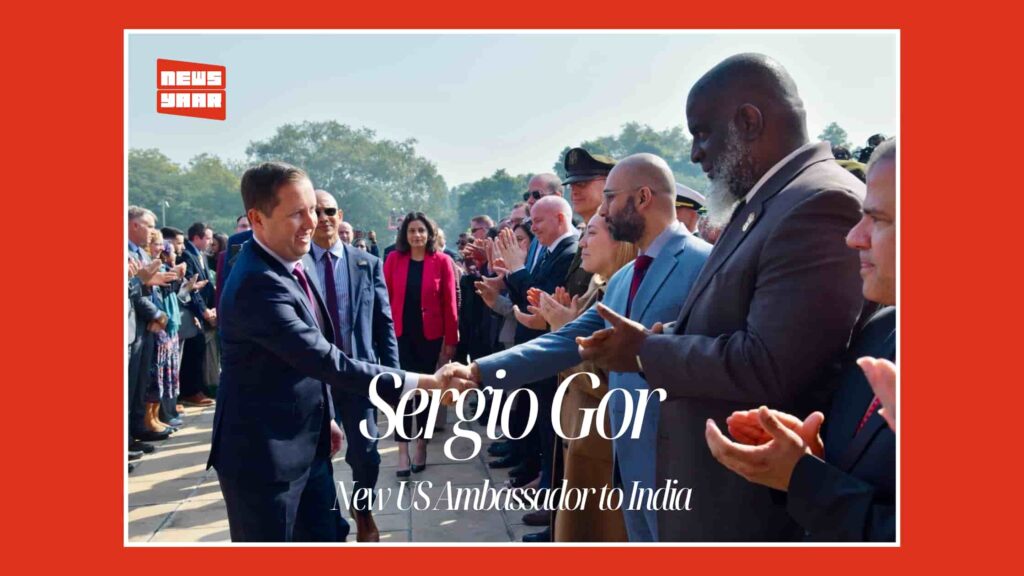
POLITICS Sergio Gor Takes Charge as U.S. Ambassador to India: What His Appointment Means for India-US Trade Relations Newsyaar January 13, 2026 1:03 pm Sergio Gor formally assumed his role as the United States Ambassador to India on Monday, signalling a fresh chapter in the bilateral relationship between the two democracies. Gor, a close associate of U.S. President Donald Trump, addressed the press ahead of taking office and outlined his vision for strengthening cooperation between Washington and New Delhi. Ambassador Gor’s appointment comes at a time when diplomatic ties between India and the United States have faced several challenges, from disagreements over trade to tensions related to global geopolitical issues. Yet his arrival has sparked cautious optimism among policymakers and analysts on both sides of the aisle. A Personal Message of Partnership and Collaboration In his public remarks upon taking charge, Ambassador Gor underscored India’s importance to the United States. He stated that no country is more “essential” to American strategic interests than India, highlighting shared values and mutual goals in areas like trade, security, technology, and regional stability. Gor also referenced the strong personal rapport between President Trump and Prime Minister Narendra Modi, describing their friendship as “real” and pivotal for future cooperation. This emphasis on interpersonal diplomacy signals an attempt to soften recent strains and build momentum for collaborative action. Reports indicate that one of Gor’s early initiatives will be to invite India to participate in the Pax Silica initiative, a U.S.-led multilateral forum focused on mineral security and advanced technologies such as artificial intelligence. Participation in this forum could broaden India’s role in global tech and strategic discussions. Trade Talks and Economic Expectations Economists and trade experts have weighed in on the potential impact of Ambassador Gor’s appointment on economic ties. India and the U.S. are actively working on a bilateral trade agreement aimed at reducing tariff barriers and promoting deeper economic engagement. ABC News and Politico Pro reports highlighted that one of the ambassador’s priorities will be expanding trade ties despite ongoing tensions related to Russian oil and global energy dynamics. As such, Gor’s role will not only be diplomatic but also deeply economic. A Reset in Relations? Analysts from The Assam Tribune and ETV Bharat have described Ambassador Gor’s messages as signalling a reset in diplomatic outreach. By stressing mutual respect and partnership, he appears intent on building a stronger, more resilient relationship that can withstand geopolitical pressure. With his first address and public engagements in India, Sergio Gor has laid the groundwork for renewed strategic dialogue. As bilateral initiatives, the world will be watching closely to see how India and the United States navigate their partnership in 2026 and beyond. https://www.youtube.com/watch?v=HsCV6soEErQ Video credit: ANI About the Author Politics Reporter Share via Copied Comments Post Comment
World Hindi Day: Connect Cultures Across Continents
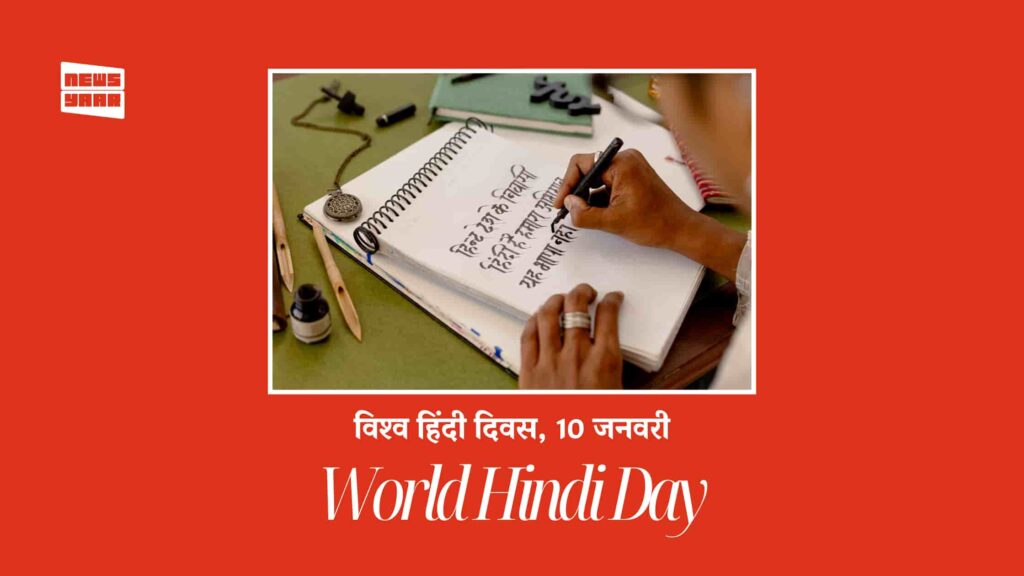
January 11, 2026 Newsyaar 4:35 am EVENTS World Hindi Day: Connect Cultures Across Continents January 10 marks World Hindi Day, a global celebration of one of the world’s most widely spoken languages and a symbol of India’s cultural identity. The Preface World Hindi Day, observed every year on January 10, is dedicated to promoting the Hindi language at an international level. Unlike Hindi Diwas, which is celebrated in India on September 14, World Hindi Day focuses on strengthening Hindi’s presence beyond India’s borders and encouraging its use as a medium of global communication. Hindi is spoken by over 600 million people worldwide, either as a first or second language. Over the years, it has grown beyond a regional language to become a cultural bridge connecting communities across continents. How Did World Hindi Day Begin? The origins of World Hindi Day can be traced back to the First World Hindi Conference, held in Nagpur on January 10, 1975. The conference brought together scholars, writers and language experts from across the world to discuss the global future of Hindi. To commemorate this historic event and to underline the importance of Hindi on the international stage, the Government of India officially declared January 10 as World Hindi Day in 2006. Since then, it has been observed annually to expand the language’s global reach. Where and How Is It Celebrated? World Hindi Day is celebrated not only in India but also across Indian embassies, cultural centres and universities worldwide. Countries with significant Indian diaspora populations, such as Mauritius, Fiji, Suriname, Trinidad and Tobago, Nepal, the United States and the United Kingdom mark the day with seminars, literary events, poetry readings and cultural programmes. Digital platforms have also played a key role in recent years, allowing Hindi writers and speakers from different countries to connect and participate in global discussions. Final Insights The day highlights Hindi’s role as a unifying language that carries India’s history, philosophy, literature and social values. As the world becomes more interconnected, World Hindi Day reinforces the idea that language is not just a means of communication, but a powerful carrier of culture, thought and shared heritage. About the Author Events Reporter Share via Copied Comments Post Comment
New York Gets Indian-Origin Mayor Zohran Mamdani: A Historic Moment in Global Politics
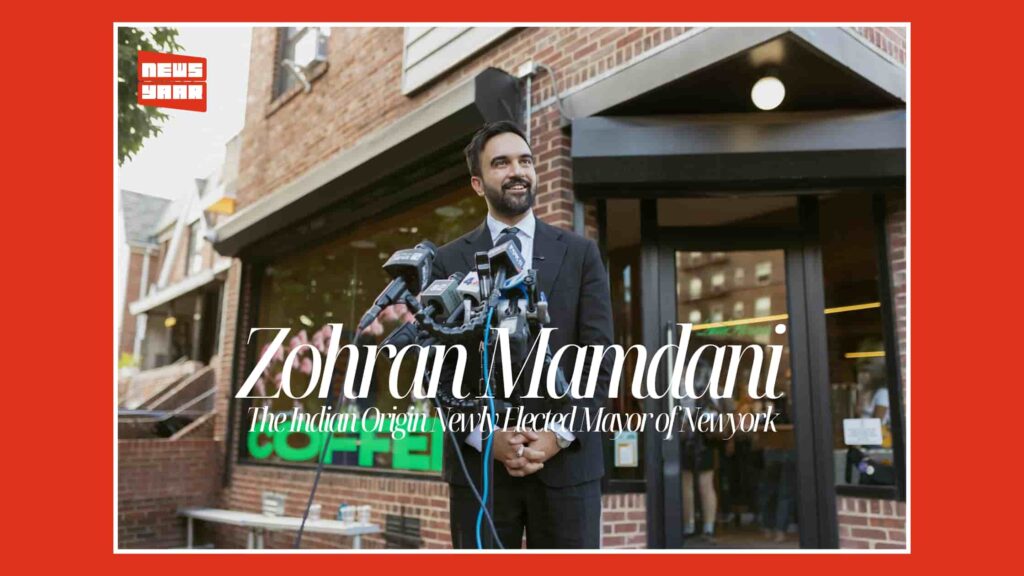
WORLD New York Gets Indian-Origin Mayor Zohran Mamdani: A Historic Moment in Global Politics In a historic political shift that has captured international attention, Zohran Kwame Mamdani has been sworn in as the 112th mayor of New York City, becoming the first Indian-origin, South Asian, and Muslim leader to hold the post in one of the world’s most influential cities. Mamdani, aged 34, officially took the oath on January 1, 2026, succeeding Eric Adams after an electrifying election victory in November 2025. His swearing-in ceremony took place in a symbolic location. At this historic Old City Hall subway station, he took the oath on two Qur’ans, including one belonging to his grandfather, highlighting both his faith and multicultural identity. Born in Kampala, Uganda, in 1991 to Indian heritage parents, acclaimed filmmaker Mira Nair and academic Mahmood Mamdani, Zohran moved to the United States as a child and grew up in New York City. He attended top local schools before graduating from Bowdoin College. Mamdani began his political career in the New York State Assembly, representing Queens, and quickly established a reputation as a progressive and community-focused leader. Mamdani’s election is seen as a major milestone for representation and diversity in American politics. As both the first Muslim and first South Asian mayor of New York City, his victory resonates far beyond municipal boundaries, symbolizing how multicultural identities are increasingly shaping the political landscapes of major Western democracies. His campaign platform focused heavily on critical issues such as affordability, public transit, and social infrastructure. Promises included fare-free city buses, universal public childcare, expanded affordable housing, and city-run grocery stores, initiatives aimed at addressing the deep economic challenges facing millions of city residents. Public response to Mamdani’s progressive agenda It turned out to be mixed. While a recent poll showed that a majority of New Yorkers support his democratic socialist policies, concerns remain among some voters about the financial feasibility of his ambitious reforms and potential budget deficits. Cultural celebrations followed his inauguration, including a block party near City Hall and Punjabi music echoing through parts of the city, reflecting pride in his heritage and the diverse identity of New York itself. As Mamdani begins his term, the world watches to see whether his blend of progressive policy, grassroots leadership, and global heritage will chart a new path for urban governance in the 21st century and what his success might mean for emerging leaders from diverse backgrounds. https://www.youtube.com/watch?v=5cG4WD8uEwE Video credit: Zohran Mamdani’s Youtube About the Author World Reporter Share via Copied Comments Post Comment
Amazon, Microsoft, Google Announce $67B India Growth Push: What you need to know?
BUSINESS Amazon, Microsoft, Google Announce $67B India Growth Push: What you need to know? In a landmark development that could reshape India’s digital economy, three global tech giants, Amazon, Microsoft, and Google, have unveiled a combined $67 billion investment plan for India over the coming years. The multi-billion-dollar commitment highlights the country’s central role in the future of technology, cloud computing, digital infrastructure, and innovation. The announcement, which follows India’s ongoing push toward digital transformation and strategic technology partnerships, signifies escalating competition among the world’s largest cloud and internet companies to expand in one of the fastest-growing tech markets. Over the past decade, India has emerged as a hub for startups, data centers, and digital services, driven by rising internet penetration, affordable data, and a large talent pool. Details of the Investment Plans: The Overview Each company’s commitment targets strategic areas of strength and collaboration with India’s public and private sectors: Amazon said it will invest roughly $30 billion in India through its cloud division, Amazon Web Services (AWS), over the next 10-12 years. The funds will support cloud infrastructure expansion, data center development, and training initiatives that aim to build digital skills across industries in India. Microsoft announced plans to invest $20 billion focused on expanding its cloud footprint through Azure data centers, partnerships with local enterprises, and programs to boost artificial intelligence (AI) adoption and digital literacy. Microsoft also reiterated its commitment to supporting India’s data governance initiatives while prioritizing data privacy and sovereignty. Google pledged $17 billion toward its India strategy, with investments in cloud infrastructure, AI research, and initiatives to support startups and developers. Google’s investment is expected to enhance its cloud services as well as expand local innovation programs in areas such as machine learning and language technologies. Collectively, these investments, totaling $67 billion, represent some of the largest foreign tech commitments in India’s history, reflecting confidence in India’s market potential and policy environment. Strategic Drivers and Implications India’s digital economy is projected to exceed $1 trillion by 2030, according to industry estimates, driven by cloud growth, mobile services, e-commerce, and AI-enabled technologies. With a population exceeding 1.4 billion and a young, tech-savvy workforce, global tech leaders see India as a strategic partner for long-term innovation and market expansion. Experts suggest that the latest funding commitments will accelerate digital infrastructure build-out, boost job creation, and stimulate growth in sectors ranging from fintech and healthtech to manufacturing and education technology. The emphasis on cloud services and AI also aligns with India’s ambitions to become a leader in emerging technologies. Policy and Public Response Government officials welcomed the investments as a vote of confidence in India’s tech ecosystem and regulatory framework. Analysts note that sustained collaboration between the tech industry and policymakers could further strengthen India’s position on the global innovation map. As Amazon, Microsoft, and Google deepen their footprints, India’s digital future appears poised for rapid transformation, with significant economic and societal implications in the years ahead. About the Author Business Reporter Share via Copied Comments Post Comment
Putin in Delhi: A Big Push for India-Russia
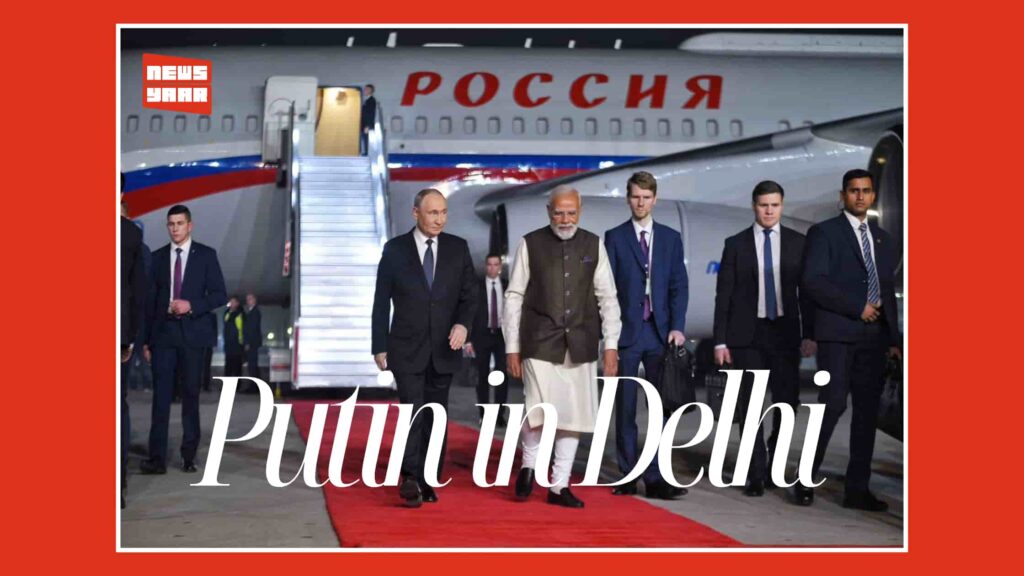
POLITICS Putin in Delhi: A Big Push for India-Russia Link to the Narendra Modi receiving Vladimir Putin at Delhi Airport video In early December 2025, Russian President Vladimir Putin arrived in New Delhi for his first visit in four years. Prime Minister Narendra Modi welcomed him warmly, and the visit was treated as a major moment for both countries. A Partnership Built Over Decades India and Russia have shared a strong bond for many years, known as their “Special and Privileged Strategic Partnership.” During this visit, both sides agreed to make the relationship even stronger. They discussed cooperation in defence, energy, science, technology, trade, and diplomacy. At a time when global politics is shifting, and Russia faces sanctions, the visit showed that India still values Russia as an important partner. It also highlighted India’s ability to balance relations with different major powers. Big Trade Plans for the Future One of the major outcomes was a new Economic Cooperation Programme that will guide both countries until 2030. The aim is to increase the current trade value of about $68.7 billion to $100 billion. India and Russia want to go beyond buying and selling oil or defence equipment. They’re looking to expand into areas like manufacturing, clean energy, minerals, pharma, agriculture, food processing, and new technology collaborations. There’s also fresh momentum to sign a Free Trade Agreement between India and the Eurasian Economic Union, which could make it easier for Indian products to enter Russian and Eurasian markets. Energy & Defence: Still the Backbone Energy remained one of the main discussion points. Putin assured India that Russia will continue supplying oil and fuel without interruption, despite global sanctions. This promise is crucial for India’s energy security. On the defence front, both sides agreed to deepen cooperation, focusing on joint manufacturing, co-production, sharing technology, and strengthening military ties. These steps aim to reduce India’s dependency on imports and build capabilities within the country. A Balanced Approach in a Complicated World What makes this visit important is India’s clear message: it will continue to follow an independent foreign policy. Despite pressure from Western countries to reduce ties with Russia, India maintained its balanced approach, keeping strong relations with both Russia and the West. For Russia, the visit helped reinforce partnerships outside the Western sphere. For India, it strengthened its trade, energy, and defence needs while preparing for a more uncertain global future. The Bottom Line Putin’s visit wasn’t just a diplomatic event. It created a fresh roadmap for India–Russia ties, focusing on stronger trade, reliable energy, deep defence cooperation, and long-term strategic trust. The visit marks a new chapter in a partnership that has stood firm for decades. https://www.youtube.com/watch?v=-oRdrsLAv1o Video credit: Narendra Modi’s Youtube Video https://www.youtube.com/watch?v=lDts5BTpyFc Video credit: Narendra Modi’s Youtube Video https://www.youtube.com/watch?v=rANa23Pxxo0 Video credit: President of India Youtube Video https://www.youtube.com/watch?v=o3_gk2xIv38 Video credit: DD News About the Author Politics Reporter Share via Copied Comments Post Comment