




PM Modi’s 129th Mann Ki Baat – Listen to the Full Episode.
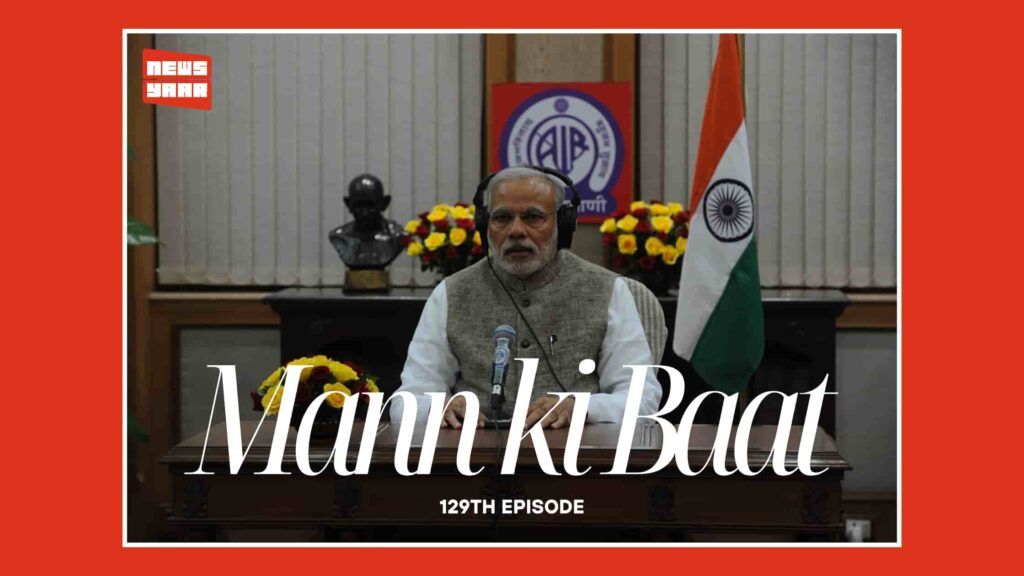
POLITICS PM Modi’s 129th Mann Ki Baat – Listen to the Full Episode. https://www.youtube.com/watch?v=xD64_6cgK64 Video credit: Narendra Modi My dear countrymen, Namaskar. Welcome back to ‘Mann Ki Baat’, greetings to you. The year 2026 is knocking at the door, and today, as I speak to you, memories of an entire year are swirling in my mind – myriad images, many discussions, many achievements that bound the nation together. 2025 gave us many moments that made every Indian proud. From national security to the sports field, from science laboratories to the world’s biggest platforms, India left a strong mark everywhere. This year, ‘Operation Sindoor’ became a symbol of pride for every Indian. The world clearly saw that today’s India does not compromise on its security. During ‘Operation Sindoor’, images of love and devotion towards Maa Bharati emerged from every corner of the country. People expressed their feelings in their own unique ways. Friends, the same spirit was also visible when ‘Vande Mataram’ completed 150 years. I had requested you to send your messages and suggestions with ‘#VandeMataram150’. The countrymen participated enthusiastically in this campaign. Friends, 2025 was also a memorable year in terms of sports. Our men’s cricket team won the ICC Champions Trophy. The women’s cricket team won the World Cup for the first time. India’s daughters created history by winning the Women’s Blind T20 World Cup. The tricolour also fluttered high with pride in the Asia Cup T20. In the World Championship Para-athletes proved by winning several medals that no obstacle can come in the way of zeal & determination. India also took a big leap in the field of Science and Space. Shubhanshu Shukla became the first Indian to reach the International Space Station. Many efforts related to environmental conservation and wildlife protection also became the hallmark of 2025. The number of cheetahs in India has now increased to more than 30. In 2025, faith, culture, and India’s unique heritage all came together. The Prayagraj Mahakumbh organized at the beginning of the year astonished the entire world. At the end of the year, the Dhwajarohan ceremony at the Ram Mandir in Ayodhya filled every Indian with pride. The excitement towards Swadeshi was also evident among one & all. People are purchasing only those goods that bear the sweat of an Indian and the fragrance of Indian soil. Today, we can proudly say that 2025 has given India even greater confidence. It is also true that this year we had to face natural disasters, at very many places. Now, the country is ready to move forward in 2026 with new hopes and new resolutions. My dear countrymen, today the world is looking at India with great hope. The biggest reason for hope in India is our youth power. Our achievements in the field of science, new innovations, and the expansion of technology have greatly impressed countries around the world. Friends, the youth of India always have a passion for something new and they are equally aware. My young friends often ask me how they can further contribute to nation-building. How can they share their ideas? Many among them enquire as to how they can present their ideas to me. The answer to this curiosity of our young colleagues is the ‘Viksit Bharat Young Leaders Dialogue’. Its first edition was held last year, and now its second edition is scheduled in a few days’ time. On the 12th of next month, ‘National Youth Day’ will be celebrated on the occasion of Swami Vivekananda’s birth anniversary. A ‘Young Leaders Dialogue’ will also be held on this day, and I will certainly participate in that. In this, our youth will share their ideas on important topics like innovation, fitness, startups, and agriculture. I am very eager about this program. Friends, I am pleased to see the rising participation of our youth in this program. A quiz competition related to this was held a few days ago. More than 50 lakh youth participated in it. An essay competition was also held, in which students expressed their views on various topics. Tamil Nadu stood first and Uttar Pradesh second in this competition. Friends, today the youth in the country are getting new opportunities to showcase their talent. Many platforms are being developed where youth can showcase their talent as per their abilities and interests. One such platform is ‘Smart India Hackathon’; another medium where ideas are turned into action. Friends, the ‘Smart India Hackathon 2025’ concluded this month. During this Hackathon, students worked on more than 270 problems of more than 80 government departments. Students offered solutions which were related to real life challenges like traffic related problems. Related to this, the youth shared very interesting perspectives on ‘Smart Traffic Management’. The youth also put forward their ideas on solutions to challenges like Financial Frauds and Digital Arrests. Suggestions were extended on Cyber Security Framework for digital banking in villages. Many youth remained engaged in solving the challenges in the agriculture sector. Friends, over 13 lakh students and over 6,000 institutes have participated in the ‘Smart India Hackathon’ in the last 7 to 8 years. The youth have also provided accurate solutions to hundreds of problems. Such Hackathons are organized from time to time. I urge my young friends to certainly be a part of these Hackathons. Friends, today’s life is becoming tech-driven, and the changes that used to happen over centuries; we are seeing them happen over a few years. At times, some people express concern whether robots are going to replace humans! In such changing times, it is very important to stay connected to our roots for human development. I am very happy to see that our next generation is holding on to the roots of our culture well – with new thinking and new methods. Friends, you must have heard the name of the Indian Institute of Science. Research and innovation are the hallmarks of this institute. A few years ago, some students there felt that there should
Census 2027: India Prepares to Count Itself Again, This Time, Digitally
GOVERNMENT Census 2027: India Prepares to Count Itself Again, This Time, Digitally After a silence that lasted longer than any in independent India’s history, the country is finally preparing to count itself again. On December 12, 2025, the Union Cabinet, chaired by Prime Minister Narendra Modi, approved the scheme for conducting the Census of India 2027, allocating ₹11,718.24 crore for what will be the largest administrative and statistical exercise in the world. More than a routine headcount, Census 2027 marks a reset of data, of governance, and of how India understands itself. A 16-Year Pause and a Long-Awaited Restart India’s census tradition dates back to 1872, when the first synchronised census was conducted under British rule. Since Independence, the country has followed a strict decennial rhythm, conducting censuses every ten years starting in 1951. That rhythm broke in 2021. Originally scheduled to begin in April 2020, the census was postponed due to the COVID-19 pandemic. What followed were years of disruption, lockdowns, vaccination drives, stretched administrative machinery and shifting priorities. The result is a 16-year gap between censuses, the longest since Independence. In that time, India changed dramatically. Cities expanded, migration patterns shifted, new welfare schemes rolled out, and digital infrastructure deepened, yet policymaking continued to rely on 2011 population data. Census 2027 is expected to finally bridge that gap. India’s First Fully Digital Census For the first time in its history, India will conduct a digital census. Gone are paper schedules and hand-drawn maps. Instead, data will be collected using mobile applications compatible with Android and iOS, deployed across the country by nearly 30 lakh field functionaries. These enumerators—mostly government teachers and officials appointed by states—will visit every household, armed with smartphones instead of registers. At the heart of this transformation is the Census Management and Monitoring System (CMMS), a centralised digital portal that will allow real-time tracking of progress across districts, states and Union Territories. Another major shift is the introduction of self-enumeration. Citizens will have the option to fill in their census details online through a secure portal, generating a QR code or reference number that enumerators can later verify. Two Phases, One Massive Operation The Census of India 2027 will be conducted in two distinct phases: Phase I: Houselisting and Housing Census Scheduled between April and September 2026, this phase will collect data on housing conditions, household assets, sanitation, drinking water, cooking fuel and amenities. Each state and Union Territory will select a 30-day window within this period. Phase II: Population Enumeration The main headcount will take place in February 2027, with a reference date of March 1, 2027. For snow-bound regions such as Ladakh, parts of Jammu & Kashmir, Himachal Pradesh and Uttarakhand, enumeration will be conducted earlier, in September 2026, with a reference date of October 1, 2026. Together, these phases will capture granular data down to the village and ward level, covering demography, religion, language, literacy, migration, fertility and economic activity. The Return of Caste Enumeration One of the most significant, and debated features of Census 2027 is the inclusion of caste enumeration. In April 2025, the Cabinet Committee on Political Affairs approved the decision to collect caste data electronically during the Population Enumeration phase. This will be the first full caste census since 1931, going beyond the Scheduled Castes and the Scheduled Tribes to include all communities. Enumerators will use a state-specific coded directory, presented as a drop-down menu within the app, to ensure consistency and accuracy in data collection. Data as a Service, Not Just a Report Census 2027 is also reimagining how data is used. Under a new “Census as a Service” (CaaS) model, census data will be delivered to ministries and departments in a clean, machine-readable and actionable format. Instead of static tables released years later, policymakers will be able to access query-based data through digital systems—supporting faster, evidence-based decision-making. The government has promised improved data dissemination with customised visualisation tools, allowing access to information down to the lowest administrative units. Privacy, Law and Public Trust With digitisation comes concern, and the government has emphasised safeguards. The census continues to operate under the Census Act, 1948, and Census Rules, 1990, which guarantee confidentiality. Individual data cannot be shared, published or used as evidence in civil or criminal proceedings. Only aggregated data will be released. Census 2027 will be India’s 16th census and the 8th since Independence, but its significance goes beyond counting people. It is an attempt to realign governance with reality, to replace assumptions with evidence, and to modernise a system that shapes everything from welfare schemes to parliamentary constituencies. As India prepares for this massive exercise, its success will depend not just on technology or budgets, but on participation, trust and accuracy. After sixteen long years, the country is finally ready to count itself again. And this time, every click matters. About the Author Government Reporter Share via Copied Comments Post Comment
IndiGo’s December 2025 Meltdown: What Really Happened?

BUSINESS IndiGo’s December 2025 Meltdown: What Really Happened? In early December 2025, IndiGo, India’s biggest budget airline, faced one of the worst aviation breakdowns the country has seen in years. Starting around December 2, thousands of flights were cancelled across major cities. Airports were filled with stranded passengers, long queues, and growing frustration. What looked like a crisis was actually the result of a deeper planning failure. Why Did Everything Collapse? The core issue began with new rules introduced by the Directorate General of Civil Aviation (DGCA). These updated regulations required airlines to: Strictly limit pilot flying hours Give longer rest breaks between flights Reduce fatigue risks, especially on late-night schedules While these rules had been planned for months, it appears IndiGo didn’t reorganise its crew schedules, standby pilots, or rosters in time. The result? Many flights simply had no pilot or co-pilot who was legally eligible to fly. Without meeting DGCA requirements, IndiGo was forced to cancel entire sets of flights, creating a ripple effect across the network. IndiGo flies over 2,200 flights daily, including many night operations. So even a small scheduling disruption hit the airline on a massive scale. The Passenger Impact: A Domino Effect Across India What began as a few hundred cancellations quickly escalated. On some of the worst days: 550–560 flights were cancelled within hours Bengaluru alone saw around 150 flight cancellations Delhi, Mumbai, Hyderabad, and Kolkata experienced severe chaos Passengers experienced: Sudden last-minute cancellations Extremely long lines at help desks Delayed or misplaced luggage Struggles to find alternate flights during the busy winter and wedding season How IndiGo Tried to Recover Facing public anger, media pressure, and regulatory scrutiny, IndiGo moved into crisis-recovery mode. They claimed rapid improvements: About 1,800 flights were operating again within days On-time performance slowly improved They released ₹827 crore in refunds to affected passengers Baggage delays and customer complaints were prioritised Most routes were restored by mid-December The airline also deployed additional staff to manage queues and customer support. Final Words IndiGo’s December 2025 crisis wasn’t a one-day glitch; it was a major systems failure. Safety rules triggered the disruption, but weak internal preparation turned it into a nationwide travel meltdown. Strong safety regulations must be matched with strong operational readiness. Otherwise, passengers end up paying the price. About the Author Business Reporter Share via Copied Comments Post Comment
Putin in Delhi: A Big Push for India-Russia
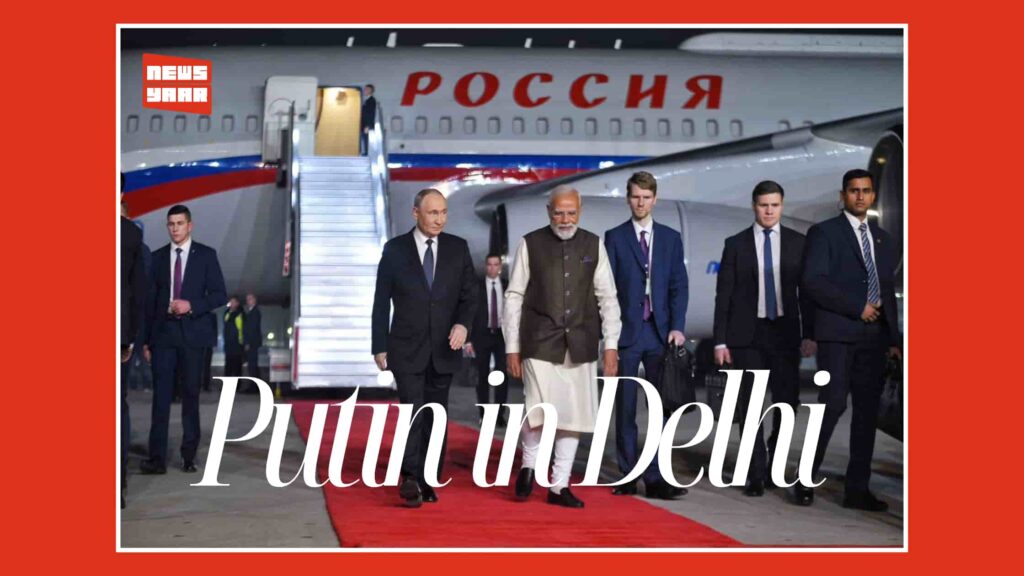
POLITICS Putin in Delhi: A Big Push for India-Russia Link to the Narendra Modi receiving Vladimir Putin at Delhi Airport video In early December 2025, Russian President Vladimir Putin arrived in New Delhi for his first visit in four years. Prime Minister Narendra Modi welcomed him warmly, and the visit was treated as a major moment for both countries. A Partnership Built Over Decades India and Russia have shared a strong bond for many years, known as their “Special and Privileged Strategic Partnership.” During this visit, both sides agreed to make the relationship even stronger. They discussed cooperation in defence, energy, science, technology, trade, and diplomacy. At a time when global politics is shifting, and Russia faces sanctions, the visit showed that India still values Russia as an important partner. It also highlighted India’s ability to balance relations with different major powers. Big Trade Plans for the Future One of the major outcomes was a new Economic Cooperation Programme that will guide both countries until 2030. The aim is to increase the current trade value of about $68.7 billion to $100 billion. India and Russia want to go beyond buying and selling oil or defence equipment. They’re looking to expand into areas like manufacturing, clean energy, minerals, pharma, agriculture, food processing, and new technology collaborations. There’s also fresh momentum to sign a Free Trade Agreement between India and the Eurasian Economic Union, which could make it easier for Indian products to enter Russian and Eurasian markets. Energy & Defence: Still the Backbone Energy remained one of the main discussion points. Putin assured India that Russia will continue supplying oil and fuel without interruption, despite global sanctions. This promise is crucial for India’s energy security. On the defence front, both sides agreed to deepen cooperation, focusing on joint manufacturing, co-production, sharing technology, and strengthening military ties. These steps aim to reduce India’s dependency on imports and build capabilities within the country. A Balanced Approach in a Complicated World What makes this visit important is India’s clear message: it will continue to follow an independent foreign policy. Despite pressure from Western countries to reduce ties with Russia, India maintained its balanced approach, keeping strong relations with both Russia and the West. For Russia, the visit helped reinforce partnerships outside the Western sphere. For India, it strengthened its trade, energy, and defence needs while preparing for a more uncertain global future. The Bottom Line Putin’s visit wasn’t just a diplomatic event. It created a fresh roadmap for India–Russia ties, focusing on stronger trade, reliable energy, deep defence cooperation, and long-term strategic trust. The visit marks a new chapter in a partnership that has stood firm for decades. https://www.youtube.com/watch?v=-oRdrsLAv1o Video credit: Narendra Modi’s Youtube Video https://www.youtube.com/watch?v=lDts5BTpyFc Video credit: Narendra Modi’s Youtube Video https://www.youtube.com/watch?v=rANa23Pxxo0 Video credit: President of India Youtube Video https://www.youtube.com/watch?v=o3_gk2xIv38 Video credit: DD News About the Author Politics Reporter Share via Copied Comments Post Comment
New Labour Codes 2025: Opportunity or Outcry?

GOVERNMENT New Labour Codes 2025: Opportunity or Outcry? On 21 November 2025, India’s labour landscape changed forever: the government replaced 29 older laws with four comprehensive new labour codes, covering wages, industrial relations, social security, and workplace safety. What does that mean for workers? For many, it sounded like a win, especially for contract and fixed-term workers, who, under the updated rules, now qualify for gratuity after just one year of service, instead of the previous five. Add to that expanded definitions for “wage” (so allowances count more), protections for health, social security, and more inclusive job norms, and it seems like a long-awaited step toward modern labour reform. For many gig, contract, and temporary workers, long excluded from benefits, this appears to be a landmark shift. Suddenly, some of the perks traditionally reserved only for permanent staff are extended to a much larger pool. It is social security made more inclusive. The Political Backlash: Protests Outside Parliament But this reform didn’t sail smoothly. The moment the new codes were notified, alarm bells rang for many union leaders and opposition parties. On December 2, MPs, including Sonia Gandhi and Mallikarjun Kharge, staged a protest outside the Parliament complex, raising placards and slogans demanding that he new laws be rolled back. Their argument? These codes benefit corporations more than workers, allowing easier layoffs, diluting job security, and undermining collective bargaining rights. Trade unions across the country echo similar fears: what if “flexibility” becomes “exploitation”? What if temporary jobs, previously light on benefits, become even more vulnerable under the cloak of new definitions and frequent hiring-firing cycles? For them, this isn’t reform, it’s a disguised rollback of worker rights. Between Reform and Risk: What’s the Verdict? The new labour codes walk a tightrope. On one side, there’s a needed push toward inclusivity, protection for informal workers, and flexibility for modern businesses. On the other, a legitimate fear that under relaxed labour norms, job security and worker welfare might take a back seat. For contract workers, the cut in gratuity eligibility from five years to one is a game-changer. For millions of India’s unorganised workforce, it might mean a combination of dignity and safety. But for many unions and opposition leaders, the same laws signal a slippery slope. As politics rages on and protests echo through Parliament corridors, the real test will be in implementation, whether the laws reflect worker protection or corporate convenience. For now, the 2025 labour reforms remain India’s most ambitious overhaul in decades: hopeful for some, controversial for many, and undoubtedly the biggest labour conversation in recent memory. https://www.youtube.com/watch?v=aA6wgQnumDc Video credit: DD News About the Author Government Reporter Share via Copied Comments Post Comment