




GOVERNMENT
Government Announces 7 New Bullet Train Corridors in India: A Transformative Push for High-Speed Connectivity
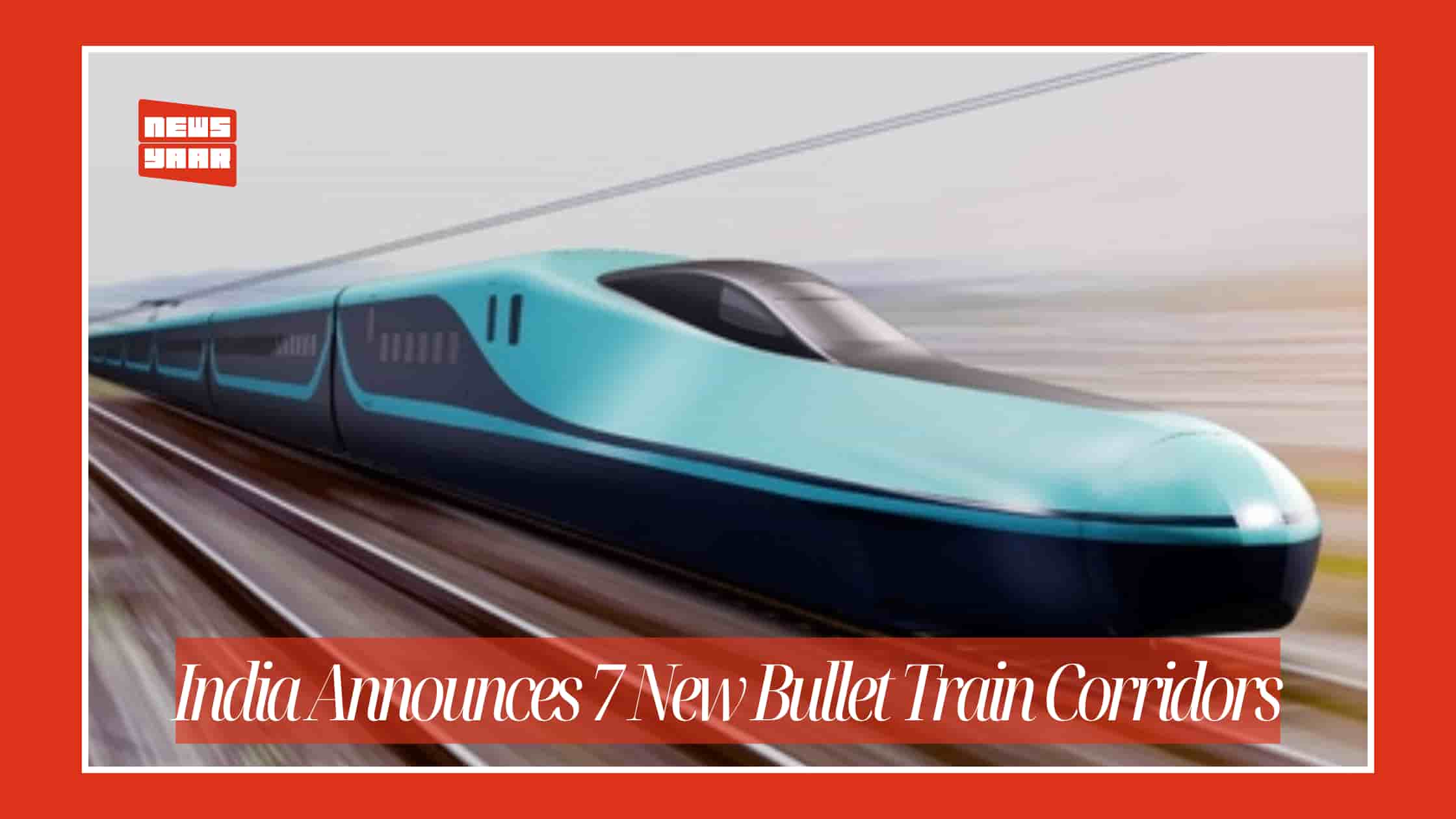
In a landmark expansion of India’s rail infrastructure, the Government of India has announced the development of seven new high-speed rail corridors — popularly referred to as bullet train routes — as part of the Union Budget 2026–27. The ambitious initiative aims to transform inter-city travel by significantly reducing travel times, boosting economic growth and enhancing connectivity between major urban and economic hubs across the country.
Announcement and Policy Context
Union Finance Minister Nirmala Sitharaman unveiled the corridors during her Budget 2026–27 speech in Parliament, categorising them as “growth connectors” that will promote environmentally sustainable passenger transport systems across India’s rail network. These high-speed corridors complement the Mumbai–Ahmedabad High-Speed Rail Corridor (MAHSR) — India’s first bullet train project — and build on the government’s broader infrastructure and mobility agenda.
Railway Minister Ashwini Vaishnaw has confirmed that detailed preparations are underway, with Detailed Project Reports (DPRs) being finalized and pre-construction activities initiated through the National High Speed Rail Corporation Limited (NHSRCL). The government is focused on fast-tracking implementation and standardising high-speed rail system development nationwide.
Proposed Bullet Train Corridors: Routes and Connectivity
The announcement includes seven high-speed rail corridors that will link key cities and regions across India. These corridors are expected to span nearly 4,000 km and strategically connect major economic, industrial and cultural centres. The routes identified are:
- Mumbai–Pune High-Speed Rail Corridor — strengthening connectivity within Maharashtra’s economic belt.
- Pune–Hyderabad High-Speed Rail Corridor — linking western and southern economic hubs.
- Hyderabad–Bengaluru High-Speed Rail Corridor — a major southern technology and industry link.
- Hyderabad–Chennai High-Speed Rail Corridor — connecting southern metros with coastal economic zones.
- Chennai–Bengaluru High-Speed Rail Corridor — improving travel between two major southern cities.
- Delhi–Varanasi High-Speed Rail Corridor — enhancing northern connectivity with Uttar Pradesh’s cultural capital.
- Varanasi–Siliguri High-Speed Rail Corridor — extending high-speed reach toward eastern India and gateway regions.
Collectively, these corridors aim to connect financial hubs, technology clusters, manufacturing centres and emerging cities with modern high-speed rail infrastructure.
Strategic Goals and Economic Rationale
Government officials have described the new corridors as not just transport projects but growth engines that will:
- Reduce travel times drastically between key city pairs (for example, a bullet train between Mumbai and Pune could reduce travel to under an hour), enhancing convenience and productivity.
- Stimulate regional economic development by creating linked urban-industrial corridors that attract investment, tourism and job creation.
- Support environmental sustainability by offering cleaner and more energy-efficient alternatives to road and air travel.
- Drive technology and manufacturing growth by enabling high-speed rail ecosystem development, including engineering, signalling, rolling stock and systems integration.
Union Minister Ashwini Vaishnaw has emphasised that the initiative will contribute toward India becoming 100 per cent self-reliant (Atmanirbhar) in high-speed rail technologies, with a focus on leveraging indigenous manufacturing and innovation wherever feasible.
Implementation and Timeline
While the Mumbai–Ahmedabad corridor is already under construction and expected to begin phased operations starting 2027 for the Surat–Bilimora section and full completion by 2029, the new seven corridors are in the pre-construction and planning stage.
Officials have indicated that preparation of DPRs, alignment finalisation, land acquisition and contract documentation will be prioritised over the coming months, with work expected to begin once these foundational studies are complete. Dedicated field teams for each corridor will support expedited project execution.
Broader Impact on Indian Railways and Mobility
The seven new bullet train corridors represent a shift toward world-class rail mobility in India, aligning with global best practices in high-speed transportation. Once operational, these corridors are expected to:
- Enhance national connectivity across key economic belts in the west, south, north and east.
- Reduce congestion on existing air and road networks by providing faster, reliable alternatives.
- Boost tourism by enabling easy access to major cultural and heritage destinations.
- Encourage urban transformation through transit-oriented development along high-speed rail alignments.
Looking Ahead: A New Era of Rail Travel
The announcement of seven additional bullet train corridors marks a transformational phase for Indian Railways, moving the nation closer to a widespread high-speed rail network that complements existing infrastructure and accelerates economic integration. By linking metropolitan centres and regional hubs with modern, efficient rail travel, the government aims to redefine mobility in India and position the country as a global leader in high-speed rail development.
Summary of the New Bullet Train Corridors
|
Route |
Region |
Strategic Role |
|
Mumbai–Pune |
West |
Economic mobility in Maharashtra |
|
Pune–Hyderabad |
West–South |
Industrial and technology linkage |
|
Hyderabad–Bengaluru |
South |
Connects major IT & innovation hubs |
|
Hyderabad–Chennai |
South |
Coastal economic corridor |
|
Chennai–Bengaluru |
South |
Southern metro connectivity |
|
Delhi–Varanasi |
North |
Links capital with cultural heartland |
|
Varanasi–Siliguri |
North–East |
Gateway to eastern region |
 Entertainment Reporter




Comments
Leave a Comment
No comments yet. Be the first to comment!