




GOVERNMENT
India–Chile Trade Deal: Deepening Economic Engagement Between South Asia and South America
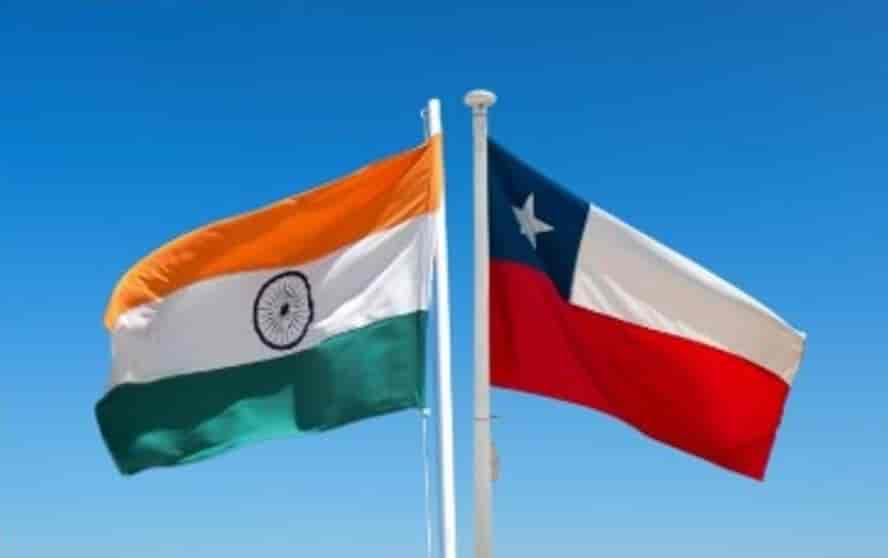
India and Chile have nurtured a stable and steadily expanding trade relationship over the past two decades, anchored in the India–Chile Preferential Trade Agreement (PTA) and moving toward a more comprehensive economic partnership. The evolving framework of cooperation reflects both countries’ strategic interests in expanding market access, diversifying export baskets, and strengthening bilateral economic integration within a globalised trade environment.
Historical Background: From Framework to Preferential Trade
The roots of formal trade cooperation between India and Chile date back to the Framework Agreement on Economic Cooperation signed in January 2005, which laid the foundation for deeper commercial ties. Following this, after four rounds of negotiations, the India–Chile Preferential Trade Agreement (PTA) was finalised and signed on March 8, 2006 and came into force in India on September 11, 2007 and in Chile on August 17, 2007. The PTA was subsequently notified to the World Trade Organization (WTO) in January 2009, underlining its legitimacy and integration into global trade rules.
Under the original 2006 PTA, both countries agreed to provide fixed tariff preferences on a selected list of goods to encourage bilateral trade. India initially offered tariff concessions ranging from 10% to 50% on 178 tariff lines at the detailed eight-digit product level to Chile, while Chile reciprocated with concessions on 296 tariff lines, some of which carried preferences of up to 100%.
Expansion and Current Trade Regime
Recognising the need to broaden the agreement’s scope, India and Chile agreed in 2016 to expand the PTA, which came into effect on May 16, 2017, after ratification by both sides. Under the expanded framework:
- Chile offered preferential duty reductions on 1,798 goods — with margins of preference (MoP) between 30% and 100% — granting Indian exporters enhanced access to the Chilean market.
- India reciprocated with tariff concessions on 1,031 products at the eight-digit classification level, providing MoPs between 10% and 100% on items ranging from processed foods and raw materials to industrial and manufacturing inputs.
The expanded PTA covers sectors such as agriculture and allied goods, chemicals, pharmaceuticals, textiles and apparel, machinery and equipment, processed foods, leather products, and various industrial commodities. This broader coverage has significantly improved market access for Indian businesses and diversified the range of products traded between the two countries.
Trade Flows and Economic Significance
Chile is one of India’s key trading partners in Latin America, ranking among the top destinations for Indian exports and sources of imports. According to data for the fiscal year 2023–24, bilateral trade between India and Chile reached approximately US$2.45 billion, with India exporting goods worth about US$1.1 billion and importing nearly US$1.35 billion, reflecting a modest trade deficit for India. Chile’s top exports to India include copper ore and concentrates, iodine, lithium compounds, molybdenum ores, and chemicals, while Indian exports to Chile comprise transport equipment, pharmaceuticals, textiles, engineering goods, plastic and leather products, and handicrafts.
Trade experts note that the India–Chile trade relationship remains well-balanced compared with other Latin American partners and continues to deepen despite global economic fluctuations. The diversity of export and import baskets illustrates the complementary aspects of both economies, offering opportunities for further expansion.
Towards a Comprehensive Economic Partnership
While the PTA has provided a stable framework for tariff concessions, policymakers in both countries have recognised that a broader and more robust trade agreement could unlock greater economic potential. To this end, India and Chile have embarked on negotiations for a Comprehensive Economic Partnership Agreement (CEPA), which aims to expand beyond tariff reductions to cover emerging areas of bilateral cooperation.
In May 2025, India and Chile signed the Terms of Reference (ToR) for CEPA, signalling their intent to elevate the trade relationship to a full-fledged free trade agreement (FTA). The CEPA negotiations build upon the existing PTA and foresee expanded cooperation in key sectors such as digital services, investment promotion and protection, small and medium enterprises (MSMEs), critical minerals, and broader goods and services trade.
The first round of CEPA talks was concluded in May 2025, followed by subsequent negotiation rounds aimed at finalising the agreement text. Both sides have identified that including digital services and critical minerals — particularly Chile’s rich reserves of lithium and copper — could add significant strategic value to the CEPA framework, benefiting sectors such as clean energy, electronics and high-technology industries.
Strategic and Geopolitical Dimensions
The India–Chile trade engagement is more than a commercial arrangement. Chile is a founding member of the Pacific Alliance, and India is an observer member, positioning the PTA and prospective CEPA as gateways to deeper engagement with broader Latin American markets. Strengthening trade ties with Chile aligns with India’s global economic outreach strategy, which seeks to diversify export markets, attract foreign investment, and secure supply chains for critical resources.
For Indian exporters, Chile offers access to a strategically located South American market with strong linkages to other regional economies. For Chile, India presents opportunities in one of the fastest-growing large economies, with demand for products ranging from pharmaceuticals to engineering goods and textiles.
Challenges and Future Prospects
While the expanded PTA has facilitated greater market access, the trade relationship still faces challenges such as addressing non-tariff barriers, improving logistics integration, and enhancing investment flows. The CEPA negotiations are seen as a necessary next step, aiming to resolve such issues and elevate economic cooperation to a more comprehensive level.
Both governments have expressed optimism that a concluded CEPA will not only expand bilateral trade volumes but also attract greater investment in sectors such as information technology, renewable energy, critical minerals, and services, while supporting MSMEs, innovation ecosystems, and job growth in both countries.
Conclusion: A Growing Partnership
The India–Chile trade deal — rooted in a preferential trade agreement since 2007 and evolving towards a Comprehensive Economic Partnership Agreement — represents a significant chapter in India’s trade diplomacy with Latin America. Through phased tariff concessions, portfolio diversification, and ongoing negotiations to deepen economic cooperation, the two countries are forging a trade relationship that blends traditional commerce with emerging sectoral opportunities.
As negotiations continue and potential CEPA outcomes take shape, the India–Chile economic partnership stands poised to expand not only in value but also in strategic scope, reflecting a shared vision of inclusive, future-oriented growth that benefits businesses, workers, and consumers on both sides.






Comments
Leave a Comment
No comments yet. Be the first to comment!