




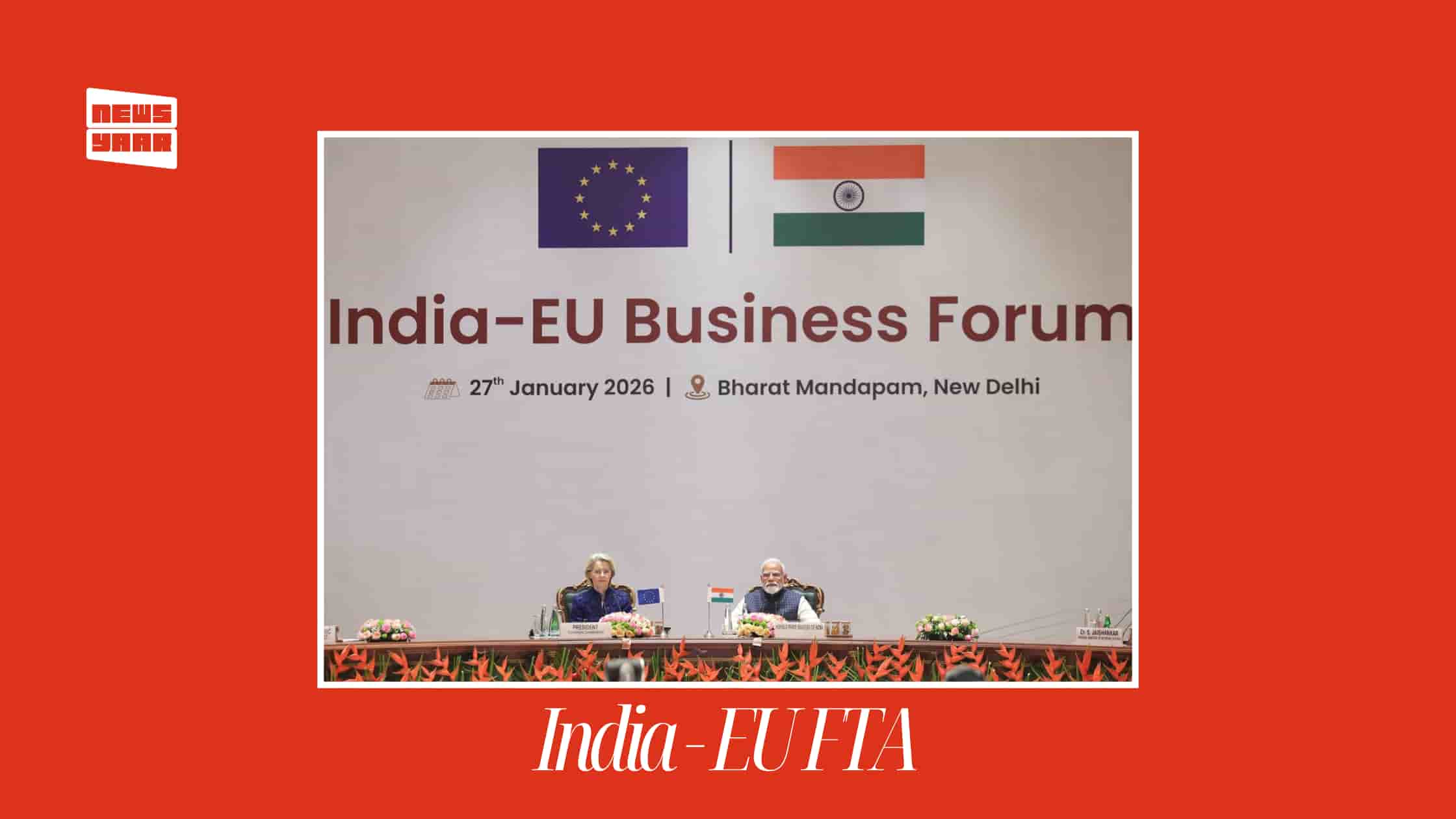
India and the European Union (EU) are intensifying negotiations on a Free Trade Agreement (FTA) that could reshape bilateral commerce, investment flows and economic strategy in the decades ahead. Officially referred to as the EU-India Trade and Investment Agreement (TIA), the proposed pact aims to reduce tariff and non-tariff barriers, deepening economic cooperation between India — one of the world’s fastest-growing major economies — and the world’s largest trading bloc.
Negotiations for the FTA have been ongoing for over a decade, and recent diplomatic momentum suggests both sides are serious about concluding a “high-ambition, high-standards” agreement in the medium term. Analysts and industry leaders see this as a strategic priority, especially as global supply chains and geopolitical alignments evolve.
Bilateral Trade at a Glance: Current Numbers and Potential Growth
Trade data underscores the scale of the economic relationship:
- Two-way merchandise trade between **India and the EU stood at around ₹11 trillion (approximately $130 billion) in 2024-25.
- India’s goods exports to the EU reached close to $70 billion, while EU exports to India were around $60 billionin the same period.
- Services trade adds another significant dimension, with India exporting approximately $30–35 billion in services to the EU annually, driven by IT, professional and business services.
Under an effective FTA, many experts believe this bilateral trade could grow substantially. Some projections suggest India-EU trade could double to $250–300 billion by 2030, contingent on market access, tariff elimination and regulatory alignment. Specific forecasts also indicate that India’s exports to the EU could touch $100 billion or more by decade end, helping India pursue its broader goal of achieving $2 trillion in total exports by 2030.
What the India-EU FTA Will Cover
This proposed FTA is not merely about reducing import duties. It is expected to encompass a broad range of modules:
Tariff liberalisation:
Both sides are discussing phased or immediate elimination of customs duties on a significant share of goods. For India, priority sectors include textiles and apparel, chemicals, pharmaceuticals and engineering goods. The EU has emphasised its interest in greater access for agricultural and processed food products, wines and spirits.
Services trade:
The EU seeks greater market access in professional services, financial services, digital services and movement of skilled professionals. India’s services competitiveness, particularly in IT and business process services, stands to benefit substantially if barriers are eased.
Investment and business facilitation:
The pact is expected to include investor protection clauses, dispute settlement mechanisms and provisions to promote cross-border investment in sectors such as renewable energy, infrastructure, logistics and manufacturing.
Regulatory cooperation:
Reducing non-tariff barriers — including technical standards, sanitary and phytosanitary (SPS) measures, testing and certification procedures — is a central objective. Regulatory alignment or mutual recognition agreements in key sectors could significantly lower trade costs.
Sustainable development and labour standards:
The EU traditionally incorporates provisions related to environmental protection, climate commitments, labour rights and responsible corporate behaviour; India has indicated support while seeking flexibility in implementation timelines.
Key Sectors Impacted
Textiles and Garments
India’s apparel and textile industry is one of the largest globally, with exports worth around $40–45 billion annually. Preferential access to the EU market could boost textile shipments by making Indian products more cost-competitive against competitors in Bangladesh, Vietnam and Turkey.
Pharmaceuticals and Chemicals
India’s pharmaceutical industry — valued at over $50 billion in domestic turnover — is a key exporter of generics, active pharmaceutical ingredients (APIs) and bulk drugs. EU market access could lower costs for Indian exporters by reducing duties (currently up to 6–7% on some products) and harmonising regulatory standards.
Engineering Goods and Auto Components
Engineering goods and auto parts — long recognised as India’s strength — could see enhanced export growth. Engineering exports to the EU were already around $25–30 billion annually, and an FTA could further these shipments by reducing tariffs and facilitating supply chain integration.
Services
India exports a large volume of services to the EU, particularly IT and corporate/business services. Improved mobility and mutual recognition for professional services could significantly increase services trade, which already accounts for roughly 25–30% of India-EU trade.
Challenges in Negotiations
Despite clear benefits, several key differences remain:
Agricultural market access:
The EU wants greater access for its dairy, meat and processed food products. India, in turn, seeks protection for its small farmers and tariff safeguards that prevent a surge in imports that could disrupt local agriculture.
Rules of origin:
Determining how much production must occur within India or the EU to qualify for tariff benefits is a sensitive issue. Strict rules may limit benefit realisation, while more flexible rules could risk diversion.
Services and labour mobility:
The EU emphasises liberalisation in professional services and easier movement for skilled professionals. India supports services access but remains cautious about commitments on short-term mobility and domestic regulatory autonomy.
Standards and compliance:
The EU has stringent regulatory standards across multiple sectors. Indian industry seeks mutual recognition, capacity building and technical cooperation to meet those norms without prolonged delays.
Geopolitical and Strategic Dimensions
The India-EU FTA is also significant beyond economics. It aligns with both partners’ strategic imperatives as global trade patterns evolve:
Diversification and resilience:
For India, the FTA represents a diversification of export destinations beyond traditional partners such as the US and Middle East. For the EU, it enhances engagement with a rapidly growing market in Asia.
Strategic autonomy:
Deeper economic ties with the EU support India’s broader foreign policy objective of strategic autonomy — maintaining balanced relations with multiple global powers.
Global standards and reform:
Negotiations with the EU could encourage India to further align with international best practices in digital trade, data flows, sustainability commitments and IP frameworks — strengthening its global integration.
Business and Industry Reactions
Industry bodies in India — including CII (Confederation of Indian Industry) and FICCI (Federation of Indian Chambers of Commerce & Industry) — have welcomed the broadened trade talks, urging negotiators to safeguard sensitive sectors while seizing opportunities for export growth and investment.
Many exporters, particularly from textiles, engineering goods and pharmaceuticals, believe that a preferential trade agreement with the EU could help India surpass entrenched competitors in European markets by making Indian products more cost-competitive.
Looking Ahead: Timeline and Expectations
Although expectations for a completed India-EU FTA vary, officials from both sides have reiterated a shared ambition to conclude the agreement in the near future, subject to resolving outstanding issues on market access and regulatory cooperation.
Analysts suggest that while a formal signing could occur within the next 12–24 months, the pace will depend on complex negotiations over tariffs, services and standards. Many see a first-phase agreement focusing on key tariff reductions and rules of origin, followed by subsequent phases addressing services and deeper regulatory cooperation.
Conclusion: Economic Promise Coupled with Negotiation Complexity
The India-EU Free Trade Agreement represents a transformative opportunity for both economies. With exact trade flows already in the hundreds of billions of dollars, a successful pact could generate new avenues for Indian exporters, enhance investment flows, and expand strategic economic cooperation with the EU. The potential uplift in Indian exports — particularly textiles, engineering goods and pharmaceuticals — could help accelerate the country’s broader export targets.
At the same time, resolving differences in agricultural access, services liberalisation and non-tariff barriers will remain critical to finalising an agreement that is balanced and sustainable. As negotiations progress, the world continues to watch one of the most consequential trade deals in contemporary global economics.
About the Author
 Government Reporter




Comments
Leave a Comment
No comments yet. Be the first to comment!