




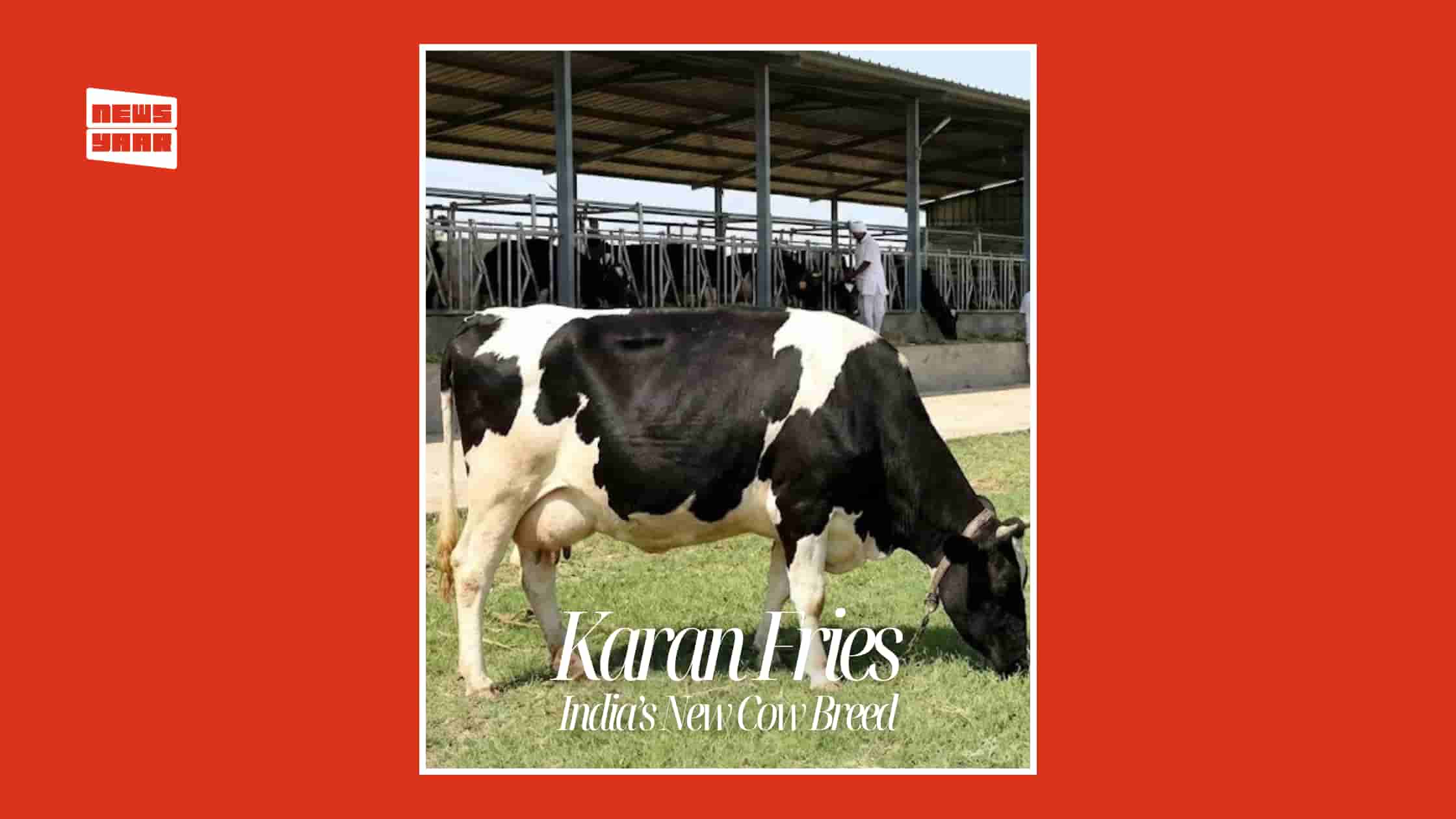
In a significant boost to India’s dairy and livestock sector, the country has officially registered Karan Fries, a high-yielding synthetic cattle breed capable of producing over 3,000 kilograms of milk in a standard 10-month lactation cycle. With this addition, India’s total number of registered livestock and poultry breeds has risen to 246, underlining the government’s continued push towards scientific breeding and productivity-led growth in animal husbandry.
Developed through systematic cross-breeding programmes, Karan Fries combines the high milk-producing traits of exotic cattle with the hardiness and adaptability of Indian breeds. Officials say the breed has been designed to perform well under Indian agro-climatic conditions, making it suitable for farmers seeking higher productivity without compromising resilience.
The focus on Karan Fries comes at a crucial time. Despite India being the world’s largest milk producer, the dairy sector faces persistent challenges. Many indigenous cattle breeds produce relatively low milk yields, typically between 1,000 and 2,000 kilograms per lactation, while farmers struggle with rising feed costs, limited veterinary access, and deteriorating cattle health. Poor nutrition, inadequate shelter, and climate stress have further affected productivity, particularly among small and marginal farmers.
Against this backdrop, Karan Fries is being seen as a ray of hope. Higher milk yields per animal can help farmers increase income without expanding herd size, easing pressure on land, water, and fodder resources. Experts believe that productivity-focused breeds like Karan Fries could play a critical role in making dairying more sustainable and economically viable.
Officials emphasised that the registration of Karan Fries reflects a broader strategy to modernise animal husbandry through genetic improvement, scientific breeding, and performance recording, while continuing to conserve indigenous breeds. “Native cattle remain essential for biodiversity, disease resistance, and ecological balance, but synthetic breeds like Karan Fries are necessary to meet growing commercial and nutritional demands,” an official said.
However, experts caution that success will depend on responsible implementation. High-yielding breeds require better management, balanced nutrition, disease control, and regular veterinary care. Without adequate support systems, farmers may struggle to realise the full benefits. Policymakers are therefore being urged to strengthen extension services, expand artificial insemination coverage, and ensure affordable access to feed and healthcare.
For farmers engaged in animal husbandry, the recognition of Karan Fries opens new possibilities. With proper support, the breed could help stabilise incomes, encourage youth participation in dairying, and enhance rural livelihoods. It also aligns with India’s long-term goals of improving farm productivity while maintaining sustainability.
As India looks ahead, the challenge will be to balance productivity, animal welfare, and genetic diversity. The inclusion of Karan Fries marks an important step in that direction—signalling a future where scientific innovation supports farmers, strengthens the dairy economy, and addresses long-standing challenges in livestock management.
About the Author
 Agriculture Reporter






Comments
Leave a Comment
No comments yet. Be the first to comment!