




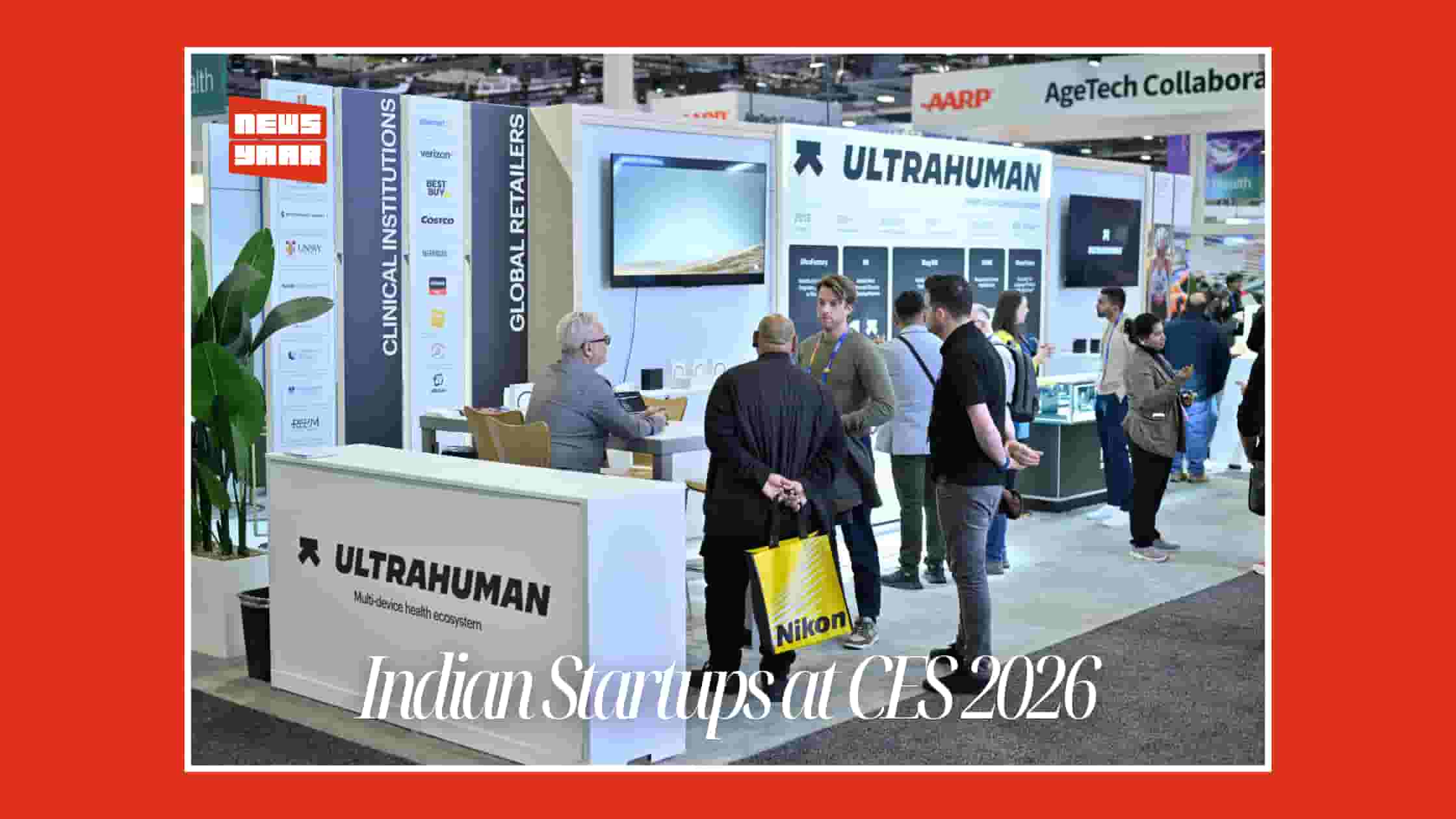
Indian startups and technology firms significantly expanded their presence at CES 2026 — the world’s largest technology showcase held in Las Vegas from January 6 to 9, 2026 — reflecting the country’s evolving tech ambitions and increasing global competitiveness. The annual event, organised by the Consumer Technology Association (CTA), attracted more than 4,100 exhibitors from around 150 countries, underscoring its role as a launchpad for next-generation innovations spanning artificial intelligence (AI), digital health, robotics, mobility, enterprise technology and immersive entertainment.
According to CTA executives, Indian participation has steadily grown, with a broader range of startups and established firms using the platform to showcase their products, engage with global partners and position themselves for international expansion. Indian delegations this year included innovators from healthtech, wearables, robotics and automotive systems, signalling the ecosystem’s transition from domestic focus to global impact.
Ultrahuman: Metabolic Health and Wearables
One of the headline Indian participants at CES 2026 was Ultrahuman, a Bengaluru-based health technology firm co-founded by Mohit Kumar, Vinay Bhargava and Vatsal Singhal. The company displayed its suite of wearable health devices and preventive care platforms, including what it bills as the world’s lightest sleep-tracking wearable, a continuous glucose monitoring (CGM) system and a preventive blood testing solution designed to empower users with metabolic insights. Ultrahuman’s presence marked India’s growing footprint in consumer health tech at global forums.
Noise: Smart Wearables Designed for Global Markets
Noise, headquartered in Gurugram and led by founders Amit Khatri and Gaurav Khatri, was another major Indian exhibitor. The company, recognised as one of the third-largest smartwatch brands in the world, showcased its latest wearable technologies at CES, emphasising advanced health metrics, design innovation and global compatibility. Noise’s participation highlighted India’s emergence not only as a producer of affordable wearables but as a designer and manufacturer capable of competing with established global brands.
“We are proud to come here and compete on a world stage,” said Hamish Patel, Vice President – Product Devices at Noise, noting that the company’s R&D and manufacturing are largely based in India, enabling it to present products that match global benchmarks.
aabo: MedTech Innovations
Among the Indian startups at CES 2026 was aabo, a MedTech firm focused on AI-driven health solutions. Although not a household name, its technology emphasises the intersection of machine intelligence and healthcare delivery, an area of rising relevance as global health systems integrate data-led diagnostics and monitoring. The specifics of aabo’s product suite were highlighted among Indian exhibitors but details on founders and product characteristics are linked to its positioning as a healthtech innovator on the CES show floor.
ArvyaX Technologies: Robotics and Pseudo-Reality
ArvyaX Technologies, founded by Shalabh Bhatnagar, showcased its robotics and pseudo-reality solutions at CES’s Eureka Park — an innovation zone dedicated to emerging startups. The Bhopal-based firm has developed technologies that blend digital and physical environments, targeting enterprise sectors such as industrial training, simulation and collaborative experiences. Shalabh Bhatnagar described participating at CES as a moment of pride, emphasising that ArvyaX’s innovations were both made and innovated in India, reflecting the nation’s rising capabilities in robotics and immersive technologies.
Sona Comstar: Automotive Technology and EV Systems
The automotive technology company Sona Comstar was another Indian participant at CES 2026, presenting its advanced electric vehicle (EV) components and systems. With a strong focus on R&D in high-power density EV motors, differential assemblies and lightweight drivetrain systems, Sona Comstar’s technology underscores India’s potential in automotive core technology development and global mobility solutions. The company’s products cater to modern EV performance requirements and highlight a broader shift toward electrification and smart mobility.
Zoondia and Industry Collaborations
In addition to standalone startups, Indian participation included Zoondia, a global technology partner offering enterprise solutions and services. Though not a startup in the strictest sense, Zoondia’s presence further reflects the breadth of Indian engagement at CES, spanning early-stage innovation to established tech services with global delivery capabilities.
The Significance of Indian Participation
Executives at CES 2026 noted that India’s presence was broader and deeper than in previous years, building on momentum from the first dedicated Indian pavilion introduced on the CES show floor in 2024. This year’s participation spanned startups, industry bodies such as the CMAI Association of India, and firms showcasing products that compete with global innovations rather than just representing emerging market offerings.
Industry observers have highlighted several key implications of India’s growing CES footprint:
- Global Visibility: Participation at CES elevates Indian startups to international buyers, investors and collaborators, helping them secure partnerships, pilot projects and market entry opportunities.
- Innovation Credibility: Demonstrating products at a major global venue signals maturity and readiness to compete on performance and design quality.
- Ecosystem Confidence: The increasing number of Indian participants reflects confidence among founders and investors in showcasing innovations on a global stage.
- Cross-Sector Representation: Startups at CES 2026 represented health tech, wearables, robotics and automotive systems, indicating that India’s startup ecosystem is diversifying beyond software into deep tech and hardware innovation.
What This Means for India’s Startup Ecosystem
The rising participation of Indian startups at CES 2026 comes at a time when the country’s broader startup ecosystem is experiencing structural shifts. India is now recognised as one of the largest startup ecosystems globally, with a growing emphasis on deep tech, AI, robotics and hardware innovation rather than only digital services. Initiatives such as startup support missions, increased R&D investment and industry collaborations are catalysing this transformation, enabling more Indian founders to engage in global innovation discourse and market expansion.
Indian founders and CEOs attending CES emphasised that events like CES are not merely showcases but strategic platforms for networking, validation, investment engagement and collaboration, helping elevate India’s technology brands to global audiences and potential customers.
Looking Forward
As CES continues to be a global stage for breakthrough technologies, the increasing presence of Indian startups at CES 2026 reflects a broader narrative of India’s evolution from a predominantly software and services economy to a hardware and deep-tech innovator on the world stage. With continued participation in global technology showcases, Indian founders aim to build enduring technology brands that are recognised not only domestically but across markets in North America, Europe and Asia.
The momentum generated at CES 2026 is expected to bolster further international collaborations, funding opportunities and market insights for Indian startups, reinforcing India’s role as a growing contributor to global technological advancement.
About the Author
 Tech Reporter





Comments
Leave a Comment
No comments yet. Be the first to comment!