




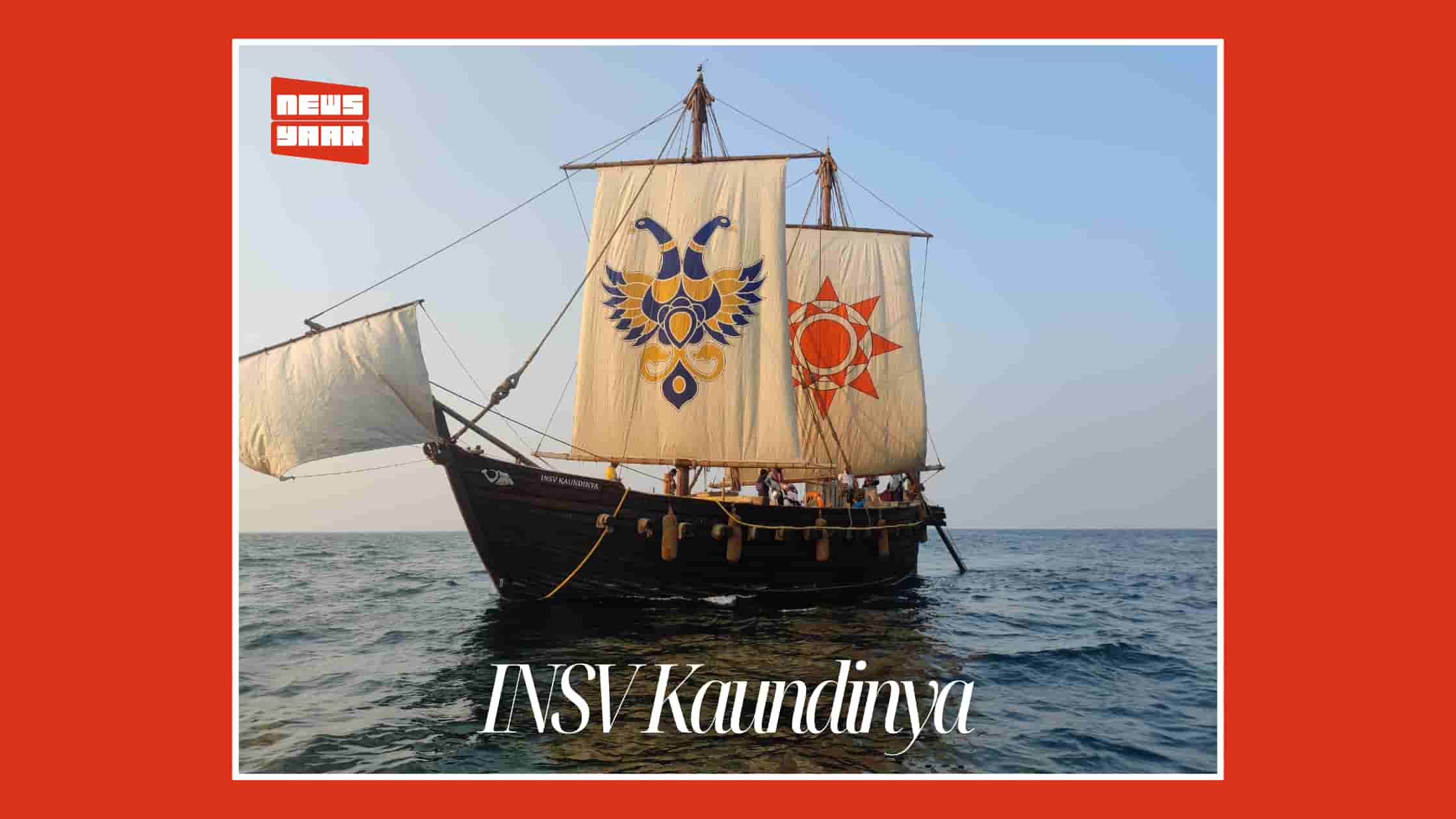
India’s Indian Naval Sailing Vessel INSV Kaundinya, a traditionally built engineless ship, is currently on a historic transoceanic voyage from Porbandar in Gujarat to Muscat in Oman. This journey, retracing ancient Indian Ocean trade routes, highlights India’s efforts to revive and celebrate its centuries-old maritime heritage.
What Is INSV Kaundinya?
INSV Kaundinya is a stitched-plank sailing vessel constructed using an ancient Indian shipbuilding technique that dates back at least to the early centuries of the Common Era. Unlike modern ships powered by engines and metal fastenings, the vessel relies entirely on wind and sails and is built by stitching wooden planks together using coir rope made from coconut fibre, sealed with natural resins, cotton and oils to make it seaworthy.
The design draws inspiration from depictions of ships in Ajanta cave paintings and descriptions found in ancient texts. These historic visual sources guided naval architects and traditional craftsmen in recreating the ship, even in the absence of surviving blueprints.
How Was the Ship Built?
The INSV Kaundinya project was initiated through a collaboration between the Indian Ministry of Culture, the Indian Navy, and Goa-based shipbuilders Hodi Innovations, with support from academic institutions like IIT Madras for scientific validation and hydrodynamic testing.
Construction milestones include:
- Keel laid: September 12, 2023
- Launch: February 2025
- Formal induction into Indian Navy: May 21, 2025 at the Karwar naval base in Karnataka
- Commissioning ceremony: Attended by senior officials and cultural leaders, the induction underscored both maritime heritage and national pride.
INSV Kaundinya measures around 19.6 metres in length and 6.5 metres in width, with a draft of about 3.33 metres. The ship’s hull incorporates motifs from India’s ancient maritime traditions, including symbolic figures and design elements that reflect civilisational seafaring legacy.
The Maiden Overseas Voyage: Porbandar to Muscat
The ship embarked on its maiden transoceanic voyage on December 29, 2025, departing from Porbandar in Gujarat— a historic port on India’s western coast. Crewed by approximately 15 sailors and four officers, the vessel retraced an ancient maritime corridor that once connected India with Oman and other parts of West Asia.
INSV Kaundinya’s skipper for the expedition is Commander Vikas Sheoran, with Commander Y Hemant Kumarserving as Officer-in-Charge, having been involved with the project since its early stages.
The journey took about 17 days at sea, with the ship navigating solely by wind and sail power across the Arabian Sea. On January 14, 2026, INSV Kaundinya reached Muscat, Oman, where it was welcomed at the Port Sultan Qaboos by officials from both countries.
Significance of the Voyage
The voyage of INSV Kaundinya is more than a naval expedition. It symbolizes:
- India’s rich maritime heritage and centuries-old seafaring traditions
- Revival of ancient shipbuilding techniques in a modern context
- A diplomatic and cultural link between India and Oman, celebrating shared historical ties spanning thousands of years
- Reinforcement of regional cooperation and maritime diplomacy in the Indian Ocean region
The expedition also coincides with the 70th anniversary of diplomatic relations between India and Oman, highlighting deepening cooperation in maritime and cultural domains.
Cultural and Historical Context
The vessel’s name — Kaundinya — evokes the legendary Indian mariner Kaundinya, believed to have sailed to Southeast Asia in the early centuries of the Common Era. According to historical accounts from Southeast Asia, Kaundinya’s voyage and subsequent marriage to a local princess helped establish early Indianised kingdoms in regions such as present-day Cambodia and Vietnam, underscoring India’s ancient maritime connectivity.
The design of the ship itself draws on shipbuilding knowledge evident in ancient art and archaeological references, including mural paintings and iconographic sources from India’s early history.
Modern Enhancements for an Ancient Vessel
While INSV Kaundinya follows traditional construction methods, modern technologies have been integrated for safety and communication. For instance, the ship uses Eutelsat OneWeb satellite communications to maintain connectivity with land-based teams and share updates during its voyage — a blend of ancient technique and contemporary innovation.
What Comes Next
After completing necessary maintenance in Oman, the vessel is expected to begin its return journey to India. The Indian Navy has indicated that this historic expedition will not only contribute to cultural diplomacy but also provide insights into ancient navigation methods and inspire future maritime heritage projects.
About the Author
 Engineering Reporter






Comments
Leave a Comment
No comments yet. Be the first to comment!