




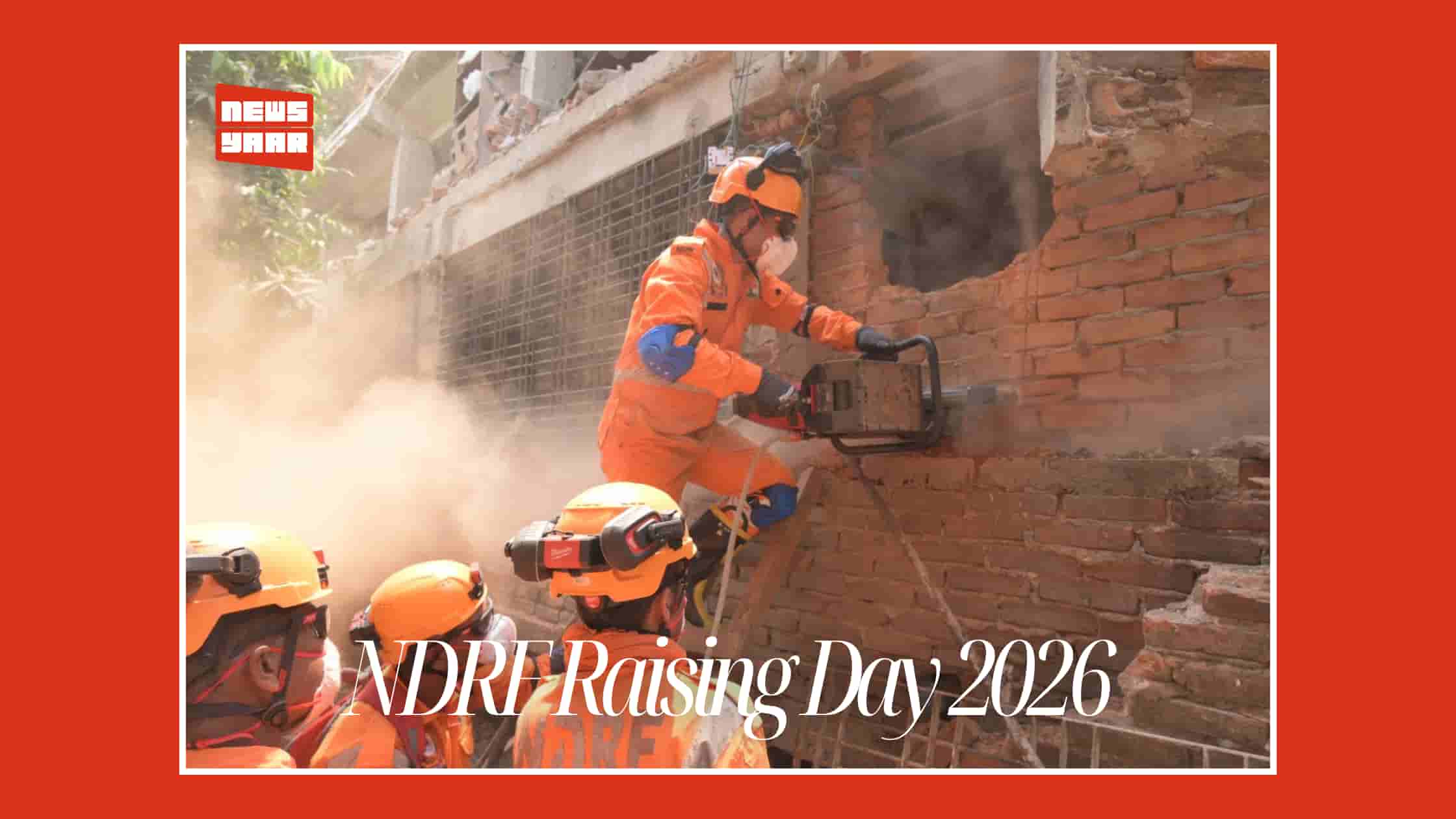
India on January 19 observed NDRF Raising Day, marking 20 years since the formation of the National Disaster Response Force (NDRF), a specialised force that has become synonymous with courage, speed and professionalism during disasters.
Established in 2006 under the Disaster Management Act, 2005, the NDRF was created to strengthen India’s preparedness and response mechanism against natural and man-made calamities.
From devastating floods and cyclones to earthquakes, landslides, industrial accidents and building collapses, the NDRF has played a crucial role in saving lives across the country. Over the past two decades, the force has evolved into a highly trained, multi-skilled unit capable of responding to complex emergencies both in India and abroad.
On Raising Day, tributes poured in from across the political spectrum. Prime Minister Narendra Modi lauded the NDRF for its “professionalism, courage and unwavering resolve,” while Home Minister Amit Shah described the force as a “pillar of trust for citizens during disasters,” paying homage to personnel who lost their lives in the line of duty.
The NDRF operates under the Ministry of Home Affairs and currently comprises multiple battalions deployed strategically across the country to ensure rapid response. Each battalion is trained in specialised disaster response skills such as flood rescue, collapsed structure search and rescue, chemical, biological, radiological and nuclear (CBRN) emergencies, and medical first response.
What sets the NDRF apart is not just its response capability but also its focus on community awareness and capacity building. The force regularly conducts mock drills, school safety programmes and training sessions for civilians, local authorities and first responders to minimise loss of life during emergencies.
In recent years, the NDRF has been at the forefront of major rescue operations, including flood relief missions, cyclone response along India’s eastern and western coasts, and urban rescue operations following infrastructure failures. Its personnel often work in extreme conditions, navigating submerged villages, unstable debris and hazardous environments, to reach those in distress.
Beyond national borders, NDRF teams have also represented India in international humanitarian assistance missions, reinforcing the country’s image as a responsible global responder.
The 2026 Raising Day was marked by ceremonial parades, award presentations and social initiatives across NDRF battalions. Senior officials and state leaders used the occasion to highlight the growing importance of disaster resilience in an era marked by climate change and extreme weather events.
Emphasis was laid on technology adoption, advanced training and inter-agency coordination to further strengthen India’s disaster response framework.
As disasters grow more frequent and complex, the role of the NDRF continues to expand. The Raising Day serves as a reminder of the silent sacrifices made by its personnel, often away from their families, operating under intense pressure, with one mission at heart: saving lives.
Twenty years on, the National Disaster Response Force remains one of India’s most trusted institutions, standing ready at the nation’s call when disaster strikes.
About the Author
 Government Reporter






Comments
Leave a Comment
No comments yet. Be the first to comment!