




Adani–Embraer Tie-Up Signals a New Chapter in India’s Commercial Aircraft Manufacturing

BUSINESS Adani–Embraer Tie-Up Signals a New Chapter in India’s Commercial Aircraft Manufacturing Newsyaar January 20, 2026 8:48 am India is set to make a landmark entry into commercial aircraft manufacturing as the Adani Group partners with Brazilian aerospace major Embraer to assemble regional passenger jets in the country. This development marks the first time India will host a final assembly line for commercial fixed-wing aircraft, placing it among a select group of nations with such advanced aerospace capabilities. The collaboration is widely seen as a significant boost to the government’s Make in India programme and a major step towards building a self-reliant aviation ecosystem. Under the partnership, Embraer’s widely used regional jets, designed for short- to medium-haul routes and seating between 70 and 146 passengers, will be assembled in India through a final assembly line operated by Adani Aerospace. While details regarding the exact location, investment size, and production timeline have not yet been formally announced, industry sources indicate that a comprehensive announcement is expected at the Hyderabad Air Show scheduled later in January 2026. Once operational, the facility will enable aircraft to be assembled, tested, and delivered from Indian soil. The timing of the partnership is particularly significant given India’s rapidly expanding aviation market. India is currently the world’s fastest-growing civil aviation market, with domestic airlines having placed orders for more than 1,800 aircraft to meet rising passenger demand. Until now, the country has depended almost entirely on global manufacturers for commercial aircraft imports. The establishment of a final assembly line is expected to reduce this dependence, generate skilled employment, and catalyse the growth of an indigenous aerospace manufacturing ecosystem. Government officials have indicated that policy support and fiscal incentives may be extended to airlines that place orders for aircraft assembled in India. Such incentives are likely to be structured on a declining basis as order volumes increase, helping the programme gain early traction while encouraging long-term sustainability. The success of this initiative is also expected to strengthen India’s case as a viable global manufacturing hub for high-value aviation products. Beyond commercial aircraft assembly, the Adani Group is positioning itself as a comprehensive aviation services provider. The group has already announced plans to expand into aircraft engine maintenance, repair and overhaul (MRO) services, as well as passenger-to-freighter conversions. By consolidating its aviation assets, including Indamer and Air Works, Adani aims to create a large integrated MRO platform serving both civilian and defence customers. This broader approach is expected to complement the aircraft assembly line by supporting lifecycle services and long-term operational needs. For Embraer, the partnership represents a strategic expansion in one of its fastest-growing markets. The Brazilian manufacturer has operated in India since 2005 and currently has close to 50 aircraft in the country serving the Indian Air Force, government agencies, business jet operators and regional airline Star Air. In October 2025, Embraer strengthened its commitment by opening an office in New Delhi to support its commercial aviation, defence, services and emerging urban air mobility segments. Industry experts believe the Adani–Embraer collaboration could have wider implications for the global aviation industry. By demonstrating the viability of commercial aircraft assembly in India, the project may encourage larger manufacturers such as Airbus and Boeing to consider setting up similar facilities in the country. If successful, the initiative could redefine India’s role in the global aerospace value chain and mark the beginning of a new era in domestic aircraft manufacturing. About the Author Business Reporter Share via Copied Comments Post Comment
India Greenlights 3 New Airlines: Transforming Domestic Aviation

BUSINESS India Greenlights 3 New Airlines: Transforming Domestic Aviation India’s aviation landscape is up for a major shake-up with the Ministry of Civil Aviation granting no-objection certificates (NOCs) to three new domestic carriers, Shankh Air, Al Hind Air, and FlyExpress, signaling steps toward increased competition, enhanced regional connectivity, and more affordable travel options in 2026. The approvals come amid growing calls to diversify the aviation market, which has long been dominated by IndiGo and the Air India Group, together controlling more than 90 % of domestic flights. Recent operational disruptions at one of the country’s largest carriers underscored the risks of such concentration and prompted regulators to clear the way for fresh capacity. Shankh Air: Uttar Pradesh’s New Player Shankh Air is expected to be one of the first among the three to begin operations, with plans to launch flight services in early 2026. Based in Uttar Pradesh, the airline aims to connect north and central Indian cities, initially linking Lucknow with major metros such as Delhi and Mumbai while expanding to Varanasi, Gorakhpur, and other destinations. The carrier, led by founder Shravan Kumar Vishwakarma, plans to start with an initial fleet of Airbus aircraft and gradually expand, including potential international operations by the late 2020s. Its mission underscores making air travel more accessible to middle-class and first-time flyers while strengthening intrastate connectivity. Al Hind Air: Regional Focus from Kerala Al Hind Air, headquartered in Kozhikode, Kerala, will initially operate as a regional commuter airline under the UDAN scheme. With a focus on connecting smaller cities and underserved markets in southern India, it plans to begin services using ATR turboprop aircraft. The airline emerges from the established Alhind Group, which brings travel and tourism sector experience to its aviation venture. While it has faced early financial strain, including unpaid leave for some staff, the carrier is advancing toward operational readiness pending its Air Operator Certificate (AOC). FlyExpress: Low-Cost Connectivity & Cargo Potential FlyExpress, a Hyderabad-based startup, has also received its NOC and intends to serve both passengers and freight across India’s regional markets as a low-cost carrier. It joins the other two new entrants in targeting a balance between affordability and broader market access. What’s Ahead for Indian Aviation? While securing NOCs is an important regulatory milestone, these airlines must still complete technical requirements, including proving flights, crew training, and DGCA-issued Air Operator Certificates, before selling commercial tickets. If successful, the trio could destabilize the market dominance, competitive pricing, boost connectivity to Tier-II and Tier-III cities, and make flying more accessible for millions of Indians. As they take shape in 2026, the aviation sector will be watching closely to see whether this trio can break into a market long held by a few major carriers. About the Author Business Reporter Share via Copied Comments Post Comment
IndiGo’s December 2025 Meltdown: What Really Happened?
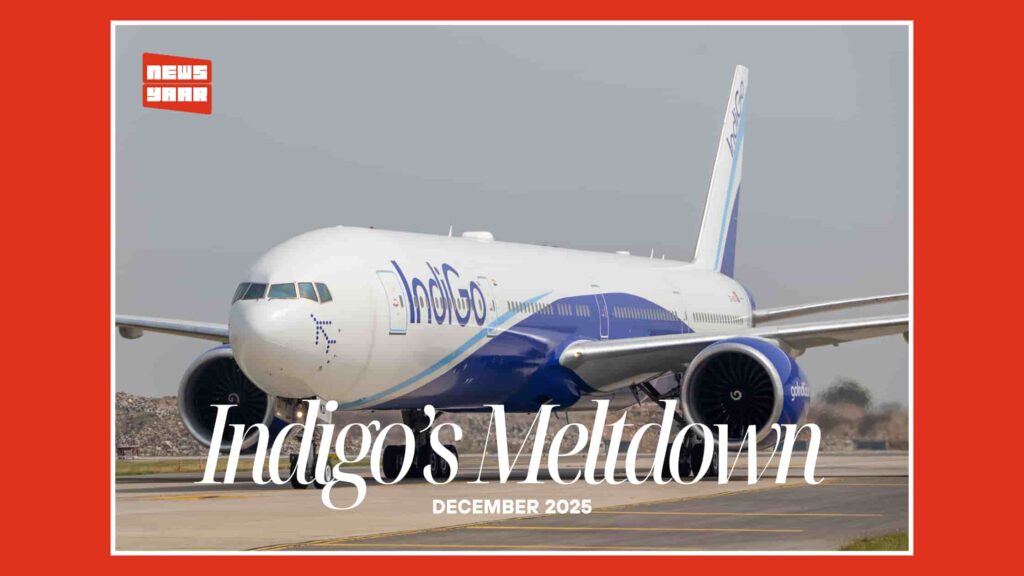
BUSINESS IndiGo’s December 2025 Meltdown: What Really Happened? In early December 2025, IndiGo, India’s biggest budget airline, faced one of the worst aviation breakdowns the country has seen in years. Starting around December 2, thousands of flights were cancelled across major cities. Airports were filled with stranded passengers, long queues, and growing frustration. What looked like a crisis was actually the result of a deeper planning failure. Why Did Everything Collapse? The core issue began with new rules introduced by the Directorate General of Civil Aviation (DGCA). These updated regulations required airlines to: Strictly limit pilot flying hours Give longer rest breaks between flights Reduce fatigue risks, especially on late-night schedules While these rules had been planned for months, it appears IndiGo didn’t reorganise its crew schedules, standby pilots, or rosters in time. The result? Many flights simply had no pilot or co-pilot who was legally eligible to fly. Without meeting DGCA requirements, IndiGo was forced to cancel entire sets of flights, creating a ripple effect across the network. IndiGo flies over 2,200 flights daily, including many night operations. So even a small scheduling disruption hit the airline on a massive scale. The Passenger Impact: A Domino Effect Across India What began as a few hundred cancellations quickly escalated. On some of the worst days: 550–560 flights were cancelled within hours Bengaluru alone saw around 150 flight cancellations Delhi, Mumbai, Hyderabad, and Kolkata experienced severe chaos Passengers experienced: Sudden last-minute cancellations Extremely long lines at help desks Delayed or misplaced luggage Struggles to find alternate flights during the busy winter and wedding season How IndiGo Tried to Recover Facing public anger, media pressure, and regulatory scrutiny, IndiGo moved into crisis-recovery mode. They claimed rapid improvements: About 1,800 flights were operating again within days On-time performance slowly improved They released ₹827 crore in refunds to affected passengers Baggage delays and customer complaints were prioritised Most routes were restored by mid-December The airline also deployed additional staff to manage queues and customer support. Final Words IndiGo’s December 2025 crisis wasn’t a one-day glitch; it was a major systems failure. Safety rules triggered the disruption, but weak internal preparation turned it into a nationwide travel meltdown. Strong safety regulations must be matched with strong operational readiness. Otherwise, passengers end up paying the price. About the Author Business Reporter Share via Copied Comments Post Comment