




Manipur Gets New Chief Minister: Yumnam Khemchand Singh Takes Oath, Pledges Peace and Stability After President’s Rule
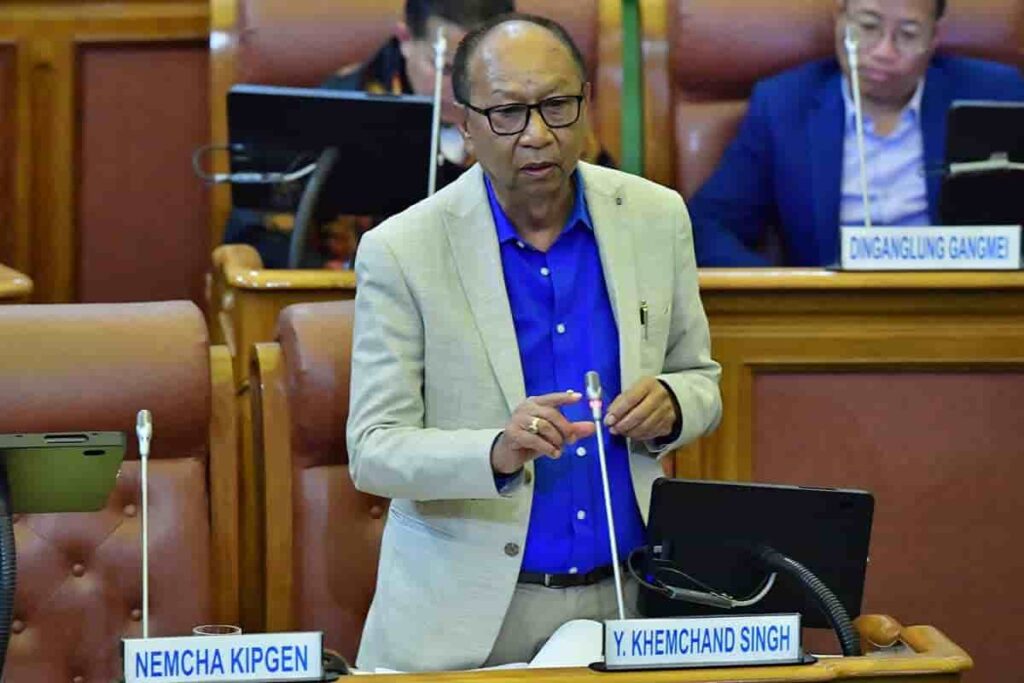
POLITICS Manipur Gets New Chief Minister: Yumnam Khemchand Singh Takes Oath, Pledges Peace and Stability After President’s Rule Imphal: Manipur returned to elected governance on February 4, 2026, with Yumnam Khemchand Singh taking oath as the Chief Minister of Manipur, formally ending months of President’s Rule in the state. The swearing-in marked a politically significant moment for Manipur, which has witnessed prolonged instability and administrative uncertainty. The oath of office and secrecy was administered by Governor Anusuiya Uikey at a ceremony in Imphal, attended by senior political leaders, legislators, officials and party representatives. The ceremony symbolised the restoration of democratic authority in the northeastern state after a period of direct central administration. President’s Rule Ends After Political Uncertainty President’s Rule was imposed in Manipur in 2025 after no political formation was able to demonstrate a stable majority in the 60-member Manipur Legislative Assembly. The prolonged deadlock followed political realignments after the 2022 Assembly elections, leading to governance being carried out directly by the Centre under Article 356 of the Constitution. Following renewed consultations and shifts in legislative support, Yumnam Khemchand Singh was invited to form the government after he staked claim with the backing of a majority of MLAs, crossing the required 31-member majority mark. With the swearing-in on February 4, President’s Rule was officially revoked, restoring legislative and executive authority to an elected government. ‘Peace Is the First Priority’: Chief Minister’s Message In his first remarks after assuming office, Chief Minister Yumnam Khemchand Singh placed peace and stability at the centre of his government’s agenda, reflecting the gravity of the situation Manipur has faced in recent years. Singh emphasised that restoring peace and normalcy would be the topmost priority of his administration, stating that development and progress are not possible without social harmony. He called upon all sections of society to work together, stressing dialogue, cooperation and restraint. “The people of Manipur want peace. Without peace, there can be no development,” Singh said, underlining his commitment to maintaining law and order while addressing the concerns of all communities. He also assured that his government would govern in an inclusive manner and would take every step necessary to rebuild trust between citizens and institutions. Political Background and Leadership Profile A senior leader of the Bharatiya Janata Party (BJP), Yumnam Khemchand Singh has been an experienced political figure in Manipur, with years of involvement in organisational and legislative roles. Known for his grassroots connect, Singh has played a key role in navigating complex political situations within the state. His elevation to the chief minister’s post comes at a time when Manipur requires firm leadership capable of balancing security, reconciliation and governance. Party leaders have described his appointment as a step towards stability and continuity. Governance Challenges Ahead The new government assumes office amid significant challenges. Apart from restoring political stability, Singh’s administration is expected to focus on: Maintaining law and order and ensuring peaceful coexistence across communities Rebuilding administrative momentum after months of President’s Rule Restarting stalled development projects and infrastructure initiatives Strengthening welfare delivery, healthcare, education and employment Working closely with the Centre on security and development matters Observers note that early decisions taken by the new government will be crucial in shaping public confidence. Political Reactions and Public Sentiment The swearing-in was welcomed by leaders of the ruling coalition, who described the end of President’s Rule as a return to democratic normalcy. Opposition parties acknowledged the transition while urging the new government to prioritise transparency, accountability and peace. Civil society organisations and residents expressed cautious optimism, with many hoping that the emphasis on peace would translate into sustained stability and improved governance. Why This Transition Matters The appointment of Yumnam Khemchand Singh as Chief Minister marks a decisive moment for Manipur. Beyond the political change, it signals an attempt to move past uncertainty and focus on reconciliation, governance and development. As the state moves forward, Singh’s repeated emphasis on peace sets the tone for his administration. How effectively his government balances security concerns with inclusive governance will determine Manipur’s political and social trajectory in the months ahead.
Modi Calls Nitin Nabin His ‘Boss’ as New BJP President Takes Charge
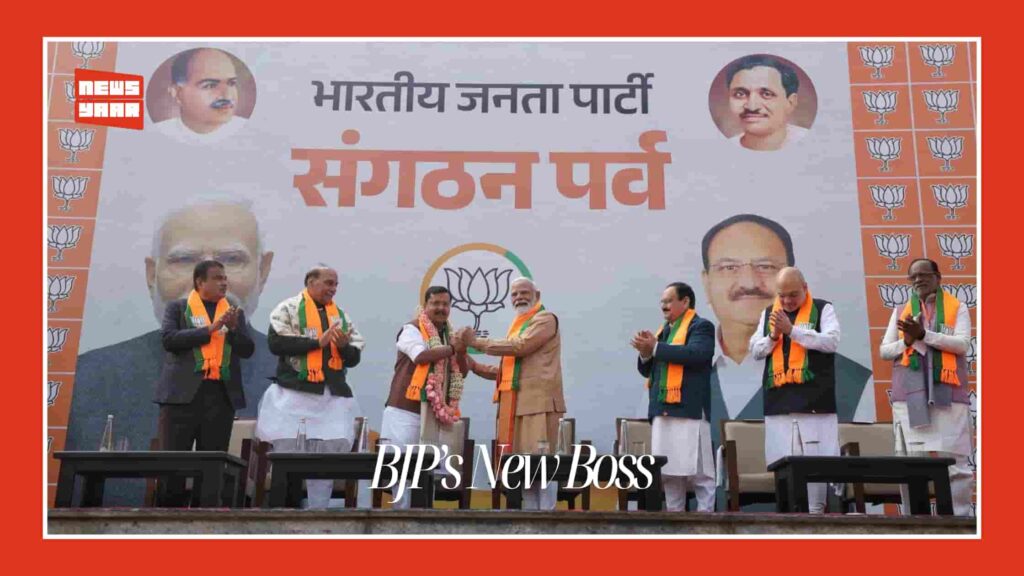
POLITICS Modi Calls Nitin Nabin His ‘Boss’ as New BJP President Takes Charge Newsyaar January 23, 2026 7:58 pm New Delhi: In a moment rich with symbolism and political messaging, Prime Minister Narendra Modi on Tuesday formally welcomed Nitin Nabin as the new national president of the Bharatiya Janata Party (BJP), declaring that in party matters, the newly appointed chief would be his “boss”. The remark, made at a felicitation event on January 20, 2026, with the BJP’s emphasis on organisational discipline and a clear separation between the party and the government. Nitin Nabin, 45, officially assumed charge in the presence of senior party leaders and Prime Minister Modi, marking the beginning of a new phase for the BJP’s organisational leadership. Addressing party workers, Modi said he had presented an account of his own work to the new president, adding with a touch of humour that he now awaited Nabin’s “guidance” and confidential report. “When it comes to party matters, honourable Nitin Nabin ji is my boss. I am a worker,” Modi said, drawing applause from the audience. The Prime Minister had made a similar statement in 2019 alongside then BJP president Amit Shah, reiterating a long-standing message within the party that the organisation functions independently of the government. Highlighting Nabin’s generational outlook, Modi pointed to the new president’s ability to bridge tradition and modernity. He remarked that while he himself grew up listening to news on the radio, Nabin represents a generation comfortable with technology and artificial intelligence, an implicit nod to the BJP’s evolving political strategies in a digital age. Nitin Nabin was officially declared the BJP national president on January 19, following the completion of an extensive internal organisational election process. According to party sources, 37 nominations were filed in his support, all of which were found valid. While the event largely focused on organisational unity, Modi also touched upon broader political issues. He reiterated the BJP’s position on national security, stating that infiltrators posed a serious threat to the country and must be identified and deported. He stressed the importance of learning from the mistakes of other political parties, a veiled reference to the Congress, and urged BJP workers to remain disciplined and connected to grassroots concerns. As Nitin Nabin steps into his new role, he faces the challenge of steering the BJP through complex electoral terrain and internal expectations. His relatively young age and organisational mandate signal a leadership style that blends experience with adaptability, qualities the party believes are essential for navigating the evolving political landscape. The transition, marked by Modi’s symbolic deference, reinforces the BJP’s core message: strong leadership thrives on organisational clarity, collective responsibility, and disciplined separation between party and power. About the Author Politics Reporter Share via Copied Comments Post Comment
Mumbai BMC Election Results 2026: BJP Breaks Shiv Sena Stronghold, Fragmented Mandate Sets New Political Tone
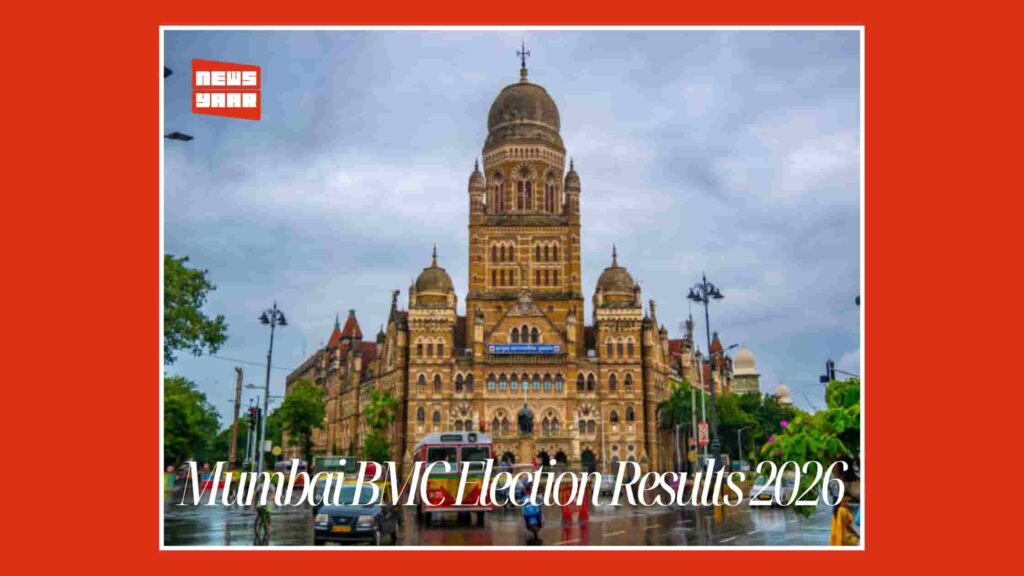
POLITICS Mumbai BMC Election Results 2026: BJP Breaks Shiv Sena Stronghold, Fragmented Mandate Sets New Political Tone Newsyaar January 18, 2026 11:27 am The results of the Brihanmumbai Municipal Corporation (BMC) elections 2026, declared late Friday night, have reconfigured civic politics in Mumbai after years of uncertainty. In a contest marked by shifting alliances and urban development themes, the Bharatiya Janata Party (BJP)-led Mahayuti alliance has emerged as the largest bloc in India’s richest municipal body, ending decades of dominance by the undivided Shiv Sena and reshaping the city’s political landscape. What Is the BMC and Why This Election Matters The Brihanmumbai Municipal Corporation is the administrative body responsible for civic services in Mumbai, including roads, hospitals, sanitation, water supply, and urban infrastructure. With an annual budget of over Rs 74,400 crore, it plays a crucial role in daily life for millions and sets the tone for urban policy in the Mumbai Metropolitan Region. This election was especially significant because it was the first held after a four-year delay and the first civic poll since the Shiv Sena split in 2022, which divided the party into the Eknath Shinde-led faction allied with the BJP and the Uddhav Balasaheb Thackeray-led Shiv Sena (UBT). Final Results: Seat Share and Winning Parties No single party secured an outright majority in the 227-ward BMC, but results show a clear lead for the Mahayuti alliance. Party-wise tally in BMC 2026: Bharatiya Janata Party (BJP): 89 seats Shiv Sena (Shinde faction): 29 seats Shiv Sena (UBT): 65 seats Congress: 24 seats AIMIM: 8 seats MNS: 6 seats Nationalist Congress Party (NCP): 3 seats Samajwadi Party: 2 seats NCP (SP): 1 seat(Majority mark in BMC: 114) With the BJP–Shinde Sena alliance jointly leading in 118 wards, they are well-positioned to form the next civic administration. Key Ward Victories and Local Players Several notable victories across the city shaped the electoral narrative. Highlights include: Ward 2 (BJP): Tejaswini Ghosalkar Ward 214 (BJP): Ajay Patil Ward 123 (UBT): Sunil More Ward 182 (UBT): Milind Vaidya Ward 183 (Congress): Asha Kale These wins reflect how both national and local issues influenced voter decisions across diverse Mumbai neighbourhoods. Political Reactions After the Results Leaders from all major camps offered their perspectives soon after results were declared. Maharashtra Chief Minister Devendra Fadnavis highlighted the alliance’s performance as a reflection of public trust in governance. According to him, the BJP’s share — around 45% vote share — demonstrated a broad urban mandate for development-oriented politics. From the opposition, Shiv Sena (UBT) leader Sanjay Raut said the results showed continued support for the Thackeray brand in many traditional areas, even as the party lost its institutional hold. Why This Is a Turning Point for Mumbai BMC has historically been a bastion of regional identity politics, with the Shiv Sena’s rise intertwined with the ‘Marathi asmita’ narrative — emphasising local pride and mobilisation around regional interests. However, this election suggests a shift toward urban governance themes such as infrastructure, flood management, civic service delivery, and development outcomes, rather than purely identity-based politics. Analysts note that the BJP’s success is the result of a “triple engine” strategy, combining support from the Centre, state leadership, and local organisational strength to appeal to voters focused on performance and delivery. Broader Maharashtra Civic Sweep and Urban Impact The BMC outcome was part of a wider civic sweep by the BJP-led alliance across Maharashtra. The party has secured dominant positions in multiple municipal corporations, including Pune and Pimpri-Chinchwad, further weakening rival factions and establishing itself as the leading force in urban local bodies ahead of future state and national contests. What Comes Next: Leadership and Governance With the alliance poised to control the BMC, the focus now shifts to: Election of the Mayor Formation of key standing committees (finance, public works, health) Early policy signals on infrastructure upgrades, monsoon preparedness, housing redevelopment and sanitation The new administration faces a range of civic challenges that will test its governance approach amidst high public expectations. In Brief BMC election 2026 held after a four-year gap ended long-standing political patterns in Mumbai. The BJP-Shinde Sena alliance crossed the majority mark with 118 wards. Shiv Sena (UBT) held on to 65 seats, showing resilience in core areas. Congress, AIMIM, MNS and smaller parties maintained pockets of influence. Urban governance and development issues appeared to outweigh traditional identity politics. About the Author Politics Reporter Share via Copied Comments Post Comment
Nitin Nabin Appointed BJP National Working President in Major Leadership Move
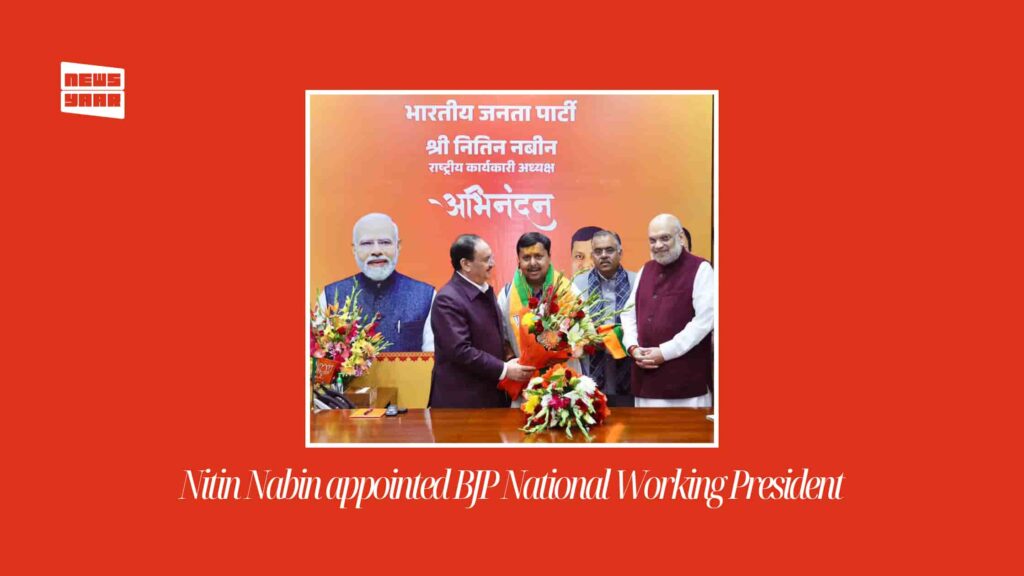
POLITICS Nitin Nabin Appointed BJP National Working President in Major Leadership Move In a significant organisational shift, the Bharatiya Janata Party (BJP) has appointed Nitin Nabin as its National Working President, marking a key moment in the party’s leadership strategy as India approaches a politically important period. The appointment was made by the BJP Parliamentary Board on 14 December 2025, and Nabin formally assumed charge at the party’s headquarters in New Delhi in the presence of senior leaders, including Home Minister Amit Shah and outgoing national president J.P. Nadda. A Generational Change in BJP Leadership At 45 years of age, Nitin Nabin becomes one of the youngest leaders to hold the post of National Working President, signalling a deliberate generational shift within the party’s top ranks. The BJP has described the appointment as recognition of his long organisational experience and grassroots work. Nabin is a five-term MLA from the Bankipur Assembly constituency in Patna and has held multiple ministerial portfolios in the Bihar government, including road construction and urban development. Shortly after taking on his national role, he resigned from his Bihar cabinet positions, adhering to the BJP’s “one person, one post” policy, reinforcing his full-time commitment to the party organisation. Political Outreach and Organisational Work Since his appointment, Nitin Nabin has embarked on an active outreach programme. He was recently seen leading a large roadshow in Patna, where thousands of party workers and supporters greeted him with slogans and flower showers, highlighting his strong support base in his home state. He has also travelled to Assam as part of the BJP’s national campaign to strengthen grassroots engagement under the party’s “Mera Booth Sabse Majboot” initiative, a key organisational push ahead of upcoming state elections. New Delhi Moves and Status In New Delhi, Nitin Nabin has also been allocated a government bungalow in the prestigious Lutyens’ Delhi area, underlining his elevated status within the party and the central leadership’s support. His visibility has risen sharply, with meetings reported with senior political figures and government dignitaries. Within a short span in his new role, he has been actively engaging with party workers and planning organisational strategy for future electoral battles. Future Prospects and Party Direction Political analysts see Nitin Nabin’s appointment as part of the BJP’s broader strategy to strengthen organisational coherence and nurture younger leadership ahead of major elections. There is also speculation that he could be elevated further within the party structure in early 2026, potentially positioning him as a future BJP national president. As Nabin settles into the role, party insiders say his blend of experience, organisational work, and ground presence will be central to the BJP’s efforts to reinforce its political footprint across India. About the Author Politics Reporter Share via Copied Comments Post Comment