




Yelahanka to Get India’s Largest Railway Terminal, Boosting Bengaluru’s Rail Capacity
In a major push to strengthen urban transport infrastructure, Yelahanka has been identified as the site for what is set to become India’s largest railway terminal. The project, announced in 2026, is expected to significantly enhance railway capacity in Bengaluru, a city that has long struggled with congestion across its major stations.With an estimated investment of over ₹5,700 crore, the proposed terminal is being planned as a large-scale, future-ready facility capable of handling growing passenger and train traffic in one of India’s fastest-expanding metropolitan regions.Addressing Growing Pressure on Bengaluru’s Rail NetworkBengaluru’s existing railway infrastructure, including key stations such as KSR Bengaluru City Railway Station, Yeshwantpur Junction, and Sir M. Visvesvaraya Terminal, has been operating under increasing pressure due to rapid urbanisation and rising passenger demand. These stations currently handle a large number of originating and terminating trains, often leading to operational bottlenecks and delays.Railway authorities have been exploring solutions to decentralise traffic and improve efficiency, and the development of a mega terminal in Yelahanka is seen as a critical step in that direction. The project aims to redistribute train operations and reduce dependence on existing congested hubs.Strategic Shift from Devanahalli to YelahankaThe railway terminal was initially proposed near Devanahalli, close to the airport corridor. However, after evaluating logistical and connectivity factors, the plan was shifted to Yelahanka, which offered better integration with the existing railway network.Yelahanka’s location provides direct connectivity to multiple rail routes and is already an important junction in the city’s northern corridor. Its proximity to the Rail Wheel Factory also makes it a suitable site for a coaching terminal, where train maintenance and operational activities can be efficiently managed alongside passenger services.Infrastructure and Design VisionThe proposed terminal is being designed as a modern, high-capacity facility capable of handling a significantly larger volume of trains and passengers compared to existing stations. It is expected to feature multiple platforms, advanced passenger amenities, and integrated infrastructure to support seamless travel.What makes the project particularly noteworthy is the possibility of it being developed as an elevated railway terminal. This design approach, if implemented, would be among the first of its kind in India and would help optimise land use in a densely developing urban area. The project is also likely to incorporate modern architectural and technological features aimed at improving passenger experience and operational efficiency.Integration with Multi-Modal TransportOne of the key aspects of the Yelahanka terminal is its potential to function as a multi-modal transport hub. With Bengaluru expanding its metro network, the terminal is expected to be integrated with upcoming metro lines, along with road connectivity to major parts of the city and access routes leading to the airport.Such integration is expected to make travel more seamless for passengers, reducing transit times and improving last-mile connectivity. The terminal could eventually serve as a crucial link between rail, metro, and air transport systems in the region.Economic and Urban ImpactBeyond transportation, the project is expected to have a wider impact on urban development in north Bengaluru. Large infrastructure investments typically attract commercial activity, real estate growth, and employment opportunities, and the Yelahanka terminal is likely to act as a catalyst in this regard.Improved connectivity and accessibility are also expected to benefit nearby residential and industrial areas, further integrating the region into the city’s economic landscape.Project Status and Way ForwardAs of 2026, the project has moved into the planning phase, with initial approvals such as the Final Location Survey already sanctioned. Detailed planning, design finalisation, and execution phases are expected to follow, with authorities working towards timely implementation of the project.Once completed, the Yelahanka railway terminal is expected to become a landmark in India’s railway infrastructure, not just in terms of size but also in terms of modern design and operational capability.The development of the country’s largest railway terminal in Yelahanka reflects the scale at which India is upgrading its infrastructure to meet future demands. For Bengaluru, the project represents a long-awaited step toward easing congestion, improving connectivity, and building a more efficient and resilient rail network. Video Credit: Curly Tales
Government Announces 7 New Bullet Train Corridors in India: A Transformative Push for High-Speed Connectivity
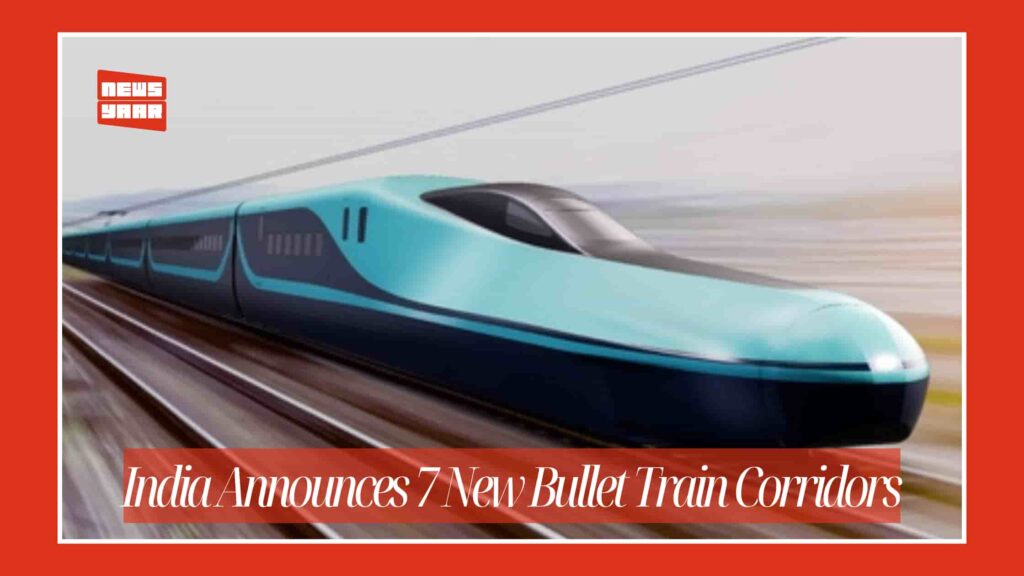
GOVERNMENT Government Announces 7 New Bullet Train Corridors in India: A Transformative Push for High-Speed Connectivity In a landmark expansion of India’s rail infrastructure, the Government of India has announced the development of seven new high-speed rail corridors — popularly referred to as bullet train routes — as part of the Union Budget 2026–27. The ambitious initiative aims to transform inter-city travel by significantly reducing travel times, boosting economic growth and enhancing connectivity between major urban and economic hubs across the country. Announcement and Policy Context Union Finance Minister Nirmala Sitharaman unveiled the corridors during her Budget 2026–27 speech in Parliament, categorising them as “growth connectors” that will promote environmentally sustainable passenger transport systems across India’s rail network. These high-speed corridors complement the Mumbai–Ahmedabad High-Speed Rail Corridor (MAHSR) — India’s first bullet train project — and build on the government’s broader infrastructure and mobility agenda. Railway Minister Ashwini Vaishnaw has confirmed that detailed preparations are underway, with Detailed Project Reports (DPRs) being finalized and pre-construction activities initiated through the National High Speed Rail Corporation Limited (NHSRCL). The government is focused on fast-tracking implementation and standardising high-speed rail system development nationwide. Proposed Bullet Train Corridors: Routes and Connectivity The announcement includes seven high-speed rail corridors that will link key cities and regions across India. These corridors are expected to span nearly 4,000 km and strategically connect major economic, industrial and cultural centres. The routes identified are: Mumbai–Pune High-Speed Rail Corridor — strengthening connectivity within Maharashtra’s economic belt. Pune–Hyderabad High-Speed Rail Corridor — linking western and southern economic hubs. Hyderabad–Bengaluru High-Speed Rail Corridor — a major southern technology and industry link. Hyderabad–Chennai High-Speed Rail Corridor — connecting southern metros with coastal economic zones. Chennai–Bengaluru High-Speed Rail Corridor — improving travel between two major southern cities. Delhi–Varanasi High-Speed Rail Corridor — enhancing northern connectivity with Uttar Pradesh’s cultural capital. Varanasi–Siliguri High-Speed Rail Corridor — extending high-speed reach toward eastern India and gateway regions. Collectively, these corridors aim to connect financial hubs, technology clusters, manufacturing centres and emerging cities with modern high-speed rail infrastructure. Strategic Goals and Economic Rationale Government officials have described the new corridors as not just transport projects but growth engines that will: Reduce travel times drastically between key city pairs (for example, a bullet train between Mumbai and Pune could reduce travel to under an hour), enhancing convenience and productivity. Stimulate regional economic development by creating linked urban-industrial corridors that attract investment, tourism and job creation. Support environmental sustainability by offering cleaner and more energy-efficient alternatives to road and air travel. Drive technology and manufacturing growth by enabling high-speed rail ecosystem development, including engineering, signalling, rolling stock and systems integration. Union Minister Ashwini Vaishnaw has emphasised that the initiative will contribute toward India becoming 100 per cent self-reliant (Atmanirbhar) in high-speed rail technologies, with a focus on leveraging indigenous manufacturing and innovation wherever feasible. Implementation and Timeline While the Mumbai–Ahmedabad corridor is already under construction and expected to begin phased operations starting 2027 for the Surat–Bilimora section and full completion by 2029, the new seven corridors are in the pre-construction and planning stage. Officials have indicated that preparation of DPRs, alignment finalisation, land acquisition and contract documentation will be prioritised over the coming months, with work expected to begin once these foundational studies are complete. Dedicated field teams for each corridor will support expedited project execution. Broader Impact on Indian Railways and Mobility The seven new bullet train corridors represent a shift toward world-class rail mobility in India, aligning with global best practices in high-speed transportation. Once operational, these corridors are expected to: Enhance national connectivity across key economic belts in the west, south, north and east. Reduce congestion on existing air and road networks by providing faster, reliable alternatives. Boost tourism by enabling easy access to major cultural and heritage destinations. Encourage urban transformation through transit-oriented development along high-speed rail alignments. Looking Ahead: A New Era of Rail Travel The announcement of seven additional bullet train corridors marks a transformational phase for Indian Railways, moving the nation closer to a widespread high-speed rail network that complements existing infrastructure and accelerates economic integration. By linking metropolitan centres and regional hubs with modern, efficient rail travel, the government aims to redefine mobility in India and position the country as a global leader in high-speed rail development. Summary of the New Bullet Train Corridors Route Region Strategic Role Mumbai–Pune West Economic mobility in Maharashtra Pune–Hyderabad West–South Industrial and technology linkage Hyderabad–Bengaluru South Connects major IT & innovation hubs Hyderabad–Chennai South Coastal economic corridor Chennai–Bengaluru South Southern metro connectivity Delhi–Varanasi North Links capital with cultural heartland Varanasi–Siliguri North–East Gateway to eastern region
Report says, India beats Japan to become world’s 4th largest economy
GOVERNMENTReport says, India beats Japan to become world’s 4th largest economy Newsyaar January 20, 2026 9:29 am In a milestone moment for the Indian economy, official data and projections indicate that India has surpassed Japan to become the world’s fourth-largest economy, a result of strong growth momentum, robust domestic demand, and strategic economic reforms. With a nominal Gross Domestic Product (GDP) estimated at around USD 4.18 trillion in 2025, India is now ranked fourth globally, trailing only the United States, China, and Germany in size. The shift in rankings reflects decades of economic transformation driven by liberalisation, digital and manufacturing reforms, and one of the world’s most dynamic young labour forces. India’s rise in the global economic order has been steady, moving from the eleventh largest economy in 1990 to the fifth in recent years, ahead of major developed countries such as the United Kingdom before overtaking Japan. According to government releases and international forecasts, the Indian economy’s recent performance has been marked by accelerating GDP growth. Official figures show that India’s real GDP expanded by 8.2 per cent in the second quarter of the 2025–26 fiscal year, up from 7.8 per cent in the previous quarter and 7.4 per cent in the final quarter of 2024–25, led by resilient domestic consumption and expanding services and industrial activity. The government’s year-end economic review highlighted that with a GDP valued at USD 4.18 trillion, India has overtaken Japan and is poised to move into the third spot globally in the next 2.5 to 3 years if current growth continues. Projections suggest India’s GDP could reach as high as USD 7.3 trillion by 2030, potentially placing it above Germany and reinforcing its position as a dominant economic power. India’s ascent has drawn wide attention from business leaders and economists. Industry figures such as Anand Mahindra noted that overtaking Japan, long considered an economic powerhouse, is “no small achievement,” underlining the country’s rapid rise driven by entrepreneurial energy and large-scale reforms. He also stressed that while the milestone is significant, continued focus on per capita income and inclusive development will be critical for sustained progress. The achievement also reflects broader global economic shifts. Japan’s economy has faced challenges from demographic decline and slower growth rates, while India’s younger population, expanding middle class, and increasing integration into global trade and technology supply chains have helped boost its economic trajectory. International agencies, including the International Monetary Fund (IMF), World Bank, and rating agencies like Moody’s and Fitch, have projected continued GDP growth for India over the next several years. Despite this success, some analysts caution that headline GDP figures do not fully capture underlying economic welfare, such as per capita income, where India still lags significantly behind Japan. They argue that while India’s total economic output now ranks fourth, focus on quality of growth, productivity improvements, and equitable income distribution remains essential. For now, India’s leap past Japan into the fourth position underscores a transformative economic journey and a rapidly evolving role in global economic leadership. As India continues to expand its industrial base, innovate in technology and services, and enhance global trade relations, its trajectory toward becoming one of the world’s top three economies appears increasingly plausible. About the AuthorGovernment Reporter Share via Copied Comments Post Comment
Adani–Embraer Tie-Up Signals a New Chapter in India’s Commercial Aircraft Manufacturing

BUSINESSAdani–Embraer Tie-Up Signals a New Chapter in India’s Commercial Aircraft Manufacturing Newsyaar January 20, 2026 8:48 am India is set to make a landmark entry into commercial aircraft manufacturing as the Adani Group partners with Brazilian aerospace major Embraer to assemble regional passenger jets in the country. This development marks the first time India will host a final assembly line for commercial fixed-wing aircraft, placing it among a select group of nations with such advanced aerospace capabilities. The collaboration is widely seen as a significant boost to the government’s Make in India programme and a major step towards building a self-reliant aviation ecosystem. Under the partnership, Embraer’s widely used regional jets, designed for short- to medium-haul routes and seating between 70 and 146 passengers, will be assembled in India through a final assembly line operated by Adani Aerospace. While details regarding the exact location, investment size, and production timeline have not yet been formally announced, industry sources indicate that a comprehensive announcement is expected at the Hyderabad Air Show scheduled later in January 2026. Once operational, the facility will enable aircraft to be assembled, tested, and delivered from Indian soil. The timing of the partnership is particularly significant given India’s rapidly expanding aviation market. India is currently the world’s fastest-growing civil aviation market, with domestic airlines having placed orders for more than 1,800 aircraft to meet rising passenger demand. Until now, the country has depended almost entirely on global manufacturers for commercial aircraft imports. The establishment of a final assembly line is expected to reduce this dependence, generate skilled employment, and catalyse the growth of an indigenous aerospace manufacturing ecosystem. Government officials have indicated that policy support and fiscal incentives may be extended to airlines that place orders for aircraft assembled in India. Such incentives are likely to be structured on a declining basis as order volumes increase, helping the programme gain early traction while encouraging long-term sustainability. The success of this initiative is also expected to strengthen India’s case as a viable global manufacturing hub for high-value aviation products. Beyond commercial aircraft assembly, the Adani Group is positioning itself as a comprehensive aviation services provider. The group has already announced plans to expand into aircraft engine maintenance, repair and overhaul (MRO) services, as well as passenger-to-freighter conversions. By consolidating its aviation assets, including Indamer and Air Works, Adani aims to create a large integrated MRO platform serving both civilian and defence customers. This broader approach is expected to complement the aircraft assembly line by supporting lifecycle services and long-term operational needs. For Embraer, the partnership represents a strategic expansion in one of its fastest-growing markets. The Brazilian manufacturer has operated in India since 2005 and currently has close to 50 aircraft in the country serving the Indian Air Force, government agencies, business jet operators and regional airline Star Air. In October 2025, Embraer strengthened its commitment by opening an office in New Delhi to support its commercial aviation, defence, services and emerging urban air mobility segments. Industry experts believe the Adani–Embraer collaboration could have wider implications for the global aviation industry. By demonstrating the viability of commercial aircraft assembly in India, the project may encourage larger manufacturers such as Airbus and Boeing to consider setting up similar facilities in the country. If successful, the initiative could redefine India’s role in the global aerospace value chain and mark the beginning of a new era in domestic aircraft manufacturing. About the AuthorBusiness Reporter Share via Copied Comments Post Comment
Vibrant Gujarat Global Summit 2026: Rajkot to Host Regional Conference Focusing on Saurashtra–Kutch Growth

EVENTSVibrant Gujarat Global Summit 2026: Rajkot to Host Regional Conference Focusing on Saurashtra–Kutch Growth Newsyaar January 19, 2026 7:07 pm The Vibrant Gujarat initiative, one of India’s most influential investment and policy platforms, will continue its next phase in 2026 through region-specific conferences, with Rajkot hosting the Vibrant Gujarat Regional Conference (VGRC) for the Saurashtra–Kutch region. The move marks a strategic shift towards decentralised economic development, taking the Vibrant Gujarat vision beyond mega summits and closer to regional industry clusters. While the Vibrant Gujarat Global Summit is scheduled to return in 2027, the 2026 regional conferences are designed to strengthen grassroots industrial growth, attract targeted investments and align regional strengths with national development priorities. Dates and Venue Event: Vibrant Gujarat Regional Conference (Saurashtra–Kutch)Dates: January 11 and 12, 2026Exhibition Duration: January 11 to January 15, 2026Venue: Marwadi University, Rajkot, Gujarat Rajkot, a major industrial and commercial hub of Saurashtra, has been chosen for its strong presence in engineering goods, auto components, ceramics, MSMEs and export-oriented manufacturing. What Is the Vibrant Gujarat Regional Conference? The Vibrant Gujarat Regional Conference is an extension of the state’s flagship Vibrant Gujarat Global Summit, launched to promote region-specific investment, sector-based policy discussions and local entrepreneurship. Unlike the larger biennial global summit held in Gandhinagar, the regional conferences focus on: District-level industrial strengthsLocal infrastructure and logisticsMSMEs, startups and traditional industriesEmployment generation and skill development The Rajkot edition will specifically address economic opportunities and challenges in Saurashtra and Kutch, two regions with high industrial potential and strategic coastal advantages. Key Focus Areas and Sectors The 2026 Rajkot conference will focus on both traditional industries and emerging sectors critical to Gujarat’s long-term growth strategy. Core Industry Sectors Engineering and auto componentsCeramics and manufacturing clustersAgro-processing and food industriesPorts, logistics and maritime tradePetrochemicals and minerals Emerging and Priority Sectors Renewable energy and green manufacturingGreen hydrogen and clean fuel projectsDefence manufacturing and innovationStartups, MSMEs and entrepreneurshipSkill development and employment-linked industriesTourism and cultural economy The discussions are aligned with India’s long-term development roadmap, including the Viksit Bharat @2047 vision. Key Events and Highlights The Vibrant Gujarat Regional Conference 2026 will feature a range of policy, business and networking platforms: Inaugural session and leadership addresses, including participation from senior central and state government leadersSector-specific conferences and panel discussions focusing on investment opportunities, policy reforms and technology adoptionReverse Buyer–Seller Meets, enabling direct interaction between domestic producers and international buyersVibrant Gujarat Regional Exhibition, showcasing industrial innovation, products and services across key sectorsUdyami Mela, aimed at promoting startups, MSMEs, women entrepreneurs and government schemes The exhibition will run for five days, providing extended engagement opportunities for investors, businesses and the general public. Investment Outlook and Regional Impact The Rajkot conference is expected to play a significant role in: Attracting fresh domestic and foreign investmentsStrengthening Gujarat’s manufacturing and export ecosystemPromoting sustainable and green industrial practicesExpanding employment opportunities in Saurashtra and KutchPositioning the region as a multi-sector industrial and logistics hub Previous regional conferences under the Vibrant Gujarat banner have resulted in substantial investment commitments and long-term industrial planning at the district level. Who Should Attend The event is relevant for: Indian and global investorsIndustry leaders and exportersStartups and MSMEsPolicy makers and government officialsEntrepreneurs and business associationsProfessionals interested in Gujarat’s industrial and economic roadmap Participation details and registrations are available through the official Vibrant Gujarat platforms. Why the 2026 Rajkot Conference Matters By hosting the Vibrant Gujarat Regional Conference in Rajkot, the Gujarat government is reinforcing its approach of balanced regional development, ensuring that growth opportunities extend beyond major urban centres. The 2026 edition positions Saurashtra–Kutch as a critical contributor to Gujarat’s and India’s economic future, combining industrial strength, coastal advantage, innovation and sustainability.https://www.youtube.com/watch?v=hBg3NqZmVAk&t=1310sVideo credit: YT@/NaMo About the AuthorEvents Reporter Share via Copied Comments Post Comment