




India AI Impact Summit 2026: Detailed Agenda for Global AI Action in New Delhi
EVENTS India AI Impact Summit 2026: Detailed Agenda for Global AI Action in New Delhi New Delhi, February 9, 2026 – India gears up for the India AI Impact Summit 2026, set for February 16-20 at Bharat Mandapam, Pragati Maidan, New Delhi, the primary venue for the India AI Impact Summit 2026, which will host the main events on February 19-20. Hosted by the Ministry of Electronics and Information Technology (MeitY), this first Global South edition, billed by Union Minister Ashwini Vaishnaw as the “largest yet,” transitions AI discourse from vision to verifiable impact under the “Three Sutras”: People, Planet, and Progress. Some sources mention a broader program across February 16-20, potentially using additional Delhi venues like Sushma Swaraj Bhawan for side events, sessions, or exhibitions. Bharat Mandapam, one of India’s largest convention centers, was upgraded by NDMC for this flagship gathering. Chief Guests and Stellar Lineup Prime Minister Narendra Modi serves as the Chief Guest, inaugurating on February 16 with a keynote and hosting a leaders’ dinner. Expected heads of government include representatives from Singapore, the UAE, and Brazil (15-20 total), plus 50+ ministers. Key speakers feature Google’s Sundar Pichai, Anthropic’s Dario Amodei, Microsoft’s Satya Nadella, and Indian luminaries like Nandan Nilekani (Infosys co-founder) and Ola’s Bhavish Aggarwal. Over 40 CEOs from Reliance, TCS, and global firms join, along with a Chinese delegation, signaling a thaw in collaboration. Event Schedule and Dialogues Feb 16: Inauguration, Modi address, CEO roundtable. Feb 17-18: Plenary sessions and seven “Chakras” (working groups) on core topics. Feb 19: Startup showcase (500+ ventures), AI model launches, bilateral dialogues. Feb 20: Closing with actionable declarations. Expect 500+ parallel sessions, hackathons, and exhibitions. Dialogues include G20-style tracks on AI ethics, public-private partnerships, and Global South priorities. Participating Governments in India AI Impact Summit 2026 The summit, hosted by India’s Ministry of Electronics and Information Technology (MeitY) under the IndiaAI Mission, expects involvement from over 100 countries. Key highlights: High-Level Representation: 15-20 heads of government and 50+ ministers confirmed, including from Singapore, UAE, Brazil, and others. China: Delegation attending after India’s formal invitation, signaling AI collaboration. Preceding Hosts: Builds on summits by UK (2023 Bletchley), South Korea (2024 Seoul), France (2025 Paris). Collaborators: NITI Aayog (India’s policy think tank), state governments like Uttarakhand (pre-summit host), and international bodies (ITU, World Economic Forum). Global Engagement: Multinational working groups across Chakras, with US, UK, EU, and ASEAN nations active in prep consultations. Key Topics and Seven Chakras The India AI Impact Summit 2026 is structured around three foundational “Sutras” (People, Planet, Progress) that guide its discussions, with seven interconnected “Chakras” (working groups) translating these into specific, actionable themes. Core Sutras People: Focuses on human-centric AI, including safeguarding rights, enhancing access to services (e.g., healthcare, education), building user trust, workforce reskilling amid job impacts, and ensuring equitable benefits across societies. Planet: Addresses sustainable AI deployment, such as energy-efficient models, responsible resource use (e.g., reducing GPU/data center power demands), and AI applications for climate action, environmental monitoring, and resilience. Progress: Emphasizes inclusive innovation, capacity-building, productivity gains in sectors like agriculture and manufacturing, economic growth, and bridging the AI divide for the Global South. Seven Chakras (Key Discussion Topics)These working groups, involving 100+ countries, cover: AI governance and ethical frameworks. Trust and safety protocols for AI models (e.g., bias mitigation, transparency). AI’s impact on work and future jobs. Sector-specific applications (healthcare, agriculture, industry). Innovation and scalable solutions. Sustainability and environmental integration. Equitable access, inclusion, and development outcomes. Sessions will also spotlight IndiaAI Mission launches, startup innovations, and global standards, prioritizing “on-ground” results over regulations. What to Expect in India AI Summit? MeitY leads with partners like NITI Aayog, NASSCOM, World Economic Forum, and ITU. Corporate backers include Google, Microsoft, NVIDIA (GPU focus), and Indian firms like Tata and Adani (data centers). Governments from US, UK, EU, and ASEAN collaborate. Attendees (10,000+), policymakers, researchers, startups, NGOs, can expect networking zones, live demos (e.g., edge AI), policy labs, and a “Global AI Talent Fair.” Launches include indigenous foundational models under the Rs 10,370 crore IndiaAI Mission. India’s Strategic Push Amid Hurdles Echoing Bletchley (2023), Seoul (2024), and Paris (2025), India’s summit prioritizes “on-ground” wins for 1.4 billion people, as per Secretary S. Krishnan. AI could add $500B to GDP (NASSCOM), but challenges like GPU imports persist—eased by US trade deals and data center tax holidays to 2047. Budget 2026-27 tweaks fund nuclear-powered AI infra, as Vaishnaw eyes energy self-reliance. Vaishnaw hailed “phenomenal” global buy-in, with NDMC upgrading venues. Beyond talks, expect MoUs on compute sharing, talent visas, and sustainable AI pacts, positioning India as an AI diplomacy hub. This summit promises not just dialogue, but deliverables: inclusive, green AI for humanity’s progress. Video credit: YT@/Digital India
India, France Hold High-Level Talks on $36–39 Billion Rafale Fighter Jet Deal
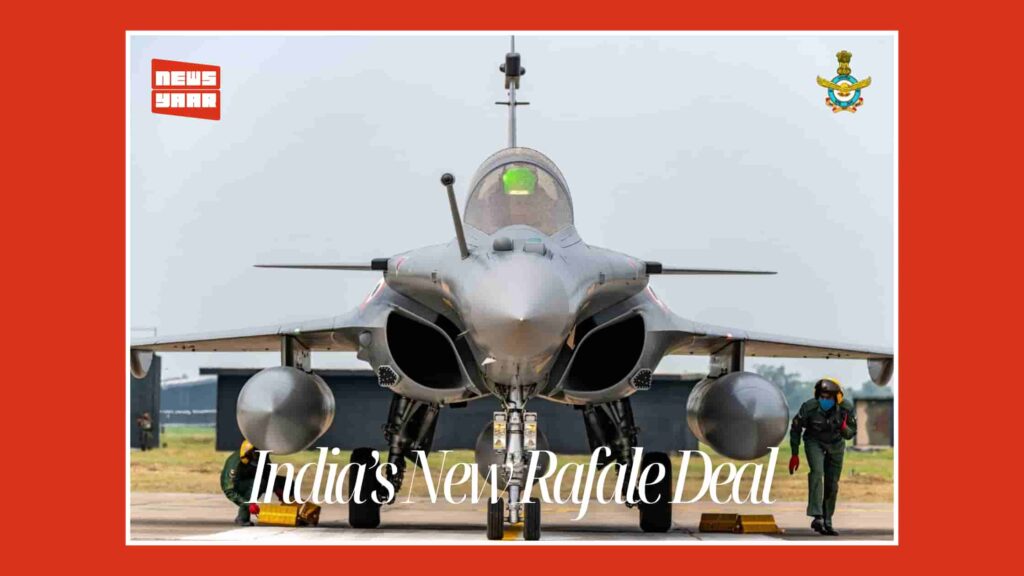
DEFENCEIndia, France Hold High-Level Talks on $36–39 Billion Rafale Fighter Jet Deal Newsyaar January 20, 2026 6:49 pm New Delhi is preparing for crucial high-level discussions with France this week on a proposal to acquire 114 additional Rafale fighter jets, a defence deal estimated at around $36–39 billion (approximately ₹3.25 trillion). If cleared, the agreement would become India’s largest-ever defence procurement, significantly boosting the combat capability of the Indian Air Force (IAF) and deepening strategic ties between the two countries. According to defence officials, the proposal will be reviewed at a senior-level Defence Ministry meeting after months of internal assessment by the IAF. The plan, formally known as the Statement of Case, must receive Defence Ministry approval before being sent to the Cabinet Committee on Security (CCS), the highest authority on defence decisions in India. The proposed acquisition comes at a critical time for the Indian Air Force, which continues to face a shortage of fighter squadrons. Several squadrons are operating below sanctioned strength, raising concerns over long-term operational readiness amid evolving regional security challenges. If approved, the deal would raise India’s total Rafale fleet to 176 aircraft, including the 36 Rafale jets already in service with the IAF and 26 Rafale-M jets contracted by the Indian Navy for aircraft carrier operations. India would then become one of the world’s largest operators of the Rafale platform. A key feature of the proposal is its strong Make in India component. Defence sources say over 30 per cent of the aircraft content would be indigenous, with most of the jets assembled domestically. Only 12 to 18 aircraft are expected to be delivered in “fly-away” condition for immediate operational use, while the rest would be produced in India in partnership with local industry. India is also seeking French approval to integrate indigenously developed weapons and electronic systems onto the Rafale. However, officials noted that the aircraft’s proprietary source codes would remain under French control, consistent with global defence norms. The deal is expected to significantly expand Dassault Aviation’s industrial footprint in India. Plans include enhanced maintenance, repair and overhaul (MRO) facilities and a proposed engine maintenance hub for Rafale’s M88 engines in Hyderabad, which could serve regional requirements as well. Indian private sector firms, including the Tata Group, are likely to play a major role in manufacturing and sustainment activities. The Rafale proposal comes amid offers from other global defence majors, including the United States’ F-35 stealth fighter and Russia’s Su-57. However, Indian officials have emphasised that proven operational performance and immediate readiness are key priorities. The Rafale’s advanced avionics, sensors and electronic warfare systems have reportedly performed strongly during recent IAF exercises. The talks follow the 38th India–France Strategic Dialogue, co-chaired by National Security Adviser Ajit Doval and French President Emmanuel Macron’s diplomatic adviser Emmanuel Bonne. Defence cooperation, technology partnerships and joint production were among the key issues discussed, setting the stage for an expected visit by President Macron to India. While the Rafale deal is still under consideration, defence analysts say it reflects India’s balanced approach, combining foreign technology with domestic manufacturing, to modernise its armed forces in an increasingly complex Indo-Pacific security environment. About the AuthorDefence Reporter Share via Copied Comments Post Comment