




India AI Impact Summit 2026: Detailed Agenda for Global AI Action in New Delhi
EVENTS India AI Impact Summit 2026: Detailed Agenda for Global AI Action in New Delhi New Delhi, February 9, 2026 – India gears up for the India AI Impact Summit 2026, set for February 16-20 at Bharat Mandapam, Pragati Maidan, New Delhi, the primary venue for the India AI Impact Summit 2026, which will host the main events on February 19-20. Hosted by the Ministry of Electronics and Information Technology (MeitY), this first Global South edition, billed by Union Minister Ashwini Vaishnaw as the “largest yet,” transitions AI discourse from vision to verifiable impact under the “Three Sutras”: People, Planet, and Progress. Some sources mention a broader program across February 16-20, potentially using additional Delhi venues like Sushma Swaraj Bhawan for side events, sessions, or exhibitions. Bharat Mandapam, one of India’s largest convention centers, was upgraded by NDMC for this flagship gathering. Chief Guests and Stellar Lineup Prime Minister Narendra Modi serves as the Chief Guest, inaugurating on February 16 with a keynote and hosting a leaders’ dinner. Expected heads of government include representatives from Singapore, the UAE, and Brazil (15-20 total), plus 50+ ministers. Key speakers feature Google’s Sundar Pichai, Anthropic’s Dario Amodei, Microsoft’s Satya Nadella, and Indian luminaries like Nandan Nilekani (Infosys co-founder) and Ola’s Bhavish Aggarwal. Over 40 CEOs from Reliance, TCS, and global firms join, along with a Chinese delegation, signaling a thaw in collaboration. Event Schedule and Dialogues Feb 16: Inauguration, Modi address, CEO roundtable. Feb 17-18: Plenary sessions and seven “Chakras” (working groups) on core topics. Feb 19: Startup showcase (500+ ventures), AI model launches, bilateral dialogues. Feb 20: Closing with actionable declarations. Expect 500+ parallel sessions, hackathons, and exhibitions. Dialogues include G20-style tracks on AI ethics, public-private partnerships, and Global South priorities. Participating Governments in India AI Impact Summit 2026 The summit, hosted by India’s Ministry of Electronics and Information Technology (MeitY) under the IndiaAI Mission, expects involvement from over 100 countries. Key highlights: High-Level Representation: 15-20 heads of government and 50+ ministers confirmed, including from Singapore, UAE, Brazil, and others. China: Delegation attending after India’s formal invitation, signaling AI collaboration. Preceding Hosts: Builds on summits by UK (2023 Bletchley), South Korea (2024 Seoul), France (2025 Paris). Collaborators: NITI Aayog (India’s policy think tank), state governments like Uttarakhand (pre-summit host), and international bodies (ITU, World Economic Forum). Global Engagement: Multinational working groups across Chakras, with US, UK, EU, and ASEAN nations active in prep consultations. Key Topics and Seven Chakras The India AI Impact Summit 2026 is structured around three foundational “Sutras” (People, Planet, Progress) that guide its discussions, with seven interconnected “Chakras” (working groups) translating these into specific, actionable themes. Core Sutras People: Focuses on human-centric AI, including safeguarding rights, enhancing access to services (e.g., healthcare, education), building user trust, workforce reskilling amid job impacts, and ensuring equitable benefits across societies. Planet: Addresses sustainable AI deployment, such as energy-efficient models, responsible resource use (e.g., reducing GPU/data center power demands), and AI applications for climate action, environmental monitoring, and resilience. Progress: Emphasizes inclusive innovation, capacity-building, productivity gains in sectors like agriculture and manufacturing, economic growth, and bridging the AI divide for the Global South. Seven Chakras (Key Discussion Topics)These working groups, involving 100+ countries, cover: AI governance and ethical frameworks. Trust and safety protocols for AI models (e.g., bias mitigation, transparency). AI’s impact on work and future jobs. Sector-specific applications (healthcare, agriculture, industry). Innovation and scalable solutions. Sustainability and environmental integration. Equitable access, inclusion, and development outcomes. Sessions will also spotlight IndiaAI Mission launches, startup innovations, and global standards, prioritizing “on-ground” results over regulations. What to Expect in India AI Summit? MeitY leads with partners like NITI Aayog, NASSCOM, World Economic Forum, and ITU. Corporate backers include Google, Microsoft, NVIDIA (GPU focus), and Indian firms like Tata and Adani (data centers). Governments from US, UK, EU, and ASEAN collaborate. Attendees (10,000+), policymakers, researchers, startups, NGOs, can expect networking zones, live demos (e.g., edge AI), policy labs, and a “Global AI Talent Fair.” Launches include indigenous foundational models under the Rs 10,370 crore IndiaAI Mission. India’s Strategic Push Amid Hurdles Echoing Bletchley (2023), Seoul (2024), and Paris (2025), India’s summit prioritizes “on-ground” wins for 1.4 billion people, as per Secretary S. Krishnan. AI could add $500B to GDP (NASSCOM), but challenges like GPU imports persist—eased by US trade deals and data center tax holidays to 2047. Budget 2026-27 tweaks fund nuclear-powered AI infra, as Vaishnaw eyes energy self-reliance. Vaishnaw hailed “phenomenal” global buy-in, with NDMC upgrading venues. Beyond talks, expect MoUs on compute sharing, talent visas, and sustainable AI pacts, positioning India as an AI diplomacy hub. This summit promises not just dialogue, but deliverables: inclusive, green AI for humanity’s progress. Video credit: YT@/Digital India
Wings India 2026: Celebrating Aviation Excellence and Cultural Unity in the Skies
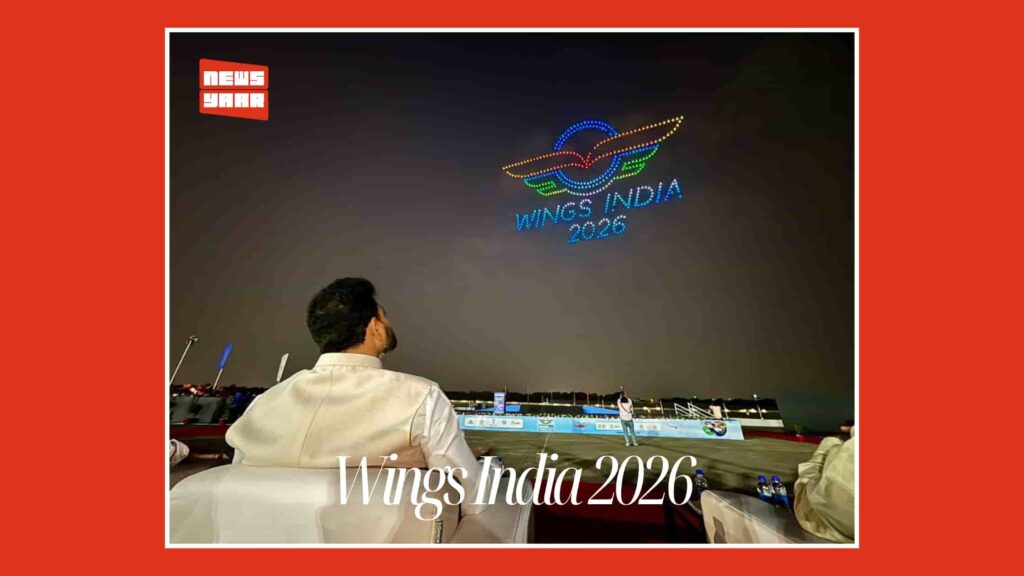
EVENTS Wings India 2026: Celebrating Aviation Excellence and Cultural Unity in the Skies Newsyaar February 5, 2026 6:31 pm Gujarat wins top aviation award as Air India Express showcases India’s rich heritage through music and art Hyderabad: The Wings India 2026 aviation expo, held at Begumpet Airport from January 28-31, has emerged as more than just an industry gathering—it’s a celebration of how aviation connects cultures, builds communities, and drives economic progress across the nation. The four-day event brought together thousands of aviation professionals, exhibitors, and enthusiasts from around the world, highlighting India’s position as one of the fastest-growing aviation markets globally. From cutting-edge technology exhibits to cultural performances on the tarmac, the expo demonstrated that modern aviation is about more than just moving people—it’s about creating meaningful connections. Gujarat Soars High with Prestigious Recognition Gujarat received the coveted ‘Best State for Promotion of Aviation Ecosystem’ award, presented by Union Minister for Civil Aviation Shri K. Ram Mohan Naidu. The state shared this honor with Telangana and Uttarakhand, recognizing their exceptional contributions to India’s aviation sector. KL Bachani, Gujarat’s Civil Aviation Commissioner, attributed the achievement to Chief Minister Bhupendra Patel’s visionary leadership and the state’s focus on world-class infrastructure. “This honor reflects Gujarat’s commitment to making air travel more accessible for citizens while driving economic growth,” Bachani said. The award acknowledges Gujarat’s impressive progress in aviation infrastructure, including maintenance, repair, and overhaul (MRO) facilities and the aircraft leasing sector. This marks Gujarat’s third consecutive recognition at Wings India, having previously won awards in 2022 and 2024, demonstrating sustained excellence in aviation development. When Aviation Meets Art: Air India Express’s Cultural Showcase One of the most memorable moments at Wings India 2026 was Air India Express’s spectacular cultural performance featuring legendary singer Usha Uthup. The unique event took place on the airport tarmac beside the airline’s stunning first line-fit Boeing 737-8 aircraft, VT-RNT, adorned with livery inspired by traditional Parsi Gara embroidery. Uthup performed alongside talented artists from eleven Indian states: Andhra Pradesh, Assam, Delhi, Gujarat, Jammu & Kashmir, Karnataka, Kerala, Maharashtra, Odisha, Punjab, and Tamil Nadu. The performance created a vibrant tapestry of India’s diverse cultural heritage against the backdrop of modern aviation. “Music is a language that connects people across cultures and geographies,” Uthup said. “Performing at Wings India as the country’s cultural ambassador makes this truly special.” Aviation with Heart: Connecting People, Not Just Places Siddhartha Butalia, Chief Marketing Officer of Air India Express, emphasized the deeper purpose behind aviation. “In an increasingly digitally connected world, the true value of travel lies in real, immersive experiences and meaningful human connections,” he explained. The airline also received the prestigious ‘Domestic Connectivity’ award from the Ministry of Civil Aviation, recognizing its efforts to expand air travel access across India. This follows their ‘Sustainability Champions’ recognition at Wings India 2024. Air India Express’s ‘Tales of India’ initiative showcases India’s artistic heritage through aircraft liveries featuring indigenous designs like Kalamkari, Bandhani, Jamawar, Warli, and Phulkari. Their ‘Gourmair’ in-flight dining extends this cultural celebration to regional cuisines, featuring special menus for festivals like Onam, Navratri, and Diwali. The new Boeing 737-8 aircraft features ergonomically designed seats, fast-charging power outlets, on-board ovens for hot meals, spacious overhead bins, and Boeing’s Sky Interior with soothing mood lighting, proving that comfort and culture can fly together. Building Tomorrow’s Skies Today Wings India 2026 demonstrated that India’s aviation sector is not just about economic growth; it’s about inclusivity, sustainability, and preserving cultural identity while embracing innovation. As states like Gujarat lead infrastructure development and airlines like Air India Express celebrate regional diversity, Indian aviation is truly paving the future from design to deployment. The event reinforced that when aviation connects people meaningfully, everyone wins, from passengers experiencing rich cultural journeys to states driving economic development through better connectivity. About the Author Events Reporter Share via Copied Comments Post Comment
Union Budget 2026–27: Government Raises Capex, Boosts Defence, Maintains Fiscal Consolidation Path
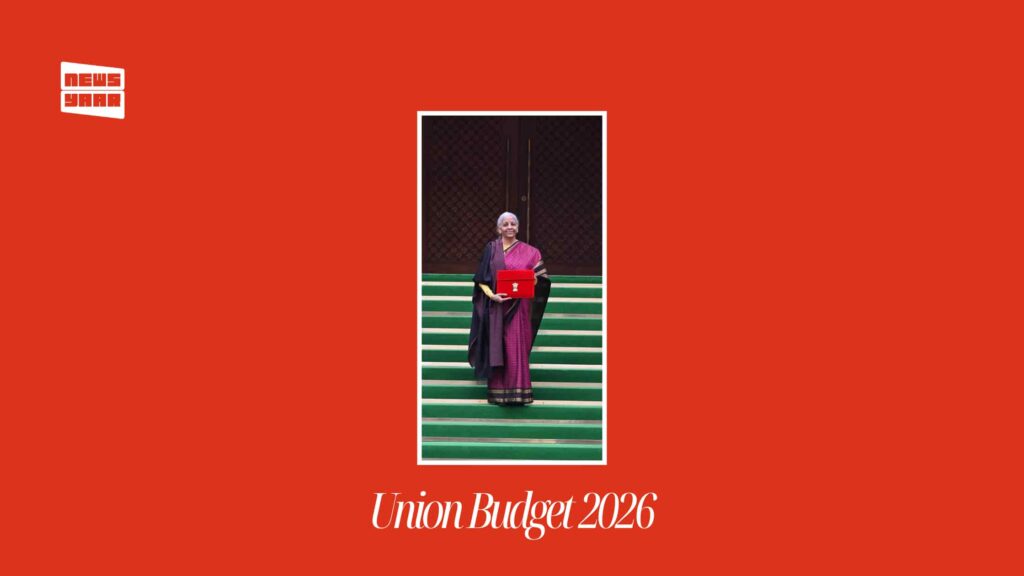
GOVERNMENT Union Budget 2026–27: Government Raises Capex, Boosts Defence, Maintains Fiscal Consolidation Path Newsyaar February 2, 2026 9:37 pm The Union Budget for 2026–27, presented by Finance Minister Nirmala Sitharaman in Parliament on Saturday, has laid out a comprehensive fiscal roadmap aimed at sustaining economic growth, strengthening infrastructure, enhancing national security and maintaining fiscal discipline amid global uncertainty. The Budget pegs the total expenditure of the Union government at ₹53.5 lakh crore for FY27, marking a sharp increase from the revised estimate of about ₹49.6 lakh crore in FY26. The increase reflects the government’s continued emphasis on public investment, defence preparedness and social sector spending. According to Budget documents, total receipts excluding borrowings are estimated at ₹36.5 lakh crore, while gross tax revenue is projected at ₹44.04 lakh crore, up from ₹42.7 lakh crore in the current financial year. Net tax receipts to the Centre are estimated at ₹28.7 lakh crore after devolution to states. To bridge the gap between receipts and expenditure, the Centre has proposed gross market borrowings of ₹17.2 lakh crore, with net market borrowings pegged at ₹11.7 lakh crore for 2026–27. Fiscal Deficit and Debt Position The government has projected the fiscal deficit at 4.3 per cent of GDP for FY27, marginally lower than the previous year, signalling a continued commitment to fiscal consolidation. The debt-to-GDP ratio is estimated at 55.6 per cent, compared with around 56.1 per cent in FY26, indicating a gradual reduction in sovereign debt levels. Finance Minister Sitharaman said the government remains focused on balancing growth imperatives with macroeconomic stability, even as it scales up spending on infrastructure and security. Capital Expenditure at Record High Capital expenditure has once again emerged as a central pillar of the Budget. The government has allocated ₹12.2 lakh crore towards capital expenditure in FY27, compared to ₹11.2 lakh crore in FY26. At 4.4 per cent of GDP, capex remains at its highest level in over a decade. The enhanced allocation will support investments in roads, railways, ports, urban infrastructure, logistics and digital connectivity, with the aim of crowding in private investment and improving long-term productivity. The Ministry of Road Transport and Highways has been allocated around ₹3.09 lakh crore, while Indian Railways has received ₹2.81 lakh crore, continuing the focus on network expansion, modernisation and safety. Defence Allocation Sees Major Jump Defence spending witnessed one of the most significant increases in the Union Budget. The total defence allocation for FY27 has been pegged at ₹7.84 lakh crore, up from ₹6.81 lakh crore in FY26. Of this, capital outlay stands at ₹2.19 lakh crore, reflecting a strong push towards military modernisation and indigenous defence manufacturing. Revenue expenditure, including pensions and operational costs, has been placed at ₹5.54 lakh crore. Within the capital budget, allocations include ₹63,733 crore for aircraft and aero engines, ₹25,023 crore for naval platforms, and enhanced funding for missiles, armoured vehicles and advanced defence technologies. Taxation: Stability and Simplification The Budget has maintained status quo on personal income tax slabs, providing stability to taxpayers. The government reiterated its commitment to simplifying tax administration and reducing litigation. The Finance Minister confirmed that the new Income Tax Act, 2025, which aims to replace the Income Tax Act of 1961, will come into effect from April 1, 2026, introducing clearer language and streamlined procedures. On the indirect tax front, customs duties were rationalised to support domestic manufacturing by reducing duties on selected capital goods and raw materials, while levies on certain imported luxury items were increased. Ministry-wise Allocations Among all ministries, the Ministry of Finance received the largest allocation at approximately ₹19.72 lakh crore, primarily towards interest payments, subsidies and transfers. The Ministry of Home Affairs has been allocated around ₹2.55 lakh crore, while the Ministry of Consumer Affairs, Food and Public Distribution received ₹2.39 lakh crore, reflecting continued support for food security and subsidies. The Ministry of Education has been allocated about ₹1.39 lakh crore, with increased funding for school education, higher education and skill development. The Ministry of Health and Family Welfare has received approximately ₹1.06 lakh crore, aimed at strengthening public healthcare infrastructure and services. Agriculture and Rural Economy Agriculture and rural development remain key focus areas. The Budget continues support for minimum support price (MSP) operations, irrigation projects and agri-infrastructure development. Allocations for rural employment schemes and farmer welfare programmes have been maintained to support rural incomes and consumption. MSMEs, Employment and Industry To support job creation and small businesses, the government expanded credit guarantee schemes for micro, small and medium enterprises (MSMEs) and announced measures to ease access to institutional finance. Skill development programmes received higher allocations to align workforce capabilities with emerging industry needs. The manufacturing and export sectors are expected to benefit from infrastructure investments, stable tax policies and continued incentives under production-linked incentive (PLI) schemes. Green Growth and Energy Transition The Budget reaffirmed India’s commitment to sustainable development, with increased allocations for renewable energy, green hydrogen, electric mobility and climate-resilient infrastructure. Incentives for electric vehicles and clean energy projects were extended to support the transition to a low-carbon economy. Market Borrowing and Revenue Outlook The government expects improved tax buoyancy, supported by steady economic growth and compliance measures. Gross tax revenue growth is projected to support higher spending without significantly widening the deficit. Bond markets are expected to closely track the government’s borrowing programme and fiscal trajectory in the coming months. Overall Assessment The Union Budget 2026–27 presents a calibrated approach focused on infrastructure-led growth, defence preparedness, fiscal prudence and inclusive development. By sustaining high public investment while gradually lowering the fiscal deficit, the government aims to support economic momentum amid global headwinds. While the immediate impact will be seen in infrastructure activity and defence manufacturing, the broader effects of the Budget are expected to unfold through higher private investment, job
NDRF Raising Day 2026: Recent Operations and Observations

GOVERNMENT NDRF Raising Day 2026: Recent Operations and Observations Newsyaar January 20, 2026 2:36 pm India on January 19 observed NDRF Raising Day, marking 20 years since the formation of the National Disaster Response Force (NDRF), a specialised force that has become synonymous with courage, speed and professionalism during disasters. Established in 2006 under the Disaster Management Act, 2005, the NDRF was created to strengthen India’s preparedness and response mechanism against natural and man-made calamities. From devastating floods and cyclones to earthquakes, landslides, industrial accidents and building collapses, the NDRF has played a crucial role in saving lives across the country. Over the past two decades, the force has evolved into a highly trained, multi-skilled unit capable of responding to complex emergencies both in India and abroad. On Raising Day, tributes poured in from across the political spectrum. Prime Minister Narendra Modi lauded the NDRF for its “professionalism, courage and unwavering resolve,” while Home Minister Amit Shah described the force as a “pillar of trust for citizens during disasters,” paying homage to personnel who lost their lives in the line of duty. The NDRF operates under the Ministry of Home Affairs and currently comprises multiple battalions deployed strategically across the country to ensure rapid response. Each battalion is trained in specialised disaster response skills such as flood rescue, collapsed structure search and rescue, chemical, biological, radiological and nuclear (CBRN) emergencies, and medical first response. What sets the NDRF apart is not just its response capability but also its focus on community awareness and capacity building. The force regularly conducts mock drills, school safety programmes and training sessions for civilians, local authorities and first responders to minimise loss of life during emergencies. In recent years, the NDRF has been at the forefront of major rescue operations, including flood relief missions, cyclone response along India’s eastern and western coasts, and urban rescue operations following infrastructure failures. Its personnel often work in extreme conditions, navigating submerged villages, unstable debris and hazardous environments, to reach those in distress. Beyond national borders, NDRF teams have also represented India in international humanitarian assistance missions, reinforcing the country’s image as a responsible global responder. The 2026 Raising Day was marked by ceremonial parades, award presentations and social initiatives across NDRF battalions. Senior officials and state leaders used the occasion to highlight the growing importance of disaster resilience in an era marked by climate change and extreme weather events. Emphasis was laid on technology adoption, advanced training and inter-agency coordination to further strengthen India’s disaster response framework. As disasters grow more frequent and complex, the role of the NDRF continues to expand. The Raising Day serves as a reminder of the silent sacrifices made by its personnel, often away from their families, operating under intense pressure, with one mission at heart: saving lives. Twenty years on, the National Disaster Response Force remains one of India’s most trusted institutions, standing ready at the nation’s call when disaster strikes. About the Author Government Reporter Share via Copied Comments Post Comment
Mumbai BMC Election Results 2026: BJP Breaks Shiv Sena Stronghold, Fragmented Mandate Sets New Political Tone
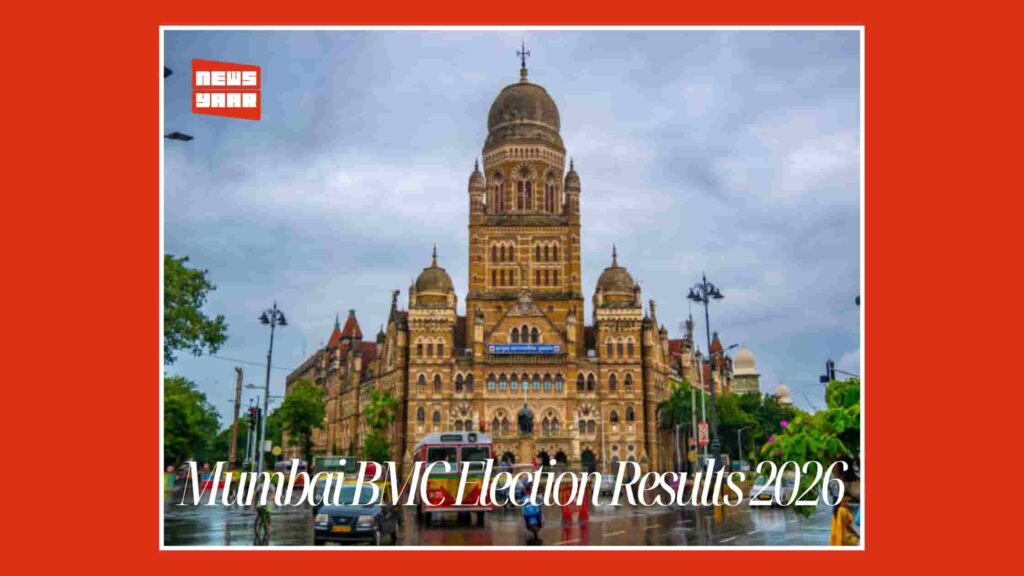
POLITICS Mumbai BMC Election Results 2026: BJP Breaks Shiv Sena Stronghold, Fragmented Mandate Sets New Political Tone Newsyaar January 18, 2026 11:27 am The results of the Brihanmumbai Municipal Corporation (BMC) elections 2026, declared late Friday night, have reconfigured civic politics in Mumbai after years of uncertainty. In a contest marked by shifting alliances and urban development themes, the Bharatiya Janata Party (BJP)-led Mahayuti alliance has emerged as the largest bloc in India’s richest municipal body, ending decades of dominance by the undivided Shiv Sena and reshaping the city’s political landscape. What Is the BMC and Why This Election Matters The Brihanmumbai Municipal Corporation is the administrative body responsible for civic services in Mumbai, including roads, hospitals, sanitation, water supply, and urban infrastructure. With an annual budget of over Rs 74,400 crore, it plays a crucial role in daily life for millions and sets the tone for urban policy in the Mumbai Metropolitan Region. This election was especially significant because it was the first held after a four-year delay and the first civic poll since the Shiv Sena split in 2022, which divided the party into the Eknath Shinde-led faction allied with the BJP and the Uddhav Balasaheb Thackeray-led Shiv Sena (UBT). Final Results: Seat Share and Winning Parties No single party secured an outright majority in the 227-ward BMC, but results show a clear lead for the Mahayuti alliance. Party-wise tally in BMC 2026: Bharatiya Janata Party (BJP): 89 seats Shiv Sena (Shinde faction): 29 seats Shiv Sena (UBT): 65 seats Congress: 24 seats AIMIM: 8 seats MNS: 6 seats Nationalist Congress Party (NCP): 3 seats Samajwadi Party: 2 seats NCP (SP): 1 seat(Majority mark in BMC: 114) With the BJP–Shinde Sena alliance jointly leading in 118 wards, they are well-positioned to form the next civic administration. Key Ward Victories and Local Players Several notable victories across the city shaped the electoral narrative. Highlights include: Ward 2 (BJP): Tejaswini Ghosalkar Ward 214 (BJP): Ajay Patil Ward 123 (UBT): Sunil More Ward 182 (UBT): Milind Vaidya Ward 183 (Congress): Asha Kale These wins reflect how both national and local issues influenced voter decisions across diverse Mumbai neighbourhoods. Political Reactions After the Results Leaders from all major camps offered their perspectives soon after results were declared. Maharashtra Chief Minister Devendra Fadnavis highlighted the alliance’s performance as a reflection of public trust in governance. According to him, the BJP’s share — around 45% vote share — demonstrated a broad urban mandate for development-oriented politics. From the opposition, Shiv Sena (UBT) leader Sanjay Raut said the results showed continued support for the Thackeray brand in many traditional areas, even as the party lost its institutional hold. Why This Is a Turning Point for Mumbai BMC has historically been a bastion of regional identity politics, with the Shiv Sena’s rise intertwined with the ‘Marathi asmita’ narrative — emphasising local pride and mobilisation around regional interests. However, this election suggests a shift toward urban governance themes such as infrastructure, flood management, civic service delivery, and development outcomes, rather than purely identity-based politics. Analysts note that the BJP’s success is the result of a “triple engine” strategy, combining support from the Centre, state leadership, and local organisational strength to appeal to voters focused on performance and delivery. Broader Maharashtra Civic Sweep and Urban Impact The BMC outcome was part of a wider civic sweep by the BJP-led alliance across Maharashtra. The party has secured dominant positions in multiple municipal corporations, including Pune and Pimpri-Chinchwad, further weakening rival factions and establishing itself as the leading force in urban local bodies ahead of future state and national contests. What Comes Next: Leadership and Governance With the alliance poised to control the BMC, the focus now shifts to: Election of the Mayor Formation of key standing committees (finance, public works, health) Early policy signals on infrastructure upgrades, monsoon preparedness, housing redevelopment and sanitation The new administration faces a range of civic challenges that will test its governance approach amidst high public expectations. In Brief BMC election 2026 held after a four-year gap ended long-standing political patterns in Mumbai. The BJP-Shinde Sena alliance crossed the majority mark with 118 wards. Shiv Sena (UBT) held on to 65 seats, showing resilience in core areas. Congress, AIMIM, MNS and smaller parties maintained pockets of influence. Urban governance and development issues appeared to outweigh traditional identity politics. About the Author Politics Reporter Share via Copied Comments Post Comment
India’s DHRUV64: The First 1 GHz, 64-Bit Dual-Core Microprocessor
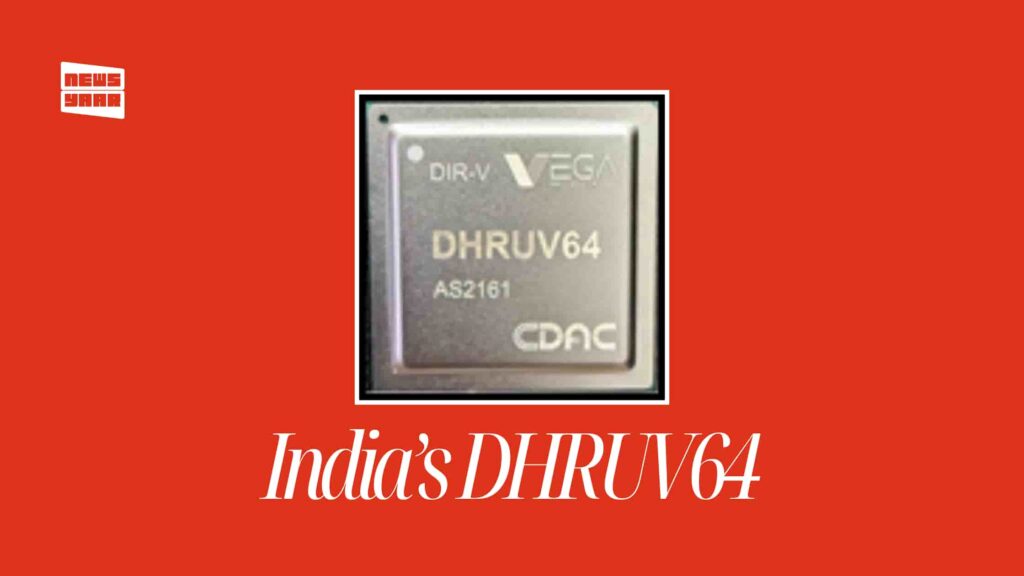
TECH India’s DHRUV64: The First 1 GHz, 64-Bit Dual-Core Microprocessor In a landmark moment for India’s semiconductor ambitions, the Centre for Development of Advanced Computing (C-DAC) has unveiled DHRUV64, the country’s first 1 GHz, 64-bit dual-core microprocessor. Developed under the government’s Microprocessor Development Programme and showcased as part of the Digital India RISC-V (DIR-V) initiative, DHRUV64 represents a major stride toward self-reliance in advanced chip design and computing technology. A Milestone in Indigenous Chip Design DHRUV64 is built on an open-source RISC-V architecture, an increasingly popular set of instructions that allows chip designers to innovate without costly licensing fees from foreign companies. Operating at a clock speed of 1.0 GHz with dual processing cores and 64-bit capability, it brings India into the realm of gigahertz-class embedded processors, a class previously dominated by global players. Unlike earlier academic or specialised chips, DHRUV64 is designed for broader strategic and commercial applications, including industrial automation, automotive electronics, 5G infrastructure, consumer devices, and Internet of Things (IoT) systems. It supports modern operating systems, integrates with diverse hardware systems, and provides multitasking efficiency suited for a range of real-world deployments. How Does It Matter? India currently consumes roughly 20 percent of the world’s microprocessors, yet historically has relied heavily on imports for core computing technology. Developing a homegrown processor like DHRUV64 is significant not only for technological sovereignty but also for enhancing security, reducing supply-chain vulnerabilities, and building local expertise in semiconductor design. By creating a platform that domestic startups, researchers, and established companies can build upon, DHRUV64 is expected to boost innovation across the electronics ecosystem and support cheaper prototyping and product development. It also provides a foundation for a growing pipeline of skilled chip design professionals, further energising India’s tech sector. A Step Toward Aatmanirbhar Bharat in Technology DHRUV64 marks a continuation of India’s journey toward an Aatmanirbhar (self-reliant) semiconductor ecosystem. The chip follows earlier indigenous designs such as SHAKTI, AJIT, VIKRAM, and THEJAS64, and sits alongside future variants like Dhanush and Dhanush+ in the development pipeline. While India still relies on global fabrication technologies for manufacturing, the design and strategic deployment of processors like DHRUV64 signal a slow but steady shift toward autonomous capabilities in core computing technologies, a critical competitiveness marker in the global tech landscape. About the Author Tech Reporter Share via Copied Comments Post Comment
Sanchar Saathi App: How India Is Empowering Citizens Against Telecom Fraud
TECH Sanchar Saathi App: How India Is Empowering Citizens Against Telecom Fraud Understanding the Sanchar Saathi Initiative Sanchar Saathi is a government-backed digital initiative aimed at protecting telecom users from fraud, identity theft, and the misuse of mobile connections. The app aims to bring transparency and control directly into the hands of citizens. Why the App Was Needed? India has witnessed a sharp rise in cyber fraud, fake SIM usage, and unauthorised mobile connections. Many users were unaware of the number of numbers issued in their name, making them vulnerable to misuse. Key Features Explained Simply The Sanchar Saathi app allows users to check mobile connections linked to their Aadhaar, block lost or stolen phones, and report suspected fraud. These features reduce dependency on telecom offices and speed up action. How It Helps Ordinary Users For common citizens, the app provides peace of mind. Users can instantly identify unknown connections, prevent misuse, and take quick corrective steps without technical knowledge. The launch of Sanchar Saathi reflects the government’s broader focus on digital safety and citizen empowerment. It aligns with initiatives aimed at securing India’s rapidly expanding digital ecosystem. Final Words As awareness grows, Sanchar Saathi could become a key tool in fighting telecom fraud nationwide. Experts believe regular updates and public education will determine its long-term success. About the Author Tech Reporter Share via Copied Comments Post Comment
Census 2027: India Prepares to Count Itself Again, This Time, Digitally
GOVERNMENT Census 2027: India Prepares to Count Itself Again, This Time, Digitally After a silence that lasted longer than any in independent India’s history, the country is finally preparing to count itself again. On December 12, 2025, the Union Cabinet, chaired by Prime Minister Narendra Modi, approved the scheme for conducting the Census of India 2027, allocating ₹11,718.24 crore for what will be the largest administrative and statistical exercise in the world. More than a routine headcount, Census 2027 marks a reset of data, of governance, and of how India understands itself. A 16-Year Pause and a Long-Awaited Restart India’s census tradition dates back to 1872, when the first synchronised census was conducted under British rule. Since Independence, the country has followed a strict decennial rhythm, conducting censuses every ten years starting in 1951. That rhythm broke in 2021. Originally scheduled to begin in April 2020, the census was postponed due to the COVID-19 pandemic. What followed were years of disruption, lockdowns, vaccination drives, stretched administrative machinery and shifting priorities. The result is a 16-year gap between censuses, the longest since Independence. In that time, India changed dramatically. Cities expanded, migration patterns shifted, new welfare schemes rolled out, and digital infrastructure deepened, yet policymaking continued to rely on 2011 population data. Census 2027 is expected to finally bridge that gap. India’s First Fully Digital Census For the first time in its history, India will conduct a digital census. Gone are paper schedules and hand-drawn maps. Instead, data will be collected using mobile applications compatible with Android and iOS, deployed across the country by nearly 30 lakh field functionaries. These enumerators—mostly government teachers and officials appointed by states—will visit every household, armed with smartphones instead of registers. At the heart of this transformation is the Census Management and Monitoring System (CMMS), a centralised digital portal that will allow real-time tracking of progress across districts, states and Union Territories. Another major shift is the introduction of self-enumeration. Citizens will have the option to fill in their census details online through a secure portal, generating a QR code or reference number that enumerators can later verify. Two Phases, One Massive Operation The Census of India 2027 will be conducted in two distinct phases: Phase I: Houselisting and Housing Census Scheduled between April and September 2026, this phase will collect data on housing conditions, household assets, sanitation, drinking water, cooking fuel and amenities. Each state and Union Territory will select a 30-day window within this period. Phase II: Population Enumeration The main headcount will take place in February 2027, with a reference date of March 1, 2027. For snow-bound regions such as Ladakh, parts of Jammu & Kashmir, Himachal Pradesh and Uttarakhand, enumeration will be conducted earlier, in September 2026, with a reference date of October 1, 2026. Together, these phases will capture granular data down to the village and ward level, covering demography, religion, language, literacy, migration, fertility and economic activity. The Return of Caste Enumeration One of the most significant, and debated features of Census 2027 is the inclusion of caste enumeration. In April 2025, the Cabinet Committee on Political Affairs approved the decision to collect caste data electronically during the Population Enumeration phase. This will be the first full caste census since 1931, going beyond the Scheduled Castes and the Scheduled Tribes to include all communities. Enumerators will use a state-specific coded directory, presented as a drop-down menu within the app, to ensure consistency and accuracy in data collection. Data as a Service, Not Just a Report Census 2027 is also reimagining how data is used. Under a new “Census as a Service” (CaaS) model, census data will be delivered to ministries and departments in a clean, machine-readable and actionable format. Instead of static tables released years later, policymakers will be able to access query-based data through digital systems—supporting faster, evidence-based decision-making. The government has promised improved data dissemination with customised visualisation tools, allowing access to information down to the lowest administrative units. Privacy, Law and Public Trust With digitisation comes concern, and the government has emphasised safeguards. The census continues to operate under the Census Act, 1948, and Census Rules, 1990, which guarantee confidentiality. Individual data cannot be shared, published or used as evidence in civil or criminal proceedings. Only aggregated data will be released. Census 2027 will be India’s 16th census and the 8th since Independence, but its significance goes beyond counting people. It is an attempt to realign governance with reality, to replace assumptions with evidence, and to modernise a system that shapes everything from welfare schemes to parliamentary constituencies. As India prepares for this massive exercise, its success will depend not just on technology or budgets, but on participation, trust and accuracy. After sixteen long years, the country is finally ready to count itself again. And this time, every click matters. About the Author Government Reporter Share via Copied Comments Post Comment
New Labour Codes 2025: Opportunity or Outcry?

GOVERNMENT New Labour Codes 2025: Opportunity or Outcry? On 21 November 2025, India’s labour landscape changed forever: the government replaced 29 older laws with four comprehensive new labour codes, covering wages, industrial relations, social security, and workplace safety. What does that mean for workers? For many, it sounded like a win, especially for contract and fixed-term workers, who, under the updated rules, now qualify for gratuity after just one year of service, instead of the previous five. Add to that expanded definitions for “wage” (so allowances count more), protections for health, social security, and more inclusive job norms, and it seems like a long-awaited step toward modern labour reform. For many gig, contract, and temporary workers, long excluded from benefits, this appears to be a landmark shift. Suddenly, some of the perks traditionally reserved only for permanent staff are extended to a much larger pool. It is social security made more inclusive. The Political Backlash: Protests Outside Parliament But this reform didn’t sail smoothly. The moment the new codes were notified, alarm bells rang for many union leaders and opposition parties. On December 2, MPs, including Sonia Gandhi and Mallikarjun Kharge, staged a protest outside the Parliament complex, raising placards and slogans demanding that he new laws be rolled back. Their argument? These codes benefit corporations more than workers, allowing easier layoffs, diluting job security, and undermining collective bargaining rights. Trade unions across the country echo similar fears: what if “flexibility” becomes “exploitation”? What if temporary jobs, previously light on benefits, become even more vulnerable under the cloak of new definitions and frequent hiring-firing cycles? For them, this isn’t reform, it’s a disguised rollback of worker rights. Between Reform and Risk: What’s the Verdict? The new labour codes walk a tightrope. On one side, there’s a needed push toward inclusivity, protection for informal workers, and flexibility for modern businesses. On the other, a legitimate fear that under relaxed labour norms, job security and worker welfare might take a back seat. For contract workers, the cut in gratuity eligibility from five years to one is a game-changer. For millions of India’s unorganised workforce, it might mean a combination of dignity and safety. But for many unions and opposition leaders, the same laws signal a slippery slope. As politics rages on and protests echo through Parliament corridors, the real test will be in implementation, whether the laws reflect worker protection or corporate convenience. For now, the 2025 labour reforms remain India’s most ambitious overhaul in decades: hopeful for some, controversial for many, and undoubtedly the biggest labour conversation in recent memory. https://www.youtube.com/watch?v=aA6wgQnumDc Video credit: DD News About the Author Government Reporter Share via Copied Comments Post Comment