




India–Chile Trade Deal: Deepening Economic Engagement Between South Asia and South America

India and Chile have nurtured a stable and steadily expanding trade relationship over the past two decades, anchored in the India–Chile Preferential Trade Agreement (PTA) and moving toward a more comprehensive economic partnership. The evolving framework of cooperation reflects both countries’ strategic interests in expanding market access, diversifying export baskets, and strengthening bilateral economic integration within a globalised trade environment. Historical Background: From Framework to Preferential Trade The roots of formal trade cooperation between India and Chile date back to the Framework Agreement on Economic Cooperation signed in January 2005, which laid the foundation for deeper commercial ties. Following this, after four rounds of negotiations, the India–Chile Preferential Trade Agreement (PTA) was finalised and signed on March 8, 2006 and came into force in India on September 11, 2007 and in Chile on August 17, 2007. The PTA was subsequently notified to the World Trade Organization (WTO) in January 2009, underlining its legitimacy and integration into global trade rules. Under the original 2006 PTA, both countries agreed to provide fixed tariff preferences on a selected list of goods to encourage bilateral trade. India initially offered tariff concessions ranging from 10% to 50% on 178 tariff lines at the detailed eight-digit product level to Chile, while Chile reciprocated with concessions on 296 tariff lines, some of which carried preferences of up to 100%. Expansion and Current Trade Regime Recognising the need to broaden the agreement’s scope, India and Chile agreed in 2016 to expand the PTA, which came into effect on May 16, 2017, after ratification by both sides. Under the expanded framework: Chile offered preferential duty reductions on 1,798 goods — with margins of preference (MoP) between 30% and 100% — granting Indian exporters enhanced access to the Chilean market. India reciprocated with tariff concessions on 1,031 products at the eight-digit classification level, providing MoPs between 10% and 100% on items ranging from processed foods and raw materials to industrial and manufacturing inputs. The expanded PTA covers sectors such as agriculture and allied goods, chemicals, pharmaceuticals, textiles and apparel, machinery and equipment, processed foods, leather products, and various industrial commodities. This broader coverage has significantly improved market access for Indian businesses and diversified the range of products traded between the two countries. Trade Flows and Economic Significance Chile is one of India’s key trading partners in Latin America, ranking among the top destinations for Indian exports and sources of imports. According to data for the fiscal year 2023–24, bilateral trade between India and Chile reached approximately US$2.45 billion, with India exporting goods worth about US$1.1 billion and importing nearly US$1.35 billion, reflecting a modest trade deficit for India. Chile’s top exports to India include copper ore and concentrates, iodine, lithium compounds, molybdenum ores, and chemicals, while Indian exports to Chile comprise transport equipment, pharmaceuticals, textiles, engineering goods, plastic and leather products, and handicrafts. Trade experts note that the India–Chile trade relationship remains well-balanced compared with other Latin American partners and continues to deepen despite global economic fluctuations. The diversity of export and import baskets illustrates the complementary aspects of both economies, offering opportunities for further expansion. Towards a Comprehensive Economic Partnership While the PTA has provided a stable framework for tariff concessions, policymakers in both countries have recognised that a broader and more robust trade agreement could unlock greater economic potential. To this end, India and Chile have embarked on negotiations for a Comprehensive Economic Partnership Agreement (CEPA), which aims to expand beyond tariff reductions to cover emerging areas of bilateral cooperation. In May 2025, India and Chile signed the Terms of Reference (ToR) for CEPA, signalling their intent to elevate the trade relationship to a full-fledged free trade agreement (FTA). The CEPA negotiations build upon the existing PTA and foresee expanded cooperation in key sectors such as digital services, investment promotion and protection, small and medium enterprises (MSMEs), critical minerals, and broader goods and services trade. The first round of CEPA talks was concluded in May 2025, followed by subsequent negotiation rounds aimed at finalising the agreement text. Both sides have identified that including digital services and critical minerals — particularly Chile’s rich reserves of lithium and copper — could add significant strategic value to the CEPA framework, benefiting sectors such as clean energy, electronics and high-technology industries. Strategic and Geopolitical Dimensions The India–Chile trade engagement is more than a commercial arrangement. Chile is a founding member of the Pacific Alliance, and India is an observer member, positioning the PTA and prospective CEPA as gateways to deeper engagement with broader Latin American markets. Strengthening trade ties with Chile aligns with India’s global economic outreach strategy, which seeks to diversify export markets, attract foreign investment, and secure supply chains for critical resources. For Indian exporters, Chile offers access to a strategically located South American market with strong linkages to other regional economies. For Chile, India presents opportunities in one of the fastest-growing large economies, with demand for products ranging from pharmaceuticals to engineering goods and textiles. Challenges and Future Prospects While the expanded PTA has facilitated greater market access, the trade relationship still faces challenges such as addressing non-tariff barriers, improving logistics integration, and enhancing investment flows. The CEPA negotiations are seen as a necessary next step, aiming to resolve such issues and elevate economic cooperation to a more comprehensive level. Both governments have expressed optimism that a concluded CEPA will not only expand bilateral trade volumes but also attract greater investment in sectors such as information technology, renewable energy, critical minerals, and services, while supporting MSMEs, innovation ecosystems, and job growth in both countries. Conclusion: A Growing Partnership The India–Chile trade deal — rooted in a preferential trade agreement since 2007 and evolving towards a Comprehensive Economic Partnership Agreement — represents a significant chapter in India’s trade diplomacy with Latin America. Through phased tariff concessions, portfolio diversification, and ongoing negotiations to deepen economic cooperation, the two countries are forging a trade relationship that blends traditional commerce with emerging sectoral opportunities. As negotiations continue and potential CEPA outcomes take shape, the India–Chile economic partnership stands poised to expand not only in value but also in strategic scope, reflecting a shared vision of inclusive, future-oriented growth that benefits businesses, workers, and consumers on both sides.
Union Budget 2026–27: Government Raises Capex, Boosts Defence, Maintains Fiscal Consolidation Path
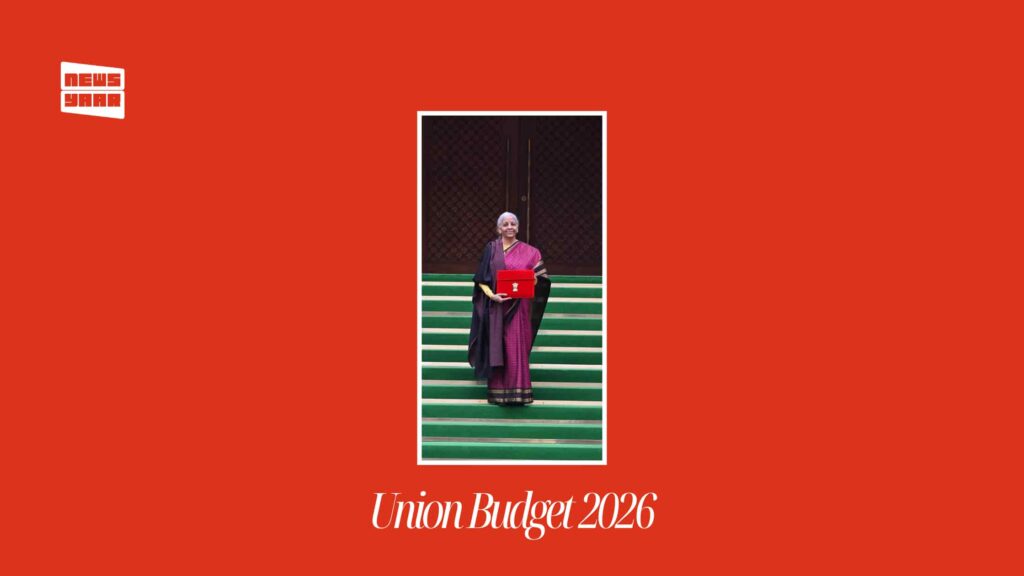
GOVERNMENT Union Budget 2026–27: Government Raises Capex, Boosts Defence, Maintains Fiscal Consolidation Path Newsyaar February 2, 2026 9:37 pm The Union Budget for 2026–27, presented by Finance Minister Nirmala Sitharaman in Parliament on Saturday, has laid out a comprehensive fiscal roadmap aimed at sustaining economic growth, strengthening infrastructure, enhancing national security and maintaining fiscal discipline amid global uncertainty. The Budget pegs the total expenditure of the Union government at ₹53.5 lakh crore for FY27, marking a sharp increase from the revised estimate of about ₹49.6 lakh crore in FY26. The increase reflects the government’s continued emphasis on public investment, defence preparedness and social sector spending. According to Budget documents, total receipts excluding borrowings are estimated at ₹36.5 lakh crore, while gross tax revenue is projected at ₹44.04 lakh crore, up from ₹42.7 lakh crore in the current financial year. Net tax receipts to the Centre are estimated at ₹28.7 lakh crore after devolution to states. To bridge the gap between receipts and expenditure, the Centre has proposed gross market borrowings of ₹17.2 lakh crore, with net market borrowings pegged at ₹11.7 lakh crore for 2026–27. Fiscal Deficit and Debt Position The government has projected the fiscal deficit at 4.3 per cent of GDP for FY27, marginally lower than the previous year, signalling a continued commitment to fiscal consolidation. The debt-to-GDP ratio is estimated at 55.6 per cent, compared with around 56.1 per cent in FY26, indicating a gradual reduction in sovereign debt levels. Finance Minister Sitharaman said the government remains focused on balancing growth imperatives with macroeconomic stability, even as it scales up spending on infrastructure and security. Capital Expenditure at Record High Capital expenditure has once again emerged as a central pillar of the Budget. The government has allocated ₹12.2 lakh crore towards capital expenditure in FY27, compared to ₹11.2 lakh crore in FY26. At 4.4 per cent of GDP, capex remains at its highest level in over a decade. The enhanced allocation will support investments in roads, railways, ports, urban infrastructure, logistics and digital connectivity, with the aim of crowding in private investment and improving long-term productivity. The Ministry of Road Transport and Highways has been allocated around ₹3.09 lakh crore, while Indian Railways has received ₹2.81 lakh crore, continuing the focus on network expansion, modernisation and safety. Defence Allocation Sees Major Jump Defence spending witnessed one of the most significant increases in the Union Budget. The total defence allocation for FY27 has been pegged at ₹7.84 lakh crore, up from ₹6.81 lakh crore in FY26. Of this, capital outlay stands at ₹2.19 lakh crore, reflecting a strong push towards military modernisation and indigenous defence manufacturing. Revenue expenditure, including pensions and operational costs, has been placed at ₹5.54 lakh crore. Within the capital budget, allocations include ₹63,733 crore for aircraft and aero engines, ₹25,023 crore for naval platforms, and enhanced funding for missiles, armoured vehicles and advanced defence technologies. Taxation: Stability and Simplification The Budget has maintained status quo on personal income tax slabs, providing stability to taxpayers. The government reiterated its commitment to simplifying tax administration and reducing litigation. The Finance Minister confirmed that the new Income Tax Act, 2025, which aims to replace the Income Tax Act of 1961, will come into effect from April 1, 2026, introducing clearer language and streamlined procedures. On the indirect tax front, customs duties were rationalised to support domestic manufacturing by reducing duties on selected capital goods and raw materials, while levies on certain imported luxury items were increased. Ministry-wise Allocations Among all ministries, the Ministry of Finance received the largest allocation at approximately ₹19.72 lakh crore, primarily towards interest payments, subsidies and transfers. The Ministry of Home Affairs has been allocated around ₹2.55 lakh crore, while the Ministry of Consumer Affairs, Food and Public Distribution received ₹2.39 lakh crore, reflecting continued support for food security and subsidies. The Ministry of Education has been allocated about ₹1.39 lakh crore, with increased funding for school education, higher education and skill development. The Ministry of Health and Family Welfare has received approximately ₹1.06 lakh crore, aimed at strengthening public healthcare infrastructure and services. Agriculture and Rural Economy Agriculture and rural development remain key focus areas. The Budget continues support for minimum support price (MSP) operations, irrigation projects and agri-infrastructure development. Allocations for rural employment schemes and farmer welfare programmes have been maintained to support rural incomes and consumption. MSMEs, Employment and Industry To support job creation and small businesses, the government expanded credit guarantee schemes for micro, small and medium enterprises (MSMEs) and announced measures to ease access to institutional finance. Skill development programmes received higher allocations to align workforce capabilities with emerging industry needs. The manufacturing and export sectors are expected to benefit from infrastructure investments, stable tax policies and continued incentives under production-linked incentive (PLI) schemes. Green Growth and Energy Transition The Budget reaffirmed India’s commitment to sustainable development, with increased allocations for renewable energy, green hydrogen, electric mobility and climate-resilient infrastructure. Incentives for electric vehicles and clean energy projects were extended to support the transition to a low-carbon economy. Market Borrowing and Revenue Outlook The government expects improved tax buoyancy, supported by steady economic growth and compliance measures. Gross tax revenue growth is projected to support higher spending without significantly widening the deficit. Bond markets are expected to closely track the government’s borrowing programme and fiscal trajectory in the coming months. Overall Assessment The Union Budget 2026–27 presents a calibrated approach focused on infrastructure-led growth, defence preparedness, fiscal prudence and inclusive development. By sustaining high public investment while gradually lowering the fiscal deficit, the government aims to support economic momentum amid global headwinds. While the immediate impact will be seen in infrastructure activity and defence manufacturing, the broader effects of the Budget are expected to unfold through higher private investment, job
World Economic Forum 2026: Global Leaders Converge in Davos Amid Major Economic and Geopolitical Challenges
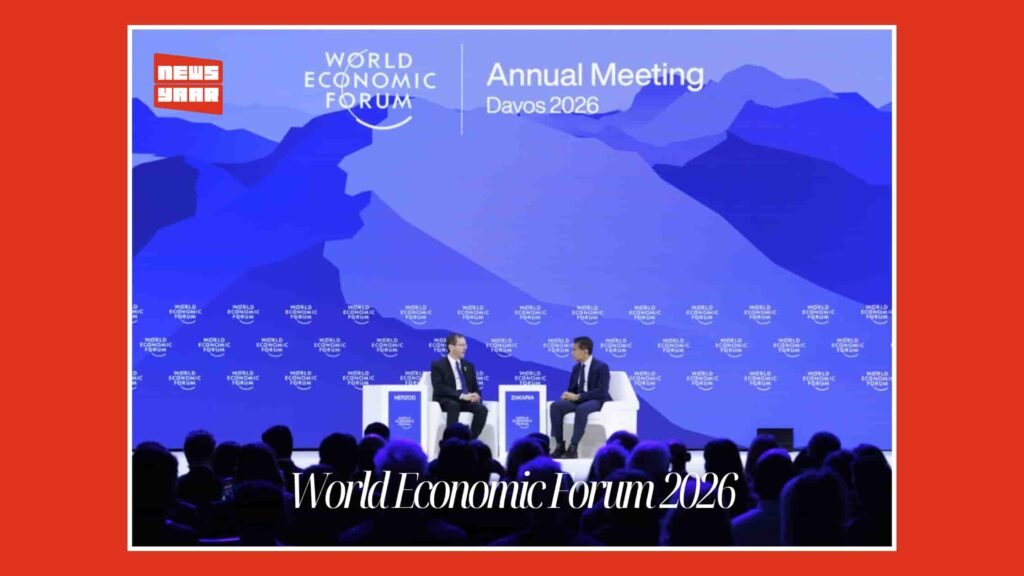
WORLD World Economic Forum 2026: Global Leaders Converge in Davos Amid Major Economic and Geopolitical Challenges Newsyaar January 22, 2026 5:04 pm The World Economic Forum (WEF) Annual Meeting 2026 took place from January 19 to 23 in Davos-Klosters, Switzerland, bringing together leaders from government, business, international organisations and civil society to discuss the most pressing global issues of the moment. Now in its 56th year, the forum — commonly referred to simply as “Davos” — is a flagship platform for public-private cooperation on economic policy, technology governance, sustainability and global security. The meeting’s official theme, “A Spirit of Dialogue,” underscored a widely recognised need for renewed cooperation in an era marked by geopolitical tensions, slowing economic growth, technological disruption and environmental risk. Organisers, delegates and analysts alike framed the discussions around the idea that dialogue — even amid disagreement — is essential for addressing interconnected global challenges. Scale of Participation and Global Profile The WEF 2026 drew thousands of participants from over 100 countries, including government ministers, heads of state, central bankers, chief executives of major corporations, academics and representatives of international institutions. The meeting’s scale and diversity reflect its enduring role as a central venue for high-level engagement on global policy priorities. Among the most notable attendees was United States President Donald Trump, whose presence drew significant media attention and marked a return to Davos for a leader of his stature. Delegations also included major European figures, leaders from Asia, Africa and Latin America, and senior representatives from international organisations and think tanks. Economic Priorities and Global Growth Concerns Economic issues formed a core pillar of the 2026 agenda. Discussions highlighted uneven global growth, persistent inflationary pressures and heightened uncertainty in financial markets. Organisers and speakers emphasised that sluggish expansions in major economies, coupled with high debt levels, pose risks to stability and investment confidence. According to WEF research and policy discussions at Davos, cooperation on economic policy, trade facilitation and investment frameworks remains essential to navigate these headwinds. Investments in human capital, innovation and sustainable growth models were also highlighted as central to unlocking new sources of economic opportunity. Technology, Innovation and Governance Technological advancement — particularly artificial intelligence (AI) — was a prominent topic throughout the meeting. Delegates debated how to harness innovation responsibly while addressing associated risks such as workforce displacement, data protection, ethical use cases and the broader social impact of AI deployment. Speakers noted the absence of globally coordinated regulatory frameworks for emerging technologies, emphasising the need for international dialogue to manage both the opportunities and risks of rapid digital transformation. Geopolitics and International Security Geopolitical tensions and international security issues shaped several panels and bilateral discussions. The ongoing conflict in Ukraine, instability in parts of the Middle East, and great-power competition in regions such as the Indo-Pacific were recurring themes. In this context, world leaders discussed the importance of resilient supply chains, energy security and strategic partnerships while acknowledging that geopolitical fragmentation continues to complicate efforts toward shared economic and diplomatic goals. A particularly high-profile moment at the forum involved exchanges around NATO and Arctic security, with debates over territorial issues such as the strategic role of Greenland drawing media attention and highlighting how security concerns intersect with economic and environmental priorities. Climate, Sustainability and Emerging Risks Climate change and sustainable development remained central to Davos discussions, but delegates acknowledged the gap between global climate commitments and action on the ground. Energy transition strategies, climate finance for developing economies and nature-based risk frameworks were all debated, often in conjunction with economic policy and innovation priorities. A distinctive focus this year was on water systems and planetary stability, with experts warning that imbalances in the global water cycle — including drought, flood extremes and freshwater scarcity — require urgent collective action. These discussions, sometimes referred to as part of the “Blue Davos” agenda, highlighted water as a foundational element of global resilience. Outcomes and Forward Agenda Unlike treaty negotiations or binding international agreements, the World Economic Forum does not issue enforceable resolutions. Instead, its role is to shape the global conversation, build networks of cooperation and catalyse voluntary initiatives. At the conclusion of the 2026 meeting, several partnerships, memoranda of understanding and investment dialogues were announced, particularly in areas such as clean energy, digital infrastructure and sustainable finance. For example, global and regional delegations highlighted collaborative efforts to expand green growth and industrial innovation, reflecting businesses and states seeking resilient growth pathways amid global uncertainty. Beyond formal sessions, the informal interactions in Davos — from bilateral talks between heads of state to private sector strategy meetings — often influence policy choices throughout the year. These engagements are frequently cited by governments and corporations as contributing to priority setting and risk assessment in economic and geopolitical planning. Why World Economic Forum 2026 Matters The World Economic Forum Annual Meeting remains significant because it brings together diverse decision-makers at a time when coordination on global issues has become more fragmented. As geopolitical tensions rise and economic risks persist, forums like Davos offer a rare structured environment where dialogues between competing interests can occur. In 2026, the emphasis on dialogue — even amid disagreement on trade, security, technology and climate policy — reflected a shared recognition that global challenges cannot be addressed in isolation. While the outcomes of Davos are not always immediately visible, the convergence of leaders and ideas continues to shape international conversations and influence public and private sector strategies in the months and years that follow. About the Author World Reporter Share via Copied Comments Post Comment
What Happened in Parliament’s Winter Session 2025: Key Takeaways
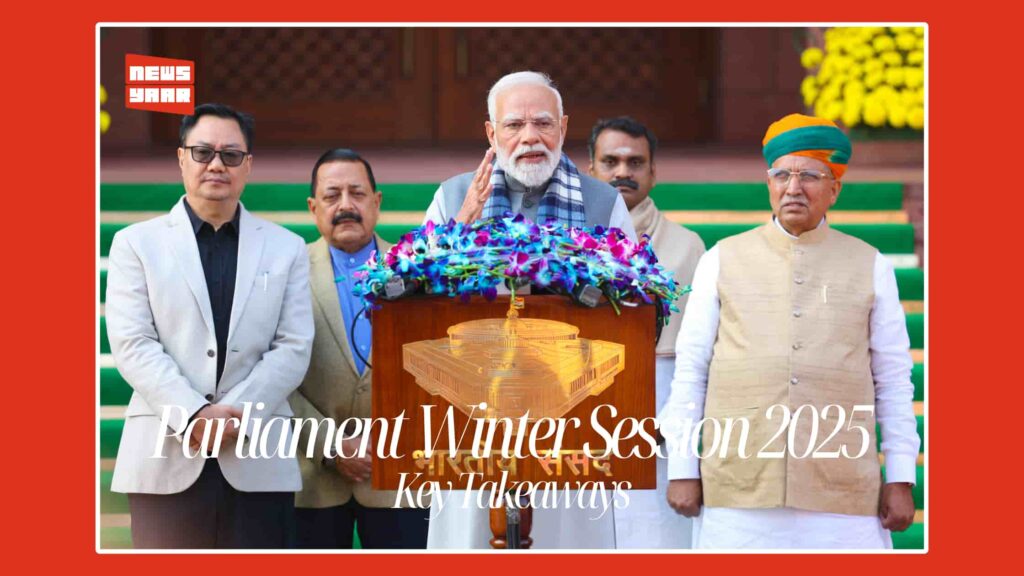
GOVERNMENT What Happened in Parliament’s Winter Session 2025: Key Takeaways The Winter Session of the Indian Parliament, held from December 1 to December 19, 2025, concluded this week with both Houses, Lok Sabha and Rajya Sabha, adjourned sine die after a packed legislative agenda and spirited debates. Across 15 sittings in each house, lawmakers debated, deliberated, and passed several bills with far-reaching implications for India’s governance, economy, and social fabric. Legislative Activity and Major Bills Passed One of the most significant outcomes of the session was the passage of eight key bills covering agriculture and rural employment, economic reforms, financial legislation, and sectoral development. At the forefront was the Viksit Bharat Guarantee for Rozgar and Ajeevika Mission (Gramin) Act, 2025, popularly known as the VB-G RAM G Bill. This legislation replaces the two-decade-old MGNREGA framework with a revised rural employment guarantee, offering 125 days of statutory work to eligible rural households and aligning with the government’s Viksit Bharat 2047 goals. Another cornerstone was the Sustainable Harnessing and Advancement of Nuclear Energy for Transforming India (SHANTI) Bill, 2025, which opens up the previously state-controlled civil nuclear sector to private participation and foreign investment, a structural shift in India’s energy policy. The Sabka Bima Sabki Raksha (Amendment of Insurance Laws) Bill, 2025, also gained Parliamentary approval, raising the FDI cap in the insurance sector from 74% to 100% and aiming to attract global capital, deepen insurance penetration, and enhance consumer choice. Other bills passed included the Appropriation (No. 4) Bill, 2025, authorising additional government spending for the current fiscal cycle, and the Repealing and Amending Bill, 2025, which repeals outdated laws and amends several existing statutes to streamline legal frameworks. Taxation adjustments were addressed through the Central Excise (Amendment) Bill, 2025, and the Manipur Goods and Services Tax (Second Amendment) Bill, 2025, while the Health Security and National Security Cess Bill, 2025, sought to replace the compensation cess on pan masala with a broader cess aimed at funding health and security needs. Debates and Political Dynamics The session saw intense political exchanges. The VB-G RAM G Bill, in particular, sparked opposition protests, with several parliamentarians objecting to the repeal of MGNREGA and the shift in funding arrangements. There were heated interventions in both Houses as lawmakers debated the future of rural employment schemes. Apart from legislative business, members also spotlighted social issues, national song Vande Mataram discussions, and challenges such as air pollution and infrastructure concerns, reflecting Parliament’s role as a platform for diverse public concerns. Session Takeaways The 2025 Winter Session underscored the government’s push towards economic reforms, rural employment restructuring, and opening strategic sectors like nuclear energy. Increased insurance sector liberalisation and the repeal of obsolete laws additionally signal a legislative drive toward modernisation. Yet, the session’s political temperature also highlighted the contentious nature of major reforms, with opposition parties raising questions about their socio-economic impacts. As Parliament adjourned, it left behind both substantive legislative change and an ongoing debate on India’s policy priorities in the years ahead. https://www.youtube.com/watch?v=jEjKon5GubM Video credit: Sansad TV About the Author Government Reporter Share via Copied Comments Post Comment