




Russia Develops Experimental Cancer Vaccine, Early Trials Show Promise
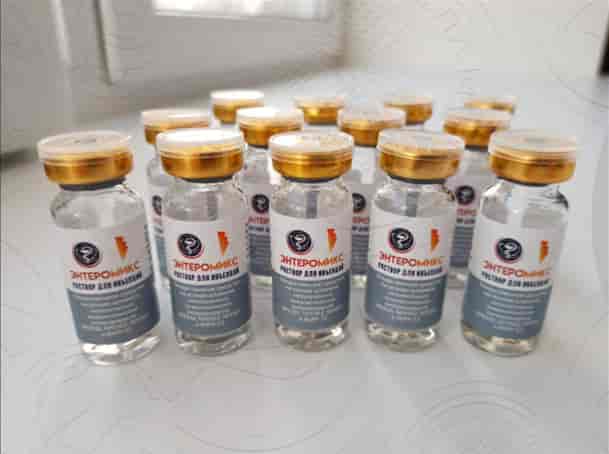
HEALTH Russia Develops Experimental Cancer Vaccine, Early Trials Show Promise Russia has announced the development of an experimental cancer vaccine, marking a significant step in its ongoing efforts to advance personalised cancer treatment through immunotherapy. The vaccine, which is still in the research and clinical trial stage, has been developed by scientific institutions operating under Russia’s state-run medical research framework and is being positioned as a therapeutic vaccine, not a preventive one. According to Russian health authorities, the vaccine is designed to stimulate the patient’s immune system to recognise and attack cancer cells, rather than prevent the onset of cancer. This places it within the rapidly growing global field of cancer immunotherapy, where treatments are tailored to the biological profile of an individual’s tumour. What Makes the Vaccine Different Unlike conventional vaccines used against infectious diseases, Russia’s cancer vaccine is personalised. It is developed using messenger RNA (mRNA) technology, a platform that delivers genetic instructions to the body’s cells, enabling the immune system to identify tumour-specific antigens and mount a targeted response against cancer cells. Russian researchers have stated that the vaccine is created after genetic sequencing of a patient’s tumour, allowing the formulation to be customised for each individual. This approach aims to improve treatment precision while reducing damage to healthy cells — a longstanding challenge in traditional cancer therapies such as chemotherapy and radiation. The project is being led by institutions under the Federal Medical Biological Agency (FMBA), with collaboration from leading molecular biology and oncology research centres in Russia. Stage of Development and Trials Russian officials have clarified that the vaccine has completed pre-clinical testing and has entered early-phase human trials, primarily focused on assessing safety and immune response rather than long-term efficacy or cure rates. Preliminary observations from these early trials suggest that the vaccine has triggered immune activation against cancer cells, with researchers reporting an absence of severe adverse effects among participants. However, experts stress that Phase I trials are not designed to establish effectiveness, and broader conclusions can only be drawn after larger Phase II and Phase III trials. As of now, comprehensive peer-reviewed clinical data has not been published in international medical journals, and the vaccine has not received regulatory approval for widespread clinical use either within Russia or internationally. Not a “Cancer Cure” Medical experts and health authorities have cautioned against describing the development as a cure for cancer. Cancer is not a single disease but a complex group of conditions, and therapeutic vaccines are generally intended to slow disease progression, prevent recurrence, or improve survival outcomes, often in combination with other treatments. Independent analysts have pointed out that while early results are encouraging, claims circulating on social media suggesting “100 per cent effectiveness” are scientifically inaccurate and misleading. Regulatory approval will depend on long-term trial outcomes, reproducibility of results and transparent data validation. International Interest and Future Plans Despite its early stage, the announcement has drawn international attention, with some countries reportedly expressing interest in observing or participating in further clinical evaluation once larger trials are initiated. Russian health authorities have indicated that, subject to successful trial outcomes and regulatory clearance, limited clinical use could be expanded in the coming years, particularly for cancers where existing treatments show limited effectiveness. Why This Development Matters Globally, cancer remains one of the leading causes of death, and the pursuit of personalised, less toxic treatments is a major priority for medical research. Therapeutic cancer vaccines, especially those using mRNA technology, are seen as a promising frontier because they aim to harness the body’s own immune defences rather than relying solely on invasive treatments. Russia’s progress reflects a broader global shift towards precision medicine, where treatments are increasingly tailored to individual patients rather than applied uniformly. The Road Ahead For now, Russia’s cancer vaccine remains an experimental medical innovation, not a commercially available treatment. Scientists and clinicians agree that extensive clinical trials, peer-reviewed data and international regulatory scrutinywill be critical before the vaccine can be considered a reliable addition to cancer care. While the early findings offer cautious optimism, experts emphasise that rigorous science, not headlines, will determine whether the vaccine ultimately changes cancer treatment outcomes.
Flamingo Aerospace, Russia’s UAC Partner to Manufacture Il-114-300 Regional Aircraft in India
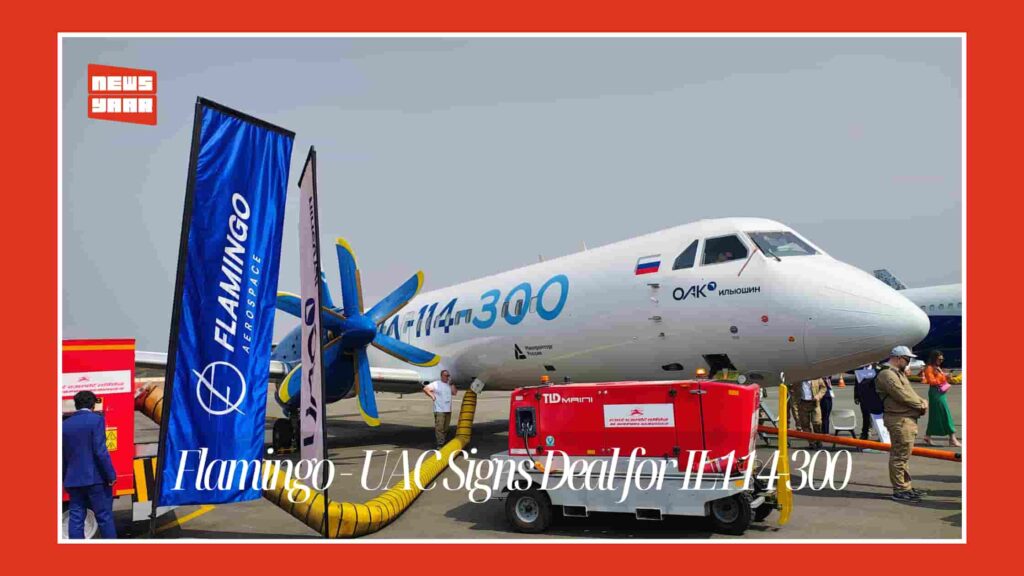
BUSINESS Flamingo Aerospace, Russia’s UAC Partner to Manufacture Il-114-300 Regional Aircraft in India Newsyaar February 2, 2026 9:22 pm In a significant development for India’s civil aviation and aerospace manufacturing ecosystem, Hyderabad-based Flamingo Aerospace has entered into a strategic partnership with Russia’s United Aircraft Corporation (UAC) to bring the Ilyushin Il-114-300 regional turboprop aircraft to India. The collaboration marks a major step toward strengthening India’s regional air connectivity while expanding indigenous aerospace manufacturing capabilities under the government’s Make in India and Atmanirbhar Bharat initiatives. The agreement was announced on the sidelines of Wings India 2026, the country’s premier civil aviation exhibition, held in Hyderabad, where senior representatives from Flamingo Aerospace and UAC formalised a framework cooperation and supply agreement. As per the initial arrangement, six Il-114-300 aircraft will be supplied, with deliveries expected to begin from 2028, followed by phased localisation and manufacturing activities in India. About the Il-114-300 Aircraft The Il-114-300 is a next-generation regional turboprop aircraft developed by Russia’s Ilyushin Aviation Complex under UAC. It is designed to carry up to 68 passengers and is optimised for short-haul and regional routes, particularly in areas with limited airport infrastructure. The aircraft is powered by TV7-117ST-01 turboprop engines, developed by the United Engine Corporation (UEC), and is capable of operating in extreme climatic conditions, ranging from sub-zero Arctic temperatures to hot and humid tropical environments. With its ability to take off and land on short and semi-prepared runways, the Il-114-300 is positioned as a strong contender for regional connectivity markets dominated by aircraft such as the ATR-72 and Dash-8. Industry experts note that the aircraft’s fuel efficiency, rugged design and lower operating costs make it particularly suitable for India’s tier-II and tier-III city routes, as well as remote and underserved regions. Details of the Flamingo–UAC Partnership Under the agreement, Flamingo Aerospace will initially procure six Il-114-300 aircraft from UAC. Beyond supply, the partnership outlines a long-term roadmap that includes: Assembly and localisation of aircraft components in India Establishment of Maintenance, Repair and Overhaul (MRO) facilities Development of a local supplier ecosystem for parts and systems Training of Indian engineers, technicians and pilots Potential expansion into full-scale manufacturing depending on market demand The phased approach is aimed at gradually transferring technology and industrial capability, positioning India as a regional hub for turboprop aircraft manufacturing and support services. Flamingo Aerospace: India’s Emerging Aviation Player Founded in 2022, Flamingo Aerospace is a private Indian aerospace and aviation company headquartered in Hyderabad, a growing centre for aerospace and defence manufacturing. The company focuses on regional aircraft programmes, aviation engineering services, MRO development and sustainable aviation solutions. Flamingo’s leadership has repeatedly emphasised the need for India to develop home-grown regional aircraft capabilities to support domestic aviation growth. With India now the third-largest domestic aviation market in the world, demand for efficient short-haul aircraft is expected to rise sharply over the next decade. The Il-114-300 programme aligns with Flamingo’s vision of creating an end-to-end aviation ecosystem, starting with aircraft acquisition and moving toward local manufacturing and lifecycle support. Strategic Importance for India’s Aviation Sector The Flamingo-UAC collaboration comes at a time when India is aggressively expanding regional air connectivity through schemes such as UDAN (Ude Desh ka Aam Naagrik). While India has witnessed rapid growth in metro-to-metro air travel, connectivity to smaller cities and remote regions remains limited. Regional turboprop aircraft like the Il-114-300 are seen as critical to bridging this gap, offering: Lower operating costs for airlines Ability to operate from smaller airports Improved connectivity to remote and hilly regions Support for tourism, trade and economic development Aviation analysts believe the introduction of an additional aircraft platform could also reduce dependence on a limited set of foreign suppliers, increase competition and provide airlines with more fleet options. Part of Broader Indo-Russian Civil Aviation Cooperation The Il-114-300 agreement complements a broader trend of expanding Indo-Russian cooperation in civil aviation. Earlier, Hindustan Aeronautics Limited (HAL) signed an agreement with UAC to manufacture the Sukhoi Superjet 100 (SJ-100) in India, signalling a diversification of aviation ties beyond defence aircraft. For Russia, partnerships with Indian firms offer access to one of the world’s fastest-growing aviation markets at a time when Western sanctions have constrained its traditional export channels. For India, these collaborations present opportunities to build industrial capability, acquire technology and create skilled jobs. Economic and Industrial Impact If fully realised, the Il-114-300 programme could generate significant economic benefits, including: Creation of high-skilled aerospace jobs Boost to India’s aerospace manufacturing supply chain Development of regional MRO hubs serving South Asia Strengthening of India’s position in the global aviation value chain Officials involved in the programme have indicated that future phases could include higher localisation levels, depending on airline interest and regulatory clearances. Looking Ahead While the agreement is currently at a framework stage, industry observers view it as a strategic entry point into regional aircraft manufacturing in India. The success of the programme will depend on certification timelines, airline orders, regulatory approvals and the pace of localisation. Nevertheless, the Flamingo Aerospace–UAC partnership represents a notable shift in India’s civil aviation landscape, reflecting growing confidence in domestic aerospace capability and a clear focus on regional connectivity as the next frontier of aviation growth. As India prepares for a sustained expansion in air travel, initiatives such as the Il-114-300 programme could play a crucial role in shaping a more inclusive, resilient and self-reliant aviation ecosystem. About the Author Business Reporter Share via Copied Comments Post Comment
HAL, Russia’s UAC to Manufacture SJ 100 Regional Jet in India: A Major Leap for Civil Aviation
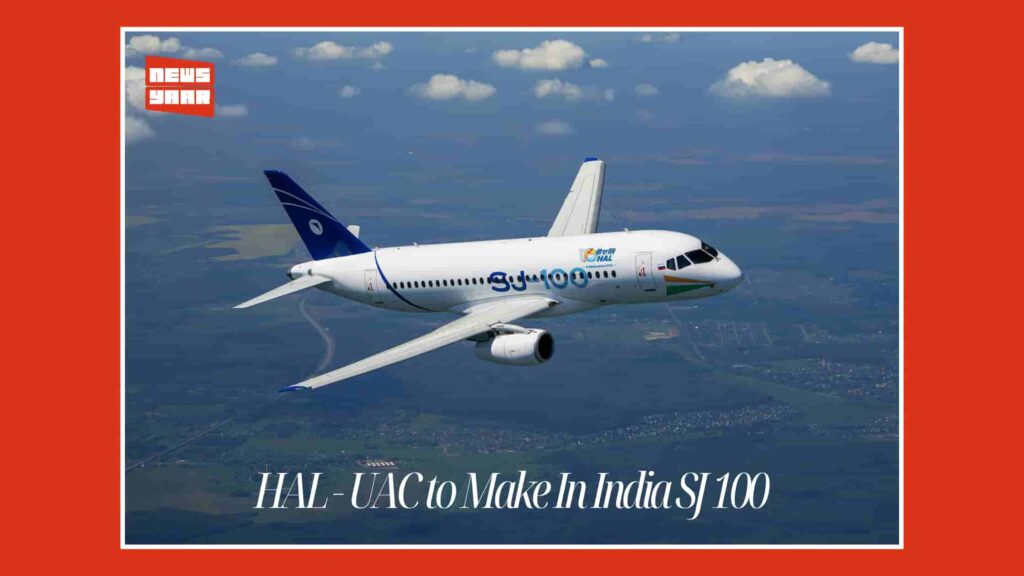
BUSINESS HAL, Russia’s UAC to Manufacture SJ 100 Regional Jet in India: A Major Leap for Civil Aviation Newsyaar February 2, 2026 9:11 pm Hindustan Aeronautics Limited (HAL) has entered into a strategic aviation partnership with Russia’s United Aircraft Corporation (UAC) to manufacture the SJ 100 regional jet in India, marking a significant expansion of HAL’s footprint into the civil aviation sector. The move was announced on the sidelines of the Wings India 2026 aviation exhibition held at Begumpet Airport in Hyderabad, where the collaboration was formally unveiled amid industry attention. The pact — which builds on a Memorandum of Understanding (MoU) signed on October 28, 2025, in Moscow — provides HAL with a licence to produce the twin-engine SJ 100 commercial aircraft in India for domestic customers, including local assembly, component manufacturing and maintenance support, alongside technical and consulting assistance from UAC. What Is the SJ 100 and Why It Matters The Yakovlev SJ 100 (often referred to as Sukhoi Superjet 100) is a twin-engine, narrow-body regional passenger jet designed to seat between 87 and 108 passengers, with a range of around 3,000 km, tailored for short- to mid-distance routes. The aircraft is already in service with airlines in Russia and abroad, with over 200 units produced and operated by multiple carriers. The SJ 100 is capable of operating from smaller airports and shorter runways, making it particularly suitable for India’s expanding regional network under initiatives such as the UDAN (Ude Desh ka Aam Naagrik) scheme, which aims to improve connectivity to underserved and tier-2/tier-3 cities. Strategic Shift for HAL HAL — traditionally focused on military aerospace manufacturing (including fighters, trainers and helicopters) — is now actively diversifying into civil aviation manufacturing. Civil platforms currently contribute only about 4–5 per cent of HAL’s revenue. The SJ 100 partnership is a cornerstone of HAL’s strategy to increase this share to about 25 per cent over the next decade, according to HAL Chairman and Managing Director D.K. Sunil. Sunil explained at Wings India 2026 that HAL plans a phased approach to aircraft introduction. Initially, HAL aims to lease about 10–20 fully assembled SJ 100 aircraft from Russia to Indian operators to familiarise them with the aircraft and validate performance and support infrastructure under Indian operating conditions. Timeline and ‘Make in India’ Ambition The partnership foresees several key stages: Short term (next 18 months): Leasing of fully built SJ 100 jets to Indian operators. Medium term (around three years): Commencement of semi-knocked-down (SKD) assembly in India, utilising HAL’s existing facilities at locations such as Nashik and Kanpur. Long term (by late decade): Full domestic manufacture capability with enhanced localisation and “Make in India” content, aligning with national goals of reduced import dependence and broader industrial development. This would mark the first time since the production of the AVRO HS-748 ended in 1988 that a complete passenger aircraft will be manufactured in India, making it a milestone for the country’s civil aviation manufacturing base. Broader Industry and Policy Context The HAL-UAC collaboration highlights deeper Indo-Russian aerospace cooperation, historically rooted in military aircraft production, now extending to civil aircraft. It also dovetails with government measures designed to attract and scale aircraft manufacturing in India. The Union Budget 2026 removed basic customs duty on aircraft components, significantly lowering the cost of establishing manufacturing lines for regional aircraft such as the SJ 100, potentially boosting both HAL’s and other manufacturers’ plans in the civil aviation domain. Industry observers note that HAL’s entry into regional jet production addresses a long-recognized gap in India’s aviation ecosystem: the absence of indigenous passenger aircraft manufacturing. India is among the world’s fastest-growing domestic aviation markets, with demand for short- to medium-haul aircraft projected to remain strong over the next decade. Local assembly and production of the SJ 100 could help airlines bridge capacity needs more cost-effectively while supporting domestic aerospace supply chains. Technology, Certification and Future Prospects Under the agreement, HAL will assist UAC in gaining type certification for the SJ 100 in India, a critical step before domestically produced jets can enter commercial service. In exchange, HAL obtains manufacturing rights and support for establishing production infrastructure, quality control systems, and maintenance ecosystems. Experts see this collaboration as a key step toward building India’s aircraft manufacturing competencies. While HAL’s primary strength has been in defence platforms, working with UAC on a complex regional jet programme is expected to transfer valuable design, production, certification and lifecycle support expertise. Officials and industry executives involved in the pact have described the arrangement as mutually beneficial: it enhances HAL’s capabilities and helps Russia sustain civilian aircraft exports in the face of geopolitical and sanction-related challenges, while opening a new avenue for aerospace collaboration between the two countries. What This Means for Passengers and Airlines If the phased plan succeeds, airlines operating within India could have access to the SJ 100 as an alternative to turboprops and larger narrow-body jets for regional routes. The regional jet segment (90–100 seats) is seen as crucial for balancing operational economics with demand on short-haul sectors, particularly under government connectivity programmes. Leasing a small fleet in the initial phase also allows airlines and HAL to build operational familiarity with the SJ 100 without requiring immediate large capital commitments, potentially encouraging broader adoption in India’s growing domestic market. Conclusion HAL’s partnership with Russia’s United Aircraft Corporation to manufacture the SJ 100 regional jet in India represents a significant step in diversifying India’s aviation industry and strengthening its manufacturing base. By combining Russian aerospace experience with HAL’s production capabilities and India’s burgeoning aviation market, the collaboration aims to deliver regional aircraft solutions tailored to national connectivity needs while advancing the government’s Make in India and civil aerospace ambitions. About the Author Business Reporter Share via Copied Comments Post Comment
BRICS India 2026: New Logo, Theme and Website Launched as Chairship Preparations Get Underway
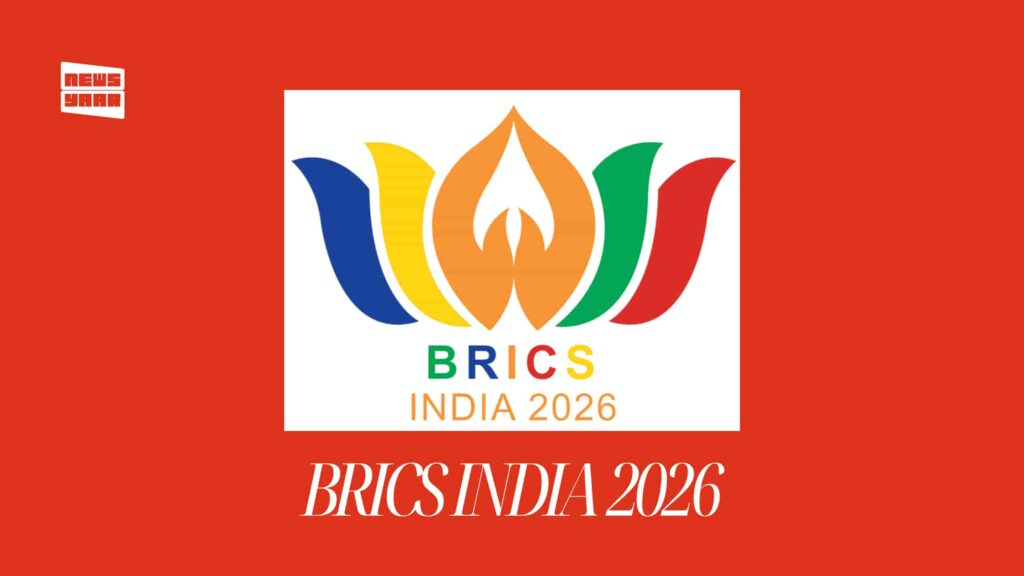
GOVERNMENT BRICS India 2026: New Logo, Theme and Website Launched as Chairship Preparations Get Underway Newsyaar January 17, 2026 12:57 pm New Delhi, India, has officially launched the logo, theme and official website for its year-long BRICS Chairship in 2026, marking the start of its leadership of the influential multilateral grouping that brings together emerging markets and developing economies. The unveiling took place in New Delhi on January 13, 2026, with External Affairs Minister Dr S. Jaishankar presiding over the ceremony. A Symbol of Unity and Shared Aspirations The newly showcased BRICS India 2026 logo draws its inspiration from the lotus flower, a symbol deeply rooted in Indian culture and widely associated with resilience, renewal and cultural heritage. The design incorporates petals in the vibrant colours of all BRICS member countries, highlighting the unity of diverse nations under a common purpose. At the centre of the emblem is the Namaste gesture, symbolising respect, warmth of partnership and a commitment to harmonious collaboration among nations. Accompanying the visual identity is the official theme for India’s chairship: “Building for Resilience, Innovation, Cooperation and Sustainability”. The theme reflects a people-centric and humanity-first approach, emphasising inclusive development, practical cooperation and mutual support. “The Indian government has said this vision is inspired by broader goals of shared growth and equitable progress across regions.” A Central Digital Platform Alongside the logo and theme, India also launched the official BRICS 2026 website, brics2026.gov.in. The digital platform is expected to serve as a central source of information on BRICS initiatives, meetings, official documents and events scheduled during India’s chairship. The website is designed to enhance transparency, engagement and communication both among member countries and with the global public. Officials highlighted that the platform’s easy access and regular updates will allow stakeholders from across member nations, partner states and civil society to stay informed about key developments and collaborative efforts under the BRICS framework. Context and Significance India assumed the BRICS Chairship on January 1, 2026, coinciding with the 20th anniversary of the BRICS grouping, which was first formed in 2006 to foster cooperation among key emerging economies. Over the years, BRICS has expanded beyond its five founding members, Brazil, Russia, India, China and South Africa, to include Egypt, Ethiopia, Iran, the United Arab Emirates and Indonesia as full members, significantly broadening its global footprint. The launch ceremony in New Delhi was attended by senior officials from the Ministry of External Affairs and representatives from diplomatic missions, underlining the importance India places on using its chairship to strengthen global dialogue and cooperation. Looking Ahead: The Final Insight With its theme focused on resilience and sustainability, India’s BRICS agenda in 2026 is expected to tackle key global challenges, including economic recovery, technological innovation, climate action and people-to-people exchanges. As preparations continue, the logo and website launch mark a pivotal early step in shaping India’s leadership year and the broader narrative of BRICS cooperation on the world stage. https://www.youtube.com/watch?v=WP8v54_xXR8 Video credit: YT@/MEA About the Author Government Reporter Share via Copied Comments Post Comment
Putin in Delhi: A Big Push for India-Russia
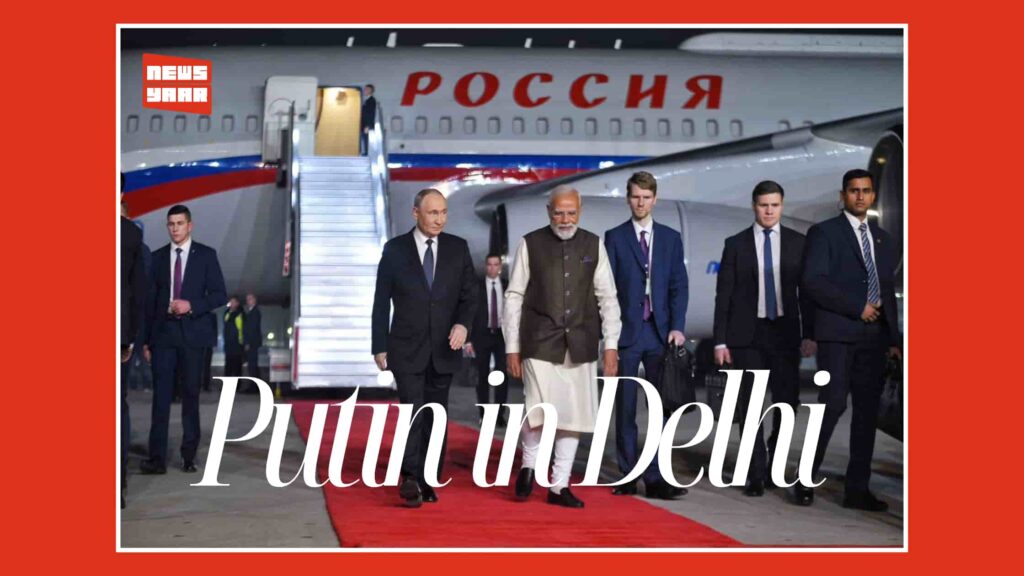
POLITICS Putin in Delhi: A Big Push for India-Russia Link to the Narendra Modi receiving Vladimir Putin at Delhi Airport video In early December 2025, Russian President Vladimir Putin arrived in New Delhi for his first visit in four years. Prime Minister Narendra Modi welcomed him warmly, and the visit was treated as a major moment for both countries. A Partnership Built Over Decades India and Russia have shared a strong bond for many years, known as their “Special and Privileged Strategic Partnership.” During this visit, both sides agreed to make the relationship even stronger. They discussed cooperation in defence, energy, science, technology, trade, and diplomacy. At a time when global politics is shifting, and Russia faces sanctions, the visit showed that India still values Russia as an important partner. It also highlighted India’s ability to balance relations with different major powers. Big Trade Plans for the Future One of the major outcomes was a new Economic Cooperation Programme that will guide both countries until 2030. The aim is to increase the current trade value of about $68.7 billion to $100 billion. India and Russia want to go beyond buying and selling oil or defence equipment. They’re looking to expand into areas like manufacturing, clean energy, minerals, pharma, agriculture, food processing, and new technology collaborations. There’s also fresh momentum to sign a Free Trade Agreement between India and the Eurasian Economic Union, which could make it easier for Indian products to enter Russian and Eurasian markets. Energy & Defence: Still the Backbone Energy remained one of the main discussion points. Putin assured India that Russia will continue supplying oil and fuel without interruption, despite global sanctions. This promise is crucial for India’s energy security. On the defence front, both sides agreed to deepen cooperation, focusing on joint manufacturing, co-production, sharing technology, and strengthening military ties. These steps aim to reduce India’s dependency on imports and build capabilities within the country. A Balanced Approach in a Complicated World What makes this visit important is India’s clear message: it will continue to follow an independent foreign policy. Despite pressure from Western countries to reduce ties with Russia, India maintained its balanced approach, keeping strong relations with both Russia and the West. For Russia, the visit helped reinforce partnerships outside the Western sphere. For India, it strengthened its trade, energy, and defence needs while preparing for a more uncertain global future. The Bottom Line Putin’s visit wasn’t just a diplomatic event. It created a fresh roadmap for India–Russia ties, focusing on stronger trade, reliable energy, deep defence cooperation, and long-term strategic trust. The visit marks a new chapter in a partnership that has stood firm for decades. https://www.youtube.com/watch?v=-oRdrsLAv1o Video credit: Narendra Modi’s Youtube Video https://www.youtube.com/watch?v=lDts5BTpyFc Video credit: Narendra Modi’s Youtube Video https://www.youtube.com/watch?v=rANa23Pxxo0 Video credit: President of India Youtube Video https://www.youtube.com/watch?v=o3_gk2xIv38 Video credit: DD News About the Author Politics Reporter Share via Copied Comments Post Comment