




India’s Semiconductor Leap: 2 nm Chips Designed from India Signal a Strategic Technological Shift
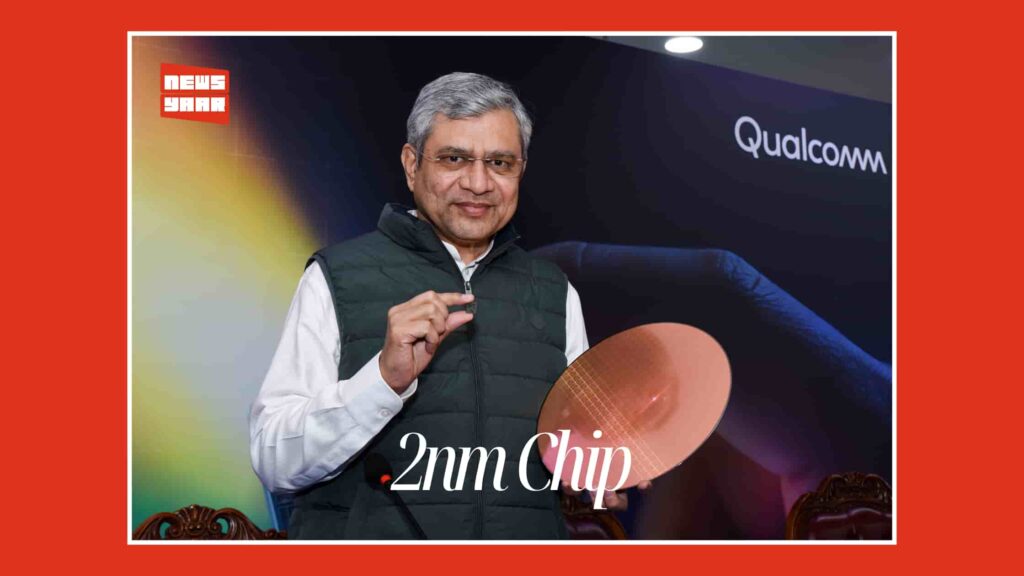
TECH India’s Semiconductor Leap: 2 nm Chips Designed from India Signal a Strategic Technological Shift In a development being widely recognised as a milestone for India’s semiconductor ambitions, engineers based in the country have played a central role in designing 2 nanometre (nm) semiconductor chips — one of the most advanced chip technologies in existence today. This achievement, marked by a successful 2 nm chip tape-out at a leading global chipmaker’s Indian facilities, underscores a significant shift in India’s role in the global semiconductor value chain from primarily back-office support to end-to-end engineering and advanced chip design. What Is a 2 nm Chip and Why It Matters In semiconductor terminology, the “nanometre (nm)” designation refers to the scale of the technology node — essentially the size of the features etched onto a chip. As technology nodes shrink, chips become more power-efficient, faster and capable of packing more transistors in the same physical space. The 2 nm node represents one of the most cutting-edge levels of chip design, sitting at the forefront of global semiconductor innovation alongside 3 nm and 4 nm processes. These advanced chips are expected to power future generations of smartphones, artificial intelligence (AI) systems, edge devices, data centre hardware, autonomous systems and high-performance computing applications. The density and complexity at this level — with tens of billions of transistors on a single die — enable significant improvements in performance and energy efficiency over earlier generations. The India Breakthrough: Design in Bengaluru and Beyond The chip design milestone was publicly showcased at **Qualcomm Technologies’ engineering centre in Bengaluru, where the company completed the **tape-out of its 2 nm semiconductor design, with development contributions distributed across its Indian engineering hubs in Bengaluru, Chennai and Hyderabad. “Tape-out” refers to the stage in chip development where the final design is completed and ready for manufacturing at a wafer fab — a critical endpoint of the design phase. While the actual manufacturing (fabrication) of the 2 nm chips will continue to be handled by specialised semiconductor foundries overseas due to the extremely capital- and technology-intensive infrastructure required, the fact that high-end design work is being led from India reflects a meaningful advance in the country’s engineering capabilities. Government Perspectives and Industry Interpretation Union Minister for Electronics and Information Technology, Ashwini Vaishnaw, highlighted this development as a marker of India’s transition toward holistic semiconductor capabilities, emphasising that the country is moving beyond “back-office development work” toward complete engineering cycles — from product definition, design and silicon layout to tape-out and validation — all conducted within Indian talent pools. At a press conference during the event, Minister Vaishnaw noted that this achievement demonstrates how India’s semiconductor design ecosystem has matured and is now integral to global engineering efforts. He indicated that the next strategic target would be to establish semiconductor “fabs” (fabrication facilities) in India, which would enable domestic production of advanced chips. Experts emphasise that such milestones are not merely technical achievements but also symbolic markers of India’s growing integration into the global semiconductor landscape, particularly in high-end design work that drives product performance and innovation. India as a Growing Engineering Hub The development also puts into sharp focus India’s rapidly expanding semiconductor ecosystem — one that combines a deep talent pipeline with increasing participation from global chipmakers. India hosts one of the largest engineering workforces outside the United States for companies like Qualcomm, which have invested in design, validation, system-level optimisation and AI integration efforts for next-generation chip platforms. Indian engineering teams contribute across multiple stages of semiconductor development, including architecture implementation, system integration and advanced feature validation — competencies that are critical in designing chips competitive at global levels. Policy Momentum: Semicon Mission 2.0 and Indigenous Design Focus The Government of India’s semiconductor policy framework, particularly Semicon Mission 2.0, prioritises indigenous chip design as a key objective alongside talent development, equipment and material ecosystem building, and eventual manufacturing capacity expansion. The revised mission includes funding and incentives for design-led startups, R&D centres, industry collaborations and skill development, aimed at creating a future-ready semiconductor workforce. Under this framework, global companies setting up design operations in India — including multinational firms like Arm — reflect international confidence in Indian engineering capabilities. Such initiatives help build intellectual property (IP), research expertise and design capability at a world-class level. Broader Strategic and Economic Implications The design of 2 nm chips from Indian engineering centres carries significance beyond technology alone. It contributes to: Enhanced strategic positioning in global semiconductor supply chains Attraction of further foreign direct investment (FDI) in high-tech R&D Upskilling of engineering talent and creation of advanced tech jobs Foundation for future advanced manufacturing and fab development Integration with AI, edge computing and next-gen connectivity sectors By enabling Indian engineers to work at the forefront of semiconductor design, the country is positioning itself as a competitor and collaborator in the high-performance chip ecosystem — a space historically dominated by a handful of global players. Conclusion: A Step Toward a Global Semiconductor Role While India’s semiconductor journey — from design to full-scale manufacturing — remains a multi-decade endeavour, the successful 2 nm chip tape-out driven by Indian talent and engineering operations represents a strategic inflection point. It reinforces the narrative that India is not just a consumer of cutting-edge technologies but a contributor and innovator, capable of playing a meaningful role in one of the most consequential fields of modern technology. This milestone, achieved through collaboration between global industry leaders and Indian engineers under supportive policy frameworks, signals that the country is steadily moving up the semiconductor value chain — from design and verification to eventual productisation and broader ecosystem participation. Video credit: YT@/ANI
India’s DHRUV64: The First 1 GHz, 64-Bit Dual-Core Microprocessor

TECH India’s DHRUV64: The First 1 GHz, 64-Bit Dual-Core Microprocessor In a landmark moment for India’s semiconductor ambitions, the Centre for Development of Advanced Computing (C-DAC) has unveiled DHRUV64, the country’s first 1 GHz, 64-bit dual-core microprocessor. Developed under the government’s Microprocessor Development Programme and showcased as part of the Digital India RISC-V (DIR-V) initiative, DHRUV64 represents a major stride toward self-reliance in advanced chip design and computing technology. A Milestone in Indigenous Chip Design DHRUV64 is built on an open-source RISC-V architecture, an increasingly popular set of instructions that allows chip designers to innovate without costly licensing fees from foreign companies. Operating at a clock speed of 1.0 GHz with dual processing cores and 64-bit capability, it brings India into the realm of gigahertz-class embedded processors, a class previously dominated by global players. Unlike earlier academic or specialised chips, DHRUV64 is designed for broader strategic and commercial applications, including industrial automation, automotive electronics, 5G infrastructure, consumer devices, and Internet of Things (IoT) systems. It supports modern operating systems, integrates with diverse hardware systems, and provides multitasking efficiency suited for a range of real-world deployments. How Does It Matter? India currently consumes roughly 20 percent of the world’s microprocessors, yet historically has relied heavily on imports for core computing technology. Developing a homegrown processor like DHRUV64 is significant not only for technological sovereignty but also for enhancing security, reducing supply-chain vulnerabilities, and building local expertise in semiconductor design. By creating a platform that domestic startups, researchers, and established companies can build upon, DHRUV64 is expected to boost innovation across the electronics ecosystem and support cheaper prototyping and product development. It also provides a foundation for a growing pipeline of skilled chip design professionals, further energising India’s tech sector. A Step Toward Aatmanirbhar Bharat in Technology DHRUV64 marks a continuation of India’s journey toward an Aatmanirbhar (self-reliant) semiconductor ecosystem. The chip follows earlier indigenous designs such as SHAKTI, AJIT, VIKRAM, and THEJAS64, and sits alongside future variants like Dhanush and Dhanush+ in the development pipeline. While India still relies on global fabrication technologies for manufacturing, the design and strategic deployment of processors like DHRUV64 signal a slow but steady shift toward autonomous capabilities in core computing technologies, a critical competitiveness marker in the global tech landscape. About the Author Tech Reporter Share via Copied Comments Post Comment
Amazon, Microsoft, Google Announce $67B India Growth Push: What you need to know?

BUSINESS Amazon, Microsoft, Google Announce $67B India Growth Push: What you need to know? In a landmark development that could reshape India’s digital economy, three global tech giants, Amazon, Microsoft, and Google, have unveiled a combined $67 billion investment plan for India over the coming years. The multi-billion-dollar commitment highlights the country’s central role in the future of technology, cloud computing, digital infrastructure, and innovation. The announcement, which follows India’s ongoing push toward digital transformation and strategic technology partnerships, signifies escalating competition among the world’s largest cloud and internet companies to expand in one of the fastest-growing tech markets. Over the past decade, India has emerged as a hub for startups, data centers, and digital services, driven by rising internet penetration, affordable data, and a large talent pool. Details of the Investment Plans: The Overview Each company’s commitment targets strategic areas of strength and collaboration with India’s public and private sectors: Amazon said it will invest roughly $30 billion in India through its cloud division, Amazon Web Services (AWS), over the next 10-12 years. The funds will support cloud infrastructure expansion, data center development, and training initiatives that aim to build digital skills across industries in India. Microsoft announced plans to invest $20 billion focused on expanding its cloud footprint through Azure data centers, partnerships with local enterprises, and programs to boost artificial intelligence (AI) adoption and digital literacy. Microsoft also reiterated its commitment to supporting India’s data governance initiatives while prioritizing data privacy and sovereignty. Google pledged $17 billion toward its India strategy, with investments in cloud infrastructure, AI research, and initiatives to support startups and developers. Google’s investment is expected to enhance its cloud services as well as expand local innovation programs in areas such as machine learning and language technologies. Collectively, these investments, totaling $67 billion, represent some of the largest foreign tech commitments in India’s history, reflecting confidence in India’s market potential and policy environment. Strategic Drivers and Implications India’s digital economy is projected to exceed $1 trillion by 2030, according to industry estimates, driven by cloud growth, mobile services, e-commerce, and AI-enabled technologies. With a population exceeding 1.4 billion and a young, tech-savvy workforce, global tech leaders see India as a strategic partner for long-term innovation and market expansion. Experts suggest that the latest funding commitments will accelerate digital infrastructure build-out, boost job creation, and stimulate growth in sectors ranging from fintech and healthtech to manufacturing and education technology. The emphasis on cloud services and AI also aligns with India’s ambitions to become a leader in emerging technologies. Policy and Public Response Government officials welcomed the investments as a vote of confidence in India’s tech ecosystem and regulatory framework. Analysts note that sustained collaboration between the tech industry and policymakers could further strengthen India’s position on the global innovation map. As Amazon, Microsoft, and Google deepen their footprints, India’s digital future appears poised for rapid transformation, with significant economic and societal implications in the years ahead. About the Author Business Reporter Share via Copied Comments Post Comment