WORLD
Iran in Crisis: Economic Collapse Triggers Unprecedented Nationwide Protests
- Newsyaar
- January 22, 2026
- 4:32 pm

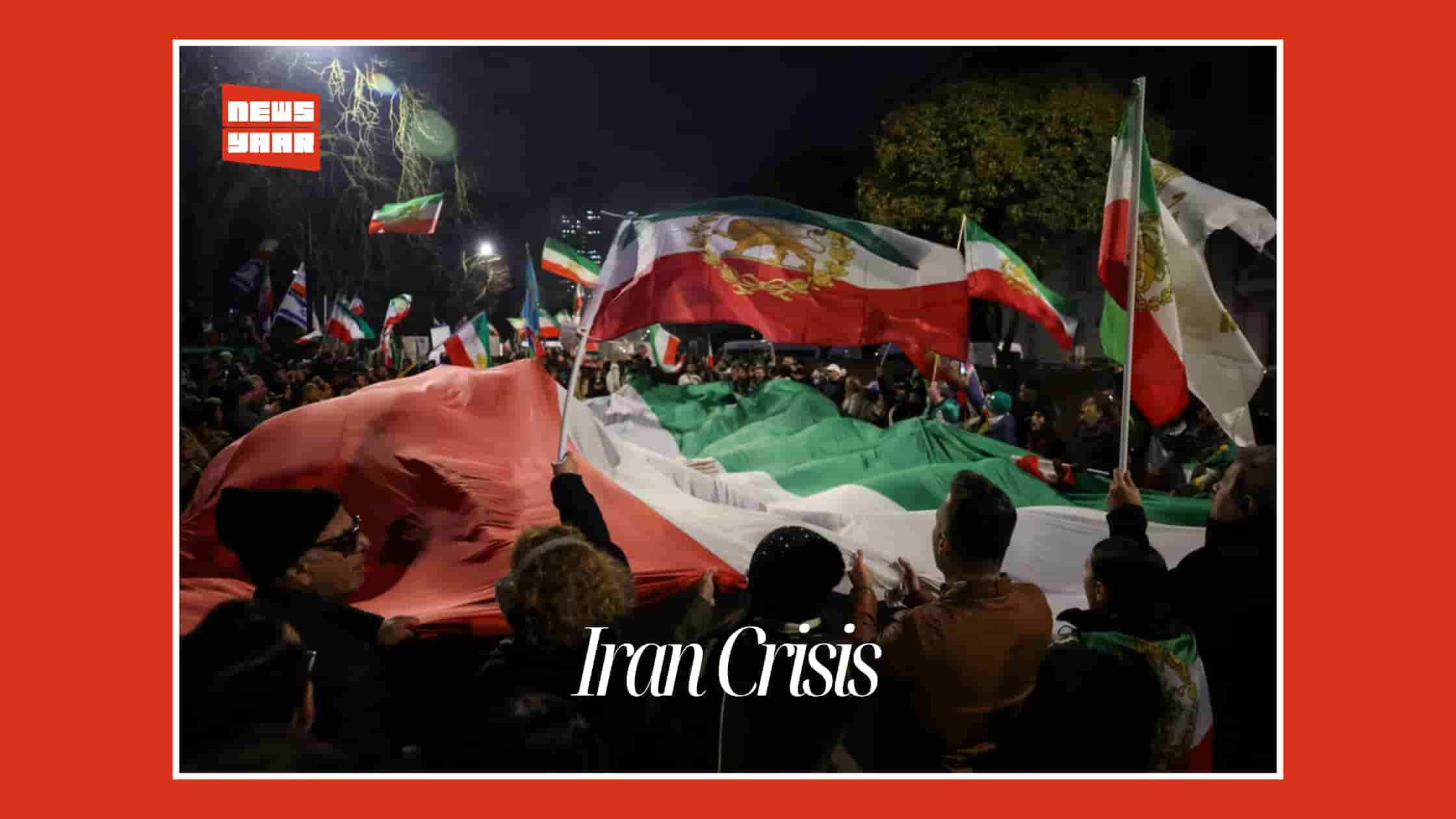
Iran is facing one of the most intense periods of civil unrest in decades as nationwide protests continue to spread, driven by a deepening economic crisis, rampant inflation, a collapsing currency and widespread public dissatisfaction with the government. The demonstrations, which began in late December 2025, have quickly escalated into the largest wave of unrest since the 1979 Islamic Revolution, encompassing cities across all 31 provinces and challenging the country’s political status quo.
What Sparked the Protests?
The immediate trigger was Iran’s economic meltdown, particularly the freefall of the Iranian rial. On 29 December 2025, the rial plummeted to historic lows of roughly 1.45 million to 1 US dollar on unofficial markets, eroding citizens’ purchasing power and fuelling anger among merchants, workers, students and ordinary families.
Inflation soared past 40 per cent, with food prices, basic goods and essential services becoming increasingly unaffordable. By late 2025, staples such as rice, fruits, vegetables and meat rose dramatically in price, compounding daily hardship for households already strained by rising costs and stagnant wages.
How the Unrest Spread
The unrest began in Tehran’s historic Grand Bazaar, where shopkeepers closed their businesses in protest of the economic conditions and the deteriorating currency. From there, demonstrations rapidly spread nationwide to cities including Isfahan, Shiraz, Mashhad, Tabriz, Kermanshah, Hamadan and Qeshm, among others, with protests intensifying and crossing demographic lines.
What began as an economic protest quickly adopted broader political dimensions, with many demonstrators chanting anti-government slogans and demanding structural reform. In some areas, slogans connected economic hardship to broader critiques of the political leadership and foreign policy priorities.
Scale and Intensity of the Protests
According to independent human rights organisations and local news agencies, the unrest has been widespread and intense:
- Protests have taken place in hundreds of locations across all 31 provinces.
- National internet and phone networks were shut down in early January 2026 in an attempt to curb information flow and limit coordination among demonstrators.
- Participation expanded from shopkeepers to students, labourers, youth and urban professionals.
Government Response and Crackdown
The Iranian government’s response has been forceful. Security forces, including the Islamic Revolutionary Guard Corps (IRGC) and paramilitary Basij units, have been deployed to disperse crowds and quell unrest. Independent reporting suggests that live ammunition, tear gas and mass arrests have been used in some cities.
Information about casualties and arrests remains difficult to verify due to restricted media access and the internet blackout, but human rights groups have reported thousands of deaths.
Human Rights Activists News Agency (HRANA) has documented a death toll exceeding 4,500, including protesters, bystanders and minors, although exact numbers vary by source and verification difficulty remains high due to restricted access.
Economic Roots of the Crisis
Iran’s economic woes did not arise overnight. While the rial’s collapse provided the immediate spark, deeper structural factors have been building over years:
Sanctions: The re-imposition and intensification of international sanctions, particularly after the collapse of the 2015 nuclear deal and renewed restrictions in late 2025, severely restricted Iran’s oil revenue, foreign currency inflows and economic flexibility.
Inflation and Currency Devaluation: Chronic inflation — estimated at 40 – 48 per cent by late 2025 — has eroded savings and suppressed wage value, while the currency’s steep devaluation made imports costlier and further strained purchasing power.
Economic Mismanagement: Analysts also point to long-standing internal policy challenges, including fiscal mismanagement, restricted private sector growth and a reliance on state subsidies that have not kept pace with rising living costs.
Water and Basic Services Shortages: Iran is simultaneously grappling with severe water scarcity, drought and utility shortages, particularly in major cities like Tehran and Mashhad, compounding public frustration with daily life hardships.
Broader Political and Social Dimensions
While economics was the initial spark, the protests have taken on a broader political character. Some crowds have shifted from purely economic grievances to explicit critiques of the current political system, including calls against the ruling structure and leadership priorities.
In parallel, regional geopolitics and recent tensions — including Iran’s confrontations with the United States and Israel — have influenced internal narratives. Government figures have at times attributed unrest to foreign interference, though such claims lack independent verification and are rejected by many protesters.
Human Impact and Daily Hardship
For ordinary Iranians, the cost of living crisis has tangible consequences: food staples have become unaffordable for many families, small businesses face collapse, and unemployment and wage stagnation leave once-stable households struggling to make ends meet.
The internet shutdown has had a severe impact on daily life and business activity, particularly for enterprises reliant on digital platforms — from online commerce to social communications — deepening economic pain even for sectors not directly tied to protests.
International and Geopolitical Repercussions
Iran’s internal turmoil has attracted global attention, with world powers monitoring the situation closely amid concerns about regional stability. Western governments have called for restraint and respect for human rights, while some leaders have hinted at diplomatic or economic pressure options should violence escalate further.
Meanwhile, Tehran has emphasised sovereignty and condemned what it describes as external interference. The interplay between domestic unrest and external diplomatic pressure adds a complex layer to an already volatile situation.
What This Means for Iran’s Future
The combination of economic collapse, popular protest and political confrontation places Iran at a critical juncture. Unlike past protest waves that were episodic or confined to symbolic issues, the current unrest is rooted in widespread economic despair affecting broad segments of society.
If the government cannot swiftly stabilise the economy and respond to popular demands, the protests could evolve into a longer-term movement with profound implications for Iran’s internal governance, social cohesion and regional posture.
Key Facts at a Glance
- Protests began: Dec 28, 2025, in Tehran’s Grand Bazaar; spread nationwide.
- Primary causes: Currency collapse, inflation, rising food costs, economic mismanagement and sanctions.
- Inflation: Above ~42 % in late 2025.
- Currency: Iranian rial fell to record lows (~1.45 million to $1).
- Spread: Protests now reported from all 31 provinces.
- Government response: Heavy crackdowns, mass arrests, internet shutdown.
Iran’s current crisis is not simply a short-lived protest cycle — it is a complex socio-economic and political moment, rooted in prolonged economic stress and widening public discontent. How the government, civil society and international community respond in the coming weeks could shape the country’s trajectory for years to come.
About the Author
World Reporter