


FIFA World Cup Final: Spain, Argentina, and the Night That Defined a Tournament

The FIFA World Cup 2026 final between Spain and Argentina delivered everything a title match should offer: elite tactical tension, high emotion, a late decisive goal, and a closing chapter that will be discussed for years. Spain won 1-0 after extra time at New York New Jersey Stadium, capping a tournament that began with 48 teams across 16 host cities and ended in a final that felt both historic and deeply human.What made the match so compelling was not only the quality on the pitch, but the contrast between the two finalists. Spain arrived as the kings of Europe, built on control, structure, and composure, while Argentina, led by Lionel Messi, came into the final riding a surge of drama and belief after a bruising knockout run.A final worthy of the stageThe match itself unfolded like a classic World Cup final: tense, carefully balanced, and decided by fine margins rather than chaos for most of its duration. Spain’s 1-0 extra-time win came through Ferran Torres, and the result was enough to deny Argentina a second consecutive world title.Spain’s performance reflected a team that knew how to manage pressure in a final. Argentina, meanwhile, were pushed into a reactive role after the momentum shifted late in the contest, especially once Enzo Fernandez was sent off in the second half, leaving Lionel Scaloni’s side to finish with 10 players. The emotional weight of defeatFor Argentina, the loss was especially painful because the team had entered the final with a sense of destiny. Messi’s presence made the occasion even heavier, since every late run, missed chance, and defensive scramble seemed to carry the emotional burden of an entire era.Enzo Fernandez spoke publicly after the defeat and described how the group’s effort mattered more than the result itself, a reminder that World Cup finals are often measured not only by the scoreline but by the meaning attached to them. In Argentina’s case, the disappointment was real, but so was the pride in having gone so far. The post-match breakdownThe closing whistle did not end the drama. Reports say that tensions exploded into a post-match melee involving players and staff from both sides, with Leandro Paredes, Nahuel Molina, Thiago Almada, Roberto Ayala, Rodri, Gavi, and Eric Garcia among those drawn into the altercation.FIFA has since opened disciplinary proceedings and appointed a disciplinary and ethics prosecutor to investigate the incident under its code. The governing body is treating the matter seriously, and sanctions could range from fines to suspensions depending on what the prosecutor concludes about the conduct and who is found responsible.Why FIFA is involvedThe key issue for FIFA is not just violence, but whether the behavior violated the principles of decent conduct and brought the sport into disrepute. That is a broader standard than a simple on-field red card, which means the disciplinary process can examine the entire context of the post-match incident, including the actions of staff and the atmosphere around the celebration.Argentina’s situation is complicated further by the fact that FIFA was already reviewing conduct linked to the semifinal celebration involving a banner reading “Las Malvinas son Argentinas.” That means the federation is not dealing with a single isolated issue, but with a pattern that FIFA may view as politically or disciplinarily problematic.Argentina’s wider disciplinary riskThe likely outcome is that individual bans, if any, will be targeted rather than sweeping, but FIFA has shown in past cases that it can impose meaningful penalties when it believes conduct crosses the line. The investigation process can take time, and the governing body has not set a public deadline for its decision.There is also precedent for FIFA and other governing bodies using disciplinary tools for conduct that goes beyond the normal boundaries of competition. That is why this case matters: it is not simply about one ugly moment after a final, but about how football’s institutions respond when emotion spills into behavior that the sport considers unacceptable.The tournament’s larger storyEven with the controversy at the end, the 2026 World Cup will be remembered as a landmark event. It was the first tournament to feature 48 teams, spread across three host countries and 16 host cities, and it produced a mix of new contenders, familiar giants, dramatic upsets, and memorable individual performances.The visual memory of the tournament will be rich as well: fans packed into stadiums, giant public screenings, legends like Messi and Mbappé on the global stage, and emerging stories that gave the competition depth beyond the final itself. That broader texture is part of what makes the World Cup such a singular event in world sport.What Spain’s win meansFor Spain, the victory confirms a return to the top of world football and a style of play that once again proved effective under the highest pressure. Their success was built on midfield control, defensive stability, and the ability to stay composed when the stakes were at their peak.A World Cup final is rarely only about who scores the goal. It is about who can absorb tension, make the fewest mistakes, and hold the shape of the game when everyone else in the stadium is being pulled by emotion. Spain did that better on the night, and that is why they left with the trophy.Closing perspectiveThe 2026 final had all the ingredients of a defining football moment: a heavyweight matchup, a dramatic outcome, emotional aftermath, and a disciplinary storyline that will continue after the celebrations fade. Spain earned the title on the field, but the scenes afterward ensured that the match will be remembered for more than the scoreline.In that sense, the final captured what the World Cup often does best and worst at once: it delivers beauty, pressure, and national pride, but it can also expose how thin the line is between competitive passion and conduct that football’s authorities cannot ignore.
NATO Summit 2026 in Ankara: A High-Stakes Meeting That Chose Continuity Over Crisis
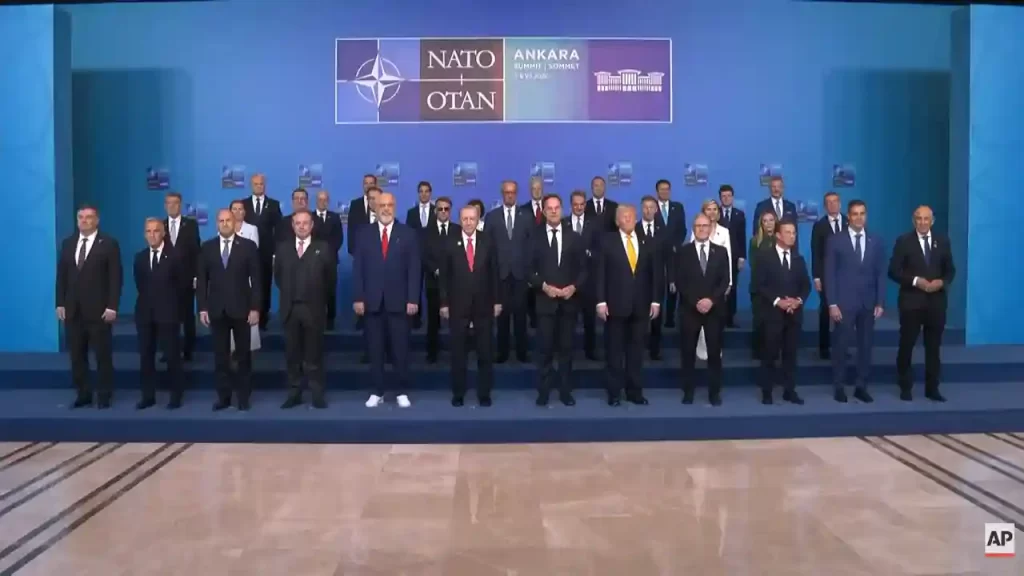
The NATO Summit in Ankara on 7–8 July 2026 arrived with the kind of tension that tends to follow every major alliance gathering in an era of war, spending disputes, and uncertain US commitment, yet the final outcome was defined less by dramatic rupture than by cautious continuity. Allied leaders managed to preserve unity on the core questions, even as disagreements over Ukraine’s membership path, burden-sharing, Turkey’s F-35 ambitions, and Europe’s broader security posture remained unresolved beneath the surface. Why Ankara MatteredThis summit was not just another annual diplomatic event; it was a review point for how far NATO had advanced since the 2025 summit in The Hague and a chance to set the next phase of the alliance’s roadmap. The timing was especially sensitive because allies entered Ankara amid uncertainty over US engagement, frustration about defense-spending delivery, and competing views on how far NATO should go in backing Ukraine and responding to wider geopolitical shocks, including the Iran war. Ankara also carried symbolic weight because NATO summits are increasingly used not only to manage crises but to signal strategic direction. In that sense, the 2026 gathering became a test of whether the alliance could still produce consensus in a more fractured world, and the answer, at least for now, was yes, though only by shelving some of the hardest issues for later. Ukraine Gains Support, But Not MembershipUkraine’s President Volodymyr Zelenskyy was one of the summit’s most consequential guests, delivering a short but emotionally charged address that earned a standing ovation on the opening day. The alliance also delivered a tangible military commitment, with allies pledging €70 billion in military equipment and training support and promising to sustain assistance at least through 2027 at equivalent levels. Even so, the long-running question of NATO membership remained largely unchanged. Zelenskyy pressed allies to consider whether it was fair to leave a country with such strong defensive capability outside the alliance, but the summit produced no breakthrough on accession, leaving Ukraine with strong support but no formal movement on membership status. The final declaration did use stronger language than the 2025 Hague statement, describing Kyiv as a contributor to “transatlantic security” and reaffirming unwavering support for its freedom, sovereignty, and territorial integrity. That distinction matters. NATO is increasingly treating Ukraine not just as a beneficiary of support but as a security contributor, yet allies remain divided over how quickly that political recognition should translate into membership. Swedish Defense Minister Pal Jonson captured the direction of travel when he said the alliance was moving toward seeing Kyiv as a “security provider,” while also arguing that the sooner Ukraine becomes a member, the better. A New Defense Finance ArchitectureOne of the summit’s most significant structural developments was the announcement of the Canada-led Defense, Security and Resilience Bank. Backed initially by Canada, Albania, Belgium, Ukraine, Greece, Latvia, Luxembourg, Romania, and Turkey, the new institution is designed to provide low-interest loans for defense projects and help governments and small and medium-sized enterprises close financing gaps. The ambition behind the bank is substantial. Ottawa said the goal is to mobilize $134 billion of capital and have the institution operating by 2027, which would make it one of the most notable financial innovations in the alliance’s recent history. The idea reflects a broader recognition that deterrence is not only about weapons and troops; it is also about industrial capacity, procurement financing, and the ability to sustain long-term defense investment in a more dangerous era. Turkey, Trump, and the F-35 QuestionThe summit also highlighted Turkey’s unresolved place inside the alliance’s most advanced defense ecosystems. Despite positive signals from Donald Trump that sanctions could be lifted, Ankara did not secure formal re-entry into the F-35 program, from which it was removed in 2019 after purchasing Russian air defense systems.Trump’s remarks suggested the issue remains alive, saying that bringing Turkey back into the fifth-generation fighter program was “something certainly we’d consider,” but no agreement was formalized. That left Turkey with a familiar combination of diplomatic encouragement and practical uncertainty, even as Turkish defense thinking appears to be shifting toward greater emphasis on the indigenous KAAN fighter rather than relying solely on a return to the American program. Big Defense Deals on the SidelinesBeyond the summit hall, the defense industry used Ankara as a launchpad for major announcements. NATO allies backed the planned procurement of up to 10 Swedish GlobalEye surveillance aircraft to replace aging E-3 planes, marking a notable turn toward a European solution after earlier plans had pointed to Boeing’s E-7 Wedgetail. The summit also saw partner nations sign letters of intent for the Crewed Airborne Early Warning High Visibility Project, involving Denmark, Finland, France, Germany, Poland, Spain, Sweden, and Turkey. At the same time, a broader coalition led by the UK committed $50 billion over the next decade to deepen long-range strike capabilities, including systems able to hit targets hundreds and, in some cases, thousands of kilometers away with precision. This wave of initiatives matters because it shows NATO’s center of gravity shifting from abstract strategic debate to concrete capability building. Air surveillance, early warning, long-range strike, and industrial financing are becoming the material language of allied deterrence. Trump’s Tone and the Alliance MoodDonald Trump’s presence cast a long shadow over the summit, especially given his tendency to criticize allies sharply. Yet by the end of the meeting, he was speaking of his “tremendous love” for Western leaders, and even said there was “a lot of love in that room” after his bilateral meeting with Zelenskyy. That softer tone likely reassured Secretary General Mark Rutte, whose diplomatic style during this NATO cycle has leaned heavily on keeping Washington engaged and the alliance unified. Still, the summit also featured a reminder that alliance management remains complicated, with Trump renewing his call to take control of Greenland, a remark that prompted Danish Prime Minister Mette Frederiksen to restate that the island is not for sale.What the Declaration AchievedThe final declaration renewed NATO’s Article 5 collective-defense commitment, a crucial signal to European and Canadian allies worried about what might happen if Russia tests the
Modi at G7 Summit 2026: Maritime Security, Global Solidarity, and International Relations
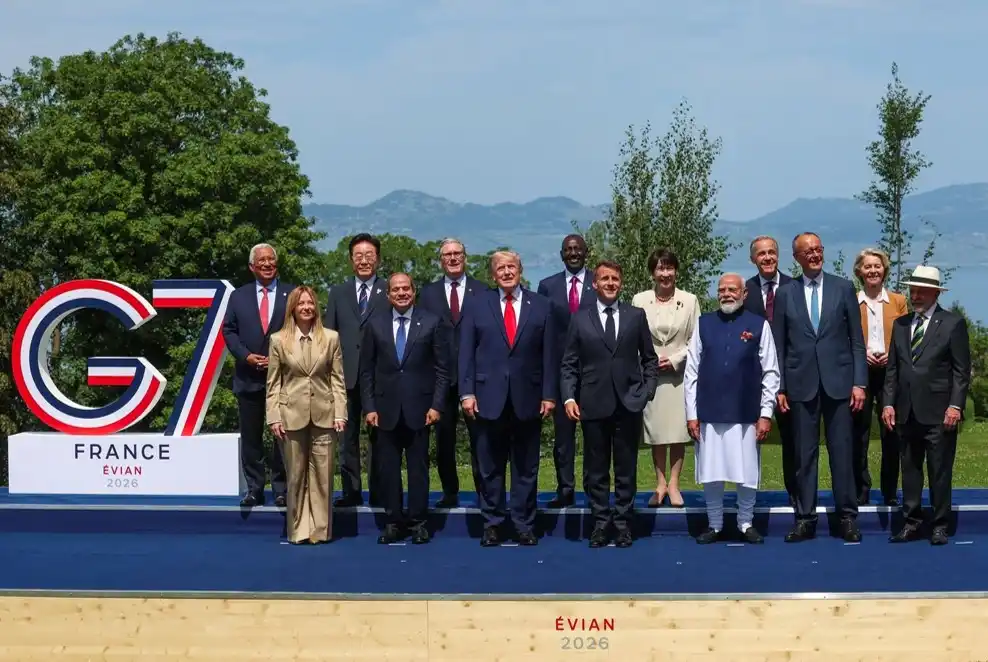
Prime Minister Narendra Modi delivered a powerful address at the 52nd G7 Summit in Evian-les-Bains, France, on Tuesday, June 16, 2026, voicing India’s firm concern over disruptions to maritime trade through the Strait of Hormuz and highlighting that several Indian civilians lost their lives during the West Asia conflict. Speaking at the outreach session on “Forging New Partnerships and Rebuilding International Solidarity,” Modi emphasized that lasting solutions to conflicts can only be achieved through dialogue, diplomacy, and international cooperation, while calling for the safety of seafarers who connect all nations through global maritime trade.The summit, held from June 15 to 17 on the shores of Lake Geneva, brings together leaders of France, Britain, Canada, Germany, Italy, Japan, and the United States alongside the European Union, with India invited as a partner country for its 13th participation and PM Modi’s 7th consecutive attendance. During his extensive diplomatic outreach on the sidelines, Modi held bilateral meetings with Canadian Prime Minister Mark Carney, British Prime Minister Keir Starmer, UAE President Sheikh Mohamed bin Zayed Al Nahyan, Kenyan President William Ruto, Egyptian President Abdel Fattah El-Sisi, Japanese Prime Minister Sanae Takaichi, and South Korean President Lee Jae-myung, while also exchanging greetings with U.S. President Donald Trump ahead of their scheduled bilateral meeting.Maritime Security and the Strait of Hormuz: India’s Core ConcernPM Modi’s remarks on the need to protect seafarers came amid growing anger in India over the deaths of three Indian crew members in a U.S. military attack on a merchant vessel off the coast of Oman last week. The U.S. Central Command said it had taken action against three vessels, Marivex on June 8, Settebello on June 9, and Jalveer on June 11, alleging that they were attempting to violate the U.S. blockade of Iranian ports. Modi raised this issue a day before his bilateral talks with President Trump, underscoring how conflicts in West Asia have disrupted global trade and caused loss of life.“We welcome the progress made in peace efforts in West Asia. This conflict has caused loss of life and property in our friendly countries in the region. Disruptions to maritime trade through the Strait of Hormuz have affected the global economy. Several Indian civilians have also lost their lives,” Modi said during his address. “It is our responsibility to ensure the safety of the seafarers who connect all nations through global maritime trade. We must ensure that maritime routes remain secure and that seafarers can perform their duties without fear,” he added.Modi’s concerns reflect India’s strategic dependence on the Strait of Hormuz, one of the world’s most critical maritime chokepoints for oil shipments and global commerce. As a major importer of energy and a nation with significant maritime trade volumes, disruptions in Hormuz directly impact India’s economic security, energy prices, and the safety of its nationals working in global shipping. The deaths of three Indian mariners in the U.S. strike have heightened domestic pressure on the government to address maritime security and protect Indian citizens abroad.Trust as the Ultimate Strategic Asset: Modi’s Vision for International RelationsIn his address, Modi underscored the importance of trust in international relations, saying that confidence among nations has become a more valuable strategic asset than minerals, technology, or markets. He argued that in an increasingly interconnected world, where energy, food, health, cyber, and economic security are closely linked, stronger international partnerships are essential for humanity’s progress and prosperity. Warning that trade and technology were being used to pursue narrow interests, Modi said such practices had contributed to a growing trust deficit in the international system.Modi wrote in an X post: “Shared my thoughts at the Outreach Session on ‘Forging New Partnerships and Rebuilding International Solidarity’ at the G7 Summit in Evian. In a world that is getting more interconnected and interdependent than ever before, this subject becomes all the more vital.” His emphasis on trust reflects India’s diplomatic philosophy that international cooperation must be founded on mutual respect, reciprocity, and shared interests rather than coercion or unilateralism.The trust deficit Modi highlighted is particularly relevant in the current global context, where geopolitical tensions, trade restrictions, technology bans, and security concerns have led nations to prioritize national interests over collective action. As the G7 discusses issues ranging from AI access to critical minerals supply chains, India’s call for trust-based partnerships offers an alternative framework that emphasizes inclusivity, cooperation, and shared prosperity for all nations, not just the wealthy few.Bilateral Outreach: Strengthening India’s Strategic PartnershipsIndia-Canada: Forward-Looking Strategic PartnershipDuring his meeting with Canadian Prime Minister Mark Carney, PM Modi and his counterpart welcomed the positive momentum in India-Canada relations and reaffirmed their commitment to building a forward-looking strategic partnership. The two leaders reviewed progress in economic cooperation, including commercial arrangements relating to Liquefied Natural Gas (LNG), Liquefied Petroleum Gas (LPG), and metallurgical coal. They expressed satisfaction over ongoing negotiations for a Comprehensive Economic Partnership Agreement, with both sides aiming to conclude the pact this year.The leaders also welcomed growing cooperation in science and technology, defence, finance, and migration. To further strengthen defence and security ties, the two countries agreed to launch negotiations on a General Security of Information Agreement. PM Modi expressed India’s support for Canada becoming a Dialogue Partner of the Indian Ocean Rim Association, and both leaders announced the establishment of Raisina Americas as a platform to enhance dialogue and cooperation.India-UK: Vision 2035 and Comprehensive Economic PartnershipDuring his meeting with British Prime Minister Keir Starmer, PM Modi reviewed progress in India-UK relations under Vision 2035. The two leaders welcomed cooperation across trade, defence, technology, education, and people-to-people ties, looking forward to the early implementation of the Comprehensive Economic and Trade Agreement. They expressed satisfaction over the strong education partnership, noting recent progress in establishing campuses of British universities in India, including the University of Liverpool in Bengaluru and the Universities of York and Bristol in Mumbai.The leaders exchanged views on regional and global developments and reaffirmed their commitment to further strengthening the India-UK Comprehensive Strategic Partnership, demonstrating how both nations are working to deepen their bilateral
Amit Kshatriya: The NASA Lifer Who Became America’s Point Man for the Moon
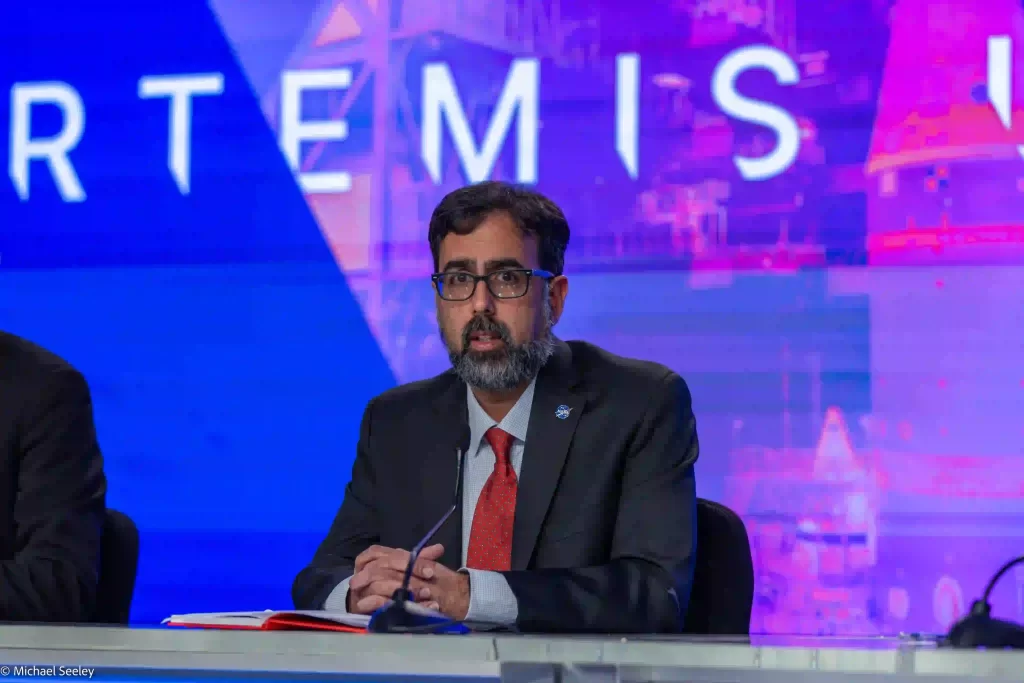
A Wisconsin Kid Who Grew Up to Run NASAThere is a particular kind of American origin story that begins in the heartland and ends somewhere extraordinary. Amit Kshatriya’s version goes from Wisconsin to the highest civil service position in the United States space agency — and the path between those two points runs through twenty-two years of calculated, relentless work at the place he always wanted to be.Kshatriya was born in Wisconsin to first-generation Indian immigrants. Growing up in Houston, he admired rocket launches as a child — which, given that Houston is home to NASA’s Johnson Space Center, meant he was watching the real thing, not television footage. That proximity to actual space operations made a future at NASA feel less like a fantasy and more like a direction.He holds a Bachelor of Science in mathematics from the California Institute of Technology in Pasadena, California, and a Master of Arts in mathematics from the University of Texas at Austin. Two degrees in mathematics. No aerospace engineering, no physics at the undergraduate level. Just the discipline that underlies all of it, pursued at two of the most demanding institutions in the United States.On September 3, 2025, acting NASA Administrator Sean P. Duffy named Amit Kshatriya as the new Associate Administrator of NASA, the agency’s top civil service role. He was, at that moment, the highest-ranking civil servant in the history of the American space agency to have Indian roots. More importantly, he was the person now responsible for making sure humans get back to the Moon.Twenty-Two Years: How You Actually Get to Run NASAThe title of NASA Associate Administrator does not come from a single impressive moment. It comes from two decades of doing every job in front of you extremely well. Kshatriya’s career at NASA is worth tracing in detail because it explains not just who he is, but how the most complex human endeavour on earth actually functions — one competent, patient professional at a time.Beginning his time at the space agency in 2003, he worked as a software engineer, robotics engineer, and spacecraft operator, primarily focused on the robotic assembly of the International Space Station. Robotic assembly of the ISS is not a glamorous assignment. It is exacting, technically demanding work with zero margin for error and very little public visibility. It is exactly the kind of work that tells you whether someone actually understands how spacecraft systems integrate, or whether they just understand the theory.From 2014 to 2017, he served as a space station flight director, where he led global teams in the operations and execution of the space station during all phases of flight. The flight director role at NASA is one of the most pressure-intensive jobs in any industry. The flight director is the person in Mission Control who, when something goes wrong, makes the call. Every system, every trade-off, every risk assessment on a mission runs through the flight director’s judgment. Kshatriya did this job for three years.He was awarded the NASA Outstanding Leadership Medal for his actions as the lead flight director for the 50th expedition to the space station. Kshatriya is also the recipient of a Silver Snoopy, an award that astronauts themselves bestow for outstanding performance contributing to flight safety. The Silver Snoopy is unusual among NASA’s many awards because it comes from the astronauts — the people whose lives depend on the quality of work done on the ground. Getting one means the people in the most dangerous seats trusted you with their lives and wanted you to know it.He also served as lead robotics officer for the SpaceX Dragon demonstration mission under the Commercial Orbital Transportation Services programme. That assignment placed him at the intersection of NASA and the commercial space industry at the precise moment that intersection became the most consequential territory in space policy. Understanding both the agency’s institutional culture and the operational culture of commercial partners is a skill set that very few people in NASA had developed at the time.From 2017 to 2021, he became deputy, and then acting manager, of the ISS Vehicle Office, where he was responsible for sustaining engineering, logistics, and hardware programme management.Then the biggest assignment of his career arrived.Moon to Mars: The Job That Defined HimIn 2021, Kshatriya was assigned to the Exploration Systems Development Mission Directorate at NASA Headquarters in Washington, D.C., where he became deputy associate administrator for the Moon to Mars Programme. In this role, he was responsible for programme planning and implementation for human missions to the Moon and Mars. He directed and led the programmes to ensure Artemis and Mars planning, development, and operations were consistent with ESDMD requirements, and served as the single point of focus for risk management.Prior to his ESDMD role, Kshatriya served as the acting deputy associate administrator for the Common Exploration Systems Development Division, where he directed and provided leadership and integration for the Space Launch System, Orion, and Exploration Ground Systems programmes, as well as associated Artemis Campaign Development Division initiatives linking the agency’s Moon to Mars objectives.In practical terms, this means Kshatriya was the person overseeing the three most expensive and technically complex elements of Artemis: the Space Launch System rocket, the Orion capsule, and the ground systems at Kennedy Space Center. The fact that those systems worked on Artemis I — the uncrewed test mission that circled the Moon in November 2022 and returned safely — reflected, among other things, the quality of the programme management he had led.In 2021, Kshatriya was assigned to NASA Headquarters as an assistant deputy associate administrator for the Exploration Systems Development Mission Directorate, where he was an integral part of the team that returned a spacecraft designed to carry humans to the Moon during the Artemis I mission.The Appointment: Why His Elevation Sent a MessageThe announcement was made by Acting NASA Administrator Sean P. Duffy: “Amit has spent more than two decades as a dedicated public servant at NASA, working to advance American leadership in space. Under his leadership,
Trump’s China Visit: Big on Pageantry, Short on Specifics, Long on Consequence
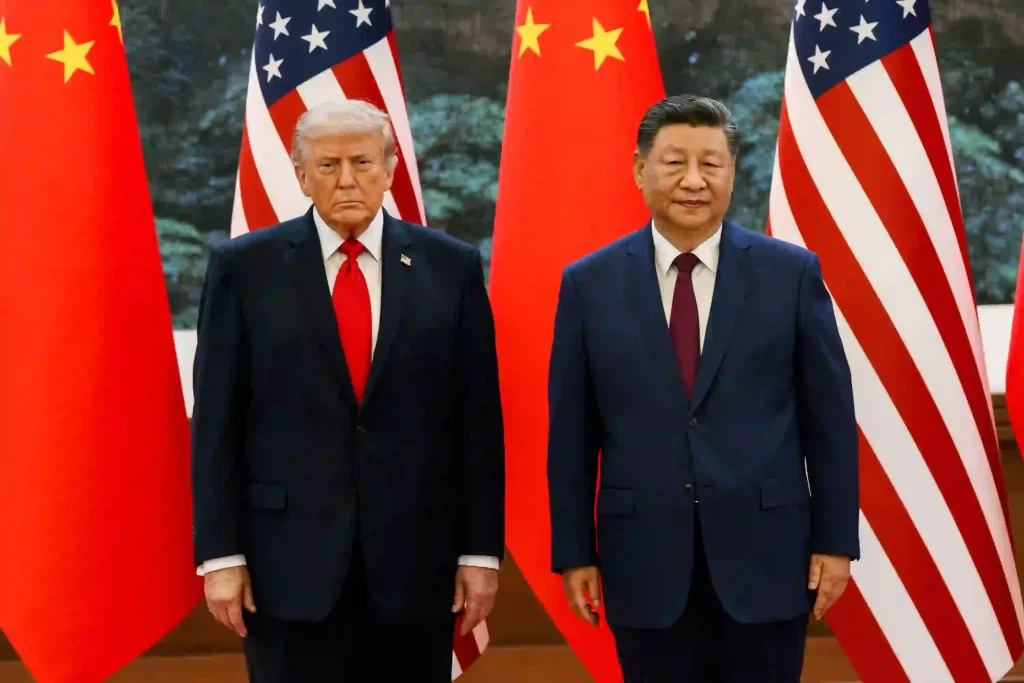
IntroductionFor three days in May 2026, the most consequential bilateral relationship in the world was conducted in person, on Chinese soil, for the first time in nearly nine years. President Donald Trump’s state visit to China — the first by an American president since his own November 2017 trip during his first term — was equal parts diplomatic theatre and strategic test, wrapped in the symbolism of Zhongnanhai gardens, Peking duck, and the careful grammar of superpower summitry.Trump called the trip “incredible,” but while it was big on pageantry, it fell short on concrete agreements. Still, Trump hailed business deals for American companies and farmers, while Chinese leader Xi Jinping touted a new era for the stability of China-US relations.The gap between those two descriptions — one transactional, one strategic — captures the essential character of what happened in Beijing. Enough was accomplished to make the visit a diplomatic success by the standards of the moment. Not enough was accomplished to resolve the crises that brought both leaders to the table.The Road to Beijing: How the Visit Was MadeThe roots of this visit go back to the Busan Summit of October 30, 2025, held on the sidelines of a regional gathering in South Korea. Trump and Xi held their first meeting during Trump’s second presidency at the Busan Summit. At the meeting, Trump announced plans to visit China in April of the following year and invited Xi to visit the United States at an appropriate time.The April timeline did not hold. The state visit was planned for the first week of April, but the meeting was postponed to May due to the 2026 Iran war. The conflict that had closed the Strait of Hormuz and sent oil prices to record highs became both the reason for delay and the dominant agenda item when the visit finally happened.The diplomatic preparation was extensive. On April 16, Defense Secretary Pete Hegseth announced that Beijing had provided high-level assurances to the White House that it would not send weapons to Iran, explicitly ruling out the potential transfer of surface-to-air missiles to the Iranian military. Hegseth attributed this breakthrough to the “strong and direct relationship” between President Trump and Xi Jinping. Secretary of State Marco Rubio had met Chinese Foreign Minister Wang Yi in February and held a further phone call on April 30 to prepare the ground for the summit.The Chinese Foreign Ministry confirmed Trump would pay a state visit to China from May 13 to 15 at President Xi Jinping’s invitation. It marked the first visit to China by an American president in almost nine years, coming at a time of heightened bilateral tensions over a range of issues, including trade, technology, and defence, and intersecting with a precarious US-Iran ceasefire and a dual blockade of the Strait of Hormuz that was driving up energy prices and weighing on global economic growth.The Arrival: Red Carpets and 300 Waving ChildrenBeijing rolled out the literal and figurative red carpet for Trump as he arrived in China on Wednesday evening local time. Three hundred Chinese children dressed in blue and white uniforms waved American and Chinese flags as Trump descended the steps of Air Force One. He was also joined on the tarmac by his son, Eric Trump, and daughter-in-law, Lara Trump.Trump was greeted at the airport by Chinese Vice President Han Zheng, Chinese Ambassador to the US Xie Feng, Executive Vice Foreign Minister Ma Zhaoxu, and US Ambassador to China David Perdue, as well as a military honour guard, a military band, and around 300 Chinese students waving Chinese and American flags. Trump and his entourage then boarded a motorcade to the Four Seasons Beijing Hotel.The visual grammar of this welcome was deliberate. Han Zheng, as China’s Vice President, is a figure of considerable standing, and his presence on the tarmac signalled the importance Beijing attached to the visit. The children chanting in Mandarin “Welcome, welcome, enthusiastically welcome” was choreography, but choreography that conveyed a message: China wanted this summit to succeed, or at least to be seen to succeed.The last time Trump visited Beijing — in November 2017 during his first term — he was given a tour of the Forbidden City and a dinner inside it, an honour granted to no other foreign leader since 1949. It remains to be seen whether this trip matched the pomp and circumstance of last time, but already there were significant events on Trump’s schedule: a welcome ceremony, a tour of the Temple of Heaven, a UNESCO World Heritage Site, and a state banquet.The Summit: The Great Hall, the Temple, and ZhongnanhaiAt 10 AM, Trump arrived at the Great Hall of the People, where he was greeted by Xi Jinping and received an opening ceremony featuring the national anthems of the United States and China, after which they inspected troops of the People’s Liberation Army and then greeted children waving Chinese and American flags.The formal bilateral meetings between Trump and Xi took place across two days, with the agenda covering trade and economic relations, the Iran war and the Strait of Hormuz, Taiwan, North Korea, rare earths and technology, and the broader structure of the bilateral relationship.On the final day, Trump headed back to the US after having lunch with Xi at Zhongnanhai, a rare visit to the Beijing compound where top Chinese officials live and work. Xi said it was meant to reciprocate Trump’s hosting him at Mar-a-Lago during his first term. “It means that China attaches great importance to this visit by President Trump to China,” said one analyst who attended the dinner banquet. “It also reflects the positive personal relationship between the two leaders.”At their last meeting, the two leaders toured the gardens at Zhongnanhai, with Trump admiring the roses. “These are the most beautiful roses anyone’s ever seen,” Trump said. Xi said he would share some Chinese rose seeds for Trump to have planted in the White House Rose Garden.The menu of the state banquet was circulated online afterward. It included cold
The Strait of Hormuz: The World’s Most Consequential Waterway and the 2026 Crisis That Changed Everything
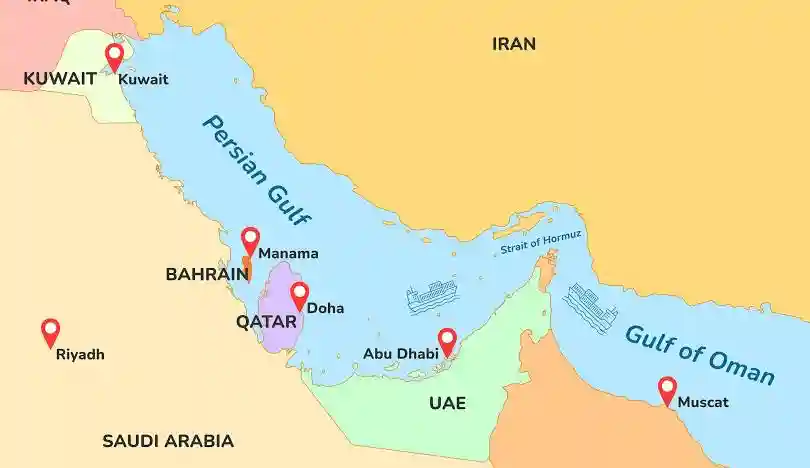
IntroductionThere are a handful of places on the map whose disruption alone can determine the fate of the global economy. The Strait of Hormuz is the most consequential of them all. A narrow strip of water barely 39 kilometres wide at its most constricted point, sitting between the southern coast of Iran and the Musandam Peninsula shared by Oman and the United Arab Emirates, it has for decades carried approximately 20 percent of the world’s seaborne oil supply and 20 percent of its liquefied natural gas.In February 2026, this artery was effectively shut. The consequences have been catastrophic.Following United States and Israeli strikes on Iran on February 28, 2026, the conflict prompted a closure of the Strait of Hormuz, through which most oil produced in the Persian Gulf is exported. Iran’s Islamic Revolutionary Guard Corps closed the strait to commercial shipping in retaliation for strikes that killed Iran’s Supreme Leader Ayatollah Ali Khamenei. What followed was the most severe energy shock the world has ever experienced, surpassing, by multiple measures, the oil crises of the 1970s, the Iran-Iraq War of the 1980s, and Iraq’s invasion of Kuwait in 1990.This article covers the geography, history, and strategic importance of the Strait of Hormuz in full, and then details the 2026 crisis that has brought the world’s energy system to the edge of collapse.Geography: What the Strait Actually IsThe Strait of Hormuz connects the Persian Gulf to the Gulf of Oman. It provides the only sea passage from the Persian Gulf to the open ocean and is one of the world’s most strategically important choke points. On the north coast lies Iran, and on the south coast lies the Musandam Peninsula, shared by the United Arab Emirates and the Musandam Governorate, an exclave of Oman. The strait is about 104 miles long, with a width varying from about 60 miles to 24 miles.Despite that width, the usable shipping lane is far more constrained. To reduce the risk of collision, ships moving through the strait follow a traffic separation scheme: inbound ships use one lane, outbound ships another, each lane being two miles wide. The lanes are separated by a two-mile-wide median. The combined active shipping corridor is therefore, in practice, just six miles wide.The northern coast belongs entirely to Iran. To traverse the strait, ships pass through the territorial waters of Iran and Oman under the transit passage provisions of the United Nations Convention on the Law of the Sea. Both Iran and Oman have expanded their territorial seas to 12 nautical miles, which means, by 1972, the entire strait fell within the combined territorial waters of the two states.Key features of the strait include Hormuz Island and Qeshm Island on the Iranian side. The main Iranian port city on the strait is Bandar Abbas, which serves as the base for Iran’s naval forces and the headquarters of the IRGC Navy. On the Omani side, the port town of Khasab in the Musandam Governorate sits along the strait’s southern edge.Historical Significance: A Trade Route Since AntiquityThe Strait of Hormuz is not merely a modern energy artery. It has been one of the world’s most strategically important trade routes for over two millennia.The 1st century AD mariner’s guide, the Periplus of the Erythraean Sea, described the mouth of the Persian Gulf as a passage connecting to vast interior trading networks, noting that pearl diving was prevalent at its upper end. Memoirs of Babur, who established the Mughal Empire, recount how almonds had to be carried from the distant Ferghana region in Central Asia to Hormuz to reach markets. From the 10th to the 17th centuries AD, the Kingdom of Ormus, which occupied the territory around the strait and appears to have given it its name, was one of the most prosperous trading kingdoms in the medieval world.The origin of the name is debated. Popular etymology derives “Hormuz” from the Middle Persian pronunciation of the name of the Zoroastrian god Ahura Mazda. Scholars and historians also derive the name from the local Persian word “Hur-mogh,” meaning date palm. A third theory links it to “hormos,” the Greek word for cove or bay.The Portuguese were the first European power to recognise the strait’s imperial importance. They occupied Hormuz Island from 1507 to 1622, using it as a base to control trade between the Persian Gulf and Europe. Their expulsion by Shah Abbas I of Persia, with British assistance, ended European direct control, but confirmed the strait as the fulcrum of Indian Ocean power politics.During the modern era, the strait’s importance shifted from spice and luxury goods to oil. When Persian Gulf oil exports began in earnest in the mid-20th century, the Strait of Hormuz became the primary commercial artery for the world’s most critical energy supply.Strategic Importance: The NumbersThe raw statistics explain why the closure of the Strait of Hormuz has no precedent in peacetime energy disruption.During 2023 to 2025, 20 percent of the world’s liquefied natural gas and 25 percent of seaborne oil trade passed through the strait annually. In 2018, 21 million barrels a day passed through the strait, worth USD 1.2 billion at 2019 prices. In 2011, according to the US Energy Information Administration, an average of 14 tankers per day passed outbound through the strait carrying 17 million barrels of crude oil. More than 85 percent of these crude oil exports went to Asian markets, with Japan, India, South Korea, and China the largest destinations.In 2024, an estimated 84 percent of crude oil and condensate shipments through the strait were destined for Asian markets, with China receiving a third of its oil via the strait. Europe gets 12 to 14 percent of its LNG from Qatar, through the strait.Beyond oil and gas, the strait is critical for the global fertiliser trade. Over 30 percent of global urea, which is widely used and produced from natural gas, is exported from Gulf countries through the Strait. Gulf countries account for roughly 45 percent of global sulfur supply, a key input for everything
FIFA World Cup 2026 in Crisis: Wars, Cartels, and Trade Fights Threaten Historic Tournament

The 2026 FIFA World Cup will be the biggest ever, with 48 teams, 104 matches from June 11 to July 19 across 16 cities in the US, Canada, and Mexico. But today, just months away, it’s facing huge problems. Wars in the Middle East, killings by drug gangs in Mexico, fights between the host countries, and even a funny award to US President Donald Trump are making things very hard. Let’s break it all down in simple terms.Trump’s Peace Prize and the Wars That FollowedIn December 2025, at the World Cup group draw, FIFA President Gianni Infantino gave Trump the first-ever FIFA Peace Prize. They called him a “dynamic leader” for talks that brought “dialogue, de-escalation, and stability.” A video praised him for four minutes. Trump put on the medal happily.But three months later, Trump started big wars. He and Israel launched airstrikes on Iran called Operation Epic Fury, killing Iran’s top leader, Ayatollah Khamenei. Iran fired missiles at Israel, Qatar, Saudi Arabia, and Iraq. Trump also hit ISIS in Nigeria on Christmas, sent troops to Venezuela to catch President Nicolás Maduro, threatened to take Greenland from Denmark, and joked about making Canada the 51st US state by calling PM Mark Carney “governor.”Now, FIFA’s peace award looks bad. The World Cup could be ruined if the war in the Middle East escalates. Iran qualified first from Asia and plans a base in Arizona, but now they’re at war with the US. Iran Soccer Federation president Mehdi Taj said: “We can’t hope for the World Cup after these attacks.”FIFA has not said anything about the prize or wars.Mexico’s Drug War Hits World Cup CitiesMexico hosts the opening match in Mexico City (Mexico vs South Africa) and games in Guadalajara and Monterrey. But violence exploded near Guadalajara. Mexican forces killed “El Mencho,” boss of the Jalisco New Generation cartel, with US help from Trump. At least 70 people died.Trump pushed Mexico’s President Claudia Sheinbaum to fight cartels. Now, Monterrey has inter-confederation playoffs on March 31: Iraq vs winner of Bolivia vs Suriname (semifinal March 26). Guadalajara hosts another playoff with New Caledonia, Jamaica, and DR Congo.FIFA’s Infantino said, “Mexico is great. Governments and police will keep it safe.” Some talk moved matches to Qatar’s Lusail stadium (the last final site), but Iran attacked Qatar too—their jets shot down Iranian planes.Iraq Wants Playoffs Delayed Because of WarIraq coach Graham Arnold asked FIFA to postpone the Monterrey game. Iran’s war closed Iraqi airspace; no players or staff can fly out. “It won’t be our best team. Iraq hasn’t been to the World Cup since 1986. This is our big dream,” he said from the UAE.Arnold suggests: Bolivia vs Suriname now; winner vs Iraq in the US a week before the World Cup. Iraq president Adnan Dirjal works non-stop. FIFA has no answer yet.Host Countries Fighting Over Trade—USMCA Ends Mid-TournamentThe “United Bid” was sold as three friends together, like old NAFTA. But the USMCA trade deal ends July 1, right in the middle of the World Cup. Trump calls it “irrelevant” and might let it die. He pressures Mexico on cartels (even military help), backs Canada’s Alberta to break away (vote October), and Canada PM Carney promises to “stand up to Trump.”Leaders met once at the draw: Trump, Sheinbaum, and Carney. Trump met FIFA boss Infantino 8 times. Money problems too:US: Cities pay alone, no big federal help. Shutdown stops FEMA grants. No big fan fests in Jersey City or Seattle.Mexico: Tax breaks for World Cup cities.Canada: Over $300M federal money, mostly to Toronto/Vancouver cities.FIFA has 1,000 staff in three countries (4,000 during the event) for security and plans. They train local teams.How the United Bid Started, and Why It’s BreakingIn 2016, US Soccer boss Sunil Gulati said: Join forces, US gets 75% games, win sure. Canada/Mexico agreed. Pitch: “Neighbors unite for inclusive World Cup.” Won in 2018 vs Morocco.What Happens Next for the World Cup?Playoffs: March 26-31 in Mexico, will they move?Iran/Iraq teams: Travel bans? Boycotts?Security: Cartels, wars, and drones worry US cities.Fans: 39 days, millions travel, flights, borders tense.FIFA says it’s one tournament, three cultures. But glue is thin. Soccer unites the world, or will wars win?World Cup 2026 tests if football beats real fights. Fans wait, pray for goals over bombs.
Strait of Hormuz Crisis: Why This Narrow Waterway Controls Global Oil and Sparks Economic Chaos
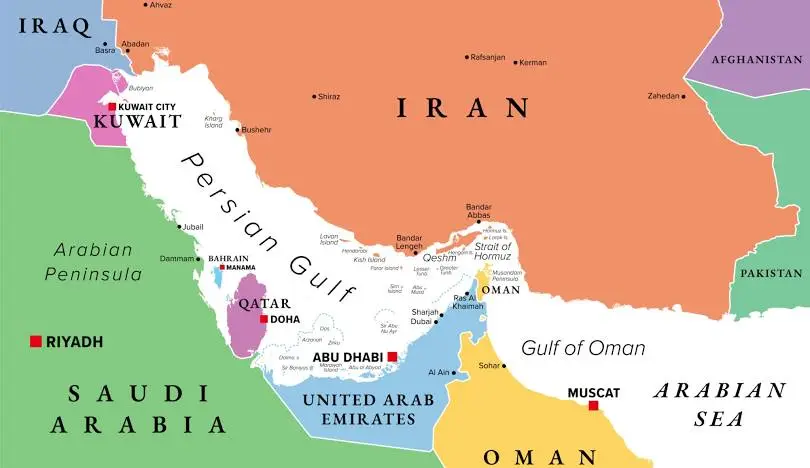
A tense new threat hangs over world trade. Iran has warned it will “set fire” to any ships passing through the Strait of Hormuz and block all oil exports from the region. This comes after US and Israeli strikes on Iran starting February 28, 2026. Already, oil prices have jumped, ships are avoiding the area, and experts fear big problems for countries like India, China, and Japan. Let’s explain this vital sea route in simple terms, what it is, why it matters, and what happens if it closes.What is the Strait of Hormuz?The Strait of Hormuz is a narrow waterway between Iran (north) and Oman/UAE (south). At its narrowest, it’s just 33 km (21 miles) wide, with shipping lanes only about 3 km (2 miles) each way. It connects the Persian Gulf to the Arabian Sea and the open ocean.Size: Deep enough for giant oil tankers; the busiest oil chokepoint in the world.Daily traffic: Around 3,000 ships per month; 20 million barrels of oil per day (20% of global supply).Value: Nearly $600 billion in oil/gas trade yearly.Big producers like Saudi Arabia, Iraq, Kuwait, Qatar, the UAE, and Iran send oil here. Most goes to Asia (84% crude oil).Why is It So Important for World Trade?This strait is like a busy highway for energy, with no good shortcuts. Without it:Global oil: 20-27% of all seaborne oil (14-20 million barrels/day). LNG (gas): 20% of world supply, mostly Qatar to Europe/Asia.Other goods: 1/3 of global fertilizer trade (hits farming/food prices).Top destinations (2024-2025 data):CountryOil ShareWhy It HurtsChina5.4M b/d (27%)90% of Iran’s oil goes here; factories are slow. India1.6-2.1M b/dHalf of India’s oil imports; fuel/food prices rise. Japan/S. Korea1.6-2.1M eachPower plants, cars affected. Europe/USSmaller but key LNGGas bills up. Saudi leads exports: 5.5M b/d (38%). Iran: 1.7M b/d ($67B/year)Current Crisis: Threats, Attacks, and Shipping StoppedIran’s General Sardar Jabbari said no “single drop of oil” leaves. After US/Israel missiles sank Iranian warships and hit tankers:Ships flee: Hapag-Lloyd/CMA CGM paused transits; 150+ tankers stranded.Prices soar: Brent crude hit $82/bbl (up 10%); could reach $100+ if blocked long.reuters+1Ports shut: Dubai’s Jebel Ali fire from missile debris.Insurance skyrockets: Supertanker to China: $400K (doubled).UKMTO warns of “miscalculation” near military ships. Flows dropped to 4M b/d (from 16-20M).How Could Iran Close It—and Can They?UN rules give coastal control up to 12 nautical miles, covering the strait fully (Iran/Oman waters).Iran’s options:Mine: Fast boats/subs drop them, hard to clear.Missiles/drones: From IRGC navy boats/subs.Attacks: On tankers/warships.But risky: US Navy could strike back (1980s “Tanker War” escorts won). Trump vows to destroy Iran’s navy.Economic Impact: Higher Prices EverywhereShort block: Oil $80-90/bbl. Month-long: $100+; gas surges 130%.Consumers: Petrol, diesel, heating 20-50%.India/Asia: Factories slow; inflation hits food/transport.Gulf hurt too: Saudi/UAE lose exports (economies rely 70% on oil).Ripple effect: Airlines, plastics, fertilizers cost more—global goods pricier.OPEC+: Boost 206K b/d April, but tiny vs 20M gap.Worst case: Sunk tanker = eco-disaster, months closed.What Happens Next?Short-term: Ships wait; prices are high for days/weeks.India: Stockpiles activated; seeks other suppliers.Global: OPEC output up, but war drags = recession risk.The Strait of Hormuz isn’t just water; it’s the world’s energy lifeline. Iran’s threat tests whether one narrow gap can choke global trade. Eyes on ships, missiles, and oil pumps.
Israel–America and Iran War: Global Impact on Trade, Travel, Economy and Lives at Risk
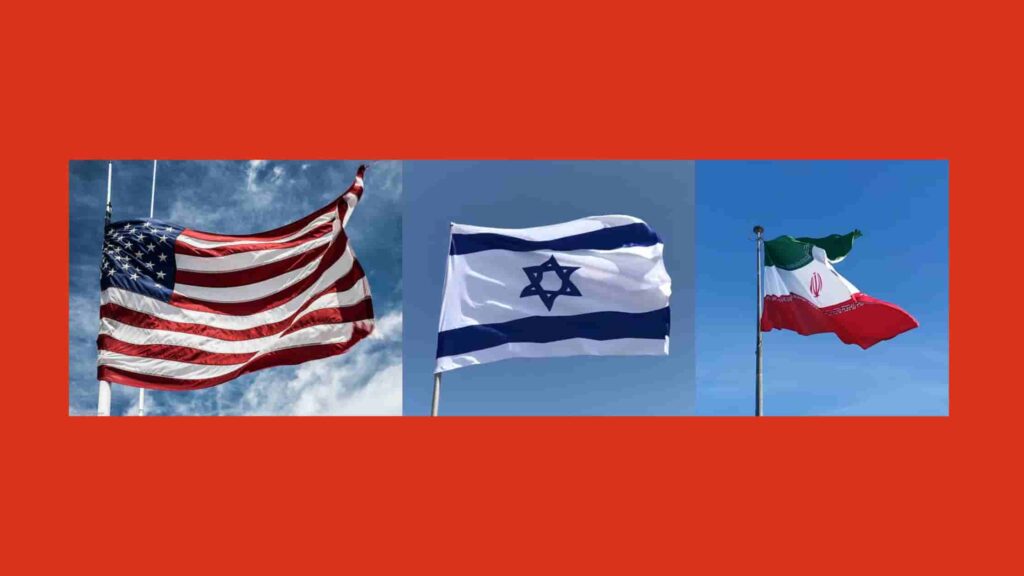
The escalating conflict involving Israel, the United States, and Iran has rapidly transformed into one of the most serious geopolitical crises of the 21st century. What began as targeted military operations has now evolved into a broader regional confrontation with global consequences. The war has not only destabilised the Middle East but has also created significant ripple effects across global trade, financial markets, aviation routes, energy supply chains, and international security.A turning point in the conflict came with the death of Iran’s Supreme Leader, Ayatollah Ali Khamenei, which dramatically intensified the geopolitical situation and reshaped the power dynamics within Iran and across the Middle East.Background of the ConflictTensions between Iran, Israel, and the United States have existed for decades, primarily due to ideological differences, nuclear ambitions, and regional power struggles. Israel has consistently viewed Iran’s nuclear and missile programmes as an existential threat to its national security, while Iran has strongly opposed U.S. military presence and Israeli influence in the region.These tensions reached a breaking point when coordinated military strikes were carried out against Iranian targets. The operation targeted strategic facilities, military installations, and high-level leadership structures in Iran. The strikes were designed to weaken Iran’s military capabilities and disrupt its command network.However, instead of de-escalating tensions, the attacks triggered large-scale retaliation from Iran, rapidly expanding the conflict across the Middle East.Death of Ali Khamenei and Its ImpactOne of the most dramatic developments in the war was the death of Iran’s Supreme Leader Ali Khamenei, who had ruled the Islamic Republic since 1989. He was killed during a targeted strike on Iranian leadership facilities during the early phase of the conflict.Khamenei was the most powerful figure in Iran’s political and religious system. As Supreme Leader, he held ultimate authority over the armed forces, intelligence agencies, judiciary, and major political decisions of the country. His influence shaped Iran’s domestic governance as well as its foreign policy for more than three decades.His death sent shockwaves through Iran and the wider Middle East. The Iranian government declared national mourning and vowed strong retaliation against Israel and the United States. The Islamic Revolutionary Guard Corps (IRGC) intensified military operations and pledged to continue resistance against what it described as foreign aggression.The assassination of a sitting supreme leader during wartime is extremely rare in modern international politics. Instead of weakening Iran’s political system, the event strengthened nationalist sentiment within the country and intensified calls for retaliation.Leadership Transition in IranFollowing Khamenei’s death, Iran’s Assembly of Experts appointed Mojtaba Khamenei, the son of the late leader, as the new Supreme Leader. This marked a controversial and historic transition, as the leadership appeared to move toward a dynastic style of succession within the Islamic Republic.Mojtaba Khamenei had long been considered an influential figure behind the scenes in Iranian politics, particularly within religious and military circles. However, his appointment sparked debate both inside and outside Iran regarding the future direction of the country’s political system.The leadership transition has also influenced the ongoing war, as the new leadership seeks to demonstrate strength and maintain internal stability while confronting external military pressure.Escalation of Military ConflictFollowing the initial strikes and leadership assassination, Iran launched large-scale missile and drone attacks targeting Israeli territory and American military installations across the region. Military bases in the Persian Gulf, naval facilities, and intelligence infrastructure became potential targets.The conflict also spread beyond Iran and Israel. Tensions intensified in neighbouring regions, including Lebanon, Syria, and the Persian Gulf, raising fears of a wider regional war involving multiple countries.Air defence systems across the Middle East were activated, and military forces in several countries were placed on high alert.Impact on Global Energy MarketsOne of the most immediate consequences of the war has been disruption to global energy markets. The Middle East remains one of the world’s most critical energy-producing regions, and any instability in this area directly affects global oil supply.A major concern during the conflict has been the security of the Strait of Hormuz, a narrow waterway through which nearly one-fifth of the world’s oil supply passes. Any threat to shipping in this region has the potential to disrupt global energy flows.As tensions increased, oil prices surged significantly due to fears of supply disruptions. Higher energy prices have direct implications for transportation, manufacturing, agriculture, and electricity generation around the world.Countries that rely heavily on imported oil are particularly vulnerable to such price shocks.Disruption of Global Trade and ShippingThe war has also affected international trade routes. The Middle East serves as a critical junction connecting Asia, Europe, and Africa, making it central to global shipping and logistics.Increased military activity and security risks in maritime corridors have forced shipping companies to reroute vessels or delay operations. Insurance costs for ships travelling through the region have also risen sharply due to heightened risk.Because the majority of global trade is transported by sea, disruptions in these strategic routes can quickly affect supply chains worldwide. Industries dependent on global shipping—including electronics, manufacturing, energy, and agriculture—are already facing logistical challenges.Economic Consequences WorldwideThe conflict has also created volatility in global financial markets. Investors often react strongly to geopolitical uncertainty, leading to fluctuations in stock markets and currency values.Rising energy prices are likely to contribute to inflation in many economies. Higher fuel costs affect transportation, manufacturing, and food production, which ultimately increases the cost of living for consumers.Economists have warned that prolonged geopolitical tensions could slow global economic growth while simultaneously increasing inflationary pressure.Developing economies may face the most severe challenges because they rely heavily on imported energy and international trade.Impact on Aviation and International TravelThe war has also disrupted global aviation routes. Much of the airspace above the Middle East lies along major flight corridors connecting Europe, Asia, and Africa.Airlines have had to reroute flights to avoid conflict zones, which increases flight durations and fuel costs. In some cases, flights have been cancelled or delayed due to security concerns.Travel advisories have been issued by multiple governments warning citizens about travelling to conflict-affected regions. Tourism industries across several Middle Eastern countries have already begun experiencing economic
America’s Proposed Greenland Acquisition: Strategic Ambitions and Arctic Stakes
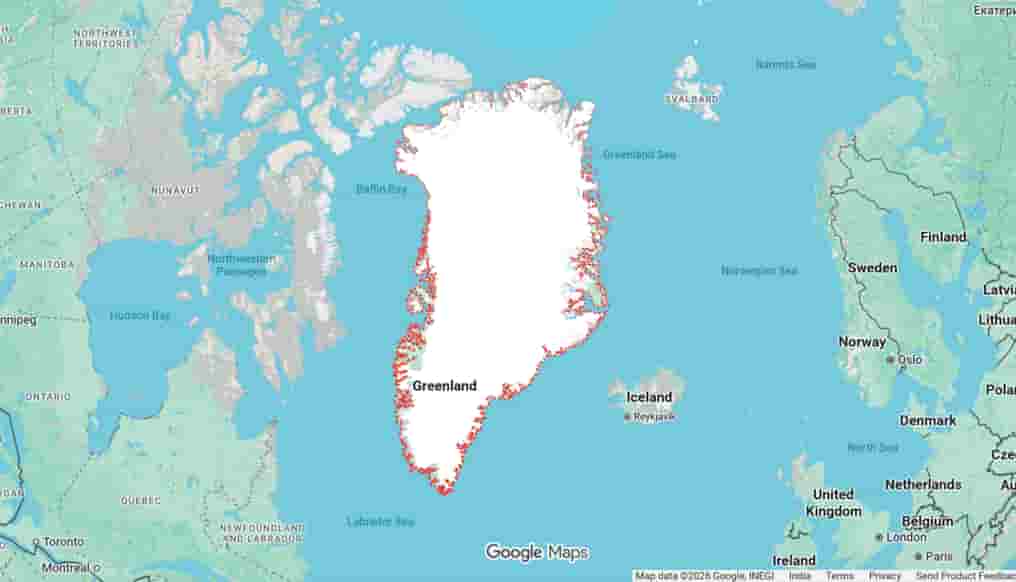
In a development that has attracted international attention and debate, the United States’ proposal to acquire Greenland — an autonomous territory of the Kingdom of Denmark — has re-emerged as a subject of strategic and geopolitical significance. Although the plan has not advanced to a formal purchase or agreement, the discussions reflect broader shifts in global power dynamics, Arctic geopolitics and resource competition in the High North.Background: What Is Greenland and Why It MattersGreenland, the world’s largest island, is an autonomous territory within the Kingdom of Denmark. It has a small population of around 56,000 people, predominantly Inuit, and exercises internal self-government, with defence and foreign policy matters managed by Copenhagen. The island’s geopolitical importance has grown dramatically in recent years due to its strategic location in the Arctic Circle, potential natural resources, and its role in global climate science.The Arctic region — long seen as remote and marginal — has become a theatre of international competition as climate change reduces sea ice cover, opening new shipping routes and access to untapped natural resources such as hydrocarbons, rare earth minerals and critical metals.The U.S. Proposal and Renewed DiscussionsThe idea of the United States acquiring Greenland first entered public consciousness in 1946, when Washington offered to purchase the island from Denmark — an offer Denmark rejected. More recently, in early 2025, the topic resurfaced in official remarks tied to U.S. strategic assessments in the Arctic region.On January 9, 2025, comments by U.S. officials sparked media attention by reiterating the historical suggestion of an acquisition and linking Greenland to contemporary strategic priorities. The U.S. reiterated that maintaining security, stability and freedom of navigation in the Arctic was critical, given increasing interest from global powers including Russia and China. However, no formal acquisition negotiations have taken place, and no treaty or transaction is under legal consideration.Why the Idea Has Re-EmergedThere are several factors that explain why the Greenland acquisition proposal has resurfaced: Strategic Location Greenland’s location astride key North Atlantic and Arctic approaches gives it enormous strategic value. Military and intelligence establishments see relevance in monitoring and controlling northern sea lanes, especially as ice melt accelerates. Resource Potential The island is believed to hold significant reserves of minerals, hydrocarbons and rare earth elements — materials crucial for advanced technologies, clean energy transitions, and defence manufacturing. Many of these resources remain largely undeveloped. Arctic Competition As Arctic ice retreats, the region is attracting investment and geopolitical interest from Russia — which already operates extensive military infrastructure in the Arctic — and from China, which has described itself as a “near-Arctic state” and has increased scientific expeditions and commercial interest in the region.In this context, a secure Arctic partnership is viewed by some U.S. policymakers as a way to check rival influence and reinforce alliances in the North Atlantic.Denmark and Greenland’s ResponseOfficials in Denmark and Greenland have objected to the notion of a territorial sale. Both Copenhagen and Nuuk (Greenland’s capital) have emphasised that any talk of acquisition is not under active negotiation and that Greenland’s autonomy and right to self-determination are paramount.Danish leaders have reiterated that Greenland is not for sale, and the notion of transfer of sovereignty to any other country is not on the diplomatic agenda. Greenland’s government has also emphasised its constitutional status and the importance of cooperation with external partners on mutually agreed terms rather than unilateral transactions.Domestic Debate in the United StatesWithin the U.S., the comments on Greenland have sparked discussion rather than policy action. Some defence and foreign policy analysts argue that the notion is symbolic rather than practical, serving as a reminder of strategic priorities in the Arctic rather than a concrete acquisition plan.Others point out that the U.S. already maintains strong strategic access to Greenland through Thule Air Base, a critical component of North American aerospace defence. Located in northwest Greenland, the base is integral to early-warning radar systems and missile tracking, and its presence reflects existing U.S. strategic interests without the need for sovereignty.International ReactionInternational observers, including strategic analysts and Arctic nations, have largely regarded the acquisition proposal as speculative rather than imminent. Canada, Russia and other Arctic Council members traditionally work through multilateral forums to address security, environmental protection and indigenous community rights in the region.Global media coverage has framed the idea as more of a strategic talking point than an actionable policy initiative, emphasising that any shift in sovereignty would require consent from Denmark and Greenland, constitutional changes, and a fundamentally altered approach to international law.Legal and Constitutional ConsiderationsUnder international law, the transfer of territory requires clear consent from the governing state and, increasingly, the affected population. Greenlanders themselves have expanded roles in their own governance under the 2009 Self-Government Act, which affirms that decisions about significant changes to sovereignty would necessitate consultation and approval from Greenland’s parliament and people.Additionally, Denmark’s constitutional framework does not allow significant cession of territory without legislative and likely referendum approval, making any acquisition a highly complex legal undertaking.What This Means for Arctic PolicyWhile the idea of a Greenland acquisition remains speculative, it highlights how the Arctic has risen in strategic importance. The U.S. and allied countries have renewed focus on:Arctic security cooperation through NATO and bilateral partnershipsScientific collaboration on climate research and environmental monitoringInvestment in infrastructure that supports commercial and defence logisticsEngagement with indigenous and local governance structuresThe Arctic Council — a multilateral forum including Arctic states such as Canada, Denmark, Finland, Iceland, Norway, Russia, Sweden and the U.S. — continues to be the primary platform for addressing regional cooperation on environmental protection, sustainable development and shared scientific objectives.Conclusion: Symbolic Signal or Strategic Shift?The renewed mention of a Greenland acquisition is best understood not as an active diplomatic negotiation but as a symbolic signal of U.S. strategic priorities in the High North. It underscores the increasing salience of the Arctic as climate change alters geography, resources and commercial access.For now, Greenland’s sovereignty remains with Denmark, and discussions about acquisition do not constitute formal policy. But the debate reflects broader anxieties and interests about the Arctic’s future