

In a landmark ruling, the National Green Tribunal (NGT) on February 16, 2026, upheld environmental clearances for the ₹81,000-92,000 crore Great Nicobar Island development, dismissing petitions citing "strategic importance" and "adequate safeguards," paving the way for India's ambitious Bay of Bengal hub amid fierce eco-debates.
Project Blueprint: Four Pillars of Transformation
Spanning 166 sq km on the 910 sq km island (India's southernmost at Indira Point), led by Andaman and Nicobar Islands Integrated Development Corp Ltd (ANIIDCO) and NITI Aayog:
- Dual-Use Airport: Greenfield civil-military strip east of Galathea Bay (4.2 sq km, displacing 379 families); runway north-south over the sea for surveillance near the Six Degree Channel, cutting Port Blair response time by 500+ km; eyes Singapore/Vietnam routes.
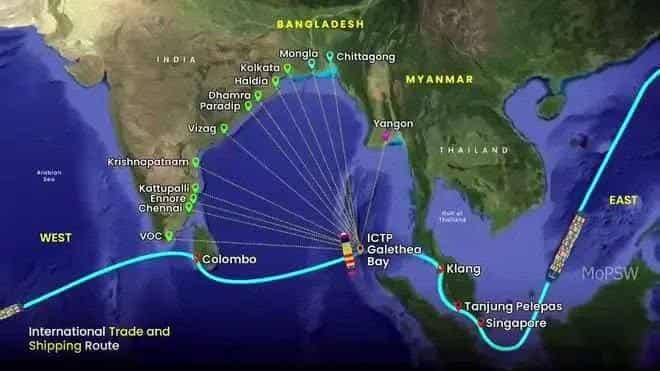
- Transshipment Port: Galathea Bay ICTP challenges Colombo's monopoly; Leatherback turtle nesting site concerns flagged.
- Integrated Township: Residential/commercial/tourism/logistics/defense zones; power plant (450 MVA gas-solar).
- Population Boom: From 6,500 to 3.25L by 2040, 13-15L by 2075, 1L+ jobs projected.
NGT bench (Justice Prakash Shrivastava) relied on HPC (ex-secy Leena Nandan) findings: No ICRZ violations, strict compliance mandated.
Strategic Imperative in Indo-Pacific Chessboard
9km from Sumatra, hugging Malacca Strait trade lanes (80% of India's oil), Great Nicobar bolsters QUAD/Andaman chain vs. China's String of Pearls.
Dual-use airport enables fighter ops, quick IOR response; port slashes foreign transshipment reliance (₹50,000 cr savings/yr est.). Eco-tourism/scientific hubs eyed, with DPR noting minimal low-alt hill flights.
Key Directives on Construction & Coastline
- No Erosion or Shoreline Changes: All activities, including foreshore development, must prevent erosion or adverse coastal alterations across project areas and nearby islands.
- Preserve Sandy Beaches: Absolute protection for turtle/bird nesting sites, no loss permitted, recognizing their role as natural barriers.
Wildlife & Species Protection
Environmental clearance conditions explicitly shield:
- Leatherback sea turtles (Galathea Bay nesting).
- Nicobar megapode, saltwater crocodiles, robber crabs, Nicobar macaques, and endemic birds.
Long-term monitoring is required for forests, coral reefs, and water quality.
Compliance & Tribal Measures
- Binding EC Conditions: Government must enforce all original safeguards without violation at any stage, HPC verified adequacy.
- Tribal Safeguards: Resettlement honoring pre-tsunami patterns; restricted construction access; include Tribal Councils (Great/Little Nicobar) per Forest Rights Act 2006.
Ongoing Oversight
- Independent ecological audits are mandated.
- Violations trigger penalties/remediation.
NGT emphasized these as non-negotiable for the ₹81,000 cr airport/port/township push on 130 sq km forest land.
Ecological & Social Storm
- Forest/Wildlife Hit: 130 sq km diversion (14% island), ~1M trees felled; Great Nicobar Biosphere Reserve impacts, Shompen/Nicobarese tribes (84 sq km land) at risk.
- Critics Cry Foul: Petitions highlighted turtle bays, river deltas; NGT deems safeguards (e.g., no CRZ breaches) sufficient.
- Population Pressure: 6.5L by 2050 strains fragile marine/forest ecosystems.
ANIIDCO insists on mitigation: Site grading, sea-path flights. NGT: "Strategic needs outweigh; monitor compliance.
NGT safeguards for the Great Nicobar project aim to protect the vulnerable Shompen tribe—a Particularly Vulnerable Tribal Group (PVTG) of ~200 semi-nomadic hunter-gatherers—primarily by enforcing spatial, surveillance, and legal isolation from project activities, though critics argue enforcement gaps persist.
Core Spatial & Access Protections
- No Habitat Disturbance: Project explicitly bans encroachment into Shompen settlements, core zones (Galathea/Alexandrina Rivers), or traditional foraging areas—130 sq km forest diversion excludes their 84 sq km reserve.greentribunal+1
- Geo-Fencing & Surveillance: Towers and restricted entry zones encircle tribal habitats to prevent outsider contact, minimizing disease transmission risks (past epidemics decimated PVTGs like Jarawas).
Oversight & Welfare Mandates
- Department of Tribal Welfare (DTW) Lead: Monitors safety, provisions (non-invasive food at Campbell Bay hospital), and rights under Andaman & Nicobar (Protection of Aboriginal Tribes) Regulation 1956, no exploitation of reserve resources by non-tribals.
- NCST Consultation: Article 338A(9) compliance verified; Forest Rights Act 2006 gram sabha inclusion for PVTGs, though implementation historically lags ("Nil" FRA progress reported).
- Isolation Protocols: No permanent non-tribal/Govt residences in reserve; temporary camps only for welfare/research; cross-infection barriers in healthcare.
Legal & Compliance Backbone
NGT/HPC upheld 2022 EC conditions as "adequate": Independent audits, penalties for violations, tribal council involvement (Great/Little Nicobar). Pre-tsunami resettlement patterns honored; Shompen rights (hunting under Wildlife Act amendment) preserved.
Lingering Concerns
Anthropologists warn of indirect threats (fragmented forests, population influx to 3L+ by 2040, disrupting semi-nomadic life); NGT mandates monitoring but lacks PVTG-specific veto power, compliance now pivotal for ~181 Shompen across 56 households.
Path Forward
Clears legal logjam post-2022 EC; HPC revisited 2023 concerns. Investments (₹1L cr+) promise jobs/hotels but hinge on tribal consent, monitoring.
As "India's Hong Kong," Great Nicobar eyes global tourism map, balancing security surge with island fragility.