


Who Is General Dhiraj Seth? Meet India’s New Army Chief, His Military Career, VIJAY Vision and Key Responsibilities
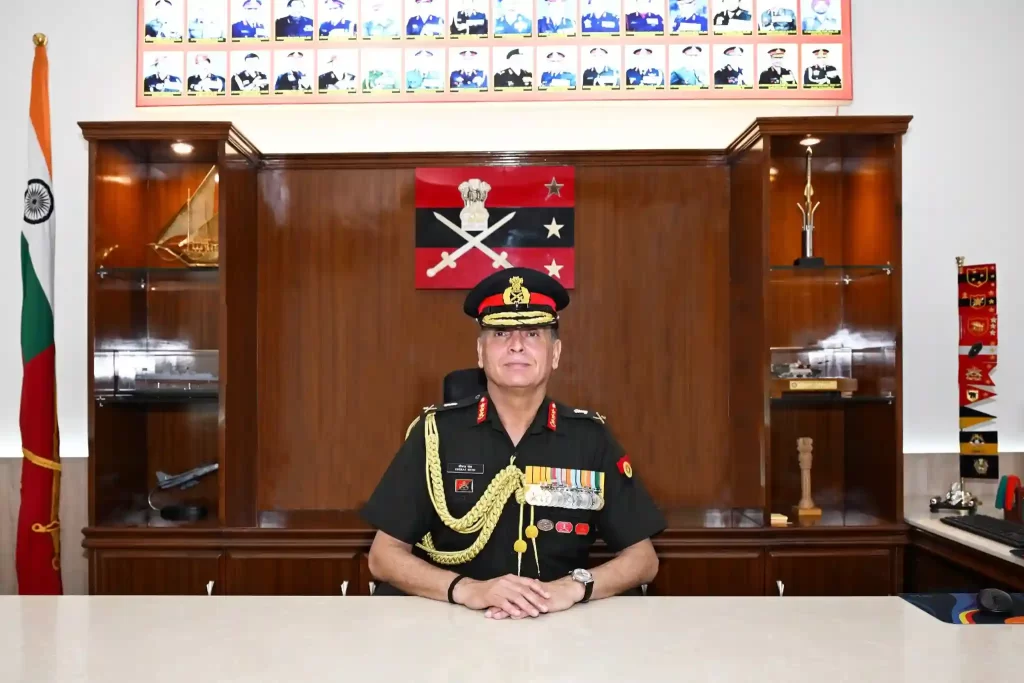
General Dhiraj Seth took charge as the 31st Chief of the Army Staff (COAS) of the Indian Army on June 30, 2026, succeeding General Upendra Dwivedi. A veteran officer of the Armoured Corps with nearly four decades of military service, General Seth has held several key operational and command positions, including leading the Southern Command and South Western Command. His appointment comes at a time when the Indian Army is placing increasing emphasis on modernisation, jointness, indigenous defence capabilities and technology-driven warfare.General Dhiraj Seth is now at the helm of the Indian Army, taking over one of the country’s most important military responsibilities. Before becoming Army Chief, he served as the Vice Chief of the Army Staff and had commanded two major Army commands during his career.His elevation to the top Army post also carries particular significance for the Armoured Corps. General Seth is the first Armoured Corps officer to become Chief of the Army Staff since General Shankar Roy Chowdhary, who retired in 1997.General Dhiraj Seth Takes Charge as 31st Army ChiefGeneral Seth formally assumed command of the Indian Army on June 30, 2026, after General Upendra Dwivedi completed his tenure and superannuated after more than four decades of service.The Ministry of Defence had announced General Seth’s appointment on June 13, stating that he would take over from General Dwivedi from June 30. At the time of his appointment, Seth was serving as Lieutenant General and Vice Chief of the Army Staff.His elevation followed a rapid succession of senior appointments. He became the General Officer Commanding-in-Chief of Southern Command in July 2024, moved to the post of Vice Chief of the Army Staff in April 2026 and became Army Chief less than three months later.The progression reflects the breadth of his experience across operational commands, Army Headquarters and higher military leadership.Who Is General Dhiraj Seth?General Dhiraj Seth is a career Army officer who was commissioned into the Armoured Corps on December 20, 1986. He is an alumnus of the National Defence Academy, Khadakwasla, and the Indian Military Academy, Dehradun.During his career, he also attended the Defence Services Staff College in Wellington, the Army War College in Mhow and the National Defence College in New Delhi. His professional military education extended overseas as well, including the General Staff Course at France’s Collège interarmées de Défense and an International Defense Acquisition Management Course at the US Naval Postgraduate School.His academic and professional training is significant because much of his later career involved areas beyond conventional battlefield command, including strategic planning, weapons and equipment, capability development and modernisation.At the Defence Services Staff College, he was reportedly adjudged the best all-round student of his course in 2006. He also earned the ‘Silver Centurion’ during the Young Officers Course and stood first in the order of merit in several courses during his career.General Dhiraj Seth’s Military CareerGeneral Seth’s military career spans nearly four decades and includes experience in armoured warfare, counter-insurgency operations, command responsibilities and strategic planning.After being commissioned into the 2nd Lancers (Gardner’s Horse), he served in a variety of regimental, brigade and staff appointments.One of his important operational assignments came in Jammu and Kashmir, where he commanded a Counter-Insurgency Force. He later commanded the Sudarshan Chakra Corps, one of the Indian Army’s major strike formations.His command experience also includes an armoured regiment in the desert sector and an armoured brigade in the western theatre.These appointments gave him experience across different operational environments, ranging from armoured formations and conventional military preparedness to counter-insurgency operations.He Also Served With the United NationsAn aspect of General Seth’s career that receives comparatively less attention is his international military experience.He served as an operations officer with the United Nations Angola Verification Mission III (UNAVEM III) between 1995 and 1996. The mission was part of the UN’s efforts in Angola during the country’s transition towards peace following years of civil conflict.His UN assignment came relatively early in his military career and added an international dimension to his operational experience.Command of South Western and Southern CommandsGeneral Seth went on to lead two major Army commands that have strategic importance because of their locations and operational responsibilities.On November 1, 2023, he took over as the General Officer Commanding-in-Chief of the South Western Command, succeeding Lieutenant General B. S. Raju.On July 1, 2024, he took charge of the Southern Command, succeeding Lieutenant General Ajai Kumar Singh. He remained in command until March 31, 2026.His tenure in senior command positions meant that by the time he became Vice Chief, General Seth had already gained experience overseeing large formations and dealing with operational preparedness at the command level.The Ministry of Defence had also identified him in official communications as Southern Army Commander during his tenure. In October 2025, for example, he attended a military event in Bhuj alongside Defence Minister Rajnath Singh and then Army Chief General Upendra Dwivedi.From Vice Chief to Army ChiefGeneral Dhiraj Seth became Vice Chief of the Army Staff on April 1, 2026, succeeding Lieutenant General Pushpendra Pal Singh.The Vice Chief is one of the most senior positions within Army Headquarters and is involved in the functioning, planning and administration of the force.His tenure as Vice Chief was brief. On June 13, the government announced that he would become the next Chief of the Army Staff, and he formally assumed command on June 30.This means General Seth moved from Vice Chief to Army Chief in less than three months.General Dhiraj Seth’s ‘VIJAY’ Vision for the Indian ArmyOne of the most important aspects of General Seth’s first days as Army Chief has been his emphasis on transforming the Army into a technology-enabled and future-ready force.After assuming office, he outlined his vision around the acronym ‘VIJAY’, which he said would provide a foundation for the Army’s future direction.The five elements of VIJAY are:V: VigilanceI: Innovation and TransformationJ: Jointness and IntegrationA: AtmanirbhartaY: Yodha FirstThe framework reflects the changing nature of military operations and the growing importance of technology, integration and indigenous defence capabilities.General Seth has stressed that the Army must adapt to
Independence Day 2026: 79 Years of Freedom, A Nation Still Becoming
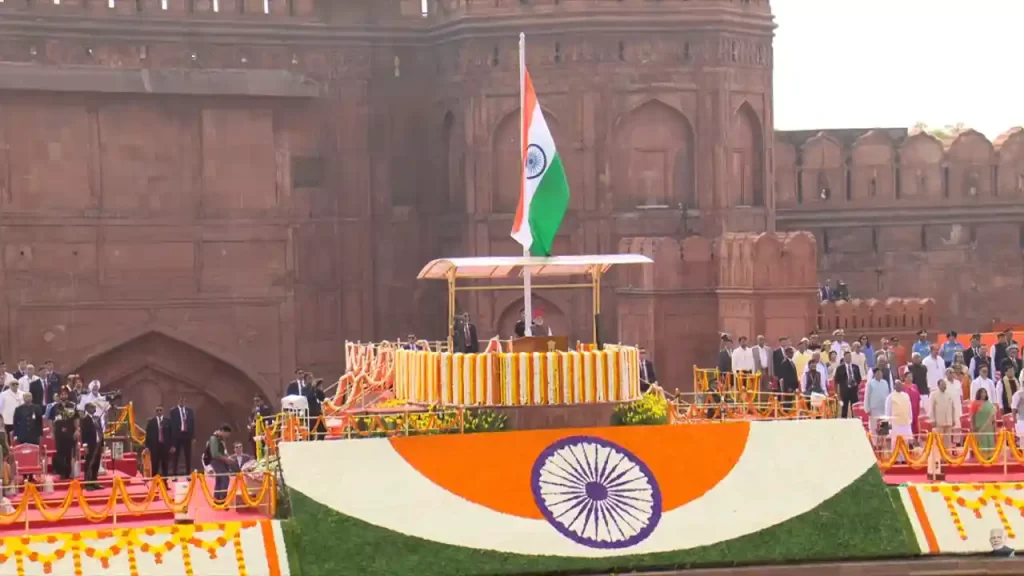
Before there was an India that could dream of becoming a global power, there was an India that simply wanted to be free.Before there were satellites, expressways, digital payments, billion-dollar companies and missions to the Moon, there was a country struggling to decide its own destiny.And before the Tricolour became a familiar sight every August 15, there were millions of Indians who fought, protested, went to prison and sacrificed their lives without knowing what the India they were fighting for would eventually become.That is what makes Independence Day more than a national holiday.It is a reminder of what India was, a celebration of what it has become and a moment to consider where the country is headed next.On August 15, 2026, India celebrated its 80th Independence Day, marking 79 years since the country became independent from British rule in 1947. The national celebration at the Red Fort in New Delhi brought together the familiar symbols of India’s freedom struggle with a strong focus on the country’s future, particularly its youth, self-reliance, technology and the ambition of building a developed India by 2047. The celebrations also carried special significance as 2026 marks 150 years of “Vande Mataram”, which was included in the Red Fort ceremony in a historic first.A Morning of National Pride at the Red FortThe Red Fort once again became the centre of the country’s Independence Day celebrations.Prime Minister Narendra Modi began the ceremony by paying tribute to the freedom fighters before proceeding with the traditional flag-hoisting ceremony.The Tricolour was unfurled against the backdrop of the historic Red Fort, accompanied by the national anthem and a ceremonial 21-gun salute. The ceremony brought together personnel representing India’s armed forces and Delhi Police, reflecting the traditional inter-services character of the national celebration. One of the notable features of this year’s ceremony was the rendition of Vande Mataram before the national anthem, marking the first time the national song was presented from the Red Fort during the Independence Day ceremony. The inclusion came in the year marking 150 years of the song. The ceremony also placed considerable emphasis on India’s young population, with the theme centred on “Yuva Shakti for Viksit Bharat@2047”, highlighting the role of young Indians in shaping the country’s development over the next two decades. From the Freedom Struggle to a New IndiaThere was a time when the idea of an independent India was itself a distant dream.For generations, Indians challenged British colonial rule through political movements, protests, revolutionary activities, social mobilisation and civil disobedience.Mahatma Gandhi transformed the freedom struggle into a mass movement through non-violent resistance. Subhas Chandra Bose pursued a different path through the Indian National Army. Bhagat Singh and other revolutionaries represented another strand of resistance.There were also thousands whose names never became part of popular history.They marched.They protested.They went to prison.They lost their livelihoods.Some lost their lives.Freedom was not handed to India. It was fought for.The Road to August 15, 1947The demand for complete independence gained a decisive political expression when the Indian National Congress adopted Purna Swaraj, or complete independence, as its goal in 1929.The Civil Disobedience Movement followed, bringing large numbers of ordinary Indians into the struggle against colonial rule.Then came the Quit India Movement in 1942, one of the defining moments of the final phase of the freedom struggle.The call of “Do or Die” reflected the determination of a population increasingly unwilling to accept continued colonial rule.Thousands were arrested. Many were subjected to imprisonment and violence. The movement demonstrated the scale of public resistance to British rule.Five years later, India became independent.But freedom came alongside the trauma of Partition.1947: Freedom and the Pain of PartitionThe celebrations of Independence were accompanied by one of the most painful episodes in the subcontinent’s history.Partition resulted in the displacement of millions of people. Families were separated, homes were abandoned and communities that had lived together for generations were torn apart.India therefore began its independent journey under extraordinarily difficult circumstances.There was poverty.There was widespread illiteracy.There were food shortages.Industrial capacity was limited.The newly independent country also faced the enormous task of building democratic institutions and integrating hundreds of princely states.Yet India made a remarkable choice.It chose democracy.India Chose to Govern ItselfIndia’s independence was followed by the creation of a constitutional framework for the new republic.The Constituent Assembly worked on the Constitution, which was adopted on November 26, 1949, and came into force on January 26, 1950.Independence had given India political sovereignty.The Constitution provided the framework through which that sovereignty would be exercised.India committed itself to democratic government, elections and constitutional institutions at a time when several newly independent countries around the world were struggling with political instability.The journey has not been perfect.There have been political conflicts, social challenges and periods of considerable difficulty.But India’s democratic system has endured.That endurance is itself an important part of the country’s post-Independence story.Look at India Then. Look at India Now.The India of 1947 would be almost unrecognisable to an Indian today.At Independence, the country had a largely agrarian economy, limited industrial infrastructure and extremely low literacy compared with modern standards.Today, India is one of the world’s largest economies.Indian companies operate globally.Indian scientists and engineers work on advanced technologies.Indian cities have expanded rapidly.Highways, airports, ports, metro systems and digital networks have transformed connectivity.The country has developed major capabilities in pharmaceuticals, information technology, space technology, defence production and renewable energy.The transformation did not happen overnight.It happened one generation at a time.The India That Learned to Feed ItselfOne of independent India’s biggest early challenges was food security.The country faced serious food shortages and depended heavily on imports.The Green Revolution transformed agricultural production through high-yielding crop varieties, irrigation, fertilisers and improved farming practices.India gradually moved from a country deeply concerned about food shortages to one of the world’s major agricultural producers.It was more than an agricultural transformation.It demonstrated what sustained investment in science, technology and public policy could accomplish.From a Young Space Programme to the MoonFew stories capture India’s technological journey better than its space programme.India’s early space programme began with modest resources.Today, the country has developed sophisticated launch
How The CJP Protest Forced India’s Education Minister to Resign.
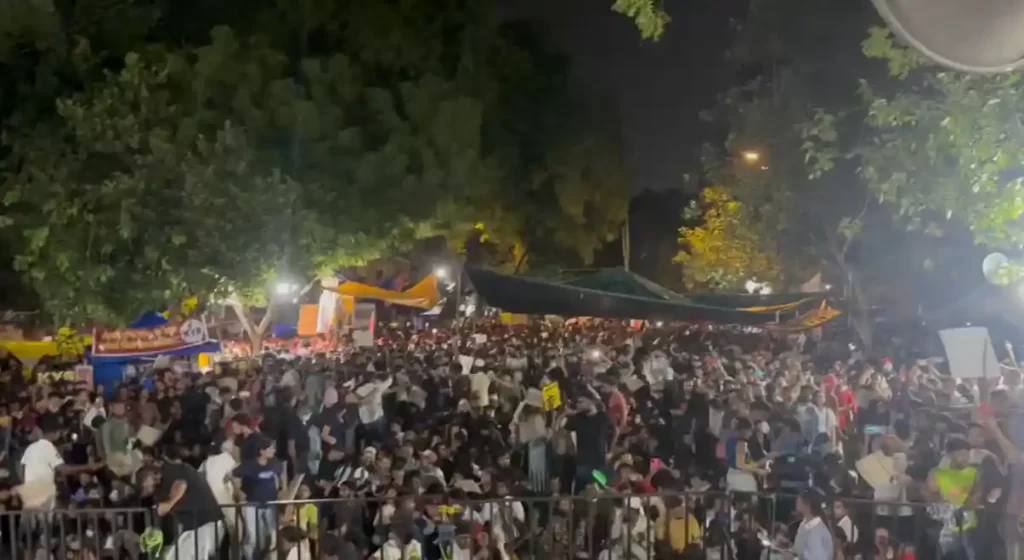
Thirty-six days. That is all it took.Thirty-six days of tear gas and lathi charges, of students sleeping on Parliament Street in the Delhi summer heat, of a 59-year-old activist slowly starving himself in a hospital bed, of a satirical party named after an insult becoming the most feared political force in the capital.On July 25, 2026, Union Education Minister Dharmendra Pradhan resigned. India’s youth had demanded it. And for once, India’s government listened.The Exam That Stole a Dream From 2.27 Million PeopleTo understand what happened at Jantar Mantar, you need to understand what NEET means in India.It is not just an entrance test. It is the single examination that decides whether you become a doctor. One paper. One day. One chance — for which families mortgage homes, students give up their teenage years, and coaching institutes in Kota charge fees that consume entire life savings.On May 3 and May 7, 2026, over 2.27 million students sat for NEET-UG. Then the NTA cancelled both dates. The paper had leaked. Not rumoured to have leaked. Not allegedly leaked. Pradhan stood in front of cameras on May 15 and admitted it himself: “We were confirmed that, under the guise of a guess paper, the actual examination questions had indeed been leaked.”Two months of preparation, wiped out. Families told to wait for a re-exam. And somewhere, the people who had bought the paper in advance — who had already known every answer before they sat down — were untouched.Students began dying by suicide.That is when the streets started filling up.The Party Born From an InsultThe Cockroach Janta Party already existed when NEET collapsed. It had been born in May from a Supreme Court judge’s courtroom remark that compared unemployed youth to cockroaches and parasites of society. Abhijeet Dipke, a student in Boston, had turned that insult into a party name, a manifesto, and an Instagram account that hit 22 million followers in under two weeks.The government’s response was to block it. Under Section 69A of the IT Act, on national security grounds.Nothing radicalises a generation faster than being called a parasite and then being silenced for objecting.When the NEET leak broke, CJP shifted its entire focus. The demands became specific: a transparent investigation, accountability for student suicides, and the resignation of Dharmendra Pradhan. The movement that had started as satire now had a body count behind it. Nobody was laughing anymore.Day 22: The Day Students Tried to March Into ParliamentJuly 20 was chosen deliberately. It was the first day of Parliament’s Monsoon Session. The CJP organised a ‘Chalo Sansad’ march — thousands of students walking from Jantar Mantar toward Parliament, carrying one demand: Pradhan must go.Delhi Police had other ideas. Barricades were erected. When the crowd pushed through, the response was immediate and brutal. Lathi-charges. Tear gas. Water cannons. Students who had come to knock on their Parliament’s door were beaten back from its gates.ThePrint’s entire reporting team came back with eyes burning from tear gas. Some took blows.Inside Parliament — the same building students were being stopped from reaching — the Opposition brought the NEET issue to both Houses. Adjournments followed. Speeches were made. And outside, the students lay on the road, coughing, bleeding, and refusing to leave.Sonam Wangchuk was arrested and taken to hospital that evening. He had been fasting for 22 days.The Hunger Strike Nobody Could IgnoreSince June 28, Wangchuk had been on an indefinite fast at Jantar Mantar alongside six students from the All India Students Association. He is 59 years old. He is famous — the engineer-activist who inspired the film 3 Idiots. He had no political affiliation that the government could use to dismiss him.That was precisely why he mattered. He brought legitimacy to a protest that the ruling party wanted to paint as anti-national. His face on the news each evening made it impossible for ordinary people to look away.By week three, celebrities were speaking up. By week four, the government had no clean options left.On July 23, after 26 days, Wangchuk ended his fast — but only after the government gave written assurances: no cases against peaceful protesters, parliamentary debate on education reform, and compensation for the families of students who died by suicide.Pradhan’s resignation was not in that deal. The CJP rejected it as insufficient.The protest continued.July 25: A Minister FallsThat morning, police were once again firing tear gas at Jantar Mantar.Then Pradhan opened X.”Considering the situation that has arisen at Jantar Mantar and across the country, so that antinational forces do not take advantage of this situation… I have sent my resignation letter to Prime Minister Modi,” he wrote. “I deeply respect the aspirations, feelings, and legitimate expectations of the country’s youth.”At Jantar Mantar, Abhijeet Dipke grabbed a microphone.”We have done it, we have done it,” he screamed.Around him, students who had been gassed and beaten and called anti-national for 36 days began to cry, to dance, to hold each other. Nineteen-year-old Lavanya Bharti, her voice shaking, told reporters: “They called us lazy and unemployed. We are lazy enough to sleep on Parliament Street for days. We have erased the fear that Modi spent years building. Cockroaches are crawling all over you, Modi.”Hours later, CJP spokesperson Ashutosh Ranka walked out of the Constitution Club of India having shaken hands with JP Nadda and Jitendra Singh. “All our demands have been accepted,” he said. “We request the protesters to withdraw immediately and return home peacefully.”It was over. All three demands — Pradhan’s resignation, compensation for families of students lost to suicide, no action against peaceful protesters — accepted.What This Was Really AboutEvery one of the 2.27 million students who appeared for NEET 2026 has a family. Say six people per family — parents, siblings, grandparents. That is roughly 14 million people directly affected by what happened on May 3 and May 7.India has produced paper leaks before. What it had not produced before was a generation angry enough, organised enough, and digitally fluent enough to refuse to absorb the humiliation quietly.AAP leader Manish Sisodia
INS Mahendragiri: India’s Sixth Project 17A Stealth Frigate and a New Marker of Naval Self-Reliance
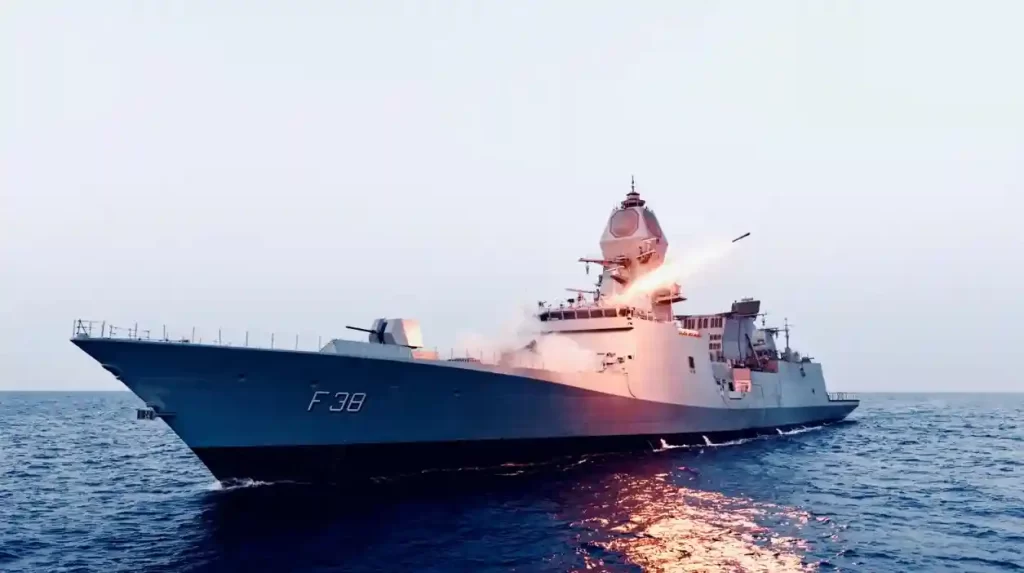
INS Mahendragiri represents a major step forward in India’s indigenous naval power, combining stealth design, advanced weapons, high indigenous content, and faster project execution into one frontline warship. Commissioned at Visakhapatnam in the presence of Defence Minister Rajnath Singh, it is the sixth Project 17A frigate to join the Indian Navy and a strong symbol of Aatmanirbhar Bharat at sea. For India, this is not just the induction of another warship; it is a statement that the country’s shipbuilding ecosystem can now design, build, test, and deliver sophisticated combat platforms that are ready for modern maritime warfare. The ship’s commissioning also strengthens India’s ability to operate across the Indian Ocean Region and the wider Indo-Pacific, where naval presence, deterrence, and rapid response now matter more than ever. A Warship Built for the New Maritime EraINS Mahendragiri belongs to the Nilgiri-class or Project 17A family, which has been developed as a new generation of multi-role stealth frigates for the Indian Navy. Designed by the Navy’s Warship Design Bureau and built by Mazagon Dock Shipbuilders Limited in Mumbai, the vessel has been created to handle a broad operational spectrum, from fleet air defence and anti-surface warfare to anti-submarine warfare, maritime interdiction, surveillance, and humanitarian assistance. That versatility is one of the ship’s most important strengths. Modern naval warfare rarely involves only one type of threat, and a ship that can defend against aircraft, submarines, and surface combatants while also supporting peacetime missions such as search and rescue must be engineered with exceptional balance. INS Mahendragiri is meant to do exactly that, which is why it is described as a frontline warship rather than a niche platform. What Makes It Stealthy?The phrase “stealth frigate” is not just a marketing label; it refers to design and systems that reduce detection and improve survivability in a contested environment. INS Mahendragiri features advanced stealth characteristics, reduced radar signature, modern sensors, and a network-centric combat system that helps it operate more effectively while remaining harder to track. In practical terms, this means the warship is better positioned to approach hostile areas, survive layered threats, and respond faster in a crisis. Its stealth profile, coupled with its electronic warfare suite and integrated combat systems, gives the Navy a ship that is more difficult to target and more adaptable to modern maritime battle conditions. Firepower and Mission SystemsINS Mahendragiri is armed for the full spectrum of naval combat, and its weapons fit the role of a highly capable multi-mission frigate. It can be equipped with the BrahMos surface-to-surface missile, widely regarded as one of the world’s fastest and most lethal cruise missiles, and it also carries medium-range surface-to-air missiles, anti-submarine rocket launchers, torpedo launchers, and a close-in weapon system for last-line defence. Beyond the headline weapons, its value lies in the combination of systems working together. An advanced multifunction radar, anti-submarine defence systems, electronic warfare gear, and an embarked multi-role helicopter create layered offensive and defensive capability, allowing the frigate to detect, classify, engage, and endure across different threat environments.Indigenous Content and Industrial DepthOne of the most important features of INS Mahendragiri is its more than 75 percent indigenous content. That figure matters because it shows how far India has come in building a defence-industrial base that is no longer dependent solely on foreign supply chains for key platforms and systems.The ship was built with the contribution of more than 200 Indian industries, including numerous MSMEs, which means its significance goes well beyond naval doctrine. It supports domestic manufacturing, precision engineering, electronics, software, propulsion-related work, logistics, and the wider industrial ecosystem that grows around a major warship programme. Faster Build, Better ProcessThe commissioning of Mahendragiri also reflects a major improvement in project execution. According to the details shared at the commissioning ceremony, the time from launch to delivery was cut from 63 months to 31 months, and the overall construction timeline fell from 95 months to 75 months. Even more strikingly, technical analyses were completed in a single sea trial instead of the usual five to seven. Those numbers matter because they show that India is not only building advanced ships, but learning how to build them more efficiently. In defence manufacturing, speed without quality is a problem, but speed with quality is a strategic advantage, and Mahendragiri appears to represent that kind of maturity. Why the Name MattersThe ship is named after the Mahendragiri mountain range in the Eastern Ghats, which gives it a sense of rootedness in India’s geography and cultural imagination. The mountain symbolism fits the vessel’s motto, “Mighty, Majestic, Matchless,” and reinforces the idea of endurance, strength, and resolve. Naming a frontline warship after a mountain range is also fitting because naval power often relies on the same qualities associated with mountains: stability, permanence, and commanding presence. In that sense, the name gives the frigate a character that is both poetic and strategic. Strategic Role in the Indo-PacificINS Mahendragiri arrives at a time when India is increasingly framing maritime security as central to national security, trade resilience, and regional stability. As Rajnath Singh noted in the commissioning address, seas matter not only for defence but also for supply chains, energy flows, commerce, and the country’s wider economic security. That is why the frigate’s role in the Eastern Fleet is especially important. It strengthens India’s blue-water reach, supports presence missions in the Indian Ocean Region, and contributes to the country’s broader posture as a net security provider and preferred security partner in the Indo-Pacific. Conventional Power and Future TechOne of the most interesting themes in the commissioning speech was the insistence that next-generation technologies and conventional platforms are not rivals but complements. Rajnath Singh’s point was that even as warfare evolves through drones, AI, cyber systems, space assets, and unmanned platforms, credible ships, trained crews, and proven military power still remain the foundation of defence.That argument is important because it places INS Mahendragiri in the real world rather than in a futuristic fantasy. The warship does not represent a rejection of new technology; it represents the idea that advanced technologies become meaningful when they are backed by solid, reliable,
Lucknow-Kanpur Expressway: Uttar Pradesh’s New High-Speed Corridor
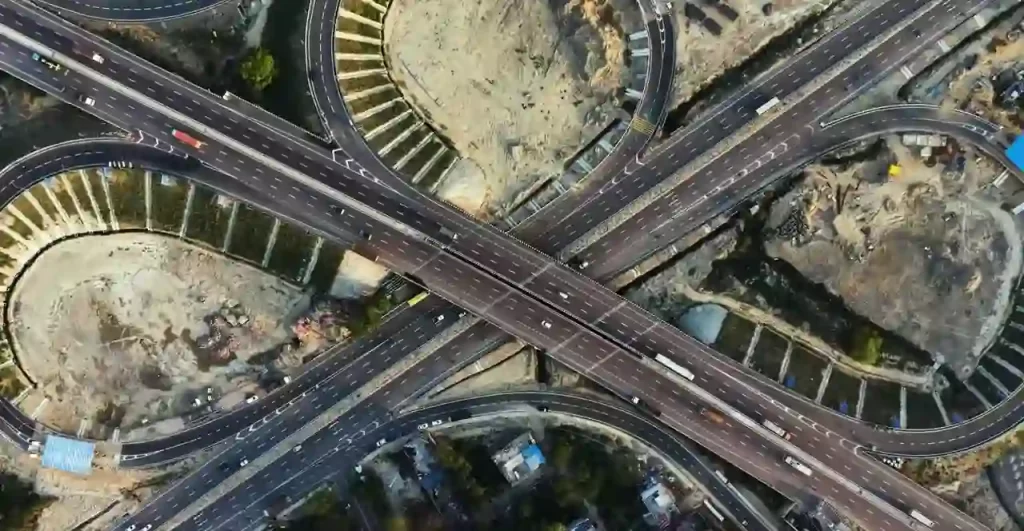
The Lucknow-Kanpur Expressway is one of the most important road infrastructure projects to come out of Uttar Pradesh in recent years, and its opening marks a major shift in how people, goods, and economic activity will move between the state’s two biggest urban centres. Built as a six-lane, access-controlled corridor with advanced traffic systems and a substantial elevated stretch, it is designed to cut travel time dramatically while also easing pressure on the older and more congested routes that commuters have relied on for decades.For travelers, the biggest change is simple and immediate: what used to be a tiring, unpredictable journey of well over two hours can now be completed in a fraction of that time. For the state, the expressway is more than a convenience project; it is a growth corridor that connects Lucknow, Kanpur, Unnao, and surrounding districts through faster mobility, smarter highway management, and stronger investment potential.A Long-Awaited CorridorThe Lucknow-Kanpur road link has been a long-standing demand, and the expressway finally gives that connection a modern, high-capacity form. The project has been completed by the National Highways Authority of India, with construction handled by PNC Infratech, and it runs for about 62.76 km between Amausi in Lucknow and Shuklaganj near Kanpur.What makes the corridor especially significant is that it combines greenfield and brownfield development, meaning it was built both on new land and through upgraded sections near existing urban areas. That blend allowed planners to create a faster, more direct route while still dealing with the practical realities of dense settlements, traffic pressure, and urban connectivity.Route and StructureThe expressway is not just a straight strip of asphalt; it is a carefully engineered corridor with multiple layers of mobility planning built into it. Around 45 km of the route is greenfield alignment, while about 18 km is elevated, making it one of the more advanced highway projects in the state.Its key stretches pass through or near Nawabganj, Banthara, Bani, and Unnao, with integration planned toward the upcoming Ganga Expressway at Unnao. The route includes major bridges, minor bridges, underpasses, flyovers, and interchanges, all of which help the expressway function as an access-controlled corridor rather than a conventional road with frequent interruptions.Faster Travel, Smarter AccessThe main promise of the expressway is time savings. Reports indicate that travel between Lucknow and Kanpur, which currently takes roughly 1.5 to 2.5 hours and sometimes more in heavy traffic, may be reduced to around 45 to 60 minutes, with some early reporting even suggesting a 35- to 45-minute range under ideal conditions.That kind of reduction matters because the corridor links two cities that are central to Uttar Pradesh’s economy, administration, education, and industry. A commuter, logistics operator, or business traveler using the route regularly does not just save time; they gain predictability, and in transport planning, predictability is often as valuable as speed.Elevated Section and Urban ReliefOne of the most impressive engineering features of the project is the elevated stretch through the Lucknow side of the corridor. This section helps vehicles bypass some of the worst congestion around areas such as Amausi, Sarojininagar, and parts of NH-27, which is crucial in a region where urban traffic often slows even fast roads to a crawl.The elevated corridor also shows how expressway planning has evolved in India. Instead of simply widening roads and hoping for better flow, modern projects increasingly try to separate through-traffic from local traffic, allowing long-distance vehicles to move efficiently while reducing conflict with city movement.Technology on the HighwayWhat sets the Lucknow-Kanpur Expressway apart from older highways is its heavy use of intelligent transport systems. The corridor has been equipped with surveillance cameras, variable message signs, video incident detection systems, emergency call boxes, speed radars, and other digital safety tools intended to make the road not just faster, but more manageable and safer.It is also described as India’s first barrier-free expressway, using Automatic Number Plate Recognition technology alongside FASTag-based tolling so vehicles can move without the stop-and-go experience of conventional toll booths. That barrier-free model is important because it reduces delay, lowers congestion at toll points, and creates a more modern highway experience overall.Tolling and User CostsThe expressway’s toll structure is an important part of the public conversation because affordability always shapes how widely such infrastructure is used. Available project details indicate that regular cars may be charged around ₹275 for a one-way trip, with a return trip within 24 hours costing around ₹415, while higher rates apply to light commercial vehicles, buses, trucks, and heavy vehicles.There are also notes that annual FASTag users may benefit from lower effective charges on eligible trips, although final toll notifications are issued by the authorities before public operations begin. For many users, the key question will be whether the time saved and fuel efficiency gained justify the toll cost, especially for frequent intercity travel.Why the Project Matters EconomicallyThe Lucknow-Kanpur Expressway is expected to influence land values, logistics activity, and regional business development along the corridor. Areas near interchanges and access points, particularly around Amausi, Unnao, and Shuklaganj, are likely to draw investor interest as improved connectivity makes them more attractive for residential and commercial development.This kind of effect is common around major highways, but the scale here could be especially notable because the expressway ties into industrial and administrative centres rather than only passing through remote land. Faster movement between airports, highways, warehouses, and city markets can encourage warehousing, manufacturing support services, and new township development in surrounding districts.Engineering College FlyoverAlong with the expressway inauguration, the government is also laying the foundation stone for a four-lane flyover at Engineering College intersection in Lucknow, reportedly at a cost of ₹108 crore. That project is meant to reduce a major local bottleneck and improve access in northern parts of the city, which shows that the highway program is not being treated as a standalone corridor but as part of a wider urban mobility plan.This matters because highway success often depends on what happens at the edges. If entry and exit zones remain congested, the road’s benefits
Prambanan Temple, Indonesia: Java’s Majestic Hindu Monument and a Living Bridge Between Civilizations
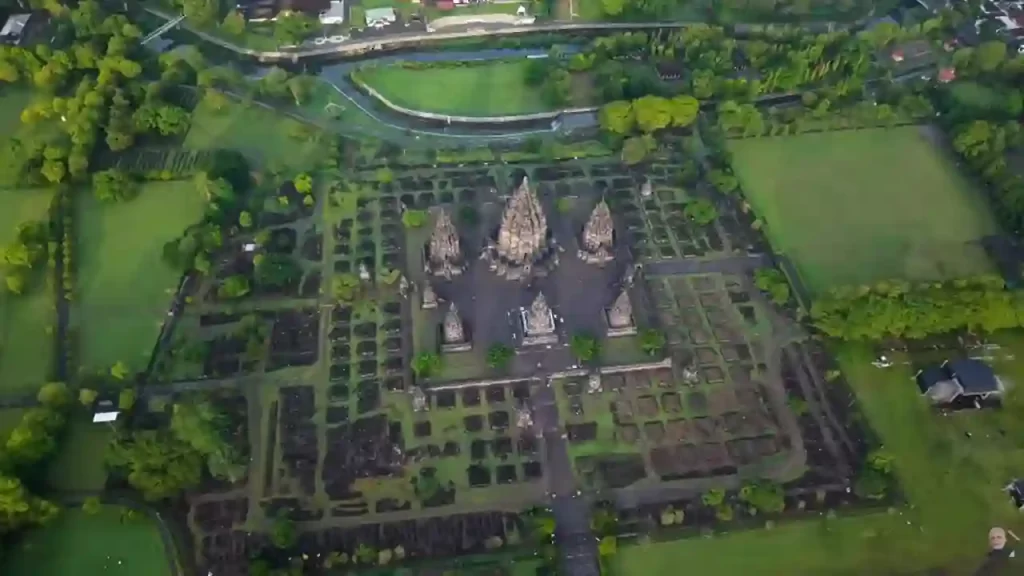
Prambanan Temple is one of Indonesia’s most remarkable historical treasures, a soaring 9th-century Hindu complex near Yogyakarta that still feels powerful even in ruins, not because it is perfectly preserved, but because it carries the grandeur of an ancient civilization in every carved stone and rising spire. As the largest Hindu temple complex in Indonesia and one of the most important in Southeast Asia, it stands today not only as a UNESCO World Heritage Site, but also as a symbol of the long cultural conversation between India and Indonesia.The recent visit by Indian Prime Minister Narendra Modi to Prambanan, alongside Indonesian President Prabowo Subianto, gave the temple renewed international attention, especially after the two leaders marked the beginning of India’s archaeological conservation and restoration project for the site. That gesture matters because Prambanan is more than a monument; it is a shared civilizational memory, built in stone and preserved through diplomacy, scholarship, and devotion.A Monument With Deep RootsPrambanan was built during the 9th and 10th centuries under the Sanjaya dynasty of the ancient Mataram Kingdom, at a time when Hinduism and Buddhism both shaped life on Java’s fertile plains. The temple was dedicated to the Hindu Trimurti, Shiva, Vishnu, and Brahma, and was designed as a sacred landscape rather than a single isolated shrine.What makes its origin story so fascinating is the way it reflects the cosmopolitan character of ancient Southeast Asia. Java was not a peripheral outpost of Indic culture; it was a place where Hindu ideas were absorbed, adapted, and given local artistic expression, creating a monument that feels both familiar and distinctly Indonesian. In that sense, Prambanan is not simply an import from India’s religious world, but a mature regional interpretation of it.Scale and StructureThe Prambanan Temple Compound is made up of several groups of buildings, including the main Prambanan temple complex as well as Sewu, Bubrah, and Lumbung temples. At the heart of the site once stood roughly 240 temples, large and small, spread across a landscape of nearly 40 hectares, making it one of the grandest religious complexes ever built in ancient Java.The central shrine arrangement is especially striking. Three main temples honor Shiva, Vishnu, and Brahma, with Shiva’s temple rising highest at around 47 metres and dominating the skyline with a verticality that immediately sets Prambanan apart from many other temple traditions in Asia. That upward sweep creates a sense of aspiration and sacred hierarchy, as if the entire complex is trying to lift the visitor’s gaze toward the divine.The Architecture & Carvings That SpeakThe first impression Prambanan gives is one of dramatic elegance. Unlike sprawling temple compounds that spread horizontally across a broad footprint, Prambanan rises sharply and symmetrically, with stone towers that create a powerful silhouette against the Javanese sky. This vertical design is not just beautiful; it reflects Hindu cosmology and the idea of sacred order expressed through geometry, elevation, and alignment.Inside the Shiva temple are chambers that house statues of Shiva, Durga, Ganesha, and the sage Agastya, reinforcing the temple’s theological depth and ritual purpose. Around the central shrines, rows of smaller pervara shrines once created a dense sacred field, and although many are now in ruins, their remains still help convey the scale and ambition of the original complex.One of Prambanan’s greatest artistic achievements is its relief sculpture. The temple galleries are decorated with finely carved bas-reliefs depicting episodes from the Ramayana, allowing visitors to move around the structure almost as if they are reading a sacred story in stone. That narrative quality gives the site a remarkable human texture. The carvings are not merely decorative; they function as theological instruction, cultural memory, and visual storytelling, connecting architecture to epic literature in a way that turns the temple into a living manuscript. Visitors traditionally walk clockwise around the corridors, following the sequence of scenes, which turns movement itself into an act of contemplation.Prambanan and BorobudurPrambanan is often discussed alongside Borobudur, the great Buddhist monument nearby, and the pairing is one of the most compelling features of Java’s cultural landscape. Where Borobudur represents the island’s Buddhist heritage, Prambanan reveals its Hindu legacy, and together they show that ancient Java was home to overlapping traditions rather than a single religious identity.That coexistence is historically important because it reminds us that Southeast Asian civilizations were deeply plural, creative, and interconnected. The two monuments, standing in the same broader region, make a powerful case for understanding heritage not as a fixed label, but as a layered record of exchange, adaptation, and local genius.UNESCO Recognition and PreservationPrambanan was designated a UNESCO World Heritage Site in 1991, a recognition that underlined both its architectural importance and its vulnerability. Like many ancient monuments, it has faced damage from age, weathering, and seismic events, which is why conservation has been central to its survival.India’s involvement in the current restoration effort is especially notable because the Archaeological Survey of India has a long history of heritage conservation in Southeast Asia, including documentation work at the Borobudur temple compounds. The Prambanan project is therefore part of a broader effort to preserve not just a structure, but a shared historical vocabulary that connects South and Southeast Asia across centuries.Why Prambanan Still MattersPrambanan matters today because it speaks to more than religion or tourism. It is a reminder that civilizations travel through architecture, that faith can become form, and that cultural influence often survives longest in stone. For Indonesia, it is a monument to the Hindu past that helped shape its early history; for India, it is a reminder of how widely Indic traditions once flowed and how deeply they were transformed abroad.It also matters because heritage diplomacy is not abstract. When leaders jointly restore a temple, they are not only protecting old walls; they are affirming a relationship between histories, publics, and identities. The plaque unveiled by Modi and Prabowo at Prambanan therefore carries meaning well beyond ceremony, because it ties preservation to friendship, scholarship, and mutual respect.ConclusionPrambanan Temple is one of Southeast Asia’s great cultural masterpieces, a place
Kalpasar Project: Gujarat’s Ambitious Plan to Build the World’s Largest Freshwater Reservoir
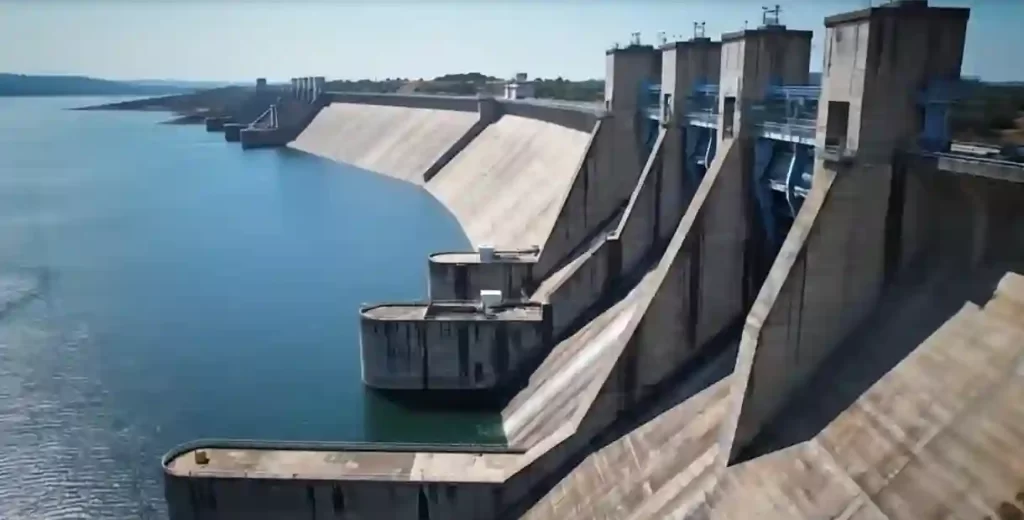
IntroductionFor decades, Gujarat has grappled with an uneven distribution of water resources. While some regions receive adequate rainfall and river water, others—particularly the Saurashtra, Kutch and North Gujarat regions—continue to face recurring water scarcity, declining groundwater levels and prolonged drought-like conditions. Addressing this challenge has remained one of the state’s biggest developmental priorities.Among the many water management initiatives proposed over the years, the Kalpasar Project stands out as one of the most ambitious and technically challenging. Envisioned as a multipurpose infrastructure project, Kalpasar aims to construct a massive dam across the Gulf of Khambhat to create what is expected to become the world’s largest freshwater reservoir in a marine environment. The project has been designed not only to improve water availability but also to strengthen transport connectivity, support industrial growth and enhance long-term water security across Gujarat. Although the project has been under discussion for nearly four decades, recent developments—including the finalisation of the Detailed Project Report (DPR) and renewed technical collaborations—have once again brought it into focus. The Vision Behind the Kalpasar ProjectThe Kalpasar Project, officially known as the Gulf of Khambhat Development Project, was conceptualised during the 1980s as a long-term solution to Gujarat’s growing water requirements.The central idea behind the project is to construct a dam across the Gulf of Khambhat, preventing freshwater from flowing directly into the Arabian Sea. Instead, the freshwater carried by rivers such as the Narmada, Sabarmati, Mahi, Dhadhar and several smaller rivers would be stored within a massive coastal reservoir for future use.Unlike conventional dams that are built across rivers, Kalpasar proposes building a barrier across a section of the sea. If implemented successfully, it would represent one of the largest and most complex coastal reservoir projects ever attempted anywhere in the world. Why Gujarat Needs a Project Like KalpasarDespite significant investments in irrigation and river-linking projects, Gujarat continues to face considerable regional disparities in water availability.Large quantities of freshwater from major rivers flow into the Gulf of Khambhat every monsoon before they can be effectively stored or utilised. Experts estimate that thousands of million cubic metres of freshwater eventually drain into the sea each year.At the same time, several districts in western Gujarat regularly depend on groundwater extraction, water tankers and long-distance canal networks to meet drinking and irrigation requirements.Kalpasar has been conceived as a solution to bridge this imbalance by capturing surplus monsoon water and storing it for use throughout the year.The project is expected to support irrigation, drinking water supply and industrial development while reducing dependence on groundwater resources. How the Project Will WorkThe project proposes constructing a massive sea dam across the Gulf of Khambhat, creating an enormous freshwater reservoir behind it.Freshwater from multiple rivers flowing into the gulf would gradually accumulate within the reservoir, while engineering systems would prevent seawater intrusion and maintain water quality.The revised plan also incorporates the Bhadbhut Barrage on the Narmada River, which will help divert freshwater into the proposed reservoir and reduce salinity intrusion in the river. This barrage has become an important component of the overall Kalpasar vision. Apart from storing water, the project also proposes the construction of a multi-lane road over the dam, significantly improving connectivity between South Gujarat and the Saurashtra region.Key Objectives of the ProjectKalpasar has been planned as a multipurpose infrastructure project rather than merely a water storage scheme.Its primary objective is to create a reliable freshwater source capable of supplying drinking water to drought-prone regions while expanding irrigation coverage for agriculture.The project also seeks to support Gujarat’s rapidly growing industrial sector by ensuring long-term water availability for manufacturing and urban development.Another important objective is to improve transportation by providing a direct road connection across the Gulf of Khambhat. Such connectivity is expected to substantially reduce travel distance and time between Bhavnagar, Bharuch and other parts of Gujarat, improving the movement of people and goods.The project is also expected to contribute to fisheries development, groundwater recharge and regional economic growth. Earlier proposals included a tidal power generation component, although this has since been excluded from the revised project design.Economic ImportanceIf completed, the Kalpasar Project could become one of Gujarat’s most transformative infrastructure initiatives.Reliable water availability is expected to benefit agriculture by enabling irrigation across large areas that currently depend on uncertain rainfall. Increased agricultural productivity could improve rural incomes while strengthening food security.The project is also expected to support industrial expansion by ensuring water availability for manufacturing clusters, ports and urban centres.The proposed road link over the dam would improve logistics, reduce transportation costs and enhance connectivity between different parts of the state, creating opportunities for trade and investment.Large-scale construction activities are also expected to generate employment across engineering, construction, transport and allied sectors.Environmental and Technical ChallengesDespite its potential benefits, Kalpasar remains one of India’s most technically challenging infrastructure projects.Constructing a dam across a tidal gulf requires sophisticated engineering solutions capable of withstanding strong tidal currents, marine conditions and complex geological formations.Environmental experts have also expressed concerns regarding the project’s potential impact on marine biodiversity, fisheries, coastal ecosystems and sediment movement.Changes in salinity levels, water circulation and ecological balance within the Gulf of Khambhat will require careful scientific assessment before construction can proceed.For this reason, numerous environmental, hydrological and technical studies have been conducted over the past several years to evaluate the project’s long-term feasibility. Why the Project Has Been DelayedAlthough the Kalpasar Project was first proposed in the 1980s, implementation has been repeatedly delayed.The project’s enormous scale, evolving design, environmental concerns and engineering complexity have required extensive feasibility studies before construction could begin.Over the years, multiple revisions have been made to the original proposal. The length of the proposed dam has been reduced, the tidal power component has been removed, and greater emphasis has been placed on ensuring environmental sustainability.The preparation of the Detailed Project Report has taken considerable time due to the large number of scientific studies and inter-departmental consultations required for a project of this magnitude.Current StatusThe Kalpasar Project has recently gained renewed momentum.According to the Gujarat government, the Detailed Project Report (DPR) has reached its final stages.
Modi at G7 Summit 2026: Maritime Security, Global Solidarity, and International Relations
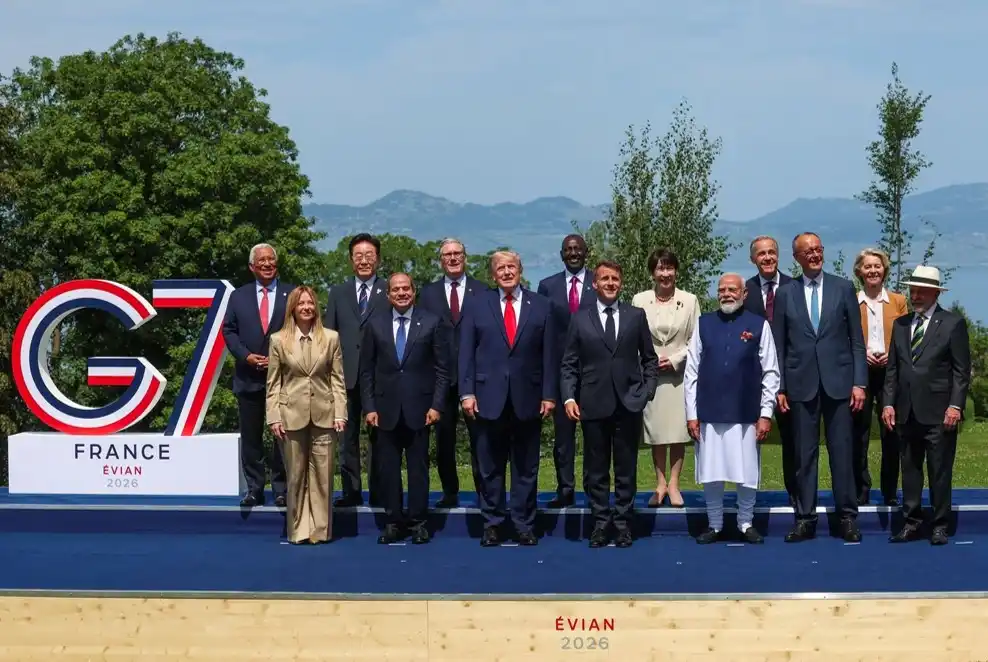
Prime Minister Narendra Modi delivered a powerful address at the 52nd G7 Summit in Evian-les-Bains, France, on Tuesday, June 16, 2026, voicing India’s firm concern over disruptions to maritime trade through the Strait of Hormuz and highlighting that several Indian civilians lost their lives during the West Asia conflict. Speaking at the outreach session on “Forging New Partnerships and Rebuilding International Solidarity,” Modi emphasized that lasting solutions to conflicts can only be achieved through dialogue, diplomacy, and international cooperation, while calling for the safety of seafarers who connect all nations through global maritime trade.The summit, held from June 15 to 17 on the shores of Lake Geneva, brings together leaders of France, Britain, Canada, Germany, Italy, Japan, and the United States alongside the European Union, with India invited as a partner country for its 13th participation and PM Modi’s 7th consecutive attendance. During his extensive diplomatic outreach on the sidelines, Modi held bilateral meetings with Canadian Prime Minister Mark Carney, British Prime Minister Keir Starmer, UAE President Sheikh Mohamed bin Zayed Al Nahyan, Kenyan President William Ruto, Egyptian President Abdel Fattah El-Sisi, Japanese Prime Minister Sanae Takaichi, and South Korean President Lee Jae-myung, while also exchanging greetings with U.S. President Donald Trump ahead of their scheduled bilateral meeting.Maritime Security and the Strait of Hormuz: India’s Core ConcernPM Modi’s remarks on the need to protect seafarers came amid growing anger in India over the deaths of three Indian crew members in a U.S. military attack on a merchant vessel off the coast of Oman last week. The U.S. Central Command said it had taken action against three vessels, Marivex on June 8, Settebello on June 9, and Jalveer on June 11, alleging that they were attempting to violate the U.S. blockade of Iranian ports. Modi raised this issue a day before his bilateral talks with President Trump, underscoring how conflicts in West Asia have disrupted global trade and caused loss of life.“We welcome the progress made in peace efforts in West Asia. This conflict has caused loss of life and property in our friendly countries in the region. Disruptions to maritime trade through the Strait of Hormuz have affected the global economy. Several Indian civilians have also lost their lives,” Modi said during his address. “It is our responsibility to ensure the safety of the seafarers who connect all nations through global maritime trade. We must ensure that maritime routes remain secure and that seafarers can perform their duties without fear,” he added.Modi’s concerns reflect India’s strategic dependence on the Strait of Hormuz, one of the world’s most critical maritime chokepoints for oil shipments and global commerce. As a major importer of energy and a nation with significant maritime trade volumes, disruptions in Hormuz directly impact India’s economic security, energy prices, and the safety of its nationals working in global shipping. The deaths of three Indian mariners in the U.S. strike have heightened domestic pressure on the government to address maritime security and protect Indian citizens abroad.Trust as the Ultimate Strategic Asset: Modi’s Vision for International RelationsIn his address, Modi underscored the importance of trust in international relations, saying that confidence among nations has become a more valuable strategic asset than minerals, technology, or markets. He argued that in an increasingly interconnected world, where energy, food, health, cyber, and economic security are closely linked, stronger international partnerships are essential for humanity’s progress and prosperity. Warning that trade and technology were being used to pursue narrow interests, Modi said such practices had contributed to a growing trust deficit in the international system.Modi wrote in an X post: “Shared my thoughts at the Outreach Session on ‘Forging New Partnerships and Rebuilding International Solidarity’ at the G7 Summit in Evian. In a world that is getting more interconnected and interdependent than ever before, this subject becomes all the more vital.” His emphasis on trust reflects India’s diplomatic philosophy that international cooperation must be founded on mutual respect, reciprocity, and shared interests rather than coercion or unilateralism.The trust deficit Modi highlighted is particularly relevant in the current global context, where geopolitical tensions, trade restrictions, technology bans, and security concerns have led nations to prioritize national interests over collective action. As the G7 discusses issues ranging from AI access to critical minerals supply chains, India’s call for trust-based partnerships offers an alternative framework that emphasizes inclusivity, cooperation, and shared prosperity for all nations, not just the wealthy few.Bilateral Outreach: Strengthening India’s Strategic PartnershipsIndia-Canada: Forward-Looking Strategic PartnershipDuring his meeting with Canadian Prime Minister Mark Carney, PM Modi and his counterpart welcomed the positive momentum in India-Canada relations and reaffirmed their commitment to building a forward-looking strategic partnership. The two leaders reviewed progress in economic cooperation, including commercial arrangements relating to Liquefied Natural Gas (LNG), Liquefied Petroleum Gas (LPG), and metallurgical coal. They expressed satisfaction over ongoing negotiations for a Comprehensive Economic Partnership Agreement, with both sides aiming to conclude the pact this year.The leaders also welcomed growing cooperation in science and technology, defence, finance, and migration. To further strengthen defence and security ties, the two countries agreed to launch negotiations on a General Security of Information Agreement. PM Modi expressed India’s support for Canada becoming a Dialogue Partner of the Indian Ocean Rim Association, and both leaders announced the establishment of Raisina Americas as a platform to enhance dialogue and cooperation.India-UK: Vision 2035 and Comprehensive Economic PartnershipDuring his meeting with British Prime Minister Keir Starmer, PM Modi reviewed progress in India-UK relations under Vision 2035. The two leaders welcomed cooperation across trade, defence, technology, education, and people-to-people ties, looking forward to the early implementation of the Comprehensive Economic and Trade Agreement. They expressed satisfaction over the strong education partnership, noting recent progress in establishing campuses of British universities in India, including the University of Liverpool in Bengaluru and the Universities of York and Bristol in Mumbai.The leaders exchanged views on regional and global developments and reaffirmed their commitment to further strengthening the India-UK Comprehensive Strategic Partnership, demonstrating how both nations are working to deepen their bilateral
Modi’s Historic Slovakia Visit: India’s Strategic Pivot to Central Europe
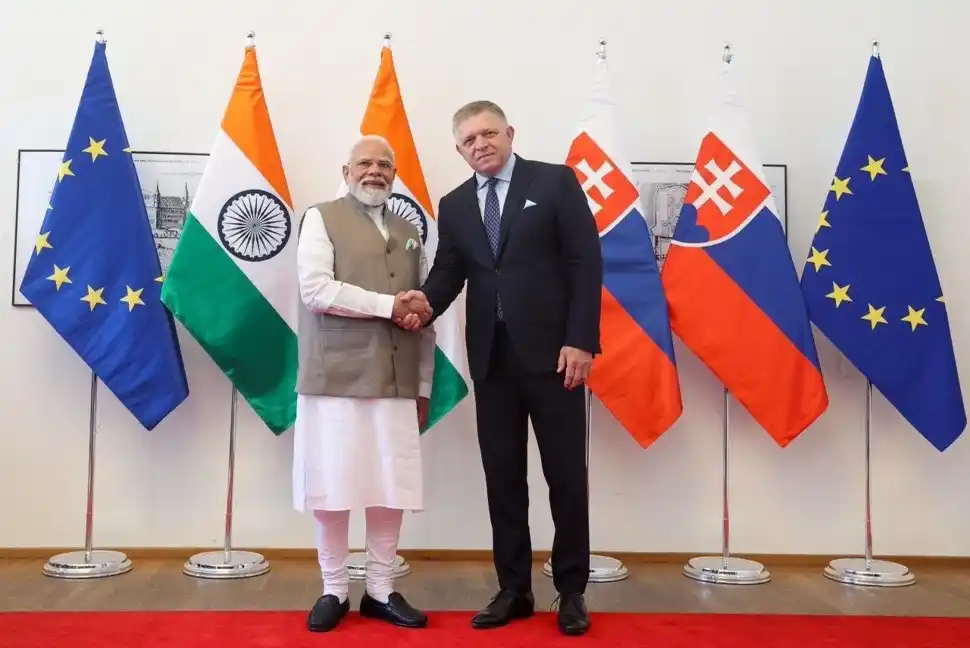
When Prime Minister Narendra Modi stepped off the plane in Bratislava on Sunday evening, June 14, 2026, the occasion transcended routine diplomatic pleasantries. It marked a vision of India quietly but purposefully embedding itself into European geopolitics, not through headline-grabbing rhetoric, but through building frameworks, forging alliances, and finding common ground. This was the first-ever visit by an Indian Prime Minister to Slovakia since its independence in 1993, transforming three decades of polite but unremarkable relations into a purposeful partnership with far-reaching strategic implications.Receiving Modi with the traditional Slovak ceremony of offering bread and salt, Slovak officials welcomed him to a three-day State Visit that fundamentally transformed India-Slovakia dynamics. The visit follows President Droupadi Murmu’s State Visit to Slovakia in April 2025 and Slovak President Peter Pellegrini’s visit to India for the AI Impact Summit in February 2026, demonstrating accelerating bilateral engagement. What Bratislava achieved was replacing polite distance with purposeful proximity, upgrading India-Slovakia ties to a “Comprehensive Partnership.”From Polite Distance to Purposeful ProximityFor three decades after Slovakia’s 1993 independence, the two countries maintained a perfectly pleasant but entirely unremarkable relationship. The Bratislava summit fundamentally transformed this dynamic. The breadth of agreements signed reveals the story: defence cooperation, counter-terrorism, artificial intelligence, semiconductors, digital infrastructure, energy, and labour migration emerged as core pillars.The decision to establish an ICCR Chair in Artificial Intelligence at the Technical University of Košice, the first such initiative anywhere in the world, signals that this partnership is built with eyes firmly on tomorrow. This timing matters enormously, as the visit came on the heels of the landmark India-EU trade deal, with both sides candid about capitalising on it. Modi acknowledged working towards the agreement’s “earliest implementation.”Automotive manufacturing, electronics, and advanced manufacturing were identified as sectors ripe for collaboration, reflecting Slovakia’s industrial capacity aligning perfectly with India’s economic priorities. The visit reaffirms India’s commitment to strengthening bilateral relations in trade, investment, and automobile and railway manufacturing.Defence, AI, and Semiconductors: Strategic PillarsDefence cooperation took centre stage alongside emerging technology sectors defining the next generation of global competition. The ICCR Chair at the Technical University of Košice demonstrates both nations positioning themselves at technological innovation’s forefront while building academic partnerships yielding long-term benefits.Counter-terrorism cooperation emerged as another critical pillar, with both sides recognizing that joint condemnation builds international consensus around India’s security concerns. This aligns with India’s emerging foreign policy, where every relationship adds to a larger ambition: India is not a supplicant but an independent, confident country charting its own course. Slovakia’s reiteration of support for India’s permanent UN Security Council membership and Nuclear Suppliers Group membership reflects the multilateral solidarity India needs to build systematically.Digital infrastructure and semiconductors emerged as priority areas, reflecting growing importance in national security and economic competitiveness. Energy and labour migration figured prominently, demonstrating that cooperation extends beyond traditional defence and trade into areas affecting everyday citizens.Diversification as Strategic NecessityFor too long, India’s economic and strategic calculus concentrated around a narrow cluster: the United States, China, the Gulf, and Russia, each carrying vulnerabilities compounded by trade wars, geopolitical rivalry, and weaponised supply chains. Diversification is no longer a strategic luxury; it is a structural necessity requiring India to build relationships across multiple regions.Europe offers a compelling opportunity as the continent reconfigures militarily, economically, and politically. Central and Eastern European nations like Slovakia are increasingly assertive EU members with growing industrial capacity, technological expertise, and political influence, complementing India’s development priorities.Modi’s European tour underscores a calculated pattern: positioning India as a pivotal power refusing capture by any single camp while building relationships advancing national interests without compromising strategic autonomy. Joint terrorism condemnation builds international consensus around India’s security concerns.The Broader European TourModi’s visit represents an integrated strategic approach, with Slovakia forming part of a broader European tour including France and the G7 Summit. At French President Emmanuel Macron’s invitation, Modi undertook an official visit to France from June 13-14 in Nice for bilateral meetings, reviewing the India-France relationship elevated to Special Global Strategic Partnership earlier this year.In Nice, both leaders jointly inaugurated ‘Bharat Innovates,’ bringing together top innovation startups and Venture Capital funds from India, France, and other countries during the India-France Year of Innovation. This reinforces the vibrant innovation partnership, spotlighting India as a global hub for innovation, digital transformation, and entrepreneurship.On the third leg, Modi participated in the G7 Summit in Evian, France, on June 16-17, exchanging views with G7 leaders on “Forging New Partnerships and Rebuilding International Solidarity,” “Reviving Balanced, Shared and Sustainable Economic Growth,” and “Ensuring Safe, Rapid and Efficient AI Rollout.” His presence reflects India’s standing as a leading Global South voice addressing global challenges.On the final leg, Modi visited Paris on June 18 for bilateral engagements and attended VivaTech Summit, Europe’s largest technology and startup event, while addressing the Indian community in Paris.Automotive and Railway ManufacturingAutomotive manufacturing emerged as a key sector, reflecting Slovakia’s position as one of Europe’s leading automotive producers and India’s growing capabilities in vehicle manufacturing and electric mobility. The sector represents natural synergy between Slovakia’s industrial expertise and India’s market size and manufacturing capabilities.Railway manufacturing also figured prominently, with both sides exploring cooperation critical for India’s infrastructure development and Slovakia’s engineering capabilities. Trade and investment emerged as overarching priorities driving the comprehensive partnership forward, with the India-EU trade deal providing additional momentum.Conclusion: A Strategic Signal of Expanding Global FootprintModi’s historic visit to Slovakia signals India’s engagement growing wider, deeper, and considerably more purposeful, marking a transformation from three decades of unremarkable relations to a comprehensive partnership with strategic depth. The first Prime Ministerial visit since 1993 demonstrates India expanding its diplomatic footprint beyond traditional power centers into emerging markets sharing common interests while respecting India’s strategic autonomy.The comprehensive partnership upgrade, ICCR Chair in Artificial Intelligence, defence cooperation, counter-terrorism collaboration, and focus on automotive and railway manufacturing signal this partnership built with eyes on tomorrow. Slovakia’s support for India’s UN Security Council and Nuclear Suppliers Group membership reflects the multilateral solidarity India needs systematically.Modi’s European tour, combining France’s Special Global Strategic Partnership, Slovakia’s historic visit,
CII Annual Business Summit 2026: Navigating Disruption, Charting India’s Path to Viksit Bharat
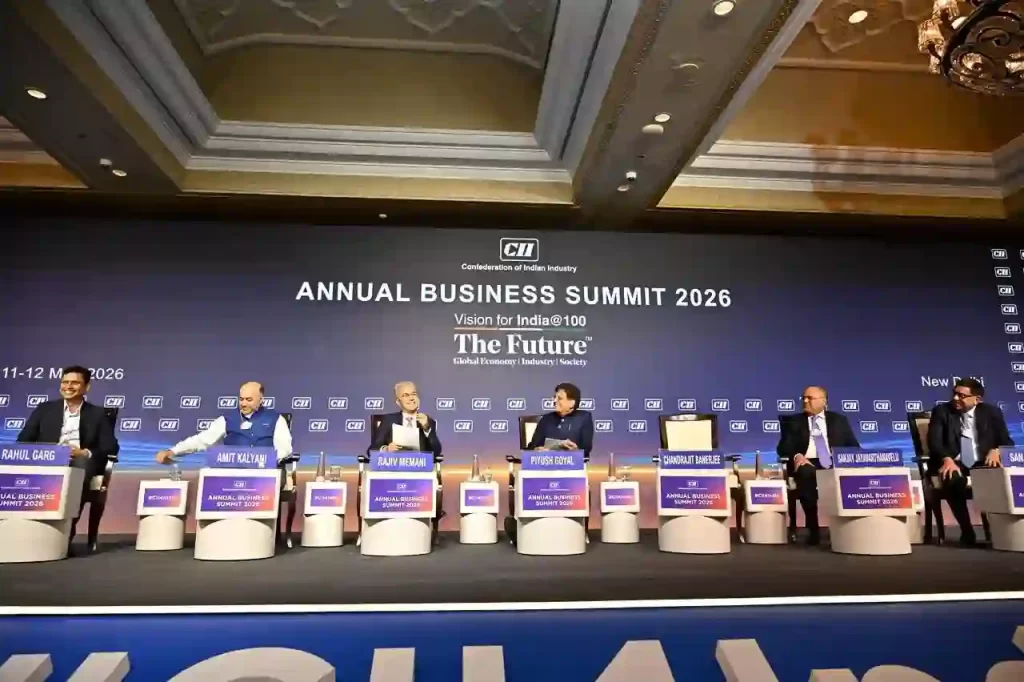
IntroductionThe Confederation of Indian Industry’s Annual Business Summit is one of India’s most consequential conversations between government and industry — a two-day forum where policy signals are sent, investment narratives are shaped, and the mood of Indian business leadership is read out loud for the entire economy to hear. The 2026 edition, held on May 11 and 12 in New Delhi, arrived at a moment of unusual global pressure: a war blocking the world’s most critical energy artery, a trade architecture being rewritten by American tariffs, an AI revolution reshaping every sector simultaneously, and India sitting at the precise intersection of all four.The CII Annual Business Summit 2026 convened under the theme “The Future | Global Economy, Industry, Society.” The focus was on navigating disruption and exercising leadership: aligning policy, industry, and society to translate this moment of inflection into sustained national advantage.The theme was not chosen casually. At a defining moment of global transformation, multiple forces including geopolitical shifts, technological change, climate urgency, and evolving societal expectations are reshaping the world. In this environment, trust, resilience, and effective governance are becoming central to long-term competitiveness. The challenge is no longer to resist change but to harness it through strong institutions, partnerships, and adaptive capabilities.About CII: The Institution Behind the SummitBefore the summit’s content can be fully appreciated, the institution organising it deserves its own introduction, because CII is not simply a trade body. It is one of India’s most influential policy-shaping institutions.Founded in 1895 as the Engineering and Iron Trades Association, the Confederation of Indian Industry has grown into India’s largest apex industry organisation, representing over 9,000 direct member companies and 300,000 companies within its associate and affiliated network through 65 sectoral industry bodies. It operates across 63 offices in India and 10 overseas offices, with institutional partnerships in 119 countries.CII works to create and sustain an environment conducive to the development of India by partnering industry, government, and civil society through advisory and consultative processes. It has been central to many of India’s significant economic policy transitions — from the liberalisation of the 1990s to the ease of doing business reforms of the 2010s to the PLI scheme architecture of the 2020s. When CII speaks, Finance Ministry officials, NITI Aayog planners, and cabinet ministers are typically in the room, listening. The Annual Business Summit is the highest-visibility manifestation of that engagement each year.The CII Annual General Meeting, which determines the organisation’s leadership and strategic direction for the year ahead, was held on May 12, the second day of the summit.The Context: Why the 2026 Summit Carried Extra WeightThe annual summit always takes place against the backdrop of the economic moment. The 2026 edition was held against a particularly demanding one.The Strait of Hormuz crisis, which had closed the world’s most critical oil transit route since late February, was still unresolved at the time of the summit. India, which imports nearly 85 percent of its crude oil and depends heavily on Hormuz-transiting Gulf supply, had been absorbing a significant cost shock to its energy import bill for months. Oil prices had spiked to record levels in March and remained elevated. The rupee had come under pressure. Inflation in fuel and logistics had fed through into manufacturing input costs and consumer prices.Simultaneously, the Trump administration’s tariff architecture — which had imposed sweeping duties on Indian exports in several categories — was creating both anxiety and opportunity for Indian industry. Anxiety because export competitiveness in affected sectors had been hurt. Opportunity because the same tariffs on Chinese goods were accelerating the global search for alternative manufacturing bases, and India remained the most credible alternative at scale.India’s own macroeconomic position entering the summit was one of relative resilience. The economy had maintained its position as the fastest-growing major economy through 2025-26, with GDP growth continuing to outperform most comparable peers. The Viksit Bharat 2047 agenda — India’s aspiration to be a fully developed economy by the centenary of independence — provided the long-term frame within which the short-term disruptions were being absorbed.As India approaches its centenary, India@100 provides a roadmap for inclusive and sustainable growth. The CII Annual Business Summit 2026 connects this long-term vision with the realities of a rapidly evolving global economy.The Theme: Three Questions for India’s FutureThe summit’s overarching theme — “The Future | Global Economy, Industry, Society” — was anchored in three interlocking questions that ran across every session of the two-day programme.Three system enablers were identified as decisive. First, governance must build trust, embed ethics, and sustain institutional legitimacy in an increasingly complex and risk-prone environment. Second, strong state capacity is essential to design coherent policy. Third, robust financial architecture must mobilise long-term capital, manage risk, and support sustained investment. Together, these enablers determine whether transformation becomes credible, resilient, and enduring across sectors, enabling growth that is both competitive and inclusive.Industry will play a central role in shaping India’s future economy as growth increasingly depends on how firms invest, innovate, and engage with society. The shift from shareholder value to broader responsibility calls for alignment with national priorities while remaining globally competitive. Leadership must extend beyond firms to ecosystems, driving R&D, integrating MSMEs, and strengthening trust through ethical governance.India’s energy transition is now a strategic economic advantage, with rapid growth in renewables reshaping cost structures and competitiveness. That last point carries particular weight in the context of the Hormuz crisis: India’s accelerating transition to non-fossil energy — non-fossil sources already account for over 50 percent of installed power capacity — is now seen not just as a climate obligation but as a strategic hedge against the kind of energy price shock that the Gulf war has delivered.Key Sessions and SpeakersLabour Reforms: Government’s CommitmentUnion Minister Mansukh Mandaviya addressed the session on “Next-Gen Labour Reforms: Driving Industry Growth and Job Creation.” He said social security coverage has increased from 29 crore people a decade ago to 94 crore at present. Highlighting the new labour codes, Mandaviya said the reforms are both labour-centric and industry-centric. He added that the