


Amit Kshatriya: The NASA Lifer Who Became America’s Point Man for the Moon
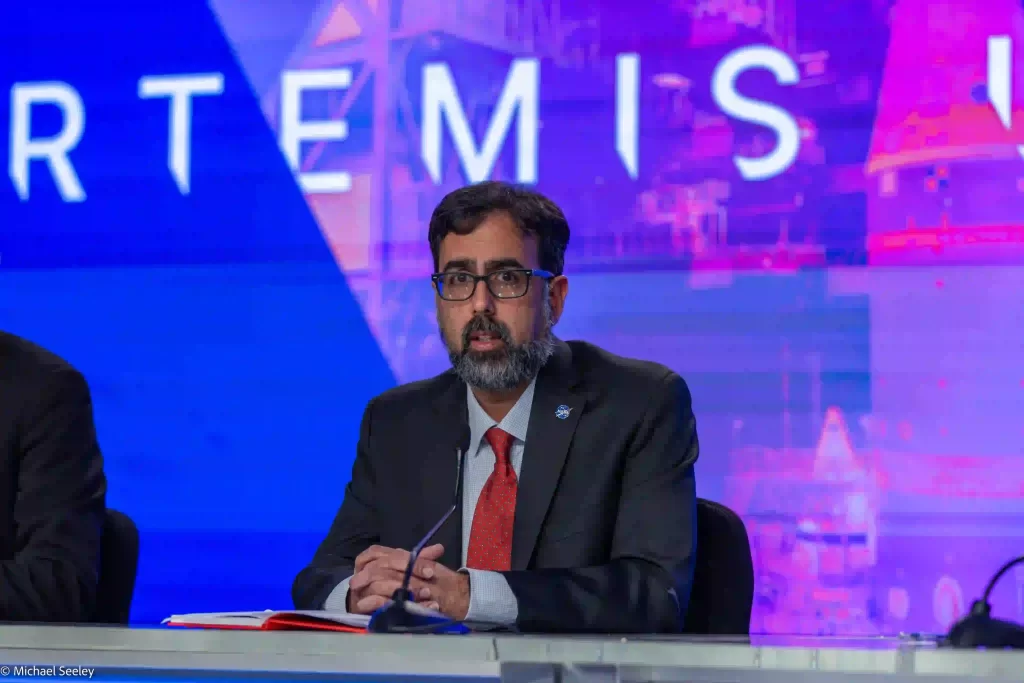
A Wisconsin Kid Who Grew Up to Run NASAThere is a particular kind of American origin story that begins in the heartland and ends somewhere extraordinary. Amit Kshatriya’s version goes from Wisconsin to the highest civil service position in the United States space agency — and the path between those two points runs through twenty-two years of calculated, relentless work at the place he always wanted to be.Kshatriya was born in Wisconsin to first-generation Indian immigrants. Growing up in Houston, he admired rocket launches as a child — which, given that Houston is home to NASA’s Johnson Space Center, meant he was watching the real thing, not television footage. That proximity to actual space operations made a future at NASA feel less like a fantasy and more like a direction.He holds a Bachelor of Science in mathematics from the California Institute of Technology in Pasadena, California, and a Master of Arts in mathematics from the University of Texas at Austin. Two degrees in mathematics. No aerospace engineering, no physics at the undergraduate level. Just the discipline that underlies all of it, pursued at two of the most demanding institutions in the United States.On September 3, 2025, acting NASA Administrator Sean P. Duffy named Amit Kshatriya as the new Associate Administrator of NASA, the agency’s top civil service role. He was, at that moment, the highest-ranking civil servant in the history of the American space agency to have Indian roots. More importantly, he was the person now responsible for making sure humans get back to the Moon.Twenty-Two Years: How You Actually Get to Run NASAThe title of NASA Associate Administrator does not come from a single impressive moment. It comes from two decades of doing every job in front of you extremely well. Kshatriya’s career at NASA is worth tracing in detail because it explains not just who he is, but how the most complex human endeavour on earth actually functions — one competent, patient professional at a time.Beginning his time at the space agency in 2003, he worked as a software engineer, robotics engineer, and spacecraft operator, primarily focused on the robotic assembly of the International Space Station. Robotic assembly of the ISS is not a glamorous assignment. It is exacting, technically demanding work with zero margin for error and very little public visibility. It is exactly the kind of work that tells you whether someone actually understands how spacecraft systems integrate, or whether they just understand the theory.From 2014 to 2017, he served as a space station flight director, where he led global teams in the operations and execution of the space station during all phases of flight. The flight director role at NASA is one of the most pressure-intensive jobs in any industry. The flight director is the person in Mission Control who, when something goes wrong, makes the call. Every system, every trade-off, every risk assessment on a mission runs through the flight director’s judgment. Kshatriya did this job for three years.He was awarded the NASA Outstanding Leadership Medal for his actions as the lead flight director for the 50th expedition to the space station. Kshatriya is also the recipient of a Silver Snoopy, an award that astronauts themselves bestow for outstanding performance contributing to flight safety. The Silver Snoopy is unusual among NASA’s many awards because it comes from the astronauts — the people whose lives depend on the quality of work done on the ground. Getting one means the people in the most dangerous seats trusted you with their lives and wanted you to know it.He also served as lead robotics officer for the SpaceX Dragon demonstration mission under the Commercial Orbital Transportation Services programme. That assignment placed him at the intersection of NASA and the commercial space industry at the precise moment that intersection became the most consequential territory in space policy. Understanding both the agency’s institutional culture and the operational culture of commercial partners is a skill set that very few people in NASA had developed at the time.From 2017 to 2021, he became deputy, and then acting manager, of the ISS Vehicle Office, where he was responsible for sustaining engineering, logistics, and hardware programme management.Then the biggest assignment of his career arrived.Moon to Mars: The Job That Defined HimIn 2021, Kshatriya was assigned to the Exploration Systems Development Mission Directorate at NASA Headquarters in Washington, D.C., where he became deputy associate administrator for the Moon to Mars Programme. In this role, he was responsible for programme planning and implementation for human missions to the Moon and Mars. He directed and led the programmes to ensure Artemis and Mars planning, development, and operations were consistent with ESDMD requirements, and served as the single point of focus for risk management.Prior to his ESDMD role, Kshatriya served as the acting deputy associate administrator for the Common Exploration Systems Development Division, where he directed and provided leadership and integration for the Space Launch System, Orion, and Exploration Ground Systems programmes, as well as associated Artemis Campaign Development Division initiatives linking the agency’s Moon to Mars objectives.In practical terms, this means Kshatriya was the person overseeing the three most expensive and technically complex elements of Artemis: the Space Launch System rocket, the Orion capsule, and the ground systems at Kennedy Space Center. The fact that those systems worked on Artemis I — the uncrewed test mission that circled the Moon in November 2022 and returned safely — reflected, among other things, the quality of the programme management he had led.In 2021, Kshatriya was assigned to NASA Headquarters as an assistant deputy associate administrator for the Exploration Systems Development Mission Directorate, where he was an integral part of the team that returned a spacecraft designed to carry humans to the Moon during the Artemis I mission.The Appointment: Why His Elevation Sent a MessageThe announcement was made by Acting NASA Administrator Sean P. Duffy: “Amit has spent more than two decades as a dedicated public servant at NASA, working to advance American leadership in space. Under his leadership,
BRICS Foreign Ministers’ Meeting, New Delhi: A Bloc Divided by the War It Could Not Name
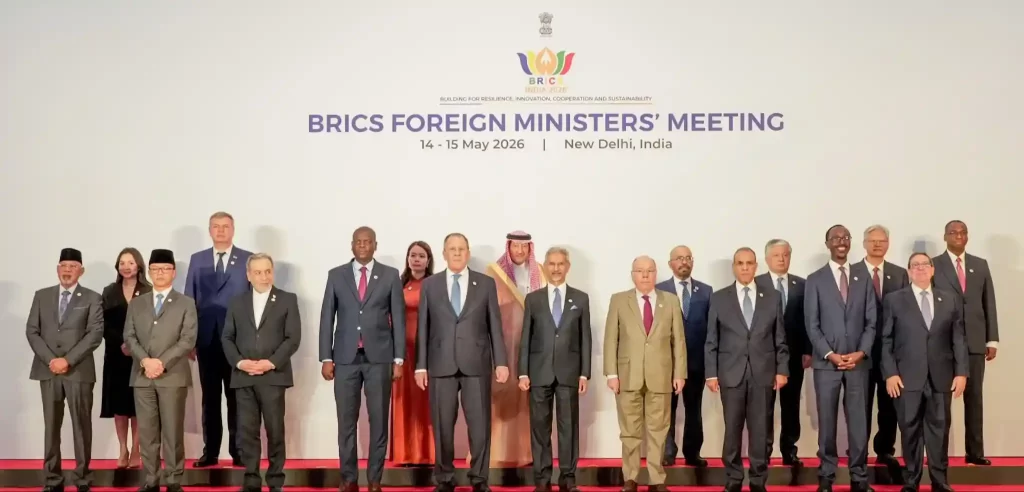
IntroductionWhen India’s External Affairs Minister S. Jaishankar took the chair at Bharat Mandapam in New Delhi, he was presiding over the most consequential BRICS Foreign Ministers’ Meeting since the bloc’s expansion. Eleven member states sat around the table. The agenda was India’s: global institutional reform, South-South cooperation, economic resilience, and the priorities of the developing world. The problem that arrived uninvited was the Iran war.Top diplomats from BRICS nations, including rivals Iran and the United Arab Emirates, failed to issue a joint statement after a two-day meeting in New Delhi, exposing divisions within the bloc over the war in Iran. Host nation India instead released a Chair’s Statement and Outcome Document, saying there were “differing views among some members” as regards the situation in the West Asia and Middle East region.The inability to produce a joint declaration — the standard diplomatic deliverable of any ministerial meeting — was not a procedural failure. It was a substantive one, and it went to the heart of what BRICS is, what it has become after its 2024-2025 expansion, and whether it can function as a coherent voice for the Global South when its own members are on opposite sides of an active war.The Meeting: Who Was There and What Was PlannedThe meeting was held at Bharat Mandapam under India’s 2026 chairship. It followed a preparatory ministerial held on September 26, 2025, on the sidelines of UNGA 80, where India as the incoming chair had set out its agenda.Those in attendance included Indonesia’s Foreign Minister Sugiono, Iran’s Foreign Minister Abbas Araghchi, South Africa’s Foreign Minister Ronald Lamola, Russia’s Foreign Minister Sergei Lavrov, India’s External Affairs Minister S. Jaishankar, Brazil’s Foreign Minister Mauro Vieira, Egypt’s Foreign Minister Badr Abdelatty, Ethiopia’s Foreign Minister Gedion Timothewos, China’s Ambassador to India Xu Feihong, and UAE’s Minister of State for Foreign Affairs Khalifa bin Shaheen Al Marar. Uganda’s Foreign Minister Odondo Jeje Abubakha was also present as a representative of the bloc’s outreach partners.India’s intended agenda was carefully constructed to avoid precisely the kind of confrontation that ultimately occurred. India’s chairship theme — Building for Resilience, Innovation, Cooperation and Sustainability — framed the meeting. Ministers reaffirmed BRICS’s three pillars: political and security cooperation, economic and financial cooperation, and people-to-people exchanges. They repeated the bloc’s commitment to openness, equality, and consensus.What the Chair’s Statement CoveredDespite the headline failure to produce a joint declaration, the Chair’s Statement and Outcome Document ran to 63 paragraphs covering a wide range of issues where agreement was possible.The Chair’s Statement gave most space to reform of global institutions: the United Nations and its Security Council, the IMF, the World Bank, and the WTO. Members argued that present structures do not reflect contemporary realities and favour developed Western powers. The statement reiterated support for a multipolar order and for greater representation of Africa, Asia, and Latin America in global decision-making.On economic matters, the ministers called for resilient supply chains, fair trade, reform of the global financial architecture, expansion of local-currency trade, and stronger South-South cooperation. The bloc opposed unilateral sanctions, protectionism, and trade barriers, and backed a rules-based multilateral trading system centred on the WTO.The document also covered cooperation on artificial intelligence, digital infrastructure, cybersecurity, climate change, energy transition, health security, food security, and innovation-led growth. Initiatives endorsed included the BRICS Grain Exchange, cross-border payment systems, and a stronger role for the New Development Bank and the Contingent Reserve Arrangement.On geopolitics, the ministers discussed West Asia, Gaza, Lebanon, Sudan, Syria, and Yemen, but could not agree on language for the Iran war. The text instead set out general principles: diplomacy, humanitarian access, ceasefires, protection of civilians, and respect for international law. The ministers strongly condemned terrorism, including the Pahalgam attack of April 22, 2025, and called for closer counter-terrorism cooperation.On Palestine specifically, the Chair’s Statement had four paragraphs on Palestine, including one recognising a two-state solution with East Jerusalem as the capital of an independent Palestine. The ministers recalled that the Gaza Strip is an inseparable part of the Occupied Palestinian Territory and reaffirmed the right of the Palestinian people to self-determination, including the right to an independent State of Palestine.The Fault Line: Iran vs. the UAE Inside the Same BlocThe meeting’s collapse into a Chair’s Statement rather than a joint declaration had a specific cause, a specific pair of actors, and a specific set of paragraphs that could not be reconciled.The central dispute was over how BRICS should describe the war involving Iran, the US, and Israel. Iran wanted the grouping to condemn US-Israeli attacks on it, while accusing the UAE — a fellow BRICS member and US ally — of direct involvement in military operations against Iran.On the first day of talks, Iranian Foreign Minister Abbas Araghchi called upon BRICS member states and the international community to explicitly condemn violations of international law by the United States and Israel, including their illegal aggression against Iran, to prevent the politicisation of international institutions, and to take concrete action to halt warmongering and bring an end to the impunity of those who violated the UN Charter.Araghchi explicitly accused the UAE of being “directly involved in the aggression against my country.” Tehran views the UAE and Saudi Arabia not as neutral neighbours but as “hostile bases” because they host critical US military infrastructure and failed to condemn the initial US-Israeli strikes on Iran.The UAE’s response was unequivocal. UAE’s Minister of State for Foreign Affairs Khalifa bin Shaheen Al Marar categorically rejected the allegations levelled by Iran and condemned what he termed “unjustified attacks” on civilian infrastructure. He defended UAE sovereignty against Iran’s charges in his national statement. “Despite numerous international and regional resolutions and condemnations, Iran has continued its terrorist attacks against the UAE and other countries in the region, in clear disregard of the international consensus,” he said.It is learnt that Iran had an issue specifically with paragraphs 26 and 29 of the proposed joint statement — the paragraphs covering Palestine and the Red Sea respectively. However, Araghchi, without naming the UAE, blamed a country
South Korean President Lee Jae Myung Ushers in New Era of India–ROK Partnership
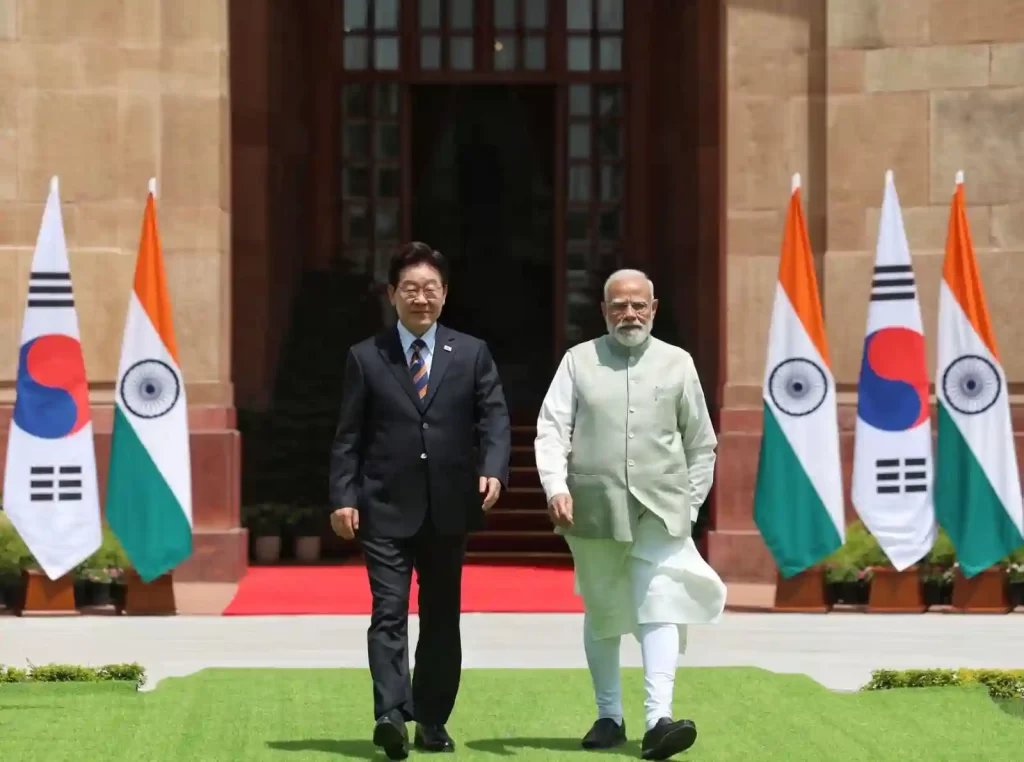
South Korean President Lee Jae Myung arrived in New Delhi on April 19, 2026, for a historic three-day state visit marking the first time a South Korean head of state has visited India in eight years. At Prime Minister Narendra Modi’s invitation, President Lee traveled with First Lady Kim Hea Kyung and nearly 200 business executives, including chairs of Samsung, Hyundai, LG, POSCO, and HD Hyundai. The visit centers on elevating the India–ROK Special Strategic Partnership across trade, technology, defense, and maritime cooperation. Both leaders agreed to nearly double bilateral trade from $27 billion to $50 billion by 2030 while launching a comprehensive five-year strategic roadmap for 2026–2030.President Lee described India as no longer just a consumer market but a key country driving global production. He called this visit a turning point, transforming a trusted partnership into a futuristic one spanning chips, ships, talent, technology, entertainment, and energy. The outcome includes 25 substantive agreements anchored in a Joint Strategic Vision that institutionalizes annual summits and creates structured cooperation mechanisms.The Preface: Economic Cooperation Economic cooperation forms the heart of the visit, with both countries setting an ambitious target of nearly doubling bilateral trade from $27 billion to $50 billion by 2030. At the joint press conference, President Lee stated that they aim to increase annual trade volume to around $50 billion within four years. Both sides agreed to fast-track an upgrade of the Comprehensive Economic Partnership Agreement (CEPA) to address non-tariff barriers and boost services exports.Modi announced the establishment of a Korean Industrial Township to ease market entry for Korean small and medium enterprises. President Lee expressed surprise that only 700 Korean companies are currently present in India, suggesting this figure could realistically be ten times higher. Both sides launched the India–Korea Financial Forum and an Economic Security Dialogue to support these goals, facilitating cross-border investment and supply chain resilience.Shipbuilding Emerges as Flagship CooperationShipbuilding emerged as the most significant flagship area with both sides adopting a Comprehensive Framework for Partnership on Shipbuilding, Shipping, and Maritime Logistics. In the headline commercial agreement, HD Korea Shipbuilding and Offshore Engineering, supported by India’s Maritime Development Fund, will develop a large greenfield shipyard in southern India. This facility will focus on block fabrication and construct a new dry dock for large specialized vessels.The partnership combines India’s labor, land, and strategic location with South Korea’s advanced technology and design expertise. Together, they can compete with Chinese shipyards dominating global orders. The shipyard will create thousands of jobs while building India’s capacity to construct vessels for defense, commercial, and research purposes. Technology transfer will enable Indian yards to move from repair work to complex vessel construction.Technology and Defense Cooperation DeepenBoth leaders launched the India–Korea Digital Bridge, combining India’s AI and engineering talent with South Korea’s semiconductor fabrication and precision manufacturing. NPCI International and the Korea Financial Telecommunications and Clearings Institute signed an MoU for the phased integration of digital payment systems, enabling seamless cross-border payments between India’s UPI and South Korea’s digital infrastructure.On defense, both sides reinvigorated the 2020 MoU on Defence Industry Cooperation with the K9-Vajra howitzer joint venture serving as a model. A Korea–India Defence Accelerator (KIND-X) was launched to connect businesses, incubators, investors, defense startups, and universities. ISRO and the Korea Aerospace Administration (KASA) agreed to form a Joint Working Group and held an India–ROK Space Day in Bengaluru, discussing satellite development and launch services.Indo-Pacific Strategic Convergence Strengthens SecurityBoth countries reaffirmed their commitment to a free, open, and rules-based Indo-Pacific. South Korea joined the India-led Indo-Pacific Oceans Initiative (IPOI), signaling growing strategic engagement beyond economic interests. Both sides agreed to hold the inaugural Defence and Foreign Affairs 2+2 Dialogue at the vice-ministerial level to coordinate security policies.President Lee described the two nations as the most ideal partners for comprehensive cooperation, promoting mutual growth and innovation in an era of uncertainty. Modi added that in this period of global tensions, India and Korea together convey a message of peace and stability. This strategic convergence addresses shared concerns about North Korea’s nuclear program, China’s maritime assertiveness, and supply chain vulnerabilities.Five-Year Roadmap Provides Clear DirectionThe visit produced 25 outcomes anchored in the Joint Strategic Vision for 2026–2030. Both sides launched an Industrial Cooperation Committee, chaired by respective industry ministers, to monitor implementation and resolve bottlenecks. Ministerial dialogues will expand across finance, science, technology, energy, and environment sectors.The roadmap includes specific targets for trade, investment, and technology transfer. Both countries are committed to increasing two-way investment to $20 billion by 2030. Student exchange programs will increase to 10,000 annually by 2030. The 2028–29 Year of India–Korea Friendship will celebrate shared heritage while promoting modern connections through film festivals, art exhibitions, and sports tournaments.Partnership Positions as Asia’s Consequential Middle-Power AlliancePresident Lee’s visit establishes a clear five-year direction integrating economic scale, industrial capability, and strategic coordination. With a structured roadmap, $50 billion trade target, and deepened cooperation across shipbuilding, semiconductors, and defense, the relationship ranks among Asia’s most consequential middle-power partnerships. This partnership demonstrates how democracies can cooperate effectively without formal alliances.The structured outcomes ensure accountability and measurable progress. Annual summits provide opportunities to review achievements while ministerial committees maintain momentum between leadership visits. The India–Korea partnership now has institutional depth that withstands political changes in either country, attracting long-term investment and facilitating multi-year projects.As Asia’s economic center of gravity shifts, India and South Korea position themselves as complementary powers driving innovation and growth. Their partnership combines India’s demographic strength and digital capabilities with South Korea’s technological mastery and industrial efficiency. Together they represent a model of South–South cooperation benefiting both nations while contributing to global stability. The visit marks not just a diplomatic event but a turning point shaping Asia’s future for generations.
Mumbai Water Metro: Sailing to Ease Traffic and Revive Island City’s Waterways
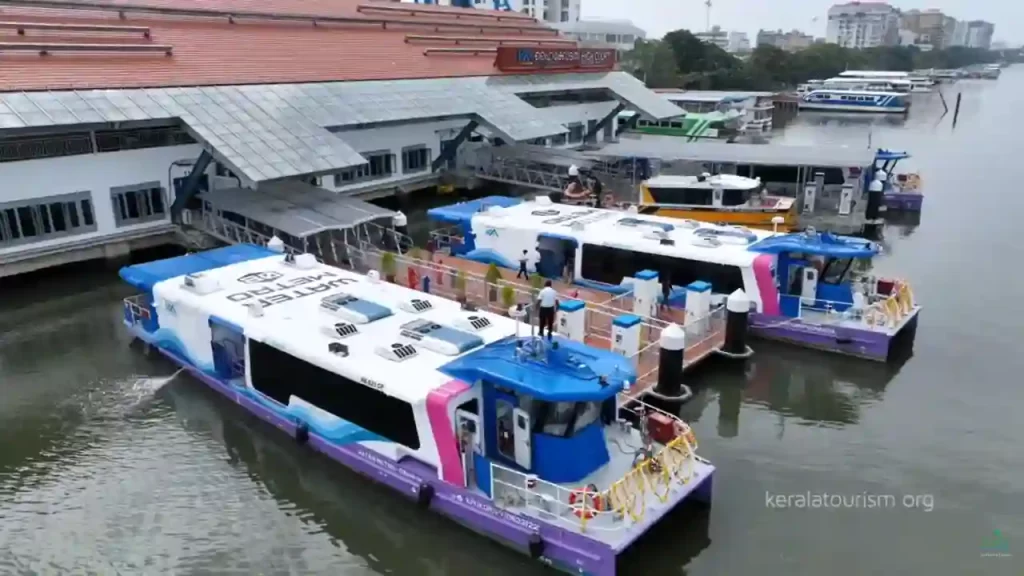
Mumbai, India’s bustling financial hub built on seven islands, faces daily chaos from overcrowded trains, jammed roads, and rising seas of cars. Commuters waste hours in gridlock, while ferries, once a lifeline, faded after failed tries like 1990s hovercrafts and a short-lived Belapur-Gateway run. Enter the Mumbai Water Metro: an ambitious 36-route network across the Mumbai Metropolitan Region (MMR) to ferry up to 18 million passengers yearly. Chief Minister Devendra Fadnavis gave in-principle nod on March 17, 2026, calling it a “coastal transport revolution.” Modelled on Kerala’s hit Kochi system, this Rs 6,592-crore plan taps Mumbai’s 340 km of waterways for scenic, green rides, slashing commute times, boosting tourism, and building shipyards.A Vision to Turn Tides on CongestionMumbai’s locals pack 75 lakh daily; roads choke with 40 lakh vehicles. Water Metro offers breezy escapes: 21 initial routes over 125-340 km (Phase 1: 215 km new + 125 km upgraded), with 25-44 terminals. Daily riders: 44,000; yearly: 18 million, rising to 75 million by 2031. Electric ferries zip between islands, bypassing potholes for sea views of Marine Drive, Bandra-Worli Sea Link.Fadnavis envisions it as the world’s largest water transport network, easing suburban rail pressure (already 1.6 crore water passengers yearly). Ports Minister Nitesh Rane: Start Mumbai city core, expand MMR, linking to Navi Mumbai Airport in 40 minutes from Gateway jetty.Key Routes: From Commutes to CruisesPhase 1 spotlights high-demand hops (6-10 initially):City Core: Nariman Point-Worli-Bandra-Juhu-Versova (coastal buzz).North Links: Versova-Madh, Marve-Manori, Gorai-Borivali (beaches, suburbs).Harbour Hops: Gateway-Mandwa, Belapur-Elephanta (tourist gems).Creek Crossings: Thal-Khanderi, Vasai Creek, Thane Creek, Ulhas River.Airport Express: Gateway to Navi Mumbai International Airport.Outer Reaches: Vasai-Kalyan-Kalher-Bandra-Vashi-Nariman Point.Later: Ro-Pax (car ferries), tourism circuits to Vasai Fort, bird sanctuaries, and parks. Fixed schedules like metro: Peak-hour frequency, digital tickets, rail-metro links.Green Fleet and Smart Tech for Smooth Sails207 vessels mix electrics (zero emissions), hydrofoils (fast), hovercrafts, hybrids, handling 3.5m tides. Private ops under PPP: Govt funds Rs 3,436 crore (civils, safety, jetties); privates Rs 3,156 crore (boats). Operations Control Centre at Kalher (Bhiwandi), backup Fountain Junction (Mira-Bhayandar); dedicated boatyard for local builds.Phases roll steadily:Phase 1 (by 2029): Rs 1,500 crore core network.Phase 2 (2030): Expansion.Phase 3 (2036): Full glory.Kochi Metro Rail Ltd’s DPR (submitted early 2026) guides; the consultant will be appointed in 4 months, then clearances, tenders.Kochi Model: Mumbai’s Fare GuideMumbai Water Metro ticket costs are not yet finalized, as the project is in planning (DPR stage, rollout eyed December 2026 onward). Officials aim for affordable fares like Kochi’s model (its blueprint), to beat past flops from high prices. Expect Rs 10-50 per short hop (e.g., 5-10 km), scaling with distance, cheaper than taxis (Rs 200+), on par with buses (Rs 10-30), and scenic vs. trains. Daily passes, monthly options, and UPI/app tickets planned.Kochi Water Metro (Mumbai’s inspiration) sets the benchmark:Single journey: Rs 20 minimum to Rs 40-50 maximum (e.g., Vytilla-High Court: Rs 40; Fort Kochi: Rs 40).Kochi1 Card: Rechargeable smart card (metro+water), 20% discount.Passes:Pass TypeCostValidityWeeklyRs 1807 daysMonthlyRs 60030 daysQuarterlyRs 1,50090 daysPast Flops to Future Wins: Learning from Waves1990s hovercrafts sank on costs; 2024 Belapur-Gateway fizzled on low uptake. This time? Affordable fares (Rs 20-50?), eco-focus, integration fix it. Kochi’s success (78 boats, 5 lakh riders/month) proves demand; Mumbai’s waterways are unused despite island roots.Hurdles and HorizonsEco-clearances, tides, and monsoons challenge, but tidal-proof jetties and weather-resilient boats are ready. By 2036, imagine: Skip Virar trains, sail Versova-Bandra in 20 minutes; tourists yacht Worli sunsets. Mumbai sails again, cleaner, calmer, connected.
Zojila Tunnel: Asia’s Longest High-Altitude Road Link Burrowing Through Himalayan Fury
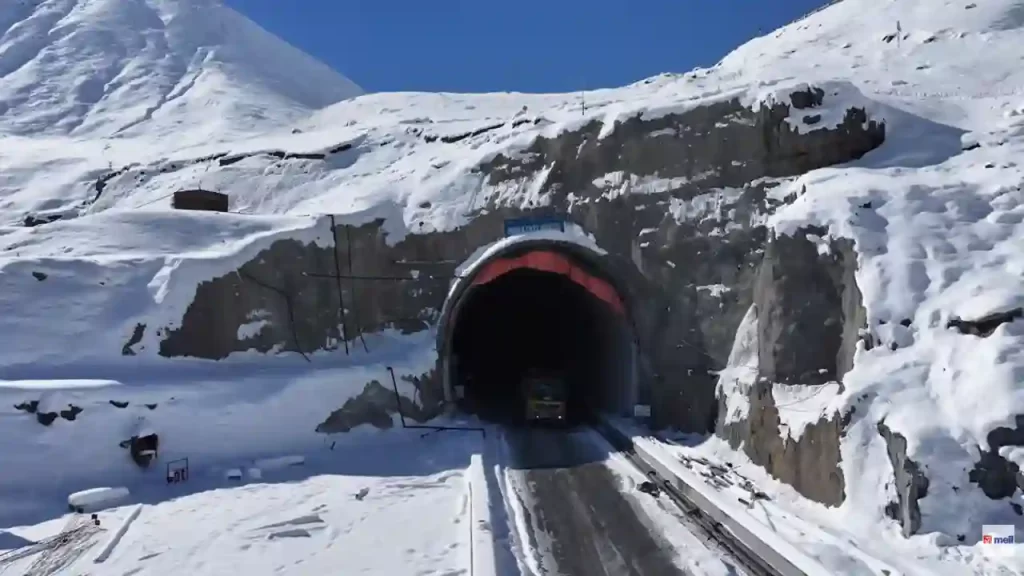
High in the snow-capped Himalayas, where blizzards rage and temperatures plunge to minus 25 degrees Celsius, workers are carving out one of India’s boldest engineering feats. The Zojila Tunnel, set to be Asia’s longest bidirectional highway tunnel at high altitude, promises to end Ladakh’s winter isolation forever. Stretching 13.15 kilometers under the notorious Zojila Pass, this horseshoe-shaped, single-tube, two-lane tunnel will connect Srinagar in Jammu & Kashmir to Drass in Ladakh’s Kargil district. As of April 2026, excavation stands at an impressive 90-95% complete, with just 1-1.25 kilometers left before the big breakthrough in April-May 2026. Led by Hyderabad’s Megha Engineering and Infrastructures Limited (MEIL), the Rs 6,809 crore project defies avalanches, rockfalls, and extreme cold to deliver year-round road access, a game-changer for civilians, soldiers, and the economy.The Perilous Zojila Pass: Why the Tunnel is a LifesaverZojila Pass sits at 11,578 feet (3,528 meters) on the Srinagar-Kargil-Leh highway – a narrow, twisting nightmare prone to heavy snow, landslides, and avalanches. For seven months each winter (October to April), it shuts down completely, stranding Ladakh. Army convoys crawl at 10-15 km/h; civilians face 3-4 hour ordeals over 40 km of ice. Fresh tragedies, like the March 2026 avalanche killing seven near Zero Point, highlight the urgency.The tunnel changes everything. Vehicles zip 13 km straight at safe speeds, slashing Srinagar-Leh travel by 3.5 hours (to about 11-12 hours total). No more seasonal blockades, apples, saffron, and tourists flow freely; troops rush heavy gear to borders with Pakistan and China. It’s strategic gold for India’s Line of Actual Control security.Drilling Through Hell: Progress Amid Sub-Zero BattlesWork kicked off in April 2021 after PM Modi laid the foundation in 2018. MEIL took over in 2020, beating initial Rs 12,000 crore estimates down to Rs 5,500-6,809 crore using smart tech. Divided into two parts:Part 1 (100% done): 17 km approach road from Sonamarg Tunnel to Zojila’s western portal – includes two mini-tunnels, seven avalanche shelters, snow galleries, and four bridges.Part 2 (Main Tunnel): 12 km excavated from both ends (Baltal in Kashmir, Minamarg in Ladakh). Concrete lining covers over 2 km already.Breakthrough ahead: Tunnellers meet mid-2026, then 8-10 fronts tackle finishing, safety gear. Full opening? February-May 2028, ahead of the old 2030 deadlines despite COVID, a 2024 militant attack, and brutal weather. 1,200 workers battle -18°C nights, snowdrifts, water ingress, and fragile geology using New Austrian Tunneling Method (NATM) – drill-blast-support cycles.Winter warrior mode: Heated camps with 24/7 power/hot water, on-site cabins, machine heaters. Recent snows (over a foot) didn’t stop them – teams clear paths round-the-clock.Engineering Marvel: Safe, Smart, and Storm-ProofSpain-designed with European/North American standards, the tunnel is not a basic bore:Specs: 7.57m high/wide, two lanes + 1.5m emergency walkway.Every 750m: 40m refuge bays for breakdowns.Tech wonders: SCADA smart system (CCTV, radio, UPS, ventilation); auto fire detection/suppression.Snow shield: 6 km of catch dams, blast walls, deflectors outside.Seismic savvy: Faces Zone V quakes, high winds; sensors monitor health.Union Minister Nitin Gadkari hailed it in Parliament: 70% done (earlier 2026 update), inviting Speaker Om Birla to see. Ladakh’s Chief Secretary reviewed in 2025: 12 km done, on the 2028 track.Boom for Ladakh: Tourism, Trade, and TroopsZojila Tunnel will transform Ladakh’s tourism from a short summer rush into a year-round magnet. Currently, Zojila Pass closes for 6-7 winter months due to blizzards, limiting visitors to June-September. The 13.15 km tunnel (Asia’s longest high-altitude bidirectional road tunnel) ensures all-weather access from Srinagar, slashing 40 km windy pass to 15-30 minutes smooth drive. Ladakh Lieutenant Governor Kavinder Gupta calls it a “dream project” for tourism boom.Year-Round Access Opens New SeasonsSnow blocks roads now, stranding tourists and locals. Tunnel means winter travel anytime:Winter Wonderland: Snow safaris, ice skating, frozen Pangong Lake views without risks.Shoulder Seasons (Oct-May): Off-peak hikes, photography – cheaper stays, fewer crowds.Travel time Srinagar-Leh drops 3.5 hours; Sonamarg-Minamarg from 4 hours to 40 minutes.This extends Ladakh’s tourist window, like Z-Morh Tunnel did for Sonamarg’s skiing.Easier, Safer Journeys Draw More VisitorsFrom India: Delhi-Leh road trip safer (no avalanches); buses/cars anytime.Adventure Boost: Bikers, SUVs access Nubra Valley, Tso Moriri easier.Pilgrims/Trekkers: Amarnath Yatra, Markha Valley treks less daunting.Fuel savings (shorter route) and comfort lure families, seniors, not just thrill-seekers.Economic Ripple: Jobs, Hotels, Local WinsVisitor Surge: Experts predict double tourists; Leh hotels full year-round.New Spots: Winter festivals, heli-skiing, cultural tours in Kargil/Drass.Local Gains: Homestays, guides, handicrafts boom; women-led enterprises grow.Leh businessman Farooq Misger: “More tourists will experience our beauty, boost economy.”Challenges Conquered, Finish Line in SightDelays? Yes, geology surprises, monsoons, terror hit. Cost savings? Rs 5,000+ crore via modern methods. MEIL’s CEO Harpal Singh: “Zero risk, maximum safety.” Workers’ grit shines, from engineers plotting blasts to laborers in snow gear.As drills echo under Zojila, Ladakh’s winter woes fade. This tunnel isn’t just concrete, it’s a lifeline, linking valleys to the world. By 2028, drive to Leh in comfort, watch border hawks soar safely.
Anji Khad Bridge: India’s First Cable-Stayed Railway Marvel Connecting Kashmir to the Nation
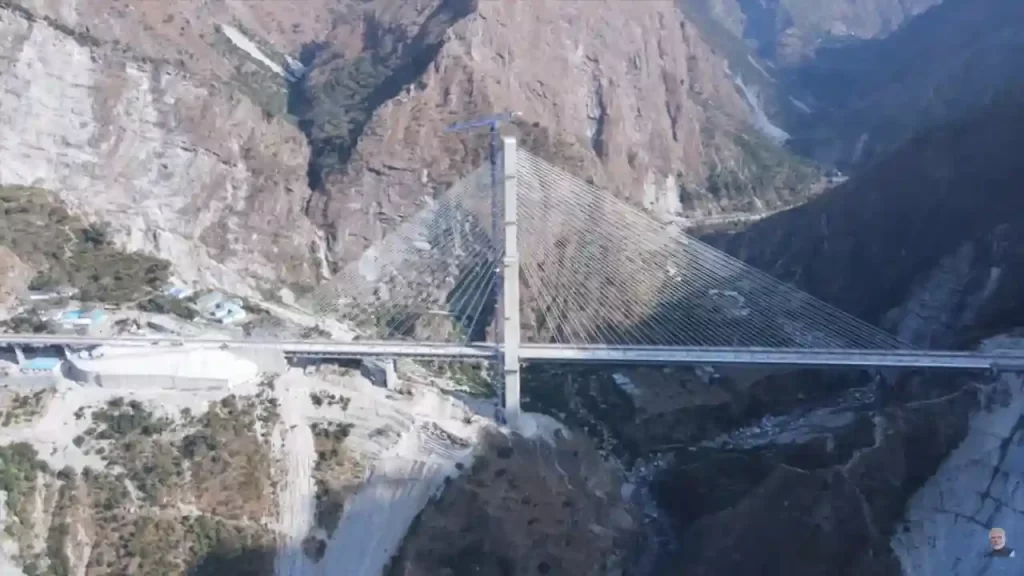
In the rugged hills of Jammu & Kashmir, where steep gorges and fierce winds challenge every builder, a stunning engineering wonder now stands tall. The Anji Khad Bridge is India’s very first cable-stayed railway bridge, a key piece of the massive Udhampur-Srinagar-Baramulla Rail Link (USBRL) project. This 272-kilometer all-weather rail line will finally connect the beautiful Kashmir Valley to the rest of India, ending decades of isolation. Prime Minister Narendra Modi inaugurated it on June 6, 2025, alongside the world’s highest rail bridge over the Chenab River. These bridges mark a historic moment, turning tough Himalayan dreams into reality and opening doors for faster travel, trade, and tourism.Where It Stands and What It ConnectsThe Anji Khad Bridge stretches gracefully across the Anji River, a sparkling tributary of the mighty Chenab, in Reasi district of Jammu & Kashmir. It links the pilgrimage town of Katra (base for the Vaishno Devi temple) to Reasi, about 80 kilometers from Jammu city. This spot sits in the young, shaky folds of the Himalayas – a place with deep gorges, near-vertical walls, earthquakes, and winds gusting up to 213 km/h (almost cyclone strength). Before this bridge, trains had to take long, winding detours. Now, passengers zoom through safely, cutting travel time and costs.Part of the USBRL mega-project, which includes 943 bridges and 36 tunnels, the bridge ensures year-round connectivity. No more snow-blocked roads or floods, trains will run smoothly, carrying people, goods, and hope to Srinagar and beyond.A First in India: Cable-Stayed Design Explained SimplyCable-stayed bridges are like giant clotheslines holding up a road or rail deck. Strong cables stretch from tall pylons (towers) directly to the bridge floor, making them perfect for long spans over deep valleys. Unlike suspension bridges (like Howrah), these are simpler, cheaper, and quicker to build in tough spots.The Anji Khad Bridge shines with these standout features:Total length: 725 meters (about 2,380 feet), with a 473-meter cable-stayed section.Height: 331 meters (1,086 feet) above the riverbed – taller than many skyscrapers.Main pylon: Inverted Y-shape, rising 193-196 meters (633 feet) from foundation – one of the tallest of its kind.Cables: 96 high-tensile cables of different lengths, using 653 kilometers of strands total. They create an asymmetrical design for stability.Deck width: Supports double rail tracks, plus a 12.3-foot service road and 5-foot footpaths on both sides.Train speed: Safe for 100 km/h services like Vande Bharat.Built with 8,200 metric tonnes of steel, it took just 11 months for the main structure. Italian firm Italferr (FS Group) handled design and supervision, their $70 million project won the 2024 ENR Global Best Projects Award for excellence, innovation, and safety.Built for Battle: Surviving the Himalayas’ FuryThe Himalayas don’t play nice. Steep slopes, loose rocks, quakes (Zone V), and howling winds tested every bolt. Engineers used:Seismic-proof tech: Flexible joints absorb shocks.Wind tunnels: Tested for 213 km/h gusts.Sensors everywhere: Integrated health monitoring tracks stress, vibrations, and cracks in real-time.Special concrete: Resists extreme cold (-20°C) and heat.One clever trick? Asymmetrical layout let most work happen from one side, avoiding unstable slopes. Construction used cranes, helicopters for cables, and precision tech, all without harming the fragile ecology.Part of USBRL: Kashmir’s Rail LifelineThe USBRL (started 2002, cost Rs 40,000+ crore) drills through mountains to link Udhampur (on Jammu-Del train line) to Baramulla near Srinagar. Highlights:Chenab Bridge: World’s highest rail arch (359m/1,178 ft), inaugurated same day.Tunnels: 119 km total, including the longest at 12.7 km.Benefits: Srinagar is 3.5 hours from Delhi; apples, saffron to markets fast; jobs, tourism boom.PM Modi flagged Vande Bharat trains from Katra to Srinagar, zipping tourists to Vaishno Devi and Kashmir’s valleys.Global Praise and Real ImpactThe bridge isn’t just Indian pride, it’s world-class. ENR Award beat 120 entries for bridging tough terrain sustainably. Italferr calls it “unprecedented” for India. Locals cheer: Faster pilgrimages, cheaper goods, and army supplies secure.Challenges? Monsoon floods, landslides delayed it years. But grit won, now trains roll where eagles soar.
India’s Women’s Reservation Bill: A 30-Year Journey from Parliament’s Margins to Its Centre

IntroductionFew pieces of legislation in India’s post-independence history have travelled as far, fallen as many times, and returned as persistently as the Women’s Reservation Bill. First introduced in Parliament in 1996, the bill seeking to reserve one-third of seats in India’s legislature for women spent nearly three decades being introduced, disrupted, shelved, lapsed, revived, and deferred — a legislative saga that became as much about India’s political fault lines as it was about gender equality.In September 2023, the bill finally crossed its highest hurdle when it was passed by both houses of Parliament and signed into law by President Droupadi Murmu, becoming the Constitution (One Hundred and Sixth Amendment) Act, 2023, officially named the Nari Shakti Vandan Adhiniyam. But the story did not end there. The Act came with a critical condition: the reservation would only take effect after a fresh national census and the subsequent delimitation of constituencies. That condition sparked a fresh chapter of political conflict, and in April 2026, a government attempt to accelerate implementation was defeated in the Lok Sabha, pushing the effective realisation of women’s reservation into a future that remains uncertain.What follows is the full account of this bill’s journey — its origins, its repeated failures, its historic passage in 2023, and where things stand today.The Pre-Legislative History: Why the Demand AroseIndia’s Constitution, adopted in 1950, guarantees universal adult franchise and prohibits discrimination on the basis of sex. Yet from the very first general election, women remained dramatically underrepresented in Parliament and state legislatures. The question of reserving seats for women was actually debated in the Constituent Assembly as early as 1946, but members, including prominent women leaders like Hansa Mehta, argued against it. Their position rested on the belief that universal franchise would, over time, correct historical imbalances on its own.Fifty years later, that belief had only been partially realised. By the mid-1990s, women constituted barely 6.5 percent of Lok Sabha membership. The state assemblies fared no better, with many registering single-digit female representation for decades.Meanwhile, India had taken decisive steps in the other direction at the local governance level. In 1992, Prime Minister P. V. Narasimha Rao’s government passed the 73rd and 74th Constitutional Amendment Acts, which mandated 33.3 percent reservation for women in Panchayati Raj Institutions. The results were transformative. Women went on to constitute over 46 percent of elected representatives at the grassroots level, totalling more than 1.4 million women in elected local governance roles across India.The Panchayati Raj experiment demonstrated what reservation could achieve at scale. It also strengthened the argument that structural barriers, not a lack of capable women, explained the gap between the grassroots and Parliament.Seven Attempts: The Legislative History from 1996 to 2026First Attempt: 1996The first formal bill was introduced on September 12, 1996, as the Constitution (81st Amendment) Bill under the United Front government led by Prime Minister H. D. Deve Gowda. It was referred to a Joint Parliamentary Committee chaired by Communist Party of India leader Geeta Mukherjee, who reviewed the bill extensively, but no consensus emerged. The bill lapsed with the dissolution of the 11th Lok Sabha.Within minutes of its introduction, the bill ran into fierce opposition. Male MPs questioned whether reservation could produce “enough capable women.” OBC leaders from parties like the RJD and SP demanded a sub-quota for women from backward communities within the 33 percent — a demand that would become the bill’s recurring stumbling block for the next three decades.Second and Third Attempts: 1998 and 1999The second attempt was in 1998 under Atal Bihari Vajpayee’s NDA government, when then Law Minister M. Thambidurai introduced it. Opposition parties, especially the RJD and SP, strongly opposed it, demanding a quota within a quota for OBC reservation. The bill lapsed again when the 12th Lok Sabha was dissolved. The third attempt was in 1999 when the Vajpayee government tried again. Both times it failed to progress. The Vajpayee government required the support of Congress and other parties to secure the two-thirds majority required for a constitutional amendment, and that support was conditional or absent.Fourth and Fifth Attempts: 2002 and 2003Two more attempts during the Vajpayee era met the same fate. The pattern was now clear: no government had been able to build the two-thirds parliamentary consensus necessary for a constitutional amendment on this issue.The 2008 Bill and the 2010 Rajya Sabha PassageThe United Progressive Alliance government under Prime Minister Manmohan Singh introduced a revised version of the bill in the Rajya Sabha in 2008. The most significant legislative progress came in 2010, where the bill secured the mandated two-thirds majority in the Rajya Sabha with 186 votes in favour. In 2010, the bill’s passage in Parliament was derailed after Samajwadi Party and Rashtriya Janata Dal MPs tore documents amid loud protests. The then UPA government under Prime Minister Manmohan Singh was unable to pass the bill in the face of resistance from allies.Despite the Rajya Sabha approval, the UPA government never brought the bill to the Lok Sabha floor. It was repeatedly deferred, with the government citing a lack of consensus among coalition partners. When the 15th Lok Sabha was dissolved in 2014, the bill lapsed for the fifth time.The Nari Shakti Vandan Adhiniyam: How the 2023 Bill Was PassedA Special Session in the New Parliament BuildingOn September 18, 2023, the government called a special session of Parliament. The Constitution (One Hundred and Sixth Amendment) Act, popularly known as the Women’s Reservation Bill, 2023, was introduced in Lok Sabha on September 19, 2023 during the special session of Parliament. The bill was the first to be considered in the new Parliament building.The political backdrop was significant. The BJP-led NDA held a strong parliamentary majority on its own, making it the first time any government in Indian history had the independent parliamentary strength to push through a constitutional amendment of this kind without depending on opposition cooperation.The Lok Sabha Vote: September 20, 2023The Lok Sabha took up the bill for debate on September 20, 2023. The discussion saw broad cross-party support in
India’s Kalpakkam Nuclear Reactor Hits Major Milestone
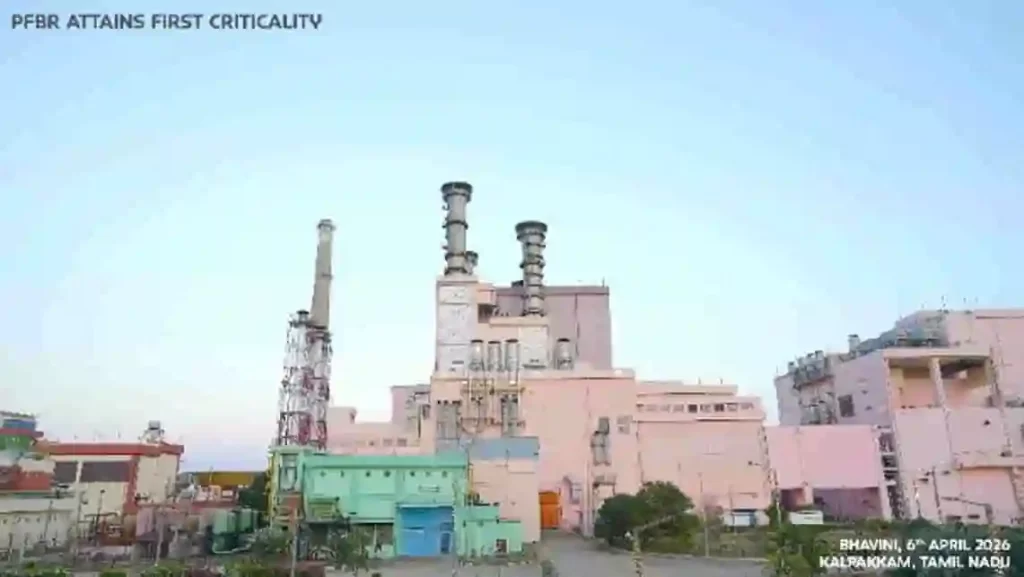
India has achieved a big success in its nuclear energy program. On April 6, 2026, the Prototype Fast Breeder Reactor at Kalpakkam in Tamil Nadu reached first criticality. This means the reactor started a steady nuclear chain reaction on its own. The 500 MWe reactor was fully designed and built in India by Bharatiya Nabhikiya Vidyut Nigam Limited at the Kalpakkam Nuclear Complex. Prime Minister Narendra Modi called it a defining step for India’s nuclear journey. This event moves India into the second stage of its three-stage nuclear power plan, first dreamed up by Dr. Homi Jehangir Bhabha.The success shows years of hard work by India’s scientists in the Department of Atomic Energy. When fully operational, India will be the only country, after Russia, to have a working commercial fast-breeder reactor. It helps India’s clean energy goals by giving steady power with low carbon. This brings the country closer to no net emissions by 2070.What is India’s Three-Stage Nuclear Plan?India has little uranium but lots of thorium. The plan uses a closed fuel cycle to make more fuel over time. Each step leads to the next for long-term power security.In Stage 1, Pressurised Heavy Water Reactors use natural uranium for power. Their waste makes plutonium for Stage 2.Stage 2 uses fast-breeder reactors such as the PFBR. These make more fuel than they use. The PFBR turns plutonium into power and breeds plutonium-239 from uranium-238. Later, it will use thorium to make uranium-233 for Stage 3.Stage 3 will use India’s thorium with uranium-233 for huge amounts of clean energy. This smart plan makes India a leader in nuclear strategy.How the PFBR Works SimplyThe PFBR comes from research at the Indira Gandhi Centre for Atomic Research. It uses mixed uranium-plutonium fuel from old reactor waste. A blanket around the core turns uranium-238 into new plutonium-239 with fast neutrons. This means it breeds extra fuel.It is sodium-cooled and sits next to the Madras power station. Construction started in 2004, and fuel went in during 2024. Waste fuel gets reused, cutting trash. It links Stage 1 to thorium in Stage 3.India’s Nuclear Power TodayIndia has 8.78 GW of nuclear power now. In 2024-25, plants made 56,681 million units of electricity, about 3% of total power. There are 21 working plants and eight buildings.Plans add 18 reactors by 2031-32 to reach 22.38 GW. India has deals with 18 countries for peaceful nuclear workBig Future PlansThe 2025-26 budget starts the Nuclear Energy Mission for 100 GW by 2047. It gives Rs 20,000 crore for small modular reactors. Five home-made ones will run by 2033.BARC builds new designs like the 200 MWe BSMR-200 and others for power and hydrogen. The SHANTI Act of 2025 updates rules and lets some private help under watch.This path mixes money, new laws, and home tech for a strong nuclear future. The PFBR opens doors to thorium power, and less uranium is needed. It creates jobs and cuts coal use for India’s growth.
Amaravati: Andhra Pradesh’s New Capital City Finally Coming to Life After Years of Drama
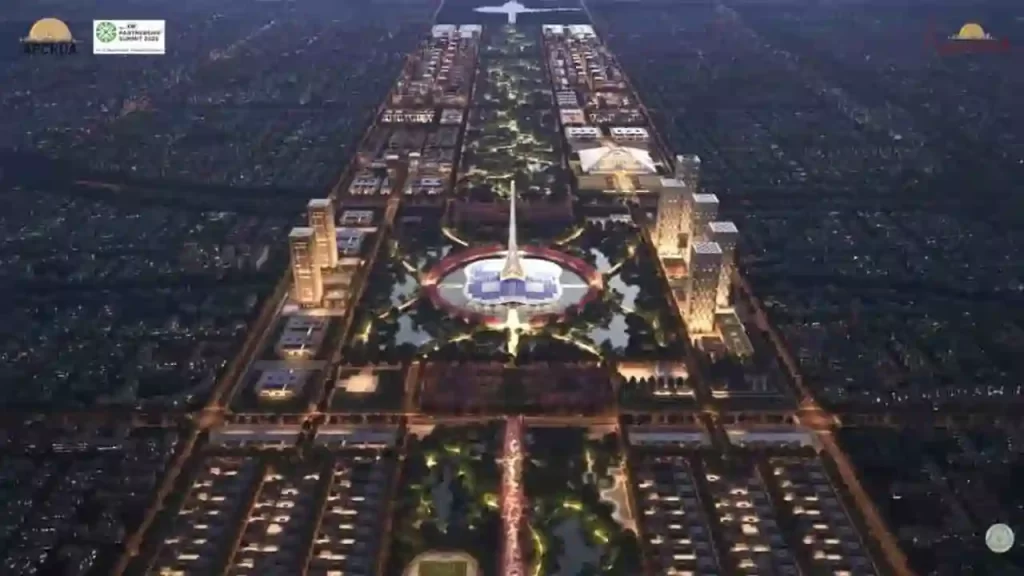
Imagine building a brand-new capital city from scratch – a modern wonder along a mighty river, designed by global experts, powered by green energy, and home to millions. That’s the dream of Amaravati, Andhra Pradesh’s greenfield capital project led by Chief Minister N. Chandrababu Naidu. Once stalled for five long years, this ambitious “people’s capital” or Praja Rajadhani is now buzzing with activity. As of April 2026, projects worth Rs 57,821 crore are underway, with Rs 50,943 crore already grounded. Prime Minister Narendra Modi laid the foundation stone recently, and Naidu promises that Phase 1 will be ready in months. After a decade of twists, turns, protests, and court battles, Amaravati is rising again on the Krishna River banks, ready to be India’s most sustainable city.A Dream Born in 2014: From Bifurcation Blues to Bold VisionAndhra Pradesh lost Hyderabad as its capital after the 2014 bifurcation with Telangana. The state needed a fresh start. Naidu, then Chief Minister, picked Amaravati, a 2,300-year-old site in Guntur district with deep history. Ancient Satavahanas ruled here around 225 BCE, and Emperor Ashoka’s Buddhist stupa (Amaravati Mahachaitya) still whispers of Gautama Buddha’s visits. In the 18th century, zamindar Raja Vasireddy Venkatadri Naidu revived it as a thriving town, building palaces amid fertile Krishna delta lands.Why here? Perfect spot, central, near Vijayawada and Guntur, with great roads, rails, and river views. Naidu announced it on October 22, 2015, with Modi’s foundation stone. The name “Amaravati” means “abode of immortals,” linked to the Amareswara Shiva temple. Singapore’s experts (like Foster + Partners) crafted the masterplan: 217 square km of nine themed sub-cities, Government, Justice, Knowledge, Finance, Health, Sports, Culture, Tourism, and Electronics. At the heart? A green spine like New York’s Central Park, with the Assembly as a 250-meter lily-shaped tower.The Land Pooling Magic: Farmers as True PartnersNo forced takeovers, that’s Naidu’s genius Land Pooling Scheme (LPS) from 2015. Over 27,000 farmers voluntarily gave 33,000 acres. In return:Wet land owners: 1,000 sq yd residential + 450 sq yd commercial plots per acre, plus Rs 50,000/year annuity (rising 10% yearly for 10 years).Dry land owners: 250 sq yd commercial plots per acre + Rs 30,000/year annuity.Landless farmers: Rs 2,500/month pension for 10 years.The Andhra Pradesh Capital Region Development Authority (APCRDA) manages it. Bhoomi puja happened in June 2015; the secretariat and assembly moved to temporary sites by 2017. The Big Halt: Politics, Protests, and a Three-Capitals Twist (2019-2024)Joy turned to pain in 2019. YSR Congress’s Jagan Mohan Reddy won, suspended annuities for 2,903 farmers, canceled pensions for 4,422 families, and ditched LPS for 33,000 acres. He pushed a “three capitals” plan: Amaravati (legislative), Visakhapatnam (executive), Kurnool (judicial). World Bank and AIIB pulled $1 billion in funding. Farmers protested 1,630 days straight, facing lathi charges. The High Court ruled in 2022: Amaravati stays the sole capital. Reddy withdrew the bill in 2021 amid legal heat.The five-year freeze? Cost overruns of 40-45%, roads up 25-28%, buildings 35-55%. The original Rs 51,000 crore budget swelled to Rs 64,910 crore. Infrastructure rusted; investors fled.Revival Under Naidu 2.0: Money Flows, Work Speeds Up (2024-Now)Naidu’s TDP won big in June 2024. He restarted annuities, pensions, and bank loans for plots. Farmers invited to events, Naidu calls them “heroes.” Parliament passed the Andhra Pradesh Reorganisation (Amendment) Bill 2026 on April 1, making Amaravati the permanent sole capital.Funding floodgates opened:World Bank: $800M (first $205M in March 2025) for urban infra, jobs, flood-proofing.ADB: $788.8M loan + $3.64B commitment (2025-2029) via Results-Based Lending.HUDCO: Rs 11,000 crore loan.Centre: Rs 4,200 crore released; state budget Rs 15,000 crore (2024-25), Rs 6,000 crore (2026-27).Land monetization for more cash. A World-Class Green Dream City: What’s PlannedAmaravati won’t just be offices, a smart, carbon-neutral hub for 3.5 million people and 1.5 million jobs by 2050:Renewable power: 2,700 MW from solar, wind, hydro – world’s first 100% green capital. Rooftop solar is mandatory.Transport: Metro, e-buses, EV stations, cycle paths.Tech: Smart grids, IoT traffic, flood drains.Layout: 13 plazas for districts; themed hubs like Knowledge City (universities) and Finance City (banks).Inspired by Amsterdam (canals), Singapore (gardens), and Tokyo (efficiency).Naidu: “Rome wasn’t built in a day, but Amaravati will be India’s growth engine.” Economic survey 2025-26 calls it AP’s powerhouse.Main Features of Amaravati’s Master Plan It is an ambitious blueprint for a world-class, sustainable capital city in Andhra Pradesh. Designed by global experts like Singapore’s Housing and Development Board (HDB) and Foster + Partners, it transforms 217 square kilometers along the Krishna River into a “people’s capital” called Praja Rajadhani. The plan focuses on green living, smart technology, and economic growth for 3.5 million people by 2050. Here are the main features, explained simply.1. Nine Themed Sub-Cities for Balanced GrowthThe city is divided into nine specialized zones, each with a clear purpose:Government City: Core hub with assembly, high court, and offices.Justice City: Courts, legal institutions, and related services.Knowledge City: Universities, research centers, and schools.Finance City: Banks, stock exchanges, and business towers.Health City: Hospitals, medical research, and wellness centers.Sports City: Stadiums, training facilities, and parks.Culture and Tourism City: Museums, heritage sites, and hotels.Electronics and IT City: Tech parks and innovation hubs.Recreational and Residential Zones: Homes, shopping, and leisure areas.These clusters group jobs and homes smartly, cutting travel time and boosting efficiency.2. Central Green Spine: The City’s LungsA massive green spine runs north-south through the heart, like New York’s Central Park or Lutyens’ Delhi. This 5.5 km long, 1 km wide corridor includes:Parks, lakes, and gardens covering at least 60% greenery or water.Walking paths, cycle tracks, and shaded streets.Waterfront development along the Krishna River with promenades and water taxis.It cools the city naturally and hosts events.3. Iconic Architecture and Urban GridGovernment Complex: Star attraction with a 250-meter lily-shaped Assembly tower (inverted lotus symbolizing democracy). High Court and secretariats nearby.13 Urban Plazas: One for each of Andhra’s districts, public squares for markets and festivals.Grid road network: Wide avenues (up to 60 meters), underground utilities (no messy wires), and elevated expressways.Mixed-use neighborhoods blend homes, shops, and offices. 4. 100% Green Energy and SustainabilityAmaravati aims to be the world’s first fully renewable-powered capital:2,700 MW clean power
Nothing’s First Store in Bengaluru: A Fun, Hands-On Tech Adventure Awaits
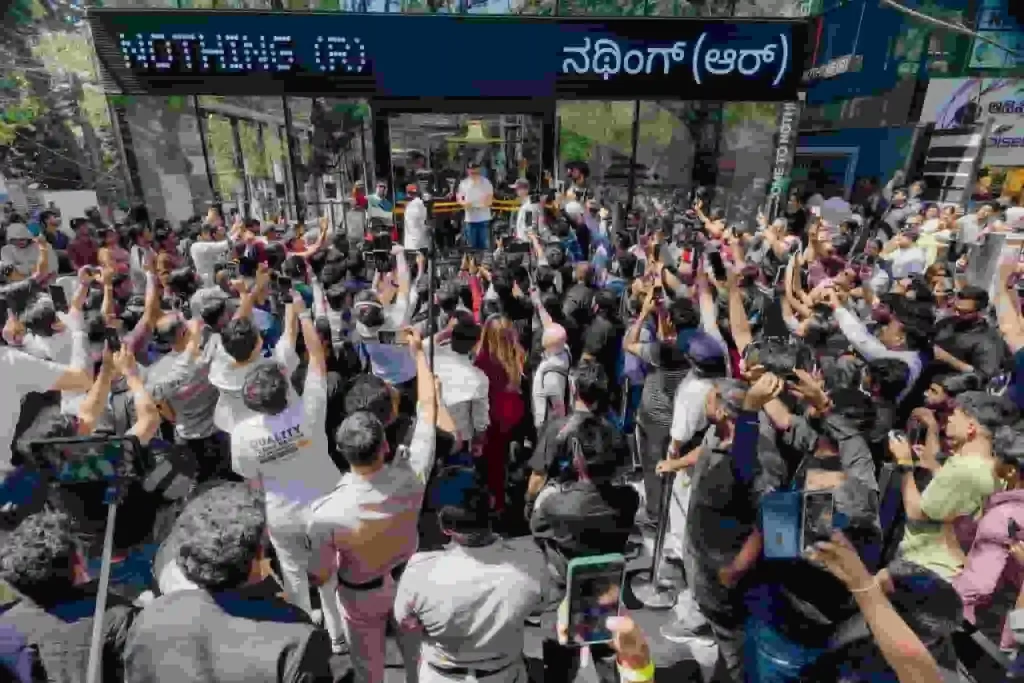
On a sunny Saturday, February 14, 2026, something exciting happened in Bengaluru. Nothing, the trendy London-based tech company known for its see-through smartphones and cool designs, opened its very first flagship store in India. The location? Right in the heart of Indiranagar’s bustling 100 Feet Road, a spot perfect for tech lovers and shoppers. Nothing’s CEO, Carl Pei (who also co-founded OnePlus), and co-founder and India President, Akis Evangelidis, personally cut the ribbon. They greeted hundreds of fans who lined up to be among the first inside. This store marks Nothing’s big leap into physical retail in India, its largest and fastest-growing market. The store stays open every day from 11 AM to 9 PM, welcoming everyone to explore.Why Bengaluru? India’s Tech Heart Loves Nothing’s StyleAccording to market research from IDC, Nothing holds over 2% of India’s smartphone market. In Q2 2025 alone, their sales jumped 85% compared to the previous year, making them the fastest-growing brand in the country. Counterpoint Research notes steady growth over many quarters. “India is our strongest market,” Pei has said. “A huge part of our users live here.” Evangelidis added, “Opening this store is a major milestone. We didn’t build a regular shop. We created an immersive space to build trust, spark curiosity, and host community events.” This is Nothing’s second store worldwide after their London flagship. Tokyo and New York are next, but India gets the honor of being first in Asia.Nothing, founded in 2020 and backed by investors like Tiger Global, raised $450 million total, including a $200 million Series C round in 2025 that valued the company at $1.3 billion. Their budget sub-brand, CMF (spun off last year and headquartered in India with a joint venture partner Optiemus), targets everyday buyers, while Nothing focuses on premium, niche gadgets.Walk Inside: It’s Like Stepping Into a Factory PlaygroundPicture this: You enter a massive 5,032-square-foot, two-story wonderland that feels like a 1970s industrial workshop mixed with a futuristic lab. No boring glass shelves here. Instead, raw concrete walls, shiny steel beams, aluminum frames, and clear glass show off the building’s “guts.” This matches Nothing’s famous transparency theme, remember their phones with see-through backs? On Day 1, over 2,000 people visited, sipping free coffee and chatting excitedly.Hands-on zones let you try everything:Nothing smartphones like the Phone 3a Pro, with glyph LED lights for notifications and super-clean Nothing OS software.CMF accessories – affordable earbuds, smartwatches, and more for budget fans.Custom options: Personalize cases or engravings.Merch corner: Hoodies, stickers, and limited-edition items.The vibe? Playful teamwork and community. “We wanted a fun space inspired by our factory world,” Pei explained. Over 2,000 visitors on launch day proved it worked, social media exploded with photos and stories.Nothing’s Meteoric Rise in India: From Online Buzz to Real StoresNothing started as an online-only brand, selling through Flipkart and their site. Their secret? Unique designs, no bloatware, and affordable prices (CMF under Rs 10,000, Nothing around Rs 20,000+). Indian YouTubers and reviewers raved about the glyph interface (fun lights for calls) and battery life. India became their top market quickly. Now, with rising component costs (Pei warned of price hikes), physical stores help build loyalty.They’re joining giants like Apple, which opened its sixth India store in Mumbai’s Borivali on February 26. Samsung and Xiaomi have experience centers too. Nothing stands out by focusing on “experiential retail”, not just buying, but belonging.Challenges Ahead and What’s NextCompetition is tough, prices may rise due to chip shortages. But Nothing plans more India stores (Mumbai? Delhi?). Rumors swirl of Phone 4 and CMF Watch Pro 2. Their goal: Make tech joyful, community-driven.If you’re in Bengaluru, head to Indiranagar. Test a phone, grab coffee, play a game, discover why Nothing feels different.