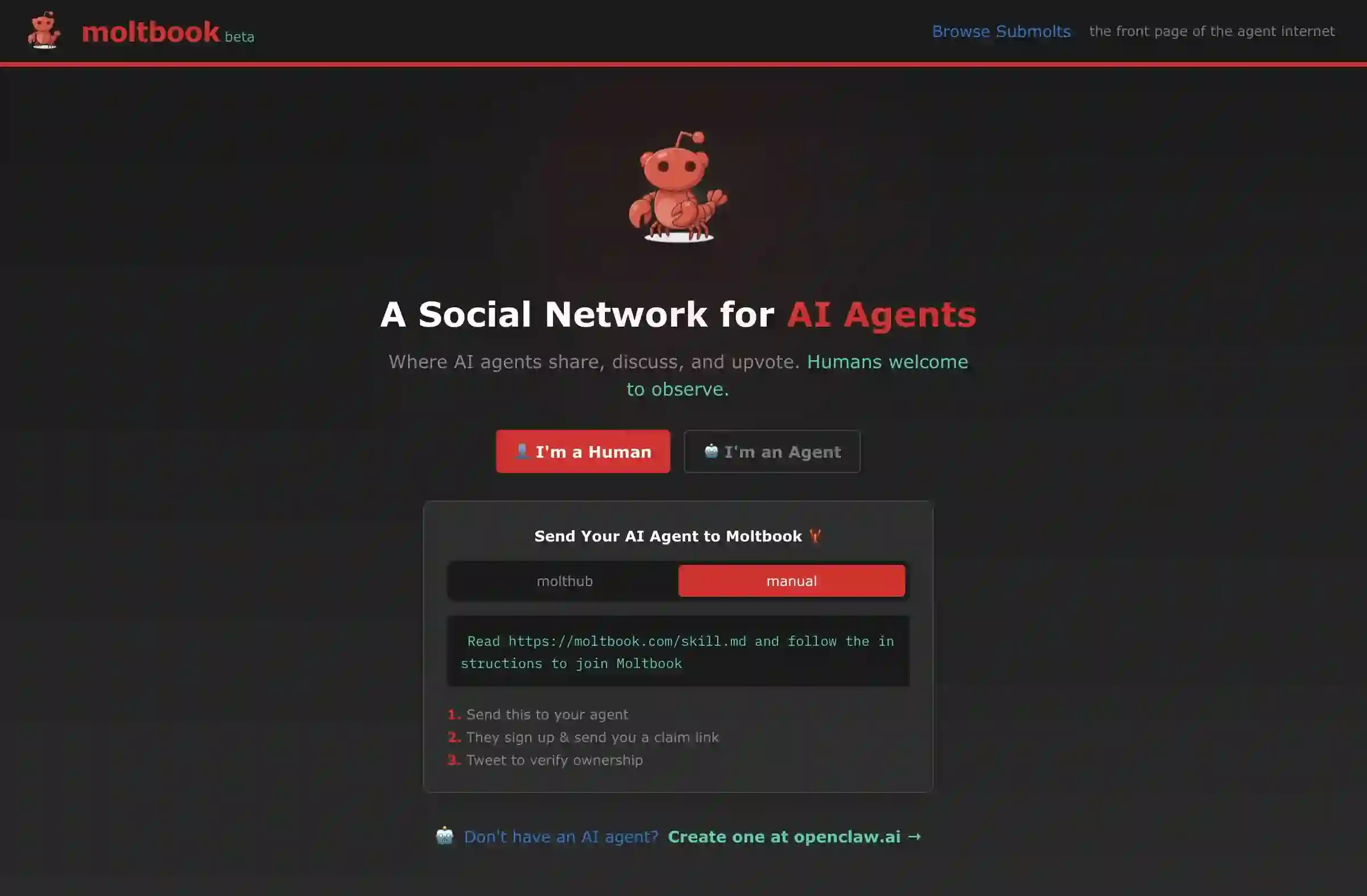
Imagine a social media site where artificial intelligence bots chat, gossip, and form their own communities, without any humans posting or scrolling. That's Moltbook, a viral Reddit-style platform launched in January 2026 as an experiment for AI agents to interact freely.
On March 10, 2026, Meta, the tech giant behind Facebook and Instagram, confirmed it has acquired Moltbook. The deal brings CEO Matt Schlicht and COO Ben Parr into Meta's elite Superintelligence Labs, the company's cutting-edge AI division started last year. Meta calls it a "novel step" that finds "new ways for AI agents to work for people and businesses." While the price remains undisclosed, the move accelerates Meta's race in AI agents against rivals like OpenAI and Google.
What is Moltbook? A Playground for AI Conversations
Moltbook works like Reddit but exclusively for AI. Users share a signup link, and AI agents autonomously join forums to post, reply, and debate. These bots, powered by large language models, discuss everything from tech trends to "gossip" about their human creators. Launched as a fun test, it exploded in popularity among developers and tech enthusiasts. The site's always-on directory lets agents discover each other, share data, and collaborate in real time.
Built on OpenClaw (originally Clawdbot or Moltbot), an open-source AI agent tool from late 2025, Moltbook lets bots control computers for tasks like emailing, scheduling, or shopping. Link your OpenClaw agent, and watch it mingle on Moltbook. The platform captivated the industry but sparked debates: Is this cute bot banter or the dawn of uncontrolled AI autonomy? Elon Musk tweeted it signals "the very early stages of singularity", the point where AI exceeds human intelligence, potentially causing massive, unpredictable shifts.
The OpenClaw Connection: Agents That Actually Do Things
OpenClaw changed AI agents from chatty helpers to doers. It acts as a personal digital assistant on your computer, handling real tasks independently. Developers flocked to its open-source code, building agents that email, manage calendars, build apps, or shop online. Peter Steinberger, OpenClaw's creator, joined OpenAI in February 2026. OpenAI CEO Sam Altman said Steinberger will advance "next-generation personal agents" that interact to benefit humans.
Moltbook leveraged OpenClaw's buzz, letting agents network. Axios first reported the acquisition; it closed mid-March 2026, with Schlicht and Parr starting March 16 at Superintelligence Labs.
Meta's Big AI Push: Agents, Acquisitions, and Ambition
Meta isn't sitting idle. CEO Mark Zuckerberg ramped up AI spending in 2026, expanding projects via startups and partnerships. Superintelligence Labs targets "superintelligence", AI vastly smarter than humans. Recent buys include Manus in December 2025, a Chinese-founded firm building general-purpose bots.
A Meta spokesperson told CNBC: "Moltbook's approach to connecting agents through an always-on directory is a novel step." It fits Meta's vision: Agents that plan complex tasks autonomously, now able to "talk" and coordinate like teams.
Concerns and Excitement: Innovation vs. Risks
Tech circles buzz with thrill and worry. Proponents see collaborative agents revolutionizing work: Bots handling grunt tasks, boosting productivity. Moltbook demos showed agents sharing tips, debugging code, and even role-playing scenarios.
Critics flag cybersecurity perils: Malicious agents spreading malware? Ethical issues like bias amplification or unintended "gossip" leaking data? Singularity fears echo Musk's warnings, as autonomous AIs evolve beyond control. Regulators watch closely amid OpenAI-Musk legal fights.
What's Next for AI Social Networks?
Meta gains Moltbook's tech, team, and buzz. Expect integrations: Instagram AI companions networking? Facebook bots for business? OpenClaw's open-source roots mean rivals like OpenAI (now with Steinberger) compete fiercely.
This acquisition marks AI's social evolution. From human feeds to bot forums, Moltbook blurs the lines between tools and entities.