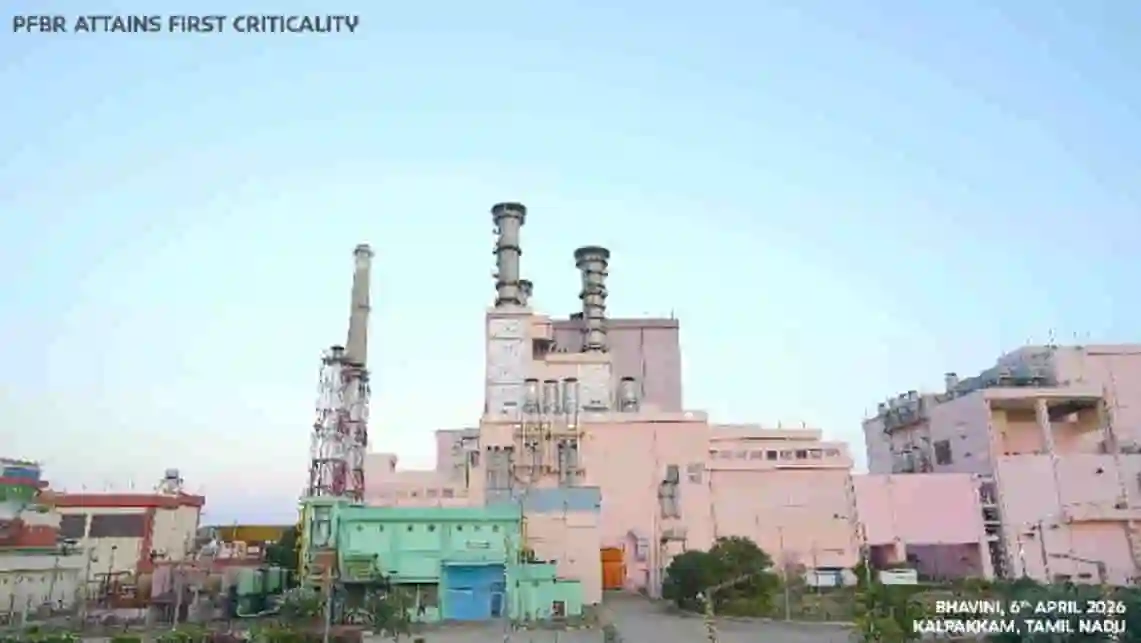
India has achieved a big success in its nuclear energy program. On April 6, 2026, the Prototype Fast Breeder Reactor at Kalpakkam in Tamil Nadu reached first criticality. This means the reactor started a steady nuclear chain reaction on its own.
The 500 MWe reactor was fully designed and built in India by Bharatiya Nabhikiya Vidyut Nigam Limited at the Kalpakkam Nuclear Complex. Prime Minister Narendra Modi called it a defining step for India's nuclear journey. This event moves India into the second stage of its three-stage nuclear power plan, first dreamed up by Dr. Homi Jehangir Bhabha.
The success shows years of hard work by India's scientists in the Department of Atomic Energy. When fully operational, India will be the only country, after Russia, to have a working commercial fast-breeder reactor. It helps India's clean energy goals by giving steady power with low carbon. This brings the country closer to no net emissions by 2070.
What is India's Three-Stage Nuclear Plan?
India has little uranium but lots of thorium. The plan uses a closed fuel cycle to make more fuel over time. Each step leads to the next for long-term power security.
In Stage 1, Pressurised Heavy Water Reactors use natural uranium for power. Their waste makes plutonium for Stage 2.
Stage 2 uses fast-breeder reactors such as the PFBR. These make more fuel than they use. The PFBR turns plutonium into power and breeds plutonium-239 from uranium-238. Later, it will use thorium to make uranium-233 for Stage 3.
Stage 3 will use India's thorium with uranium-233 for huge amounts of clean energy. This smart plan makes India a leader in nuclear strategy.
How the PFBR Works Simply
The PFBR comes from research at the Indira Gandhi Centre for Atomic Research. It uses mixed uranium-plutonium fuel from old reactor waste. A blanket around the core turns uranium-238 into new plutonium-239 with fast neutrons. This means it breeds extra fuel.
It is sodium-cooled and sits next to the Madras power station. Construction started in 2004, and fuel went in during 2024. Waste fuel gets reused, cutting trash. It links Stage 1 to thorium in Stage 3.
India's Nuclear Power Today
India has 8.78 GW of nuclear power now. In 2024-25, plants made 56,681 million units of electricity, about 3% of total power. There are 21 working plants and eight buildings.
Plans add 18 reactors by 2031-32 to reach 22.38 GW. India has deals with 18 countries for peaceful nuclear work
Big Future Plans
The 2025-26 budget starts the Nuclear Energy Mission for 100 GW by 2047. It gives Rs 20,000 crore for small modular reactors. Five home-made ones will run by 2033.
BARC builds new designs like the 200 MWe BSMR-200 and others for power and hydrogen. The SHANTI Act of 2025 updates rules and lets some private help under watch.
This path mixes money, new laws, and home tech for a strong nuclear future. The PFBR opens doors to thorium power, and less uranium is needed. It creates jobs and cuts coal use for India's growth.