


PM Modi Launches Five-Nation Tour to Secure Energy, Tech Ties Amid Iran War
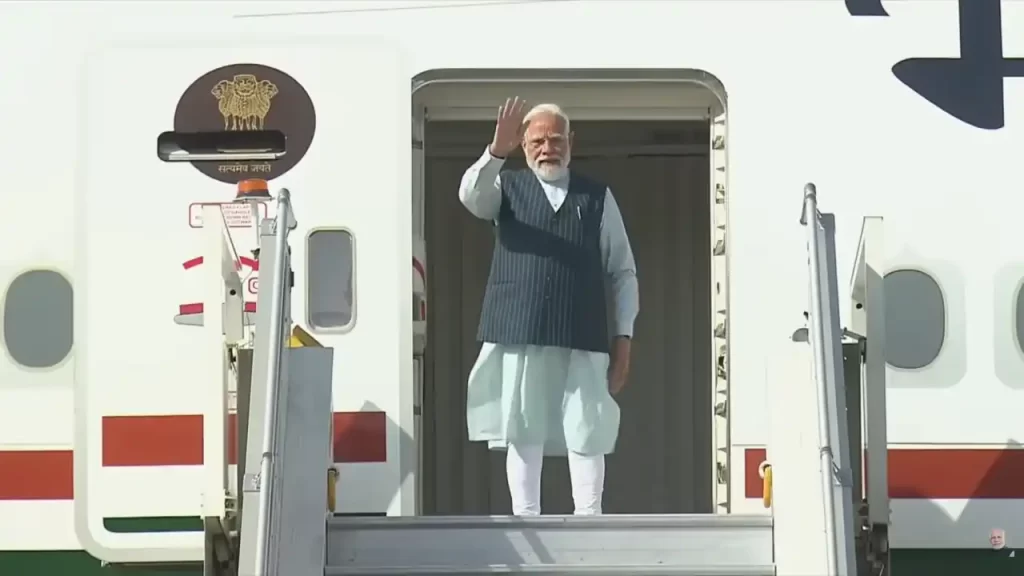
Prime Minister Narendra Modi has begun a massive five-nation tour starting in the United Arab Emirates (UAE). The trip runs from May 15 to May 20, 2026. It includes visits to the UAE, the Netherlands, Sweden, Norway, and Italy. The Prime Minister travels at a critical time when the ongoing war between the US and Iran has disrupted global shipping routes. Tensions around the Strait of Hormuz have caused oil prices to rise. This tour aims to secure India’s energy supply and strengthen technology partnerships. The visit comes right after India and the European Union signed a historic free trade agreement. Modi calls this deal the “mother of all deals.”The journey highlights India’s effort to build strong economic ties while managing global instability. Experts say diplomacy can reduce market panic, but oil prices will stay high until the war ends. Until then, India must focus on energy security and protecting its economy from rising costs.Visit to UAE: Fortifying Energy and Strategic TiesPM Modi landed in the UAE on May 15 to meet President Sheikh Mohamed bin Zayed Al Nahyan. Since 2014, Modi has visited the UAE seven times. President Sheikh Mohamed has visited India five times. Their relationship has only grown stronger over the years. The UAE has remained one of India’s most reliable energy partners even during this Gulf crisis. Long-term oil and gas supply agreements protect India’s energy security.Two important Memorandums of Understanding (MoUs) are likely to be signed during this visit. One deals with Liquefied Petroleum Gas (LPG). The other focuses on Strategic Petroleum Reserves. These deals will help India store more fuel for emergencies. Bilateral trade between India and the UAE crossed $101.25 billion in the last financial year. Both nations aim to double this trade to $200 billion by 2032. The UAE is India’s seventh-largest investor, with over $25 billion in cumulative investment.The UAE also hosts the largest group of Indian expatriates in the world. Over 4.5 million Indians live there. They form the backbone of the UAE economy. The leaders will discuss their welfare and safety. Remittances from these workers help India’s foreign exchange reserves. A Local Currency Settlement system allows trade in Indian Rupees and UAE Dirhams. This reduces dependence on the US dollar.Netherlands: Chip Deals and Water TechnologyThe Prime Minister arrived in the Netherlands from May 15 to 17. This is only his second visit since 2017. The partnership focuses on “innovation meets scale.” Dutch technology combines with India’s massive market size. Areas like semiconductors, water management, hydrogen, and maritime tech are key.A major business highlight is the agreement between Tata Electronics and ASML Netherlands. They will sign a deal to equip a semiconductor fabrication plant in Dholera, Gujarat. This boosts India’s chip-making capabilities. PM Modi and the Dutch Prime Minister visited the Afsluitdijk Dam together. This site shows cooperation in clean energy and sustainable fisheries. The Netherlands is India’s largest trading partner in Europe. Trade reached $27.8 billion in FY 2024-25. It is also India’s fourth-largest investor.The PM addressed the Indian community of over 90,000 NRIs. The visit also reached out to over 200,000 Surinami Hindustanis, the largest Indian-origin group in mainland Europe. Both nations are streamlining migration and mobility. Tourism between the two countries is set to grow.Sweden: Defense, AI, and Strategically De-risking from ChinaModi visited Sweden after an eight-year gap. He last went there in April 2018 for the first India-Nordic Summit. Sweden invests over 3 percent of its GDP in research and development. It ranks among the top innovators in Europe. Sweden has taken a firm stance to reduce its reliance on China. They removed Chinese vendors from their telecom networks. This makes India a key strategic partner.Bilateral trade reached $7.75 billion in 2025. Over 280 Swedish companies work in India. A major project is the Saab manufacturing plant in Jhajjar. Saab is building its first Carl-Gustaf weapon plant outside Sweden here. This is India’s first 100 percent FDI-driven defense project. Sweden also holds large critical mineral deposits. This helps India secure supply chains for electric vehicles and defense electronics.A new Statement of Intent created the Sweden-India Technology and AI Corridor (SITAC). It covers 6G, Artificial Intelligence, quantum computing, and life sciences. Over 80 Swedish companies attended the AI Impact Summit 2026. The Maharashtra government signed an MoU for electric boat investment worth Rs 1,990 crore.Norway: First Solo Visit in 43 Years and Arctic TechThis trip marks the first standalone visit by an Indian Prime Minister to Norway in 43 years. Modi attended the third India-Nordic Summit in Oslo. This summit places India in a high tier of Nordic engagement, joining only the United States. The India-EFTA TEPA agreement is now in force. It promises $100 billion in investment and one million jobs over 15 years.Norway’s sovereign wealth fund, the world’s largest at $2 trillion, has invested nearly $30 billion in India. Indian shipyards now hold 11 percent of Norwegian ship orders. Cochin Shipyard is building eco-friendly vessels for Norway. An MoU between GRSE and Kongsberg Maritime will deliver India’s first indigenous Polar Research Vessel.ISRO antennas at Svalbard became operational in 2026. They support India’s Arctic research. Norwegian tunneling technology helps the Char Dham railway project. Clean energy cooperation will diversify India’s energy mix. Norway also sees opportunities for Indian talent due to its aging population.Italy: Strategic Partnership and Submarine CablesPM Modi travels to Italy from May 19 to 21. He meets Prime Minister Giorgia Meloni to reaffirm their strategic partnership. The visit follows the Joint Strategic Plan of Action 2025-29. Italy views India as a major power and an indispensable partner.Italy champions the India-Middle East-Europe Economic Corridor (IMEEC). A new submarine cable, Sparkle-Airtel Blue-Raman, connects Genoa to India. This secures supply chains and boosts energy security. Bilateral trade reached $16.77 billion in 2025. The target is 20 billion euros by 2029. Tata Motors acquired the Iveco Group for 3.8 billion euros. This is the largest Indian investment in Italy. Italy opened a SIMEST office in Delhi to support SMEs.Energy Crisis and Global ImpactThe Iran war has caused
India’s Kalpakkam Nuclear Reactor Hits Major Milestone
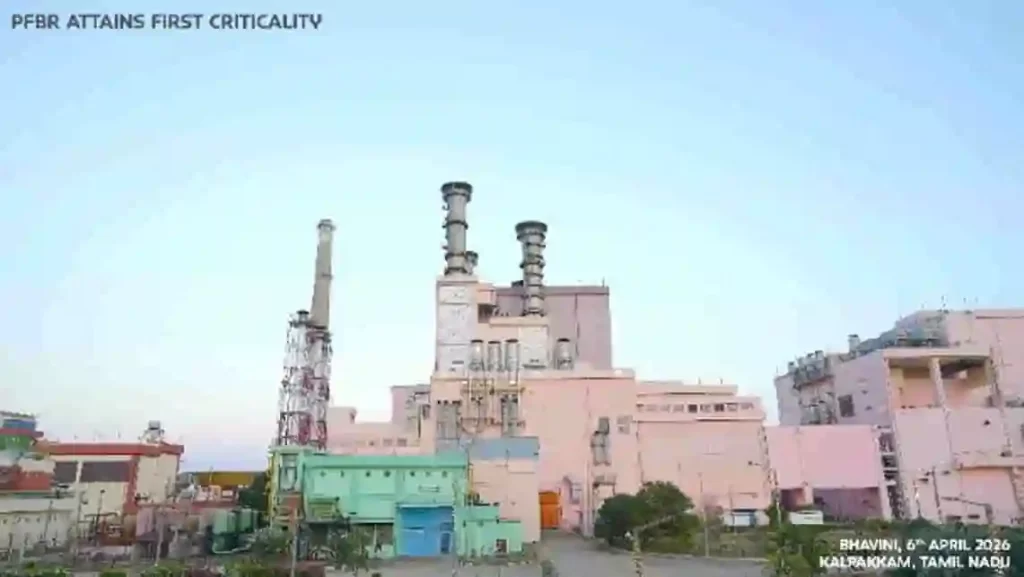
India has achieved a big success in its nuclear energy program. On April 6, 2026, the Prototype Fast Breeder Reactor at Kalpakkam in Tamil Nadu reached first criticality. This means the reactor started a steady nuclear chain reaction on its own. The 500 MWe reactor was fully designed and built in India by Bharatiya Nabhikiya Vidyut Nigam Limited at the Kalpakkam Nuclear Complex. Prime Minister Narendra Modi called it a defining step for India’s nuclear journey. This event moves India into the second stage of its three-stage nuclear power plan, first dreamed up by Dr. Homi Jehangir Bhabha.The success shows years of hard work by India’s scientists in the Department of Atomic Energy. When fully operational, India will be the only country, after Russia, to have a working commercial fast-breeder reactor. It helps India’s clean energy goals by giving steady power with low carbon. This brings the country closer to no net emissions by 2070.What is India’s Three-Stage Nuclear Plan?India has little uranium but lots of thorium. The plan uses a closed fuel cycle to make more fuel over time. Each step leads to the next for long-term power security.In Stage 1, Pressurised Heavy Water Reactors use natural uranium for power. Their waste makes plutonium for Stage 2.Stage 2 uses fast-breeder reactors such as the PFBR. These make more fuel than they use. The PFBR turns plutonium into power and breeds plutonium-239 from uranium-238. Later, it will use thorium to make uranium-233 for Stage 3.Stage 3 will use India’s thorium with uranium-233 for huge amounts of clean energy. This smart plan makes India a leader in nuclear strategy.How the PFBR Works SimplyThe PFBR comes from research at the Indira Gandhi Centre for Atomic Research. It uses mixed uranium-plutonium fuel from old reactor waste. A blanket around the core turns uranium-238 into new plutonium-239 with fast neutrons. This means it breeds extra fuel.It is sodium-cooled and sits next to the Madras power station. Construction started in 2004, and fuel went in during 2024. Waste fuel gets reused, cutting trash. It links Stage 1 to thorium in Stage 3.India’s Nuclear Power TodayIndia has 8.78 GW of nuclear power now. In 2024-25, plants made 56,681 million units of electricity, about 3% of total power. There are 21 working plants and eight buildings.Plans add 18 reactors by 2031-32 to reach 22.38 GW. India has deals with 18 countries for peaceful nuclear workBig Future PlansThe 2025-26 budget starts the Nuclear Energy Mission for 100 GW by 2047. It gives Rs 20,000 crore for small modular reactors. Five home-made ones will run by 2033.BARC builds new designs like the 200 MWe BSMR-200 and others for power and hydrogen. The SHANTI Act of 2025 updates rules and lets some private help under watch.This path mixes money, new laws, and home tech for a strong nuclear future. The PFBR opens doors to thorium power, and less uranium is needed. It creates jobs and cuts coal use for India’s growth.
India Energy Week 2026: Mapping India’s Energy Transition in a Fragmented World
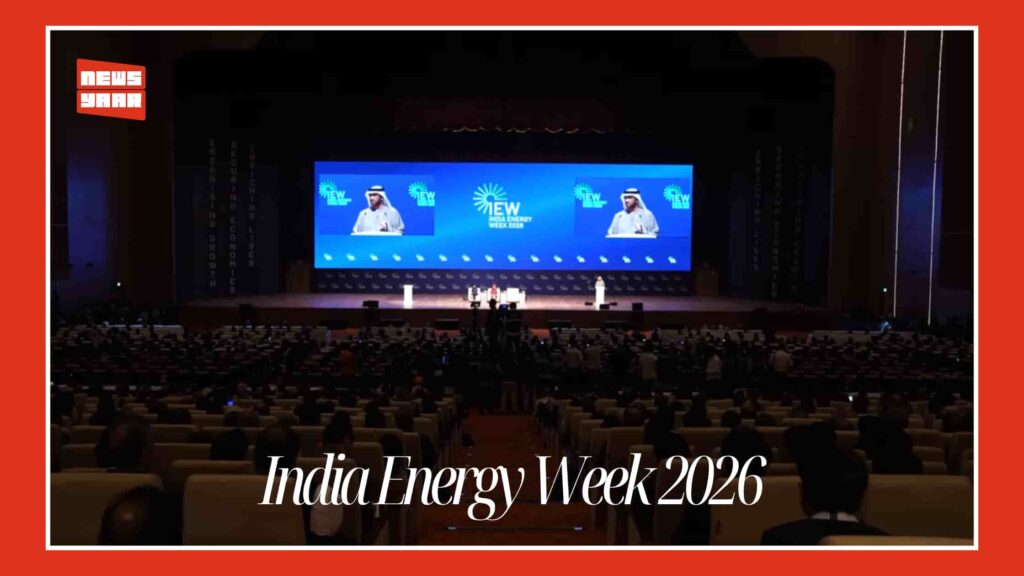
New Delhi: India Energy Week (IEW) 2026 emerged as a pivotal platform for India to articulate its energy priorities at a time when global energy systems are undergoing rapid transition amid geopolitical uncertainty, climate imperatives and shifting technology landscapes. Bringing together policymakers, industry leaders, innovators and global stakeholders, the event reinforced India’s ambition to position itself as a key driver of the global energy transition while safeguarding energy security and affordability.Held with a sharp focus on collaboration and execution, India Energy Week 2026 underscored the idea that India’s energy journey will be defined not by a single fuel or technology, but by a balanced, multi-pathway approach.Why India Energy Week MattersIndia Energy Week is designed as India’s flagship international energy forum, aimed at bridging dialogue between government, global energy companies, clean-tech innovators and investors. As one of the world’s fastest-growing energy consumers, India sits at the centre of global energy conversations, both as a market and as a solutions provider.With India targeting net-zero emissions by 2070, while simultaneously meeting the needs of a growing population and industrial base, the event plays a crucial role in aligning policy intent with industry execution. IEW 2026 continued this mandate by spotlighting policy clarity, investment opportunities and technological pathways across conventional and clean energy sectors.Central Themes and Focus AreasIndia Energy Week 2026 revolved around a few clear pillars:Energy Security in an Uncertain World: Discussions highlighted the need for diversified supply chains, domestic production and strategic reserves to shield economies from global disruptions.Accelerating the Clean Energy Transition: Renewable energy, green hydrogen, biofuels and energy storage were central to conversations, with India positioning itself as a scalable clean-energy hub rather than just a consumer of imported technologies.Technology, Innovation and Digitalisation: Artificial intelligence, smart grids and digital monitoring systems were presented as key enablers for improving efficiency, reducing losses and optimising energy distribution.Just and Inclusive Transition: Policymakers stressed that India’s energy shift must remain affordable and inclusive, ensuring that growth, employment and access are not compromised in the pursuit of sustainability.Key Highlights from India Energy Week 2026A major highlight of IEW 2026 was the strong participation from both domestic and global energy players across oil & gas, renewables, power, hydrogen and emerging technologies. The event featured:Policy Dialogues: Senior government representatives outlined India’s evolving energy roadmap, emphasising reforms, infrastructure expansion and investor-friendly frameworks.Investment Conversations: India showcased opportunities across upstream and downstream energy, renewable manufacturing, electric mobility and green hydrogen ecosystems, reinforcing confidence in long-term capital deployment.Hydrogen and Bioenergy Push: India’s ambitions under the National Green Hydrogen Mission were discussed in detail, alongside progress in ethanol blending and bioenergy adoption to reduce import dependence.Energy Transition Showcases: Technology exhibitions and innovation zones demonstrated advancements in storage solutions, clean fuels and digital energy platforms.Global and Domestic Voices on the Same StageIndia Energy Week 2026 featured participation from a wide range of stakeholders, including senior Indian ministers, global energy executives, international organisations and climate experts. The presence of global industry leaders reinforced India’s growing relevance in shaping future energy markets.International delegates engaged in dialogues on climate finance, technology transfer and collaborative innovation, while Indian public sector enterprises and private companies presented transition-ready business models aligned with sustainability goals.Strategic Significance for IndiaThe significance of India Energy Week 2026 lies in its timing and context. As global energy systems face volatility, from supply disruptions to policy shifts, India is positioning itself as a stable, predictable and scalable energy partner.The event highlighted India’s dual strength:Its ability to anchor traditional energy markets responsibly, andIts growing leadership in renewables and low-carbon solutions.By aligning policy, capital and innovation under one platform, IEW 2026 strengthened India’s narrative as a country that is not choosing between growth and sustainability, but integrating both.Looking Ahead: The Final Insights While India Energy Week 2026 focused heavily on ideas, partnerships and vision, the underlying message was clear: execution will define success. The emphasis on infrastructure readiness, regulatory clarity and market depth suggests a shift from aspirational announcements to delivery-oriented outcomes.As India advances towards becoming a $5 trillion economy, energy will remain at the core of its growth story. India Energy Week 2026 reaffirmed that India’s approach, pragmatic, inclusive and forward-looking, could well serve as a blueprint for other emerging economies navigating similar transitions.In a world searching for balanced energy solutions, India is increasingly positioning itself not just as a participant, but as a shaper of the global energy future.