




Modi Calls Nitin Nabin His ‘Boss’ as New BJP President Takes Charge
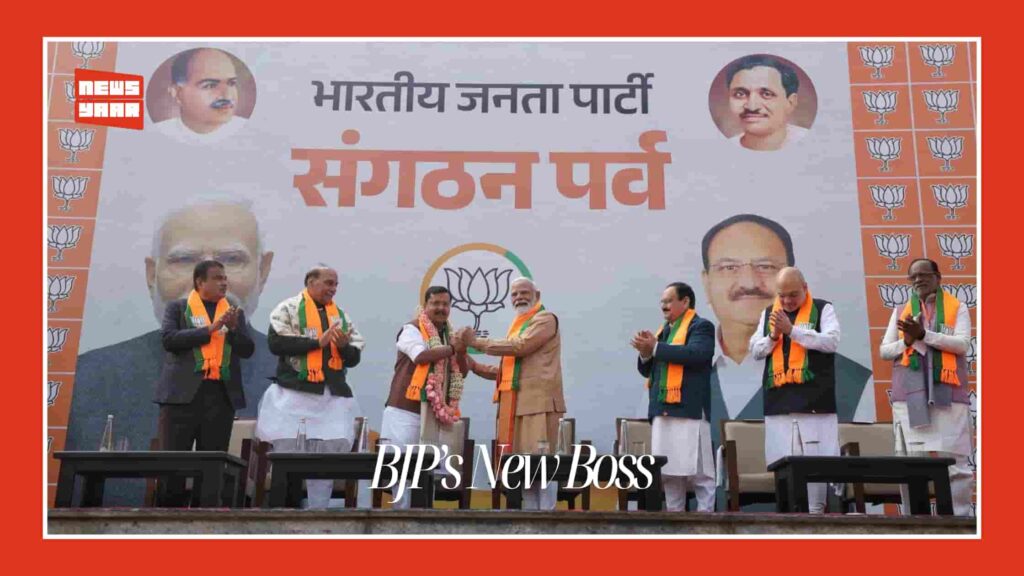
POLITICS Modi Calls Nitin Nabin His ‘Boss’ as New BJP President Takes Charge Newsyaar January 23, 2026 7:58 pm New Delhi: In a moment rich with symbolism and political messaging, Prime Minister Narendra Modi on Tuesday formally welcomed Nitin Nabin as the new national president of the Bharatiya Janata Party (BJP), declaring that in party matters, the newly appointed chief would be his “boss”. The remark, made at a felicitation event on January 20, 2026, with the BJP’s emphasis on organisational discipline and a clear separation between the party and the government. Nitin Nabin, 45, officially assumed charge in the presence of senior party leaders and Prime Minister Modi, marking the beginning of a new phase for the BJP’s organisational leadership. Addressing party workers, Modi said he had presented an account of his own work to the new president, adding with a touch of humour that he now awaited Nabin’s “guidance” and confidential report. “When it comes to party matters, honourable Nitin Nabin ji is my boss. I am a worker,” Modi said, drawing applause from the audience. The Prime Minister had made a similar statement in 2019 alongside then BJP president Amit Shah, reiterating a long-standing message within the party that the organisation functions independently of the government. Highlighting Nabin’s generational outlook, Modi pointed to the new president’s ability to bridge tradition and modernity. He remarked that while he himself grew up listening to news on the radio, Nabin represents a generation comfortable with technology and artificial intelligence, an implicit nod to the BJP’s evolving political strategies in a digital age. Nitin Nabin was officially declared the BJP national president on January 19, following the completion of an extensive internal organisational election process. According to party sources, 37 nominations were filed in his support, all of which were found valid. While the event largely focused on organisational unity, Modi also touched upon broader political issues. He reiterated the BJP’s position on national security, stating that infiltrators posed a serious threat to the country and must be identified and deported. He stressed the importance of learning from the mistakes of other political parties, a veiled reference to the Congress, and urged BJP workers to remain disciplined and connected to grassroots concerns. As Nitin Nabin steps into his new role, he faces the challenge of steering the BJP through complex electoral terrain and internal expectations. His relatively young age and organisational mandate signal a leadership style that blends experience with adaptability, qualities the party believes are essential for navigating the evolving political landscape. The transition, marked by Modi’s symbolic deference, reinforces the BJP’s core message: strong leadership thrives on organisational clarity, collective responsibility, and disciplined separation between party and power. About the Author Politics Reporter Share via Copied Comments Post Comment
Khelo India Winter Games 2026: Ladakh Takes Centre Stage as India Pushes Its Winter Sports Ambition
SPORTS Khelo India Winter Games 2026: Ladakh Takes Centre Stage as India Pushes Its Winter Sports Ambition Newsyaar January 23, 2026 7:31 pm The Khelo India Winter Games (KIWG) 2026 marked another milestone in India’s growing winter sports journey, with Ladakh emerging as the country’s undisputed hub for ice and snow-based competitions. The sixth edition of the Games was inaugurated at the NDS Stadium Ice Hockey Rink in Leh, reinforcing the region’s status as a natural home for winter sports in India. Dates, Venues, and Schedule The Khelo India Winter Games 2026 are being held in January 2026, with competitions spread across key venues in Leh and the surrounding areas of Ladakh. The primary venues include: NDS Stadium Ice Hockey Rink, Leh – Ice hockey matches Leh and Kargil regions – Ice skating and other winter disciplines Designated frozen lakes and rinks prepared specially for the Games Matches are scheduled over multiple days, featuring league-stage encounters followed by knockout rounds, particularly in ice hockey, one of the marquee attractions of the tournament. Sports and Teams Participating The Games feature popular winter sports such as: Ice Hockey (Men & Women) Ice Skating (Short Track & Figure Skating) Snow-related disciplines, depending on weather conditions Teams from Union Territories, states, and institutional teams like the Indian Army, ITBP, and other forces are participating. Regions with colder climates, such as Ladakh, Jammu & Kashmir, Himachal Pradesh, Uttarakhand, alongside teams from states like Telangana and Rajasthan, reflect the expanding footprint of winter sports across India. India’s Place in Global Winter Sports Globally, winter sports dominate the sporting calendar in countries with long snow seasons. Nations like Canada, the United States, Russia, Norway, Sweden, Finland, Germany, Switzerland, Japan, and South Korea are traditional powerhouses. Major global competitions include the Winter Olympic Games, Winter Paralympics, IIHF Ice Hockey World Championships, and FIS Alpine Ski World Cup, drawing thousands of athletes and massive international audiences. Compared to these established winter-sport nations, India is still at a developing stage. Limited snowfall regions and infrastructure constraints have historically restricted growth. However, Ladakh, with its frozen lakes, natural ice rinks, and sub-zero winters, offers conditions comparable to international winter sports destinations. The infrastructure developed for KIWG, ice rinks, training facilities, and logistics, will remain as a legacy for future events. This is expected to help India gradually scale up participation in the Asian Winter Games and the Winter Olympics. As Ladakh continues to host the Games, India is signaling its intent to carve a space in the global winter sports ecosystem. About the Author Sports Reporter Share via Copied Comments Post Comment
Indian Passport Climbs the Ladder in 2026, but Global Travel Reality Remains Mixed
TRAVEL Indian Passport Climbs the Ladder in 2026, but Global Travel Reality Remains Mixed Newsyaar January 23, 2026 7:07 pm Indian passport holders have a reason to feel cautiously optimistic in 2026. According to the latest Henley Passport Index, India’s passport has registered an improvement in global rankings, signalling a gradual rise in international mobility for Indian travellers. However, beneath the headline gain lies a more nuanced reality that travellers must keep in mind while planning overseas journeys. The Henley Passport Index 2026 has placed India at the 80th position, a jump of five ranks from last year’s 85th spot. The index, which ranks passports based on the number of destinations their holders can access without a prior visa, reflects how freely citizens of a country can travel across borders. In practical terms, Indian passport holders can now access 55 destinations without securing a visa in advance. This includes countries offering visa-free entry, visa-on-arrival, or electronic travel authorisation (ETA). The upward movement suggests incremental progress in India’s global travel standing, driven partly by diplomatic engagements, bilateral agreements, and the growing international presence of Indian travellers. For frequent flyers and first-time international tourists alike, this translates into slightly more flexibility and reduced paperwork for select destinations. However, the improvement in ranking does not tell the full story. Despite climbing the index, the number of destinations offering hassle-free access to Indian passport holders remains limited compared to many other countries. In fact, while the rank has improved, access to key regions such as Europe’s Schengen Area, the United States, the United Kingdom, and several East Asian nations continues to require traditional visas, often involving lengthy processing times, extensive documentation, and high costs. This contrast highlights an important point: rankings can improve even when overall access remains constrained. The Henley Index is relative in nature, meaning India’s rise may also reflect changes in other countries’ visa policies rather than a dramatic expansion of visa-free access for Indians. For Indian travellers, the list of accessible destinations is still dominated by countries in Southeast Asia, Africa, the Caribbean, and parts of the Middle East. While these destinations offer rich cultural and travel experiences, many popular business, education, and tourism hubs remain out of easy reach without prior approvals. Travel industry experts say the ranking improvement is symbolically significant but should not be overstated. “A higher rank improves perception, but on the ground, Indian travellers still need to plan well in advance for most long-haul or premium destinations,” said a senior travel consultant based in Delhi. He added that visa rejections, appointment delays, and rising visa fees continue to be common concerns. At the same time, the gradual rise reflects India’s growing global footprint. As one of the world’s fastest-growing major economies and a key player in international diplomacy, India has been actively engaging with countries to simplify travel frameworks. Industry observers believe that sustained diplomatic efforts, along with reciprocal visa arrangements, could further enhance passport strength in the coming years. For now, Indian passport holders can take heart in the positive movement, while remaining realistic. The 2026 ranking underscores progress, but also serves as a reminder that global mobility for Indians is still a work in progress, one that requires both policy-level negotiations and patient travel planning. As international travel rebounds and geopolitical equations evolve, the Indian passport’s journey up the global ladder is likely to continue, albeit gradually. About the Author Travel Reporter Share via Copied Comments Post Comment
PM Modi Likely to Shift PMO to Seva Teerth, Marking Historic Transition from South Block
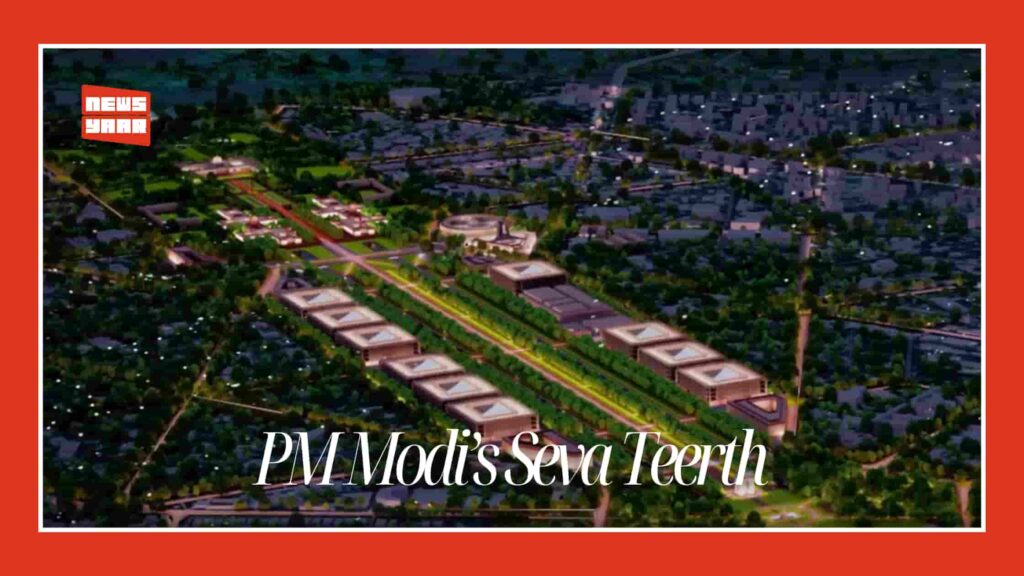
GOVERNMENT PM Modi Likely to Shift PMO to Seva Teerth, Marking Historic Transition from South Block Newsyaar January 20, 2026 7:00 pm New Delhi: Prime Minister Narendra Modi is likely to shift his office to the newly constructed Seva Teerth complex near Raisina Hill after January 14, marking a historic transition in India’s administrative landscape. According to reports, the move is expected to coincide with Makar Sankranti and will formally end the Prime Minister’s Office’s long association with South Block, where it has functioned since Independence. The relocation is part of the ambitious Central Vista redevelopment project, aimed at modernising India’s core administrative infrastructure and bringing key decision-making bodies under one consolidated zone. What is Seva Teerth? Seva Teerth, officially known as the Executive Enclave, is located on Dara Shikoh Road, earlier called Dalhousie Road, in the heart of New Delhi, close to Raisina Hill. The complex has been designed as a secure and integrated administrative hub, reflecting the government’s vision of a more efficient and contemporary governance system. The Executive Enclave comprises three distinct buildings, each assigned to a crucial arm of national administration. Allocation of Offices Within the Complex Seva Teerth-1 has been designated to house the Prime Minister’s Office. The building includes office spaces, meeting rooms, and ceremonial areas, with a more expansive and formal layout reflecting the PMO’s national and international responsibilities. Seva Teerth-2 already houses the Cabinet Secretariat, which shifted there in September last year. Seva Teerth-3 will accommodate the National Security Council Secretariat and the office of the National Security Advisor, Ajit Doval. Once fully operational, the complex will bring together top-level decision-makers within proximity, facilitating smoother coordination on governance and national security matters. A Symbolic End to the South Block Era The move marks the end of an era for South Block, which has served as the seat of the Prime Minister’s Office since 1947. Over the decades, South Block became synonymous with executive authority and witnessed some of the most significant decisions in independent India’s history. Similarly, North Block, home to the Ministries of Home Affairs and Finance for decades, has also been vacated as part of the transition. Both ministries have already shifted to Kartavya Bhavan, another component of the Central Vista project. The Central Vista redevelopment seeks to address long-standing space constraints, outdated infrastructure, and the dispersal of ministries across Delhi. By consolidating offices, the government aims to improve efficiency, security, and inter-ministerial coordination, while also modernising buildings to meet present-day functional and technological requirements. Officials familiar with the project have said the new complexes are designed with advanced security features, sustainable infrastructure, and digital-ready facilities, aligning with India’s future governance needs. A New Chapter in Governance Once the Prime Minister formally begins work from Seva Teerth, it will mark a significant symbolic and functional shift in India’s administrative history. While South Block remains a powerful emblem of the past, Seva Teerth represents the government’s push toward a modern, centralised, and future-ready system of governance at the heart of the national capital. https://www.youtube.com/watch?v=hTlB4OrFN0Y Video credit: YT@/PMO India About the Author Government Reporter Share via Copied Comments Post Comment
NDRF Raising Day 2026: Recent Operations and Observations
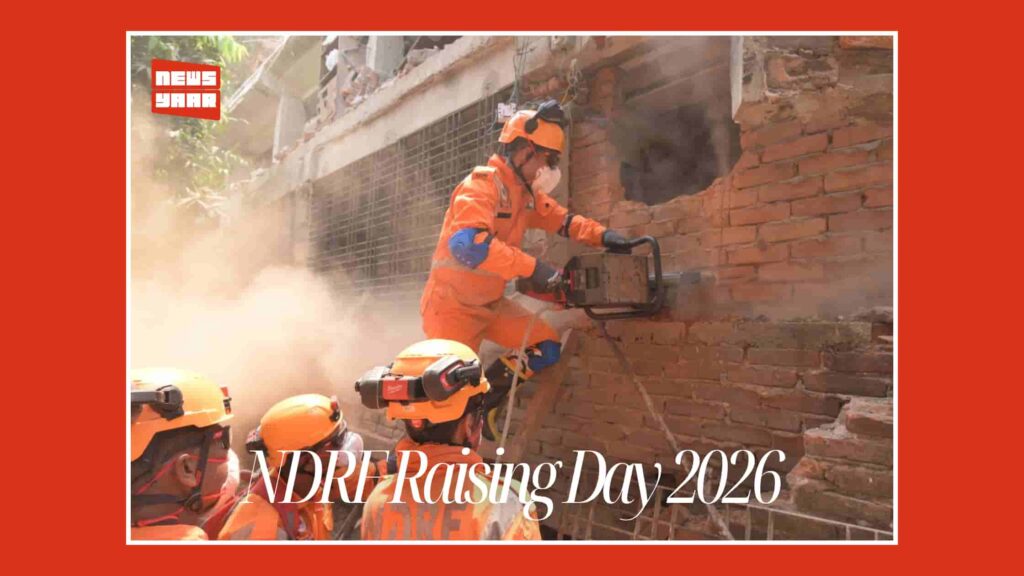
GOVERNMENT NDRF Raising Day 2026: Recent Operations and Observations Newsyaar January 20, 2026 2:36 pm India on January 19 observed NDRF Raising Day, marking 20 years since the formation of the National Disaster Response Force (NDRF), a specialised force that has become synonymous with courage, speed and professionalism during disasters. Established in 2006 under the Disaster Management Act, 2005, the NDRF was created to strengthen India’s preparedness and response mechanism against natural and man-made calamities. From devastating floods and cyclones to earthquakes, landslides, industrial accidents and building collapses, the NDRF has played a crucial role in saving lives across the country. Over the past two decades, the force has evolved into a highly trained, multi-skilled unit capable of responding to complex emergencies both in India and abroad. On Raising Day, tributes poured in from across the political spectrum. Prime Minister Narendra Modi lauded the NDRF for its “professionalism, courage and unwavering resolve,” while Home Minister Amit Shah described the force as a “pillar of trust for citizens during disasters,” paying homage to personnel who lost their lives in the line of duty. The NDRF operates under the Ministry of Home Affairs and currently comprises multiple battalions deployed strategically across the country to ensure rapid response. Each battalion is trained in specialised disaster response skills such as flood rescue, collapsed structure search and rescue, chemical, biological, radiological and nuclear (CBRN) emergencies, and medical first response. What sets the NDRF apart is not just its response capability but also its focus on community awareness and capacity building. The force regularly conducts mock drills, school safety programmes and training sessions for civilians, local authorities and first responders to minimise loss of life during emergencies. In recent years, the NDRF has been at the forefront of major rescue operations, including flood relief missions, cyclone response along India’s eastern and western coasts, and urban rescue operations following infrastructure failures. Its personnel often work in extreme conditions, navigating submerged villages, unstable debris and hazardous environments, to reach those in distress. Beyond national borders, NDRF teams have also represented India in international humanitarian assistance missions, reinforcing the country’s image as a responsible global responder. The 2026 Raising Day was marked by ceremonial parades, award presentations and social initiatives across NDRF battalions. Senior officials and state leaders used the occasion to highlight the growing importance of disaster resilience in an era marked by climate change and extreme weather events. Emphasis was laid on technology adoption, advanced training and inter-agency coordination to further strengthen India’s disaster response framework. As disasters grow more frequent and complex, the role of the NDRF continues to expand. The Raising Day serves as a reminder of the silent sacrifices made by its personnel, often away from their families, operating under intense pressure, with one mission at heart: saving lives. Twenty years on, the National Disaster Response Force remains one of India’s most trusted institutions, standing ready at the nation’s call when disaster strikes. About the Author Government Reporter Share via Copied Comments Post Comment
National Startup Day 2026: India Celebrates a Decade of Entrepreneurial Transformation
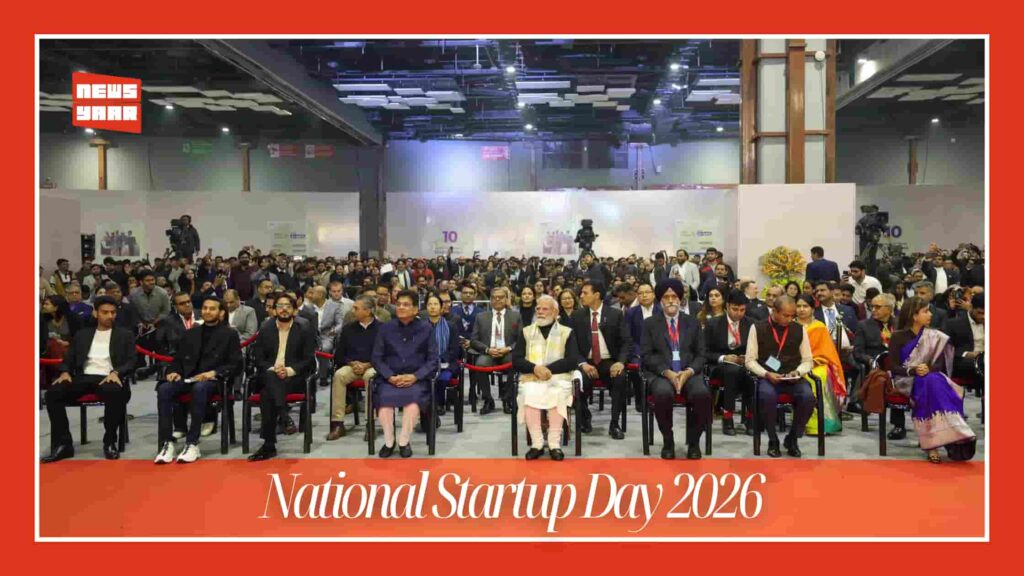
STARTUPS National Startup Day 2026: India Celebrates a Decade of Entrepreneurial Transformation Newsyaar January 19, 2026 7:50 pm New Delhi, 16 January 2026: India marked National Startup Day 2026 with grand celebrations highlighting ten years of the government’s Startup India initiative and its transformative impact on the nation’s innovation landscape. The event drew founders, investors, policymakers, and ecosystem leaders from across the country to reflect on the journey of entrepreneurship and chart the path ahead. At a flagship event held in New Delhi, Prime Minister Narendra Modi joined startup founders and industry stakeholders to commemorate the milestone. Addressing the gathering, he emphasized the courage and innovative spirit of India’s youth, calling startups engines of economic growth and societal change. His remarks underscored how risk–taking and problem-solving have become mainstream within the entrepreneurial community. Over the past decade since the launch of Startup India, more than 200,000 startups have been recognised across sectors such as technology, healthcare, climate solutions, logistics, fintech, and education. These ventures have collectively generated millions of jobs and helped India emerge as one of the world’s largest and most dynamic startup ecosystems. The celebrations showcased a broad shift in the startup narrative—from chasing rapid valuations to focusing on sustainable growth and real-world impact. Industry experts highlighted that Indian startups are increasingly building deep-tech and AI-driven solutions tailored to local challenges, with a rising emphasis on climate tech, healthcare innovation, and sovereign AI platforms. A notable trend highlighted during the day was the geographical diversification of entrepreneurship. Recent data suggests that over half of registered startups now originate from Tier-2 and Tier-3 cities, signalling a decentralisation of innovation beyond traditional metropolitan hubs. Panel discussions and keynote sessions throughout the event brought to light how startups are contributing to India’s economic resilience, job creation, and technological advancement. Speakers also discussed policy priorities for the next decade, including a renewed push into manufacturing, deep-tech research, and global market expansion. Celebrations were not limited to New Delhi alone. Across states and regions, local startup communities hosted meetups, pitch events, and mentoring sessions, reinforcing a nationwide commitment to empowering entrepreneurs. As National Startup Day 2026 concluded, the startup ecosystem stood not only proud of its achievements over the last ten years but also energized for future challenges, firmly anchored in innovation, inclusivity, and impact. https://www.youtube.com/watch?v=MMbxe9uiAEA Video credit: YT@/NaMo https://www.youtube.com/watch?v=6Io_e-QP1XU Video credit: YT@/NaMo About the Author Startups Reporter Share via Copied Comments Post Comment
India Army’s Combat Battalions Bhairav Force Ready for Modern Warfare
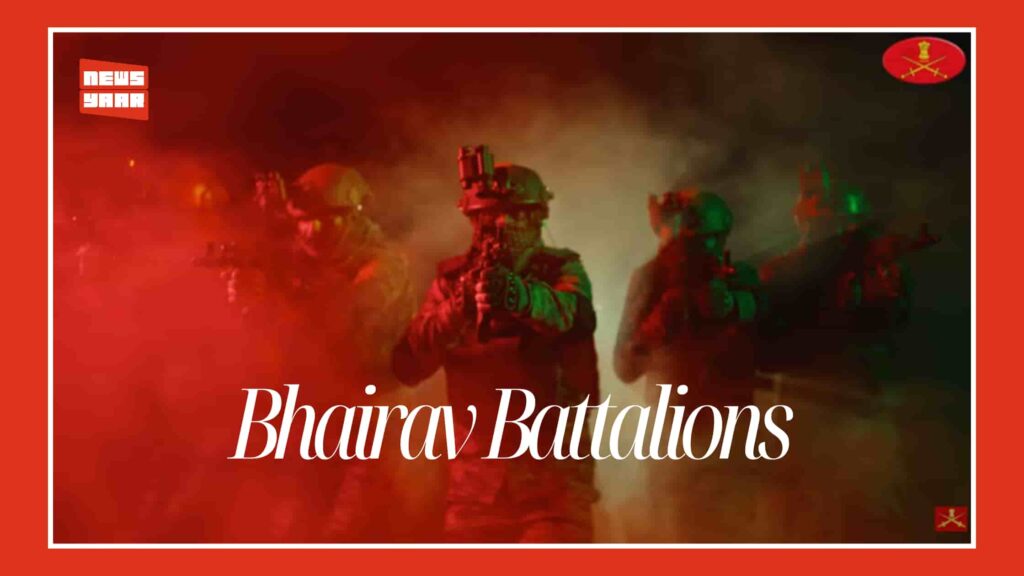
DEFENCE India Army’s Combat Battalions Bhairav Force Ready for Modern Warfare Newsyaar January 13, 2026 1:29 pm Image credit: @IndianArmy The Indian Army’s Bhairav Battalions are fast emerging as a key element of the force’s modernisation drive, designed to meet the demands of 21st-century warfare with speed, technology, and tactical agility. These newly raised light commando units are set to play a significant role in both operational deployments and ceremonial showcases, including participation in the upcoming 78th Army Day Parade in Jaipur. A New Chapter in Army Modernisation Officially introduced in 2025, the Bhairav Battalions form part of a broader restructuring effort by the Indian Army to adapt to rapidly evolving threats along India’s borders. Rather than replacing traditional infantry or elite Special Forces, these units are meant to bridge the capability gap between regular battalions and the highly specialised Para Special Forces. Each battalion typically consists of around 250 soldiers selected from various arms of the Army, including infantry, artillery, air defence, and signals, providing an integrated and versatile combat unit. The Bhairav formation reflects the Army’s recognition that future conflicts will likely involve hybrid warfare, where speed, technology, and precision matter as much as manpower. Strategic Deployment and Expansion The Bhairav concept has already seen practical implementation, with around 15 battalions raised and integrated across various commands on both the northern and western borders. Plans are underway to expand this number to 25 battalions within the next few months, underscoring the Army’s emphasis on adaptability and readiness. Two of these units, the 2 Bhairav Battalion from Southern Command, known as the “Desert Falcons”, and the 4 Bhairav Battalion from South Western Command, have been confirmed to participate in this year’s Army Day celebrations in Jaipur. The 2 Bhairav Battalion’s distinctive war cry, “Raja Ramchandra ki Jai,” embodies its fighting spirit and commitment to mission success. Role and Operational Focus Unlike the Para Special Forces, Bhairav Battalions operate as a rapid response force capable of acting independently at short notice. Their training emphasises modern tactical manoeuvres, drone integration, surveillance, and quick-strike capabilities, making them well-suited to the challenges of today’s complex battlefield environments. With their smaller size and high mobility, Bhairav units can rapidly respond to evolving threats, conduct targeted operations in diverse terrains, and support conventional forces during high-intensity situations. Final Insights The rise of the Bhairav Battalions signals a significant shift in the Indian Army’s operational doctrine, blending traditional combat strength with modern warfare capabilities. These units represent the service’s efforts to stay ahead of contemporary threats while enhancing overall battlefield effectiveness. As they take centre stage during national events and operational deployments alike, the Bhairav Force stands as a symbol of India’s evolving military prowess in an increasingly dynamic security landscape. https://www.youtube.com/watch?v=lY7_5WBEhfY Video credit: DD India About the Author Defence Reporter Share via Copied Comments Post Comment
Sergio Gor Takes Charge as U.S. Ambassador to India: What His Appointment Means for India-US Trade Relations

POLITICS Sergio Gor Takes Charge as U.S. Ambassador to India: What His Appointment Means for India-US Trade Relations Newsyaar January 13, 2026 1:03 pm Sergio Gor formally assumed his role as the United States Ambassador to India on Monday, signalling a fresh chapter in the bilateral relationship between the two democracies. Gor, a close associate of U.S. President Donald Trump, addressed the press ahead of taking office and outlined his vision for strengthening cooperation between Washington and New Delhi. Ambassador Gor’s appointment comes at a time when diplomatic ties between India and the United States have faced several challenges, from disagreements over trade to tensions related to global geopolitical issues. Yet his arrival has sparked cautious optimism among policymakers and analysts on both sides of the aisle. A Personal Message of Partnership and Collaboration In his public remarks upon taking charge, Ambassador Gor underscored India’s importance to the United States. He stated that no country is more “essential” to American strategic interests than India, highlighting shared values and mutual goals in areas like trade, security, technology, and regional stability. Gor also referenced the strong personal rapport between President Trump and Prime Minister Narendra Modi, describing their friendship as “real” and pivotal for future cooperation. This emphasis on interpersonal diplomacy signals an attempt to soften recent strains and build momentum for collaborative action. Reports indicate that one of Gor’s early initiatives will be to invite India to participate in the Pax Silica initiative, a U.S.-led multilateral forum focused on mineral security and advanced technologies such as artificial intelligence. Participation in this forum could broaden India’s role in global tech and strategic discussions. Trade Talks and Economic Expectations Economists and trade experts have weighed in on the potential impact of Ambassador Gor’s appointment on economic ties. India and the U.S. are actively working on a bilateral trade agreement aimed at reducing tariff barriers and promoting deeper economic engagement. ABC News and Politico Pro reports highlighted that one of the ambassador’s priorities will be expanding trade ties despite ongoing tensions related to Russian oil and global energy dynamics. As such, Gor’s role will not only be diplomatic but also deeply economic. A Reset in Relations? Analysts from The Assam Tribune and ETV Bharat have described Ambassador Gor’s messages as signalling a reset in diplomatic outreach. By stressing mutual respect and partnership, he appears intent on building a stronger, more resilient relationship that can withstand geopolitical pressure. With his first address and public engagements in India, Sergio Gor has laid the groundwork for renewed strategic dialogue. As bilateral initiatives, the world will be watching closely to see how India and the United States navigate their partnership in 2026 and beyond. https://www.youtube.com/watch?v=HsCV6soEErQ Video credit: ANI About the Author Politics Reporter Share via Copied Comments Post Comment
PM Modi’s Inspiring Speech on National Youth Day at Viksit Bharat Young Leaders Dialogue 2026
EVENTS PM Modi’s Inspiring Speech on National Youth Day at Viksit Bharat Young Leaders Dialogue 2026 Newsyaar January 12, 2026 5:25 pm PM Modi addresses Young Indians on National Youth Day. It is officially celebrated on 12th January every year. PM delivered the speech on concluding session of Viksit Bharat Young Leaders Dialogue 2026, a public event that was organised especially for the Youths of the nation. https://www.youtube.com/watch?v=yRjxTPhGcZQ Video credit: @Youtube/Narendra Modi About the Author Events Reporter Share via Copied Comments Post Comment
What Happened in Parliament’s Winter Session 2025: Key Takeaways
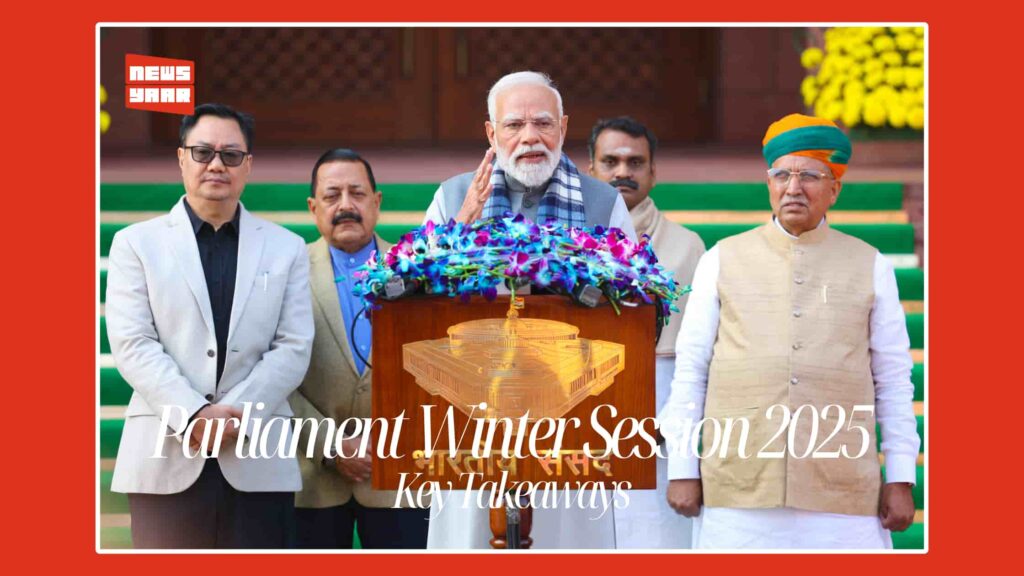
GOVERNMENT What Happened in Parliament’s Winter Session 2025: Key Takeaways The Winter Session of the Indian Parliament, held from December 1 to December 19, 2025, concluded this week with both Houses, Lok Sabha and Rajya Sabha, adjourned sine die after a packed legislative agenda and spirited debates. Across 15 sittings in each house, lawmakers debated, deliberated, and passed several bills with far-reaching implications for India’s governance, economy, and social fabric. Legislative Activity and Major Bills Passed One of the most significant outcomes of the session was the passage of eight key bills covering agriculture and rural employment, economic reforms, financial legislation, and sectoral development. At the forefront was the Viksit Bharat Guarantee for Rozgar and Ajeevika Mission (Gramin) Act, 2025, popularly known as the VB-G RAM G Bill. This legislation replaces the two-decade-old MGNREGA framework with a revised rural employment guarantee, offering 125 days of statutory work to eligible rural households and aligning with the government’s Viksit Bharat 2047 goals. Another cornerstone was the Sustainable Harnessing and Advancement of Nuclear Energy for Transforming India (SHANTI) Bill, 2025, which opens up the previously state-controlled civil nuclear sector to private participation and foreign investment, a structural shift in India’s energy policy. The Sabka Bima Sabki Raksha (Amendment of Insurance Laws) Bill, 2025, also gained Parliamentary approval, raising the FDI cap in the insurance sector from 74% to 100% and aiming to attract global capital, deepen insurance penetration, and enhance consumer choice. Other bills passed included the Appropriation (No. 4) Bill, 2025, authorising additional government spending for the current fiscal cycle, and the Repealing and Amending Bill, 2025, which repeals outdated laws and amends several existing statutes to streamline legal frameworks. Taxation adjustments were addressed through the Central Excise (Amendment) Bill, 2025, and the Manipur Goods and Services Tax (Second Amendment) Bill, 2025, while the Health Security and National Security Cess Bill, 2025, sought to replace the compensation cess on pan masala with a broader cess aimed at funding health and security needs. Debates and Political Dynamics The session saw intense political exchanges. The VB-G RAM G Bill, in particular, sparked opposition protests, with several parliamentarians objecting to the repeal of MGNREGA and the shift in funding arrangements. There were heated interventions in both Houses as lawmakers debated the future of rural employment schemes. Apart from legislative business, members also spotlighted social issues, national song Vande Mataram discussions, and challenges such as air pollution and infrastructure concerns, reflecting Parliament’s role as a platform for diverse public concerns. Session Takeaways The 2025 Winter Session underscored the government’s push towards economic reforms, rural employment restructuring, and opening strategic sectors like nuclear energy. Increased insurance sector liberalisation and the repeal of obsolete laws additionally signal a legislative drive toward modernisation. Yet, the session’s political temperature also highlighted the contentious nature of major reforms, with opposition parties raising questions about their socio-economic impacts. As Parliament adjourned, it left behind both substantive legislative change and an ongoing debate on India’s policy priorities in the years ahead. https://www.youtube.com/watch?v=jEjKon5GubM Video credit: Sansad TV About the Author Government Reporter Share via Copied Comments Post Comment