Newsyaar

Advertisement

BUSINESS

India Secures Record Investments at Davos 2026
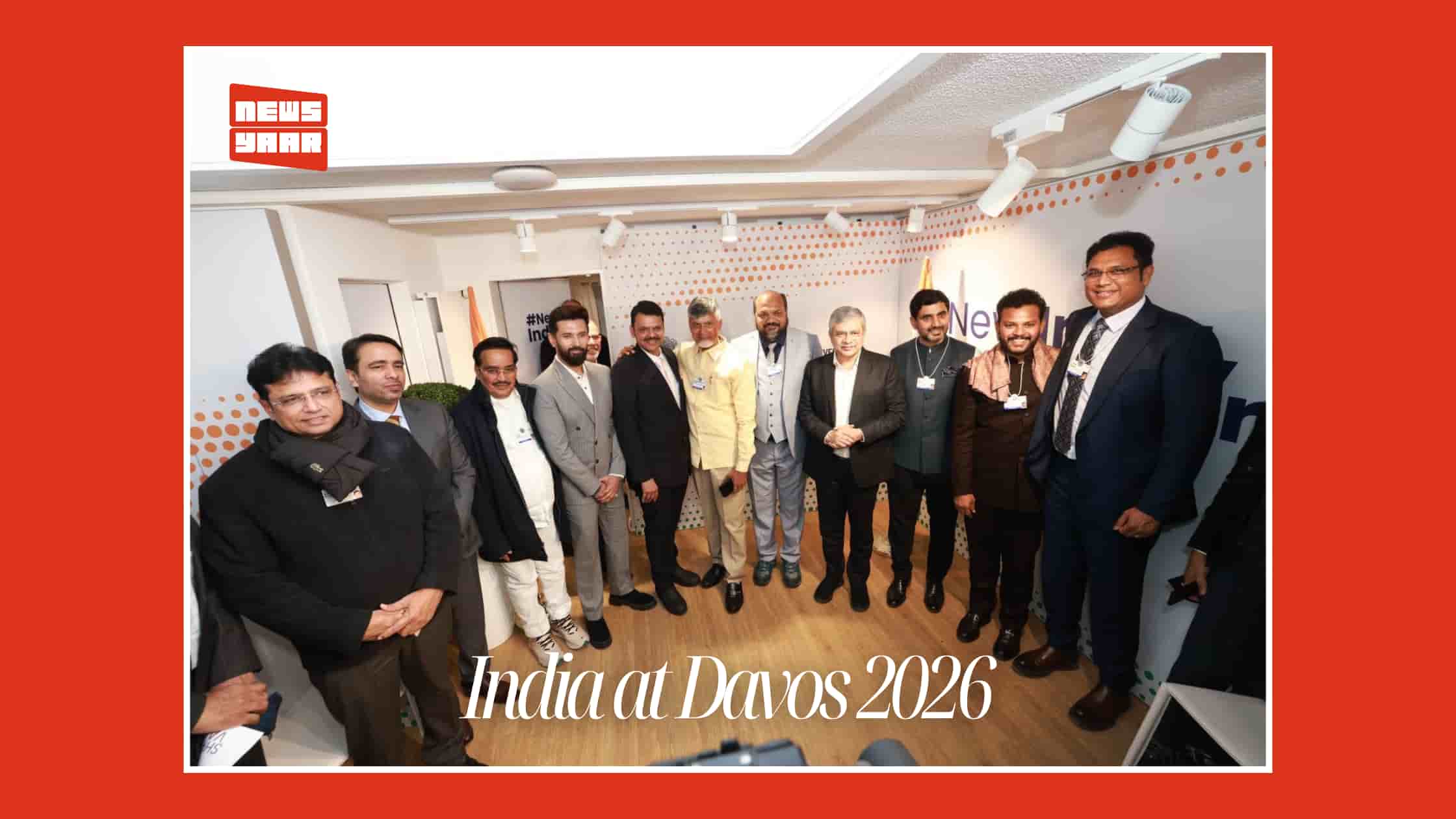


Nine States Present Unified Investment Vision at World Economic Forum


India emerged as the preferred investment destination at the World Economic Forum 2026 held in Davos, Switzerland, with nine participating states securing commitments worth lakhs of crores across artificial intelligence, clean energy, manufacturing, and digital infrastructure. The states presented themselves as a single, integrated investment market, showcasing opportunities that position India firmly as a future-ready economic powerhouse.


Gujarat, Maharashtra, Telangana, Karnataka, Uttar Pradesh, Andhra Pradesh, Kerala, Assam, and Jharkhand participated in the summit, with Assam and Jharkhand making their inaugural appearances. All states are integrated with the National Single Window System, a centralised digital platform designed to streamline investment approvals and clearances for global investors.


India’s Strategic Objectives at Davos 2026


India’s presence at Davos 2026 represented a coordinated national strategy with several key objectives:


  • Positioning India as a Unified Investment Destination: Rather than competing against each other, states presented complementary strengths, demonstrating policy alignment and infrastructure readiness across the country.
  • Showcasing Digital Infrastructure Readiness: With the National Single Window System integration, India demonstrated its commitment to ease of doing business and rapid investment approvals.
  • Accelerating Clean Energy Transition: States highlighted renewable energy commitments aligned with India’s net-zero targets, attracting global climate-focused investors.
  • Building AI and Technology Leadership: Multiple states positioned themselves as AI-ready economies, competing for next-generation technology investments.
  • Creating Employment at Scale: Investment commitments focused on job creation, with Maharashtra alone projecting over 40 lakh jobs from secured MoUs.


Maharashtra Leads with ₹30 Lakh Crore Investment Pipeline


Maharashtra Chief Minister Devendra Fadnavis announced MoUs worth ₹30 lakh crore, with 83 per cent involving foreign direct investment and 16 per cent in partnerships with foreign technologies. Companies from 18 countries are committed to investing in the state, potentially creating over 40 lakh jobs. Major investors include Lodha Developers, OpenAI, Iron Mountain, Princeton Data Group, Volkswagen, and Coca-Cola, with a primary focus on developing data centres.


Lodha Developers pledged ₹1 lakh crore to develop a 2.5 GW Green Data Centre Park in the Mumbai Metropolitan Region, set to become one of India’s largest digital infrastructure hubs. Plans also include an AI innovation city near Navi Mumbai, a Global Capability Centre in Bandra Kurla Complex, and a ₹20,000 crore steel plant expansion in Gadchiroli.


Technology and Clean Energy Drive State Commitments


Telangana secured investments worth ₹30,000 crore, positioning itself as an AI-first economy. L’Oréal will establish an AI-powered Global Beauty Tech Hub in Hyderabad, while UPC Volt plans a 100 MW AI-ready data centre in Bharat Future City. The Rashmi Group committed ₹12,500 crore for a steel plant, and Schneider Electric India announced manufacturing capacity expansion.


Uttar Pradesh signed MoUs exceeding ₹9,750 crore, coordinated by Invest UP. Key projects include SAEL Industries’ ₹8,000 crore waste-to-energy initiative, Sift Technologies’ ₹1,600 crore AI-ready data centres, and a ₹150 crore AI city in Noida focused on defence manufacturing.


Assam has secured investment commitments worth Rs 1 lakh crore already, and it is only a base for the state in the global arena, Chief Minister Himanta Biswa Sarma said on Wednesday.


Karnataka attracted interest from Nokia for Global Capability Centres and research facilities beyond Bengaluru, with discussions involving Cloudflare and aerospace companies Vast Space and Voyager Technologies. The RPSG Group invested in renewable energy projects in Vijapura and Ballari districts, supporting wind power manufacturing expansion.


Kerala secured $14 billion (₹1.18 lakh crore) in commitments across renewable energy, skill development, tourism, medical services, and infrastructure. Andhra Pradesh partnered with RMZ Corporation for large-scale mixed-use, digital, industrial, and logistics infrastructure development. Jharkhand received Tata Steel’s ₹11,000 crore investment commitment for low-carbon steelmaking technologies and held discussions with Hitachi India on power and grid infrastructure.


National Clean Energy Push


India is rapidly expanding its clean electricity pipeline through large-scale solar and wind farms while upgrading grid infrastructure. The focus includes battery storage and hybrid storage options to meet 24×7 renewable power needs, increasing energy reliability across regions.


Davos 2026 showcased India’s growing stature as a global investment destination. From state-led projects to nationwide green energy initiatives, the announcements reflect strong investor confidence in India’s policy stability, scale, and future-ready growth story, promising long-term economic growth, job creation, and deeper global integration.


Why Davos 2026 Matters for India?


Davos 2026 showcased India’s growing stature as a global investment destination. From state-led projects to nationwide green energy initiatives, the announcements reflect strong investor confidence in India’s policy stability, scale, and future-ready growth story, promising long-term economic growth, job creation, and deeper global integration.


The success of India’s Davos 2026 participation will ultimately be measured not just in MoU values, but in actual project implementation, job creation, technology transfer, and contribution to India’s vision of becoming a developed nation by 2047. The unified approach by participating states, supported by central government infrastructure and policy frameworks, creates a strong foundation for translating commitments into tangible economic outcomes.


About the Author

Business Reporter

Comments

Leave a Reply

Your email address will not be published. Required fields are marked *