


Ravi Tamta: The Almora Innovator Behind India’s New Flying Vehicle Prototype

For years, the idea of a flying car has existed somewhere between science fiction and engineering ambition. In India, that idea has now taken an unusual turn in the hills of Uttarakhand.Ravi Tamta, an innovator from Almora, has developed and test-flown a single-seater electric flying vehicle prototype called HAPIDA SKYNeX. The prototype, developed under his venture Hapida Sky, has attracted attention after videos of its test flight in Almora surfaced online.The achievement is particularly striking because Tamta’s work has emerged from Kaflikhan village in Almora, rather than from a large aerospace company or a major metropolitan technology hub. His journey reflects a growing interest in grassroots innovation in India’s smaller towns and hilly regions.At the same time, the vehicle is still a prototype. It is not a commercially available flying car, and its development should not be confused with the large-scale electric vertical take-off and landing aircraft programmes being pursued by established aerospace companies around the world.What makes the story interesting is the attempt itself: using electric propulsion and modified drone technology to explore personal air mobility in a region where terrain can make conventional transportation difficult.Who Is Ravi Tamta?Ravi Tamta is a young entrepreneur and innovator based in Almora, Uttarakhand. His company, Hapida, describes him as its founder and says his work focuses on developing technology and products suited to hilly areas and village life. His earlier work has included several unconventional inventions. Hapida’s website lists products and projects ranging from a smart bamboo stick and mobile-chargeable shoes to an electrolyte pump that the company describes as an electric vehicle charging technology. This background is important to understanding Tamta’s latest project.His work has consistently focused on using relatively accessible technology to address problems associated with difficult terrain, mobility and everyday life in hill regions.The flying vehicle is an extension of that approach, although on a considerably more ambitious scale.HAPIDA SKYNeX: What Has Been Developed?The vehicle developed by Tamta is known as HAPIDA SKYNeX.It is described as a single-seater electric personal flying vehicle prototype. Unlike the conventional image of a flying car that can drive on roads and then take off, SKYNeX is better understood at its current stage as a compact electric vertical-flight vehicle.The prototype uses multiple electric motors and propellers to generate lift and manoeuvre through the air. Its design draws on principles used in multirotor drones, allowing the vehicle to take off vertically rather than requiring a conventional runway.The recent test flight in Almora demonstrated that the prototype could become airborne with a person onboard. Reports said the test was conducted in an open field in the Almora region.That distinction matters.SKYNeX is currently a flying vehicle prototype, not a road-going car that can seamlessly switch between driving and flying.Calling it a “flying car” is useful for describing the broader idea behind the project, but the technology demonstrated so far is closer to a personal electric aerial vehicle.The Almora Test FlightThe test flight became the moment when Tamta’s project moved from an experimental concept to something that could be seen operating in the real world.The prototype was flown in an open area in Almora, with Tamta demonstrating its ability to lift off and remain airborne.The test attracted attention because of the location.Almora is part of Uttarakhand’s mountainous Kumaon region, where steep slopes, winding roads and difficult terrain can make road connectivity time-consuming.For such regions, the concept of short-distance aerial mobility has obvious appeal.A journey that requires considerable time by road could theoretically be shortened dramatically if a small electric aircraft could travel directly from one point to another.Reports surrounding the prototype have cited the possibility of reducing journeys that could take around 90 minutes by road to roughly 10 minutes through the air. These figures represent the potential being discussed around the concept, rather than an established commercial service. Why Build a Flying Vehicle in the Hills?The geography of Uttarakhand provides an interesting context for the project.Mountainous terrain makes transportation fundamentally different from transportation across plains.Roads often have to follow the contours of mountains rather than taking a straight route between two locations. Building new roads can involve tunnels, bridges, land acquisition and significant construction costs.Air travel, in principle, can bypass some of these geographical constraints.This is one reason small electric aircraft and vertical-flight technologies are attracting interest globally.For a state such as Uttarakhand, potential applications could extend beyond personal transportation.Such aircraft could eventually have applications in emergency response, medical transportation, tourism, logistics and connectivity to remote areas.However, turning that potential into a safe and economically viable transportation system would require considerably more development.From Drone Technology to Personal Air MobilityThe basic technology behind SKYNeX draws on the rapid development of electric drone systems.Multirotor drones have demonstrated that multiple electronically controlled propellers can provide vertical lift and directional movement without the need for conventional aircraft wings or runways.The challenge becomes much greater when the system has to carry a human being.A passenger-carrying aircraft needs considerably higher levels of reliability, redundancy, structural strength, battery capacity, flight control and safety.A drone that weighs a few kilograms can tolerate design limitations that a vehicle carrying a person cannot.That is why a successful prototype flight is only an early stage in the development process.The Biggest Challenge: SafetyThe most important question surrounding any passenger-carrying flying vehicle is not whether it can take off.It is whether it can take off safely, remain controllable and land safely under a wide range of conditions.A human-carrying electric aircraft must account for motor failures, battery problems, electronic failures, weather conditions, loss of control, emergency landings and structural stresses.It also needs systems capable of preventing a single component failure from immediately becoming a catastrophic event.For commercial deployment, aviation regulators would also need to establish appropriate certification and operating requirements.Therefore, the successful flight of SKYNeX should be seen as a demonstration of a prototype’s capability, not as proof that the vehicle is ready for public transportation.The Battery ProblemElectric propulsion offers an important advantage because electric motors are mechanically simpler than conventional combustion engines and can produce power efficiently.But batteries remain one of the
Bharat Innovates 2026: Showcasing India’s Deep-Tech Ambitions on the Global Stage
IntroductionAs countries around the world compete to lead the next wave of technological innovation, India has increasingly positioned itself not only as a hub for software and digital services but also as a growing centre for deep-tech research and entrepreneurship. Bharat Innovates 2026, held in Nice, France, marked an important step in that journey by providing Indian startups, researchers and academic institutions with a global platform to showcase indigenous technologies and build international partnerships.Organised under the Ministry of Education with strategic guidance from the Office of the Principal Scientific Adviser to the Government of India, Bharat Innovates 2026 brought together India’s innovation ecosystem—including startups, higher educational institutions, investors, industry leaders and policymakers—to demonstrate the country’s capabilities in emerging technologies. The initiative reflected India’s broader vision of transforming itself from a technology consumer into a global technology developer and exporter.What is Bharat Innovates 2026?Bharat Innovates 2026 is India’s first large-scale international deep-tech showcase designed to present the country’s most promising innovations before a global audience. The event featured around 120 carefully selected deep-tech startups, research institutions and universities working across strategic technology sectors.Unlike traditional startup exhibitions that primarily focus on fundraising, Bharat Innovates was conceived as a global accelerator to facilitate research collaborations, pilot projects, technology commercialisation, manufacturing partnerships and international market access. It also sought to strengthen links between Indian innovators and investors, industries, universities and governments from around the world. Why the Initiative MattersIndia has emerged as one of the world’s fastest-growing startup ecosystems, with thousands of technology companies working in areas such as artificial intelligence, biotechnology, space technology, robotics and semiconductor design. However, many deep-tech startups often face challenges in accessing international markets, research partnerships and long-term investments.Bharat Innovates 2026 was designed to bridge this gap by providing a dedicated international platform where Indian innovators could directly interact with global venture capital firms, multinational corporations, research organisations and government agencies.The initiative also highlights a shift in India’s innovation strategy. Instead of focusing only on information technology services, the country is increasingly investing in technologies that require advanced scientific research, intellectual property development and long-term industrial applications. Key Focus AreasThe event showcased innovations across a wide range of strategic sectors that are expected to shape the future global economy.Artificial Intelligence and machine learning emerged as major focus areas, with startups presenting solutions in healthcare diagnostics, language technologies, automation and industrial applications.Space technology formed another important segment, reflecting India’s growing capabilities following the success of missions such as Chandrayaan and Aditya-L1. Several startups demonstrated satellite technologies, earth observation solutions and launch-related innovations.Other sectors included:Semiconductor technologiesDefence and aerospaceBiotechnologyClimate and clean energyQuantum technologiesAdvanced manufacturingRobotics and automationAgritech and food securityHealthcare technologiesThe diversity of innovations reflected the growing maturity of India’s research and startup ecosystemIndia-France CollaborationOne of the defining aspects of Bharat Innovates 2026 was its role in strengthening technology cooperation between India and France.The event was inaugurated by Prime Minister Narendra Modi and French President Emmanuel Macron during the India-France Year of Innovation. Both leaders emphasised the importance of collaborative research, innovation-driven economic growth and stronger partnerships in emerging technologies.France has become an important strategic partner for India in areas such as defence, aerospace, artificial intelligence and clean energy. Bharat Innovates expanded this cooperation by creating opportunities for joint research projects, technology transfer and industrial collaboration between institutions from both countries. Opportunities for Indian StartupsFor participating startups, Bharat Innovates represented far more than an exhibition.The event provided opportunities to pitch technologies before global investors, establish commercial partnerships, explore international markets and collaborate with universities and research laboratories.Many startups working in advanced technologies often require long-term funding and access to specialised expertise rather than traditional venture capital alone. By bringing together investors, research institutions and industry leaders under one platform, Bharat Innovates aimed to accelerate the commercialisation of Indian innovations.The initiative also sought to encourage Indian startups to think globally from the early stages of product development instead of limiting themselves to domestic markets. Role of Higher Educational InstitutionsUniversities and research institutions formed a significant part of Bharat Innovates 2026.Premier institutions including the Indian Institutes of Technology (IITs), research laboratories and innovation centres showcased technologies developed through academic research. Projects ranged from healthcare solutions and advanced materials to artificial intelligence, defence technologies and sustainable engineering.The participation of academic institutions reflected the growing emphasis on translating scientific research into commercially viable technologies and supporting innovation-driven entrepreneurship within higher education.Supporting the Vision of Atmanirbhar BharatBharat Innovates also aligns closely with the Government of India’s vision of Atmanirbhar Bharat by promoting indigenous innovation in strategically important sectors.Rather than depending entirely on imported technologies, India is encouraging domestic research, intellectual property creation and advanced manufacturing capabilities.This approach has become particularly important in sectors such as semiconductors, defence equipment, artificial intelligence, cybersecurity and quantum technologies, where technological self-reliance is increasingly viewed as a strategic necessity.Through initiatives such as Bharat Innovates, the government aims to strengthen India’s position as both an innovation hub and a technology exporter.Challenges AheadWhile Bharat Innovates represents an important milestone, several challenges remain.Deep-tech startups typically require larger investments, longer development timelines and stronger research infrastructure compared to conventional technology startups. Commercialising advanced scientific innovations also involves regulatory approvals, manufacturing capabilities and sustained industry collaboration.Maintaining global competitiveness will require continued investment in research and development, stronger university-industry partnerships and policies that encourage innovation while supporting entrepreneurs through different stages of growth.Looking AheadBharat Innovates 2026 represents more than a single international event. It reflects India’s broader ambition to become a leading contributor to global technological advancement.As emerging technologies continue to reshape industries worldwide, initiatives that connect Indian researchers and startups with international partners are expected to play an increasingly important role in driving innovation-led economic growth.By providing a global platform for indigenous technologies, Bharat Innovates has the potential to strengthen India’s innovation ecosystem and accelerate the transition from research laboratories to commercial markets.ConclusionBharat Innovates 2026 marked a significant milestone in India’s efforts to establish itself as a global centre for deep-tech innovation. By bringing together startups, researchers, universities, investors and policymakers on an international platform, the initiative showcased the growing capabilities
ImagiNxt 2026: India’s Festival of Technology and Innovation Driving the Next Wave of Growth
IntroductionAs artificial intelligence, quantum computing, robotics and digital infrastructure reshape economies across the world, countries are increasingly investing in platforms that bring together innovators, policymakers, investors and industry leaders to accelerate technological progress. India, which has emerged as one of the world’s fastest-growing startup ecosystems, is also creating such collaborative platforms to strengthen its position as a global technology leader.One such initiative is ImagiNxt 2026, India’s first large-scale Festival of Technology and Innovation. Held on 22–23 May 2026 at the Jio World Convention Centre in Mumbai, the inaugural edition brought together technology companies, startups, investors, government leaders, researchers, educators and entrepreneurs to discuss the technologies that are expected to shape India’s economy over the coming decade.Rather than functioning as a conventional technology conference, ImagiNxt was designed as a platform for collaboration, innovation and policy dialogue. It reflected India’s growing ambition to move beyond being a global IT services hub and establish itself as a centre for research, product innovation and deep technology development.What is ImagiNxt?ImagiNxt is a national technology festival focused on emerging technologies, innovation and entrepreneurship. The platform aims to connect every stakeholder involved in the innovation ecosystem—including startups, venture capital firms, corporations, government agencies, universities, research institutions and technology professionals.The organisers describe the event as a platform where “the world meets India,” highlighting its objective of promoting India’s innovation ecosystem while encouraging international partnerships, investments and knowledge exchange. The inaugural edition attracted more than 10,000 attendees, over 150 speakers, 250 startups, 100 investors and representatives from leading global technology companies and academic institutions. The event demonstrated how India’s technology ecosystem is evolving from isolated innovation clusters into an integrated network where government policy, private investment, academic research and entrepreneurship work together.Why ImagiNxt MattersIndia has become the world’s third-largest startup ecosystem and is witnessing rapid growth in sectors such as artificial intelligence, fintech, healthtech, space technology, biotechnology and semiconductor design. However, scaling innovation requires more than talented entrepreneurs. It also depends on access to investment, policy support, research collaboration and international markets.ImagiNxt addresses this requirement by creating a common platform where innovators can directly interact with policymakers, investors and industry leaders.The event also reflects a broader shift in India’s economic strategy. For decades, India’s global reputation was built primarily on software services and information technology outsourcing. Today, the country’s focus is gradually expanding towards developing original products, intellectual property, advanced manufacturing and frontier technologies.By encouraging collaboration between different sectors, ImagiNxt seeks to accelerate this transition from a service-based economy to an innovation-driven economy.Major Themes of ImagiNxt 2026Artificial Intelligence emerged as the central theme of the inaugural edition.Discussions focused on the responsible development of AI, generative artificial intelligence, enterprise automation, healthcare applications, digital governance, education, manufacturing and financial services. Experts explored how AI is transforming industries while also examining issues related to ethics, regulation and workforce transformation.Alongside AI, several other emerging technologies received significant attention, including:Quantum computingRobotics and automationDeepTech innovationsSpace technologyCybersecurityCloud computingDigital Public InfrastructureSemiconductor technologiesClimate technology and sustainabilityExtended Reality (XR), Virtual Reality (VR) and Augmented Reality (AR)Creator economy and digital mediaThe event showcased how these technologies are increasingly converging to transform industries ranging from healthcare and agriculture to manufacturing, defence and financial services. Government Participation and Policy DiscussionsOne of the distinguishing features of ImagiNxt 2026 was the active participation of government leaders alongside industry representatives.The event featured keynote addresses from Union Minister Dr. Jitendra Singh, who oversees the Department of Science and Technology, and Maharashtra Chief Minister Devendra Fadnavis, among other policymakers.Discussions focused on India’s long-term technology strategy, including the IndiaAI Mission, the National Quantum Mission, digital public infrastructure, startup funding, research commercialisation and innovation-led economic growth.Government representatives emphasised that future economic competitiveness will increasingly depend on technological capability, advanced research and domestic innovation rather than traditional manufacturing alone. Maharashtra’s AI VisionA major announcement during the event came from the Government of Maharashtra, which outlined an ambitious roadmap to position the state as one of India’s leading artificial intelligence hubs.The state government announced plans to generate over 1.5 lakh AI-related jobs and attract approximately ₹10,000 crore in investments by 2031. It also proposed investments in AI infrastructure, innovation centres, startup ecosystems and high-performance computing facilities.The announcement reflects the increasing competition among Indian states to attract technology investments and become centres for AI research, semiconductor manufacturing and advanced digital industries. Platform for Startups and EntrepreneursStartups formed one of the biggest attractions at ImagiNxt 2026.Hundreds of emerging companies showcased innovations across healthcare, financial technology, agritech, education, mobility, defence technology and industrial automation.For many early-stage companies, the event provided opportunities to present their products before venture capital firms, angel investors, multinational corporations and government agencies.Networking sessions, startup exhibitions, investor meetings and business matchmaking programmes enabled entrepreneurs to explore funding opportunities, strategic partnerships and commercial collaborations.This ecosystem-driven approach distinguishes ImagiNxt from traditional exhibitions by focusing on business creation rather than product display alone.Focus on DeepTech and ResearchUnlike many startup conferences that concentrate mainly on software applications, ImagiNxt placed considerable emphasis on DeepTech.Research institutions, universities and technology companies presented developments in artificial intelligence, advanced robotics, quantum technologies, aerospace, biotechnology and next-generation computing.The participation of researchers alongside entrepreneurs highlighted the importance of translating laboratory research into commercially viable products.This aligns with India’s broader efforts to strengthen innovation through initiatives such as the National Quantum Mission, IndiaAI Mission and increased investment in scientific research and technology development.International CollaborationImagiNxt was conceived as an international platform rather than a purely domestic technology event.The festival welcomed global technology companies, foreign investors, international speakers and overseas innovation ecosystems, creating opportunities for cross-border collaboration.Such partnerships are becoming increasingly important as emerging technologies require global cooperation in research, investment, talent development and supply chains.International participation also helps Indian startups access foreign markets while attracting global investment into India’s growing innovation ecosystem. Skilling and Future WorkforceBeyond technology itself, ImagiNxt also addressed the growing importance of digital skills.Panel discussions explored how artificial intelligence is transforming employment, the future of work, higher education and workforce development. Experts discussed the need for continuous reskilling as automation changes the nature of jobs across multiple industries.Workshops, masterclasses and interactive sessions allowed students, developers
Indus Awakens: Sarvam’s Homegrown AI Chatbot Challenges ChatGPT in India’s Language Arena
India’s AI battlefield just got fiercer. Bengaluru-based startup Sarvam AI stealth-launched Indus, its multilingual chat app powered by the mighty Sarvam 105B model, on February 20, 2026, mere days after disclosing 105B and 30B LLMs at the India AI Impact Summit. Now in beta on iOS, Android, and web (indus.sarvam.ai), Indus is entering a market where ChatGPT boasts 100M+ weekly Indian users, and Claude claims a 5.8% global share (second to the US).Google CEO Sundar Pichai’s recent praise, “Sarvam’s local models have no impediments, very well positioned,” fuels the hype. As OpenAI, Anthropic, and Google dominate, Sarvam bets on sovereignty: Built entirely in India for 22+ Indic languages, voice-first, culturally attuned.From Summit Spotlight to Consumer HandsIndus interfaces Sarvam 105B (105B parameters, mixture-of-experts for complex reasoning; 128K token context) and nimble 30B (real-time chats). Disclosed amid summit buzz, partnerships with HMD (Nokia feature phones), Bosch (auto AI), the app rolled out gradually on limited compute. Beta quirks: No per-chat deletion (full account wipe only), mandatory reasoning mode (slows some responses). Phone/Google/Microsoft/Apple login; India-limited now. Early users rave on Reddit/YouTube: Seamless Hinglish switching, ethical dilemmas solved step by step, puzzles cracked in Hindi.ModelParametersStrengthsUse CaseSarvam 105B105BComplex reasoning, 128K contextDeep analysis, docs/imagesSarvam 30B30BReal-time convos, efficiencyVoice chats, daily queries Tailored for Bharat: Features That Speak LocalIndus shines where globals falter, Indic mastery. Type/speak in any of 22 scheduled languages; mid-chat switches (English→Hindi→Tamil) flow naturally. Upload images/PDFs for analysis; future AI agents automate tasks, in-app doc edit/write.Voice-first: Bulbul TTS (11 langs, 39 voices), Saaras STT (code-mixed, telephony audio). Reasoning demos crush: River crossing puzzles, math series, trolley ethics, historical what-ifs, all Hindi/English, step-by-step. YouTube tests (e.g., Nitish Verma) hail puzzle-solving, troubleshooting smarts.Beta perks: Free API trials for devs; file uploads for visual reasoning (charts/tables/handwritten Indic scripts).Sarvam’s Rebel Rise: $41M Fuel, Sovereign VisionFounded in 2023 by Raghavan/Kumar, Sarvam snagged $41M from Lightspeed, Peak XV, and Khosla, building Indic-optimized LLMs amid data scarcity. Unlike English-biased GPT-4, Sarvam trains on local data for accuracy in dialects/scripts. Summit feats: Outperformed Gemini/ChatGPT on Indic OCR (84.3% olmOCR-Bench).Enterprise wins: UIDAI (Aadhaar voice/fraud), Odisha/Tamil Nadu AI hubs, SBI Life (11-lang policy bots). Consumer Indus democratizes it.Full List of Supported LanguagesSarvam 105B supports all 22 scheduled languages of India, as defined in the Constitution’s Eighth Schedule, trained on high-quality Indic datasets for superior handling of code-mixed speech, scripts, and contexts.These form India’s official linguistic backbone, enabling seamless multilingual interactions in Indus and enterprise apps:AssameseBengaliBodoDogriGujaratiHindiKannadaKashmiriKonkaniMaithiliMalayalamManipuri (Meitei)MarathiNepaliOdiaPunjabiSanskritSantaliSindhiTamilTeluguUrduBattle for India’s AI SoulIndia’s genAI frenzy, 100M ChatGPT users, demands sovereignty. Indus fights import reliance, privacy risks. Competitors: Global giants (latency, culture gaps); locals like Krutrim, CoRover lag scale. Sarvam’s edge: Open-source leanings, partnerships (Nokia cars/glasses).Challenges: Compute scaling (waitlists), refinement (deletions/reasoning toggle). Upside: Population-scale data moat, govt IndiaAI Mission backing.Indus isn’t just code, it’s India’s digital voice. From Hinglish banter to ethical debates, Sarvam crafts AI that gets us.
ODOP – One District One Product: Transforming Local Economies into Global Opportunities
The One District One Product (ODOP) initiative has emerged as a key strategy in India’s effort to promote balanced regional development and strengthen local economies. The programme focuses on identifying and promoting a unique product from each district, with the aim of boosting manufacturing, generating employment, and enhancing exports.By linking traditional skills and local specialisations with modern market access, ODOP seeks to position India’s diverse district-level products on both national and global platforms.Concept and Origin of ODOPThe idea behind ODOP is rooted in the principle that every district has a distinct product, craft, or agricultural strength that can be developed into a competitive economic asset. The initiative was first implemented at the state level in Uttar Pradesh, where it gained considerable success in promoting local industries and artisans.Building on this model, the concept was later adopted at the national level to encourage districts across India to identify and develop their unique products. These include handicrafts, textiles, agricultural goods, processed foods, and industrial products.Objectives of the InitiativeODOP is designed to address multiple economic and developmental challenges through a focused approach. The initiative aims to promote indigenous products, support local artisans and manufacturers, and create sustainable employment opportunities at the district level.Another key objective is to reduce regional imbalances by ensuring that economic growth is not limited to major urban centres but is distributed across smaller districts. By strengthening local industries, ODOP also contributes to increasing exports and enhancing India’s global trade presence.Implementation and Institutional FrameworkThe ODOP initiative is implemented through coordination between central ministries, state governments, and district administrations. Each district identifies its flagship product based on factors such as historical significance, availability of raw materials, and existing skill sets.Once identified, support is provided in areas such as production, processing, packaging, branding, and marketing. Financial assistance, training programmes, and infrastructure development are also part of the implementation framework.The initiative is closely aligned with broader national programmes aimed at promoting self-reliance and entrepreneurship.Focus on Skill Development and Capacity BuildingA significant component of ODOP is the emphasis on skill development. Artisans and producers are trained in modern techniques, quality control, and business practices to improve productivity and competitiveness.Capacity-building programmes also focus on enhancing design, innovation, and value addition, enabling local products to meet global standards. This approach helps traditional industries adapt to changing market demands without losing their authenticity.Market Linkages and Export PromotionOne of the major challenges faced by local producers has been access to markets. ODOP addresses this by facilitating market linkages through exhibitions, e-commerce platforms, and export channels.Products identified under the initiative are promoted through various trade fairs and government-supported platforms, helping them reach a wider audience. The focus on branding and packaging has further improved the visibility and appeal of these products in international markets.Economic and Social ImpactThe ODOP initiative has contributed to strengthening local economies by creating employment opportunities and increasing income levels in districts. By promoting district-specific industries, it has encouraged entrepreneurship and reduced migration to urban areas.Socially, the initiative has helped preserve traditional crafts and cultural heritage, providing recognition and support to artisans who were previously operating in informal sectors.Integration with National Development GoalsODOP aligns with India’s broader vision of self-reliance and inclusive growth, complementing initiatives focused on manufacturing and exports. It also supports the development of micro, small, and medium enterprises (MSMEs), which play a crucial role in the country’s economy.The initiative contributes to the goal of making India a global manufacturing hub by leveraging local strengths and diversifying production bases.Challenges and the Way ForwardDespite its potential, the implementation of ODOP faces certain challenges. These include issues related to infrastructure, supply chain inefficiencies, and limited awareness among producers in some regions.Ensuring consistent quality, scaling production, and maintaining competitiveness in global markets are also areas that require continued attention. Strengthening digital platforms and improving logistics will be crucial for the initiative’s long-term success.The One District One Product initiative represents a strategic approach to decentralised economic development. By focusing on local strengths and connecting them to larger markets, it is creating new opportunities for growth while preserving India’s rich cultural and industrial diversity.
Bharatiya GPT: India’s Push Towards Indigenous AI Models
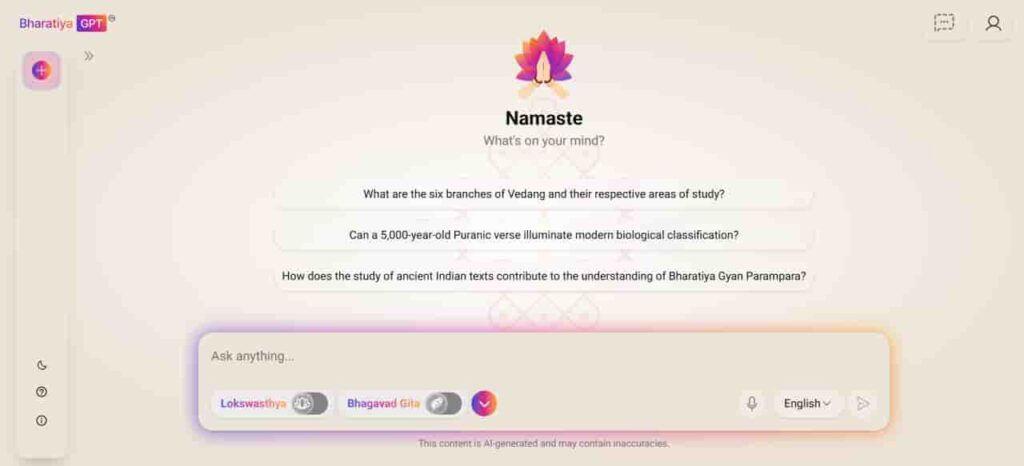
As artificial intelligence continues to reshape industries globally, India has been steadily moving towards building its own large language models (LLMs), often referred to in public discourse as “Bharatiya GPT.” The term does not denote a single product, but rather represents a broader effort to develop India-focused AI systems that understand the country’s languages, cultural context, and governance needs.At the centre of this movement are government-backed initiatives, academic collaborations, and private sector innovations aimed at reducing dependence on global AI platforms.The Need for an India-Centric AI ModelMost globally dominant AI systems, including those developed by OpenAI and Google, are primarily trained on English-heavy datasets and Western contexts. While they perform well globally, their understanding of India’s linguistic diversity and socio-cultural nuances remains limited.India, with over 20 officially recognised languages and hundreds of dialects, requires AI systems that can:Understand and generate regional languages accuratelyInterpret local context, idioms, and governance frameworksServe sectors like agriculture, healthcare, and public administration at scale“Bharatiya GPT” is therefore envisioned as a solution tailored specifically to these needs.Government-Led Initiatives and Policy PushThe Indian government has played a key role in advancing indigenous AI capabilities. Under its broader digital transformation agenda, several initiatives have been launched to support AI research and deployment.One of the central efforts is the IndiaAI Mission, which focuses on:Building domestic AI infrastructureSupporting startups and research institutionsCreating datasets in Indian languagesAdditionally, institutions like Indian Institute of Technology Madras and Indian Institute of Technology Bombay have been actively involved in AI research, contributing to language models and speech technologies tailored for Indian users.Rise of Indigenous AI ModelsIndia has already seen the emergence of several homegrown AI models that align with the idea of “Bharatiya GPT.”Key Developments:AI4BharatA research initiative focused on building open-source datasets and models for Indian languages. It has played a significant role in enabling multilingual AI capabilities.KrutrimDeveloped by Ola, Krutrim is one of India’s first large language models designed specifically for Indian users, supporting multiple regional languages.Reliance Jio AI initiativesIn collaboration with global technology partners, Jio has been working on AI platforms aimed at large-scale deployment across its digital ecosystem.These developments indicate a growing ecosystem where both public and private players are contributing to India’s AI ambitions.Challenges in Building Bharatiya GPTDespite strong momentum, developing a fully indigenous AI model comes with several challenges:1. Data AvailabilityHigh-quality datasets in Indian languages are limited compared to English, making training complex.2. Computing InfrastructureTraining large AI models requires massive computational resources, an area where global players still have an advantage.3. Linguistic ComplexityIndia’s linguistic diversity adds layers of difficulty in ensuring accuracy, consistency, and contextual understanding.4. Funding and ScaleBuilding and maintaining LLMs is capital-intensive, requiring sustained investment.Strategic Importance for IndiaThe push for Bharatiya GPT is not just technological—it is also strategic.Key Benefits:Digital SovereigntyReduces dependence on foreign AI systemsInclusionEnables access to AI in regional languages, especially in rural areasEconomic GrowthSupports startups, innovation, and job creationGovernance EfficiencyHelps in citizen services, policy implementation, and digital governanceGlobal Context and CompetitionIndia’s efforts mirror a broader global trend, where countries are developing their own AI models to maintain technological independence. Nations like China and the European Union have already invested heavily in localized AI systems.In this context, Bharatiya GPT represents India’s attempt to establish itself as a serious player in the global AI ecosystem, rather than just a consumer of foreign technology.The Road AheadIndia’s journey towards building a fully functional “Bharatiya GPT” is still evolving. Future developments are expected to focus on:Expanding multilingual capabilitiesImproving accuracy and contextual understandingScaling infrastructure through public-private partnershipsIntegrating AI into everyday governance and business use casesConclusion“Bharatiya GPT” is not a single product but a national vision for AI self-reliance. It reflects India’s ambition to create technology that is not only globally competitive but also deeply rooted in its own linguistic and cultural landscape.As development continues, the success of this initiative will depend on how effectively India can balance innovation, inclusivity, and scale—while building AI systems that truly understand and serve its diverse population.
India AI Impact Summit 2026: Detailed Agenda for Global AI Action in New Delhi
New Delhi, February 9, 2026 – India gears up for the India AI Impact Summit 2026, set for February 16-20 at Bharat Mandapam, Pragati Maidan, New Delhi, the primary venue for the India AI Impact Summit 2026, which will host the main events on February 19-20.Hosted by the Ministry of Electronics and Information Technology (MeitY), this first Global South edition, billed by Union Minister Ashwini Vaishnaw as the “largest yet,” transitions AI discourse from vision to verifiable impact under the “Three Sutras”: People, Planet, and Progress.Some sources mention a broader program across February 16-20, potentially using additional Delhi venues like Sushma Swaraj Bhawan for side events, sessions, or exhibitions. Bharat Mandapam, one of India’s largest convention centers, was upgraded by NDMC for this flagship gathering. Chief Guests and Stellar LineupPrime Minister Narendra Modi serves as the Chief Guest, inaugurating on February 16 with a keynote and hosting a leaders’ dinner. Expected heads of government include representatives from Singapore, the UAE, and Brazil (15-20 total), plus 50+ ministers. Key speakers feature Google’s Sundar Pichai, Anthropic’s Dario Amodei, Microsoft’s Satya Nadella, and Indian luminaries like Nandan Nilekani (Infosys co-founder) and Ola’s Bhavish Aggarwal. Over 40 CEOs from Reliance, TCS, and global firms join, along with a Chinese delegation, signaling a thaw in collaboration. Event Schedule and Dialogues Feb 16: Inauguration, Modi address, CEO roundtable.Feb 17-18: Plenary sessions and seven “Chakras” (working groups) on core topics.Feb 19: Startup showcase (500+ ventures), AI model launches, bilateral dialogues.Feb 20: Closing with actionable declarations.Expect 500+ parallel sessions, hackathons, and exhibitions. Dialogues include G20-style tracks on AI ethics, public-private partnerships, and Global South priorities. Participating Governments in India AI Impact Summit 2026 The summit, hosted by India’s Ministry of Electronics and Information Technology (MeitY) under the IndiaAI Mission, expects involvement from over 100 countries. Key highlights:High-Level Representation: 15-20 heads of government and 50+ ministers confirmed, including from Singapore, UAE, Brazil, and others.China: Delegation attending after India’s formal invitation, signaling AI collaboration.Preceding Hosts: Builds on summits by UK (2023 Bletchley), South Korea (2024 Seoul), France (2025 Paris).Collaborators: NITI Aayog (India’s policy think tank), state governments like Uttarakhand (pre-summit host), and international bodies (ITU, World Economic Forum).Global Engagement: Multinational working groups across Chakras, with US, UK, EU, and ASEAN nations active in prep consultations. Key Topics and Seven ChakrasThe India AI Impact Summit 2026 is structured around three foundational “Sutras” (People, Planet, Progress) that guide its discussions, with seven interconnected “Chakras” (working groups) translating these into specific, actionable themes.Core SutrasPeople: Focuses on human-centric AI, including safeguarding rights, enhancing access to services (e.g., healthcare, education), building user trust, workforce reskilling amid job impacts, and ensuring equitable benefits across societies.Planet: Addresses sustainable AI deployment, such as energy-efficient models, responsible resource use (e.g., reducing GPU/data center power demands), and AI applications for climate action, environmental monitoring, and resilience.Progress: Emphasizes inclusive innovation, capacity-building, productivity gains in sectors like agriculture and manufacturing, economic growth, and bridging the AI divide for the Global South. Seven Chakras (Key Discussion Topics)These working groups, involving 100+ countries, cover:AI governance and ethical frameworks.Trust and safety protocols for AI models (e.g., bias mitigation, transparency).AI’s impact on work and future jobs.Sector-specific applications (healthcare, agriculture, industry).Innovation and scalable solutions.Sustainability and environmental integration.Equitable access, inclusion, and development outcomes.Sessions will also spotlight IndiaAI Mission launches, startup innovations, and global standards, prioritizing “on-ground” results over regulations. What to Expect in India AI Summit?MeitY leads with partners like NITI Aayog, NASSCOM, World Economic Forum, and ITU. Corporate backers include Google, Microsoft, NVIDIA (GPU focus), and Indian firms like Tata and Adani (data centers). Governments from US, UK, EU, and ASEAN collaborate. Attendees (10,000+), policymakers, researchers, startups, NGOs, can expect networking zones, live demos (e.g., edge AI), policy labs, and a “Global AI Talent Fair.” Launches include indigenous foundational models under the Rs 10,370 crore IndiaAI Mission. India’s Strategic Push Amid HurdlesEchoing Bletchley (2023), Seoul (2024), and Paris (2025), India’s summit prioritizes “on-ground” wins for 1.4 billion people, as per Secretary S. Krishnan. AI could add $500B to GDP (NASSCOM), but challenges like GPU imports persist—eased by US trade deals and data center tax holidays to 2047. Budget 2026-27 tweaks fund nuclear-powered AI infra, as Vaishnaw eyes energy self-reliance.Vaishnaw hailed “phenomenal” global buy-in, with NDMC upgrading venues. Beyond talks, expect MoUs on compute sharing, talent visas, and sustainable AI pacts, positioning India as an AI diplomacy hub.This summit promises not just dialogue, but deliverables: inclusive, green AI for humanity’s progress.Video credit: YT@/Digital India
India Secures Record Investments at Davos 2026
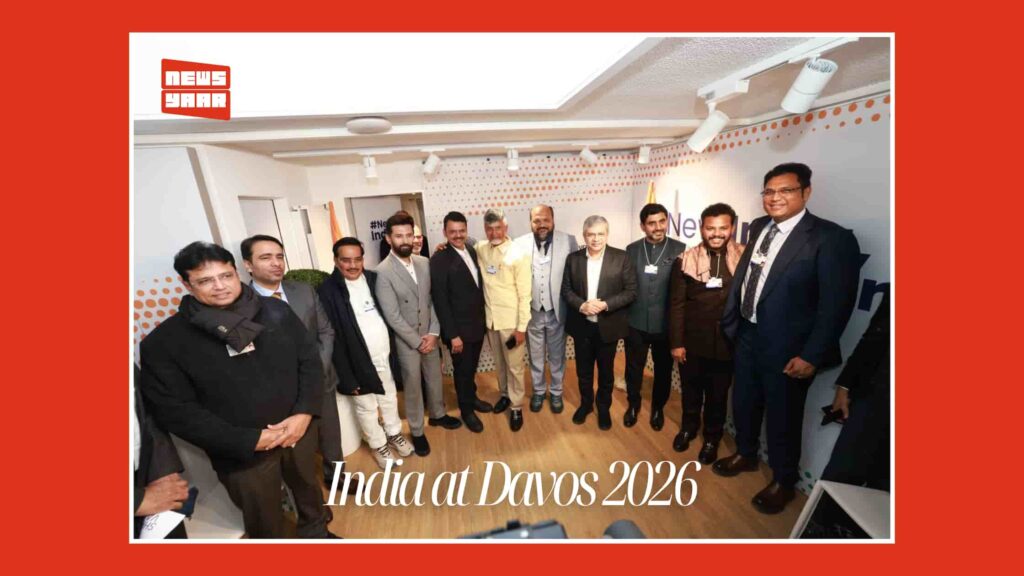
Nine States Present Unified Investment Vision at World Economic ForumIndia emerged as the preferred investment destination at the World Economic Forum 2026 held in Davos, Switzerland, with nine participating states securing commitments worth lakhs of crores across artificial intelligence, clean energy, manufacturing, and digital infrastructure. The states presented themselves as a single, integrated investment market, showcasing opportunities that position India firmly as a future-ready economic powerhouse. Gujarat, Maharashtra, Telangana, Karnataka, Uttar Pradesh, Andhra Pradesh, Kerala, Assam, and Jharkhand participated in the summit, with Assam and Jharkhand making their inaugural appearances. All states are integrated with the National Single Window System, a centralised digital platform designed to streamline investment approvals and clearances for global investors. India’s Strategic Objectives at Davos 2026 India’s presence at Davos 2026 represented a coordinated national strategy with several key objectives: Positioning India as a Unified Investment Destination: Rather than competing against each other, states presented complementary strengths, demonstrating policy alignment and infrastructure readiness across the country. Showcasing Digital Infrastructure Readiness: With the National Single Window System integration, India demonstrated its commitment to ease of doing business and rapid investment approvals. Accelerating Clean Energy Transition: States highlighted renewable energy commitments aligned with India’s net-zero targets, attracting global climate-focused investors. Building AI and Technology Leadership: Multiple states positioned themselves as AI-ready economies, competing for next-generation technology investments. Creating Employment at Scale: Investment commitments focused on job creation, with Maharashtra alone projecting over 40 lakh jobs from secured MoUs. Maharashtra Leads with ₹30 Lakh Crore Investment Pipeline Maharashtra Chief Minister Devendra Fadnavis announced MoUs worth ₹30 lakh crore, with 83 per cent involving foreign direct investment and 16 per cent in partnerships with foreign technologies. Companies from 18 countries are committed to investing in the state, potentially creating over 40 lakh jobs. Major investors include Lodha Developers, OpenAI, Iron Mountain, Princeton Data Group, Volkswagen, and Coca-Cola, with a primary focus on developing data centres. Lodha Developers pledged ₹1 lakh crore to develop a 2.5 GW Green Data Centre Park in the Mumbai Metropolitan Region, set to become one of India’s largest digital infrastructure hubs. Plans also include an AI innovation city near Navi Mumbai, a Global Capability Centre in Bandra Kurla Complex, and a ₹20,000 crore steel plant expansion in Gadchiroli. Technology and Clean Energy Drive State Commitments Telangana secured investments worth ₹30,000 crore, positioning itself as an AI-first economy. L’Oréal will establish an AI-powered Global Beauty Tech Hub in Hyderabad, while UPC Volt plans a 100 MW AI-ready data centre in Bharat Future City. The Rashmi Group committed ₹12,500 crore for a steel plant, and Schneider Electric India announced manufacturing capacity expansion. Uttar Pradesh signed MoUs exceeding ₹9,750 crore, coordinated by Invest UP. Key projects include SAEL Industries’ ₹8,000 crore waste-to-energy initiative, Sift Technologies’ ₹1,600 crore AI-ready data centres, and a ₹150 crore AI city in Noida focused on defence manufacturing. Assam has secured investment commitments worth Rs 1 lakh crore already, and it is only a base for the state in the global arena, Chief Minister Himanta Biswa Sarma said on Wednesday. Karnataka attracted interest from Nokia for Global Capability Centres and research facilities beyond Bengaluru, with discussions involving Cloudflare and aerospace companies Vast Space and Voyager Technologies. The RPSG Group invested in renewable energy projects in Vijapura and Ballari districts, supporting wind power manufacturing expansion. Kerala secured $14 billion (₹1.18 lakh crore) in commitments across renewable energy, skill development, tourism, medical services, and infrastructure. Andhra Pradesh partnered with RMZ Corporation for large-scale mixed-use, digital, industrial, and logistics infrastructure development. Jharkhand received Tata Steel’s ₹11,000 crore investment commitment for low-carbon steelmaking technologies and held discussions with Hitachi India on power and grid infrastructure. National Clean Energy Push India is rapidly expanding its clean electricity pipeline through large-scale solar and wind farms while upgrading grid infrastructure. The focus includes battery storage and hybrid storage options to meet 24×7 renewable power needs, increasing energy reliability across regions. Davos 2026 showcased India’s growing stature as a global investment destination. From state-led projects to nationwide green energy initiatives, the announcements reflect strong investor confidence in India’s policy stability, scale, and future-ready growth story, promising long-term economic growth, job creation, and deeper global integration. Why Davos 2026 Matters for India? Davos 2026 showcased India’s growing stature as a global investment destination. From state-led projects to nationwide green energy initiatives, the announcements reflect strong investor confidence in India’s policy stability, scale, and future-ready growth story, promising long-term economic growth, job creation, and deeper global integration. The success of India’s Davos 2026 participation will ultimately be measured not just in MoU values, but in actual project implementation, job creation, technology transfer, and contribution to India’s vision of becoming a developed nation by 2047. The unified approach by participating states, supported by central government infrastructure and policy frameworks, creates a strong foundation for translating commitments into tangible economic outcomes.
Vibrant Gujarat Global Summit 2026: Rajkot to Host Regional Conference Focusing on Saurashtra–Kutch Growth
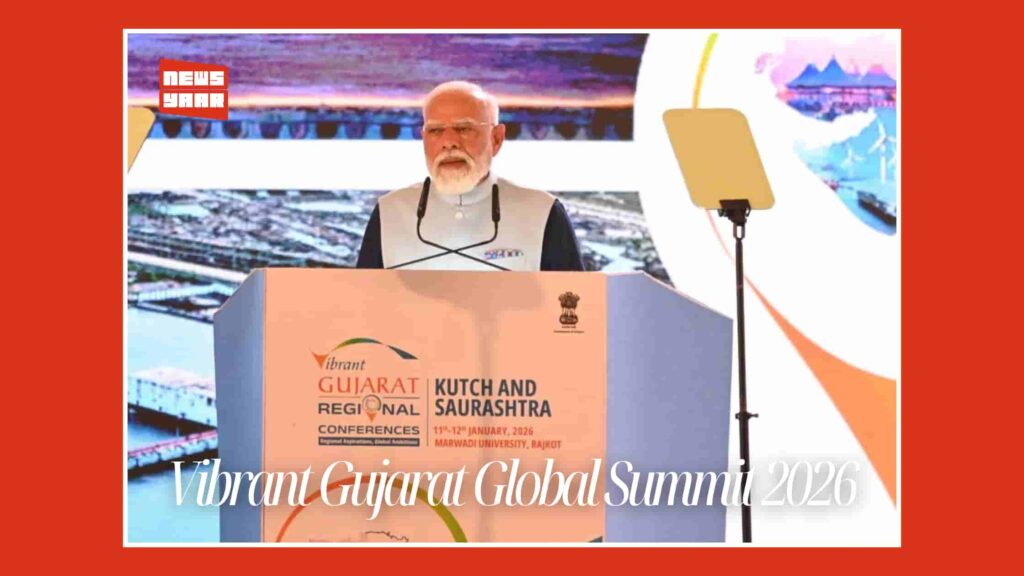
The Vibrant Gujarat initiative, one of India’s most influential investment and policy platforms, will continue its next phase in 2026 through region-specific conferences, with Rajkot hosting the Vibrant Gujarat Regional Conference (VGRC) for the Saurashtra–Kutch region. The move marks a strategic shift towards decentralised economic development, taking the Vibrant Gujarat vision beyond mega summits and closer to regional industry clusters.While the Vibrant Gujarat Global Summit is scheduled to return in 2027, the 2026 regional conferences are designed to strengthen grassroots industrial growth, attract targeted investments and align regional strengths with national development priorities.Dates and VenueEvent: Vibrant Gujarat Regional Conference (Saurashtra–Kutch)Dates: January 11 and 12, 2026Exhibition Duration: January 11 to January 15, 2026Venue: Marwadi University, Rajkot, GujaratRajkot, a major industrial and commercial hub of Saurashtra, has been chosen for its strong presence in engineering goods, auto components, ceramics, MSMEs and export-oriented manufacturing.What Is the Vibrant Gujarat Regional Conference?The Vibrant Gujarat Regional Conference is an extension of the state’s flagship Vibrant Gujarat Global Summit, launched to promote region-specific investment, sector-based policy discussions and local entrepreneurship.Unlike the larger biennial global summit held in Gandhinagar, the regional conferences focus on:District-level industrial strengthsLocal infrastructure and logisticsMSMEs, startups and traditional industriesEmployment generation and skill developmentThe Rajkot edition will specifically address economic opportunities and challenges in Saurashtra and Kutch, two regions with high industrial potential and strategic coastal advantages.Key Focus Areas and SectorsThe 2026 Rajkot conference will focus on both traditional industries and emerging sectors critical to Gujarat’s long-term growth strategy.Core Industry SectorsEngineering and auto componentsCeramics and manufacturing clustersAgro-processing and food industriesPorts, logistics and maritime tradePetrochemicals and mineralsEmerging and Priority SectorsRenewable energy and green manufacturingGreen hydrogen and clean fuel projectsDefence manufacturing and innovationStartups, MSMEs and entrepreneurshipSkill development and employment-linked industriesTourism and cultural economyThe discussions are aligned with India’s long-term development roadmap, including the Viksit Bharat @2047 vision.Key Events and HighlightsThe Vibrant Gujarat Regional Conference 2026 will feature a range of policy, business and networking platforms:Inaugural session and leadership addresses, including participation from senior central and state government leadersSector-specific conferences and panel discussions focusing on investment opportunities, policy reforms and technology adoptionReverse Buyer–Seller Meets, enabling direct interaction between domestic producers and international buyersVibrant Gujarat Regional Exhibition, showcasing industrial innovation, products and services across key sectorsUdyami Mela, aimed at promoting startups, MSMEs, women entrepreneurs and government schemesThe exhibition will run for five days, providing extended engagement opportunities for investors, businesses and the general public.Investment Outlook and Regional ImpactThe Rajkot conference is expected to play a significant role in:Attracting fresh domestic and foreign investmentsStrengthening Gujarat’s manufacturing and export ecosystemPromoting sustainable and green industrial practicesExpanding employment opportunities in Saurashtra and KutchPositioning the region as a multi-sector industrial and logistics hubPrevious regional conferences under the Vibrant Gujarat banner have resulted in substantial investment commitments and long-term industrial planning at the district level.Who Should AttendThe event is relevant for:Indian and global investorsIndustry leaders and exportersStartups and MSMEsPolicy makers and government officialsEntrepreneurs and business associationsProfessionals interested in Gujarat’s industrial and economic roadmapParticipation details and registrations are available through the official Vibrant Gujarat platforms.Why the 2026 Rajkot Conference MattersBy hosting the Vibrant Gujarat Regional Conference in Rajkot, the Gujarat government is reinforcing its approach of balanced regional development, ensuring that growth opportunities extend beyond major urban centres.The 2026 edition positions Saurashtra–Kutch as a critical contributor to Gujarat’s and India’s economic future, combining industrial strength, coastal advantage, innovation and sustainability.Video credit: YT@/NaMo
CES 2026: From Dexterous Robots to Smart Living, A Glimpse Into the Future of Technology
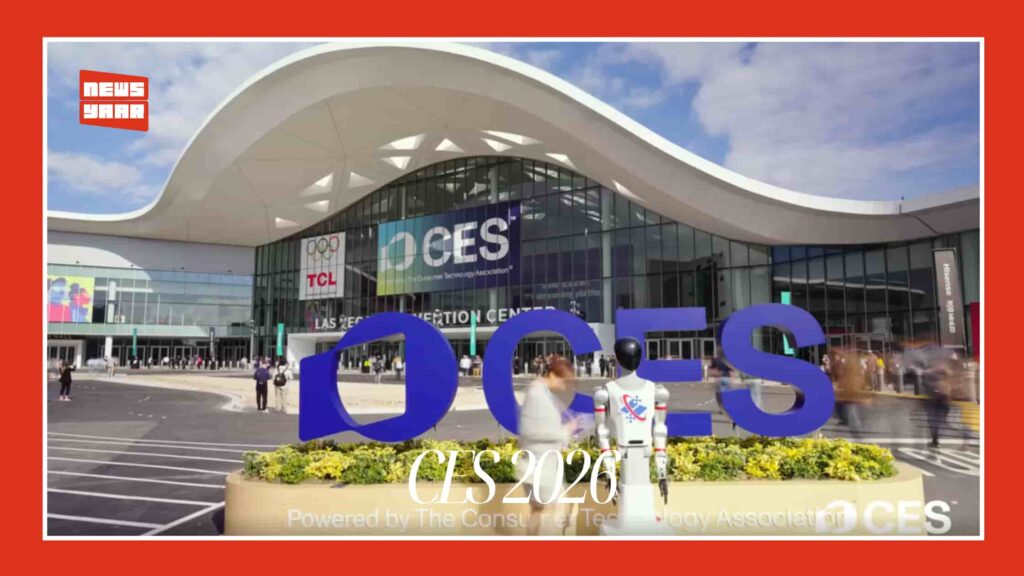
The Consumer Electronics Show (CES) 2026 once again proved why it is considered the world’s biggest stage for innovation. Held in Las Vegas, the annual tech showcase brought together global technology leaders, startups, and innovators to present ideas that could shape how people live, work, and interact with machines in the coming years.This year’s edition marked a clear shift in focus, from flashy concepts to practical, usable technologies that address real-world needs.Robots Get Smarter, Not Just TallerOne of the most talked-about highlights of CES 2026 was the rapid evolution of robotic technology. Unlike earlier years that focused on full humanoid robots, this time the spotlight was on dexterous robotic hands.These advanced systems demonstrated delicate tasks such as folding laundry, playing musical instruments, and even origami, showing how precision and control have improved significantly.Experts noted a strong presence from South Korean and Chinese companies, signalling growing competition in the robotics sector. The progress suggests robots are moving closer to assisting humans in homes, healthcare, and manufacturing environments.AI Takes Centre Stage Across CategoriesArtificial Intelligence was everywhere at CES 2026, not just as a feature, but as the foundation of innovation. From AI-powered home ecosystems to health monitoring devices, companies showcased how machine learning is being integrated seamlessly into daily life.HealthTech innovations stood out, including wearable devices that track vital signs, AI-driven wellness tools, and smart systems designed to improve long-term health outcomes. Industry experts estimate that AI-driven healthcare could become a multi-trillion-dollar market in the coming years.Smarter Homes, Cleaner LivingSmart home technology saw major upgrades at CES 2026. Brands showcased AI-powered cleaning systems, automated home management platforms, and energy-efficient appliances designed to reduce human effort while improving sustainability.Several companies also showcased whole-home ecosystems, where lighting, security, climate control, and cleaning devices communicate with each other through a single intelligent platform. This signals a future where homes don’t just respond, but anticipate needs.Displays, Gadgets, and the Rise of E-PaperDisplay technology also evolved, with innovations in e-paper and flexible screens drawing attention. Lightweight, energy-efficient displays are expected to redefine how information is consumed, especially in portable devices and smart signage.Meanwhile, consumer gadgets, from compact chargers to next-generation laptops, balanced futuristic design with immediate usability, reflecting a trend toward tech that consumers can adopt right away.CES 2026 Sets the Tone for the Year AheadCES 2026 highlighted a clear message: technology is becoming more human-centric. Instead of focusing solely on speed or power, innovation is now centred on usability, accessibility, and meaningful impact.As industries continue to adopt AI, robotics, and smart systems, CES 2026 has set the tone for a future where technology quietly blends into everyday life, making it smarter, simpler, and more connected than ever before.