




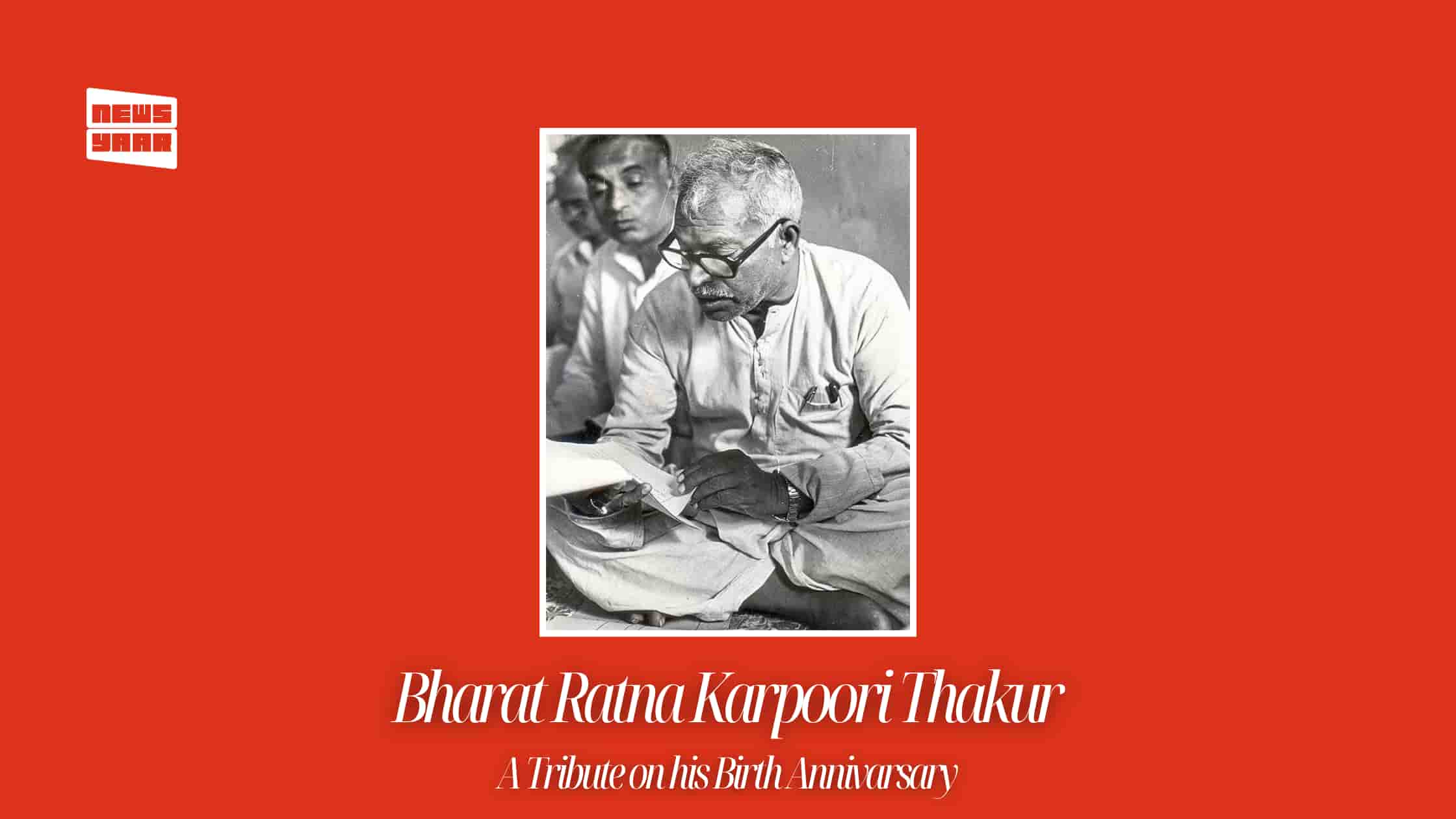
Tributes were paid across Bihar and the country on the birth anniversary of Bharat Ratna Karpoori Thakur, one of India’s most influential socialist leaders and a key architect of social justice politics in the Hindi heartland. Political leaders, social organisations and citizens remembered Thakur’s enduring contribution to inclusive governance, backward class empowerment and ethical public life.
Born on January 24, 1924, in Samastipur district of Bihar, Karpoori Thakur rose from modest beginnings to become one of the most respected mass leaders of the state. His political life was shaped by the freedom movement, socialist ideology and a deep commitment to the upliftment of marginalised communities. He passed away in 1988, but his legacy continues to influence India’s political and social discourse decades later.
On the occasion of his birth anniversary, leaders cutting across party lines highlighted Thakur’s role in institutionalising social justice policies at a time when such ideas faced strong resistance. Prime Minister Narendra Modi led the national tributes, recalling Thakur’s simplicity, integrity and lifelong dedication to the poor and backward classes. In a message, the Prime Minister described him as a visionary leader who devoted his life to empowering the marginalised and strengthening democratic values.
Bihar Chief Minister Nitish Kumar, along with several senior state leaders, paid floral tributes at Karpoori Thakur’s memorial and emphasised that his policies laid the foundation for social equality in the state. Similar commemorative events were held in Patna, Samastipur and other parts of Bihar, with public meetings recalling his governance model and personal conduct in public office.
Karpoori Thakur served as the Chief Minister of Bihar twice — first from 1970 to 1971 and again from 1977 to 1979. His tenure is particularly remembered for the implementation of reservations for backward classes in government jobs at the state level, a move that preceded and later informed national-level policy debates on affirmative action. His decision to include extremely backward classes within the reservation framework was considered path-breaking and remains central to Bihar’s social justice structure today.
Often referred to as “Jan Nayak” (people’s leader), Karpoori Thakur was known for his austere lifestyle and incorruptible reputation. Despite holding high office, he lived simply and maintained close contact with grassroots workers and ordinary citizens. His refusal to accumulate personal wealth and his insistence on clean politics set him apart in an era marked by increasing political competition and power struggles.
In recognition of his exceptional contribution to public life and social equity, the Government of India conferred the Bharat Ratna — the country’s highest civilian award — on Karpoori Thakur posthumously in 2024. The honour was widely seen as long overdue and was welcomed across the political spectrum, particularly by leaders and communities who regard Thakur as a symbol of empowerment and dignity.
Political analysts note that Karpoori Thakur’s relevance has only grown over time, especially as debates around social justice, representation and inclusive growth continue to shape Indian politics. His emphasis on education, reservation, linguistic accessibility in administration and decentralised governance remains influential, particularly in Bihar and neighbouring states.
As the nation marks his birth anniversary, Karpoori Thakur is remembered not only as a former chief minister or socialist leader, but as a statesman whose ideas were rooted in equity, humility and democratic participation. His life and work continue to serve as a moral and political reference point in contemporary India, reinforcing the values of social justice and public service.
About the Author
 Social Work Reporter





Comments
Leave a Comment
No comments yet. Be the first to comment!