EVENT
Bagurumba Dwhou 2026 in Guwahati: A Historic Celebration of Bodo Culture
- Newsyaar
- January 22, 2026
- 4:50 pm

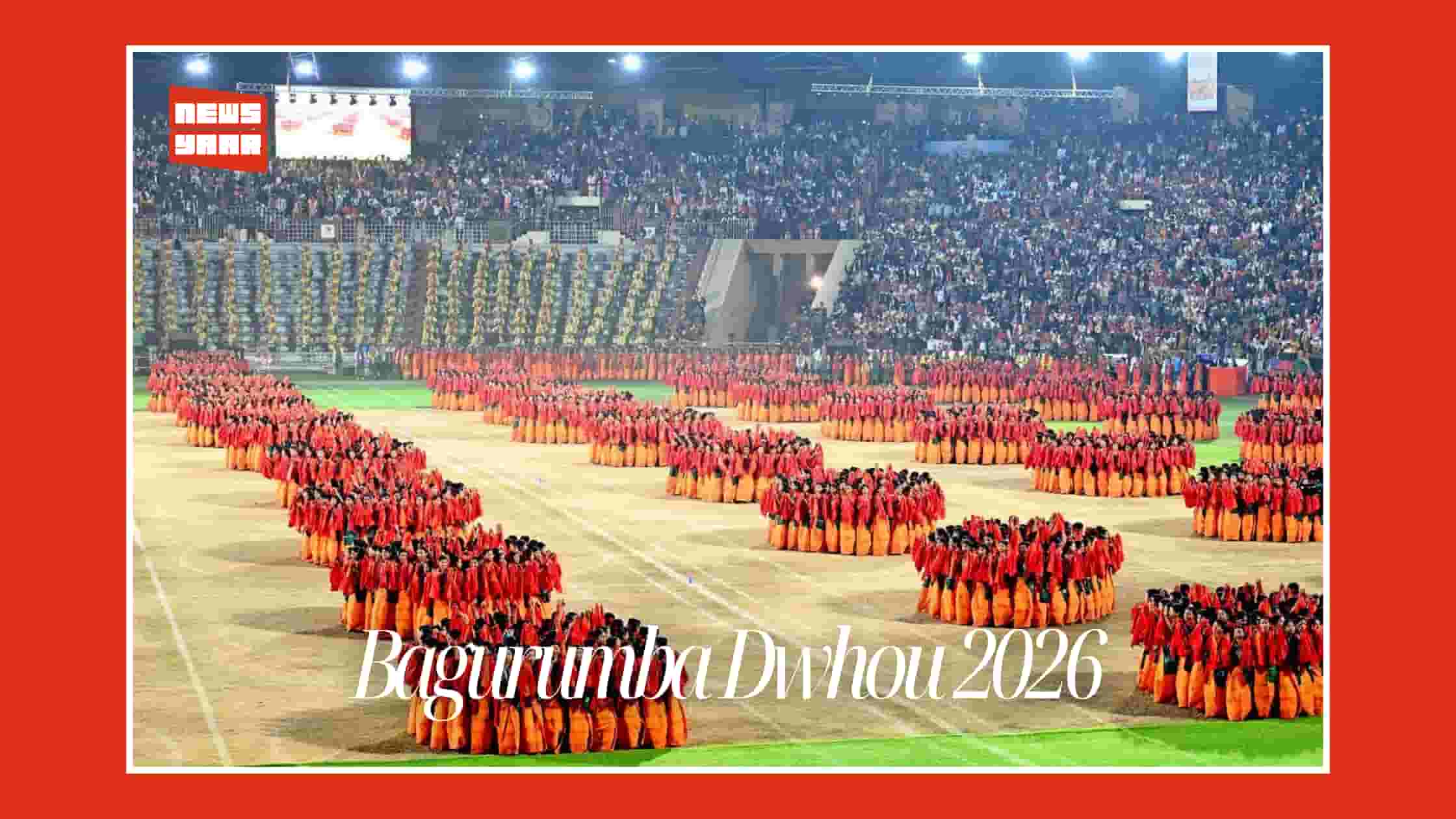
Guwahati played host to one of the most significant cultural events in recent memory on January 17, 2026, when the Bagurumba Dwhou 2026 programme brought together more than 10,000 artistes from across Assam to perform the iconic Bagurumba dance of the Bodo community in a large-scale presentation at the Arjun Bhogeswar Baruah Sports Complex, Sarusajai, Guwahati. The event was held in the presence of Prime Minister Narendra Modi, senior state leaders and cultural representatives, marking a landmark moment for the recognition and celebration of indigenous heritage.
What Is Bagurumba Dwhou?
Bagurumba is a traditional folk dance of the Bodo community, one of Assam’s oldest and most culturally rich indigenous groups. Often referred to as the “butterfly dance,” this art form draws inspiration from nature — its gentle, flowing movements mimic butterflies, birds, leaves and flowers — and symbolises peace, fertility, joy and collective harmony. Traditionally performed by young Bodo women, with men providing musical accompaniment on instruments such as the kham (drum) and sifung (flute), Bagurumba features dancers in vibrant, hand-woven attire including Dokhona, Jwmgra and Aronai.
The term Dwhou in the event’s name refers to a wave or surge, and in this context signifies a grand, synchronised display that takes the traditional dance to an unprecedented scale.
Date, Venue and Programme Details
Date: January 17, 2026
Venue: Arjun Bhogeswar Baruah Sports Complex (Sarusajai Stadium), Guwahati, Assam
The event was preceded by extensive preparations and rehearsals that began in early January, involving hundreds of master trainers and thousands of dancers from across 23 districts of Assam. Participants were brought to Guwahati in the days leading up to the event, with rehearsals starting from January 12 to ensure a coordinated and visually compelling performance.
Scale and Artistic Participation
Bagurumba Dwhou 2026 was remarkable for its scale. Organisers confirmed that over 10,000 Bodo artistes took part in a single, synchronised performance of Bagurumba, making it one of the largest cultural gatherings of its kind. The dancers represented all 81 Legislative Assembly constituencies across Assam, reflecting the dance’s pan-state cultural reach and unifying spirit.
Musical accompaniment was provided by traditional instruments including:
- Kham (drum)
- Sifung (bamboo flute)
- Serja
- Jatha and Japshring
These instruments added rhythmic depth to the choreography and underscored the event’s authenticity and traditional roots.
Prime Minister’s Participation and Remarks
Prime Minister Narendra Modi attended Bagurumba Dwhou 2026 as part of his official visit to Assam, which also included infrastructure inaugurations and other cultural programmes. On the sidelines of the event, he actively participated, including trying his hand at traditional musical instruments and being felicitated by organisers and artists.
In his address, the Prime Minister described the performance as a vibrant celebration of Bodo identity and Assam’s rich cultural heritage. He emphasised that Bagurumba Dwhou was not just a dance festival but a medium to honour the longstanding traditions of the Bodo community and remember its eminent leaders. He paid tribute to figures such as Bodofa Upendra Nath Brahma, Gurudev Kalicharan Brahma, Rupnath Brahma and others, noting their roles in social reform, cultural renaissance and political awakening.
The Prime Minister observed that efforts to promote Assamese and Bodo art forms have helped bring the region’s cultural expressions to national and global prominence, noting social media traction and national viewership of the event.
Cultural Significance and Tourism Potential
Officials and cultural advocates highlighted Bagurumba Dwhou 2026 as a milestone in Assam’s cultural narrative. According to Assam’s Cultural Affairs Minister, the mass performance was executed with structured training involving 25 experts and 400 master trainers, who prepared the dancers for the synchronised choreography that awaited them on the main stage. The event was expected to attract a large audience, with around 14,000 entry passes distributed and arrangements made for LED screens outside the stadium to accommodate additional viewers.
Beyond its immediate spectacle, Bagurumba Dwhou 2026 was promoted as a potential draw for cultural tourism. By showcasing one of Assam’s most distinctive traditional art forms on a massive platform, organisers hoped to boost interest in the state’s broader heritage offerings, further enriching tourism prospects.
Broader Context of Cultural Promotion
The Bagurumba Dwhou follows other major cultural showcases supported by central and state efforts, such as large-scale Bihu and Jhumoir performances in recent years. These have been part of a broader initiative to position Assam’s diverse dance traditions — from the globally recognised Bihu to indigenous forms like Jhumoir and Bagurumba — as symbols of cultural identity and pride.
What Bagurumba Represents
Bagurumba is more than a dance; it is a visual representation of the Bodo community’s deep connection to nature, harmony and collective joy. Its choreography evokes natural elements — fluttering butterflies, rolling leaves, flowing rivers — and symbolises themes of peace, fertility and community cohesion. While traditionally associated with festivals like Bwisagu (Bodo New Year) and Domasi, the 2026 Dwhou elevated the form from local festivities to a nationwide cultural spectacle.
Looking Ahead
Bagurumba Dwhou 2026 set a new benchmark for cultural showcases in Assam, demonstrating how traditional art forms can be celebrated at scale and introduced to broader audiences. With global interest in the dance increasing — partly driven by social media engagement and official promotion — the event is likely to spur further presentations of indigenous performing arts from the Northeast.
About the Author
Government Reporter