


Bagurumba Dwhou 2026 in Guwahati: A Historic Celebration of Bodo Culture

Guwahati played host to one of the most significant cultural events in recent memory on January 17, 2026, when the Bagurumba Dwhou 2026 programme brought together more than 10,000 artistes from across Assam to perform the iconic Bagurumba dance of the Bodo community in a large-scale presentation at the Arjun Bhogeswar Baruah Sports Complex, Sarusajai, Guwahati. The event was held in the presence of Prime Minister Narendra Modi, senior state leaders and cultural representatives, marking a landmark moment for the recognition and celebration of indigenous heritage. What Is Bagurumba Dwhou? Bagurumba is a traditional folk dance of the Bodo community, one of Assam’s oldest and most culturally rich indigenous groups. Often referred to as the “butterfly dance,” this art form draws inspiration from nature — its gentle, flowing movements mimic butterflies, birds, leaves and flowers — and symbolises peace, fertility, joy and collective harmony. Traditionally performed by young Bodo women, with men providing musical accompaniment on instruments such as the kham (drum) and sifung (flute), Bagurumba features dancers in vibrant, hand-woven attire including Dokhona, Jwmgra and Aronai. The term Dwhou in the event’s name refers to a wave or surge, and in this context signifies a grand, synchronised display that takes the traditional dance to an unprecedented scale. Date, Venue and Programme Details Date: January 17, 2026 Venue: Arjun Bhogeswar Baruah Sports Complex (Sarusajai Stadium), Guwahati, Assam The event was preceded by extensive preparations and rehearsals that began in early January, involving hundreds of master trainers and thousands of dancers from across 23 districts of Assam. Participants were brought to Guwahati in the days leading up to the event, with rehearsals starting from January 12 to ensure a coordinated and visually compelling performance. Scale and Artistic Participation Bagurumba Dwhou 2026 was remarkable for its scale. Organisers confirmed that over 10,000 Bodo artistes took part in a single, synchronised performance of Bagurumba, making it one of the largest cultural gatherings of its kind. The dancers represented all 81 Legislative Assembly constituencies across Assam, reflecting the dance’s pan-state cultural reach and unifying spirit. Musical accompaniment was provided by traditional instruments including: Kham (drum) Sifung (bamboo flute) Serja Jatha and Japshring These instruments added rhythmic depth to the choreography and underscored the event’s authenticity and traditional roots. Prime Minister’s Participation and Remarks Prime Minister Narendra Modi attended Bagurumba Dwhou 2026 as part of his official visit to Assam, which also included infrastructure inaugurations and other cultural programmes. On the sidelines of the event, he actively participated, including trying his hand at traditional musical instruments and being felicitated by organisers and artists. In his address, the Prime Minister described the performance as a vibrant celebration of Bodo identity and Assam’s rich cultural heritage. He emphasised that Bagurumba Dwhou was not just a dance festival but a medium to honour the longstanding traditions of the Bodo community and remember its eminent leaders. He paid tribute to figures such as Bodofa Upendra Nath Brahma, Gurudev Kalicharan Brahma, Rupnath Brahma and others, noting their roles in social reform, cultural renaissance and political awakening. The Prime Minister observed that efforts to promote Assamese and Bodo art forms have helped bring the region’s cultural expressions to national and global prominence, noting social media traction and national viewership of the event. Cultural Significance and Tourism Potential Officials and cultural advocates highlighted Bagurumba Dwhou 2026 as a milestone in Assam’s cultural narrative. According to Assam’s Cultural Affairs Minister, the mass performance was executed with structured training involving 25 experts and 400 master trainers, who prepared the dancers for the synchronised choreography that awaited them on the main stage. The event was expected to attract a large audience, with around 14,000 entry passes distributed and arrangements made for LED screens outside the stadium to accommodate additional viewers. Beyond its immediate spectacle, Bagurumba Dwhou 2026 was promoted as a potential draw for cultural tourism. By showcasing one of Assam’s most distinctive traditional art forms on a massive platform, organisers hoped to boost interest in the state’s broader heritage offerings, further enriching tourism prospects. Broader Context of Cultural Promotion The Bagurumba Dwhou follows other major cultural showcases supported by central and state efforts, such as large-scale Bihu and Jhumoir performances in recent years. These have been part of a broader initiative to position Assam’s diverse dance traditions — from the globally recognised Bihu to indigenous forms like Jhumoir and Bagurumba — as symbols of cultural identity and pride. What Bagurumba Represents Bagurumba is more than a dance; it is a visual representation of the Bodo community’s deep connection to nature, harmony and collective joy. Its choreography evokes natural elements — fluttering butterflies, rolling leaves, flowing rivers — and symbolises themes of peace, fertility and community cohesion. While traditionally associated with festivals like Bwisagu (Bodo New Year) and Domasi, the 2026 Dwhou elevated the form from local festivities to a nationwide cultural spectacle. Looking Ahead Bagurumba Dwhou 2026 set a new benchmark for cultural showcases in Assam, demonstrating how traditional art forms can be celebrated at scale and introduced to broader audiences. With global interest in the dance increasing — partly driven by social media engagement and official promotion — the event is likely to spur further presentations of indigenous performing arts from the Northeast.
Guwahati’s New Airport Terminal Marks a Turning Point for Assam and the Northeast
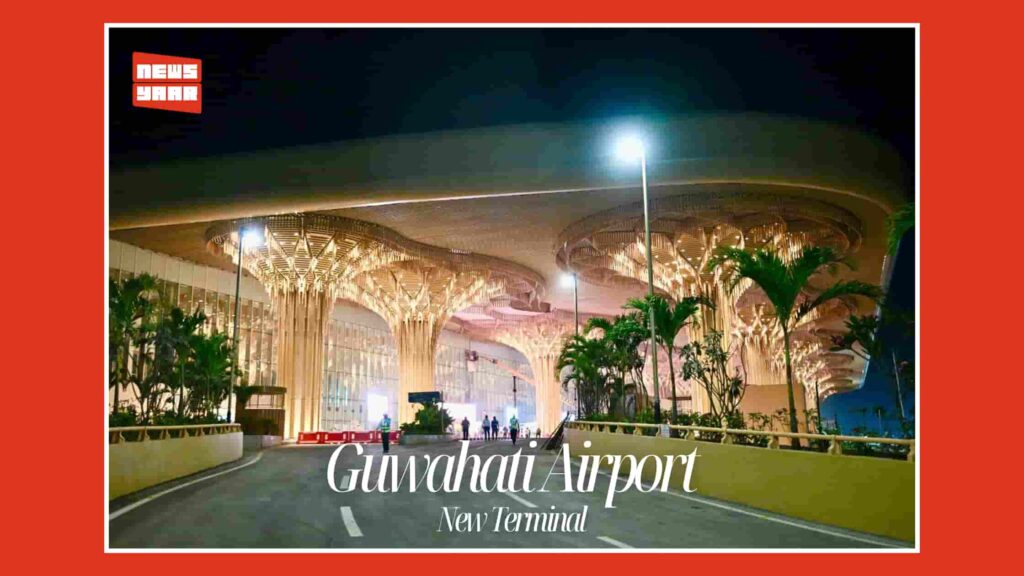
The inauguration of the new terminal at Lokpriya Gopinath Bordoloi International Airport (LGBIA) in Guwahati marks one of the most significant infrastructure upgrades in Assam in recent years, expanding the airport’s capacity and reinforcing its role as the Northeast’s primary aviation gateway. The terminal was inaugurated by Prime Minister Narendra Modi and is designed to handle over 13 million passengers annually, nearly doubling the airport’s earlier capacity of around 6 million passengers per year. Built at an estimated cost of Rs 1,200 crore, the expansion reflects a broader push to modernise transport infrastructure across eastern and northeastern India. What Has Changed at LGBIA The new terminal adds substantial scale and modern facilities to the airport: Terminal area expanded to approximately 167,000 square metres Designed to handle both domestic and international passengers Equipped with 64 check-in counters, automated baggage handling systems and expanded security lanes Integrated energy-efficient systems and passenger-friendly layouts to reduce congestion during peak travel hours With the upgrade, LGBIA now ranks among the larger airports in eastern India, both in terms of passenger handling and operational capacity. A Cultural Statement Alongside Infrastructure Unlike many airport expansions that focus purely on efficiency, Guwahati’s new terminal places visible emphasis on regional identity. Architectural elements draw from Assamese culture, with bamboo-inspired design features, local motifs and open spaces that reflect the state’s natural landscape. The installation of an 80-foot statue of Lokpriya Gopinath Bordoloi, Assam’s first Chief Minister, further anchors the project in historical and cultural context. The symbolism is deliberate — positioning the airport not only as a transport hub, but as a representation of Assam’s legacy and aspirations. Why the Expansion Was Necessary Passenger traffic at Guwahati airport has grown steadily over the past decade, driven by: Rising tourism to Assam and neighbouring states Increased business travel linked to infrastructure and energy projects Growing defence and logistics movement in the region Despite this growth, the airport’s infrastructure struggled to keep pace, often leading to congestion and delays. The new terminal addresses these constraints and prepares LGBIA for future demand, particularly as air connectivity to smaller northeastern cities improves. Strategic Importance Beyond Assam LGBIA functions as the main aviation hub for the entire Northeast, serving travellers from Arunachal Pradesh, Meghalaya, Nagaland, Mizoram and parts of Manipur. Improved capacity and passenger experience in Guwahati directly impact accessibility for the wider region. The airport also plays a role in India’s Act East policy, strengthening connectivity with Southeast Asia through potential international routes. Enhanced infrastructure makes Guwahati better positioned to support future cross-border travel and trade. Economic Impact and Future Plans The expansion is expected to generate ripple effects across multiple sectors: Tourism and hospitality, with increased visitor footfall Cargo and perishables transport, supporting regional agriculture and exports Employment in airport operations, ground handling and allied services Additionally, plans for a Maintenance, Repair and Overhaul (MRO) facility at Guwahati signal long-term ambitions to develop aviation-related services in the region, reducing dependence on metro cities for aircraft servicing. Why This Matters Now Guwahati’s new airport terminal arrives at a moment when the Northeast is no longer on the margins of India’s growth story. Infrastructure investment, regional stability and economic activity have reached a point where connectivity is no longer optional — it is essential. This expansion is not simply about accommodating more passengers. It reflects a broader recognition that Assam and the Northeast require infrastructure that matches their strategic, economic and cultural significance. As air travel continues to shape how regions connect with the rest of the country and the world, Lokpriya Gopinath Bordoloi International Airport stands as a clear signal that the Northeast’s gateway is finally being built at scale.
First Vande Bharat Sleeper Train to Run Between Guwahati and Howrah: Route, Features, Speed and Fare
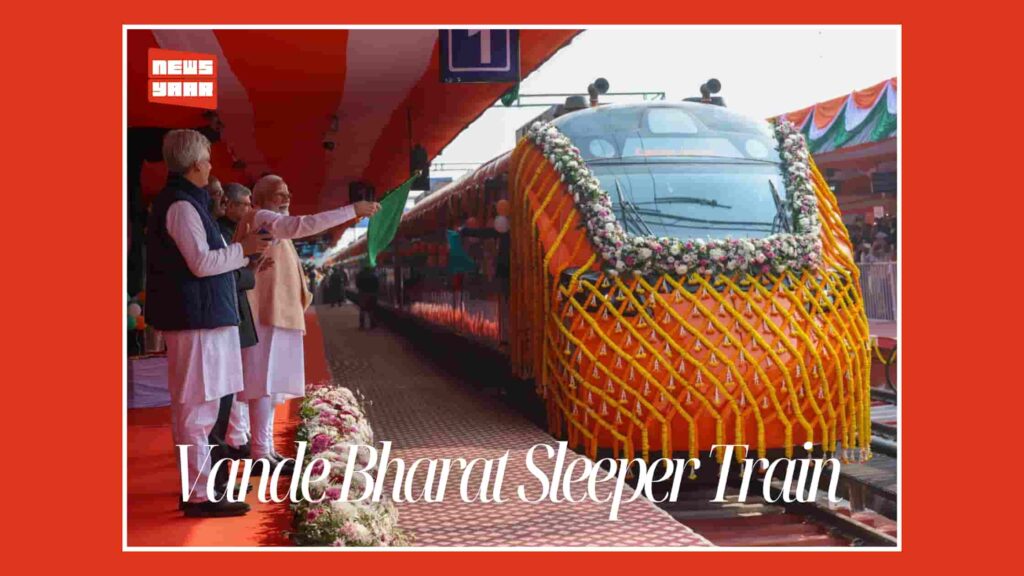
India has launched its first Vande Bharat sleeper train, marking a major milestone in the modernisation of long-distance rail travel. The new service will operate between Guwahati and Howrah, providing an overnight, high-speed connection between the Northeast and eastern India.Prime Minister Narendra Modi flagged off the sleeper variant of the Vande Bharat train from Malda Town in West Bengal, while the return Guwahati–Howrah service was inaugurated virtually. The launch signals the expansion of the Vande Bharat network beyond short daytime routes into long-haul overnight travel.Guwahati–Howrah Vande Bharat Sleeper Train RouteThe Vande Bharat sleeper train connects Howrah in West Bengal with Kamakhya Junction in Guwahati, one of the most important railway hubs in Assam. Designed as an overnight service, the train aims to offer faster, safer and more comfortable travel on a busy inter-state corridor.According to official estimates, the new service is expected to reduce travel time by nearly two and a half hours compared to existing trains on the route.Speed and Operational CapacityThe sleeper Vande Bharat train has been engineered for a top speed of 180 kilometres per hour. However, its operational speed is expected to range between 120 and 130 kilometres per hour, in line with current track conditions and safety protocols.Despite this, railway officials say the train will significantly improve journey efficiency and punctuality on the Guwahati–Howrah sector.Designed for Overnight ComfortUnlike the earlier Vande Bharat chair car services, this train has been specifically developed for long overnight journeys. It is fully air-conditioned and offers three classes of accommodation.Passenger comfort has been prioritised through ergonomically designed berths and a modern suspension system that ensures a smoother ride. Updated linens and improved onboard hygiene systems have also been introduced to enhance the travel experience.Safety and Automation FeaturesThe train is equipped with advanced safety systems, including the indigenous Kavach automatic train protection technology. Comprehensive onboard surveillance systems have been installed to improve passenger security.In addition, automated sliding doors remain closed while the train is in motion and open only when it reaches a station, adding an extra layer of safety and efficiency.Local Cuisine on BoardCatering services are included in the ticket price and have been designed to reflect regional food preferences. Passengers travelling from Guwahati to Howrah will be served Assamese cuisine, while those on the return journey can expect Bengali dishes.The initiative mirrors airline-style meal services and aims to offer passengers a more personalised travel experience.Ticket Fare and ClassesThe Guwahati–Howrah Vande Bharat sleeper train offers three classes of travel. Expected one-way fares are:3AC: Around Rs 2,3002AC: Approximately Rs 3,0001AC: Close to Rs 3,600The pricing positions the train in the premium segment while remaining competitive with existing long-distance rail services.Boost to Connectivity and TourismRailway authorities believe the introduction of the Vande Bharat sleeper train will strengthen connectivity between West Bengal and Assam. Faster overnight travel is expected to benefit business travellers, tourists and pilgrims, while also supporting economic activity across the region.With this launch, Indian Railways has indicated that sleeper variants of the Vande Bharat platform will play a key role in the future of long-distance rail travel in the country.Video credit: YT@/NaMo