Newsyaar

Advertisement

×

GOVERNMENT

Beating Retreat 2026: A Grand Musical Finale to India’s Republic Day Celebrations
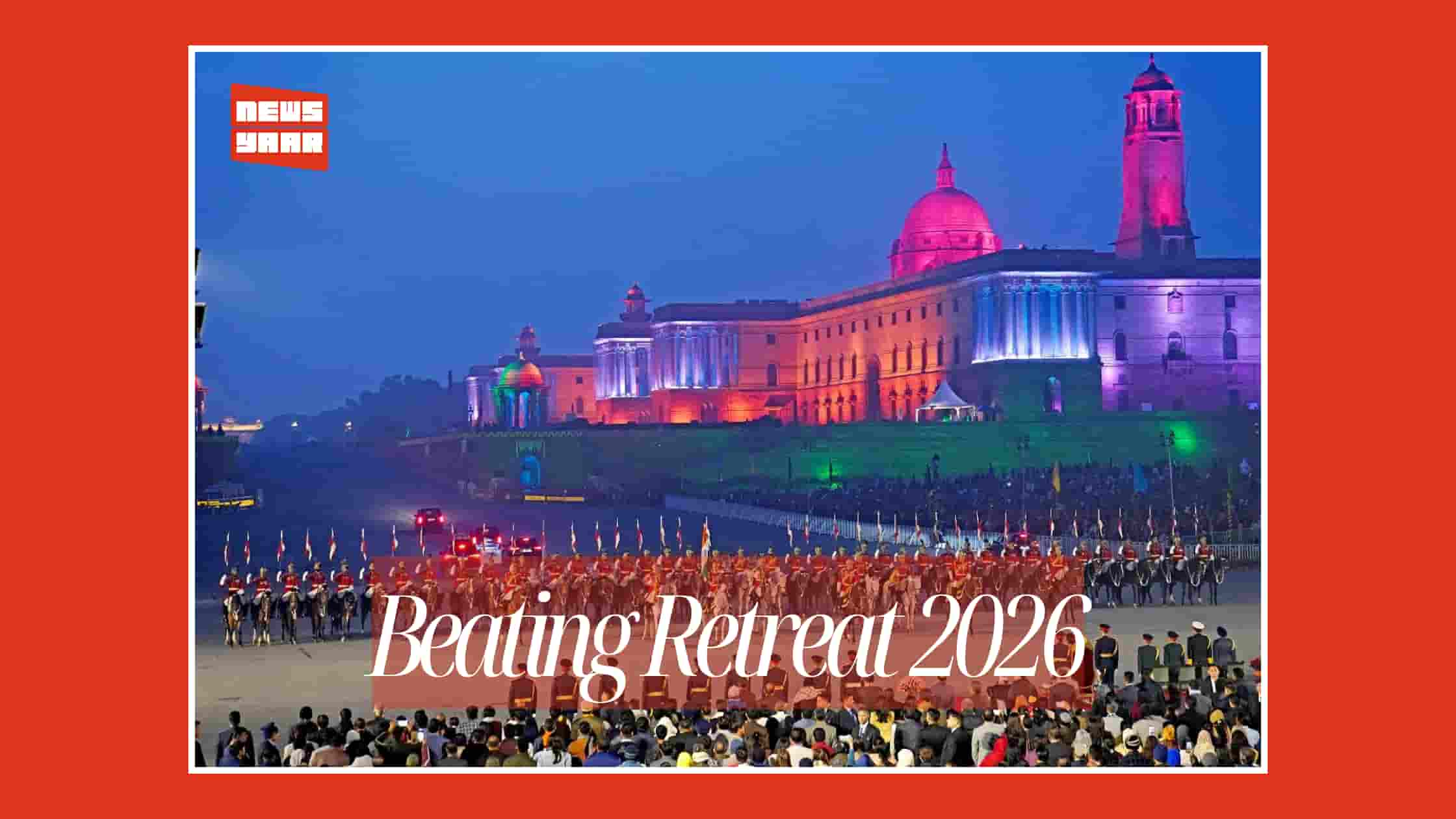


The Beating Retreat ceremony — a time-honoured tradition that marks the official conclusion of India’s Republic Day festivities — was held on the evening of January 29, 2026, at Vijay Chowk in New Delhi. The event, presided over by President Droupadi Murmu in her capacity as Supreme Commander of the Indian Armed Forces, brought to a close several days of national celebration through a stirring display of military music, ceremonial precision and patriotic sentiment. The ceremony was also attended by Prime Minister Narendra Modi, Vice President Jagdeep Dhankhar, senior government officials and distinguished guests.


Beating Retreat is held three days after Republic Day (26 January) and traditionally marks the end of India’s four-day long Republic Day celebrations that begin with the Parade on Kartavya Path and culminate in this distinctive evening event.


What Beating Retreat Is and Its Origins


The term “Beating Retreat” originates from a 17th-century military practice in England, when drums and bugles were sounded at sunset to signal troops to retire from the battlefield or return to their quarters for the night. Over time, this evolved into a ceremonial tradition involving massed military bands and formal musical routines. 


In India, the Beating Retreat ceremony was first introduced in 1955 during the state visit of Queen Elizabeth II and Prince Philip, with efforts led by officers of the Indian Army’s Ceremonial and Welfare Directorate. Since then, it has become a formal annual event integral to Republic Day observances, symbolising both military discipline and national unity.


Ceremony Format and Key Elements


Beating Retreat is celebrated against the backdrop of Vijay Chowk — the historic ceremonial venue flanked by the North and South Blocks of the Central Secretariat and the Rashtrapati Bhavan. The ceremony typically begins as the sun begins to set:


When the President arrives, she is escorted by the President’s Bodyguard (PBG), a cavalry unit of the Indian Army, and receives a ceremonial salute. This is followed by the playing of the Indian National Anthem (Jana Gana Mana) by the massed bands and the unfurling of the National Flag.


The musical programme features performances by a mass formation of bands drawn from multiple services and organisations — including the Indian Army, Indian Navy, Indian Air Force, pipe bands of the Army, Central Armed Police Forces (CAPF) and the Delhi Police bands. These ensembles play a blend of traditional military marches, Indian patriotic tunes and Western compositions.


As the sky darkens, bands perform in synchronisation, demonstrating precision drills, compound marches and coordinated formations that reflect the discipline and heritage of India’s armed forces. Many of the musical arrangements incorporate both Western and Indian instruments, honouring the diversity of India’s cultural and military music traditions.


A signature moment of the ceremony is the lowering of the National Flag at sunset. This is traditionally accompanied by a bugle call signalling retreat, followed by the martial strains of patriotic tunes such as “Saare Jahan Se Accha” and, in many years, the poignant hymn “Abide With Me”, which has been a fixture at the ceremony due to its historical association with Mahatma Gandhi.


Beating Retreat 2026: Highlights and Significance


The 2026 ceremony showcased the unity and precision of India’s military and paramilitary bands in a beautifully choreographed musical presentation. As the Republic Day festivities drew to a close, the event reaffirmed the discipline, dedication and professionalism of India’s defence and security forces.


Prime Minister Narendra Modi, while attending the ceremony, underscored its importance as a symbol of India’s rich military heritage and traditions, reflecting the nation’s pride in its armed forces and cultural unity.


The Beating Retreat ceremony is widely recognised not merely as a military protocol but as a cultural homage to the values enshrined in India’s Constitution — unity, diversity, courage and disciplined service to the nation. It is both a tribute to the armed forces and a reminder of the republic’s democratic ethos.


Cultural and Public Engagement


For many citizens and visitors, Beating Retreat represents the emotional climax of Republic Day celebrations, bringing together music, history and ceremonial dignity. The event is open to the public through limited ticketing and live broadcasts, and is followed by celebratory lighting displays across key government buildings in New Delhi, including the North and South Blocks and Rashtrapati Bhavan, enhancing the spectacle for attendees.


Authorities in the capital also implement traffic and security arrangements in areas surrounding Vijay Chowk, Kartavya Path and Rafi Marg to ensure public safety and smooth conduct of the ceremony. 


Why Beating Retreat Matters


Beating Retreat holds a unique place in India’s national calendar. Beyond crowd applause and musical grandeur, it encapsulates centuries-old military tradition adapted to contemporary national celebrations. The ceremony bridges historical practice with modern patriotic expression, reinforcing respect for service and sacrifice among citizens.


Held every year on January 29, the Beating Retreat does more than end a series of Republic Day events; it symbolises the transition from formal celebration back to the regular rhythms of civic life, leaving an enduring impression of national pride and unity.

Video credit: YT@/NaMo


About the Author

Government Reporter

Comments

Leave a Reply

Your email address will not be published. Required fields are marked *