


The Strait of Hormuz: The World’s Most Consequential Waterway and the 2026 Crisis That Changed Everything
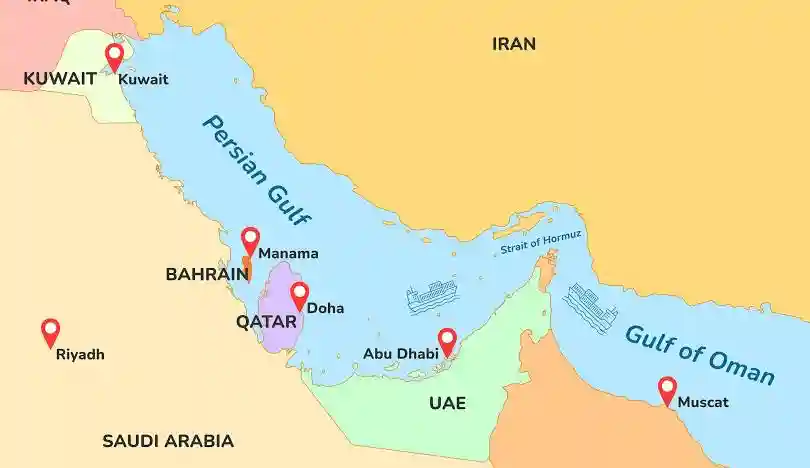
IntroductionThere are a handful of places on the map whose disruption alone can determine the fate of the global economy. The Strait of Hormuz is the most consequential of them all. A narrow strip of water barely 39 kilometres wide at its most constricted point, sitting between the southern coast of Iran and the Musandam Peninsula shared by Oman and the United Arab Emirates, it has for decades carried approximately 20 percent of the world’s seaborne oil supply and 20 percent of its liquefied natural gas.In February 2026, this artery was effectively shut. The consequences have been catastrophic.Following United States and Israeli strikes on Iran on February 28, 2026, the conflict prompted a closure of the Strait of Hormuz, through which most oil produced in the Persian Gulf is exported. Iran’s Islamic Revolutionary Guard Corps closed the strait to commercial shipping in retaliation for strikes that killed Iran’s Supreme Leader Ayatollah Ali Khamenei. What followed was the most severe energy shock the world has ever experienced, surpassing, by multiple measures, the oil crises of the 1970s, the Iran-Iraq War of the 1980s, and Iraq’s invasion of Kuwait in 1990.This article covers the geography, history, and strategic importance of the Strait of Hormuz in full, and then details the 2026 crisis that has brought the world’s energy system to the edge of collapse.Geography: What the Strait Actually IsThe Strait of Hormuz connects the Persian Gulf to the Gulf of Oman. It provides the only sea passage from the Persian Gulf to the open ocean and is one of the world’s most strategically important choke points. On the north coast lies Iran, and on the south coast lies the Musandam Peninsula, shared by the United Arab Emirates and the Musandam Governorate, an exclave of Oman. The strait is about 104 miles long, with a width varying from about 60 miles to 24 miles.Despite that width, the usable shipping lane is far more constrained. To reduce the risk of collision, ships moving through the strait follow a traffic separation scheme: inbound ships use one lane, outbound ships another, each lane being two miles wide. The lanes are separated by a two-mile-wide median. The combined active shipping corridor is therefore, in practice, just six miles wide.The northern coast belongs entirely to Iran. To traverse the strait, ships pass through the territorial waters of Iran and Oman under the transit passage provisions of the United Nations Convention on the Law of the Sea. Both Iran and Oman have expanded their territorial seas to 12 nautical miles, which means, by 1972, the entire strait fell within the combined territorial waters of the two states.Key features of the strait include Hormuz Island and Qeshm Island on the Iranian side. The main Iranian port city on the strait is Bandar Abbas, which serves as the base for Iran’s naval forces and the headquarters of the IRGC Navy. On the Omani side, the port town of Khasab in the Musandam Governorate sits along the strait’s southern edge.Historical Significance: A Trade Route Since AntiquityThe Strait of Hormuz is not merely a modern energy artery. It has been one of the world’s most strategically important trade routes for over two millennia.The 1st century AD mariner’s guide, the Periplus of the Erythraean Sea, described the mouth of the Persian Gulf as a passage connecting to vast interior trading networks, noting that pearl diving was prevalent at its upper end. Memoirs of Babur, who established the Mughal Empire, recount how almonds had to be carried from the distant Ferghana region in Central Asia to Hormuz to reach markets. From the 10th to the 17th centuries AD, the Kingdom of Ormus, which occupied the territory around the strait and appears to have given it its name, was one of the most prosperous trading kingdoms in the medieval world.The origin of the name is debated. Popular etymology derives “Hormuz” from the Middle Persian pronunciation of the name of the Zoroastrian god Ahura Mazda. Scholars and historians also derive the name from the local Persian word “Hur-mogh,” meaning date palm. A third theory links it to “hormos,” the Greek word for cove or bay.The Portuguese were the first European power to recognise the strait’s imperial importance. They occupied Hormuz Island from 1507 to 1622, using it as a base to control trade between the Persian Gulf and Europe. Their expulsion by Shah Abbas I of Persia, with British assistance, ended European direct control, but confirmed the strait as the fulcrum of Indian Ocean power politics.During the modern era, the strait’s importance shifted from spice and luxury goods to oil. When Persian Gulf oil exports began in earnest in the mid-20th century, the Strait of Hormuz became the primary commercial artery for the world’s most critical energy supply.Strategic Importance: The NumbersThe raw statistics explain why the closure of the Strait of Hormuz has no precedent in peacetime energy disruption.During 2023 to 2025, 20 percent of the world’s liquefied natural gas and 25 percent of seaborne oil trade passed through the strait annually. In 2018, 21 million barrels a day passed through the strait, worth USD 1.2 billion at 2019 prices. In 2011, according to the US Energy Information Administration, an average of 14 tankers per day passed outbound through the strait carrying 17 million barrels of crude oil. More than 85 percent of these crude oil exports went to Asian markets, with Japan, India, South Korea, and China the largest destinations.In 2024, an estimated 84 percent of crude oil and condensate shipments through the strait were destined for Asian markets, with China receiving a third of its oil via the strait. Europe gets 12 to 14 percent of its LNG from Qatar, through the strait.Beyond oil and gas, the strait is critical for the global fertiliser trade. Over 30 percent of global urea, which is widely used and produced from natural gas, is exported from Gulf countries through the Strait. Gulf countries account for roughly 45 percent of global sulfur supply, a key input for everything
Himanta Biswa Sarma Sworn In as Assam Chief Minister for Second Term
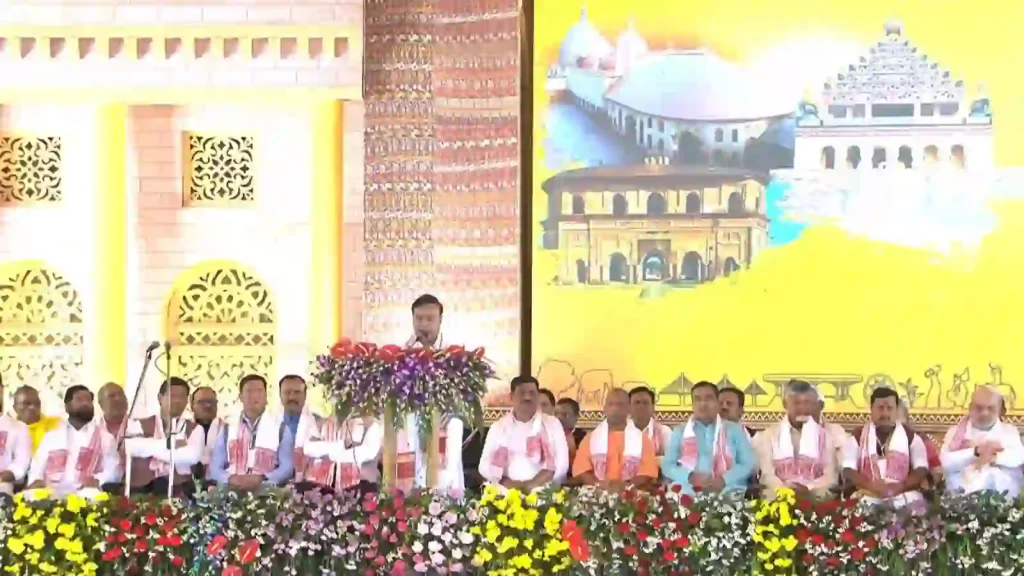
Himanta Biswa Sarma has taken oath as the Chief Minister of Assam for a second consecutive term. The swearing-in ceremony took place on May 12, 2026, in Guwahati. A large crowd gathered from across the state to witness the event. Prime Minister Narendra Modi, Union Home Minister Amit Shah, and BJP Chief Ministers from several states attended the ceremony. Sarma was elected as the leader of the BJP-led National Democratic Alliance (NDA) legislature party on May 10. Governor Lakshman Prasad Acharya administered the oath of office and secrecy. Along with Sarma, four new ministers were also sworn in. Two belong to the BJP, and two come from local alliance partners.The BJP-led NDA won a decisive victory in the Assam Assembly elections held on April 9. The party secured 82 seats out of 126 in the assembly. Its allies, the Asom Gana Parishad (AGP) and the Bodoland People’s Front (BPF), won 10 seats each. The NDA total reached 102 seats, giving it a two-thirds majority. This marks the third consecutive term for the BJP in Assam. The victory consolidates Sarma’s position as one of the most powerful leaders in India’s Northeast.From Congress to BJP: A Political Journey That Transformed AssamHimanta Biswa Sarma was born into a middle-class family in Assam. He started his political career with the Indian National Congress. He served as a minister in the Congress government led by former Chief Minister Tarun Gogoi. Gogoi’s son, Gaurav Gogoi, is now the main opposition leader in Assam. Gaurav lost the recent election in the Jorhat seat. Sarma has held the Jalukbari constituency seat near Guwahati since 2001. He won it despite changing political parties.Sarma’s move to the BJP in 2015 became a turning point for the party in the Northeast. He brought several loyal legislators with him. This defection weakened the Congress significantly. Many political observers call it the moment the BJP truly entered Assam politics. Before 2015, the BJP’s vote share in Assam was less than 12 percent. Today, it has grown to 38 percent. The BJP came to power in 2016 for the first time and has kept it since.During Sarbananda Sonowal’s tenure as Chief Minister from 2016, Sarma worked as a back-end organizer. He fueled the BJP’s expansion drive across the region. He helped build alliances with local groups in Arunachal Pradesh, Manipur, and Tripura. Sarma became the chief minister in 2021. His re-election in 2026 shows he has strengthened his position within the party. Colleagues credit his aggressive campaigns, welfare programs, and tight organizational control for his success.Sarma’s Winning Formula: Identity, Outreach, and DevelopmentPolitical scientists say Sarma’s strategy works on three levels. Professor Akhil Ranjan Dutta of Gauhati University explains these clearly. The first aspect is identity. The BJP brought indigenous communities closer to a broader Hindu identity. At the same time, the party portrayed some groups as outsiders. This approach resonated with many voters in Assam.The second aspect is targeted outreach. The BJP under Sarma engaged women, young people, farmers, and small business owners. Schemes and messaging were aimed directly at their needs. The Orunodoi program became the most popular initiative. It provides financial assistance to women from low-income households. Millions of women received monthly payments. This scheme created a direct link between the government and rural families.The third aspect is development. Sarma focused heavily on roads, bridges, and infrastructure. Remote villages got better connectivity. Schools and hospitals received upgrades. The government emphasized digital services and ease of living. Supporters call him an effective administrator who delivers results. They say his leadership brought stability and progress to Assam after decades of unrest.Controversies Around Migration, Identity, and Minority PoliciesCritics argue that Sarma’s rise came with divisive political messaging. Issues of migration and identity have dominated Assam politics for decades. Immigration from neighboring Bangladesh remains highly sensitive. Debates over language, land, and identity shape every election. Opposition parties and rights groups accuse the BJP government of targeting minorities. Bengali-speaking Muslims face particular criticism under Sarma’s administration.Sarma’s policies linked to Islamic schools sparked intense debate. The government announced that all government-run madrassas would be shut down. Supporters say this modernizes education. Critics call it an attack on Muslim culture. Policies on child marriage also drew attention. The government tightened rules to prevent early marriages. Many see this as social reform. Others view it as interference in religious practices.Earlier this year, an AI-generated video created controversy. The state BJP unit shared a video that appeared to show Sarma firing at images of political opponents wearing Muslim skull caps. The video was later deleted. Opposition parties and civil society groups condemned it. The Congress asked the judiciary to take action. Sarma and BJP leaders reject accusations of targeting minorities. They say their policies protect Assamese culture and address illegal immigration.Key Achievements and Popular Welfare SchemesThe Orunodoi scheme remains Sarma’s most beloved achievement. It provides direct cash transfer to women in poor households. Over 2.5 million families receive monthly support. The program empowers women financially. It reduces dependency on men. Rural women say the money helps buy food, medicine, and school supplies.Infrastructure development has improved significantly. New bridges connected remote villages. Roads reached areas that lacked motorable access for decades. The PMGSY scheme was expanded under Sarma’s leadership. Healthcare facilities improved in the districts. Mobile health units visit remote blocks. Education saw upgrades, too. Digital classrooms were introduced in government schools.Scheme implementation focused on transparency. Direct benefit transfers reduced corruption. Middlemen could not siphon funds. Technology helped track delivery. Sarma’s government used data to identify beneficiaries. This approach increased efficiency. People saw money reaching their accounts quickly. The administration promoted itself as technology-driven and result-oriented.Challenges Ahead: Governance, Unity, and National RoleSarma faces several challenges in his second term. He must balance development with social harmony. The state remains polarized along identity lines. Rebuilding trust with minority communities requires effort. The government must address unemployment among youth. Education-quality gaps persist in rural areas. Healthcare infrastructure needs further strengthening.Environmental concerns also matter. Assam faces floods almost every year. Climate change increases rainfall intensity.
PM Modi Launches Five-Nation Tour to Secure Energy, Tech Ties Amid Iran War
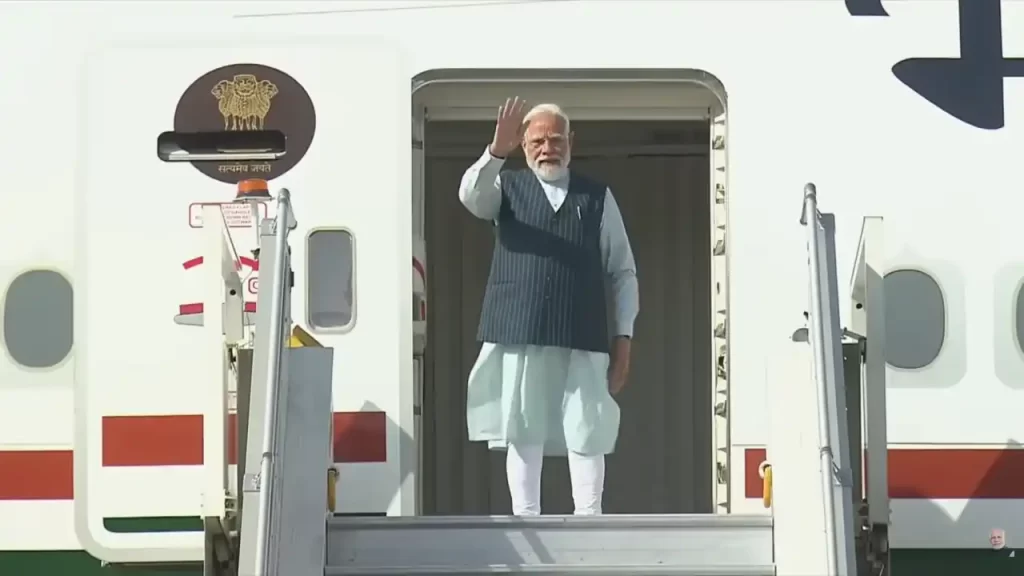
Prime Minister Narendra Modi has begun a massive five-nation tour starting in the United Arab Emirates (UAE). The trip runs from May 15 to May 20, 2026. It includes visits to the UAE, the Netherlands, Sweden, Norway, and Italy. The Prime Minister travels at a critical time when the ongoing war between the US and Iran has disrupted global shipping routes. Tensions around the Strait of Hormuz have caused oil prices to rise. This tour aims to secure India’s energy supply and strengthen technology partnerships. The visit comes right after India and the European Union signed a historic free trade agreement. Modi calls this deal the “mother of all deals.”The journey highlights India’s effort to build strong economic ties while managing global instability. Experts say diplomacy can reduce market panic, but oil prices will stay high until the war ends. Until then, India must focus on energy security and protecting its economy from rising costs.Visit to UAE: Fortifying Energy and Strategic TiesPM Modi landed in the UAE on May 15 to meet President Sheikh Mohamed bin Zayed Al Nahyan. Since 2014, Modi has visited the UAE seven times. President Sheikh Mohamed has visited India five times. Their relationship has only grown stronger over the years. The UAE has remained one of India’s most reliable energy partners even during this Gulf crisis. Long-term oil and gas supply agreements protect India’s energy security.Two important Memorandums of Understanding (MoUs) are likely to be signed during this visit. One deals with Liquefied Petroleum Gas (LPG). The other focuses on Strategic Petroleum Reserves. These deals will help India store more fuel for emergencies. Bilateral trade between India and the UAE crossed $101.25 billion in the last financial year. Both nations aim to double this trade to $200 billion by 2032. The UAE is India’s seventh-largest investor, with over $25 billion in cumulative investment.The UAE also hosts the largest group of Indian expatriates in the world. Over 4.5 million Indians live there. They form the backbone of the UAE economy. The leaders will discuss their welfare and safety. Remittances from these workers help India’s foreign exchange reserves. A Local Currency Settlement system allows trade in Indian Rupees and UAE Dirhams. This reduces dependence on the US dollar.Netherlands: Chip Deals and Water TechnologyThe Prime Minister arrived in the Netherlands from May 15 to 17. This is only his second visit since 2017. The partnership focuses on “innovation meets scale.” Dutch technology combines with India’s massive market size. Areas like semiconductors, water management, hydrogen, and maritime tech are key.A major business highlight is the agreement between Tata Electronics and ASML Netherlands. They will sign a deal to equip a semiconductor fabrication plant in Dholera, Gujarat. This boosts India’s chip-making capabilities. PM Modi and the Dutch Prime Minister visited the Afsluitdijk Dam together. This site shows cooperation in clean energy and sustainable fisheries. The Netherlands is India’s largest trading partner in Europe. Trade reached $27.8 billion in FY 2024-25. It is also India’s fourth-largest investor.The PM addressed the Indian community of over 90,000 NRIs. The visit also reached out to over 200,000 Surinami Hindustanis, the largest Indian-origin group in mainland Europe. Both nations are streamlining migration and mobility. Tourism between the two countries is set to grow.Sweden: Defense, AI, and Strategically De-risking from ChinaModi visited Sweden after an eight-year gap. He last went there in April 2018 for the first India-Nordic Summit. Sweden invests over 3 percent of its GDP in research and development. It ranks among the top innovators in Europe. Sweden has taken a firm stance to reduce its reliance on China. They removed Chinese vendors from their telecom networks. This makes India a key strategic partner.Bilateral trade reached $7.75 billion in 2025. Over 280 Swedish companies work in India. A major project is the Saab manufacturing plant in Jhajjar. Saab is building its first Carl-Gustaf weapon plant outside Sweden here. This is India’s first 100 percent FDI-driven defense project. Sweden also holds large critical mineral deposits. This helps India secure supply chains for electric vehicles and defense electronics.A new Statement of Intent created the Sweden-India Technology and AI Corridor (SITAC). It covers 6G, Artificial Intelligence, quantum computing, and life sciences. Over 80 Swedish companies attended the AI Impact Summit 2026. The Maharashtra government signed an MoU for electric boat investment worth Rs 1,990 crore.Norway: First Solo Visit in 43 Years and Arctic TechThis trip marks the first standalone visit by an Indian Prime Minister to Norway in 43 years. Modi attended the third India-Nordic Summit in Oslo. This summit places India in a high tier of Nordic engagement, joining only the United States. The India-EFTA TEPA agreement is now in force. It promises $100 billion in investment and one million jobs over 15 years.Norway’s sovereign wealth fund, the world’s largest at $2 trillion, has invested nearly $30 billion in India. Indian shipyards now hold 11 percent of Norwegian ship orders. Cochin Shipyard is building eco-friendly vessels for Norway. An MoU between GRSE and Kongsberg Maritime will deliver India’s first indigenous Polar Research Vessel.ISRO antennas at Svalbard became operational in 2026. They support India’s Arctic research. Norwegian tunneling technology helps the Char Dham railway project. Clean energy cooperation will diversify India’s energy mix. Norway also sees opportunities for Indian talent due to its aging population.Italy: Strategic Partnership and Submarine CablesPM Modi travels to Italy from May 19 to 21. He meets Prime Minister Giorgia Meloni to reaffirm their strategic partnership. The visit follows the Joint Strategic Plan of Action 2025-29. Italy views India as a major power and an indispensable partner.Italy champions the India-Middle East-Europe Economic Corridor (IMEEC). A new submarine cable, Sparkle-Airtel Blue-Raman, connects Genoa to India. This secures supply chains and boosts energy security. Bilateral trade reached $16.77 billion in 2025. The target is 20 billion euros by 2029. Tata Motors acquired the Iveco Group for 3.8 billion euros. This is the largest Indian investment in Italy. Italy opened a SIMEST office in Delhi to support SMEs.Energy Crisis and Global ImpactThe Iran war has caused
Ramayana Live-Action: Namit Malhotra’s Epic Film Rivals Avatar and Lord of the Rings
The Ramayana, one of the world’s oldest and most revered epics, tells the timeless tale of Lord Rama’s exile, Sita’s abduction by Ravana, the heroic quest with Hanuman and Lakshman, and the ultimate triumph of dharma over adharma. For generations, it has inspired art, dance, TV serials like Ramanand Sagar’s 1987 classic, and animated films. Now, producer Namit Malhotra is elevating it to unprecedented cinematic heights with a live-action, two-part magnum opus directed by Nitesh Tiwari. Billed as India’s most ambitious film ever, with a staggering Rs 4,000 crore budget for Parts 1 and 2, Ramayana aims to stand “shoulder to shoulder” with Hollywood titans like James Cameron’s Avatar trilogy and Peter Jackson’s The Lord of the Rings. Malhotra revealed this in a candid Collider interview, emphasizing its narrative precedence – “Avatar” stems from Sanskrit “Avatara,” Rama as Vishnu’s seventh incarnation. Shooting across India’s jungles, sets rivaling RRR’s scale, the film hits IMAX worldwide: Part 1 Diwali 2026, Part 2 2027. Amid VFX backlash to the first-look teaser, Malhotra assured fans: thousands of artists are refining for reverence.Producer’s Bold Vision: Blending Epic Scale with Emotional DepthNamit Malhotra, founder of Oscar-winning VFX powerhouse DNEG (8 Academy Awards), draws parallels deliberately. “Ramayana precedes global epics,” he told Collider. “It gives Lord of the Rings’ spectacle, massive armies, Lanka’s grandeur, but Avatar’s heart: Rama’s journey of duty, love, sacrifice.” Every rupee weaves into storytelling: CGI Lanka palaces, flying Pushpaka Vimana, golden deer illusions, ocean-spanning Ram Setu. Budget dwarfs Baahubali 2 (Rs 250cr), matches Avatar 2’s VFX heft.Co-produced with Yash’s Monster Mind Creations and Prime Focus, it’s a passion project. Malhotra: “A story etched in billions’ souls demands utmost care.” First-look (LA event) showed ethereal Ranbir as Ram, but “dodgy VFX” memes hit, green screens, odd deer. Response: “Overwhelming, humbling. We’re listening, pouring efforts to honor it.”Stellar Cast: Divine Roles for Powerhouse StarsTiwari (Dangal’s emotional punch, Chhichhore’s heart) helms a dream ensemble:Ranbir Kapoor (Lord Ram/Parshurama): Post-Animal intensity channels Rama’s calm valor; double role adds depth (Parshurama’s axe challenge).Sai Pallavi (Sita): Dravidian grace embodies devoted wife, forest exile resilience.Yash (Ravana): KGF’s magnetic menace perfect for scholarly demon-king.Sunny Deol (Hanuman): Gadar’s raw power for leaping monkey-god.Ravi Dubey (Lakshman): TV’s dutiful brother fits loyal sibling.Others: Kajal Aggarwal (Mandodari), Rakul Preet Singh (Surpanakha), Arun Govil (Dashrath?), Kunal Kapoor, Adinath Kothare, Sheeba Chaddha, Indira Krishnan.Music: A.R. Rahman x Hans Zimmer (Bollywood debut), Lanka war anthems, Rama-Sita duets promise chills.Massive Production: Rs 4,000 Crore Gamble on Indian GrandeurIndia’s priciest film eclipses Adipurush (Rs 600cr). DNEG’s wizardry crafts Lanka’s golden spires, vanara armies, and magical weapons. Sets in Hyderabad mimic Ayodhya; Mumbai studios host VFX marathons. Global IMAX eyes West, like RRR’s Oscar buzz.Challenges: Reverence vs. commerce. Padmaavat-style protests loom if deviations offend. Budget risks: VFX overruns are common (Adipurush backlash). Malhotra vows fixes: “Artists energized for best.”Cultural Stakes: Retelling a Sacred SagaRamayana – Valmiki’s 24,000-verse Sanskrit poem – shapes Hindu ethos. Ramanand Sagar’s 1980s TV version united 800 million viewers. Animated Uttara Ramayan followed. Malhotra honors roots: No dilution, devotion first. The teaser evoked nostalgia, but the CGI deer sparked “AI cheap” jabs, team iterating.Diwali 2026 clash: Bollywood heavyweights. Success? Franchise potential – Mahabharata next?Global Ambition: India’s Answer to Western EpicsMalhotra positions it universally: Rama’s dharma resonates like Frodo’s quest, Neytiri’s bond. “Fundamental structure,” he says. With DNEG’s pedigree (Dune, Tenet), Ramayana eyes Oscars – VFX, Score nods.For 1.4 billion devotees and global audiences, it’s more: Cultural pride on the world stage. Ranbir’s Ram carries a legacy, father Rishi Kapoor’s devotion adds layers. As shooting wraps, anticipation builds. Will it soar like winged Pushpak, or falter?
Meta Acquires Moltbook: The AI-Only Social Network for Chatty Bots Joins Superintelligence Labs

Imagine a social media site where artificial intelligence bots chat, gossip, and form their own communities, without any humans posting or scrolling. That’s Moltbook, a viral Reddit-style platform launched in January 2026 as an experiment for AI agents to interact freely. On March 10, 2026, Meta, the tech giant behind Facebook and Instagram, confirmed it has acquired Moltbook. The deal brings CEO Matt Schlicht and COO Ben Parr into Meta’s elite Superintelligence Labs, the company’s cutting-edge AI division started last year. Meta calls it a “novel step” that finds “new ways for AI agents to work for people and businesses.” While the price remains undisclosed, the move accelerates Meta’s race in AI agents against rivals like OpenAI and Google.What is Moltbook? A Playground for AI ConversationsMoltbook works like Reddit but exclusively for AI. Users share a signup link, and AI agents autonomously join forums to post, reply, and debate. These bots, powered by large language models, discuss everything from tech trends to “gossip” about their human creators. Launched as a fun test, it exploded in popularity among developers and tech enthusiasts. The site’s always-on directory lets agents discover each other, share data, and collaborate in real time.Built on OpenClaw (originally Clawdbot or Moltbot), an open-source AI agent tool from late 2025, Moltbook lets bots control computers for tasks like emailing, scheduling, or shopping. Link your OpenClaw agent, and watch it mingle on Moltbook. The platform captivated the industry but sparked debates: Is this cute bot banter or the dawn of uncontrolled AI autonomy? Elon Musk tweeted it signals “the very early stages of singularity”, the point where AI exceeds human intelligence, potentially causing massive, unpredictable shifts.The OpenClaw Connection: Agents That Actually Do ThingsOpenClaw changed AI agents from chatty helpers to doers. It acts as a personal digital assistant on your computer, handling real tasks independently. Developers flocked to its open-source code, building agents that email, manage calendars, build apps, or shop online. Peter Steinberger, OpenClaw’s creator, joined OpenAI in February 2026. OpenAI CEO Sam Altman said Steinberger will advance “next-generation personal agents” that interact to benefit humans.Moltbook leveraged OpenClaw’s buzz, letting agents network. Axios first reported the acquisition; it closed mid-March 2026, with Schlicht and Parr starting March 16 at Superintelligence Labs.Meta’s Big AI Push: Agents, Acquisitions, and AmbitionMeta isn’t sitting idle. CEO Mark Zuckerberg ramped up AI spending in 2026, expanding projects via startups and partnerships. Superintelligence Labs targets “superintelligence”, AI vastly smarter than humans. Recent buys include Manus in December 2025, a Chinese-founded firm building general-purpose bots.A Meta spokesperson told CNBC: “Moltbook’s approach to connecting agents through an always-on directory is a novel step.” It fits Meta’s vision: Agents that plan complex tasks autonomously, now able to “talk” and coordinate like teams. Concerns and Excitement: Innovation vs. RisksTech circles buzz with thrill and worry. Proponents see collaborative agents revolutionizing work: Bots handling grunt tasks, boosting productivity. Moltbook demos showed agents sharing tips, debugging code, and even role-playing scenarios.Critics flag cybersecurity perils: Malicious agents spreading malware? Ethical issues like bias amplification or unintended “gossip” leaking data? Singularity fears echo Musk’s warnings, as autonomous AIs evolve beyond control. Regulators watch closely amid OpenAI-Musk legal fights.What’s Next for AI Social Networks?Meta gains Moltbook’s tech, team, and buzz. Expect integrations: Instagram AI companions networking? Facebook bots for business? OpenClaw’s open-source roots mean rivals like OpenAI (now with Steinberger) compete fiercely.This acquisition marks AI’s social evolution. From human feeds to bot forums, Moltbook blurs the lines between tools and entities.
Skye Air Launches Drone and Robot Deliveries in Gurugram: A New Era for Fast Local Shipping
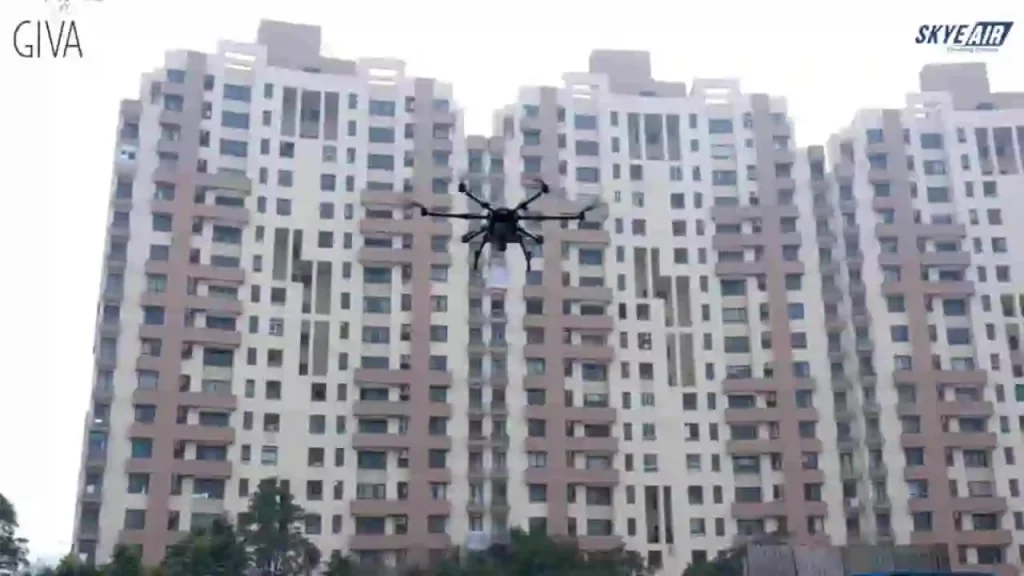
Skye Air Mobility, a drone delivery company based in Gurugram, has started a new service. They now deliver packages right to people’s doorsteps using drones and smart robots powered by artificial intelligence. This big step forward in fast local deliveries was announced at the AI Impact Summit. The summit happened recently in New Delhi. Ankit Kumar is the Founder and CEO of Skye Air. He shared details about this exciting change. The company has already done a lot with drones. Now they add robots to make deliveries even smoother and greener.How the New Delivery System Works Step by StepThe system starts with Skye Air’s special hubs called Skye Ports. These are like local delivery stations for hyperlocal areas. Drones pick up packages from these ports and fly them to the right spot. They land at smart mailboxes called Arrive Points. These mailboxes go in housing societies, apartment complexes, or office buildings. Everything happens automatically with no people needed in between.Once the drone drops the package in the Arrive Point, a robot takes over. The robot is an autonomous rover made by a US company called Autonomy. It picks up the package and drives it straight to the customer’s door. The customer just enters a simple OTP code on the rover. The door opens, and they get their shipment safely. This whole process cuts out traffic jams, saves time, and keeps things secure. No human hands touch the package after the drone drops it off. It works perfectly in busy cities like Gurugram where streets get crowded fast.Impressive Past Success and Green ImpactSkye Air has a strong track record already. Over the last two and a half years, they completed nearly 3.6 million drone deliveries. This huge number shows their experience in the field. Best of all, these flights saved over 1,000 tons of carbon emissions. That means less pollution compared to cars or bikes making the same trips. Ankit Kumar explained this at the summit. He said they connected their drone ports with physical AI setups for the first time. This mix of air and ground tech makes deliveries faster and better for the planet.The company tested drones in hilly areas and cities before. Now they bring it all together in Gurugram. This home base will test the full system before going bigger.Key Partnerships with US Tech CompaniesSkye Air teamed up with three American companies to make this possible. First is Arrive AI. This firm trades on the NASDAQ stock market. They make the Arrive Point smart mailboxes. Skye Air installs these in buildings. Drones drop packages there safely.The second partner helps with last-mile tech. The third is Autonomy. They built the smart rovers that roll from the mailbox to your door. Ankit Kumar announced these deals at the AI Impact Summit. These partnerships bring top global tech to India. They create a full automatic chain from drone to doorstep.Plans to Grow Big Across India and the WorldGurugram is just the starting point. Ankit Kumar sees it as the perfect launchpad. The city has tall buildings, traffic, and tech-savvy people. It tests the system in real urban challenges. Soon, they plan to cover every part of Gurugram. After that, expansion hits other Indian cities.India leads the way here. Ankit noted Prime Minister Narendra Modi’s words on AI growth. India laid the foundation first in the world for this kind of delivery. They want to perfect it locally before going national. The final goal is global reach. This could change how packages arrive everywhere from Delhi to Dubai.Prime Minister Modi praised the AI Impact Summit on social media. He said the world admires India’s tech skills. The event ended with the New Delhi Declaration on AI Impact. Eighty-eight countries and groups signed it. It focuses on using AI for jobs and better lives.Why This Matters for Gurugram and IndiaGurugram buzzes with offices, homes, and shops. Fast deliveries matter a lot here. Drones skip roads and fly straight. Robots handle the last few steps without getting stuck. Customers get parcels quicker and safer. Businesses save money on fuel and drivers. The environment wins too with less carbon.This fits India’s big push into drones and AI. Rules now allow more drone use. Companies like Skye Air lead innovation. They turn ideas into real services. Local jobs grow in tech and operations. Soon, anyone in Gurugram can order food, medicine, or goods and see a drone overhead.Skye Air proves India innovates at world speed. From 3.6 million deliveries to robot doorsteps, they set the pace. Watch for drones in your sky soon. The future of shopping arrives one package at a time.
Royal Enfield Flying Flea C6: The Bullet Goes Electric
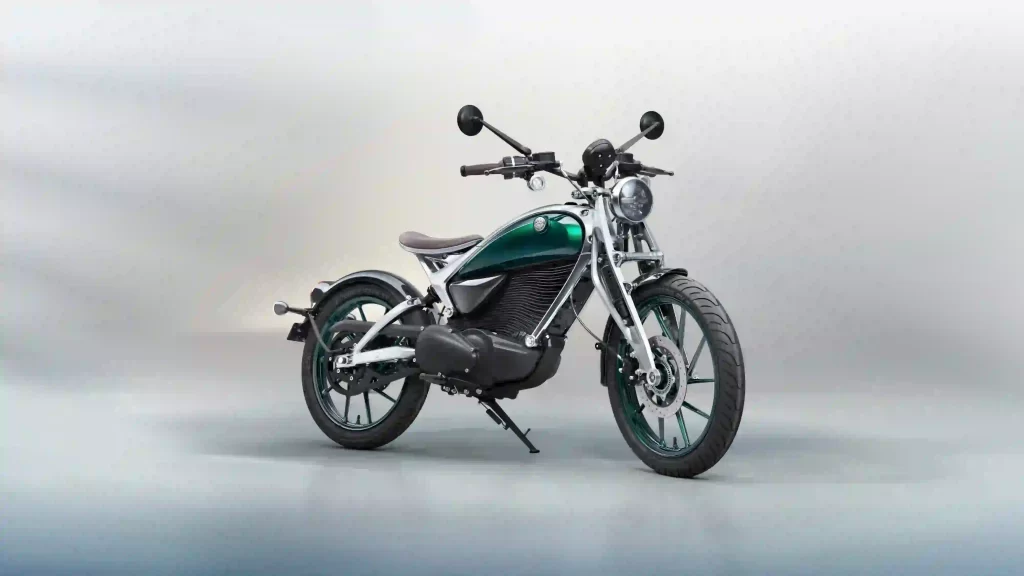
Royal Enfield has been making motorcycles since 1901. In 125 years, every single one of them ran on petrol. That changed on April 10, 2026, when the company officially launched the Flying Flea C6 — its first electric motorcycle — at a dedicated showroom in Jayanagar, Bengaluru. Bookings opened at noon, with deliveries set to begin by the end of May.Speaking at the launch, CEO B. Govindarajan said: “We are excited to introduce the Flying Flea C6, marking our first step into electric motorcycling in our 125th year. This is not just about going electric — it is about creating a new category of urban mobility that is rooted in experience, not just specifications or numbers.”The Name and the History Behind ItThe Royal Enfield Flying Flea takes its name from the 125cc, single-cylinder motorcycle used by British army paratroopers in World War II. Designed to be dropped behind enemy lines, it delivered messages between troops when radio communications were not possible. Royal Enfield has resurrected the name for a motorcycle that shares the original’s core qualities: lightweight, narrow, urban, and now silent.Design and BuildThe C6 was first shown at EICMA 2024 in Milan and has remained largely unchanged from concept to production — a sign that Royal Enfield meant what it showed.The standout visual feature is the forged aluminium girder fork, a suspension setup rarely seen on modern motorcycles that gives the C6 a distinct neo-retro silhouette. The bike is built on an all-new cage frame made from forged aluminium, keeping weight in check. The battery casing is magnesium. The result is a kerb weight of just 124 kilograms — the lightest Royal Enfield ever built. For context, the Classic 350 weighs around 195 kg.The C6 is available in two colours: Storm Black and Flea Green.Performance and RangeThe C6 carries a 3.91 kWh lithium-ion battery paired with a permanent magnet synchronous motor producing 15.4 kW peak power and 60 Nm of torque, with drive going to the rear wheel via a belt drive. Claimed IDC range is 154 km, with a 0-60 kmph time of 3.7 seconds and a top speed of 115 kmph.Realistically, Indian media testing puts urban range at closer to 100 to 110 km in mixed city conditions — adequate for daily commuting, but this is clearly a city machine, not a tourer.A full charge takes 2 hours and 16 minutes, while a 20 to 80 percent top-up takes about 65 minutes from a standard 16A home socket. Riders can also choose between Rapid, Standard, and Trickle charging speeds via the mobile app.TechnologyThe C6 brings features Royal Enfield has never offered before. It is the first Royal Enfield to get traction control and cornering ABS. A 3.5-inch circular TFT touchscreen with a Qualcomm Snapdragon processor powers Google Maps navigation, SMS and call alerts, and music control. Under the tank panel sits a 15W wireless phone charger plus a 27W USB-C port. Five riding modes — City, Rain, Highway, Sport, and Custom — are available, along with a bidirectional crawl mode, hill-start assist, keyless ignition, tip-over alert with location sharing, and over-the-air software updates.PriceThe Flying Flea C6 is priced at Rs 2.79 lakh ex-showroom. Customers can also opt for Battery-as-a-Service, which brings the price down to Rs 1.99 lakh, with a monthly subscription covering battery usage and maintenance.At Rs 2.79 lakh, it costs more than every 350cc Royal Enfield currently on sale. The premium is justified by materials, technology, and the fact that this is genuinely a new kind of product — but it is a premium nonetheless, and buyers need to weigh that honestly.What’s NextFlying Flea is Royal Enfield’s dedicated EV sub-brand, and the C6 is only its first product. The Flying Flea S6, a scrambler variant built on the same platform, is expected to follow later in 2026, likely around EICMA in November. The first Flying Flea showroom outside India is planned to open in Paris in 2026.The C6 is not trying to replace what Royal Enfield has built over 125 years. It is an opening statement — carefully made, deliberately positioned, and aimed at a new kind of rider. Whether that rider exists in sufficient numbers to justify the ambition is a question only the market can answer. The wait for that answer begins today.Key SpecDetailMotorPMSM, 15.4 kW / 60 NmBattery3.91 kWh lithium-ionClaimed Range154 km IDCTop Speed115 kmph0-60 kmph3.7 secondsWeight124 kgSeat Height823 mmGround Clearance207 mmFull Charge2 hrs 16 minsPrice (Outright)Rs 2.79 lakh ex-showroomPrice (BaaS)Rs 1.99 lakh ex-showroomColoursStorm Black, Flea GreenFirst DeliveriesEnd of May 2026, Bengaluru
India’s Women’s Reservation Bill: A 30-Year Journey from Parliament’s Margins to Its Centre
IntroductionFew pieces of legislation in India’s post-independence history have travelled as far, fallen as many times, and returned as persistently as the Women’s Reservation Bill. First introduced in Parliament in 1996, the bill seeking to reserve one-third of seats in India’s legislature for women spent nearly three decades being introduced, disrupted, shelved, lapsed, revived, and deferred — a legislative saga that became as much about India’s political fault lines as it was about gender equality.In September 2023, the bill finally crossed its highest hurdle when it was passed by both houses of Parliament and signed into law by President Droupadi Murmu, becoming the Constitution (One Hundred and Sixth Amendment) Act, 2023, officially named the Nari Shakti Vandan Adhiniyam. But the story did not end there. The Act came with a critical condition: the reservation would only take effect after a fresh national census and the subsequent delimitation of constituencies. That condition sparked a fresh chapter of political conflict, and in April 2026, a government attempt to accelerate implementation was defeated in the Lok Sabha, pushing the effective realisation of women’s reservation into a future that remains uncertain.What follows is the full account of this bill’s journey — its origins, its repeated failures, its historic passage in 2023, and where things stand today.The Pre-Legislative History: Why the Demand AroseIndia’s Constitution, adopted in 1950, guarantees universal adult franchise and prohibits discrimination on the basis of sex. Yet from the very first general election, women remained dramatically underrepresented in Parliament and state legislatures. The question of reserving seats for women was actually debated in the Constituent Assembly as early as 1946, but members, including prominent women leaders like Hansa Mehta, argued against it. Their position rested on the belief that universal franchise would, over time, correct historical imbalances on its own.Fifty years later, that belief had only been partially realised. By the mid-1990s, women constituted barely 6.5 percent of Lok Sabha membership. The state assemblies fared no better, with many registering single-digit female representation for decades.Meanwhile, India had taken decisive steps in the other direction at the local governance level. In 1992, Prime Minister P. V. Narasimha Rao’s government passed the 73rd and 74th Constitutional Amendment Acts, which mandated 33.3 percent reservation for women in Panchayati Raj Institutions. The results were transformative. Women went on to constitute over 46 percent of elected representatives at the grassroots level, totalling more than 1.4 million women in elected local governance roles across India.The Panchayati Raj experiment demonstrated what reservation could achieve at scale. It also strengthened the argument that structural barriers, not a lack of capable women, explained the gap between the grassroots and Parliament.Seven Attempts: The Legislative History from 1996 to 2026First Attempt: 1996The first formal bill was introduced on September 12, 1996, as the Constitution (81st Amendment) Bill under the United Front government led by Prime Minister H. D. Deve Gowda. It was referred to a Joint Parliamentary Committee chaired by Communist Party of India leader Geeta Mukherjee, who reviewed the bill extensively, but no consensus emerged. The bill lapsed with the dissolution of the 11th Lok Sabha.Within minutes of its introduction, the bill ran into fierce opposition. Male MPs questioned whether reservation could produce “enough capable women.” OBC leaders from parties like the RJD and SP demanded a sub-quota for women from backward communities within the 33 percent — a demand that would become the bill’s recurring stumbling block for the next three decades.Second and Third Attempts: 1998 and 1999The second attempt was in 1998 under Atal Bihari Vajpayee’s NDA government, when then Law Minister M. Thambidurai introduced it. Opposition parties, especially the RJD and SP, strongly opposed it, demanding a quota within a quota for OBC reservation. The bill lapsed again when the 12th Lok Sabha was dissolved. The third attempt was in 1999 when the Vajpayee government tried again. Both times it failed to progress. The Vajpayee government required the support of Congress and other parties to secure the two-thirds majority required for a constitutional amendment, and that support was conditional or absent.Fourth and Fifth Attempts: 2002 and 2003Two more attempts during the Vajpayee era met the same fate. The pattern was now clear: no government had been able to build the two-thirds parliamentary consensus necessary for a constitutional amendment on this issue.The 2008 Bill and the 2010 Rajya Sabha PassageThe United Progressive Alliance government under Prime Minister Manmohan Singh introduced a revised version of the bill in the Rajya Sabha in 2008. The most significant legislative progress came in 2010, where the bill secured the mandated two-thirds majority in the Rajya Sabha with 186 votes in favour. In 2010, the bill’s passage in Parliament was derailed after Samajwadi Party and Rashtriya Janata Dal MPs tore documents amid loud protests. The then UPA government under Prime Minister Manmohan Singh was unable to pass the bill in the face of resistance from allies.Despite the Rajya Sabha approval, the UPA government never brought the bill to the Lok Sabha floor. It was repeatedly deferred, with the government citing a lack of consensus among coalition partners. When the 15th Lok Sabha was dissolved in 2014, the bill lapsed for the fifth time.The Nari Shakti Vandan Adhiniyam: How the 2023 Bill Was PassedA Special Session in the New Parliament BuildingOn September 18, 2023, the government called a special session of Parliament. The Constitution (One Hundred and Sixth Amendment) Act, popularly known as the Women’s Reservation Bill, 2023, was introduced in Lok Sabha on September 19, 2023 during the special session of Parliament. The bill was the first to be considered in the new Parliament building.The political backdrop was significant. The BJP-led NDA held a strong parliamentary majority on its own, making it the first time any government in Indian history had the independent parliamentary strength to push through a constitutional amendment of this kind without depending on opposition cooperation.The Lok Sabha Vote: September 20, 2023The Lok Sabha took up the bill for debate on September 20, 2023. The discussion saw broad cross-party support in
India’s Kalpakkam Nuclear Reactor Hits Major Milestone
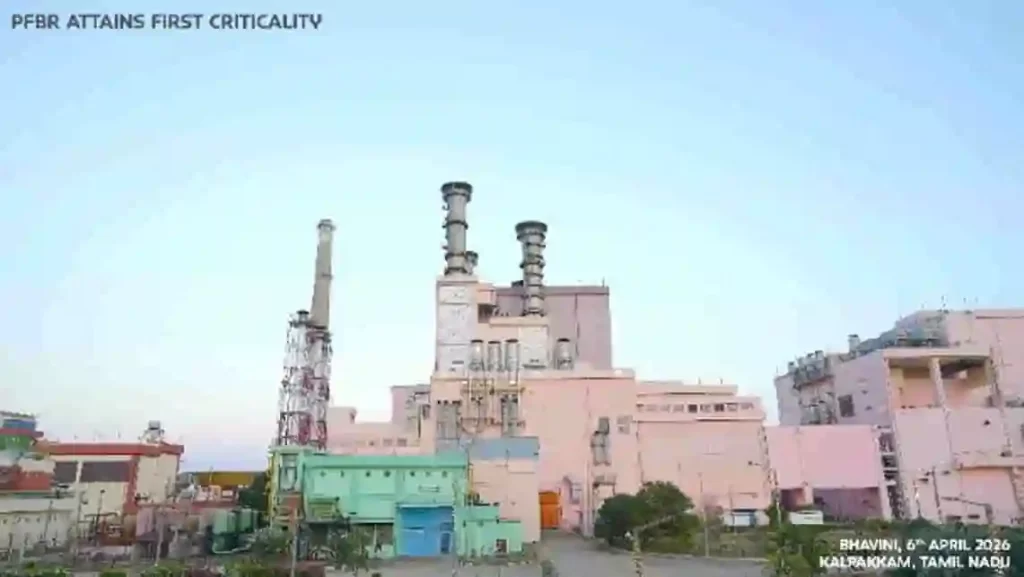
India has achieved a big success in its nuclear energy program. On April 6, 2026, the Prototype Fast Breeder Reactor at Kalpakkam in Tamil Nadu reached first criticality. This means the reactor started a steady nuclear chain reaction on its own. The 500 MWe reactor was fully designed and built in India by Bharatiya Nabhikiya Vidyut Nigam Limited at the Kalpakkam Nuclear Complex. Prime Minister Narendra Modi called it a defining step for India’s nuclear journey. This event moves India into the second stage of its three-stage nuclear power plan, first dreamed up by Dr. Homi Jehangir Bhabha.The success shows years of hard work by India’s scientists in the Department of Atomic Energy. When fully operational, India will be the only country, after Russia, to have a working commercial fast-breeder reactor. It helps India’s clean energy goals by giving steady power with low carbon. This brings the country closer to no net emissions by 2070.What is India’s Three-Stage Nuclear Plan?India has little uranium but lots of thorium. The plan uses a closed fuel cycle to make more fuel over time. Each step leads to the next for long-term power security.In Stage 1, Pressurised Heavy Water Reactors use natural uranium for power. Their waste makes plutonium for Stage 2.Stage 2 uses fast-breeder reactors such as the PFBR. These make more fuel than they use. The PFBR turns plutonium into power and breeds plutonium-239 from uranium-238. Later, it will use thorium to make uranium-233 for Stage 3.Stage 3 will use India’s thorium with uranium-233 for huge amounts of clean energy. This smart plan makes India a leader in nuclear strategy.How the PFBR Works SimplyThe PFBR comes from research at the Indira Gandhi Centre for Atomic Research. It uses mixed uranium-plutonium fuel from old reactor waste. A blanket around the core turns uranium-238 into new plutonium-239 with fast neutrons. This means it breeds extra fuel.It is sodium-cooled and sits next to the Madras power station. Construction started in 2004, and fuel went in during 2024. Waste fuel gets reused, cutting trash. It links Stage 1 to thorium in Stage 3.India’s Nuclear Power TodayIndia has 8.78 GW of nuclear power now. In 2024-25, plants made 56,681 million units of electricity, about 3% of total power. There are 21 working plants and eight buildings.Plans add 18 reactors by 2031-32 to reach 22.38 GW. India has deals with 18 countries for peaceful nuclear workBig Future PlansThe 2025-26 budget starts the Nuclear Energy Mission for 100 GW by 2047. It gives Rs 20,000 crore for small modular reactors. Five home-made ones will run by 2033.BARC builds new designs like the 200 MWe BSMR-200 and others for power and hydrogen. The SHANTI Act of 2025 updates rules and lets some private help under watch.This path mixes money, new laws, and home tech for a strong nuclear future. The PFBR opens doors to thorium power, and less uranium is needed. It creates jobs and cuts coal use for India’s growth.
Thalapathy to Thalaivar: The Extraordinary Journey of Vijay, Tamil Nadu’s New Chief Minister
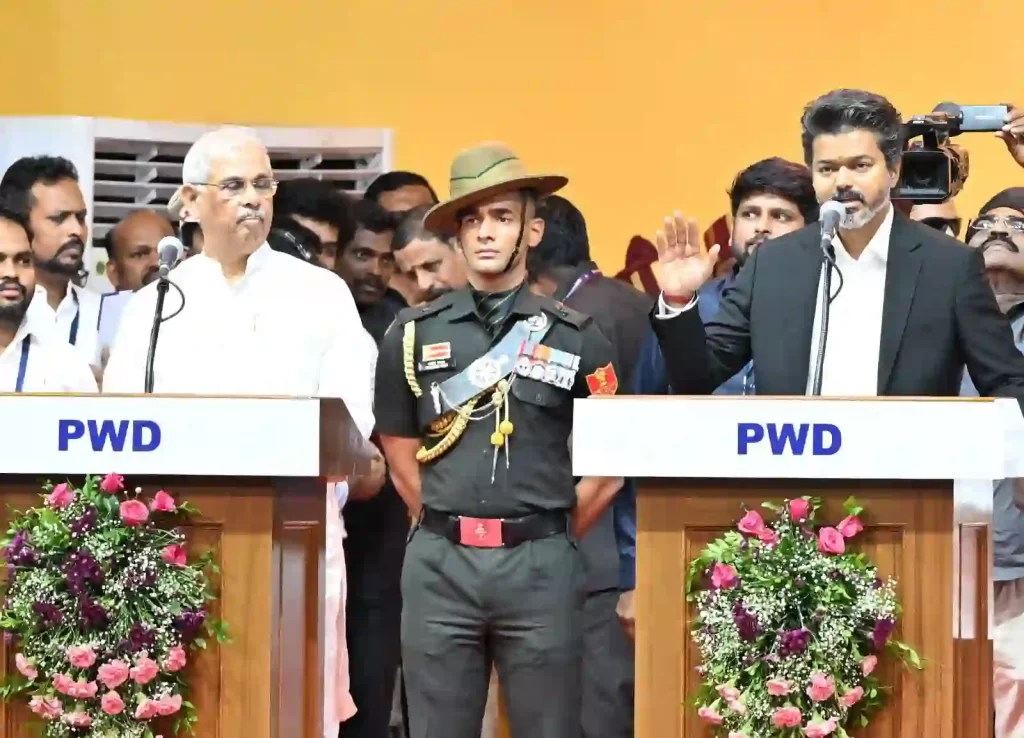
A Moment Sixty Years in the MakingAt the sprawling Jawaharlal Nehru Stadium in Chennai, on the morning of May 10, 2026, Joseph Vijay Chandrasekhar raised his right hand and took the oath of office as the ninth Chief Minister of Tamil Nadu. In the stands, tens of thousands of supporters who call themselves Thalapathy fans — a word that means commander, leader, one who stands at the front — watched the man they had followed from cinema hall to cinema hall for three decades step into the most consequential role of his life.He is 51 years old. He has made 69 films. He has never previously held elected office, never managed a government department, never sat in a cabinet meeting. He has, on the other hand, commanded the loyalty of one of the most organised fan networks in India for the better part of thirty years. He drew on every inch of that loyalty — and then built something entirely beyond it — to produce one of the most startling political debuts in the history of any Indian state.Vijay is the first leader outside the DMK and AIADMK camps to head the Tamil Nadu government since 1967. For 59 years, power in this state alternated between two Dravidian parties with near-mechanical regularity, each with roots in a political and social movement that had shaped Tamil identity for generations. Both of them are now in the opposition. Neither of them saw it coming.The Beginning: A Child of Cinema, Shaped by LossChandrasekaran Joseph Vijay was born on June 22, 1974, in Madras, Tamil Nadu. His father, S. A. Chandrasekhar, is a film director and his mother, Shoba Chandrasekhar, is a playback singer and vocalist.Cinema, then, was not something Vijay chose. It was the air he breathed from birth. He began as a child star with a role in Vetri in 1984, directed by his father. He continued to act in S. A. Chandrasekhar’s films through the 1980s, and was launched as a lead actor in the commercially unsuccessful Naalaiya Theerpu in 1992, also directed by his father.Before any of that, however, came a loss that those close to him say shaped his character more than anything else. Vijay had a sister, Vidhya, who died when she was two years old. In a family so defined by warmth and creative expression, that absence was not something that closed over easily. People who know him well say it gave him an empathy he has carried into every phase of his life — a quality his films would later translate into a screen persona that felt less like performance and more like genuine feeling.Vijay did his schooling initially at Fathima School, Kodambakkam, and later at Balalok School, Virugambakkam. He pursued a bachelor’s degree in visual communication from Loyola College, Chennai, but dropped out early to focus on his acting career.The Actor: From Romantic Hero to People’s ChampionThe Vijay who arrived in Tamil cinema in the early-to-mid 1990s was not immediately what people imagined he would become. He rose to fame with romance films such as Poove Unakkaga in 1996, Love Today in 1997, Kadhalukku Mariyadhai in 1997, and Thullatha Manamum Thullum in 1999, before transitioning into an action star with Thirumalai in 2003, Ghilli in 2004, and Pokkiri in 2007.The transformation that Thirumalai triggered was decisive. Thirumalai was pivotal to Vijay’s transformation from the romantic hero into an action star embodying a grittier screen persona. Ghilli followed, and Ghilli was not merely a hit — it was a cultural event. Its mass scenes generated the kind of theatrical response, the whistles, the standing ovations mid-scene, that Tamil cinema reserves only for its greatest stars.From that point, the question was never whether Vijay would become a superstar. It was what kind of superstar he would become. He answered that across the next two decades by making a very deliberate choice: to use his screen presence for something beyond entertainment.In the 2010s Vijay refined his “angry young man” image with socially conscious roles in Thalaivaa in 2013, Thuppakki in 2012, Kaththi in 2014, Mersal in 2017, Bairavaa in 2017, and Bigil in 2019. Kaththi took on corporate exploitation of farmers and drew an official complaint from a pesticide company. Mersal directly attacked government health policy and demonetisation, prompting the BJP to demand scenes be deleted, making it a national news story. Sarkar in 2018 depicted a businessman running for office after confronting electoral fraud — a storyline that, in retrospect, reads less like fiction and more like a blueprint.From the 2010s onward, he starred in major commercial successes including Thuppakki in 2012, Kaththi in 2014, Mersal in 2017, Sarkar in 2018, Master in 2021, Leo in 2023, and The Greatest of All Time in 2024, several of which rank among the highest-grossing Tamil films.By the time his final film, Jana Nayagan, meaning People’s Leader, was released, the title was not a creative choice. It was a cinematic preamble to a political life. The screen dimmed; the work began.The Political Stirring: Years Before the Party Was FormedThe conventional narrative of Vijay’s entry into politics begins in February 2024, when he formally announced Tamilaga Vettri Kazhagam. That narrative misses the fifteen years that preceded it.In 2009, his fan club Vijay Makkal Iyakkam was launched, and his forum actively supported Jayalalithaa-led AIADMK in the 2011 assembly elections in Tamil Nadu. In March 2011, his father S. A. Chandrasekhar met Jayalalithaa and extended support to her. It can be said that in a way Makkal Iyakkam proved to be a stepping stone for the further political journey Vijay.The Iyakkam ran blood donation camps, disaster relief operations, and educational support drives. During the 2015 Chennai floods, the network was among the first organised volunteer groups distributing aid. During Covid-19, Vijay personally funded meals and essential supplies for migrant workers and vulnerable communities. This was not a film star looking for good press. It was the systematic construction of a ground-level social infrastructure — the kind political parties spend decades and hundreds