


Doomsday Clock Explained: Why Humanity Remains 90 Seconds from Midnight
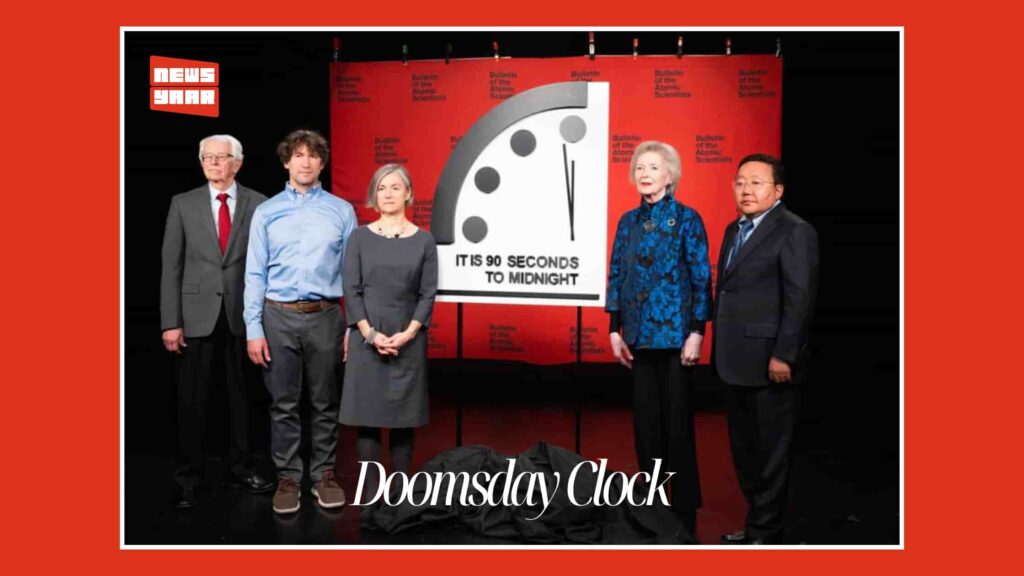
The Doomsday Clock, a symbolic measure of humanity’s proximity to global catastrophe, remains set at 90 seconds to midnight, the closest it has ever been to the point representing irreversible disaster. Maintained by the Bulletin of the Atomic Scientists, the clock reflects the collective judgement of leading scientists, security experts and Nobel laureates on the state of existential threats facing the world.First unveiled in 1947, the Doomsday Clock was conceived by scientists who had worked on the Manhattan Project and later became deeply concerned about the consequences of nuclear weapons. What began as a warning about atomic warfare has since evolved into a broader indicator that incorporates multiple human-driven risks, including nuclear conflict, climate change, biological threats, disruptive technologies and geopolitical instability.Midnight on the clock does not represent a specific event or date. Instead, it symbolises a threshold beyond which civilisation could face irreversible damage. The clock’s movement toward or away from midnight is recalibrated periodically based on global developments, policy decisions and emerging scientific assessments.Why the Clock Is Still at 90 SecondsThe decision to keep the Doomsday Clock at 90 seconds to midnight reflects the Bulletin’s view that the global risk environment remains exceptionally dangerous, with no meaningful improvement across major threat categories.At the centre of this assessment lies the continued risk of nuclear confrontation. More than three decades after the end of the Cold War, nuclear weapons remain deeply embedded in global security doctrines. Approximately 12,000 nuclear warheads exist worldwide, many on high alert. The erosion of arms control frameworks, combined with heightened geopolitical tensions, has increased the risk of miscalculation, misunderstanding or unintended escalation.The ongoing conflict in Ukraine, now entering a prolonged phase with no clear resolution, has brought nuclear rhetoric back into mainstream strategic discourse. Relations between nuclear-armed states have grown more confrontational, while communication channels that once helped manage crises have weakened. Experts warn that even a limited nuclear exchange would have catastrophic humanitarian, environmental and economic consequences far beyond national borders.Climate Change as a Risk MultiplierClimate change is another central reason for the clock’s position. Scientists associated with the Bulletin consistently describe climate disruption as a threat multiplier, exacerbating existing political, economic and social stresses. Rising global temperatures, intensifying extreme weather events, melting glaciers and sea-level rise are no longer future projections but present realities.Despite international agreements and climate pledges, global greenhouse gas emissions continue at levels incompatible with limiting warming to safer thresholds. The failure to translate commitments into action has raised concerns that climate impacts could trigger large-scale displacement, food insecurity and conflict, further destabilising fragile regions.The Bulletin has emphasised that climate risks intersect with nuclear and geopolitical dangers, creating complex feedback loops that make crises harder to manage and resolve.Biological Risks and Global Health VulnerabilitiesThe COVID-19 pandemic reshaped global thinking around biological threats, exposing weaknesses in health systems, international coordination and crisis response mechanisms. While the immediate emergency has passed, experts caution that the world remains underprepared for future pandemics.Advances in biotechnology, while offering immense benefits, also raise concerns about accidental releases, laboratory safety and the potential misuse of biological agents. The Bulletin notes that insufficient global governance in this area increases the likelihood that biological risks could escalate rapidly before adequate countermeasures are deployed.Technology, AI and Unintended ConsequencesEmerging technologies, particularly artificial intelligence, have become an increasingly important factor in the Doomsday Clock’s assessment. Rapid advances in AI, autonomous systems and cyber capabilities are transforming economies and militaries alike, often faster than regulatory or ethical frameworks can adapt.Of particular concern is the integration of AI into military decision-making systems, where reduced human oversight could increase the risk of unintended escalation during crises. The spread of AI-driven misinformation and deepfake technologies has also undermined trust in institutions, media and democratic processes, contributing to political polarisation and instability.The Bulletin has warned that technological innovation without adequate safeguards could amplify existing threats rather than mitigate them.The Role of Geopolitics and Global FragmentationA defining feature of the current era is the fragmentation of global cooperation. Multilateral institutions face growing pressure, while geopolitical rivalries increasingly shape international engagement. Trade disputes, sanctions regimes and strategic competition have narrowed the space for collective problem-solving.The Doomsday Clock reflects this reality by highlighting not just the presence of risks, but the absence of effective global responses. According to the Bulletin, many of today’s dangers are exacerbated by mistrust between states and the prioritisation of short-term national interests over long-term global stability.A Warning, Not a PredictionCrucially, the Bulletin of the Atomic Scientists stresses that the Doomsday Clock is not a forecast of inevitable disaster. Rather, it is a warning signal intended to prompt reflection, debate and action. The clock’s hands have moved away from midnight in the past, most notably after the Cold War, demonstrating that political choices and international cooperation can reduce existential risk.The current setting at 90 seconds to midnight is meant to convey urgency. It reflects a judgement that humanity is operating with a dangerously narrow margin for error — but not that catastrophe is unavoidable.Why the Doomsday Clock Still Matters TodayIn an era of constant news cycles and competing crises, the Doomsday Clock endures because it offers a unified framework for understanding global risk. It reminds policymakers and the public alike that nuclear weapons, climate change, pandemics and disruptive technologies are interconnected challenges requiring coordinated responses.The Bulletin argues that humanity possesses the knowledge and resources needed to address these threats. What remains uncertain is whether there is sufficient political will to act decisively and collectively before risks escalate further.As the world navigates an increasingly complex and volatile landscape, the Doomsday Clock’s position serves as both a mirror and a message — reflecting the consequences of current choices and urging leaders to recognise that the future is still shaped by decisions made today.
Tata Mumbai Marathon 2026: Date, Winners, Route, Celebrities, Elite Runners and Why the Race Matters
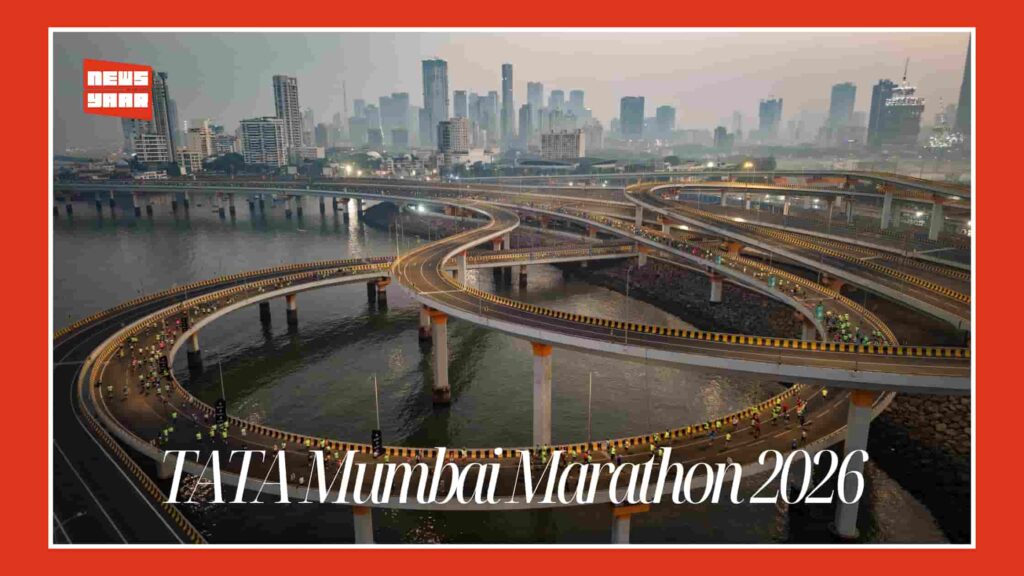
The Tata Mumbai Marathon 2026, one of Asia’s largest and most prestigious road races, was held on January 18, 2026, transforming Mumbai’s streets into a celebration of endurance, inclusivity and city pride. Thousands of runners from India and abroad participated across multiple categories, while elite athletes, celebrities and civic leaders reinforced the marathon’s position as a landmark sporting and cultural event. Organised by Procam International in association with the Tata Group, the Mumbai Marathon continues to be a key fixture on the global long-distance running calendar and a flagship event in India’s sports ecosystem. Tata Mumbai Marathon 2026: Race Categories and Distances The 2026 edition featured a wide range of race formats, allowing participation from professional athletes as well as first-time runners: 42.195 km Full Marathon (Elite & Open Category) 21.097 km Half Marathon 10 km Timed Run 5 km Run for All Senior Citizens’ Run This structure ensured that the Tata Mumbai Marathon remained both highly competitive and mass-participative, a defining feature of the event since its inception. Mumbai Marathon 2026 Route, Venue and Course Highlights The race commenced in the early hours near Chhatrapati Shivaji Maharaj Terminus (CSMT), with the route spanning some of Mumbai’s most recognisable landmarks. Runners passed through Marine Drive, Nariman Point and key arterial roads, experiencing a course that blends urban intensity with coastal beauty. The early morning schedule and sea-facing stretches helped maintain favourable running conditions, while strict traffic and safety protocols ensured smooth execution across the city. Elite Race at Tata Mumbai Marathon 2026: International and Indian Athletes The elite field at the Tata Mumbai Marathon 2026 featured top runners from Kenya, Ethiopia and other East African nations, continuing their strong presence in global distance running. Indian athletes also made their mark, with Kartik Karkera emerging as a notable performer in the men’s elite race. His effort was widely viewed as a significant step for Indian long-distance running, highlighting growing domestic competitiveness against established international runners. The elite races delivered tactical battles, fast pacing and strong finishes, reinforcing Mumbai Marathon’s standing as a serious international athletic contest. Celebrities at Tata Mumbai Marathon 2026: Aamir Khan Joins the Run Bollywood actor Aamir Khan joined thousands of runners on the streets of Mumbai, lending star presence to the event. Speaking during the marathon, Khan described the experience as a reflection of Mumbai’s resilience and collective spirit, praising participants for their enthusiasm and discipline. Celebrity participation has become an important element of the Mumbai Marathon, helping bridge the gap between elite sport and popular culture while motivating wider public participation. Sponsors and Support System: Bisleri and Event Infrastructure Bisleri, the Official Hydration Partner for Tata Mumbai Marathon 2026, ensured uninterrupted hydration support across the route. The event also featured: Medical aid and emergency response teams Volunteer-managed hydration and energy stations Live entertainment zones On-ground crowd and traffic coordination These measures played a crucial role in maintaining runner safety and enhancing the overall experience. Public Participation and Social Impact of Mumbai Marathon 2026 Beyond competition, the Tata Mumbai Marathon continues to function as a social movement. Corporate teams, schools, NGOs, fitness groups and charity runners participated in large numbers, using the platform to raise awareness for causes ranging from health and education to environmental sustainability. The Run for All and Senior Citizens’ Run segments underlined the marathon’s inclusive philosophy, making it accessible to participants across age groups and fitness levels. Tourism, Culture and the Mumbai Experience For international and out-of-city participants, the marathon doubled as a gateway to exploring Mumbai. Many runners extended their visits to experience the city’s heritage sites, coastal promenades and diverse cuisine. Spectators along the route added to the festive atmosphere with music, cheering zones and local flavour, turning the race into a city-wide celebration rather than a closed sporting event. Why the Tata Mumbai Marathon Is Important for India The Tata Mumbai Marathon plays a vital role in India’s sporting and civic landscape by: Promoting fitness and long-distance running culture Providing a global platform for Indian athletes Supporting charitable fundraising initiatives Strengthening Mumbai’s international sporting profile Encouraging community participation and inclusivity Its consistent growth reflects India’s increasing engagement with endurance sports and large-scale civic events. Conclusion The Tata Mumbai Marathon 2026 once again demonstrated why it is regarded as one of Asia’s premier road races. By seamlessly blending elite competition, mass participation, celebrity engagement and social purpose, the event captured the essence of Mumbai — energetic, resilient and inclusive. As runners crossed finish lines against the backdrop of the city’s skyline, the marathon reaffirmed its place not just as a sporting event, but as a symbol of India’s evolving fitness culture and global sporting ambition.