


18th Rozgar Mela: Massive Government Job Drive Connects Youth With Employment Opportunities
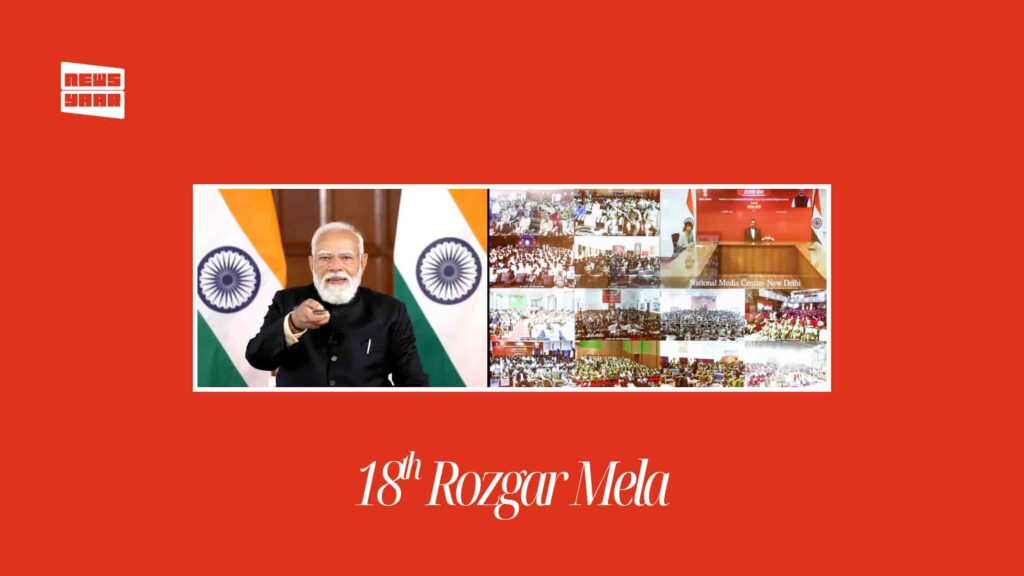
The 18th Rozgar Mela, one of India’s largest ongoing employment initiatives, was held on 24 January 2026 with events organised simultaneously across the country to provide job opportunities and appointment letters to young Indians. The flagship programme — aimed at accelerating government recruitment and linking the nation’s youth with jobs across ministries, departments and public sector units — witnessed widespread participation and engagement from newly appointed candidates. Prime Minister Narendra Modi addressed the 18th Rozgar Mela via video conferencing from New Delhi, speaking to appointees gathered at 45 locations nationwide. In his address, he described the initiative as a significant milestone for India’s youth and reiterated the government’s focus on employment creation, skill development and economic opportunity expansion for young Indians. When and Where It HappenedThe 18th Rozgar Mela took place on 24 January 2026, coinciding with a period of national significance that includes Parakram Diwas (on 23 January), National Voters’ Day (25 January) and the Republic Day celebrations on 26 January. The event was organised at 45 locations across India, allowing candidates from diverse regions to receive appointment letters and engage in related activities. The main address was delivered from New Delhi by the Prime Minister, while physical distribution of letters and events were held at designated Rozgar Mela venues in states across the country, including West Bengal, Nagaland, and other regions. Some centres, such as the Assam Rifles Training Centre in Dimapur, Nagaland, issued appointment letters to newly recruited candidates, reflecting the decentralised nature of the event. Key Highlights and Appointment DistributionOver 61,000 appointment letters were distributed to candidates selected for government jobs across ministries, departments and organisations, including departments such as Home Affairs, Health and Family Welfare, Higher Education, Financial Services, and others. The appointment letters were handed over through a combination of physical distribution at Rozgar Mela venuesand virtual interaction, connecting recipients across different states with the Prime Minister’s address. The event marks one of the largest single distributions of appointment letters under the Rozgar Mela scheme, with many of the new appointees beginning their careers in government service immediately following the mela. Reports from individual centres — such as Digberia in West Bengal — indicated that thousands of appointment letters were issued locally to freshly recruited personnel, including those selected for service in Central Armed Police Forces (CAPFs) and other government wings. Prime Minister’s Address and Core MessagesIn his address, Prime Minister Narendra Modi highlighted the symbolic importance of the Rozgar Mela and framed the distribution of appointment letters as an “invitation to nation building” for the youth. He noted that the year 2026 had begun with new opportunities and happiness for many young Indians who were now entering government service through the mela. The Prime Minister emphasised that connecting youth with skills and employment remains a priority of the government and that the Rozgar Mela had evolved into a key institutional mechanism over recent years, issuing over 11 lakh appointment letters since its inception as a mission-mode recruitment drive. In his remarks, the Prime Minister also positioned the Rozgar Mela within a larger economic and developmental narrative, highlighting India’s rapidly growing startup ecosystem, expanding opportunities in sectors such as animation, digital media and electronics, and the role of trade and mobility agreements in opening new opportunities for Indian youth globally. He pointed to India’s demographic advantage as one of the youngest countries in the world and underlined the government’s consistent efforts to create employment both domestically and internationally, reinforcing the event’s relevance as part of the broader agenda of economic empowerment and youth inclusion. Broader Impact of Rozgar MelasSince its launch, the Rozgar Mela programme has been a significant tool for mission-mode recruitment by the Centre, working to accelerate government hiring and ensure transparent, timely delivery of appointment letters. According to government figures, the Rozgar Mela initiative has facilitated the distribution of appointment letters in excess of 11 lakh across multiple editions, helping to place youth in positions within central ministries, departments and public sector undertakings nationwide. Union officials and youth representatives have lauded the Rozgar Mela as a platform that not only invites career opportunities but also encourages the next generation of public servants to contribute meaningfully to national development. Many candidates expressed gratitude and optimism after receiving their appointment letters, highlighting the personal and professional significance of the event. A Platform for Empowerment and National ServiceThe 18th Rozgar Mela reinforced its identity as a platform for youth employment generation, providing young Indians with direct entry points into government service while aligning with broader national goals of skill development, economic growth and public service excellence. By bringing thousands of new recruits into government employment, the event underscored the government’s commitment to expanding opportunities for work and career advancement for the nation’s youth. Looking ahead, future editions of the Rozgar Mela will continue to be watched closely as an indicator of the government’s progress in achieving large-scale, transparent employment generation across sectors and regions, particularly at a time when job creation remains a central public policy objective.
Economic Survey 2025–26: Know the key highlights of Stable Growth& Inflation
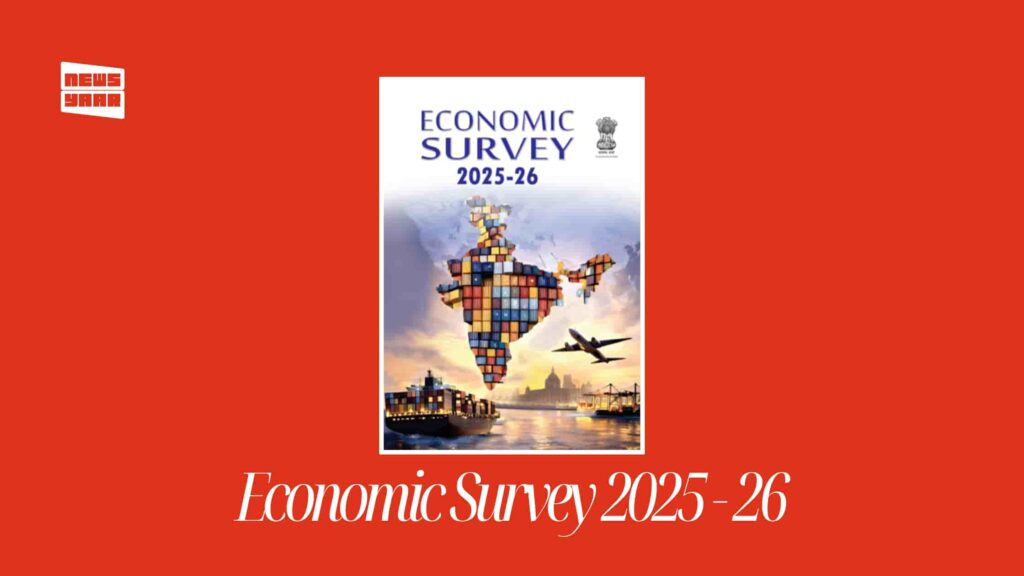
New Delhi:The Economic Survey 2025–26, tabled in Parliament on January 29 ahead of the Union Budget, presents a picture of an Indian economy that remains resilient amid global uncertainty, while urging policymakers and businesses to proceed with caution rather than pessimism. Prepared by the Department of Economic Affairs under Chief Economic Adviser (CEA) V. Anantha Nageswaran, the document sets the tone for the government’s economic thinking going into FY27. At its core, the Survey projects real GDP growth in the range of 6.8% to 7.2% for FY27, signalling steady momentum despite a challenging external environment marked by trade tensions, tariff pressures, and geopolitical risks. Growth Outlook: Steady, but Not Without Risks According to the Survey, India’s domestic economy is on a stable footing, supported by strong macro fundamentals. For FY26, growth is estimated at 7.4% as per the first advance estimates. Looking ahead, the government expects India to remain one of the fastest-growing major economies globally. The Survey notes that while domestic drivers such as consumption resilience, public investment, and improving private investment intentions continue to support growth, global conditions remain fragile. Trade conflicts, particularly tariff-related disruptions, could weigh on exports and investor sentiment intermittently. Importantly, the Survey introduces a nuanced stance: growth prospects are steady, but policymakers must maintain buffers and credibility. As the document puts it, the outlook requires “caution, but not pessimism.” Inflation: At Historic Lows, With Firming Ahead One of the most notable takeaways from the Economic Survey is the sharp moderation in inflation. Retail inflation has remained well below the Reserve Bank of India’s target of 4%, aided by food price corrections and improved supply conditions. The RBI has estimated CPI inflation at 2% for FY26, with projections of 0.6% for the December quarter and 2.9% for the March quarter. While inflation is expected to firm up gradually in FY27, it is likely to remain within the targeted range. Healthier balance sheets across households, firms, and banks, combined with controlled inflation, have helped preserve macroeconomic stability, the Survey notes. Global Context: Headwinds Persist The Survey flags a dim medium-term outlook for the global economy, citing modest growth, lingering geopolitical tensions, and risks related to global financial markets. It warns that if the much-hyped AI boom fails to deliver productivity gains, it could trigger corrections in asset markets. Despite these risks, India’s economy has demonstrated resilience. Total exports, including goods and services, reached a record $825.3 billion in FY25, even as merchandise exports faced tariff-related pressures, particularly from the United States. Investment, Reforms, and Deregulation The Economic Survey places renewed emphasis on systematic deregulation as the next phase of reforms under what it calls Ease of Doing Business 2.0. It argues that small, targeted deregulation efforts can trigger a “butterfly effect”, leading to entrepreneurship, investment, and innovation. Public capital expenditure continues to play a critical role, with Centre-led infrastructure spending acting as a key growth driver. At the same time, private investment intentions are improving, though the Survey stresses the need for regulatory certainty to translate intent into execution. Social Sectors and Emerging Themes Beyond macroeconomics, the Survey reviews progress across employment, health, education and agriculture. It reiterates the importance of skill development as services now account for over 55% of India’s Gross Value Added. The document also raises concerns over excessive social media use among younger populations, suggesting that age-based access limits may need consideration. On artificial intelligence, the Survey proposes the creation of an AI Economic Council to calibrate the pace of adoption and balance innovation with societal risks. Setting the Stage for Budget 2026 Presented just days before the Union Budget, the Economic Survey serves as a crucial backdrop for upcoming fiscal decisions. It highlights FY26 as an “unusually challenging year,” but frames FY27 as a year of adjustment, where firms and households adapt to regulatory changes and global shifts. In sum, the Economic Survey 2025–26 paints a picture of an economy that is resilient, reform-oriented and cautiously optimistic, positioning India to navigate uncertainty without losing growth momentum.
India-EU Free Trade Agreement Explained: What It Means for Trade, Economy and Strategic Partnerships
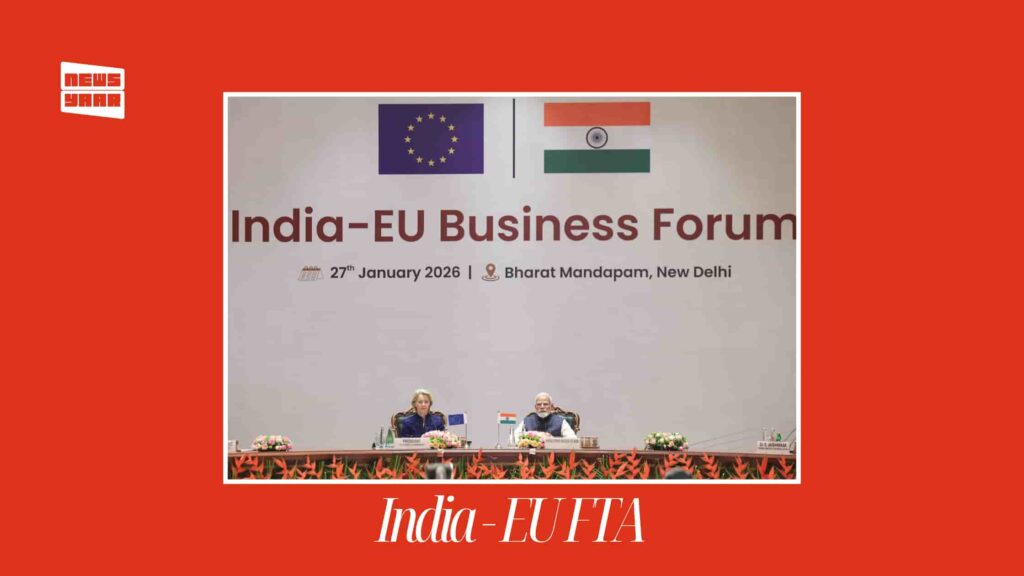
India and the European Union (EU) are advancing free trade agreement (FTA) negotiations aimed at expanding economic ties between one of the world’s fastest-growing major economies and the bloc comprising 27 European nations. The India-EU FTA, also known as the EU-India Trade and Investment Agreement (TIA), is expected to be one of the most significant trade pacts of the decade, with potential to reshape global trade flows, boost exports, and deepen strategic cooperation between two large economic partners. What Is the India-EU FTA? The India-EU Free Trade Agreement is a planned comprehensive trade deal designed to facilitate the reduction or elimination of tariffs, address non-tariff barriers, and expand market access for goods and services between India and the EU. Unlike a simple tariff agreement, the FTA also aims to cover investment protection, digital trade, intellectual property, rules of origin, services, government procurement and sustainable development — making it a high-ambition, high-standards agreement. Negotiations for the trade pact have been ongoing for over a decade, reflecting both the complexity of aligning regulatory frameworks and the growing economic significance of the India-EU relationship. While some rounds of talks were stalled or slowed due to differences on specific issues, recent developments indicate renewed momentum and a political commitment from both sides to conclude the deal. Why the India-EU FTA Is Important An India-EU FTA holds strategic economic importance for both partners: Expanding Trade and Market Access:The EU is among India’s largest trading partners, with two-way trade exceeding $130 billion in recent years. Economic modelling suggests that a successful FTA could significantly raise the volume of bilateral trade by eliminating tariffs on key products such as textiles, automobiles, engineering goods, pharmaceuticals, chemicals and agricultural products. Export Competitiveness and Targets:India has set ambitious export targets — including achieving $14 trillion in exports by 2030. An FTA with the EU could provide preferential market access that boosts India’s export competitiveness in key sectors, helping it approach those targets sooner. Reductions in tariff barriers and streamlined standards would make Indian goods more competitive in European markets. Investment and Economic Cooperation:Beyond goods, the FTA could strengthen services trade and investment flows, particularly in sectors where India has global strength, such as IT and professional services. It also presents opportunities for EU investors in India’s manufacturing, infrastructure and clean energy sectors. Strategic and Geopolitical Alignment:The India-EU FTA is also seen through a geopolitical lens, strengthening economic ties at a time when global trade dynamics are shifting. Deeper integration with the EU can provide India diversification from traditional trade partners and reduce dependence on any single market. Key Issues and Areas of Negotiation Negotiating an ambitious trade deal between two large economies involves complex discussions. Key areas under negotiation include: Tariff Reductions and Market Access:India is seeking lower tariffs on goods such as automobiles and textiles, while the EU is pushing for tariff cuts on agricultural products, dairy and alcoholic beverages. The pace and scope of tariff liberalisation remain a central challenge. Services and Regulatory Cooperation:The EU places significant emphasis on services trade, including professional services, digital trade and data flows. India continues to seek greater access for its services exports while ensuring data protection and regulatory balance. Rules of Origin and Supply Chains:Both sides aim to include clear and predictable rules of origin, which determine how products qualify for preferential tariff treatment under the FTA. This is critical for supply chain integration and ensuring that Indian and EU manufacturers can benefit from the agreement. Sustainable Development and Labour Standards:The EU typically includes provisions on environmental protection, labour rights and sustainability in its trade agreements. India has pushed for similar commitments but within its developmental context, seeking flexibility on implementation timelines. Agriculture and Food Products:Agricultural market access has been a contentious area, with the EU seeking greater access for its dairy and other farm products, while India aims to safeguard the interests of its agricultural producers and small farmers. Impact on Indian Economy and Industries If successfully concluded, the India-EU FTA could produce a range of economic impacts: Boost to Exports:Reduced tariffs and smoother market access could help Indian exporters increase shipments of textiles, pharmaceuticals, chemicals, automotive components, machinery and engineering goods — sectors that have already registered strong growth in recent years. Improved Competitiveness:By aligning standards and reducing trade costs, the FTA could help Indian industries become more competitive globally, attracting foreign investment and encouraging technology transfer. Services Sector Growth:India’s services sector, particularly IT and business process management services, is expected to gain from improved access to EU markets. The agreement could address regulatory barriers that currently limit the full potential of services exports. Investment Flows:With clear investment protections and dispute resolution mechanisms, an FTA could drive greater EU investment into Indian sectors such as renewable energy, infrastructure, healthcare and manufacturing — sectors critical to India’s economic transformation. Regional and Global Implications The India-EU FTA has strategic implications beyond immediate bilateral trade: Diversification of Trade Relations:For India, the pact offers diversification in a global context where trade tensions and supply chain vulnerabilities have increased interest in forging deeper partnerships outside traditional markets. Competitive Response:Neighbouring countries and trading blocs are closely watching the negotiations. In some cases, like Pakistan, there is concern that closer India-EU economic ties could shift regional trade dynamics and erode competitive advantages in certain areas. Alignment with Global Standards:By negotiating with the EU — a bloc known for high regulatory standards — India could accelerate its own reforms in areas such as intellectual property, digital trade, quality standards and sustainability frameworks. What Comes Next Discussions on the India-EU FTA have gained pace in recent months, with officials from both sides underscoring the importance of reaching an agreement that is “balanced, comprehensive and forward-looking.” While the timeline remains uncertain and depends on resolving differences in key areas, sources indicate that negotiators are working toward finalising an outline that could pave the way for conclusion in the coming years. Both policymakers and businesses are closely monitoring developments. Indian industry bodies have urged the government to secure a
National Startup Day 2026: India Celebrates a Decade of Entrepreneurial Transformation
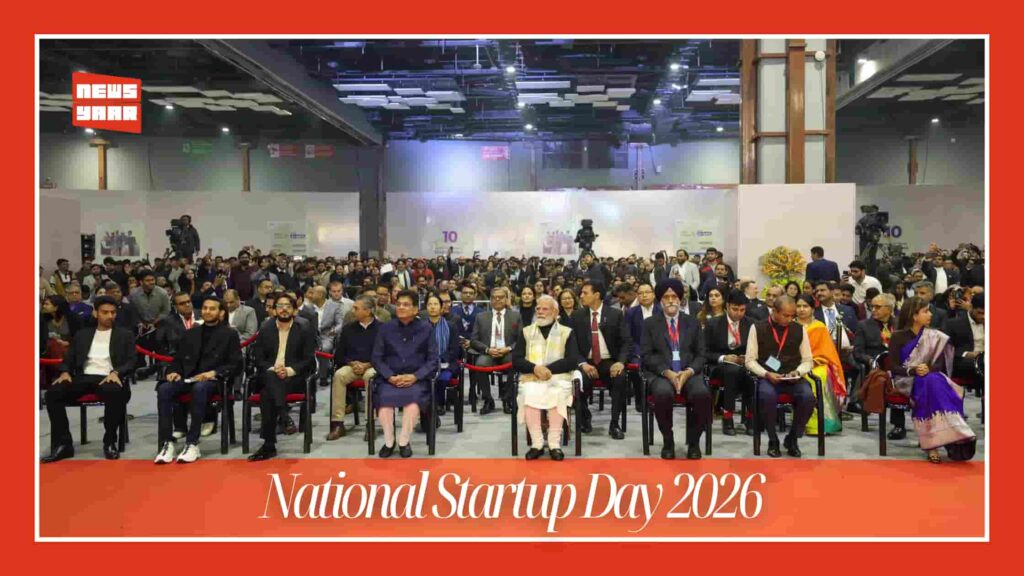
New Delhi, 16 January 2026: India marked National Startup Day 2026 with grand celebrations highlighting ten years of the government’s Startup India initiative and its transformative impact on the nation’s innovation landscape. The event drew founders, investors, policymakers, and ecosystem leaders from across the country to reflect on the journey of entrepreneurship and chart the path ahead.At a flagship event held in New Delhi, Prime Minister Narendra Modi joined startup founders and industry stakeholders to commemorate the milestone. Addressing the gathering, he emphasized the courage and innovative spirit of India’s youth, calling startups engines of economic growth and societal change. His remarks underscored how risk–taking and problem-solving have become mainstream within the entrepreneurial community.Over the past decade since the launch of Startup India, more than 200,000 startups have been recognised across sectors such as technology, healthcare, climate solutions, logistics, fintech, and education. These ventures have collectively generated millions of jobs and helped India emerge as one of the world’s largest and most dynamic startup ecosystems.The celebrations showcased a broad shift in the startup narrative—from chasing rapid valuations to focusing on sustainable growth and real-world impact. Industry experts highlighted that Indian startups are increasingly building deep-tech and AI-driven solutions tailored to local challenges, with a rising emphasis on climate tech, healthcare innovation, and sovereign AI platforms.A notable trend highlighted during the day was the geographical diversification of entrepreneurship. Recent data suggests that over half of registered startups now originate from Tier-2 and Tier-3 cities, signalling a decentralisation of innovation beyond traditional metropolitan hubs.Panel discussions and keynote sessions throughout the event brought to light how startups are contributing to India’s economic resilience, job creation, and technological advancement. Speakers also discussed policy priorities for the next decade, including a renewed push into manufacturing, deep-tech research, and global market expansion.Celebrations were not limited to New Delhi alone. Across states and regions, local startup communities hosted meetups, pitch events, and mentoring sessions, reinforcing a nationwide commitment to empowering entrepreneurs.As National Startup Day 2026 concluded, the startup ecosystem stood not only proud of its achievements over the last ten years but also energized for future challenges, firmly anchored in innovation, inclusivity, and impact.
Vibrant Gujarat Global Summit 2026: Rajkot to Host Regional Conference Focusing on Saurashtra–Kutch Growth
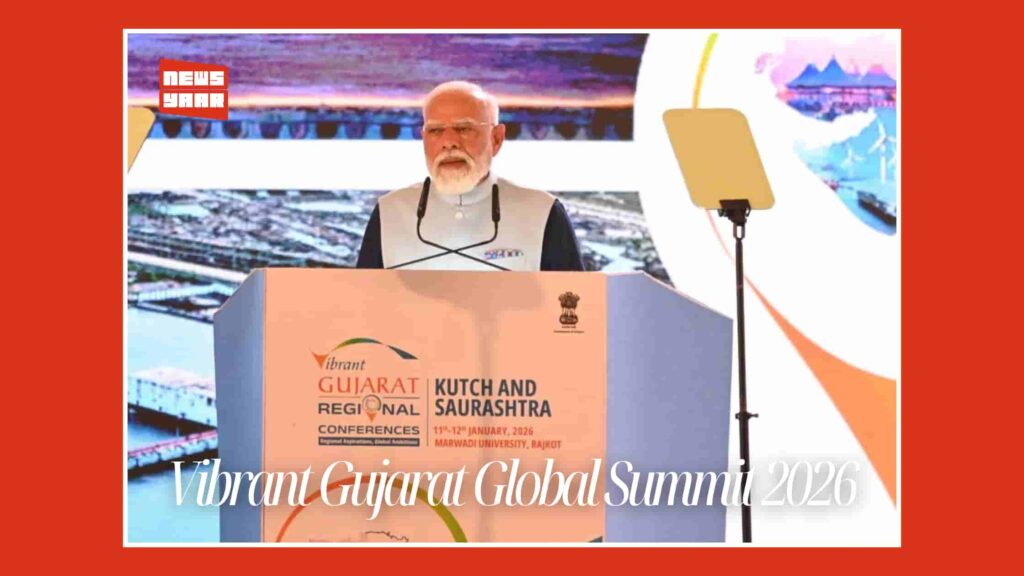
The Vibrant Gujarat initiative, one of India’s most influential investment and policy platforms, will continue its next phase in 2026 through region-specific conferences, with Rajkot hosting the Vibrant Gujarat Regional Conference (VGRC) for the Saurashtra–Kutch region. The move marks a strategic shift towards decentralised economic development, taking the Vibrant Gujarat vision beyond mega summits and closer to regional industry clusters.While the Vibrant Gujarat Global Summit is scheduled to return in 2027, the 2026 regional conferences are designed to strengthen grassroots industrial growth, attract targeted investments and align regional strengths with national development priorities.Dates and VenueEvent: Vibrant Gujarat Regional Conference (Saurashtra–Kutch)Dates: January 11 and 12, 2026Exhibition Duration: January 11 to January 15, 2026Venue: Marwadi University, Rajkot, GujaratRajkot, a major industrial and commercial hub of Saurashtra, has been chosen for its strong presence in engineering goods, auto components, ceramics, MSMEs and export-oriented manufacturing.What Is the Vibrant Gujarat Regional Conference?The Vibrant Gujarat Regional Conference is an extension of the state’s flagship Vibrant Gujarat Global Summit, launched to promote region-specific investment, sector-based policy discussions and local entrepreneurship.Unlike the larger biennial global summit held in Gandhinagar, the regional conferences focus on:District-level industrial strengthsLocal infrastructure and logisticsMSMEs, startups and traditional industriesEmployment generation and skill developmentThe Rajkot edition will specifically address economic opportunities and challenges in Saurashtra and Kutch, two regions with high industrial potential and strategic coastal advantages.Key Focus Areas and SectorsThe 2026 Rajkot conference will focus on both traditional industries and emerging sectors critical to Gujarat’s long-term growth strategy.Core Industry SectorsEngineering and auto componentsCeramics and manufacturing clustersAgro-processing and food industriesPorts, logistics and maritime tradePetrochemicals and mineralsEmerging and Priority SectorsRenewable energy and green manufacturingGreen hydrogen and clean fuel projectsDefence manufacturing and innovationStartups, MSMEs and entrepreneurshipSkill development and employment-linked industriesTourism and cultural economyThe discussions are aligned with India’s long-term development roadmap, including the Viksit Bharat @2047 vision.Key Events and HighlightsThe Vibrant Gujarat Regional Conference 2026 will feature a range of policy, business and networking platforms:Inaugural session and leadership addresses, including participation from senior central and state government leadersSector-specific conferences and panel discussions focusing on investment opportunities, policy reforms and technology adoptionReverse Buyer–Seller Meets, enabling direct interaction between domestic producers and international buyersVibrant Gujarat Regional Exhibition, showcasing industrial innovation, products and services across key sectorsUdyami Mela, aimed at promoting startups, MSMEs, women entrepreneurs and government schemesThe exhibition will run for five days, providing extended engagement opportunities for investors, businesses and the general public.Investment Outlook and Regional ImpactThe Rajkot conference is expected to play a significant role in:Attracting fresh domestic and foreign investmentsStrengthening Gujarat’s manufacturing and export ecosystemPromoting sustainable and green industrial practicesExpanding employment opportunities in Saurashtra and KutchPositioning the region as a multi-sector industrial and logistics hubPrevious regional conferences under the Vibrant Gujarat banner have resulted in substantial investment commitments and long-term industrial planning at the district level.Who Should AttendThe event is relevant for:Indian and global investorsIndustry leaders and exportersStartups and MSMEsPolicy makers and government officialsEntrepreneurs and business associationsProfessionals interested in Gujarat’s industrial and economic roadmapParticipation details and registrations are available through the official Vibrant Gujarat platforms.Why the 2026 Rajkot Conference MattersBy hosting the Vibrant Gujarat Regional Conference in Rajkot, the Gujarat government is reinforcing its approach of balanced regional development, ensuring that growth opportunities extend beyond major urban centres.The 2026 edition positions Saurashtra–Kutch as a critical contributor to Gujarat’s and India’s economic future, combining industrial strength, coastal advantage, innovation and sustainability.Video credit: YT@/NaMo
Rajasthan DigiFest 2026: Jaipur to Host Regional AI Impact Conference Ahead of India AI Summit
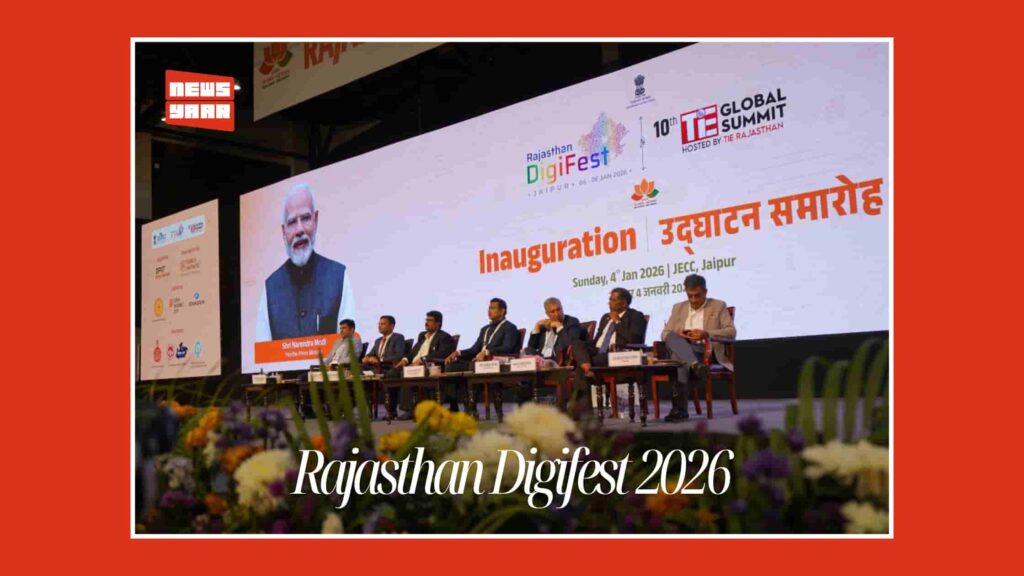
Jaipur is set to become a major hub for artificial intelligence discussions as Rajasthan hosts the Regional AI Impact Conference 2026 on January 6, marking a significant step in India’s journey towards AI-driven governance and innovation.The conference will be held as part of Rajasthan DigiFest 2026, in collaboration with the TiE Global Summit 2026, and will serve as a crucial regional engagement leading up to the India AI Impact Summit 2026, scheduled for February this year.The high-profile event will witness the presence of Union Minister for Electronics and Information Technology Ashwini Vaishnaw and Minister of State for Electronics and Information Technology Jitin Prasada, underlining the Centre’s strong focus on accelerating AI adoption across states and sectors.A Platform for AI-Led Governance and GrowthAccording to the Ministry of Electronics and Information Technology (MeitY), the Regional AI Impact Conference in Jaipur will act as a key platform to explore how Artificial Intelligence can transform governance systems, boost economic growth, encourage innovation, and support inclusive development. The discussions are expected to focus on both policy and practice, highlighting how AI can be effectively integrated into public administration and service delivery.One of the central themes of the conference will be AI for Public Service Delivery and Governance, examining the role of emerging technologies in improving efficiency, transparency, and citizen engagement. Sessions will also address Ethical and Responsible AI, reflecting growing concerns around data privacy, algorithmic bias, and accountability in AI-driven systems.As AI continues to reshape the global workforce, the conference will feature dedicated discussions on AI and the Future of Employment and Skills. Policymakers and industry experts are expected to deliberate on reskilling, upskilling, and preparing India’s workforce for technology-driven changes.AI Conversations Extend to GuwahatiParallel to the Jaipur conference, Guwahati will host a Human Capital Working Group Meeting over the next two days. The meeting will be chaired by Prof. T. G. Sitharam, Chair of the Human Capital Working Group, and will bring together senior policymakers, academic leaders, industry experts, and practitioners.The discussions in Guwahati will focus on the future of education, skilling, and workforce readiness in the age of Artificial Intelligence, complementing the broader objectives of the AI Impact Conference. Together, these engagements underline the government’s emphasis on aligning technology advancement with human capital development.Building Momentum Towards India AI Impact Summit 2026The Regional AI Impact Conference under Rajasthan DigiFest 2026 is part of a nationwide series of dialogues aimed at building momentum for the India AI Impact Summit 2026. By bringing AI conversations closer to regional ecosystems, the initiative seeks to ensure that technological growth remains inclusive, balanced, and aligned with India’s development priorities.With Jaipur hosting this significant gathering, Rajasthan is positioning itself as an active participant in India’s AI transformation, reinforcing its role in shaping the country’s digital and innovation-led future.Video credit: YT@/DoIT&C Government of RajasthanVideo credit: YT@/DoIT&C Government of Rajasthan
New Delhi Book Fair 2026: A Literary Celebration Bringing Readers and Writers Together
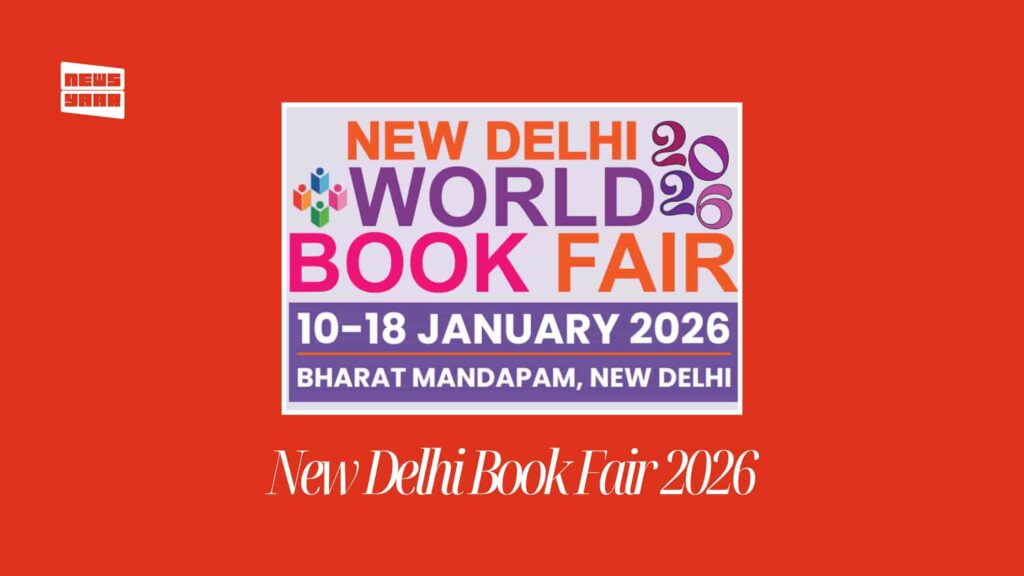
The Delhi Book Fair once again transformed the national capital into a vibrant hub of literature, ideas, and storytelling. Known as one of India’s most loved literary events, the fair attracted book lovers, authors, publishers, and students from across the country, reaffirming Delhi’s place as a cultural and intellectual centre. Event Details Dates: January 10–18, 2026 (9 days) Venue: Bharat Mandapam (Halls 2–6), Pragati Maidan, New Delhi Timings: 11:00 AM – 8:00 PM daily Entry: Free for all visitors Stepping into the fair felt like entering a world woven from stories, ideas, and imagination. The event showcased an incredible variety of books across genres, from fiction and non-fiction to academic texts, children’s books, self-help, and regional language publications, catering to readers of all ages and interests.An iconic venue, the fair offered a rich mix of books across genres, ranging from fiction, non-fiction, academic texts, children’s literature, self-help, and regional language publications. A Paradise for Book Lovers Walking into the Delhi Book Fair felt like stepping into a world made entirely of stories. Hundreds of stalls showcased books in English, Hindi, and several Indian languages, ensuring there was something for every reader. From bestselling novels and classic literature to competitive exam guides and research material, the fair catered to readers of all ages.Special sections dedicated to children remained a major attraction, with colourful books, comics, and activity corners encouraging young minds to develop a love for reading. Authors, Discussions, and Cultural Exchange Beyond book shopping, the Delhi Book Fair served as a platform for author interactions, panel discussions, and book launches. Renowned writers, emerging voices, and publishers engaged in conversations around literature, education, publishing trends, and the future of reading in a digital age.These sessions provided readers with a chance to connect directly with authors, understand their creative journeys, and gain insights into the evolving literary landscape.In a time when online content dominates, the fair stood as a reminder of the lasting value of printed books and structured learning. Keeping the Reading Culture Alive Despite the rise of e-books and digital platforms, the Delhi Book Fair highlighted that the charm of physical books remains strong. The event brought together people from diverse backgrounds, united by a shared love for reading, learning, and storytelling.Publishers also offered attractive discounts, making books more accessible and encouraging readers to build personal libraries. Delhi Book Fair: More Than Just an Event The Delhi Book Fair is not just about buying books; it is about celebrating ideas, creativity, and knowledge. It continues to inspire curiosity, promote literacy, and strengthen India’s reading culture.As the fair concludes, it leaves behind shelves full of new books and minds filled with fresh perspectives, proving once again that stories still matter, and always will.
PM Modi’s Inspiring Speech on National Youth Day at Viksit Bharat Young Leaders Dialogue 2026

PM Modi addresses Young Indians on National Youth Day. It is officially celebrated on 12th January every year.PM delivered the speech on concluding session of Viksit Bharat Young Leaders Dialogue 2026, a public event that was organised especially for the Youths of the nation. Video credit: @Youtube/Narendra Modi
Madhavi Latha: The Engineer Behind the World’s Highest Rail Bridge
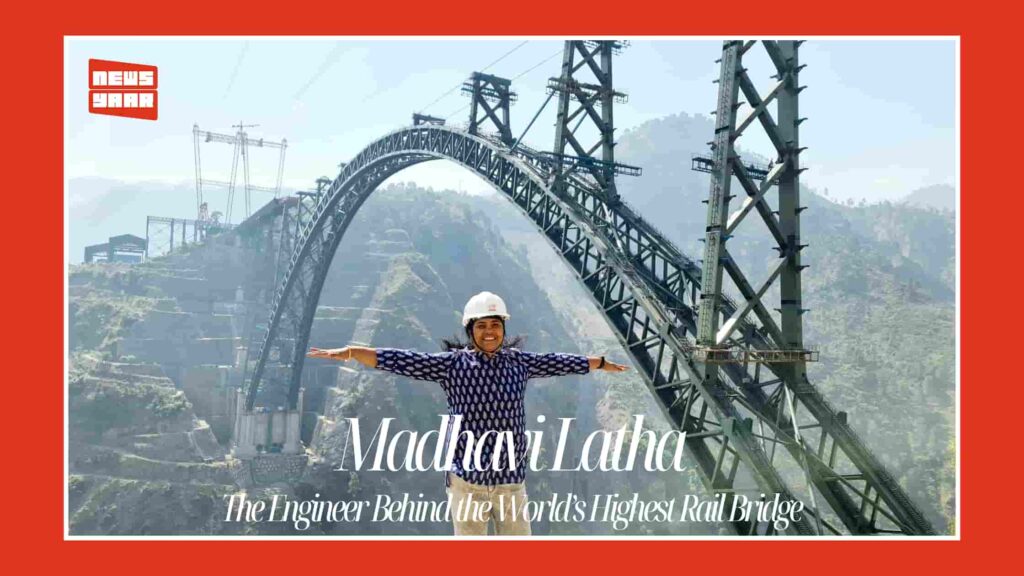
When the Chenab Rail Bridge, the world’s highest railway bridge, stands tall amid the rugged Himalayas, it represents more than an engineering marvel. It tells the story of Dr. G. Madhavi Latha, the engineer whose expertise and vision played a pivotal role in turning an impossible idea into reality. She has also been awarded the NDTV Science Icon of the Year Award.Towering at 359 metres above the Chenab River in Jammu and Kashmir, the bridge is higher than the Eiffel Tower and is one of India’s most ambitious infrastructure projects. Designed to withstand extreme winds, earthquakes, and challenging geological conditions, the Chenab Bridge is a symbol of modern India’s engineering strength, and Dr. Madhavi Latha was at the heart of it.A professor at IIT Madras, Dr. Madhavi Latha, served as the geotechnical consultant for the project. Her role was crucial: the bridge stands in a highly seismic zone with fragile rock formations and unpredictable terrain. Traditional construction methods were not enough. Innovative geotechnical solutions were required to stabilise slopes, design foundations, and ensure long-term safety in one of the most hostile environments imaginable.Dr. Latha and her team worked extensively on slope stabilisation, foundation design, and rock reinforcement, addressing landslide risks and geological uncertainties. What made the challenge even greater was the remoteness of the site, harsh weather conditions, and limited accessibility. Despite these obstacles, her scientific approach and practical problem-solving ensured that the bridge could safely support high-speed trains while enduring nature’s extremes.Beyond its technical brilliance, Dr. Madhavi Latha’s contribution carries deep symbolic value. In a field traditionally dominated by men, her leadership and expertise have made her an inspiration for young engineers across India. She has often spoken about how the project demanded patience, collaboration, and unwavering commitment, qualities as critical as technical knowledge.The Chenab Rail Bridge is a vital link in the Udhampur–Srinagar–Baramulla Rail Line (USBRL) project, aimed at improving connectivity, mobility, and development in Jammu and Kashmir. Its completion marks a major milestone in India’s infrastructure journey.Dr. Madhavi Latha’s story reminds us that behind every iconic structure lies human effort, intellect, and resilience. As trains begin to cross the world’s highest rail bridge, they carry with them not just passengers, but the legacy of an engineer who redefined what was possible.
New Labour Codes 2025: Opportunity or Outcry?

On 21 November 2025, India’s labour landscape changed forever: the government replaced 29 older laws with four comprehensive new labour codes, covering wages, industrial relations, social security, and workplace safety.What does that mean for workers? For many, it sounded like a win, especially for contract and fixed-term workers, who, under the updated rules, now qualify for gratuity after just one year of service, instead of the previous five.Add to that expanded definitions for “wage” (so allowances count more), protections for health, social security, and more inclusive job norms, and it seems like a long-awaited step toward modern labour reform. For many gig, contract, and temporary workers, long excluded from benefits, this appears to be a landmark shift. Suddenly, some of the perks traditionally reserved only for permanent staff are extended to a much larger pool. It is social security made more inclusive.The Political Backlash: Protests Outside ParliamentBut this reform didn’t sail smoothly. The moment the new codes were notified, alarm bells rang for many union leaders and opposition parties. On December 2, MPs, including Sonia Gandhi and Mallikarjun Kharge, staged a protest outside the Parliament complex, raising placards and slogans demanding that he new laws be rolled back.Their argument? These codes benefit corporations more than workers, allowing easier layoffs, diluting job security, and undermining collective bargaining rights. Trade unions across the country echo similar fears: what if “flexibility” becomes “exploitation”? What if temporary jobs, previously light on benefits, become even more vulnerable under the cloak of new definitions and frequent hiring-firing cycles? For them, this isn’t reform, it’s a disguised rollback of worker rights. Between Reform and Risk: What’s the Verdict?The new labour codes walk a tightrope. On one side, there’s a needed push toward inclusivity, protection for informal workers, and flexibility for modern businesses. On the other, a legitimate fear that under relaxed labour norms, job security and worker welfare might take a back seat.For contract workers, the cut in gratuity eligibility from five years to one is a game-changer. For millions of India’s unorganised workforce, it might mean a combination of dignity and safety. But for many unions and opposition leaders, the same laws signal a slippery slope.As politics rages on and protests echo through Parliament corridors, the real test will be in implementation, whether the laws reflect worker protection or corporate convenience. For now, the 2025 labour reforms remain India’s most ambitious overhaul in decades: hopeful for some, controversial for many, and undoubtedly the biggest labour conversation in recent memory.Video credit: DD News