


Special Intensive Revision: Why Electoral Rolls Are Being Rechecked
Every democracy depends on a simple but powerful foundation: the right list of voters. To protect that foundation, election authorities periodically undertake an exercise known as the Special Intensive Revision (SIR) of the electoral rolls process that may appear routine on paper but carries deep significance for free and fair elections.Unlike regular updates, which happen continuously through the year, a Special Intensive Revision is a focused, time-bound effort to comprehensively verify and correct voter lists in a particular area. It is usually undertaken ahead of major elections or when concerns arise about inaccuracies, duplication, or demographic changes that may affect electoral integrity.At its core, SIR is about accuracy and inclusion. Over time, electoral rolls naturally become outdated. People move homes, migrate for work, change names, or pass away. New voters turn 18 and become eligible, while others may no longer meet the criteria to remain on the list. If these changes are not addressed systematically, voter rolls risk becoming cluttered with errorspotentially disenfranchising genuine voters or allowing misuse.The Special Intensive Revision seeks to address this by going beyond desk-based corrections. Booth Level Officers (BLOs) are often tasked with physical verification, visiting households to confirm voter details. Citizens are encouraged to check their entries, submit claims for inclusion, request corrections, or file objections against incorrect listings. Draft rolls are published, feedback is invited, and final rolls are prepared only after this public scrutiny.This participatory nature is what makes SIR especially important. It places responsibility not just on election officials, but also on voters themselves. A clean electoral roll is not created in isolation relies on citizens taking the time to verify their information and report inaccuracies.In recent years, SIR exercises have gained added relevance due to increased urban migration and rapid population shifts. Cities expand, rural populations relocate, and entire neighbourhoods transform within a few years. Without intensive revision, voter lists may fail to reflect these realities, leading to confusion on polling day and, in some cases, allegations of unfair practices.Technology has also reshaped how SIR is conducted. Digital databases, online forms, and mobile applications have made it easier for voters to check their status and submit requests. However, physical verification remains a critical component, particularly in areas with limited digital access. The balance between technology and on-ground outreach ensures that no voter is left out due to the digital divide.Critics sometimes raise concerns that intensive revisions could lead to wrongful deletions if not handled carefully. Election authorities, therefore, emphasise transparency and due process. Deletions are not meant to be arbitrary; they follow clear guidelines, documented verification, and opportunities for appeal. The goal is correction, not exclusion.From a democratic standpoint, SIR serves as a preventive measure. Clean electoral rolls reduce disputes, build trust in the election process, and strengthen the credibility of outcomes. When voters see their details accurately reflected, confidence in the system grows. When political parties operate with the same verified data, the playing field becomes more level.Ultimately, the Special Intensive Revision is not just an administrative exercise; it is a democratic safeguard. It reminds citizens that voting rights come with civic responsibility, and that democracy requires regular maintenance, not blind faith.As elections approach in different parts of the country, SIR exercises will continue to play a quiet but crucial role behind the scenes. Their success depends on meticulous execution by officials and active participation by voters. In that partnership lies the assurance that every legitimate voice is counted and counted correctly.Video credit: Election Commission of India
Bihar Election Results 2025: A Clear Mandate, A Loud Message
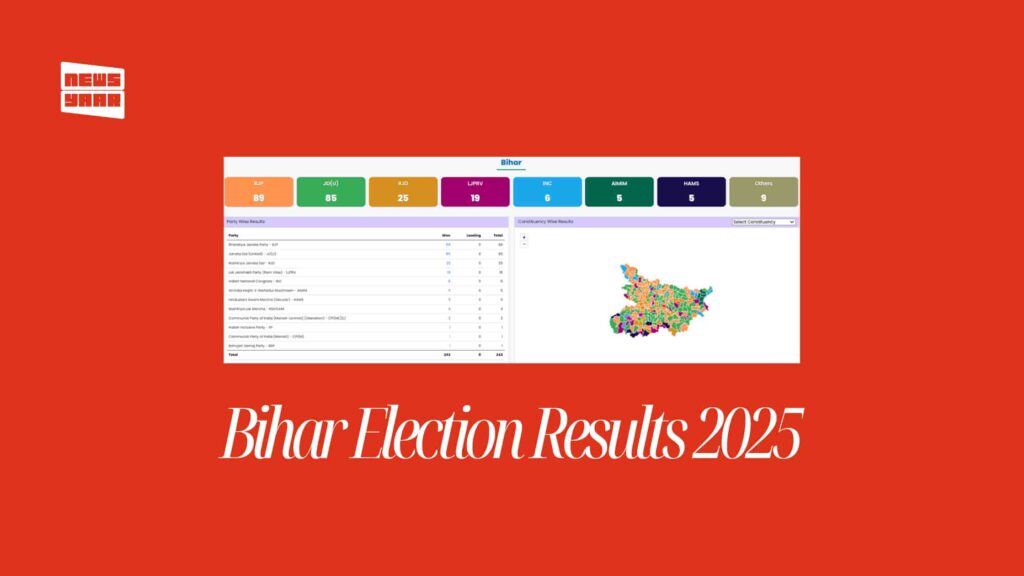
The dust has settled, and the verdict is out: National Democratic Alliance (NDA) has secured a landslide victory in Bihar’s 2025 assembly elections, winning a whopping majority in a show that left rival alliances reeling.Heading the charge was Bharatiya Janata Party (BJP), which emerged as the single-largest party with 89 seats, closely followed by its partner Janata Dal (United) (JD(U)), which bagged 85 seats, together sealing what many are calling a “tsunami” of support.On the other side, Rashtriya Janata Dal (RJD) and the broader opposition, despite winning large vote shares in some pockets, failed to translate that into seats. Their dispersed votes and strategic vote-splits under the “First Past the Post” system cost them dearly. What Made the Difference?The Bihar Election Results 2025 were shaped by a mix of strategy, voter behaviour, and political arithmetic that worked in the NDA’s favour.Their strong coalition strategy, tight coordination between the BJP and JD(U), smart seat-sharing, and aggressive grassroots outreach helped them consolidate votes in key battleground constituencies.On the other side, the election saw strong voter turnout, with an especially notable rise in female participation, which, as reported by multiple outlets like The Indian Express and PIB, played a crucial role in shifting the electoral balance. Women voters showed a preference for stability, welfare continuity, and governance credibility, adding momentum to the NDA’s campaign.Meanwhile, the opposition struggled with fragmentation; their votes were spread thin across several parties, leading to many second-place finishes but very few actual wins, a classic case of the “vote-split penalty,” noted by political analysts and outlets like The Times of India. In a tight electoral battlefield like Bihar, this scattering of anti-NDA votes proved costly, allowing the ruling alliance to convert even marginal leads into decisive victories. Together, these factors created the perfect conditions for the sweeping mandate delivered in 2025.What This Means for Bihar?This verdict gives the NDA, and likely Nitish Kumar, a strong mandate to govern. With comfortable numbers in the assembly, the government can push its agenda without the constant threat of instability.For the opposition, the message is loud and clear: vote consolidation matters. Winning hearts is not enough; you need votes to translate to seats. For political strategists, this result may spark a rethinking of alliances, messaging, and outreach strategies.For citizens, especially in Bihar, it’s a moment of expectation. Promises of development, governance, and social welfare now carry weight. The next few months will show if this electoral mandate leads to real change.Final ThoughtsBihar Election 2025 wasn’t just another polling season; it turned into a lesson on political arithmetic, coalition strength, and the power of effective campaigning. The NDA’s dominant win is a clear mandate: the people spoke, and the message is loud.But for democracy, the real test begins now, whether the government delivers, and whether the opposition recalibrates. For voters across India, Bihar’s result will likely become a blueprint for what works, and what doesn’t, in today’s political arena.Video credit: DD NewsVideo credit: BJP