


Brazil President Lula in India: A Friendly Visit for Talks on AI, Trade, and More
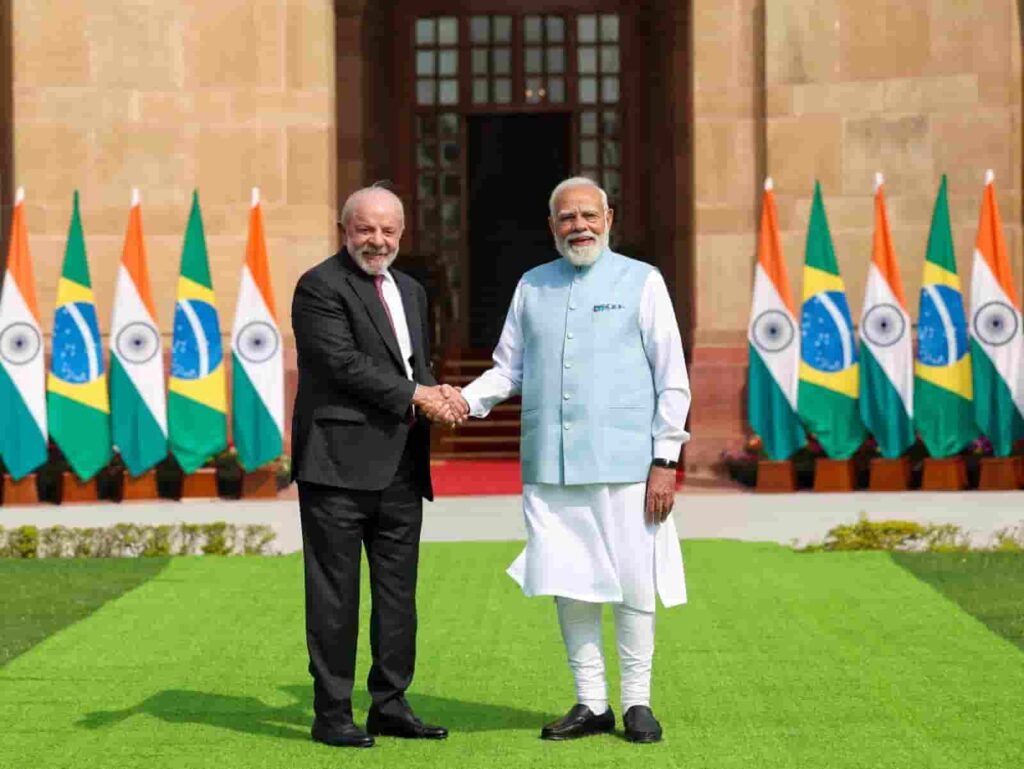
Brazil’s President Luiz Inácio Lula da Silva landed in New Delhi on February 18, 2026, for a five-day state visit. He said “Namaste, India!” on social media and shared a video of his warm traditional welcome. This is his sixth trip to India, invited by Prime Minister Narendra Modi. Lula will stay until February 22. The visit focuses on stronger ties between the two countries, with key events like the AI Impact Summit and meetings with top Indian leaders. Lula got a nice welcome at the airport from Minister of State for External Affairs Pabitra Margherita. He is here with about 14 ministers and many top CEOs from Brazilian companies. They will meet Indian leaders and join a Business Forum to talk business. India and Brazil already trade a lot, $15 billion in 2025. Brazil is India’s biggest trade partner in Latin America. What Will Happen During the Visit The visit has a full schedule. On February 19-20, Lula will join the 2nd AI Impact Summit. This event brings leaders together to discuss how AI can help countries grow fairly. India and Brazil both care about smartly using tech. President Droupadi Murmu will meet Lula and host a banquet for him. Vice President C.P. Radhakrishnan and External Affairs Minister S. Jaishankar will also call on him. The big meeting is on February 21. Prime Minister Modi will sit down with Lula to review all parts of their relationship. They will talk about trade, defense, energy, farming, health, and new areas like AI and space. Modi will host lunch for Lula. The leaders will also share ideas on world issues like UN changes, climate change, terrorism, and problems facing the Global South. Strong Ties Between India and Brazil India and Brazil have been close friends since 1948. They became Strategic Partners in 2006. Both are big democracies with shared values. They work together in BRICS, where India is the chair right now. Trade is growing fast. Brazil sells things like soybeans and oil to India. India sends pharma, chemicals, and auto parts to Brazil. They cooperate in defense, green energy, critical minerals for batteries, and Digital Public Infrastructure, like India’s UPI. Both push for UN reforms and fight climate change. Lula first came to India in 2004 as a Republic Day guest. He was here last for the G20 in 2023. Modi visited Brazil in July 2025, the first Indian PM’s state visit there in 57 years. They met again at the G20 in November 2025. Why This Visit Matters This trip will help both countries plan. Business leaders want more deals in trade and investment. Ministers will talk on energy, health, and tech. The CEOs’ forum shows how companies from both sides see big chances. Lula said the visit is about “strengthening ties, deepening partnerships, and discussing AI’s future.” For India, it boosts the BRICS and the Global South work. Brazil gets a stronger link to Asia’s top economy. People-to-people links are good too, yoga in Brazil, Brazilian culture in India. Both leaders want more cooperation on big world problems.
India AI Impact Summit 2026: Detailed Agenda for Global AI Action in New Delhi
New Delhi, February 9, 2026 – India gears up for the India AI Impact Summit 2026, set for February 16-20 at Bharat Mandapam, Pragati Maidan, New Delhi, the primary venue for the India AI Impact Summit 2026, which will host the main events on February 19-20.Hosted by the Ministry of Electronics and Information Technology (MeitY), this first Global South edition, billed by Union Minister Ashwini Vaishnaw as the “largest yet,” transitions AI discourse from vision to verifiable impact under the “Three Sutras”: People, Planet, and Progress.Some sources mention a broader program across February 16-20, potentially using additional Delhi venues like Sushma Swaraj Bhawan for side events, sessions, or exhibitions. Bharat Mandapam, one of India’s largest convention centers, was upgraded by NDMC for this flagship gathering. Chief Guests and Stellar LineupPrime Minister Narendra Modi serves as the Chief Guest, inaugurating on February 16 with a keynote and hosting a leaders’ dinner. Expected heads of government include representatives from Singapore, the UAE, and Brazil (15-20 total), plus 50+ ministers. Key speakers feature Google’s Sundar Pichai, Anthropic’s Dario Amodei, Microsoft’s Satya Nadella, and Indian luminaries like Nandan Nilekani (Infosys co-founder) and Ola’s Bhavish Aggarwal. Over 40 CEOs from Reliance, TCS, and global firms join, along with a Chinese delegation, signaling a thaw in collaboration. Event Schedule and Dialogues Feb 16: Inauguration, Modi address, CEO roundtable.Feb 17-18: Plenary sessions and seven “Chakras” (working groups) on core topics.Feb 19: Startup showcase (500+ ventures), AI model launches, bilateral dialogues.Feb 20: Closing with actionable declarations.Expect 500+ parallel sessions, hackathons, and exhibitions. Dialogues include G20-style tracks on AI ethics, public-private partnerships, and Global South priorities. Participating Governments in India AI Impact Summit 2026 The summit, hosted by India’s Ministry of Electronics and Information Technology (MeitY) under the IndiaAI Mission, expects involvement from over 100 countries. Key highlights:High-Level Representation: 15-20 heads of government and 50+ ministers confirmed, including from Singapore, UAE, Brazil, and others.China: Delegation attending after India’s formal invitation, signaling AI collaboration.Preceding Hosts: Builds on summits by UK (2023 Bletchley), South Korea (2024 Seoul), France (2025 Paris).Collaborators: NITI Aayog (India’s policy think tank), state governments like Uttarakhand (pre-summit host), and international bodies (ITU, World Economic Forum).Global Engagement: Multinational working groups across Chakras, with US, UK, EU, and ASEAN nations active in prep consultations. Key Topics and Seven ChakrasThe India AI Impact Summit 2026 is structured around three foundational “Sutras” (People, Planet, Progress) that guide its discussions, with seven interconnected “Chakras” (working groups) translating these into specific, actionable themes.Core SutrasPeople: Focuses on human-centric AI, including safeguarding rights, enhancing access to services (e.g., healthcare, education), building user trust, workforce reskilling amid job impacts, and ensuring equitable benefits across societies.Planet: Addresses sustainable AI deployment, such as energy-efficient models, responsible resource use (e.g., reducing GPU/data center power demands), and AI applications for climate action, environmental monitoring, and resilience.Progress: Emphasizes inclusive innovation, capacity-building, productivity gains in sectors like agriculture and manufacturing, economic growth, and bridging the AI divide for the Global South. Seven Chakras (Key Discussion Topics)These working groups, involving 100+ countries, cover:AI governance and ethical frameworks.Trust and safety protocols for AI models (e.g., bias mitigation, transparency).AI’s impact on work and future jobs.Sector-specific applications (healthcare, agriculture, industry).Innovation and scalable solutions.Sustainability and environmental integration.Equitable access, inclusion, and development outcomes.Sessions will also spotlight IndiaAI Mission launches, startup innovations, and global standards, prioritizing “on-ground” results over regulations. What to Expect in India AI Summit?MeitY leads with partners like NITI Aayog, NASSCOM, World Economic Forum, and ITU. Corporate backers include Google, Microsoft, NVIDIA (GPU focus), and Indian firms like Tata and Adani (data centers). Governments from US, UK, EU, and ASEAN collaborate. Attendees (10,000+), policymakers, researchers, startups, NGOs, can expect networking zones, live demos (e.g., edge AI), policy labs, and a “Global AI Talent Fair.” Launches include indigenous foundational models under the Rs 10,370 crore IndiaAI Mission. India’s Strategic Push Amid HurdlesEchoing Bletchley (2023), Seoul (2024), and Paris (2025), India’s summit prioritizes “on-ground” wins for 1.4 billion people, as per Secretary S. Krishnan. AI could add $500B to GDP (NASSCOM), but challenges like GPU imports persist—eased by US trade deals and data center tax holidays to 2047. Budget 2026-27 tweaks fund nuclear-powered AI infra, as Vaishnaw eyes energy self-reliance.Vaishnaw hailed “phenomenal” global buy-in, with NDMC upgrading venues. Beyond talks, expect MoUs on compute sharing, talent visas, and sustainable AI pacts, positioning India as an AI diplomacy hub.This summit promises not just dialogue, but deliverables: inclusive, green AI for humanity’s progress.Video credit: YT@/Digital India
18th Rozgar Mela: Massive Government Job Drive Connects Youth With Employment Opportunities
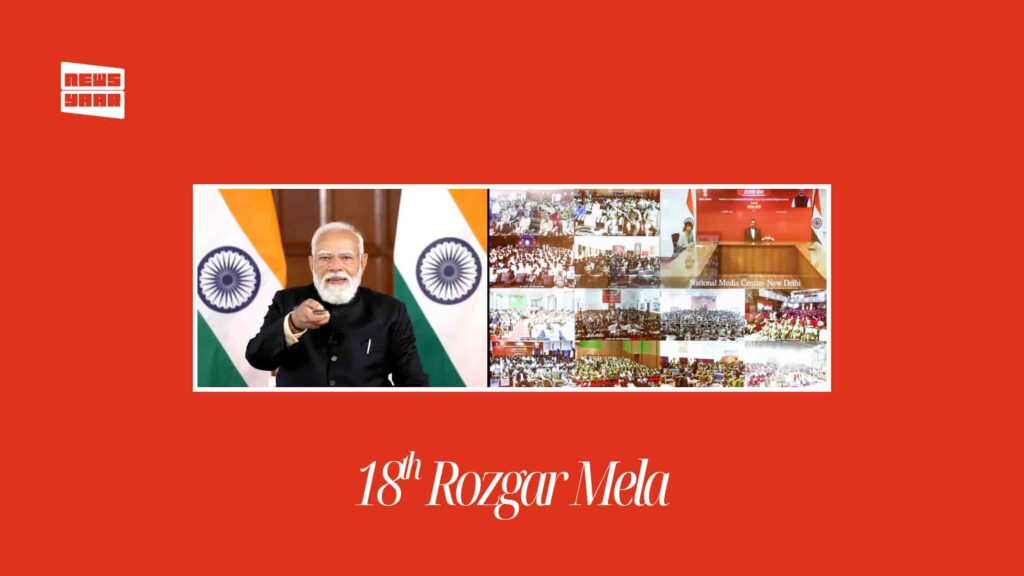
The 18th Rozgar Mela, one of India’s largest ongoing employment initiatives, was held on 24 January 2026 with events organised simultaneously across the country to provide job opportunities and appointment letters to young Indians. The flagship programme — aimed at accelerating government recruitment and linking the nation’s youth with jobs across ministries, departments and public sector units — witnessed widespread participation and engagement from newly appointed candidates. Prime Minister Narendra Modi addressed the 18th Rozgar Mela via video conferencing from New Delhi, speaking to appointees gathered at 45 locations nationwide. In his address, he described the initiative as a significant milestone for India’s youth and reiterated the government’s focus on employment creation, skill development and economic opportunity expansion for young Indians. When and Where It HappenedThe 18th Rozgar Mela took place on 24 January 2026, coinciding with a period of national significance that includes Parakram Diwas (on 23 January), National Voters’ Day (25 January) and the Republic Day celebrations on 26 January. The event was organised at 45 locations across India, allowing candidates from diverse regions to receive appointment letters and engage in related activities. The main address was delivered from New Delhi by the Prime Minister, while physical distribution of letters and events were held at designated Rozgar Mela venues in states across the country, including West Bengal, Nagaland, and other regions. Some centres, such as the Assam Rifles Training Centre in Dimapur, Nagaland, issued appointment letters to newly recruited candidates, reflecting the decentralised nature of the event. Key Highlights and Appointment DistributionOver 61,000 appointment letters were distributed to candidates selected for government jobs across ministries, departments and organisations, including departments such as Home Affairs, Health and Family Welfare, Higher Education, Financial Services, and others. The appointment letters were handed over through a combination of physical distribution at Rozgar Mela venuesand virtual interaction, connecting recipients across different states with the Prime Minister’s address. The event marks one of the largest single distributions of appointment letters under the Rozgar Mela scheme, with many of the new appointees beginning their careers in government service immediately following the mela. Reports from individual centres — such as Digberia in West Bengal — indicated that thousands of appointment letters were issued locally to freshly recruited personnel, including those selected for service in Central Armed Police Forces (CAPFs) and other government wings. Prime Minister’s Address and Core MessagesIn his address, Prime Minister Narendra Modi highlighted the symbolic importance of the Rozgar Mela and framed the distribution of appointment letters as an “invitation to nation building” for the youth. He noted that the year 2026 had begun with new opportunities and happiness for many young Indians who were now entering government service through the mela. The Prime Minister emphasised that connecting youth with skills and employment remains a priority of the government and that the Rozgar Mela had evolved into a key institutional mechanism over recent years, issuing over 11 lakh appointment letters since its inception as a mission-mode recruitment drive. In his remarks, the Prime Minister also positioned the Rozgar Mela within a larger economic and developmental narrative, highlighting India’s rapidly growing startup ecosystem, expanding opportunities in sectors such as animation, digital media and electronics, and the role of trade and mobility agreements in opening new opportunities for Indian youth globally. He pointed to India’s demographic advantage as one of the youngest countries in the world and underlined the government’s consistent efforts to create employment both domestically and internationally, reinforcing the event’s relevance as part of the broader agenda of economic empowerment and youth inclusion. Broader Impact of Rozgar MelasSince its launch, the Rozgar Mela programme has been a significant tool for mission-mode recruitment by the Centre, working to accelerate government hiring and ensure transparent, timely delivery of appointment letters. According to government figures, the Rozgar Mela initiative has facilitated the distribution of appointment letters in excess of 11 lakh across multiple editions, helping to place youth in positions within central ministries, departments and public sector undertakings nationwide. Union officials and youth representatives have lauded the Rozgar Mela as a platform that not only invites career opportunities but also encourages the next generation of public servants to contribute meaningfully to national development. Many candidates expressed gratitude and optimism after receiving their appointment letters, highlighting the personal and professional significance of the event. A Platform for Empowerment and National ServiceThe 18th Rozgar Mela reinforced its identity as a platform for youth employment generation, providing young Indians with direct entry points into government service while aligning with broader national goals of skill development, economic growth and public service excellence. By bringing thousands of new recruits into government employment, the event underscored the government’s commitment to expanding opportunities for work and career advancement for the nation’s youth. Looking ahead, future editions of the Rozgar Mela will continue to be watched closely as an indicator of the government’s progress in achieving large-scale, transparent employment generation across sectors and regions, particularly at a time when job creation remains a central public policy objective.
Economic Survey 2025–26: Know the key highlights of Stable Growth& Inflation
New Delhi:The Economic Survey 2025–26, tabled in Parliament on January 29 ahead of the Union Budget, presents a picture of an Indian economy that remains resilient amid global uncertainty, while urging policymakers and businesses to proceed with caution rather than pessimism. Prepared by the Department of Economic Affairs under Chief Economic Adviser (CEA) V. Anantha Nageswaran, the document sets the tone for the government’s economic thinking going into FY27. At its core, the Survey projects real GDP growth in the range of 6.8% to 7.2% for FY27, signalling steady momentum despite a challenging external environment marked by trade tensions, tariff pressures, and geopolitical risks. Growth Outlook: Steady, but Not Without Risks According to the Survey, India’s domestic economy is on a stable footing, supported by strong macro fundamentals. For FY26, growth is estimated at 7.4% as per the first advance estimates. Looking ahead, the government expects India to remain one of the fastest-growing major economies globally. The Survey notes that while domestic drivers such as consumption resilience, public investment, and improving private investment intentions continue to support growth, global conditions remain fragile. Trade conflicts, particularly tariff-related disruptions, could weigh on exports and investor sentiment intermittently. Importantly, the Survey introduces a nuanced stance: growth prospects are steady, but policymakers must maintain buffers and credibility. As the document puts it, the outlook requires “caution, but not pessimism.” Inflation: At Historic Lows, With Firming Ahead One of the most notable takeaways from the Economic Survey is the sharp moderation in inflation. Retail inflation has remained well below the Reserve Bank of India’s target of 4%, aided by food price corrections and improved supply conditions. The RBI has estimated CPI inflation at 2% for FY26, with projections of 0.6% for the December quarter and 2.9% for the March quarter. While inflation is expected to firm up gradually in FY27, it is likely to remain within the targeted range. Healthier balance sheets across households, firms, and banks, combined with controlled inflation, have helped preserve macroeconomic stability, the Survey notes. Global Context: Headwinds Persist The Survey flags a dim medium-term outlook for the global economy, citing modest growth, lingering geopolitical tensions, and risks related to global financial markets. It warns that if the much-hyped AI boom fails to deliver productivity gains, it could trigger corrections in asset markets. Despite these risks, India’s economy has demonstrated resilience. Total exports, including goods and services, reached a record $825.3 billion in FY25, even as merchandise exports faced tariff-related pressures, particularly from the United States. Investment, Reforms, and Deregulation The Economic Survey places renewed emphasis on systematic deregulation as the next phase of reforms under what it calls Ease of Doing Business 2.0. It argues that small, targeted deregulation efforts can trigger a “butterfly effect”, leading to entrepreneurship, investment, and innovation. Public capital expenditure continues to play a critical role, with Centre-led infrastructure spending acting as a key growth driver. At the same time, private investment intentions are improving, though the Survey stresses the need for regulatory certainty to translate intent into execution. Social Sectors and Emerging Themes Beyond macroeconomics, the Survey reviews progress across employment, health, education and agriculture. It reiterates the importance of skill development as services now account for over 55% of India’s Gross Value Added. The document also raises concerns over excessive social media use among younger populations, suggesting that age-based access limits may need consideration. On artificial intelligence, the Survey proposes the creation of an AI Economic Council to calibrate the pace of adoption and balance innovation with societal risks. Setting the Stage for Budget 2026 Presented just days before the Union Budget, the Economic Survey serves as a crucial backdrop for upcoming fiscal decisions. It highlights FY26 as an “unusually challenging year,” but frames FY27 as a year of adjustment, where firms and households adapt to regulatory changes and global shifts. In sum, the Economic Survey 2025–26 paints a picture of an economy that is resilient, reform-oriented and cautiously optimistic, positioning India to navigate uncertainty without losing growth momentum.
New Labour Codes 2025: Opportunity or Outcry?

On 21 November 2025, India’s labour landscape changed forever: the government replaced 29 older laws with four comprehensive new labour codes, covering wages, industrial relations, social security, and workplace safety.What does that mean for workers? For many, it sounded like a win, especially for contract and fixed-term workers, who, under the updated rules, now qualify for gratuity after just one year of service, instead of the previous five.Add to that expanded definitions for “wage” (so allowances count more), protections for health, social security, and more inclusive job norms, and it seems like a long-awaited step toward modern labour reform. For many gig, contract, and temporary workers, long excluded from benefits, this appears to be a landmark shift. Suddenly, some of the perks traditionally reserved only for permanent staff are extended to a much larger pool. It is social security made more inclusive.The Political Backlash: Protests Outside ParliamentBut this reform didn’t sail smoothly. The moment the new codes were notified, alarm bells rang for many union leaders and opposition parties. On December 2, MPs, including Sonia Gandhi and Mallikarjun Kharge, staged a protest outside the Parliament complex, raising placards and slogans demanding that he new laws be rolled back.Their argument? These codes benefit corporations more than workers, allowing easier layoffs, diluting job security, and undermining collective bargaining rights. Trade unions across the country echo similar fears: what if “flexibility” becomes “exploitation”? What if temporary jobs, previously light on benefits, become even more vulnerable under the cloak of new definitions and frequent hiring-firing cycles? For them, this isn’t reform, it’s a disguised rollback of worker rights. Between Reform and Risk: What’s the Verdict?The new labour codes walk a tightrope. On one side, there’s a needed push toward inclusivity, protection for informal workers, and flexibility for modern businesses. On the other, a legitimate fear that under relaxed labour norms, job security and worker welfare might take a back seat.For contract workers, the cut in gratuity eligibility from five years to one is a game-changer. For millions of India’s unorganised workforce, it might mean a combination of dignity and safety. But for many unions and opposition leaders, the same laws signal a slippery slope.As politics rages on and protests echo through Parliament corridors, the real test will be in implementation, whether the laws reflect worker protection or corporate convenience. For now, the 2025 labour reforms remain India’s most ambitious overhaul in decades: hopeful for some, controversial for many, and undoubtedly the biggest labour conversation in recent memory.Video credit: DD News