


Skye Air Launches Drone and Robot Deliveries in Gurugram: A New Era for Fast Local Shipping
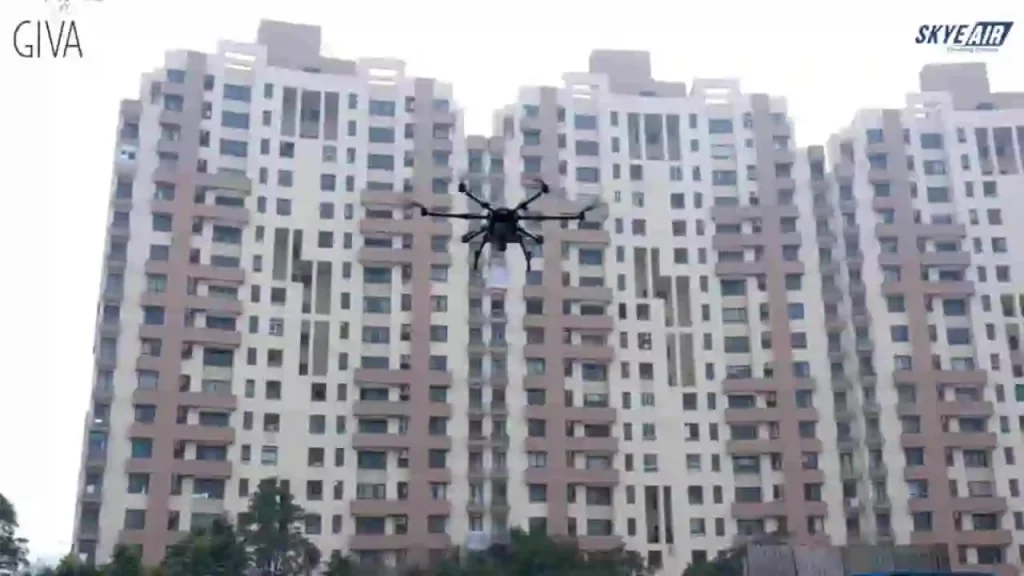
Skye Air Mobility, a drone delivery company based in Gurugram, has started a new service. They now deliver packages right to people’s doorsteps using drones and smart robots powered by artificial intelligence. This big step forward in fast local deliveries was announced at the AI Impact Summit. The summit happened recently in New Delhi. Ankit Kumar is the Founder and CEO of Skye Air. He shared details about this exciting change. The company has already done a lot with drones. Now they add robots to make deliveries even smoother and greener.How the New Delivery System Works Step by StepThe system starts with Skye Air’s special hubs called Skye Ports. These are like local delivery stations for hyperlocal areas. Drones pick up packages from these ports and fly them to the right spot. They land at smart mailboxes called Arrive Points. These mailboxes go in housing societies, apartment complexes, or office buildings. Everything happens automatically with no people needed in between.Once the drone drops the package in the Arrive Point, a robot takes over. The robot is an autonomous rover made by a US company called Autonomy. It picks up the package and drives it straight to the customer’s door. The customer just enters a simple OTP code on the rover. The door opens, and they get their shipment safely. This whole process cuts out traffic jams, saves time, and keeps things secure. No human hands touch the package after the drone drops it off. It works perfectly in busy cities like Gurugram where streets get crowded fast.Impressive Past Success and Green ImpactSkye Air has a strong track record already. Over the last two and a half years, they completed nearly 3.6 million drone deliveries. This huge number shows their experience in the field. Best of all, these flights saved over 1,000 tons of carbon emissions. That means less pollution compared to cars or bikes making the same trips. Ankit Kumar explained this at the summit. He said they connected their drone ports with physical AI setups for the first time. This mix of air and ground tech makes deliveries faster and better for the planet.The company tested drones in hilly areas and cities before. Now they bring it all together in Gurugram. This home base will test the full system before going bigger.Key Partnerships with US Tech CompaniesSkye Air teamed up with three American companies to make this possible. First is Arrive AI. This firm trades on the NASDAQ stock market. They make the Arrive Point smart mailboxes. Skye Air installs these in buildings. Drones drop packages there safely.The second partner helps with last-mile tech. The third is Autonomy. They built the smart rovers that roll from the mailbox to your door. Ankit Kumar announced these deals at the AI Impact Summit. These partnerships bring top global tech to India. They create a full automatic chain from drone to doorstep.Plans to Grow Big Across India and the WorldGurugram is just the starting point. Ankit Kumar sees it as the perfect launchpad. The city has tall buildings, traffic, and tech-savvy people. It tests the system in real urban challenges. Soon, they plan to cover every part of Gurugram. After that, expansion hits other Indian cities.India leads the way here. Ankit noted Prime Minister Narendra Modi’s words on AI growth. India laid the foundation first in the world for this kind of delivery. They want to perfect it locally before going national. The final goal is global reach. This could change how packages arrive everywhere from Delhi to Dubai.Prime Minister Modi praised the AI Impact Summit on social media. He said the world admires India’s tech skills. The event ended with the New Delhi Declaration on AI Impact. Eighty-eight countries and groups signed it. It focuses on using AI for jobs and better lives.Why This Matters for Gurugram and IndiaGurugram buzzes with offices, homes, and shops. Fast deliveries matter a lot here. Drones skip roads and fly straight. Robots handle the last few steps without getting stuck. Customers get parcels quicker and safer. Businesses save money on fuel and drivers. The environment wins too with less carbon.This fits India’s big push into drones and AI. Rules now allow more drone use. Companies like Skye Air lead innovation. They turn ideas into real services. Local jobs grow in tech and operations. Soon, anyone in Gurugram can order food, medicine, or goods and see a drone overhead.Skye Air proves India innovates at world speed. From 3.6 million deliveries to robot doorsteps, they set the pace. Watch for drones in your sky soon. The future of shopping arrives one package at a time.
Indus Awakens: Sarvam’s Homegrown AI Chatbot Challenges ChatGPT in India’s Language Arena
India’s AI battlefield just got fiercer. Bengaluru-based startup Sarvam AI stealth-launched Indus, its multilingual chat app powered by the mighty Sarvam 105B model, on February 20, 2026, mere days after disclosing 105B and 30B LLMs at the India AI Impact Summit. Now in beta on iOS, Android, and web (indus.sarvam.ai), Indus is entering a market where ChatGPT boasts 100M+ weekly Indian users, and Claude claims a 5.8% global share (second to the US).Google CEO Sundar Pichai’s recent praise, “Sarvam’s local models have no impediments, very well positioned,” fuels the hype. As OpenAI, Anthropic, and Google dominate, Sarvam bets on sovereignty: Built entirely in India for 22+ Indic languages, voice-first, culturally attuned.From Summit Spotlight to Consumer HandsIndus interfaces Sarvam 105B (105B parameters, mixture-of-experts for complex reasoning; 128K token context) and nimble 30B (real-time chats). Disclosed amid summit buzz, partnerships with HMD (Nokia feature phones), Bosch (auto AI), the app rolled out gradually on limited compute. Beta quirks: No per-chat deletion (full account wipe only), mandatory reasoning mode (slows some responses). Phone/Google/Microsoft/Apple login; India-limited now. Early users rave on Reddit/YouTube: Seamless Hinglish switching, ethical dilemmas solved step by step, puzzles cracked in Hindi.ModelParametersStrengthsUse CaseSarvam 105B105BComplex reasoning, 128K contextDeep analysis, docs/imagesSarvam 30B30BReal-time convos, efficiencyVoice chats, daily queries Tailored for Bharat: Features That Speak LocalIndus shines where globals falter, Indic mastery. Type/speak in any of 22 scheduled languages; mid-chat switches (English→Hindi→Tamil) flow naturally. Upload images/PDFs for analysis; future AI agents automate tasks, in-app doc edit/write.Voice-first: Bulbul TTS (11 langs, 39 voices), Saaras STT (code-mixed, telephony audio). Reasoning demos crush: River crossing puzzles, math series, trolley ethics, historical what-ifs, all Hindi/English, step-by-step. YouTube tests (e.g., Nitish Verma) hail puzzle-solving, troubleshooting smarts.Beta perks: Free API trials for devs; file uploads for visual reasoning (charts/tables/handwritten Indic scripts).Sarvam’s Rebel Rise: $41M Fuel, Sovereign VisionFounded in 2023 by Raghavan/Kumar, Sarvam snagged $41M from Lightspeed, Peak XV, and Khosla, building Indic-optimized LLMs amid data scarcity. Unlike English-biased GPT-4, Sarvam trains on local data for accuracy in dialects/scripts. Summit feats: Outperformed Gemini/ChatGPT on Indic OCR (84.3% olmOCR-Bench).Enterprise wins: UIDAI (Aadhaar voice/fraud), Odisha/Tamil Nadu AI hubs, SBI Life (11-lang policy bots). Consumer Indus democratizes it.Full List of Supported LanguagesSarvam 105B supports all 22 scheduled languages of India, as defined in the Constitution’s Eighth Schedule, trained on high-quality Indic datasets for superior handling of code-mixed speech, scripts, and contexts.These form India’s official linguistic backbone, enabling seamless multilingual interactions in Indus and enterprise apps:AssameseBengaliBodoDogriGujaratiHindiKannadaKashmiriKonkaniMaithiliMalayalamManipuri (Meitei)MarathiNepaliOdiaPunjabiSanskritSantaliSindhiTamilTeluguUrduBattle for India’s AI SoulIndia’s genAI frenzy, 100M ChatGPT users, demands sovereignty. Indus fights import reliance, privacy risks. Competitors: Global giants (latency, culture gaps); locals like Krutrim, CoRover lag scale. Sarvam’s edge: Open-source leanings, partnerships (Nokia cars/glasses).Challenges: Compute scaling (waitlists), refinement (deletions/reasoning toggle). Upside: Population-scale data moat, govt IndiaAI Mission backing.Indus isn’t just code, it’s India’s digital voice. From Hinglish banter to ethical debates, Sarvam crafts AI that gets us.
Claude vs ChatGPT: How OpenAI and Anthropic Are Shaping the Future of Artificial Intelligence
The rapid evolution of generative artificial intelligence over the past few years has been largely defined by two major players—OpenAI and Anthropic. Their flagship AI systems, ChatGPT and Claude, have emerged as leading conversational models, widely used across industries ranging from media and education to software development and enterprise automation.While both tools are built on advanced large language models (LLMs) and often perform similar tasks, they differ significantly in their design philosophy, capabilities, safety approach, and real-world applications. As AI becomes more deeply embedded in everyday workflows, understanding these differences is essential for users, businesses, and policymakers alike.Origins and Development: Two Different ApproachesChatGPT was launched by OpenAI in late 2022 and quickly became a global phenomenon, crossing millions of users within days. Its success was driven by its ease of use, conversational ability, and versatility, making it accessible to both professionals and casual users.Claude, introduced by Anthropic in 2023, entered the market as a more safety-focused alternative. Anthropic itself was founded by former OpenAI researchers, with a clear mission to build AI systems that are more controllable, interpretable, and aligned with human values.This divergence in origins reflects the broader contrast between the two platforms—one prioritising rapid innovation and wide usability, the other emphasising cautious deployment and ethical safeguards.Core Philosophy: Capability vs AlignmentAt the heart of the comparison lies a fundamental difference in philosophy.OpenAI’s ChatGPT is designed to be highly capable and adaptable, supporting a wide range of use cases such as writing, coding, research, design, and even voice-based interactions. It aims to be an all-in-one AI assistant.Anthropic’s Claude, by contrast, is built on the concept of “constitutional AI”, a framework that guides the model’s behaviour using a set of predefined ethical principles. This makes Claude more measured, cautious, and aligned, particularly in sensitive or complex contexts.In practical terms, this means:ChatGPT often offers more flexible and creative outputsClaude tends to produce more restrained, carefully reasoned responsesCapabilities and Technical StrengthsMultimodal Features and EcosystemChatGPT has a clear advantage when it comes to multimodal capabilities. It supports:Text generation and editingImage understanding and generationVoice conversationsCustom AI assistants and integrationsThis makes it a more dynamic and feature-rich platform, especially for content creators, marketers, and general users.Claude remains more text-centric, focusing on:Long-form writingDocument analysisCoding assistanceResearch-heavy tasksWhile it can process large files and images, it does not yet match ChatGPT’s broader ecosystem of tools and integrations.Context Window and Long-Form ProcessingOne of Claude’s biggest strengths is its ability to handle extremely large context windows. It can process long documents—such as research papers, contracts, or entire books—with greater continuity and coherence.This makes Claude particularly effective for:Legal analysisAcademic researchLarge-scale documentation tasksChatGPT, while also capable of handling extended context, is generally more optimised for interactive conversations and faster responses, rather than extremely long inputs.Reasoning and Analytical DepthClaude is often recognised for its strength in deep reasoning and structured thinking. Its responses tend to be:More detailedLogically sequencedCautious in uncertain scenariosChatGPT, on the other hand, excels in:Balanced reasoning across domainsQuick problem-solvingConversational clarityFor users, this translates into a trade-off between depth and speed.Writing Style and User ExperienceThe difference between the two models becomes especially visible in their writing styles.ChatGPT produces content that is engaging, creative, and conversational, making it ideal for storytelling, marketing copy, and social media content.Claude leans towards a more formal, structured, and nuanced tone, often preferred for reports, essays, and professional communication.For newsroom-style writing, both can be effective, but Claude’s tone is often perceived as slightly more measured and editorial, while ChatGPT is more adaptable to different tones and audiences.Use Cases Across IndustriesBoth platforms have seen widespread adoption, but their strengths align with different use cases.ChatGPT is widely used for:Content creation and journalismEducation and tutoringCoding and debuggingCreative writing and brainstormingClaude is increasingly used for:Enterprise workflowsPolicy and compliance analysisLong-form documentationResearch-intensive tasksIn many organisations, the two are used together rather than in competition, depending on the task at hand.Safety, Ethics, and ReliabilitySafety is where Claude distinguishes itself most clearly. Built with a strong emphasis on ethical AI, it is more likely to:Avoid harmful or sensitive outputsProvide balanced perspectivesRefuse risky or ambiguous queriesChatGPT also incorporates safety systems, but it is generally less restrictive, allowing for broader exploration and creativity.This difference can be critical in sectors like:LawHealthcareGovernment policywhere accuracy and caution are more important than flexibility.Performance and Real-World ComparisonsRecent benchmarks and user comparisons suggest that:Claude often performs better in multi-step reasoning and long-form tasksChatGPT excels in speed, versatility, and multimodal interactionsHowever, performance varies depending on:The complexity of the taskThe clarity of user promptsThe specific model version being usedThere is no universal winner—only context-dependent superiority.The Bigger Picture: Competition Driving InnovationThe rivalry between OpenAI and Anthropic is not just about two AI tools—it represents a broader debate within the tech industry:Should AI prioritise maximum capability and innovation?Or should it focus on safety, alignment, and controlled growth?Both approaches are shaping the future of artificial intelligence in different ways.As governments begin to regulate AI and businesses integrate it into core operations, the balance between power and responsibility will become increasingly important.Where Things Stand TodayAs of 2026, both ChatGPT and Claude have established themselves as leading AI assistants globally, each with its own strengths and limitations. Their continued development is expected to push the boundaries of what AI can achieve—while also raising important questions about governance, ethics, and human-AI collaboration.In practical terms, users are no longer choosing between them as competitors, but rather leveraging them as complementary tools, depending on whether the task demands creativity, speed, depth, or caution.Together, they are redefining how information is created, processed, and consumed in the digital age.
Anthropic’s Claude Cowork Plug-ins Spark ‘SaaSpocalypse’: Global Tech Sell-Off Hits Indian IT Hard

Global tech markets plunged into chaos following Anthropic’s January 30, 2026, launch of 11 open-source plug-ins for its Claude Cowork agent, igniting fears that agentic AI could obliterate traditional SaaS models and disrupt India’s IT services giants. Indian IT stocks like Infosys (down 8%), TCS (6.46%), HCLTech (5.76%), Wipro, and Tech Mahindra cratered, erasing over ₹5.7 lakh crore in market cap as the Nifty IT index dropped 19% in eight sessions, its worst since 2020.The Trigger: Claude Cowork’s Game-Changing Plug-insAnthropic, founded in 2021 by ex-OpenAI leaders Dario and Daniela Amodei, shifted AI from chatbots to autonomous “coworkers.” These no-code plug-ins bundle skills, connectors, and sub-agents for enterprise roles, autonomously planning, executing, and validating multi-step tasks like document processing, cross-verification, and adaptive strategies. Key offerings target:Plug-in CategoryCore FunctionsLegalContract review, NDA analysis, compliance checks, risk flagging.SalesProspect research, deal prep, process tracking.FinanceFinancial modelling, metrics tracking.Data/Marketing/ProductQuery/visualise datasets, campaign planning, and roadmap prioritisation.Others (Productivity, Support, Biology)Task/calendar management, issue triage, and literature analysis.This “vibe coding” lets users describe intent in plain English, bypassing specialised software from Salesforce, ServiceNow, or Adobe—threatening recurring subscriptions that fueled SaaS profits.Market Carnage: Wall Street to Dalal StreetUS: Nasdaq fell 1.4-2.4%; Goldman Sachs software basket 6%; S&P 500 -0.84%. Adobe (-7.31%), Cognizant (-10.14%), Thomson Reuters (-15.67%), Gartner (-20.87%), Equifax (-12.11%), ServiceNow/Salesforce (~7%) shed $ 300 B in market cap. Even Nvidia/Meta dipped 2-3%.India: Infosys ADR -5.56% (Nasdaq); TCS mcap below ₹10 lakh crore (2020 levels); Nifty IT -3-6% daily. Sensex dragged 100+ points.Termed ‘SaaSpocalypse’: Jefferies warns AI agents compress software categories into one interface, turning tools into utilities.Palantir’s CTO noted AI slashing SAP migrations from years to weeks, amplifying panic over billable hours in legal research, compliance, and due diligence, bread-and-butter for Indian IT juniors.Indian IT Sector: Existential Threat or Overreaction?India’s IT behemoths thrived on outsourcing data processing, analysis, and support—now AI-vulnerable. Economic Survey 2025-26 flagged risks: concentrated AI data/compute erodes India’s edge if adaptation lags. Mustafa Suleyman-like warnings predict 12-month white-collar hits (lawyers, accountants, coders).Bear Case: Agentic AI automates L1 support, reporting, testing—hollowing low-end services; clients rethink headcount-heavy models.Bull Rebuttals:JPMorgan sees “compelling value” in Infosys/TCS; correction temporary.Cognizant CEO Ravi Kumar: Enterprises need integrators for AI-human bridges; no “plug-and-play” magic.Zoho’s Sridhar Vembu: Domain expertise trumps AI; SaaS woes predated agents.Happiest Minds’ Ashok Soota: Disruption expands IT roles in transformation.Experts (Pareekh Jain, Prasad Valavade): Incremental impact; humans essential for governance, legacy integration, high-stakes decisions. Legal AI needs oversight (Adv. Varun Singh).Broader Implications and Road AheadSalesforce’s 1,000 AI-driven layoffs signal restructuring. Anthropic’s Dario Amodei reassures startups: “Claude powers AI-native firms.” Indian firms pivot to AI orchestration, but face pricing pressure (fixed-fee vs. hours). JPMorgan urges buying the dip; long-term, IT survives as AI embedders.As of February 17, 2026, markets stabilise slightly, but the AI shift, from assistant to executor, reshapes software economics. Indian IT must accelerate: reskill, embed AI in processes, or risk obsolescence. The ‘SaaSpocalypse’ may be hype, but evolution is inevitable.
India AI Impact Summit 2026: Detailed Agenda for Global AI Action in New Delhi
New Delhi, February 9, 2026 – India gears up for the India AI Impact Summit 2026, set for February 16-20 at Bharat Mandapam, Pragati Maidan, New Delhi, the primary venue for the India AI Impact Summit 2026, which will host the main events on February 19-20.Hosted by the Ministry of Electronics and Information Technology (MeitY), this first Global South edition, billed by Union Minister Ashwini Vaishnaw as the “largest yet,” transitions AI discourse from vision to verifiable impact under the “Three Sutras”: People, Planet, and Progress.Some sources mention a broader program across February 16-20, potentially using additional Delhi venues like Sushma Swaraj Bhawan for side events, sessions, or exhibitions. Bharat Mandapam, one of India’s largest convention centers, was upgraded by NDMC for this flagship gathering. Chief Guests and Stellar LineupPrime Minister Narendra Modi serves as the Chief Guest, inaugurating on February 16 with a keynote and hosting a leaders’ dinner. Expected heads of government include representatives from Singapore, the UAE, and Brazil (15-20 total), plus 50+ ministers. Key speakers feature Google’s Sundar Pichai, Anthropic’s Dario Amodei, Microsoft’s Satya Nadella, and Indian luminaries like Nandan Nilekani (Infosys co-founder) and Ola’s Bhavish Aggarwal. Over 40 CEOs from Reliance, TCS, and global firms join, along with a Chinese delegation, signaling a thaw in collaboration. Event Schedule and Dialogues Feb 16: Inauguration, Modi address, CEO roundtable.Feb 17-18: Plenary sessions and seven “Chakras” (working groups) on core topics.Feb 19: Startup showcase (500+ ventures), AI model launches, bilateral dialogues.Feb 20: Closing with actionable declarations.Expect 500+ parallel sessions, hackathons, and exhibitions. Dialogues include G20-style tracks on AI ethics, public-private partnerships, and Global South priorities. Participating Governments in India AI Impact Summit 2026 The summit, hosted by India’s Ministry of Electronics and Information Technology (MeitY) under the IndiaAI Mission, expects involvement from over 100 countries. Key highlights:High-Level Representation: 15-20 heads of government and 50+ ministers confirmed, including from Singapore, UAE, Brazil, and others.China: Delegation attending after India’s formal invitation, signaling AI collaboration.Preceding Hosts: Builds on summits by UK (2023 Bletchley), South Korea (2024 Seoul), France (2025 Paris).Collaborators: NITI Aayog (India’s policy think tank), state governments like Uttarakhand (pre-summit host), and international bodies (ITU, World Economic Forum).Global Engagement: Multinational working groups across Chakras, with US, UK, EU, and ASEAN nations active in prep consultations. Key Topics and Seven ChakrasThe India AI Impact Summit 2026 is structured around three foundational “Sutras” (People, Planet, Progress) that guide its discussions, with seven interconnected “Chakras” (working groups) translating these into specific, actionable themes.Core SutrasPeople: Focuses on human-centric AI, including safeguarding rights, enhancing access to services (e.g., healthcare, education), building user trust, workforce reskilling amid job impacts, and ensuring equitable benefits across societies.Planet: Addresses sustainable AI deployment, such as energy-efficient models, responsible resource use (e.g., reducing GPU/data center power demands), and AI applications for climate action, environmental monitoring, and resilience.Progress: Emphasizes inclusive innovation, capacity-building, productivity gains in sectors like agriculture and manufacturing, economic growth, and bridging the AI divide for the Global South. Seven Chakras (Key Discussion Topics)These working groups, involving 100+ countries, cover:AI governance and ethical frameworks.Trust and safety protocols for AI models (e.g., bias mitigation, transparency).AI’s impact on work and future jobs.Sector-specific applications (healthcare, agriculture, industry).Innovation and scalable solutions.Sustainability and environmental integration.Equitable access, inclusion, and development outcomes.Sessions will also spotlight IndiaAI Mission launches, startup innovations, and global standards, prioritizing “on-ground” results over regulations. What to Expect in India AI Summit?MeitY leads with partners like NITI Aayog, NASSCOM, World Economic Forum, and ITU. Corporate backers include Google, Microsoft, NVIDIA (GPU focus), and Indian firms like Tata and Adani (data centers). Governments from US, UK, EU, and ASEAN collaborate. Attendees (10,000+), policymakers, researchers, startups, NGOs, can expect networking zones, live demos (e.g., edge AI), policy labs, and a “Global AI Talent Fair.” Launches include indigenous foundational models under the Rs 10,370 crore IndiaAI Mission. India’s Strategic Push Amid HurdlesEchoing Bletchley (2023), Seoul (2024), and Paris (2025), India’s summit prioritizes “on-ground” wins for 1.4 billion people, as per Secretary S. Krishnan. AI could add $500B to GDP (NASSCOM), but challenges like GPU imports persist—eased by US trade deals and data center tax holidays to 2047. Budget 2026-27 tweaks fund nuclear-powered AI infra, as Vaishnaw eyes energy self-reliance.Vaishnaw hailed “phenomenal” global buy-in, with NDMC upgrading venues. Beyond talks, expect MoUs on compute sharing, talent visas, and sustainable AI pacts, positioning India as an AI diplomacy hub.This summit promises not just dialogue, but deliverables: inclusive, green AI for humanity’s progress.Video credit: YT@/Digital India
India’s Semiconductor Leap: 2 nm Chips Designed from India Signal a Strategic Technological Shift
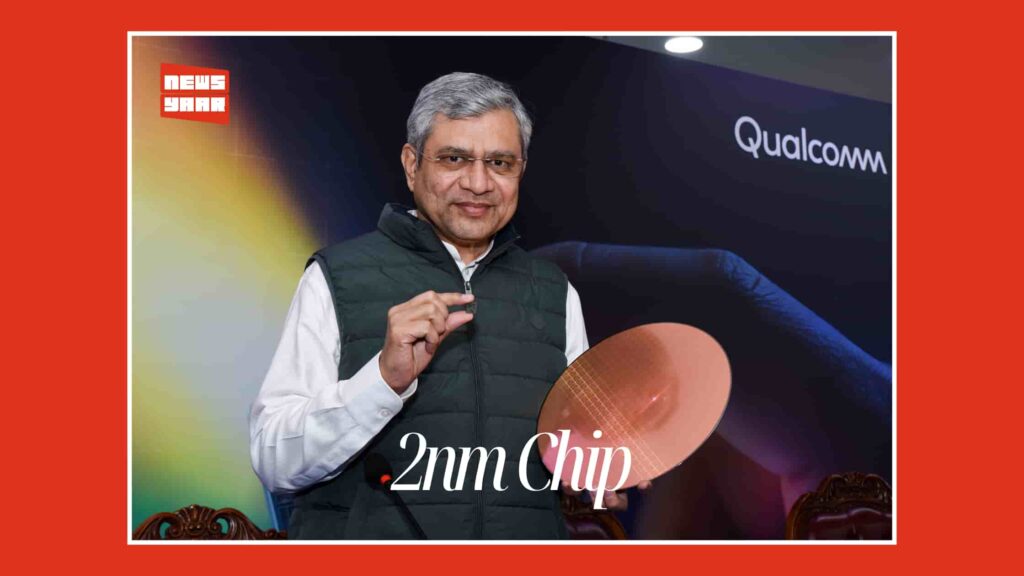
In a development being widely recognised as a milestone for India’s semiconductor ambitions, engineers based in the country have played a central role in designing 2 nanometre (nm) semiconductor chips — one of the most advanced chip technologies in existence today. This achievement, marked by a successful 2 nm chip tape-out at a leading global chipmaker’s Indian facilities, underscores a significant shift in India’s role in the global semiconductor value chain from primarily back-office support to end-to-end engineering and advanced chip design.What Is a 2 nm Chip and Why It MattersIn semiconductor terminology, the “nanometre (nm)” designation refers to the scale of the technology node — essentially the size of the features etched onto a chip. As technology nodes shrink, chips become more power-efficient, faster and capable of packing more transistors in the same physical space. The 2 nm node represents one of the most cutting-edge levels of chip design, sitting at the forefront of global semiconductor innovation alongside 3 nm and 4 nm processes.These advanced chips are expected to power future generations of smartphones, artificial intelligence (AI) systems, edge devices, data centre hardware, autonomous systems and high-performance computing applications. The density and complexity at this level — with tens of billions of transistors on a single die — enable significant improvements in performance and energy efficiency over earlier generations.The India Breakthrough: Design in Bengaluru and BeyondThe chip design milestone was publicly showcased at **Qualcomm Technologies’ engineering centre in Bengaluru, where the company completed the **tape-out of its 2 nm semiconductor design, with development contributions distributed across its Indian engineering hubs in Bengaluru, Chennai and Hyderabad. “Tape-out” refers to the stage in chip development where the final design is completed and ready for manufacturing at a wafer fab — a critical endpoint of the design phase.While the actual manufacturing (fabrication) of the 2 nm chips will continue to be handled by specialised semiconductor foundries overseas due to the extremely capital- and technology-intensive infrastructure required, the fact that high-end design work is being led from India reflects a meaningful advance in the country’s engineering capabilities.Government Perspectives and Industry InterpretationUnion Minister for Electronics and Information Technology, Ashwini Vaishnaw, highlighted this development as a marker of India’s transition toward holistic semiconductor capabilities, emphasising that the country is moving beyond “back-office development work” toward complete engineering cycles — from product definition, design and silicon layout to tape-out and validation — all conducted within Indian talent pools.At a press conference during the event, Minister Vaishnaw noted that this achievement demonstrates how India’s semiconductor design ecosystem has matured and is now integral to global engineering efforts. He indicated that the next strategic target would be to establish semiconductor “fabs” (fabrication facilities) in India, which would enable domestic production of advanced chips.Experts emphasise that such milestones are not merely technical achievements but also symbolic markers of India’s growing integration into the global semiconductor landscape, particularly in high-end design work that drives product performance and innovation.India as a Growing Engineering HubThe development also puts into sharp focus India’s rapidly expanding semiconductor ecosystem — one that combines a deep talent pipeline with increasing participation from global chipmakers. India hosts one of the largest engineering workforces outside the United States for companies like Qualcomm, which have invested in design, validation, system-level optimisation and AI integration efforts for next-generation chip platforms.Indian engineering teams contribute across multiple stages of semiconductor development, including architecture implementation, system integration and advanced feature validation — competencies that are critical in designing chips competitive at global levels.Policy Momentum: Semicon Mission 2.0 and Indigenous Design FocusThe Government of India’s semiconductor policy framework, particularly Semicon Mission 2.0, prioritises indigenous chip design as a key objective alongside talent development, equipment and material ecosystem building, and eventual manufacturing capacity expansion. The revised mission includes funding and incentives for design-led startups, R&D centres, industry collaborations and skill development, aimed at creating a future-ready semiconductor workforce.Under this framework, global companies setting up design operations in India — including multinational firms like Arm — reflect international confidence in Indian engineering capabilities. Such initiatives help build intellectual property (IP), research expertise and design capability at a world-class level.Broader Strategic and Economic ImplicationsThe design of 2 nm chips from Indian engineering centres carries significance beyond technology alone. It contributes to:Enhanced strategic positioning in global semiconductor supply chainsAttraction of further foreign direct investment (FDI) in high-tech R&DUpskilling of engineering talent and creation of advanced tech jobsFoundation for future advanced manufacturing and fab developmentIntegration with AI, edge computing and next-gen connectivity sectorsBy enabling Indian engineers to work at the forefront of semiconductor design, the country is positioning itself as a competitor and collaborator in the high-performance chip ecosystem — a space historically dominated by a handful of global players.Conclusion: A Step Toward a Global Semiconductor RoleWhile India’s semiconductor journey — from design to full-scale manufacturing — remains a multi-decade endeavour, the successful 2 nm chip tape-out driven by Indian talent and engineering operations represents a strategic inflection point. It reinforces the narrative that India is not just a consumer of cutting-edge technologies but a contributor and innovator, capable of playing a meaningful role in one of the most consequential fields of modern technology.This milestone, achieved through collaboration between global industry leaders and Indian engineers under supportive policy frameworks, signals that the country is steadily moving up the semiconductor value chain — from design and verification to eventual productisation and broader ecosystem participation.Video credit: YT@/ANI
Indian Startups at CES 2026: Homegrown Innovation Takes Global Spotlight in Las Vegas

Indian startups and technology firms significantly expanded their presence at CES 2026 — the world’s largest technology showcase held in Las Vegas from January 6 to 9, 2026 — reflecting the country’s evolving tech ambitions and increasing global competitiveness. The annual event, organised by the Consumer Technology Association (CTA), attracted more than 4,100 exhibitors from around 150 countries, underscoring its role as a launchpad for next-generation innovations spanning artificial intelligence (AI), digital health, robotics, mobility, enterprise technology and immersive entertainment.According to CTA executives, Indian participation has steadily grown, with a broader range of startups and established firms using the platform to showcase their products, engage with global partners and position themselves for international expansion. Indian delegations this year included innovators from healthtech, wearables, robotics and automotive systems, signalling the ecosystem’s transition from domestic focus to global impact.Ultrahuman: Metabolic Health and WearablesOne of the headline Indian participants at CES 2026 was Ultrahuman, a Bengaluru-based health technology firm co-founded by Mohit Kumar, Vinay Bhargava and Vatsal Singhal. The company displayed its suite of wearable health devices and preventive care platforms, including what it bills as the world’s lightest sleep-tracking wearable, a continuous glucose monitoring (CGM) system and a preventive blood testing solution designed to empower users with metabolic insights. Ultrahuman’s presence marked India’s growing footprint in consumer health tech at global forums.Noise: Smart Wearables Designed for Global MarketsNoise, headquartered in Gurugram and led by founders Amit Khatri and Gaurav Khatri, was another major Indian exhibitor. The company, recognised as one of the third-largest smartwatch brands in the world, showcased its latest wearable technologies at CES, emphasising advanced health metrics, design innovation and global compatibility. Noise’s participation highlighted India’s emergence not only as a producer of affordable wearables but as a designer and manufacturer capable of competing with established global brands.“We are proud to come here and compete on a world stage,” said Hamish Patel, Vice President – Product Devices at Noise, noting that the company’s R&D and manufacturing are largely based in India, enabling it to present products that match global benchmarks.aabo: MedTech InnovationsAmong the Indian startups at CES 2026 was aabo, a MedTech firm focused on AI-driven health solutions. Although not a household name, its technology emphasises the intersection of machine intelligence and healthcare delivery, an area of rising relevance as global health systems integrate data-led diagnostics and monitoring. The specifics of aabo’s product suite were highlighted among Indian exhibitors but details on founders and product characteristics are linked to its positioning as a healthtech innovator on the CES show floor.ArvyaX Technologies: Robotics and Pseudo-RealityArvyaX Technologies, founded by Shalabh Bhatnagar, showcased its robotics and pseudo-reality solutions at CES’s Eureka Park — an innovation zone dedicated to emerging startups. The Bhopal-based firm has developed technologies that blend digital and physical environments, targeting enterprise sectors such as industrial training, simulation and collaborative experiences. Shalabh Bhatnagar described participating at CES as a moment of pride, emphasising that ArvyaX’s innovations were both made and innovated in India, reflecting the nation’s rising capabilities in robotics and immersive technologies.Sona Comstar: Automotive Technology and EV SystemsThe automotive technology company Sona Comstar was another Indian participant at CES 2026, presenting its advanced electric vehicle (EV) components and systems. With a strong focus on R&D in high-power density EV motors, differential assemblies and lightweight drivetrain systems, Sona Comstar’s technology underscores India’s potential in automotive core technology development and global mobility solutions. The company’s products cater to modern EV performance requirements and highlight a broader shift toward electrification and smart mobility.Zoondia and Industry CollaborationsIn addition to standalone startups, Indian participation included Zoondia, a global technology partner offering enterprise solutions and services. Though not a startup in the strictest sense, Zoondia’s presence further reflects the breadth of Indian engagement at CES, spanning early-stage innovation to established tech services with global delivery capabilities.The Significance of Indian ParticipationExecutives at CES 2026 noted that India’s presence was broader and deeper than in previous years, building on momentum from the first dedicated Indian pavilion introduced on the CES show floor in 2024. This year’s participation spanned startups, industry bodies such as the CMAI Association of India, and firms showcasing products that compete with global innovations rather than just representing emerging market offerings.Industry observers have highlighted several key implications of India’s growing CES footprint:Global Visibility: Participation at CES elevates Indian startups to international buyers, investors and collaborators, helping them secure partnerships, pilot projects and market entry opportunities.Innovation Credibility: Demonstrating products at a major global venue signals maturity and readiness to compete on performance and design quality.Ecosystem Confidence: The increasing number of Indian participants reflects confidence among founders and investors in showcasing innovations on a global stage.Cross-Sector Representation: Startups at CES 2026 represented health tech, wearables, robotics and automotive systems, indicating that India’s startup ecosystem is diversifying beyond software into deep tech and hardware innovation.What This Means for India’s Startup EcosystemThe rising participation of Indian startups at CES 2026 comes at a time when the country’s broader startup ecosystem is experiencing structural shifts. India is now recognised as one of the largest startup ecosystems globally, with a growing emphasis on deep tech, AI, robotics and hardware innovation rather than only digital services. Initiatives such as startup support missions, increased R&D investment and industry collaborations are catalysing this transformation, enabling more Indian founders to engage in global innovation discourse and market expansion.Indian founders and CEOs attending CES emphasised that events like CES are not merely showcases but strategic platforms for networking, validation, investment engagement and collaboration, helping elevate India’s technology brands to global audiences and potential customers.Looking ForwardAs CES continues to be a global stage for breakthrough technologies, the increasing presence of Indian startups at CES 2026 reflects a broader narrative of India’s evolution from a predominantly software and services economy to a hardware and deep-tech innovator on the world stage. With continued participation in global technology showcases, Indian founders aim to build enduring technology brands that are recognised not only domestically but across markets in North America, Europe and Asia.The momentum generated at CES 2026 is expected
Rajasthan DigiFest 2026: Jaipur to Host Regional AI Impact Conference Ahead of India AI Summit
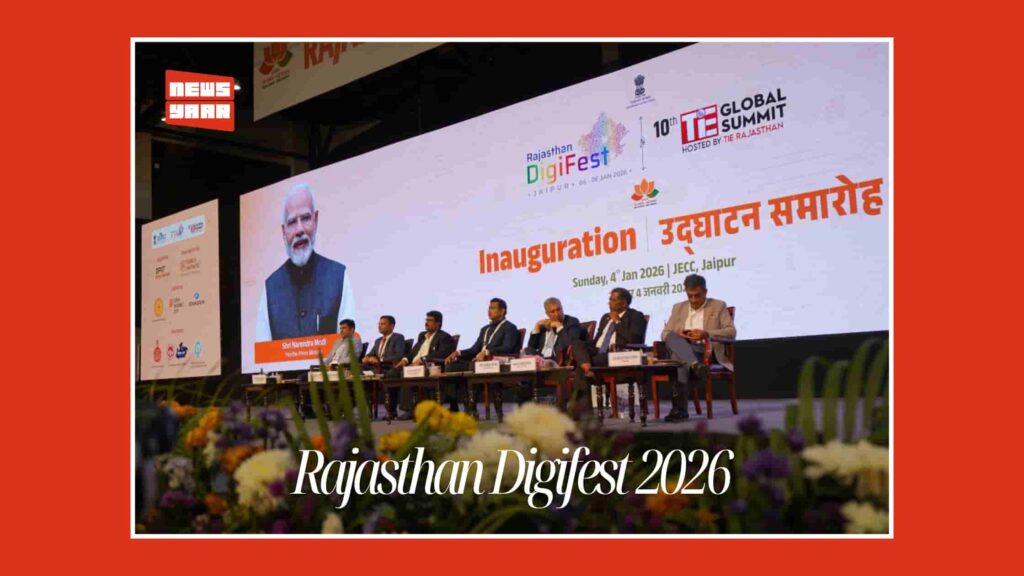
Jaipur is set to become a major hub for artificial intelligence discussions as Rajasthan hosts the Regional AI Impact Conference 2026 on January 6, marking a significant step in India’s journey towards AI-driven governance and innovation.The conference will be held as part of Rajasthan DigiFest 2026, in collaboration with the TiE Global Summit 2026, and will serve as a crucial regional engagement leading up to the India AI Impact Summit 2026, scheduled for February this year.The high-profile event will witness the presence of Union Minister for Electronics and Information Technology Ashwini Vaishnaw and Minister of State for Electronics and Information Technology Jitin Prasada, underlining the Centre’s strong focus on accelerating AI adoption across states and sectors.A Platform for AI-Led Governance and GrowthAccording to the Ministry of Electronics and Information Technology (MeitY), the Regional AI Impact Conference in Jaipur will act as a key platform to explore how Artificial Intelligence can transform governance systems, boost economic growth, encourage innovation, and support inclusive development. The discussions are expected to focus on both policy and practice, highlighting how AI can be effectively integrated into public administration and service delivery.One of the central themes of the conference will be AI for Public Service Delivery and Governance, examining the role of emerging technologies in improving efficiency, transparency, and citizen engagement. Sessions will also address Ethical and Responsible AI, reflecting growing concerns around data privacy, algorithmic bias, and accountability in AI-driven systems.As AI continues to reshape the global workforce, the conference will feature dedicated discussions on AI and the Future of Employment and Skills. Policymakers and industry experts are expected to deliberate on reskilling, upskilling, and preparing India’s workforce for technology-driven changes.AI Conversations Extend to GuwahatiParallel to the Jaipur conference, Guwahati will host a Human Capital Working Group Meeting over the next two days. The meeting will be chaired by Prof. T. G. Sitharam, Chair of the Human Capital Working Group, and will bring together senior policymakers, academic leaders, industry experts, and practitioners.The discussions in Guwahati will focus on the future of education, skilling, and workforce readiness in the age of Artificial Intelligence, complementing the broader objectives of the AI Impact Conference. Together, these engagements underline the government’s emphasis on aligning technology advancement with human capital development.Building Momentum Towards India AI Impact Summit 2026The Regional AI Impact Conference under Rajasthan DigiFest 2026 is part of a nationwide series of dialogues aimed at building momentum for the India AI Impact Summit 2026. By bringing AI conversations closer to regional ecosystems, the initiative seeks to ensure that technological growth remains inclusive, balanced, and aligned with India’s development priorities.With Jaipur hosting this significant gathering, Rajasthan is positioning itself as an active participant in India’s AI transformation, reinforcing its role in shaping the country’s digital and innovation-led future.Video credit: YT@/DoIT&C Government of RajasthanVideo credit: YT@/DoIT&C Government of Rajasthan
Bharat Taxi Launched: Government-Backed Cooperative Cab Platform Aims to Disrupt Ride-Hailing Market
The Government of India has extended institutional support to Bharat Taxi, a cooperative-owned digital mobility platform that seeks to offer an alternative to private ride-hailing aggregators by placing drivers at the centre of ownership and operations. Launched under the vision of “Sahakar se Samriddhi”, Bharat Taxi is being positioned as India’s first large-scale, cooperative-led cab service, focused on transparent pricing, fair earnings for drivers and affordable transport for commuters. What Is Bharat Taxi and Who Runs It Bharat Taxi operates under Sahakar Taxi Cooperative Limited, a Multi-State Cooperative Society registered under the Multi-State Cooperative Societies Act, 2002. Unlike conventional cab platforms, drivers on Bharat Taxi are not just service providers but cooperative members with ownership stakes. The initiative is supported by major national cooperative institutions, including the National Cooperative Development Corporation, NABARD, IFFCO, KRIBHCO, Amul, NAFED, the National Dairy Development Board and the National Cooperative Export Limited. While the government is not involved in daily operations, it is actively promoting the cooperative framework behind the platform. A Driver-First Alternative to Aggregator Models Bharat Taxi has been conceived as a community-owned alternative to commission-based ride-hailing services. The platform follows a zero-commission model, allowing drivers to retain the full fare earned from each ride. Under the cooperative structure, driver-members are expected to benefit from collective decision-making, profit-sharing mechanisms and long-term financial participation, moving away from high platform fees that have been a longstanding concern in the sector. For passengers, the platform promises safe, reliable and cost-effective mobility with upfront fare visibility and reduced dependence on surge pricing. Pilot Launch and Expansion Plans The service has been pilot-launched in Delhi–National Capital Region and parts of Gujarat’s Saurashtra region. Based on feedback and operational readiness, Bharat Taxi is expected to expand to major cities including Mumbai, Bengaluru, Chennai, Hyderabad and Kolkata, followed by tier-2 cities and semi-urban areas. The government has indicated that the platform is intended to strengthen last-mile and point-to-point connectivity, especially in regions where ride-hailing services remain inconsistent or limited. Booking, App and Accessibility Features Bharat Taxi is accessible through a mobile application available on both Android and iOS platforms. Users can register using their mobile number and book city rides, intercity travel and metro-linked services. The app includes features aimed at accessibility, allowing users to indicate specific needs, including disabilities, during registration. Real-time tracking, emergency support and customer assistance are expected to be part of the platform’s core offerings. Fare Structure and Transparency One of the key selling points of Bharat Taxi is its pricing model. The platform aims to offer transparent, upfront fares with minimal fluctuation during peak hours. While fares are expected to remain competitive with existing services like Ola and Uber, the emphasis is on predictability rather than aggressive discounting. For drivers, the absence of commission is expected to translate into higher take-home earnings and improved financial stability. Why Bharat Taxi Matters Bharat Taxi represents a significant policy experiment in applying cooperative principles to the digital economy. By extending the cooperative movement into urban mobility, the initiative aligns with broader government goals of inclusive growth, fair competition and sustainable livelihoods. If scaled successfully, Bharat Taxi could reshape how technology-enabled public services are delivered, proving that platform-based businesses do not have to rely solely on investor-driven models. The Road Ahead As India’s urban transport needs continue to grow, Bharat Taxi’s success will depend on execution, service quality and user trust. The coming months will be crucial in determining whether the cooperative-led model can compete effectively in a market dominated by private aggregators. For now, Bharat Taxi marks a notable shift in India’s mobility landscape, one that blends technology with community ownership and signals a new direction for platform-based public services.
CES 2026: From Dexterous Robots to Smart Living, A Glimpse Into the Future of Technology
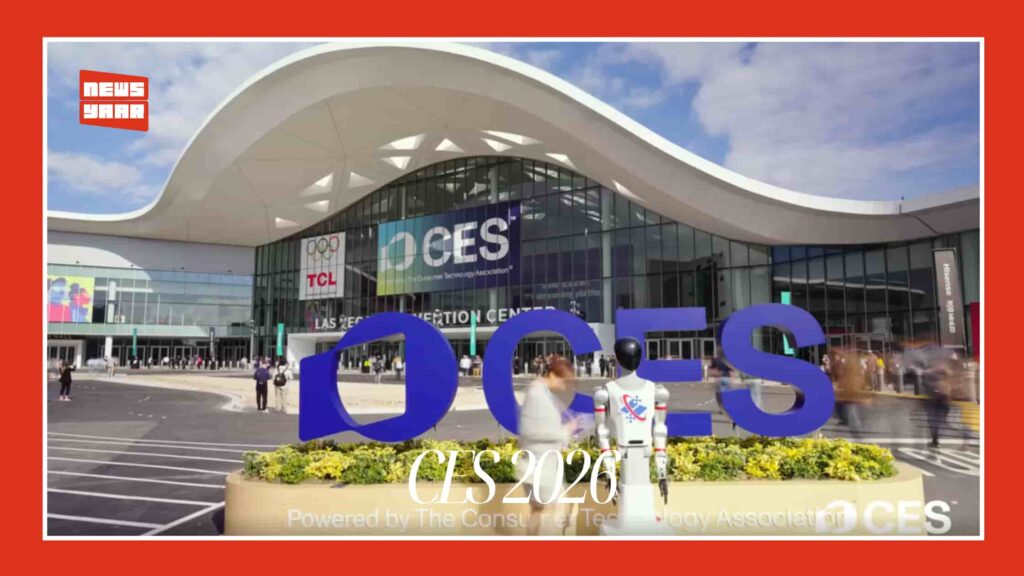
The Consumer Electronics Show (CES) 2026 once again proved why it is considered the world’s biggest stage for innovation. Held in Las Vegas, the annual tech showcase brought together global technology leaders, startups, and innovators to present ideas that could shape how people live, work, and interact with machines in the coming years.This year’s edition marked a clear shift in focus, from flashy concepts to practical, usable technologies that address real-world needs.Robots Get Smarter, Not Just TallerOne of the most talked-about highlights of CES 2026 was the rapid evolution of robotic technology. Unlike earlier years that focused on full humanoid robots, this time the spotlight was on dexterous robotic hands.These advanced systems demonstrated delicate tasks such as folding laundry, playing musical instruments, and even origami, showing how precision and control have improved significantly.Experts noted a strong presence from South Korean and Chinese companies, signalling growing competition in the robotics sector. The progress suggests robots are moving closer to assisting humans in homes, healthcare, and manufacturing environments.AI Takes Centre Stage Across CategoriesArtificial Intelligence was everywhere at CES 2026, not just as a feature, but as the foundation of innovation. From AI-powered home ecosystems to health monitoring devices, companies showcased how machine learning is being integrated seamlessly into daily life.HealthTech innovations stood out, including wearable devices that track vital signs, AI-driven wellness tools, and smart systems designed to improve long-term health outcomes. Industry experts estimate that AI-driven healthcare could become a multi-trillion-dollar market in the coming years.Smarter Homes, Cleaner LivingSmart home technology saw major upgrades at CES 2026. Brands showcased AI-powered cleaning systems, automated home management platforms, and energy-efficient appliances designed to reduce human effort while improving sustainability.Several companies also showcased whole-home ecosystems, where lighting, security, climate control, and cleaning devices communicate with each other through a single intelligent platform. This signals a future where homes don’t just respond, but anticipate needs.Displays, Gadgets, and the Rise of E-PaperDisplay technology also evolved, with innovations in e-paper and flexible screens drawing attention. Lightweight, energy-efficient displays are expected to redefine how information is consumed, especially in portable devices and smart signage.Meanwhile, consumer gadgets, from compact chargers to next-generation laptops, balanced futuristic design with immediate usability, reflecting a trend toward tech that consumers can adopt right away.CES 2026 Sets the Tone for the Year AheadCES 2026 highlighted a clear message: technology is becoming more human-centric. Instead of focusing solely on speed or power, innovation is now centred on usability, accessibility, and meaningful impact.As industries continue to adopt AI, robotics, and smart systems, CES 2026 has set the tone for a future where technology quietly blends into everyday life, making it smarter, simpler, and more connected than ever before.