


National Startup Day 2026: India Celebrates a Decade of Entrepreneurial Transformation
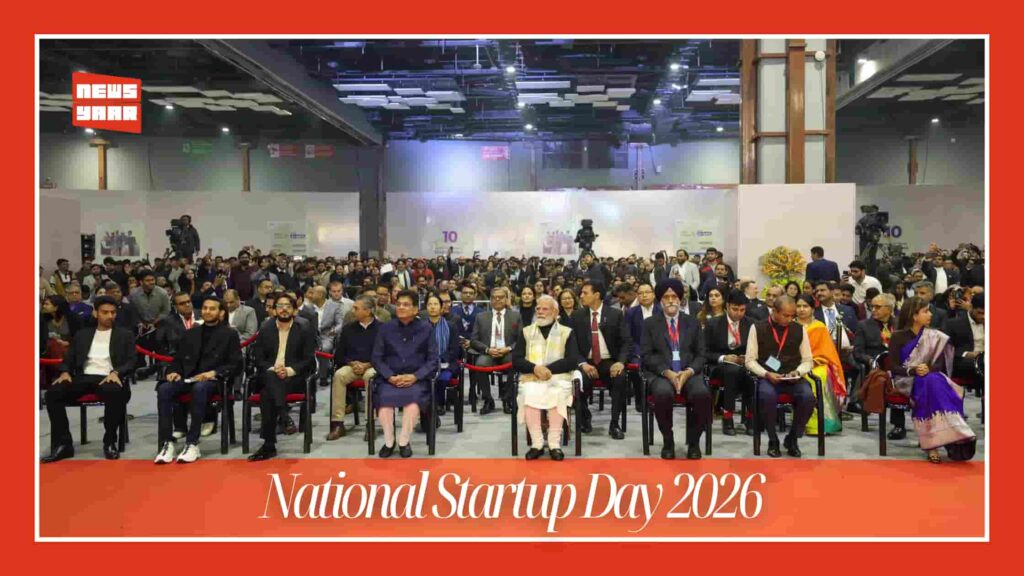
New Delhi, 16 January 2026: India marked National Startup Day 2026 with grand celebrations highlighting ten years of the government’s Startup India initiative and its transformative impact on the nation’s innovation landscape. The event drew founders, investors, policymakers, and ecosystem leaders from across the country to reflect on the journey of entrepreneurship and chart the path ahead.At a flagship event held in New Delhi, Prime Minister Narendra Modi joined startup founders and industry stakeholders to commemorate the milestone. Addressing the gathering, he emphasized the courage and innovative spirit of India’s youth, calling startups engines of economic growth and societal change. His remarks underscored how risk–taking and problem-solving have become mainstream within the entrepreneurial community.Over the past decade since the launch of Startup India, more than 200,000 startups have been recognised across sectors such as technology, healthcare, climate solutions, logistics, fintech, and education. These ventures have collectively generated millions of jobs and helped India emerge as one of the world’s largest and most dynamic startup ecosystems.The celebrations showcased a broad shift in the startup narrative—from chasing rapid valuations to focusing on sustainable growth and real-world impact. Industry experts highlighted that Indian startups are increasingly building deep-tech and AI-driven solutions tailored to local challenges, with a rising emphasis on climate tech, healthcare innovation, and sovereign AI platforms.A notable trend highlighted during the day was the geographical diversification of entrepreneurship. Recent data suggests that over half of registered startups now originate from Tier-2 and Tier-3 cities, signalling a decentralisation of innovation beyond traditional metropolitan hubs.Panel discussions and keynote sessions throughout the event brought to light how startups are contributing to India’s economic resilience, job creation, and technological advancement. Speakers also discussed policy priorities for the next decade, including a renewed push into manufacturing, deep-tech research, and global market expansion.Celebrations were not limited to New Delhi alone. Across states and regions, local startup communities hosted meetups, pitch events, and mentoring sessions, reinforcing a nationwide commitment to empowering entrepreneurs.As National Startup Day 2026 concluded, the startup ecosystem stood not only proud of its achievements over the last ten years but also energized for future challenges, firmly anchored in innovation, inclusivity, and impact.
Vibrant Gujarat Global Summit 2026: Rajkot to Host Regional Conference Focusing on Saurashtra–Kutch Growth
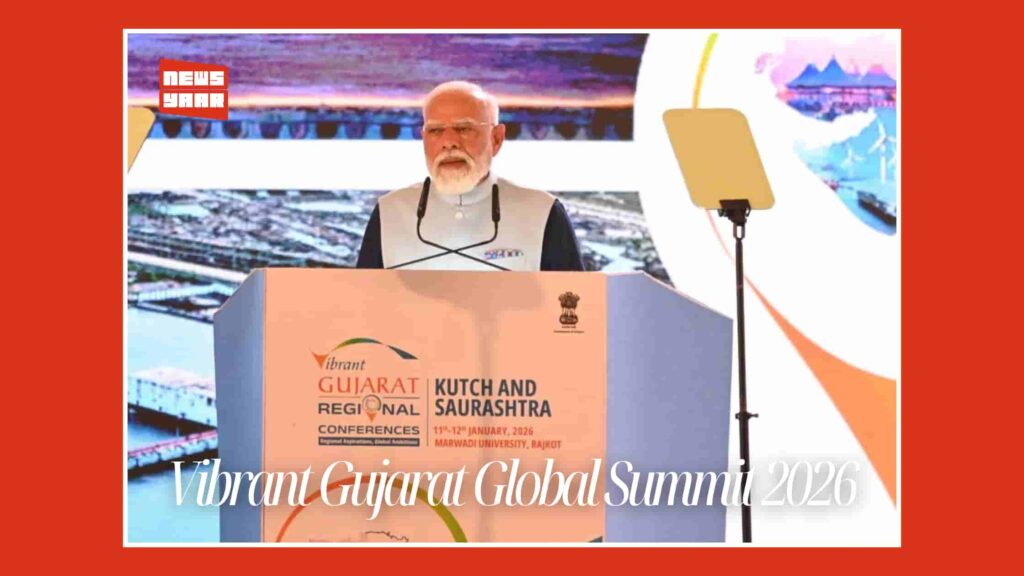
The Vibrant Gujarat initiative, one of India’s most influential investment and policy platforms, will continue its next phase in 2026 through region-specific conferences, with Rajkot hosting the Vibrant Gujarat Regional Conference (VGRC) for the Saurashtra–Kutch region. The move marks a strategic shift towards decentralised economic development, taking the Vibrant Gujarat vision beyond mega summits and closer to regional industry clusters.While the Vibrant Gujarat Global Summit is scheduled to return in 2027, the 2026 regional conferences are designed to strengthen grassroots industrial growth, attract targeted investments and align regional strengths with national development priorities.Dates and VenueEvent: Vibrant Gujarat Regional Conference (Saurashtra–Kutch)Dates: January 11 and 12, 2026Exhibition Duration: January 11 to January 15, 2026Venue: Marwadi University, Rajkot, GujaratRajkot, a major industrial and commercial hub of Saurashtra, has been chosen for its strong presence in engineering goods, auto components, ceramics, MSMEs and export-oriented manufacturing.What Is the Vibrant Gujarat Regional Conference?The Vibrant Gujarat Regional Conference is an extension of the state’s flagship Vibrant Gujarat Global Summit, launched to promote region-specific investment, sector-based policy discussions and local entrepreneurship.Unlike the larger biennial global summit held in Gandhinagar, the regional conferences focus on:District-level industrial strengthsLocal infrastructure and logisticsMSMEs, startups and traditional industriesEmployment generation and skill developmentThe Rajkot edition will specifically address economic opportunities and challenges in Saurashtra and Kutch, two regions with high industrial potential and strategic coastal advantages.Key Focus Areas and SectorsThe 2026 Rajkot conference will focus on both traditional industries and emerging sectors critical to Gujarat’s long-term growth strategy.Core Industry SectorsEngineering and auto componentsCeramics and manufacturing clustersAgro-processing and food industriesPorts, logistics and maritime tradePetrochemicals and mineralsEmerging and Priority SectorsRenewable energy and green manufacturingGreen hydrogen and clean fuel projectsDefence manufacturing and innovationStartups, MSMEs and entrepreneurshipSkill development and employment-linked industriesTourism and cultural economyThe discussions are aligned with India’s long-term development roadmap, including the Viksit Bharat @2047 vision.Key Events and HighlightsThe Vibrant Gujarat Regional Conference 2026 will feature a range of policy, business and networking platforms:Inaugural session and leadership addresses, including participation from senior central and state government leadersSector-specific conferences and panel discussions focusing on investment opportunities, policy reforms and technology adoptionReverse Buyer–Seller Meets, enabling direct interaction between domestic producers and international buyersVibrant Gujarat Regional Exhibition, showcasing industrial innovation, products and services across key sectorsUdyami Mela, aimed at promoting startups, MSMEs, women entrepreneurs and government schemesThe exhibition will run for five days, providing extended engagement opportunities for investors, businesses and the general public.Investment Outlook and Regional ImpactThe Rajkot conference is expected to play a significant role in:Attracting fresh domestic and foreign investmentsStrengthening Gujarat’s manufacturing and export ecosystemPromoting sustainable and green industrial practicesExpanding employment opportunities in Saurashtra and KutchPositioning the region as a multi-sector industrial and logistics hubPrevious regional conferences under the Vibrant Gujarat banner have resulted in substantial investment commitments and long-term industrial planning at the district level.Who Should AttendThe event is relevant for:Indian and global investorsIndustry leaders and exportersStartups and MSMEsPolicy makers and government officialsEntrepreneurs and business associationsProfessionals interested in Gujarat’s industrial and economic roadmapParticipation details and registrations are available through the official Vibrant Gujarat platforms.Why the 2026 Rajkot Conference MattersBy hosting the Vibrant Gujarat Regional Conference in Rajkot, the Gujarat government is reinforcing its approach of balanced regional development, ensuring that growth opportunities extend beyond major urban centres.The 2026 edition positions Saurashtra–Kutch as a critical contributor to Gujarat’s and India’s economic future, combining industrial strength, coastal advantage, innovation and sustainability.Video credit: YT@/NaMo
Rajasthan DigiFest 2026: Jaipur to Host Regional AI Impact Conference Ahead of India AI Summit

Jaipur is set to become a major hub for artificial intelligence discussions as Rajasthan hosts the Regional AI Impact Conference 2026 on January 6, marking a significant step in India’s journey towards AI-driven governance and innovation.The conference will be held as part of Rajasthan DigiFest 2026, in collaboration with the TiE Global Summit 2026, and will serve as a crucial regional engagement leading up to the India AI Impact Summit 2026, scheduled for February this year.The high-profile event will witness the presence of Union Minister for Electronics and Information Technology Ashwini Vaishnaw and Minister of State for Electronics and Information Technology Jitin Prasada, underlining the Centre’s strong focus on accelerating AI adoption across states and sectors.A Platform for AI-Led Governance and GrowthAccording to the Ministry of Electronics and Information Technology (MeitY), the Regional AI Impact Conference in Jaipur will act as a key platform to explore how Artificial Intelligence can transform governance systems, boost economic growth, encourage innovation, and support inclusive development. The discussions are expected to focus on both policy and practice, highlighting how AI can be effectively integrated into public administration and service delivery.One of the central themes of the conference will be AI for Public Service Delivery and Governance, examining the role of emerging technologies in improving efficiency, transparency, and citizen engagement. Sessions will also address Ethical and Responsible AI, reflecting growing concerns around data privacy, algorithmic bias, and accountability in AI-driven systems.As AI continues to reshape the global workforce, the conference will feature dedicated discussions on AI and the Future of Employment and Skills. Policymakers and industry experts are expected to deliberate on reskilling, upskilling, and preparing India’s workforce for technology-driven changes.AI Conversations Extend to GuwahatiParallel to the Jaipur conference, Guwahati will host a Human Capital Working Group Meeting over the next two days. The meeting will be chaired by Prof. T. G. Sitharam, Chair of the Human Capital Working Group, and will bring together senior policymakers, academic leaders, industry experts, and practitioners.The discussions in Guwahati will focus on the future of education, skilling, and workforce readiness in the age of Artificial Intelligence, complementing the broader objectives of the AI Impact Conference. Together, these engagements underline the government’s emphasis on aligning technology advancement with human capital development.Building Momentum Towards India AI Impact Summit 2026The Regional AI Impact Conference under Rajasthan DigiFest 2026 is part of a nationwide series of dialogues aimed at building momentum for the India AI Impact Summit 2026. By bringing AI conversations closer to regional ecosystems, the initiative seeks to ensure that technological growth remains inclusive, balanced, and aligned with India’s development priorities.With Jaipur hosting this significant gathering, Rajasthan is positioning itself as an active participant in India’s AI transformation, reinforcing its role in shaping the country’s digital and innovation-led future.Video credit: YT@/DoIT&C Government of RajasthanVideo credit: YT@/DoIT&C Government of Rajasthan
Amazon, Microsoft, Google Announce $67B India Growth Push: What you need to know?

In a landmark development that could reshape India’s digital economy, three global tech giants, Amazon, Microsoft, and Google, have unveiled a combined $67 billion investment plan for India over the coming years. The multi-billion-dollar commitment highlights the country’s central role in the future of technology, cloud computing, digital infrastructure, and innovation.The announcement, which follows India’s ongoing push toward digital transformation and strategic technology partnerships, signifies escalating competition among the world’s largest cloud and internet companies to expand in one of the fastest-growing tech markets.Over the past decade, India has emerged as a hub for startups, data centers, and digital services, driven by rising internet penetration, affordable data, and a large talent pool. Details of the Investment Plans: The Overview Each company’s commitment targets strategic areas of strength and collaboration with India’s public and private sectors:Amazon said it will invest roughly $30 billion in India through its cloud division, Amazon Web Services (AWS), over the next 10-12 years. The funds will support cloud infrastructure expansion, data center development, and training initiatives that aim to build digital skills across industries in India.Microsoft announced plans to invest $20 billion focused on expanding its cloud footprint through Azure data centers, partnerships with local enterprises, and programs to boost artificial intelligence (AI) adoption and digital literacy. Microsoft also reiterated its commitment to supporting India’s data governance initiatives while prioritizing data privacy and sovereignty.Google pledged $17 billion toward its India strategy, with investments in cloud infrastructure, AI research, and initiatives to support startups and developers. Google’s investment is expected to enhance its cloud services as well as expand local innovation programs in areas such as machine learning and language technologies.Collectively, these investments, totaling $67 billion, represent some of the largest foreign tech commitments in India’s history, reflecting confidence in India’s market potential and policy environment. Strategic Drivers and Implications India’s digital economy is projected to exceed $1 trillion by 2030, according to industry estimates, driven by cloud growth, mobile services, e-commerce, and AI-enabled technologies.With a population exceeding 1.4 billion and a young, tech-savvy workforce, global tech leaders see India as a strategic partner for long-term innovation and market expansion.Experts suggest that the latest funding commitments will accelerate digital infrastructure build-out, boost job creation, and stimulate growth in sectors ranging from fintech and healthtech to manufacturing and education technology. The emphasis on cloud services and AI also aligns with India’s ambitions to become a leader in emerging technologies. Policy and Public Response Government officials welcomed the investments as a vote of confidence in India’s tech ecosystem and regulatory framework. Analysts note that sustained collaboration between the tech industry and policymakers could further strengthen India’s position on the global innovation map.As Amazon, Microsoft, and Google deepen their footprints, India’s digital future appears poised for rapid transformation, with significant economic and societal implications in the years ahead.
New Labour Codes 2025: Opportunity or Outcry?

On 21 November 2025, India’s labour landscape changed forever: the government replaced 29 older laws with four comprehensive new labour codes, covering wages, industrial relations, social security, and workplace safety.What does that mean for workers? For many, it sounded like a win, especially for contract and fixed-term workers, who, under the updated rules, now qualify for gratuity after just one year of service, instead of the previous five.Add to that expanded definitions for “wage” (so allowances count more), protections for health, social security, and more inclusive job norms, and it seems like a long-awaited step toward modern labour reform. For many gig, contract, and temporary workers, long excluded from benefits, this appears to be a landmark shift. Suddenly, some of the perks traditionally reserved only for permanent staff are extended to a much larger pool. It is social security made more inclusive.The Political Backlash: Protests Outside ParliamentBut this reform didn’t sail smoothly. The moment the new codes were notified, alarm bells rang for many union leaders and opposition parties. On December 2, MPs, including Sonia Gandhi and Mallikarjun Kharge, staged a protest outside the Parliament complex, raising placards and slogans demanding that he new laws be rolled back.Their argument? These codes benefit corporations more than workers, allowing easier layoffs, diluting job security, and undermining collective bargaining rights. Trade unions across the country echo similar fears: what if “flexibility” becomes “exploitation”? What if temporary jobs, previously light on benefits, become even more vulnerable under the cloak of new definitions and frequent hiring-firing cycles? For them, this isn’t reform, it’s a disguised rollback of worker rights. Between Reform and Risk: What’s the Verdict?The new labour codes walk a tightrope. On one side, there’s a needed push toward inclusivity, protection for informal workers, and flexibility for modern businesses. On the other, a legitimate fear that under relaxed labour norms, job security and worker welfare might take a back seat.For contract workers, the cut in gratuity eligibility from five years to one is a game-changer. For millions of India’s unorganised workforce, it might mean a combination of dignity and safety. But for many unions and opposition leaders, the same laws signal a slippery slope.As politics rages on and protests echo through Parliament corridors, the real test will be in implementation, whether the laws reflect worker protection or corporate convenience. For now, the 2025 labour reforms remain India’s most ambitious overhaul in decades: hopeful for some, controversial for many, and undoubtedly the biggest labour conversation in recent memory.Video credit: DD News