


Kerala’s ‘Kumbh Mela’ Revival at Thirunavaya: Spiritual Spectacle or Contested Rebranding?
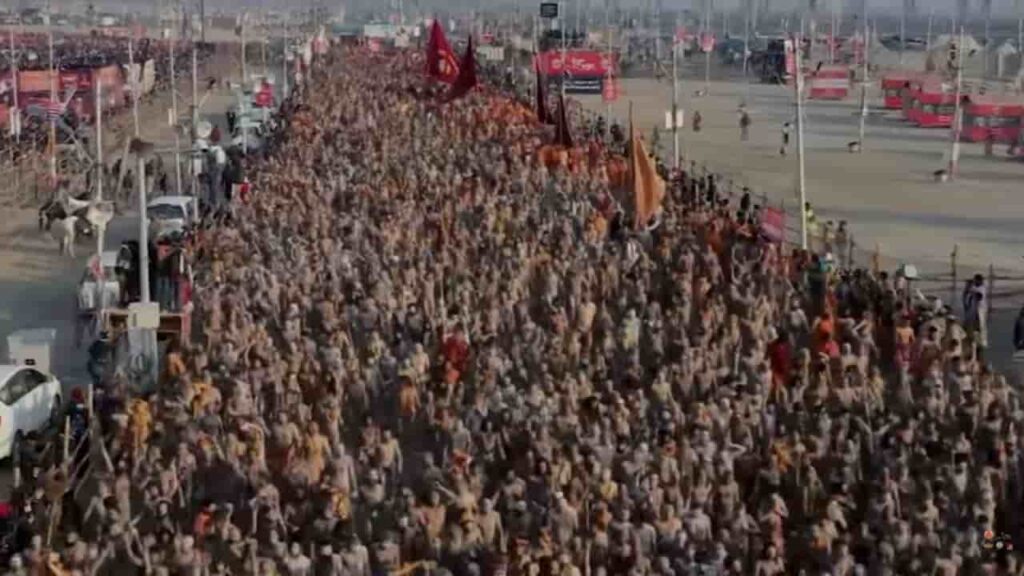
Thirunavaya’s Bharathapuzha (Nila) riverbanks hosted the Mahamagha Mahotsavam, dubbed Kerala’s Kumbh Mela, from January 18 to February 3, 2026, drawing over 3.5 lakh daily devotees at its peak. Organized by Varanasi’s Juna Akhada with Mohanji Foundation and Mata Amritanandamayi Math, the 17-day event peaked February 2-3 with Naga sanyasis’ arrival, blending Vedic dips, Nila aarti by Varanasi priests, and tribal rites, but sparked debate over history, politics, and ecology.Event Highlights and RitualsHeld at Trimurti Sangama (Brahma-Vishnu-Shiva temples triangle), the festival revived rituals absent for ~250-270 years:Holy Dips (Snana Mahotsavam): Believed to energize souls, equivalent to Ganga baths.Nila Aarti: 15-member Varanasi team’s evening fire rituals, evoking Kashi ghats.Inclusivity: Vedic yajnas, tantra, Paniya/Kattunayakan tribal practices alongside Brahmin rites; discourses, bhajans.Processions: Mahameru Rath Yatra from Tamil Nadu’s Trimurtimala; Naga sanyasis’ dips/meditations.Special trains stopped at Kuttipuram/Tirur; crowds from Kerala, Tamil Nadu, Andhra, and North India. Logistics: Parking/security robust; stays in Kottakkal/Perinthalmanna (accommodation scarce onsite).Phase/DateHighlights & SignificanceJan 18: Inaugural SnanaFestival launch; initial mass dips, poojas at Navamukunda Temple.Jan 19-22: Rathayatra PeriodChariot arrival; heightened dips amid processions, yajnas.Feb 2: Naga Sanyasi ArrivalAsh-smeared avadhoots’ ritual dips via special trains (Kuttipuram/Tirur stops); awe-inspiring for devotees.Feb 3: Mahamagha CulminationFinal peak snana; grand aarti, homams, festival close; max crowds for soul purification.Brahma Muhurta (4-5:30 AM) is ideal for dips; post-bath charity/meditation amplified merits. No exact parallels to Prayagraj’s Paush Purnima/Mauni Amavasya, but Feb 3 evoked “king of snans” vibe.Key Leaders and RolesThirunavaya’s Mahamagha event (Jan 18–Feb 3, 2026) drew key figures from Juna Akhada, Kerala mathas, and reformist lineages, blending north-south traditions. Led by Varanasi’s Juna Akhada with Mohanji Foundation and Mata Amritanandamayi Math, attendees included Naga sanyasis, Aghori babas, and matha heads for dips, aartis, and poojas.Leader/TitleAffiliation/RoleHighlightsMahamandaleshwar Swami Anandavanam BharatiJuna Akhada (Sabhapati); ex-SFI/journalist turned Mahamandaleshwar (2025 Maha Kumbh).Led inaugural Magha Snana (Jan 19); presided over all rituals; public face promoting “Kerala Kumbh.” Mata Amritanandamayi (Amma)Chief Patron (Mata Amritanandamayi Math).Symbolic patron since 2018 revivals; inclusivity focus. Acharya Mahamandaleshwar Avadheshananda Giri Ji MaharajJuna Akhada Supreme Head; Co-Chief Patron.Oversaw organizational revival.Swami Satyananda SaraswatiFoundation Managing Trustee; Shriramdas Mission National Gen Secy.Inaugural presence (Jan 18). Sri Shakti Shantanananda MaharshiShriramdas Mission; with Swami Satyananda.Day 1 ceremonies. Mooppil Swamis (Kerala Shankara Mathas)Thrissur Thekke (Vasudevananda Brahmanandabhuti), Kasaragod Idaneer (Sachidananda Bharathi), Thrissur Naduvil (Achyuta Bharathi), Thanur Thrikkaikattu (Narayana Brahmananda Theertha), Ilamura (Parthasarathy Bharathi).Special poojas (Jan 30); sanctified event. Acharyan Arun PrabhakarjiGayatri Gurukulam.Led Vedic chanting for Magha Snana. Ivarmatham Ramesh KorappathjiVedic ritual leader.Shmashana Shraddha (Jan 18). Naga Sanyasis & Aghori BabasJuna Akhada ashrams (Kashi/Varanasi).Arrived Feb 2 for dips/meditations; mystic draw.Additional ContextInaugural Dignitaries: Kerala Governor Rajendra Vishwanath Arlekar (Chief Guest, Dharmadhwaja hoisting Jan 19); Zamorin rep K.C. Dileep Raja Arikkara, Sudheer Namboothiri.Reformist Homage: Honored Adi Shankaracharya, Sree Narayana Guru, Chattampi Swamikal, Ayyankali, Ayya Vaikunda Swamikal, Swami Chinmayananda, Nijananda/Satchidananda Saraswati—inclusivity across sects.Coordination: Swami Chidanandapuri (earlier patron); BJP leaders/Seva Bharati volunteers supported.These figures amplified the event’s pan-Hindu appeal, drawing 3.5 lakh/day peaks despite historical debates.Historical Context: Mamankam vs. Kumbh RebrandRooted in medieval Mamankam (Maha-Makham, every 12 years till 1755), a Chera-era trade/political arena where Zamorin-Valluvakonathiri clashed via chaver suicide squads. Sites: Nilapadu Thara (Zamorin throne), Manikkinar well, Changampally Kalari. Legends tie to Parashurama’s yajna at Thavunur.Organizers (Sabhapati Swami Anandavanam Bharati, ex-SFI/journalist turned Mahamandaleshwar) frame as prehistoric Magha Mela revival—Bṛhaspati-led, post-Palazhi Mathanam myth. But historians diverge:Supporters (VV Haridas): River festival akin to Kumbh; Mamakam=Magha Utsavam.Critics (Rajan Gurukkal, KN Ganesh): Distinct—nakshatra (Makam) vs. Jupiter-Sun rāśi alignments; martial/multicultural (Muslim Kozhikotu Koya on platform, Mappila guards/traders), not purely religious. No Kerala Kumbh tradition; Hindutva overlay erases secular history.Revival attempts: 2016 (Thirur Dinesh), 2018+ (Swami Chidanandapuri, Amma); 2025 Juna Akhada scale-up. 2028 promises a fuller 12-year cycle.Controversies: Hindutva, Politics, EcologyRebranding Critique: Historians (Shibi Thekkeyil, PK Michael Tharakan) call it Hindutva appropriation, Brahminical north-Indian narrative overwriting Dravidian/secular Mamankam in Muslim-majority Malappuram (75%+ local Muslims). RSS visitors’ eyes “Hindu unity.”Permissions Clash: Jan 2026 stop-memo (river conservation/safety) resolved via Collector; TN denied TN-Kerala rathayatra stops—framed as anti-Hindu bias by Swami (communal remarks on LDF/UDF vs. Muslim events).Environmental Alarm: Drought-prone Bharathapuzha (dries summers; coliform pollution, sand-mining); NGOs (Re-Echo, Friends of Bharathapuzha) fear crowds exacerbate scarcity (444 water projects dependent). CPCB post-2025 Prayagraj report warns of pilgrim impacts. Organizers counter: Tradition reveres nature.State aid: Police (hundreds), Haritha Sena (waste), KSRTC buses, despite BJP gripes.Broader ImplicationsIn poll-bound Kerala, the event fuses local lore with pan-Indian Hindu revivalism, attracting lakhs yet polarizing: Devotees hail spiritual homecoming; critics see imported north-Indian violence/majoritarianism. As Bharathapuzha’s ecology strains, balancing faith and sustainability looms large for 2028’s sequel.
Second Global Buddhist Summit 2026, New Delhi: A Confluence of Heritage, Dialogue and Global Peace Efforts
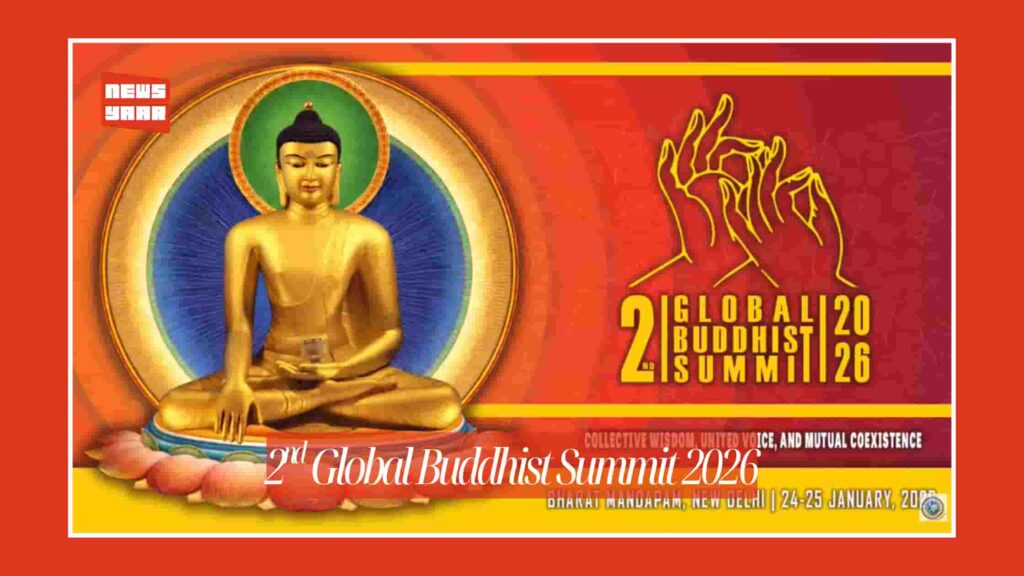
The Second Global Buddhist Summit was held in New Delhi on January 24–25, 2026, bringing together Buddhist leaders, scholars, practitioners and delegates from countries across Asia, Europe, the Americas and Oceania. The summit — a follow-up to the first edition held in 2023 — reaffirmed India’s role as an ancient cradle of Buddhism and a modern platform for inter-civilizational dialogue, peace advocacy, cultural cooperation and spiritual exchange. Hosted in the Indian capital, the summit underscored shared commitments to Buddhist philosophy, ethical governance, sustainable development and global harmony. Context: India and Buddhism Buddhism, originating in India over 2,500 years ago with the enlightenment of Gautama Buddha at Bodh Gaya, has since spread across Asia and the world, influencing culture, art, philosophy and ethical systems. From the ancient universities of Nalanda and Takshashila to the widespread Buddhist traditions of East, Southeast and Central Asia, India remains central to the historical and spiritual heritage of Buddhism. Hosting the Global Buddhist Summit aligns with the country’s broader efforts to preserve and promote its civilizational legacy while encouraging global cooperation on contemporary challenges through the lens of Buddhist teachings. Objectives of the Second Global Buddhist Summit The summit was designed to accomplish several key objectives: Revitalising Buddhist Heritage: Reaffirming India’s connection to Buddhist history and cultural heritage, and encouraging the preservation and promotion of Buddhist sites, languages and scholarly traditions. Promoting Global Dialogue: Providing a structured platform for Buddhist leaders, scholars and practitioners to engage in dialogue on issues such as peace, conflict resolution, ethical leadership, environmental stewardship and human well-being. Enhancing Cultural Exchange: Encouraging cross-cultural understanding and cooperation among Buddhist communities from different countries and traditions, including Theravada, Mahayana and Vajrayana schools. Addressing Contemporary Challenges: Linking traditional Buddhist perspectives with modern issues, including mental health, education, social equity and climate resilience, to highlight the relevance of Buddhist wisdom in the 21st century. Participation and Representation The summit featured participation from over 30 countries, including nations with strong Buddhist traditions such as Japan, Sri Lanka, Thailand, Nepal, Myanmar, Bhutan, South Korea and Vietnam. Delegations comprised: Buddhist monastic leaders and sangha representatives Scholars and academics specialising in Buddhist studies Government officials and cultural envoys Civil society members engaged in peace and ethical initiatives The diverse range of participants reflected the pluralistic nature of global Buddhism and its ability to foster cooperation across different societies and cultures. Summit Themes and Deliberations The agenda included plenary sessions, panel discussions, cultural performances, academic presentations and collaborative workshops. Key themes addressed during the summit included: Peace and Non-Violence: Delegates discussed how Buddhist principles of compassion, non-violence and ethical conduct can inform peacebuilding efforts in regions experiencing conflict and social tension. Buddhist Heritage Preservation: Strategies for safeguarding ancient Buddhist sites, enhancing archaeological research and encouraging pilgrimages were deliberated, with a focus on integrating heritage conservation into sustainable tourism frameworks. Mindfulness, Well-Being and Education: The role of mindfulness, meditation and ethical education in promoting mental health and resilience across societies was a significant focus, examined through interdisciplinary perspectives blending traditional insights with contemporary science. Environmental Ethics: Participants explored how Buddhist teachings on interdependence and respect for all life forms can contribute to global environmental movements, climate action and sustainable living practices. Youth Engagement and Future Leadership: Sessions emphasised empowering young Buddhists and youth leaders to carry forward ethical leadership, community service and cultural exchange in an increasingly interconnected world. Cultural and Ceremonial Highlights The summit also featured cultural programmes designed to showcase the richness and diversity of Buddhist traditions. These included: Traditional chanting and musical recitals Performances of Buddhist dance and theatre forms Exhibitions of Buddhist art, manuscripts and calligraphy Visits to key Buddhist sites in and around the National Capital Region One of the summit’s notable ceremonial moments was a collective meditation and prayer session attended by delegates from various traditions, articulating a shared aspiration for global peace and harmony. India’s Role and Government Support The Government of India actively supported the summit through policy facilitation, logistical arrangements and inter-ministerial coordination. In official statements, ministers highlighted India’s commitment to promoting civilizational dialogue and advancing cooperation on cultural, educational and spiritual fronts. They also reaffirmed the Indian state’s respect for all faith traditions, while underlining the secular ethos enshrined in the Constitution. Officials noted that forums like the Global Buddhist Summit contribute to soft power diplomacy, strengthen cultural ties with Buddhist-majority countries and complement India’s external engagement initiatives such as the Act East Policy and International Buddhist Confederation activities. Why the Summit Matters The Second Global Buddhist Summit holds significance beyond religious discourse. It serves as: A platform for peace and ethical dialogue among nations A mechanism for cultural diplomacy strengthening people-to-people relations An avenue for integrating ancient wisdom with contemporary global issues A reaffirmation of India’s historical role in the preservation and propagation of Buddhist thought At a time when many societies grapple with challenges ranging from conflict and inequality to environmental degradation and mental health crises, the summit’s emphasis on compassion, interdependence and ethical action resonated across cultural and national boundaries. Looking Ahead Building on the momentum of the second edition, participants expressed eagerness to continue collaborative engagement through academic networks, cultural exchange programmes, joint research initiatives and future summits. The host government indicated plans to institutionalise the summit as a recurring global forum, enabling sustained dialogue on issues of shared concern. By situating Buddhist philosophical insights within conversations about peace, sustainability and well-being, the Second Global Buddhist Summit 2026 in New Delhi reaffirmed the timeless relevance of these traditions and charted a path for ongoing cooperation and understanding in an increasingly complex world. Video credit: YT@/IBC World
Guru Ravidas Jayanti 2026: Know History, Significance, Dates, and more
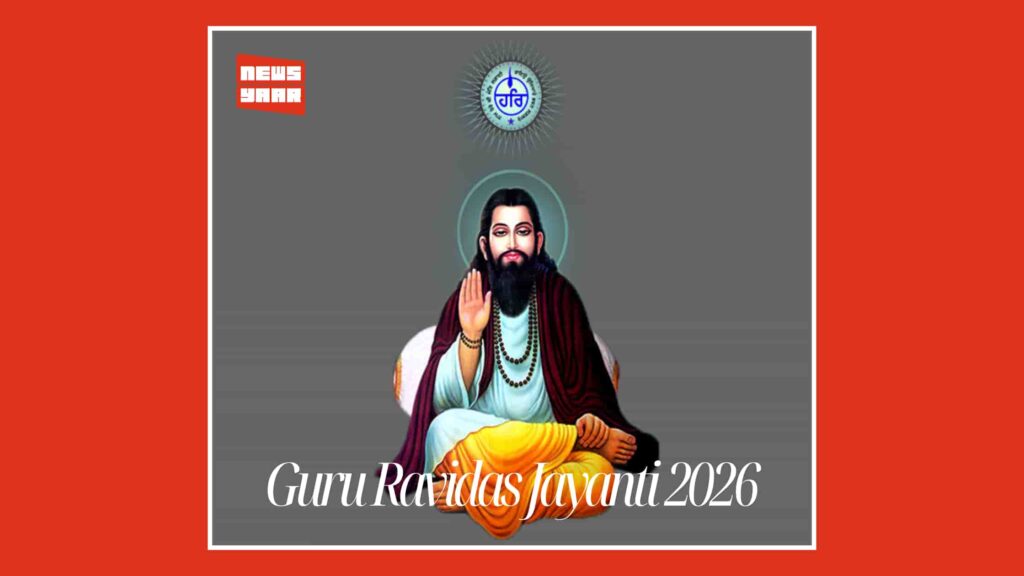
This year marks the 649th birth anniversary of Sant Guru Ravidas Ji, whose timeless teachings of equality and spiritual wisdom continue to inspire millions Guru Ravidas Jayanti 2026 was celebrated on Sunday, February 1, 2026, marking the 649th birth anniversary of Sant Guru Ravidas Ji, a revered 15th-century saint, poet, and social reformer whose vision of an egalitarian society remains profoundly relevant today. Date and Timings Celebrated annually on Magha Purnima, the full moon day of the Hindu month of Magha, the festival is observed with great devotion across India, particularly in Punjab, Uttar Pradesh, and Haryana. As per religious tradition, the festival is celebrated on the day the Purnima tithi begins, hence Guru Ravidas Jayanti falls on February 1, 2026. Who Was Guru Ravidas? Born in the village of Seer Goverdhanpur near Varanasi, Uttar Pradesh, Guru Ravidas emerged as a prominent figure in the Bhakti Movement, a spiritual revolution that emphasized personal devotion to the divine over rigid ritualistic practices. A contemporary of Saint Kabir, Guru Ravidas’s influence transcended social boundaries. He is believed to have been the spiritual guide to Meera Bai, the celebrated Rajput princess and devotional poetess. Despite being born into a community of leather workers, traditionally considered among the lowest in the caste hierarchy, Guru Ravidas rose above social discrimination through his spiritual wisdom and compassionate teachings. Philosophy and Teachings The cornerstone of Guru Ravidas’s philosophy was the rejection of the caste system and the promotion of human dignity and equality. He envisioned an ideal society called ‘Beghumpura’ (literally, “a city without sorrow”), a utopian realm free from suffering, fear, and discrimination, where all people could live with equal rights and dignity. His spiritual contributions are immortalized in the Guru Granth Sahib, the holy scripture of Sikhism, which contains 41 of his hymns. These verses emphasize that God resides in every heart and that true devotion is found not in caste or ritual, but in: Inner purity Compassion Selfless service (Sewa) Guru Ravidas’s teachings also emphasize simplicity, humility, and the unity of all humanity under one divine power. Significance of Guru Ravidas Jayanti Guru Ravidas Jayanti is not merely a religious festival but a celebration of social justice, equality, and human values. His message challenged the oppressive caste structures of medieval India and advocated for a society built on mutual respect and spiritual equality. In today’s world, his teachings serve as a powerful reminder to rise above discrimination based on caste, religion, wealth, or status. His vision of Beghumpura inspires movements for social reform and continues to guide those working toward a more just and compassionate society. How Is Guru Ravidas Jayanti Celebrated? Preparations for Guru Ravidas Jayanti 2026 are in full swing across the country, with elaborate arrangements being made, especially in Uttar Pradesh. In Varanasi Thousands of devotees gather at the Shri Guru Ravidas Janam Asthan Mandir in Varanasi, the birthplace of the saint. Key rituals include: Taking a holy dip in the Ganges River, believed to purify the soul Offering prayers and flowers at the temple Lighting diyas (oil lamps) at Sant Ravidas Park Nagar Kirtans (Processions) Vibrant processions are organized in cities across Punjab, Uttar Pradesh, Haryana, and other states. Devotees: Carry portraits and images of Guru Ravidas Sing devotional songs (bhajans) and perform kirtan Use traditional instruments to create a spiritually charged atmosphere Religious Gatherings In Gurdwaras and temples dedicated to the saint: Special prayer meetings are held The Amritbani Guru Ravidas Ji (a collection of his teachings) is recited Scholars deliver discourses on his philosophy and social contributions A Message for Modern Times As India prepares to celebrate Guru Ravidas Jayanti 2026, the occasion serves as a powerful reminder of the values that can unite society: compassion, equality, and spiritual devotion. In an era still grappling with social divisions, Guru Ravidas’s 649-year-old vision of Beghumpura offers a blueprint for a more harmonious and just world. His life exemplifies that true greatness lies not in one’s birth or social status, but in the purity of one’s heart and the service rendered to humanity. This Guru Ravidas Jayanti, devotees across the nation will gather to honor this extraordinary saint whose words continue to light the path toward a better tomorrow.
PM Modi’s Mann Ki Baat – Episode: 130th
GOVERNMENTPM Modi’s Mann Ki Baat – Episode: 130th Newsyaar January 25, 2026 6:15 pm https://www.youtube.com/watch?v=ehO3BjjTQgM&t=28sVideo credit: YT@/NaMo My dear countrymen, Namaskar. This is the first ‘Mann Ki Baat’ of the year 2026. Tomorrow, on the 26th of January, we shall all celebrate our Republic Day. Our Constitution came into effect on this very day. This day; the 26th of January, gives us an opportunity to pay homage to the founding fathers of our Constitution. Today, the 25th of January, is also a very significant day. Today is National Voter’s Day… Matadata Diwas. A voter is the soul of democracy. Friends, Usually, when someone turns 18, becomes a voter, it is considered a normal milestone in life. However, this occasion is actually a major milestone in any Indian’s life. Therefore, it is very important that we celebrate becoming a voter in our country. Just as we wish and celebrate birthdays… similarly, whenever a young person becomes a voter for the first time, the entire neighbourhood, village, or city should come together to congratulate them and distribute sweets. That would raise awareness about voting and strengthen the feeling of how important it is to be a voter. Friends, I would like to express my deep appreciation to all those people in the country who are involved in the electoral process and work at the grassroots level to keep our democracy vibrant. Today, on ‘Voter’s Day’, I would once again urge my young friends to register themselves as voters upon turning 18. This will fulfil the sense of duty that the Constitution expects of every citizen and will also strengthen India’s democracy. My dear countrymen, These days I am seeing an interesting trend on social media. People are reliving their memories of the year 2016. In the same spirit, today I too would like to share one of my memories with you. Ten years ago, in January 2016, we embarked upon an ambitious journey. We had realised then, that even if it were a small one, it was very important for the future of the country for the young generation. At that time, some people could not understand what it was all about, after all! Friends, the journey I am referring to is the journey of Start-up India. The heroes of this amazing journey are our young friends. The innovations they came up with by stepping out of their comfort zones are being recorded in history. Friends, Today India has turned into the third largest Start-ups ecosystem in the world. These Start-ups are out of the box; they are working in sectors that were unimaginable even 10 years ago. AI, Space, Nuclear Energy, Semiconductors, Mobility, Green Hydrogen, Biotechnology… you name it and you’ll find one Indian Start-up or the other working in that sector. I salute all my young friends who are associated with one Start-up or the other or want to start one of their own. Friends, Today through ‘Mann Ki Baat’, I want to urge my countrymen; especially the youth associated with industry and Start-ups. India’s economy is progressing rapidly. The world is watching India. At such a juncture, we all shoulder a huge responsibility. That responsibility is to emphasize on quality. The era of ‘it just happens… it works… it will go through somehow’ is over. Come, let us prioritize quality with all our might this year. Let our only mantra be quality, quality and only quality. Better quality today than what it was yesterday. Let us resolve to improve the quality of whatever we manufacture. Be it our textiles, technology or electronics… even packaging; the connotation of an Indian product should become – ‘top quality’. Come, let us make excellence our benchmark. Let us resolve that there will be no laxity on quality, nor will there be any compromise on quality. And I had expressed from Red Fort – ‘Zero Defect Zero Effect’. Only by doing this shall we be able to accelerate the journey towards a ‘Viksit Bharat’. My dear countrymen, The people of our country are very innovative. Seeking solutions to problems is part of our countrymen’s nature. Some do this through start-ups; while others try to find a solution through the collective strength of society. One such effort has emerged in Azamgarh, Uttar Pradesh. The People there have lent life anew to the Tamsa River that flows through this place. The Tamsa is not just a river; it’s a Live continuum of our cultural and spiritual heritage. This river, which crosses Ayodhya and merges with the Ganga, was once the axis of life for the people of this region. However, on account of pollution, its uninterrupted flow was obstructed. Silt, garbage and filth had blocked the flow of this river. After that, the people here started a campaign to give it a new lease of life. The river was cleaned, and shady, fruit-bearing trees were planted along its banks. Local people engaged themselves at the task with a sense of duty… and through everyone’s efforts, the river was revived. Friends, A similar endeavour of public participation has also been witnessed in Ananthapur, Andhra Pradesh. This is a region that has been grappling with a severe drought. The soil here is red and sandy, which is why people face water shortages. Many areas here do not receive rain over long periods. People sometimes even compare Anantapur to a desert drought.Friends, to address this problem, locals resolved to clean the reservoirs. After that, with the support of the administration, the ‘Ananta Neeru Sanrakshanam Project’ was launched. Under this effort, more than 10 reservoirs have been revived. These reservoirs are filling with water now. Simultaneously, more than 7,000 trees have been planted. This means that along with water conservation, the green cover in Anantapur has also increased. Children now, can also enjoy swimming here. In a way, the entire ecosystem here has been revitalized. Friends, Whether it’s Azamgarh, Ananthapur,
Jallikattu 2026: Dates, Venues, Significance and How to Experience Tamil Nadu’s Bull-Taming Celebration
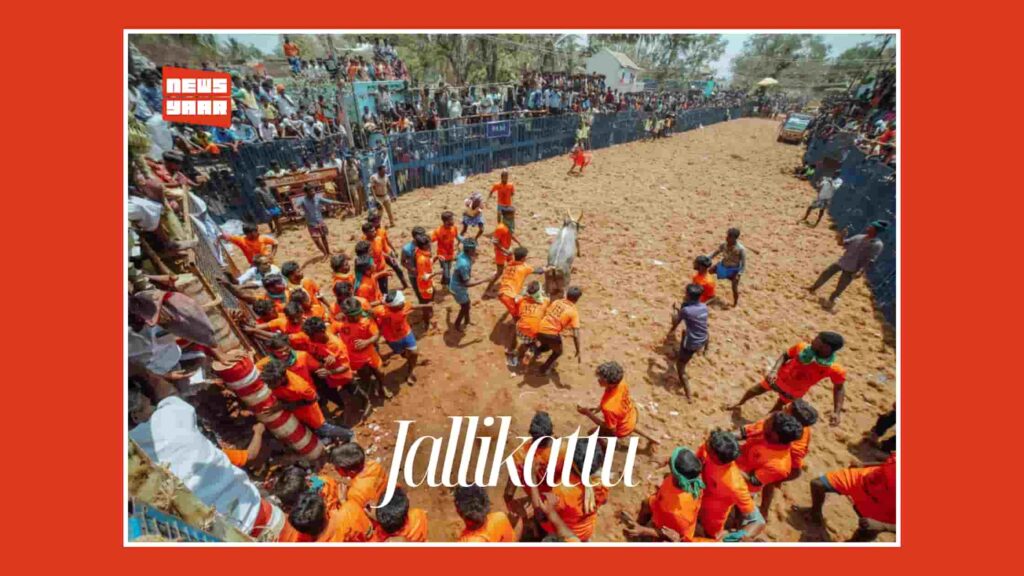
Jallikattu, a centuries-old bull-taming event deeply rooted in Tamil Nadu’s cultural fabric, is among India’s most iconic traditional sports. Celebrated as part of the Pongal harvest festival in January, Jallikattu blends sport, heritage and community identity, drawing enthusiastic participation from rural areas and spectators from across the state and beyond. What Is Jallikattu and Why It MattersJallikattu (also known as Sallikkattu or Manjuvirattu) is a traditional sport in which a bull, often of native breeds such as Pulikulam or Kangayam, is released into an open arena. Participants, known as tamers, attempt to grasp the bull’s hump and hold on long enough to bring the animal to a stop or cross a designated finish line. The sport is symbolic of valour, rural tradition and cattle conservation, traditionally practised in southern Tamil Nadu as part of Pongal celebrations. The sport also functions as a way for farming communities to maintain and honour native bull breeds, which are culturally and economically significant in agrarian life. When It Happens: Dates and DurationJallikattu events are typically held during the Pongal festival, which falls in mid-January each year. The main events are organised on Mattu Pongal day — the third day of the four-day Pongal celebration — with some competitions taking place before and after this date as part of the broader season. In recent seasons:The first Jallikattu of the year has been held as early as January 3 in districts such as Pudukottai. Major competitions like those in Avaniyapuram, Palamedu and Alanganallur are usually held between January 14 and 16, coinciding with Pongal festivities. Major Venues Where Jallikattu Is HeldJallikattu is organised in several traditional hotspots, particularly in southern Tamil Nadu:Avaniyapuram (Madurai district): One of the first and most popular stages of Jallikattu — often held on Pongal day — attracting hundreds of participants and thousands of spectators each year. Palamedu: Another historic venue with intense local participation. Alanganallur: Considered among the most famous Jallikattu arenas in the state with large crowd turnout. Suriyur (Trichy district): A permanent Jallikattu arena inaugurated recently to host this traditional sport during the season. Thatchankurichi (Pudukottai district): Hosts one of the opening events of the season, drawing participants from several districts. How to Reach and Experience JallikattuAir Travel:The nearest major airport for most Jallikattu venues is Madurai Airport (IXM), well connected to major Indian cities including Chennai, Bengaluru and Hyderabad. Rail Travel:Madurai Junction is the closest major railway station to Avaniyapuram, Palamedu and Alanganallur, with regular trains from key cities across India. Road Connectivity:Tamil Nadu’s road network links other districts such as Pudukottai, Tiruchirappalli and Theni to the Jallikattu venues. State buses, private taxis and shared vehicles are common options during the festival. What to Expect at the EventTraditional Spectacle:Each Jallikattu event begins with bulls being released from a designated enclosure (called vadivasal) into a field where tamers attempt to hold onto the animal’s hump or ride them. Success entails stopping or controlling the bull, which requires strength, skill and experience. Registration and Safety:Bull tamers and owners usually register with district authorities ahead of events, and bulls undergo veterinary checks to ensure fitness for participation. Medical and veterinary teams are typically stationed at arenas to handle injuries. Prizes and Recognition:In past years, winners have received significant prizes — including cars for top tamers and tractors or other awards for the best bulls — reflecting the prestige associated with the sport. Spectator Culture:Thousands of spectators, including local devotees and cultural tourists, gather at these arenas. Large crowds, local music and festive foods are part of the overall experience.Cultural and Historical SignificanceJallikattu’s origins date back over two millennia, with references to bull-taming activities in ancient Tamil literature. The sport is traditionally linked to the harvest festival of Pongal, where people express gratitude for agricultural bounty and honour livestock, which are central to rural livelihoods. Beyond sport, Jallikattu symbolizes community pride, bravery and rural identity. Despite controversies over animal welfare and safety in the past, it retains deep cultural resonance in Tamil Nadu and forms an integral part of the Pongal narrative.Visitor Tips and SafetyPlan Travel Early: January is peak season; book transport and accommodation well in advance.Stay Informed: Specific dates and registrations vary by district; check local administration notifications for schedules.Safety Precautions: While festive, Jallikattu involves large animals and crowds. Follow directions from officials and avoid entering restricted areas in arenas.Cultural Respect: The event is traditionally tied to local customs and community pride — respectful behaviour enhances the experience.In SummaryJallikattu is more than a sporting spectacle — it is a living tradition celebrated against the backdrop of harvest gratitude and local identity during the Pongal festival in Tamil Nadu. Combining cultural heritage, fierce competition and community participation, it offers an unforgettable experience for participants and spectators alike. With major venues such as Avaniyapuram, Palamedu and Alanganallur hosting events each January, the sport continues to draw attention both within India and abroad as an enduring symbol of Tamil rural culture.Video credit: YT@/Vikatan TV
Magh Mela 2026: A Floating City of Faith Takes Shape at Prayagraj
Prayagraj once again transforms into a living canvas of devotion, discipline, and tradition as Magh Mela 2026 unfolds along the sacred banks of the Triveni Sangam. What sets this year’s Magh Mela apart is not just the scale of participation but the quiet yet powerful stories emerging from within this month-long spiritual congregation. A City That Appears Overnight One of the most striking sights at Magh Mela 2026 is the temporary city that rises almost overnight. Thousands of tents, pontoon bridges, electric poles, and water pipelines form a fully functional settlement on the riverbed.This seasonal city accommodates saints, Kalpvasis, pilgrims, and visitors, operating with roads, hospitals, security posts, and community kitchens, all designed to vanish once the Mela concludes. Officials say this year’s infrastructure is more eco-conscious, with improved waste management, river protection measures, and plastic-free zones near the Sangam. Kalpvasis: Living a Month of Renunciation At the heart of Magh Mela are the Kalpvasis, devotees who observe strict vows for the entire month of Magh. Living on minimal possessions, sleeping on the ground, and eating simple food, they dedicate their days to prayer, scripture reading, and ritual bathing.Interestingly, Magh Mela 2026 has seen a rise in young Kalpvasis, including students and working professionals seeking spiritual discipline amid modern chaos. Many describe it as a “mental detox” from digital life. Spiritual Discourse Meets Modern Curiosity This year’s Mela has also become a space where ancient philosophy meets modern inquiry. Spiritual discourses by saints and scholars are drawing not only devotees but also researchers, photographers, and international visitors curious about India’s living traditions.Drone visuals of sunrise snan rituals and the glowing Sangam aarti have gone viral, bringing global attention to the quieter yet profound nature of Magh Mela compared to the Kumbh. Faith, Food, and Folk Traditions Beyond rituals, Magh Mela remains a cultural experience. Community kitchens serve hot khichdi, roti,s and tea to thousands daily. Folk singers narrate mythological stories, while small stalls sell handmade diyas, rudraksha beads, and religious texts.Despite the simplicity, there is a strong sense of order and mutual respect, a reminder of how faith can organise society without excess. Safety and Administration in Focus Authorities have deployed enhanced river patrols, medical camps, and crowd-monitoring systems. With lakhs expected over the coming weeks, officials stress that safety, sanitation, and accessibility remain top priorities. More Than a Gathering Magh Mela 2026 is not just about ritual bathing or religious observance. It is a rare social phenomenon where discipline, devotion, and community coexist, quietly proving that faith, when lived sincerely, still has the power to shape collective life in modern India.
New Delhi Book Fair 2026: A Literary Celebration Bringing Readers and Writers Together
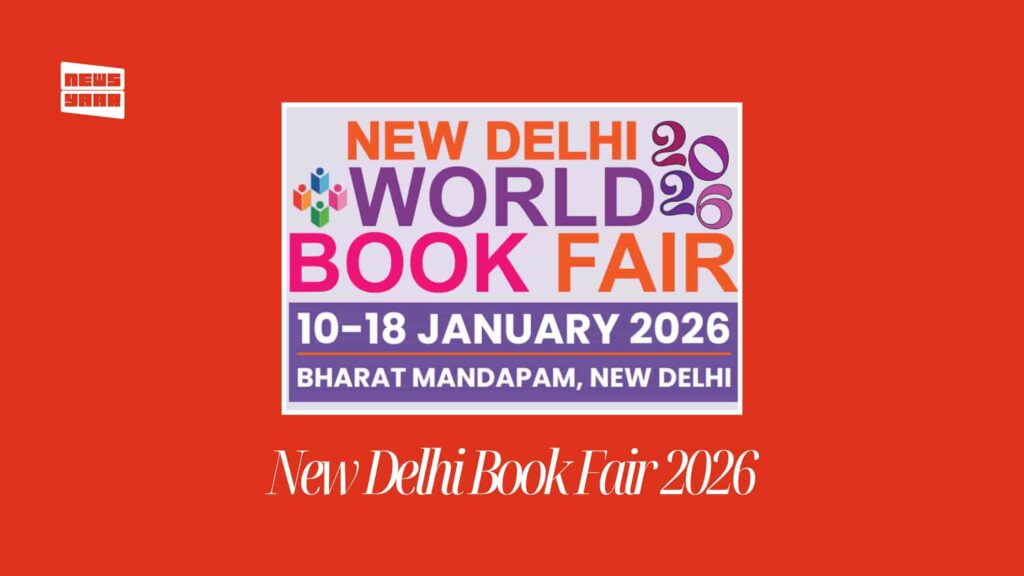
The Delhi Book Fair once again transformed the national capital into a vibrant hub of literature, ideas, and storytelling. Known as one of India’s most loved literary events, the fair attracted book lovers, authors, publishers, and students from across the country, reaffirming Delhi’s place as a cultural and intellectual centre. Event Details Dates: January 10–18, 2026 (9 days) Venue: Bharat Mandapam (Halls 2–6), Pragati Maidan, New Delhi Timings: 11:00 AM – 8:00 PM daily Entry: Free for all visitors Stepping into the fair felt like entering a world woven from stories, ideas, and imagination. The event showcased an incredible variety of books across genres, from fiction and non-fiction to academic texts, children’s books, self-help, and regional language publications, catering to readers of all ages and interests.An iconic venue, the fair offered a rich mix of books across genres, ranging from fiction, non-fiction, academic texts, children’s literature, self-help, and regional language publications. A Paradise for Book Lovers Walking into the Delhi Book Fair felt like stepping into a world made entirely of stories. Hundreds of stalls showcased books in English, Hindi, and several Indian languages, ensuring there was something for every reader. From bestselling novels and classic literature to competitive exam guides and research material, the fair catered to readers of all ages.Special sections dedicated to children remained a major attraction, with colourful books, comics, and activity corners encouraging young minds to develop a love for reading. Authors, Discussions, and Cultural Exchange Beyond book shopping, the Delhi Book Fair served as a platform for author interactions, panel discussions, and book launches. Renowned writers, emerging voices, and publishers engaged in conversations around literature, education, publishing trends, and the future of reading in a digital age.These sessions provided readers with a chance to connect directly with authors, understand their creative journeys, and gain insights into the evolving literary landscape.In a time when online content dominates, the fair stood as a reminder of the lasting value of printed books and structured learning. Keeping the Reading Culture Alive Despite the rise of e-books and digital platforms, the Delhi Book Fair highlighted that the charm of physical books remains strong. The event brought together people from diverse backgrounds, united by a shared love for reading, learning, and storytelling.Publishers also offered attractive discounts, making books more accessible and encouraging readers to build personal libraries. Delhi Book Fair: More Than Just an Event The Delhi Book Fair is not just about buying books; it is about celebrating ideas, creativity, and knowledge. It continues to inspire curiosity, promote literacy, and strengthen India’s reading culture.As the fair concludes, it leaves behind shelves full of new books and minds filled with fresh perspectives, proving once again that stories still matter, and always will.
PM Modi’s Inspiring Speech on National Youth Day at Viksit Bharat Young Leaders Dialogue 2026
PM Modi addresses Young Indians on National Youth Day. It is officially celebrated on 12th January every year.PM delivered the speech on concluding session of Viksit Bharat Young Leaders Dialogue 2026, a public event that was organised especially for the Youths of the nation. Video credit: @Youtube/Narendra Modi