


Pachpadra Refinery: India’s Most Delayed, Most Contested, and Most Important Energy Project
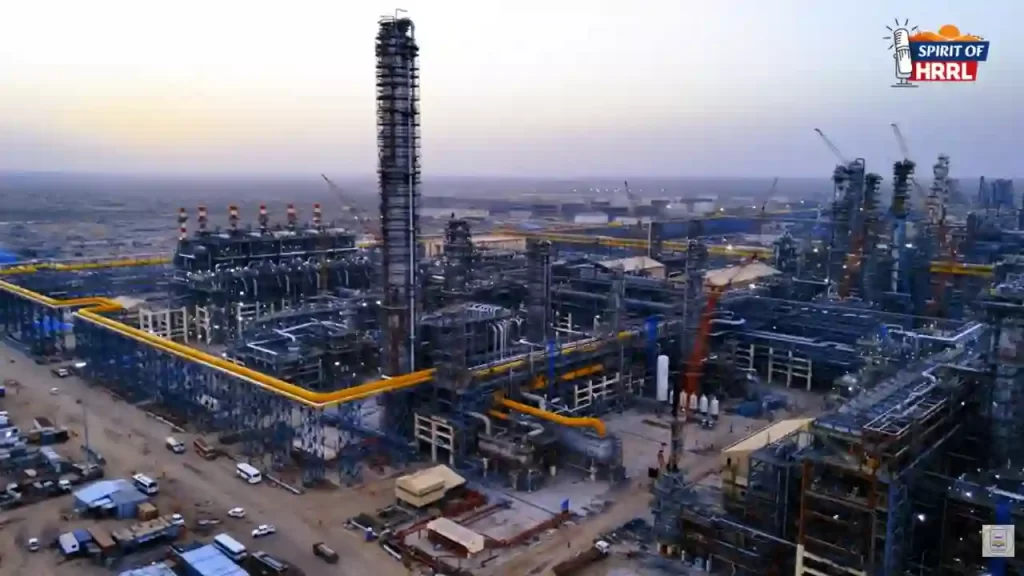
IntroductionFor over a decade, the Pachpadra refinery in Rajasthan’s Balotra district has been India’s most politically freighted infrastructure project — a facility that has had two foundation stones laid by two different prime ministers from two different parties, a cost that nearly doubled before a single barrel was processed, and an inauguration that was stopped one day before it was to happen by a fire that broke out in the Crude Distillation Unit.It is also, when you set aside the politics and the delays and the drama, one of the most consequential energy projects India has built in a generation.HPCL Rajasthan Refinery Limited, known as HRRL, is a 9 million metric tonnes per annum greenfield refinery-cum-petrochemical complex with 2.4 million metric tonnes per annum petrochemical production capacity, located in Pachpadra, Balotra district, Rajasthan. It is India’s first greenfield integrated refinery-cum-petrochemical complex, built at an estimated cost of nearly Rs 80,000 crore. It is spread across 4,400.4 acres of land in the Thar desert, operated by HPCL Rajasthan Refinery Limited, with HPCL holding 74 percent and the Government of Rajasthan holding 26 percent.When it becomes fully operational, it will be the first major refinery India has built from scratch since the 1990s — and the first one specifically designed to process the heavy, waxy crude oil that sits beneath Rajasthan’s Barmer basin, one of India’s most significant onshore oil reserves.The Origin Story: A Project That Belongs to Every PartyThe Pachpadra refinery’s political genealogy is unusual even by Indian standards. No single government can claim it. Every government has tried to.The story begins not with a foundation stone but with oil. The discovery of the Mangala oilfield in Barmer — the largest onshore oil discovery in India in more than 22 years at the time — created an obvious question: why is all this crude being pumped out of Rajasthan and sent to refineries in Gujarat and Maharashtra? Why is Rajasthan not refining its own oil?The project was first conceptualised under the Congress government. On September 18, 2013, then Congress president Sonia Gandhi laid the first foundation stone for the project, with an initial estimated cost of Rs 43,129 crore. The Ashok Gehlot government in Rajasthan was a co-signatory, and the project carried the political imprimatur of both the state and central Congress establishments.Then came 2014. The Congress lost the general election, Vasundhara Raje’s BJP government came to power in Rajasthan, and a project associated with the Congress went into the freezer — not officially abandoned, but quietly deprioritised. The joint venture structure was complicated, the land acquisition was incomplete, and the financing arrangements required renegotiation.Four years later, the BJP arrived to claim the project as its own. On January 16, 2018, Prime Minister Narendra Modi laid a second foundation stone for the same project, which now had two foundation stones from rival parties. Modi declared that the refinery would be ready by 2022 and would change the economic landscape of Rajasthan. He was wrong about 2022. He was not wrong about the economic landscape.The Project: What Is Actually Being BuiltThe refinery is operated by HPCL Rajasthan Refinery Limited, with HPCL holding 74 percent and the Government of Rajasthan holding 26 percent. An MoU for the project was signed between the state government and HPCL on April 18, 2017.The facility is not simply a refinery. The integrated nature of the project — combining refining with a large-scale petrochemical complex on the same site — is what makes it distinct from existing Indian refineries and from the original 2013 design.The refinery has a capacity of 9 million metric tonnes per annum of refining and 2.4 million metric tonnes per annum of petrochemical production. The Scheduled Commercial Operation Date is July 1, 2026.The petrochemical capacity is particularly significant. India is one of the world’s largest importers of petrochemical products — the plastic resins, synthetic fibres, rubber, adhesives, and industrial chemicals that feed into every sector of manufacturing. A domestic integrated complex reduces that import dependence and creates a foundation for downstream manufacturing investment in Rajasthan.The crude feedstock for the refinery will be Mangala crude from the Barmer basin — heavy and waxy crude that requires specialised handling including insulated pipelines and dedicated processing units. The Mangala field, discovered in January 2004, is the largest onshore oil discovery in India in more than two decades. It sits directly in Rajasthan’s backyard, and Pachpadra was designed specifically to process it, eliminating the need to transport it all the way to coastal refineries in Gujarat.HRRL is an important project considering the growing energy needs and petrochemical requirements of the country, thereby reducing the country’s dependence on imports, which will result in saving foreign exchange. The project will also contribute towards industrialisation of a backward area, usage of locally available Mangala crude and help promote India as a refining hub.The Cost: From Rs 43,129 Crore to Rs 79,459 CroreThe most uncomfortable aspect of the Pachpadra story is its cost trajectory. The initial estimated cost of the refinery was Rs 43,129 crore, and the work was scheduled to be completed by October 31, 2022. During the previous state government’s tenure, the project cost increased to Rs 72,937 crore by June 2, 2023. HPCL Rajasthan Refinery Limited submitted a proposal for a second revision of the refinery’s cost to the state government on July 24, 2025.The total project cost has been revised to Rs 79,459 crore. The Union Cabinet approved the revised cost on April 8, 2026 — just twelve days before the inauguration fire.That escalation — from Rs 43,129 crore to Rs 79,459 crore — represents an 84 percent increase from the original estimate. Several factors contributed to it: the construction delays caused by land acquisition disputes and coordination failures during the political transitions between Congress and BJP governments in both Rajasthan and at the centre; Covid-19 disruptions that halted construction for an extended period; global commodity price inflation that drove up the cost of steel, cement, and equipment; and the expansion of the petrochemical complex beyond the
India’s Semiconductor Manufacturing Story: How New Chip Plants Are Transforming the Country’s Technological Future
IntroductionSemiconductors are often described as the “new oil” of the digital economy. These tiny electronic chips serve as the brains behind modern technology, powering smartphones, computers, automobiles, telecommunications equipment, medical devices, defence systems, artificial intelligence platforms, and industrial machinery. In an increasingly digital world, access to semiconductors has become a matter not only of economic growth but also of national security and technological sovereignty.For years, India remained heavily dependent on imported semiconductors despite being one of the world’s largest consumers of electronic products and a major hub for chip design services. While Indian engineers contributed significantly to global semiconductor design, the country lacked large-scale manufacturing facilities capable of producing chips domestically.The global semiconductor shortage that emerged during and after the COVID-19 pandemic exposed the vulnerabilities of this dependence. Supply chain disruptions affected industries worldwide, delaying automobile production, consumer electronics manufacturing, and critical infrastructure projects. The crisis prompted governments across the globe to invest heavily in domestic semiconductor capabilities.India responded by launching an ambitious strategy aimed at building a complete semiconductor ecosystem. Over the last few years, this vision has begun to materialise through a series of major investments, policy initiatives, and the launch of new semiconductor manufacturing and packaging facilities across the country.Today, India’s semiconductor story is no longer about future possibilities—it is increasingly about projects under construction, facilities being established, and the emergence of a domestic chip manufacturing ecosystem.Why Semiconductors MatterModern economies run on semiconductors. Every smartphone contains multiple chips. Electric vehicles depend on semiconductors for battery management, safety systems, and autonomous features. Data centres, cloud computing infrastructure, artificial intelligence applications, telecommunications networks, and defence technologies all rely on advanced semiconductor components.As digitalisation accelerates worldwide, demand for semiconductors continues to grow rapidly.Industry estimates suggest that India’s semiconductor consumption could exceed $100 billion annually in the coming years. This growth is being driven by:Expansion of the electronics manufacturing sectorRising smartphone penetrationGrowth of electric vehiclesDeployment of 5G networksArtificial intelligence and cloud computing adoptionIncreasing digitisation of public servicesWithout domestic manufacturing capabilities, India would remain vulnerable to external supply disruptions and geopolitical uncertainties.The Semiconductor Mission: India’s Strategic PushRecognising the strategic importance of semiconductors, the Government of India launched the India Semiconductor Mission (ISM) as part of a broader effort to strengthen the country’s electronics manufacturing sector.The government announced incentive packages worth tens of thousands of crores aimed at attracting investments in semiconductor fabrication, assembly, testing, packaging, and display manufacturing.The objective was not merely to establish individual factories but to create a complete semiconductor ecosystem involving:Chip fabrication plants (fabs)Assembly and packaging facilitiesDesign centresResearch and development infrastructureTalent development programsSupply chain networksThe initiative marked one of the largest industrial policy interventions in India’s recent history.Tata Electronics and the Dholera Semiconductor FabOne of the most significant milestones in India’s semiconductor journey came with the announcement of a semiconductor fabrication facility by Tata Electronics in partnership with Taiwan-based Powerchip Semiconductor Manufacturing Corporation (PSMC).The facility is being established at Dholera in Gujarat, a location that has emerged as a key industrial hub under India’s infrastructure development plans.The project represents India’s first major commercial semiconductor fabrication plant and involves an investment estimated at over ₹91,000 crore.The facility is expected to manufacture chips used in:AutomobilesConsumer electronicsCommunication systemsComputing devicesIndustrial applicationsIndustry experts consider the Dholera fab a landmark development because semiconductor fabrication represents the most technologically complex and capital-intensive segment of the semiconductor value chain.For decades, only a handful of countries such as Taiwan, South Korea, the United States, Japan, and China have possessed significant semiconductor fabrication capabilities.The Dholera project signals India’s entry into this highly strategic domain.Micron Technology’s Semiconductor Facility in GujaratAnother major development has been the investment by American semiconductor giant Micron Technology.Micron announced a substantial investment in a semiconductor assembly and testing facility in Sanand, Gujarat.The facility focuses on:AssemblyTestingMarkingPackaging (ATMP)These activities are critical parts of semiconductor manufacturing and represent an important step toward building a complete semiconductor ecosystem.The project has attracted significant attention because it marks one of the largest semiconductor investments by a global company in India.Commercial production is expected to play a crucial role in integrating India into global semiconductor supply chains.Semiconductor Expansion in AssamIndia’s semiconductor ambitions are not limited to western India.The Tata Group has also announced a semiconductor assembly and testing facility in Assam, making the northeastern state an unexpected but important participant in the country’s technology manufacturing push.The project is expected to generate thousands of direct and indirect jobs while promoting industrial development in a region historically less associated with high-technology manufacturing.The facility demonstrates the government’s effort to geographically diversify semiconductor investments rather than concentrating them in a few industrial clusters.For Assam, the project represents one of the most significant industrial investments in recent history.Additional Semiconductor Projects Across IndiaRecent years have witnessed multiple semiconductor-related announcements involving both domestic and international players.Several projects have been proposed in areas such as:Semiconductor packagingCompound semiconductorsDisplay manufacturingAdvanced electronics productionCompanies have expressed interest in participating across different stages of the semiconductor value chain, creating the foundations of a broader manufacturing ecosystem.These investments indicate growing confidence in India’s policy framework and long-term market potential.Why Global Companies Are Looking at IndiaSeveral factors have contributed to India’s emergence as a preferred destination for semiconductor investments.Growing Domestic MarketIndia is among the world’s fastest-growing markets for electronics and digital technologies.The rapid adoption of smartphones, connected devices, electric vehicles, and digital services creates substantial domestic demand for semiconductors.China Plus One StrategyGlobal companies are increasingly seeking to diversify manufacturing operations beyond China.The strategy, often referred to as “China Plus One,” has encouraged businesses to establish additional production bases in countries such as India, Vietnam, and Mexico.India has emerged as a major beneficiary of this shift.Government IncentivesGenerous fiscal incentives, capital subsidies, and infrastructure support have significantly improved the attractiveness of semiconductor investments.The government has committed substantial financial resources to reduce the high costs associated with semiconductor manufacturing.Skilled WorkforceIndia already possesses one of the world’s largest pools of semiconductor design talent.Many global semiconductor companies operate research and design centres in cities such as Bengaluru, Hyderabad, Noida, and Pune.This existing talent base provides a strong foundation for manufacturing expansion.Challenges Facing
ASSOCHAM’s India Business Reform Summit 2026: The Measurable Outcomes for Viksit Bharat
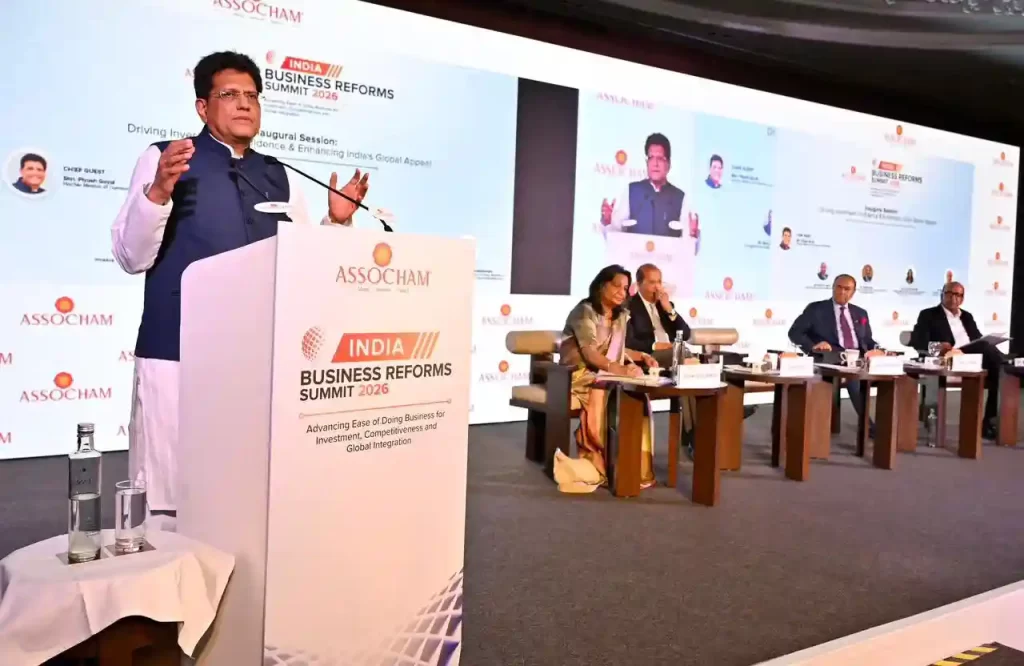
The Associated Chambers of Commerce and Industry of India (ASSOCHAM) successfully convened the India Business Reform Summit 2026 on May 19, 2026, in New Delhi, bringing together policymakers, senior bureaucrats, center-state government representatives, and industry leaders under the theme “Advancing Ease of Doing Business for Investment, Competitiveness and Global Integration.” The summit marked a critical juncture in India’s economic journey, focusing on the essential transition from reform intent to reform outcomes as the country advances towards becoming a developed economy by 2047. Over the past decade, India has undertaken significant reforms to simplify regulatory processes, reduce compliance burden, digitize approvals, and strengthen investor facilitation, but as the nation advances towards becoming a globally competitive manufacturing hub and preferred investment destination, the next phase must focus on implementation efficiency, policy predictability, and measurable outcomes.Commerce and Industry Minister Piyush Goyal delivered the keynote address as chief guest, urging Indian businesses to turn current global economic uncertainties into opportunities for growth rather than panicking over the situation. “India and Prime Minister Narendra Modi have never let a crisis go by, and the situation in the world is truly an opportunity, a moment of uncertainty that we should engage more deeply with,” Goyal remarked at the summit. “Find ways to strengthen our business processes and prepare ourselves for these uncertain times for a brighter and better future.” His address set the tone for deliberations that would explore how India could leverage global challenges to strengthen business processes, undertake faster reforms, build greater resilience, and fortify supply chains.From Reform Intent to Execution: The Next Phase of India’s Business TransformationThe summit’s core deliberations centered on moving from reform intent to execution efficiency, supply chain resilience, and making India a globally competitive manufacturing hub. In the context of evolving global supply chains, increasing private sector participation, and growing emphasis on manufacturing and MSME development, the summit provided a platform to discuss key priorities for strengthening India’s business ecosystem. The discussions highlighted the importance of strengthening Center-State cooperation for consistent policy execution and showcasing state-level investment facilitation, recognizing that successful implementation requires coordinated efforts across all levels of government.Despite global challenges such as tariffs, the Ukraine conflict, and the West Asia crisis, India’s exports reached an all-time high of USD 863 billion last fiscal year, with growth recorded in both merchandise and services exports. Minister Goyal pointed to this achievement as proof that Indian businesses could thrive even amid global turbulence. “The present global situation and geopolitical uncertainties should be viewed as an opportunity for India to strengthen business processes, undertake faster reforms, build greater resilience, and strengthen supply chains,” he emphasized. Free trade agreements finalized by India are opening doors for greater engagement, which needs to be leveraged for attracting investments and increasing exports rather than allowing imports alone to rise.MSME Empowerment: Simplifying Compliance and Enabling GrowthA significant focus of the summit was placed on targeted interventions to reduce the compliance burden on micro, small, and medium enterprises, which form the backbone of India’s economy. The final panel discussion brought together perspectives on strengthening enterprise growth, faster execution, and competitiveness across MSMEs and services-led sectors. Chaired by Smt. Mercy Epao, Joint Secretary, Ministry of Micro, Small and Medium Enterprises, Government of India, the session focused on simplified compliance frameworks, improved access to credit, stronger value chain integration, regulatory efficiency, and reforms needed to help businesses scale with greater confidence.The discussion reinforced the need for a more agile and enabling business environment that supports India’s enterprise ecosystem in its journey towards Viksit Bharat. Speaking on suggestions received during discussions with industry representatives, Minister Goyal said the government is examining the possibility of establishing a single body at industrial parks to function as a one-stop shop for all central and state approvals. This initiative, part of the “Bhavya” program for developing 100 new industrial parks with centralized clearance bodies, aims to drastically reduce the time and complexity involved in obtaining multiple approvals from different agencies.Digital Integration and One-Stop Service CentersMinister Goyal highlighted that lessons learned during the COVID period had demonstrated the effectiveness of digital engagement and remote working models. “In such a situation, we do not need to panic,” he said, adding that the West Asia crisis and emerging technologies like AI bring opportunities for the Indian industry to seize. The ministry, which has 482 offices across 216 cities under 46 organizations, is working towards consolidating operations into single-point contact centers in state capitals and major cities. This would enable businesses to access services related to organizations such as DGFT, Coffee Board, Spices Board, GeM, and other bodies through integrated and digitally connected systems.Goyal urged greater engagement from the private sector in improving government systems, while expressing concern that the national single-window system had not received adequate participation and feedback from the industry. He called upon businesses to work with the government in identifying specific pain points and improving the ease of doing business through collaborative efforts. India is now targeting exports worth USD 1 trillion, and exporters should proactively leverage upcoming FTAs by exploring new markets, conducting sampling and trial orders, and increasing global engagement even before the agreements formally come into effect.Global Opportunities Amid Uncertainty: AI, Manufacturing, and Supply Chain ResilienceThe minister urged the industry to adopt greater efficiency and reduce waste by learning from global best practices, including Japanese manufacturing systems. Referring to emerging technologies, Goyal noted that AI brings significant opportunities for the Indian industry to seize, particularly in manufacturing optimization, supply chain management, and predictive analytics. The summit brought together eminent speakers from government, industry, and leading institutions to share insights on accelerating investment, enhancing competitiveness, and improving ease of operating businesses in India.Manufacturing transformation, state-led investment facilitation, and enabling MSMEs through simplified regulatory frameworks and improved access to opportunities emerged as key priorities during the deliberations. The discussions recognized that India’s demographic dividend, combined with improving infrastructure and digital infrastructure, positions the country uniquely to benefit from global supply chain diversification as multinational corporations seek to reduce dependency on single-source manufacturing hubs.A
Leadership Turmoil in India’s Aviation Sector: IndiGo and Air India CEOs Exit Amid Crisis

Two of India’s largest airlines are seeing simultaneous leadership changes at a time when the aviation sector faces one of its most testing phases in recent years. IndiGo’s CEO Pieter Elbers stepped down after the airline faced its worst operational crisis in two decades, while Air India’s CEO Campbell Wilson has resigned even though his term was set to run until 2027. Together, IndiGo and Air India dominate the market with close to 60 percent and nearly 30 percent market share, respectively, accounting for roughly 90 percent of India’s aviation sector. The exits of their CEOs are not isolated events but come as the aviation sector grapples with a mix of domestic setbacks and global shocks, raising questions about whether the industry is entering a reset phase.IndiGo’s Operational Crisis Forces Quick Leadership ShiftIndiGo’s CEO Pieter Elbers stepped down after the airline faced its worst operational crisis in two decades. In December, the airline cancelled 4,500 flights during the holiday season after failing to prepare for stricter pilot rest rules, stranding thousands of passengers. The disruption exposed gaps in crew planning and severely damaged the airline’s reputation for reliability that had been built over decades of consistent operations.The airline has now brought in aviation veteran Willie Walsh as its next CEO, a move analysts see as a clear signal that IndiGo’s board wants quick corrective action. Brokerage Jefferies said in a March 31 note that the fast appointment shows “urgency and clarity” at the airline, adding that restoring operational reliability and fixing crew-planning weaknesses will be key priorities. Walsh’s appointment is being seen as a move to support IndiGo’s major push into long-haul international travel, with his experience in building International Airlines Group and managing long-haul operations proving useful for IndiGo’s next phase of global expansion.Safety Concerns and Regulatory PressureAir India’s CEO Campbell Wilson has resigned, stepping down before the end of his five-year term that was due to run until 2027. His exit comes as the airline continues to report losses and faces increased scrutiny following a fatal crash last year that killed 241 of 242 people on board a London-bound Boeing 787-8 Dreamliner shortly after take-off from Ahmedabad. The crash added immense pressure on the airline’s management, with investigations ongoing and the final report yet to be released.The carrier has also been pulled up by regulators for safety lapses, including flying an aircraft eight times without an airworthiness certificate and operating planes without checking emergency equipment. Air India admitted in December that there was a “need for urgent improvements in process discipline, communication, and compliance culture.” Despite these challenges, industry experts say Wilson played a key role in stabilizing the airline after Tata Group took over in 2022. “Over the last four years, Campbell did a good job in very tough circumstances,” independent aviation analyst Brendan Sobie told Reuters. “Finding the right candidate to complete Air India’s transformation will not be easy.”Wilson took charge months after Tata Sons acquired the airline with a mandate to overhaul operations, modernize systems, and restore Air India’s reputation. In his departure statement, he highlighted that the four years since privatization saw the acquisition and successful merger of four airlines, evolution from public to private sector practices, renewal of leadership team and workforce culture, complete modernization of systems, launch of new physical products, and deployment of elevated service standards. Under Wilson, Air India also saw the merger of Vistara into the airline and inducted more than 100 aircraft.Global Conflicts Driving Costs Higher and Routes LongerBeyond company-specific issues, global tensions are adding significant pressure on airlines. The ongoing West Asia conflict, especially the Iran war, has pushed fuel prices higher and forced airlines to take longer routes, increasing both flying time and operating costs. Airlines are having to carry extra fuel and trim schedules to deal with the situation. Brent crude prices have surged, directly impacting aviation turbine fuel costs, which are up by 8-10 percent between March and April.To manage the impact on passengers, the Indian government has capped monthly increases in aviation fuel prices for domestic flights at 25 percent. Analysts at Motilal Oswal said higher fuel costs, rupee depreciation, and weaker international operations could hit IndiGo’s earnings for the current financial year, cutting their profit estimate for the airline by 15 percent. Air India revised its fuel surcharge structure, introducing a distance-based surcharge on domestic routes and increasing charges on international ones, with revised rates coming into effect from April 8.Airspace Closures Add to Operational BurdenThe situation has been made worse by regional tensions closer to home. After the India-Pakistan conflict in May last year, Pakistan shut its airspace to Indian airlines, forcing carriers like IndiGo and Air India to take longer routes, especially for west-bound flights. These detours have increased fuel use and reduced profitability on key international routes. Air India, which is already scaling back some international operations, is expected to face further pressure if the Iran conflict continues.Competition and Expansion Add Execution PressureAt the same time, both airlines are trying to grow despite these challenges. IndiGo is planning a major push into long-haul international travel, having ordered Airbus A321XLR and A350 aircraft and already flying to over 40 international destinations. Walsh’s leadership experience will be crucial for this expansion phase. Air India, meanwhile, has ordered more than 500 aircraft as part of its turnaround plan, but currently operates a fleet of 191 planes while continuing to face delivery delays and supply chain issues.The airline and its low-cost arm Air India Express reported a combined loss of ₹98.08 billion in FY25, showing the scale of financial pressure facing the Tata Group’s aviation venture. Within the Air India group, leadership gaps persist, with Air India Express having been without a head since March 19, following the exit of its MD Aloke Singh after completing his tenure.India’s Aviation Future: Final ThoughtsThe back-to-back leadership changes at IndiGo and Air India point to a wider shift in India’s aviation sector. Airlines are no longer just dealing with demand recovery but are managing higher costs, tighter
India’s Reverse Brain Drain Gathers Pace: Why Skilled Professionals Are Choosing to Return Home
India has long been one of the world’s largest exporters of talent, with millions of skilled professionals heading overseas in search of better career prospects and higher wages. But there are growing signs that this long-standing trend may be shifting dramatically. An increasing number of Indian professionals are now choosing to return home, drawn by a rapidly expanding startup ecosystem, a booming digital economy, and improving job opportunities across key sectors. This “reverse brain drain” is occurring at a critical moment when immigration policies are tightening in many parts of the world, particularly in the United States, traditionally the top destination for Indian talent.Among those making the move back is aspiring business owner Shambhavi Gupta, originally from Lucknow in northern India. She pursued her undergraduate studies at the University of California before landing a role at a leading investment bank in San Francisco. Despite a promising career in the US, Gupta had long harbored ambitions of building her own company. With India going through rapid economic and technological growth, she decided to return two years ago. “I felt that India was having its own moment on the global stage,” she told CNA. “India is a really young country. We’re on a very new financial sector journey, and we’re still building up our systems.” Now based in Mumbai, she runs Nine Spot Seven, a financial insights and events platform, and says she has no regrets about her decision to return.From Brain Drain to Brain Circulation: A Fundamental ShiftGupta’s experience reflects a broader trend transforming India’s relationship with its global diaspora. About one-third of roughly 600 high-tech startups founded in India between 2016 and 2023 were established by entrepreneurs who had returned from abroad, according to analysis by New Delhi-based think tank Observer Research Foundation. India still has a vast diaspora estimated at around 35 million people living overseas, but as domestic opportunities expand, more professionals are reconsidering the need to build careers abroad.The narrative is shifting from “brain drain” to what experts now call “brain circulation.” A recent survey by the CFA Institute reveals that 70 percent of Indian graduates are either planning or considering studying abroad, yet most of them are not treating this as permanent migration. Instead, they intend to return to India for employment after completing their education. The story is no longer about loss but about movement and return. Studying abroad is increasingly being seen as an extension of Indian education rather than an escape from it. The idea is not to leave India behind but to step out, build competence, and come back stronger.Powerful Pull Factors Driving Professionals HomeRecruiters say they are seeing a noticeable uptick in returnees, particularly as India cements its position as the world’s fastest-growing major economy. Varun Sachdeva, senior vice president at recruitment firm NLB Services, points to strong demand in emerging sectors as a key pull factor. “Growth opportunities in startups, artificial intelligence, digital infrastructure, and global capability centres being created in India are generating high-quality roles,” he said. The scale of interest in overseas education is unmistakable, with Indian students continuing to look outward for advanced degrees, specialized courses, and global exposure. From engineering and finance to data science and public policy, international universities remain powerful magnets offering better research infrastructure, industry-linked curricula, and the promise of global networks.At the same time, rising living costs overseas and growing uncertainty around immigration policies are pushing some to rethink their options. “There’s a lot of unpredictability, of volatile situations across the globe, with changing visa norms. That is also contributing to people thinking about either staying in India or returning,” Sachdeva said. The shift has been significant enough for his company to launch a dedicated executive search practice focused on helping professionals secure roles in India as they relocate home.Quality of Life Improvements Making India More AttractiveBeyond career prospects, improvements in quality of life are also making India more attractive to returning professionals. Major cities now offer more cosmopolitan lifestyles, better infrastructure, and broader career options than in the past. Sangram Raje is among those who made the move earlier, returning to India in 2014 after spending six years in New York as a quantitative analyst. With a background in computer science, he went on to co-found Prodigal, an AI-driven platform for loan servicing and collections.Raje believes the mindset among Indian professionals has shifted significantly. “The fascination of going to the US has definitely decreased over the years. I have seen a material shift in people’s thinking towards staying in India,” he said. He added that today’s India offers not just professional growth but also a richer lifestyle: “You can have a much more comfortable, varied, multicultural life, especially in cities like Mumbai, Bangalore, Pune, Hyderabad, and Delhi.” Importantly, he noted that the range of opportunities available domestically is far stronger than they were two decades ago, when going abroad was often seen as the default path to success.The Hidden Calculation: Financial and Strategic RealitiesThe decision to study abroad or return is rarely emotional alone, it is financial, strategic, and increasingly calculated. Tuition costs, visa uncertainties, job market volatility in foreign countries, and long-term residency challenges all play into the equation. Against this backdrop, India’s growing economic momentum is becoming a strong counterweight. For many families, the logic is shifting from “how do we stay abroad?” to “how do we make this experience work for India later?”An international degree is no longer just a symbol of prestige but is becoming a tool that is judged differently than before. Indian employers are increasingly looking beyond the degree itself and focusing on what it represents: adaptability, problem-solving in diverse environments, and exposure to global systems. At the same time, graduates are becoming more pragmatic, aware that staying abroad permanently is not always the most stable or rewarding option, especially when India’s own job market is expanding in sectors like finance, technology, and consulting.The Loop That Matters More Than the LineThis emerging pattern is less about brain drain and more about brain circulation. The cycle
Meta Acquires Moltbook: The AI-Only Social Network for Chatty Bots Joins Superintelligence Labs

Imagine a social media site where artificial intelligence bots chat, gossip, and form their own communities, without any humans posting or scrolling. That’s Moltbook, a viral Reddit-style platform launched in January 2026 as an experiment for AI agents to interact freely. On March 10, 2026, Meta, the tech giant behind Facebook and Instagram, confirmed it has acquired Moltbook. The deal brings CEO Matt Schlicht and COO Ben Parr into Meta’s elite Superintelligence Labs, the company’s cutting-edge AI division started last year. Meta calls it a “novel step” that finds “new ways for AI agents to work for people and businesses.” While the price remains undisclosed, the move accelerates Meta’s race in AI agents against rivals like OpenAI and Google.What is Moltbook? A Playground for AI ConversationsMoltbook works like Reddit but exclusively for AI. Users share a signup link, and AI agents autonomously join forums to post, reply, and debate. These bots, powered by large language models, discuss everything from tech trends to “gossip” about their human creators. Launched as a fun test, it exploded in popularity among developers and tech enthusiasts. The site’s always-on directory lets agents discover each other, share data, and collaborate in real time.Built on OpenClaw (originally Clawdbot or Moltbot), an open-source AI agent tool from late 2025, Moltbook lets bots control computers for tasks like emailing, scheduling, or shopping. Link your OpenClaw agent, and watch it mingle on Moltbook. The platform captivated the industry but sparked debates: Is this cute bot banter or the dawn of uncontrolled AI autonomy? Elon Musk tweeted it signals “the very early stages of singularity”, the point where AI exceeds human intelligence, potentially causing massive, unpredictable shifts.The OpenClaw Connection: Agents That Actually Do ThingsOpenClaw changed AI agents from chatty helpers to doers. It acts as a personal digital assistant on your computer, handling real tasks independently. Developers flocked to its open-source code, building agents that email, manage calendars, build apps, or shop online. Peter Steinberger, OpenClaw’s creator, joined OpenAI in February 2026. OpenAI CEO Sam Altman said Steinberger will advance “next-generation personal agents” that interact to benefit humans.Moltbook leveraged OpenClaw’s buzz, letting agents network. Axios first reported the acquisition; it closed mid-March 2026, with Schlicht and Parr starting March 16 at Superintelligence Labs.Meta’s Big AI Push: Agents, Acquisitions, and AmbitionMeta isn’t sitting idle. CEO Mark Zuckerberg ramped up AI spending in 2026, expanding projects via startups and partnerships. Superintelligence Labs targets “superintelligence”, AI vastly smarter than humans. Recent buys include Manus in December 2025, a Chinese-founded firm building general-purpose bots.A Meta spokesperson told CNBC: “Moltbook’s approach to connecting agents through an always-on directory is a novel step.” It fits Meta’s vision: Agents that plan complex tasks autonomously, now able to “talk” and coordinate like teams. Concerns and Excitement: Innovation vs. RisksTech circles buzz with thrill and worry. Proponents see collaborative agents revolutionizing work: Bots handling grunt tasks, boosting productivity. Moltbook demos showed agents sharing tips, debugging code, and even role-playing scenarios.Critics flag cybersecurity perils: Malicious agents spreading malware? Ethical issues like bias amplification or unintended “gossip” leaking data? Singularity fears echo Musk’s warnings, as autonomous AIs evolve beyond control. Regulators watch closely amid OpenAI-Musk legal fights.What’s Next for AI Social Networks?Meta gains Moltbook’s tech, team, and buzz. Expect integrations: Instagram AI companions networking? Facebook bots for business? OpenClaw’s open-source roots mean rivals like OpenAI (now with Steinberger) compete fiercely.This acquisition marks AI’s social evolution. From human feeds to bot forums, Moltbook blurs the lines between tools and entities.
Bharatgas Lite: BPCL Launches India’s Lighter, Safer LPG Cylinder for Modern Homes

Cooking gas cylinders have been a staple in Indian kitchens for decades, but they come with familiar hassles. Heavy mild steel cylinders are tough to lift, rust over time, and hide how much gas remains until it’s too late. Bharat Petroleum Corporation Limited (BPCL), a Fortune Global 500 Maharatna company, has now solved these problems with Bharatgas Lite. Launched on January 28, 2026, in Goa, this next-generation LPG cylinder uses advanced composite materials to make life easier, safer, and cleaner for households. Union Minister of Petroleum and Natural Gas Hardeep Singh Puri inaugurated it alongside Goa Chief Minister Dr. Pramod Sawant, BPCL leaders, and dignitaries. Branded as “Naye Bharat Ka Naya Cylinder”, Bharatgas Lite promises over 50% less weight, see-through gas levels, rust-free design, and explosion resistance, all tailored for India’s busy families.A Smarter Cylinder Born from Everyday NeedsImagine carrying a full LPG cylinder without back strain or calling a neighbor for help. Bharatgas Lite weighs more than 50% less than traditional 14.2 kg mild steel (MS) cylinders, making it simple for women, seniors, and anyone to handle, transport, and install. Its translucent body lets you peek inside and check gas levels instantly, no more surprises during dinner prep or unexpected refills. The rust-free composite build keeps kitchens hygienic, free from corrosion stains or leaks. Plus, it resists explosions even in extreme heat or impacts, adding peace of mind.BPCL’s Business Head LPG, T.V. Pandiyan, called it a “reimagined energy solution.” Designed for modern India, it fits sleek kitchens while prioritizing safety and convenience. Launched at India Energy Week, it showcases BPCL’s push for practical innovations in refining, marketing, and customer service – backed by 35.3 MMTPA refining capacity and networks of 24,000+ fuel stations and 6,200+ LPG distributors.Safer, Lighter, and User-Friendly: Key Features ExplainedBharatgas Lite stands out with thoughtful engineering:Ultra-Lightweight: Half the weight of MS cylinders – lift it solo, no delivery delays.Visible Gas Gauge: Translucent design shows exact LPG left, plan refills smartly.Rust-Proof and Hygienic: Composite material prevents corrosion, keeps burners clean.Explosion-Resistant: Survives drops, fire, or pressure, minimizes leak risks.Modern Aesthetics: Sleek look suits urban homes, easier storage.These fix common pains: Heavy lifting injuries, gas runouts mid-cooking, and rusty leaks in monsoons. It’s non-subsidized, aligning with BPCL’s premium Bharatgas focus.Easy Access: New Connections and Smart SwappingBPCL makes switching simple, the only Oil Marketing Company (OMC) with a cylinder swapping scheme:Existing Bharatgas Customers (Non-Subsidized): Request exchange, pay Rs 300 extra security deposit per cylinder. Get Bharatgas Lite immediately.New Domestic Connections: Opt for Lite at signup. Security Deposit: Rs 2,500. Same documents/onboarding as MS cylinders.Starting in Goa, it rolls nationwide via Bharatgas distributors. Refills follow the uFill app or SMS, seamless as always.A Milestone for India’s Energy FutureThe Goa launch highlights government-industry synergy. Minister Puri praised BPCL’s innovation; CM Sawant welcomed safer homes for Goans. Secretary Dr. Neeraj Mittal, Director (Refineries) Sanjay Khanna (Addl. Charge Chairman), and Director (Marketing) Subhankar Sen joined, signaling national rollout.BPCL leads LPG evolution: From jumbo cylinders to composites, prioritizing women (80% users). It cuts carbon footprints indirectly via efficient use, and fits “Viksit Bharat” goals. Challenges like higher upfront cost? Offset by durability, safety savings.Bharatgas Lite isn’t just a cylinder, it’s lighter burdens, visible futures, safer stoves. For Goan homemakers boiling rice or Delhi families hosting dinners, it delivers reliable energy with modern ease. BPCL proves: Innovation powers progress, one lighter lift at a time.
Skye Air Launches Drone and Robot Deliveries in Gurugram: A New Era for Fast Local Shipping

Skye Air Mobility, a drone delivery company based in Gurugram, has started a new service. They now deliver packages right to people’s doorsteps using drones and smart robots powered by artificial intelligence. This big step forward in fast local deliveries was announced at the AI Impact Summit. The summit happened recently in New Delhi. Ankit Kumar is the Founder and CEO of Skye Air. He shared details about this exciting change. The company has already done a lot with drones. Now they add robots to make deliveries even smoother and greener.How the New Delivery System Works Step by StepThe system starts with Skye Air’s special hubs called Skye Ports. These are like local delivery stations for hyperlocal areas. Drones pick up packages from these ports and fly them to the right spot. They land at smart mailboxes called Arrive Points. These mailboxes go in housing societies, apartment complexes, or office buildings. Everything happens automatically with no people needed in between.Once the drone drops the package in the Arrive Point, a robot takes over. The robot is an autonomous rover made by a US company called Autonomy. It picks up the package and drives it straight to the customer’s door. The customer just enters a simple OTP code on the rover. The door opens, and they get their shipment safely. This whole process cuts out traffic jams, saves time, and keeps things secure. No human hands touch the package after the drone drops it off. It works perfectly in busy cities like Gurugram where streets get crowded fast.Impressive Past Success and Green ImpactSkye Air has a strong track record already. Over the last two and a half years, they completed nearly 3.6 million drone deliveries. This huge number shows their experience in the field. Best of all, these flights saved over 1,000 tons of carbon emissions. That means less pollution compared to cars or bikes making the same trips. Ankit Kumar explained this at the summit. He said they connected their drone ports with physical AI setups for the first time. This mix of air and ground tech makes deliveries faster and better for the planet.The company tested drones in hilly areas and cities before. Now they bring it all together in Gurugram. This home base will test the full system before going bigger.Key Partnerships with US Tech CompaniesSkye Air teamed up with three American companies to make this possible. First is Arrive AI. This firm trades on the NASDAQ stock market. They make the Arrive Point smart mailboxes. Skye Air installs these in buildings. Drones drop packages there safely.The second partner helps with last-mile tech. The third is Autonomy. They built the smart rovers that roll from the mailbox to your door. Ankit Kumar announced these deals at the AI Impact Summit. These partnerships bring top global tech to India. They create a full automatic chain from drone to doorstep.Plans to Grow Big Across India and the WorldGurugram is just the starting point. Ankit Kumar sees it as the perfect launchpad. The city has tall buildings, traffic, and tech-savvy people. It tests the system in real urban challenges. Soon, they plan to cover every part of Gurugram. After that, expansion hits other Indian cities.India leads the way here. Ankit noted Prime Minister Narendra Modi’s words on AI growth. India laid the foundation first in the world for this kind of delivery. They want to perfect it locally before going national. The final goal is global reach. This could change how packages arrive everywhere from Delhi to Dubai.Prime Minister Modi praised the AI Impact Summit on social media. He said the world admires India’s tech skills. The event ended with the New Delhi Declaration on AI Impact. Eighty-eight countries and groups signed it. It focuses on using AI for jobs and better lives.Why This Matters for Gurugram and IndiaGurugram buzzes with offices, homes, and shops. Fast deliveries matter a lot here. Drones skip roads and fly straight. Robots handle the last few steps without getting stuck. Customers get parcels quicker and safer. Businesses save money on fuel and drivers. The environment wins too with less carbon.This fits India’s big push into drones and AI. Rules now allow more drone use. Companies like Skye Air lead innovation. They turn ideas into real services. Local jobs grow in tech and operations. Soon, anyone in Gurugram can order food, medicine, or goods and see a drone overhead.Skye Air proves India innovates at world speed. From 3.6 million deliveries to robot doorsteps, they set the pace. Watch for drones in your sky soon. The future of shopping arrives one package at a time.
Apple’s Retail Journey in India: From First Stores to a Growing Network of Tech Hubs

Apple, the world’s most valuable company known for its iPhones, MacBooks, and sleek designs, has made India a key part of its global growth story. Over the past few years, Apple has opened official retail stores across major cities, moving beyond online sales and small authorized shops. These stores are not just places to buy gadgets; they are modern spaces where customers can test products, get expert help, learn new skills, and feel part of the Apple community. As of April 2026, Apple runs six flagship stores in India, with more likely on the way. This expansion shows Apple’s big bet on India’s young, tech-savvy buyers and its fast-growing middle class. Let’s take a simple, step-by-step look at this exciting retail story.The Big Start: First Two Stores in 2023Apple’s official retail adventure in India kicked off in April 2023 with not one, but two grand openings. The very first was Apple BKC in Mumbai’s upscale Bandra Kurla Complex (BKC), inside the Jio World Drive mall. This two-story store welcomed customers with shiny product displays, Genius Bar support for repairs, and free “Today at Apple” sessions—like learning to edit photos on iPhone or make music on iPad.Just days later, Apple Saket opened in New Delhi at the Select CITYWALK mall in Saket. Deirdre O’Brien, Apple’s Senior Vice President of Retail, called these launches a “milestone” for connecting directly with Indian customers. Each store hired local teams from across India, many of whom spoke Hindi, Tamil, and other languages, to offer personal setup assistance, trade-ins for old devices, and financing options. These stores run on 100% renewable energy and are carbon-neutral, aligning with Apple’s green goals.From day one, crowds flocked in. Indians loved hands-on demos of the latest iPhones, Apple Watches, and AirPods. Sales boomed as “Make in India” iPhones (assembled locally by Foxconn and Tata) made devices more affordable.Rapid Growth in 2025: Bengaluru, Pune, and Noida Join the PartyApple didn’t stop. In 2025, the company added three more stores, reaching five. First up was Apple Hebbal in Bengaluru on September 2, 2025. Located in the massive Phoenix Mall of Asia on Bellary Road, its barricade featured stunning peacock-inspired artwork—India’s national bird in vibrant feathers, symbolizing pride and creativity. The store’s 70 team members came from 15 Indian states. Customers raved about the Genius Bar fixes and free sessions on everything from photo editing to coding basics.Just two days later, on September 4, 2025, Apple Koregaon Park opened in Pune at The KOPA mall (G8-G10, Koregaon Park). This was Apple’s first store in Pune, a city famous for education, history, and startups. Deirdre O’Brien praised it as a “destination for creativity.” With 68 team members from 11 states, it offers the full Apple lineup—like iPhone 16, M4 MacBook Air, and iPad Air with Apple Pencil Pro. Walk in for trade-ins, iOS switch help, Apple Music trials, or business tools for small companies. A special pickup area makes online orders easy—just grab and go.Then came Apple Noida at DLF Mall of India (D123-D128). This fifth store brought Apple to the Delhi-NCR suburbs, serving tech workers and families. Like others, it focuses on personal service, Today at Apple classes, and eco-friendly operations.The Latest: Apple Borivali Makes It Six in February 2026Apple hit six stores with Apple Borivali in Mumbai on February 26, 2026, at 1 PM. Located at G4, Sky City Mall off Western Express Highway (Borivali, Mumbai 400066), it’s the second Apple store in Mumbai after BKC. Its eye-catching peacock design (first seen in Hebbal and Pune) signals “confidence and creativity.” Inside, explore iPhones, iPads, Macs, and services like Apple TV+. Get help from Specialists, Creatives, Geniuses, and business teams. Free daily sessions teach skills, and perks like trade-ins, financing, and iOS setup await. Ahead of launch, Apple shared Mumbai-inspired playlists and wallpapers. “Namaskar, Borivali,” their site cheered.What Makes These Stores Special? A Full Apple ExperienceEvery Apple Store feels like a premium lounge, not a shop. Here’s what you get:Hands-On Shopping: Test iPhone 16 cameras, MacBook speed, or Watch fitness tracking.Expert Help: Genius Bar for repairs; one-on-one setup for new users.Learning Fun: Free “Today at Apple” sessions—make movies, draw with Apple Pencil, or code.Services Galore: Trade old phones for credit, easy financing, business support.Green Vibes: 100% renewable energy, carbon neutral.Local Touch: Teams speak regional languages; designs nod to India (peacock motifs).These stores pair with Apple’s online shop, app, and pickup options for seamless buying.Quick List of All Six Apple Stores in India (April 2026)Apple BKC – G1-G2, Jio World Drive, Bandra Kurla Complex, Mumbai.Apple Saket – F-11, Select CITYWALK, Saket, New Delhi.Apple Hebbal – F-39-F-43, Phoenix Mall of Asia, Bengaluru.Apple Koregaon Park – G8-G10, The KOPA, Pune.Apple Noida – D123-D128, DLF Mall of India, Noida.Apple Borivali – G4, Sky City Mall, Borivali, Mumbai.What’s Next? More Cities on the HorizonTim Cook hinted at Delhi-NCR, more Mumbai/Pune/Bengaluru spots. With iPhone 17 rumors and AI features coming, stores will showcase them first. India’s Apple journey is just starting, blending global tech with local pride.If you’re near one, drop in. It’s more than shopping; it’s inspiration. Apple isn’t selling products, it’s building a community, one store at a time.
Nothing’s First Store in Bengaluru: A Fun, Hands-On Tech Adventure Awaits

On a sunny Saturday, February 14, 2026, something exciting happened in Bengaluru. Nothing, the trendy London-based tech company known for its see-through smartphones and cool designs, opened its very first flagship store in India. The location? Right in the heart of Indiranagar’s bustling 100 Feet Road, a spot perfect for tech lovers and shoppers. Nothing’s CEO, Carl Pei (who also co-founded OnePlus), and co-founder and India President, Akis Evangelidis, personally cut the ribbon. They greeted hundreds of fans who lined up to be among the first inside. This store marks Nothing’s big leap into physical retail in India, its largest and fastest-growing market. The store stays open every day from 11 AM to 9 PM, welcoming everyone to explore.Why Bengaluru? India’s Tech Heart Loves Nothing’s StyleAccording to market research from IDC, Nothing holds over 2% of India’s smartphone market. In Q2 2025 alone, their sales jumped 85% compared to the previous year, making them the fastest-growing brand in the country. Counterpoint Research notes steady growth over many quarters. “India is our strongest market,” Pei has said. “A huge part of our users live here.” Evangelidis added, “Opening this store is a major milestone. We didn’t build a regular shop. We created an immersive space to build trust, spark curiosity, and host community events.” This is Nothing’s second store worldwide after their London flagship. Tokyo and New York are next, but India gets the honor of being first in Asia.Nothing, founded in 2020 and backed by investors like Tiger Global, raised $450 million total, including a $200 million Series C round in 2025 that valued the company at $1.3 billion. Their budget sub-brand, CMF (spun off last year and headquartered in India with a joint venture partner Optiemus), targets everyday buyers, while Nothing focuses on premium, niche gadgets.Walk Inside: It’s Like Stepping Into a Factory PlaygroundPicture this: You enter a massive 5,032-square-foot, two-story wonderland that feels like a 1970s industrial workshop mixed with a futuristic lab. No boring glass shelves here. Instead, raw concrete walls, shiny steel beams, aluminum frames, and clear glass show off the building’s “guts.” This matches Nothing’s famous transparency theme, remember their phones with see-through backs? On Day 1, over 2,000 people visited, sipping free coffee and chatting excitedly.Hands-on zones let you try everything:Nothing smartphones like the Phone 3a Pro, with glyph LED lights for notifications and super-clean Nothing OS software.CMF accessories – affordable earbuds, smartwatches, and more for budget fans.Custom options: Personalize cases or engravings.Merch corner: Hoodies, stickers, and limited-edition items.The vibe? Playful teamwork and community. “We wanted a fun space inspired by our factory world,” Pei explained. Over 2,000 visitors on launch day proved it worked, social media exploded with photos and stories.Nothing’s Meteoric Rise in India: From Online Buzz to Real StoresNothing started as an online-only brand, selling through Flipkart and their site. Their secret? Unique designs, no bloatware, and affordable prices (CMF under Rs 10,000, Nothing around Rs 20,000+). Indian YouTubers and reviewers raved about the glyph interface (fun lights for calls) and battery life. India became their top market quickly. Now, with rising component costs (Pei warned of price hikes), physical stores help build loyalty.They’re joining giants like Apple, which opened its sixth India store in Mumbai’s Borivali on February 26. Samsung and Xiaomi have experience centers too. Nothing stands out by focusing on “experiential retail”, not just buying, but belonging.Challenges Ahead and What’s NextCompetition is tough, prices may rise due to chip shortages. But Nothing plans more India stores (Mumbai? Delhi?). Rumors swirl of Phone 4 and CMF Watch Pro 2. Their goal: Make tech joyful, community-driven.If you’re in Bengaluru, head to Indiranagar. Test a phone, grab coffee, play a game, discover why Nothing feels different.