


Nation First: PM Modi’s Seven Appeals to India in a Time of Global Energy Crisis
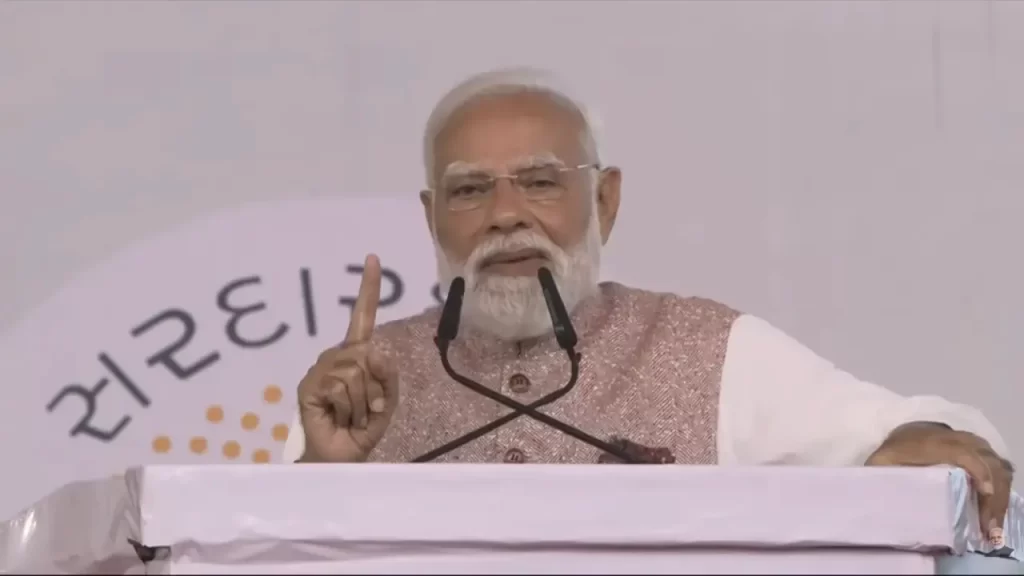
IntroductionPrime Minister Narendra Modi has made some of his most consequential speeches in front of Parliament. He has made others at Red Fort, at election rallies, and on Mann Ki Baat. But the speech he delivered at a public function in Hyderabad in the second week of May 2026 was different from most of them in one important way: it asked nothing of the government. It asked everything of the citizen.Prime Minister Modi called upon countrymen to become partners in strengthening the nation amid the West Asia crisis. Addressing a function in Hyderabad, he made seven appeals to the nation.Seven specific asks. No legislation behind them, no penalty for non-compliance, no new taxes or emergency decree. Just a Prime Minister standing before a crowd and asking 1.4 billion people to change their daily behaviour — voluntarily, collectively, and urgently — because a war they had no part in starting was now threatening the economic stability of a country they shared.”If 140 crore people take one step forward, the country also moves 140 crore steps forward,” Modi said, setting the tone for what followed.The speech was, at one level, a call to austerity. At another level, it was the government’s most explicit public acknowledgement yet of how deeply the Strait of Hormuz crisis was beginning to press on India’s economic foundations — and of how much the government needed its citizens to understand and respond to that pressure.The Context: Why This Speech Was NecessaryTo understand what Modi said in Hyderabad, you need to understand the specific economic weight that the West Asia conflict had placed on India by early May 2026.India is the world’s third-largest oil importer, behind only China and the United States. From April 2025 to March 2026, India imported crude oil worth $123 billion — the single largest contributor to India’s import budget. That was before the Strait of Hormuz closed. After it closed, oil prices surged past $120 per barrel at their March peak. Brent crude was still trading above $100 per barrel at the time of the Hyderabad speech, with a 52-week high of $126 per barrel recorded at the end of the previous month.India imports approximately 88 percent of its crude oil requirements and roughly 60 percent of its LPG, with 90 percent of that supply historically transiting the Strait of Hormuz. Every dollar by which the oil price rises above its baseline represents billions of additional dollars in India’s import bill annually.Oil is only one part of the problem. Indians imported gold worth $72 billion in the 2025-2026 fiscal year — second in the world only to China. Gold imports are paid in US dollars. They add nothing to India’s productive capacity. They represent pure foreign exchange outflow.Indians travelling abroad spent $31.7 billion in 2023-24, with about 30.9 million Indian nationals departing India in 2024, up from 27.9 million in 2023. Foreign travel, like gold, is paid in foreign currency and constitutes a direct drain on reserves.India is also the world’s largest importer of urea, having imported about 10 million tonnes of the fertiliser last year. Edible oil imports add another $14 to 16 billion annually.The International Monetary Fund projected that India’s current account deficit will be $84 billion in 2026. A current account deficit of that magnitude, in a year when the country’s largest import — oil — had risen dramatically in cost, and when the rupee was under pressure from dollar strengthening, created precisely the kind of economic vulnerability that the government needed citizens to help manage.A weaker rupee means imports become more expensive, which eventually affects fuel prices, transportation costs and inflation across sectors. The government wanted citizens to voluntarily adopt spending discipline before global economic conditions worsened further. The appeal was also being viewed as a preventive measure to control the current account deficit and reduce pressure on India’s forex reserves.This was the economic landscape when the Prime Minister took the stage in Hyderabad.The Seven Appeals: In FullAppeal 1: Use Public Transport and CarpoolingPM Modi urged citizens to help conserve foreign exchange reserves by reducing the consumption of imported fuel through the use of public transport and carpooling.Calling fuel conservation the “need of the hour,” Modi appealed to citizens to reduce unnecessary usage of petrol, diesel, and gas amid fears of rising crude oil prices due to tensions in West Asia. He said that shifting to buses, metros, and shared rides — even partially and temporarily — would reduce the national import burden at a time when every barrel saved had a direct and measurable impact on India’s foreign exchange position.Appeal 2: Revive Work-From-HomeModi said people should move to online meetings instead of physical gatherings and use the work-from-home model that was adopted globally during the COVID-19 pandemic. He explained that such practices would cut down the use of fuel.Modi said India had successfully adapted to virtual work, video conferencing, and online meetings during the Covid-19 period and those habits should be revived in the national interest. He urged offices and businesses to bring back work-from-home practices wherever possible to cut fuel consumption.The COVID parallel was deliberate. During the pandemic, India’s fuel consumption dropped significantly — not because of any conscious conservation effort, but as a side effect of lockdowns. Modi was asking the country to replicate that consumption reduction voluntarily, without waiting for an emergency to force it.Appeal 3: Avoid Foreign Travel for One YearModi asked Indians to cut nonessential overseas travel for at least a year. He urged citizens to rethink discretionary spending, including reconsidering destination weddings abroad.This was perhaps the most direct ask directed at urban, upper-middle-class Indians. Foreign travel — holidays in Europe and Southeast Asia, business trips, destination weddings in Bali and Tuscany — has become a significant and growing category of Indian consumer spending. Every overseas holiday spent in foreign currency is dollars leaving India. The aggregate of millions of such decisions, Modi’s argument ran, had a real and measurable impact on the reserve position.Appeal 4: Stop or Limit Gold Purchases for a
CII Annual Business Summit 2026: Navigating Disruption, Charting India’s Path to Viksit Bharat
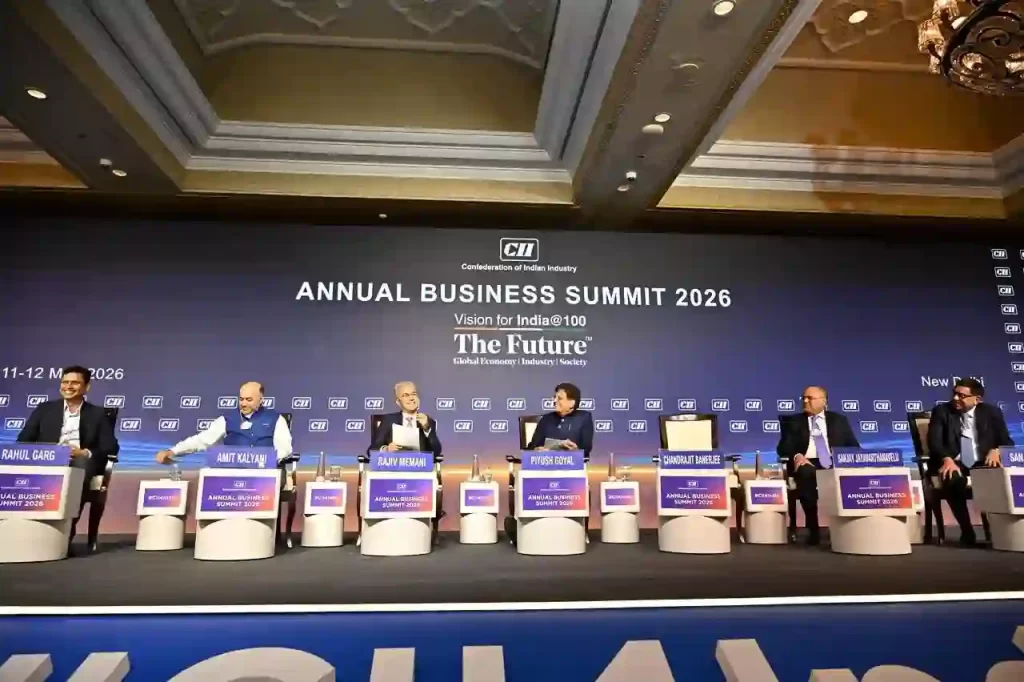
IntroductionThe Confederation of Indian Industry’s Annual Business Summit is one of India’s most consequential conversations between government and industry — a two-day forum where policy signals are sent, investment narratives are shaped, and the mood of Indian business leadership is read out loud for the entire economy to hear. The 2026 edition, held on May 11 and 12 in New Delhi, arrived at a moment of unusual global pressure: a war blocking the world’s most critical energy artery, a trade architecture being rewritten by American tariffs, an AI revolution reshaping every sector simultaneously, and India sitting at the precise intersection of all four.The CII Annual Business Summit 2026 convened under the theme “The Future | Global Economy, Industry, Society.” The focus was on navigating disruption and exercising leadership: aligning policy, industry, and society to translate this moment of inflection into sustained national advantage.The theme was not chosen casually. At a defining moment of global transformation, multiple forces including geopolitical shifts, technological change, climate urgency, and evolving societal expectations are reshaping the world. In this environment, trust, resilience, and effective governance are becoming central to long-term competitiveness. The challenge is no longer to resist change but to harness it through strong institutions, partnerships, and adaptive capabilities.About CII: The Institution Behind the SummitBefore the summit’s content can be fully appreciated, the institution organising it deserves its own introduction, because CII is not simply a trade body. It is one of India’s most influential policy-shaping institutions.Founded in 1895 as the Engineering and Iron Trades Association, the Confederation of Indian Industry has grown into India’s largest apex industry organisation, representing over 9,000 direct member companies and 300,000 companies within its associate and affiliated network through 65 sectoral industry bodies. It operates across 63 offices in India and 10 overseas offices, with institutional partnerships in 119 countries.CII works to create and sustain an environment conducive to the development of India by partnering industry, government, and civil society through advisory and consultative processes. It has been central to many of India’s significant economic policy transitions — from the liberalisation of the 1990s to the ease of doing business reforms of the 2010s to the PLI scheme architecture of the 2020s. When CII speaks, Finance Ministry officials, NITI Aayog planners, and cabinet ministers are typically in the room, listening. The Annual Business Summit is the highest-visibility manifestation of that engagement each year.The CII Annual General Meeting, which determines the organisation’s leadership and strategic direction for the year ahead, was held on May 12, the second day of the summit.The Context: Why the 2026 Summit Carried Extra WeightThe annual summit always takes place against the backdrop of the economic moment. The 2026 edition was held against a particularly demanding one.The Strait of Hormuz crisis, which had closed the world’s most critical oil transit route since late February, was still unresolved at the time of the summit. India, which imports nearly 85 percent of its crude oil and depends heavily on Hormuz-transiting Gulf supply, had been absorbing a significant cost shock to its energy import bill for months. Oil prices had spiked to record levels in March and remained elevated. The rupee had come under pressure. Inflation in fuel and logistics had fed through into manufacturing input costs and consumer prices.Simultaneously, the Trump administration’s tariff architecture — which had imposed sweeping duties on Indian exports in several categories — was creating both anxiety and opportunity for Indian industry. Anxiety because export competitiveness in affected sectors had been hurt. Opportunity because the same tariffs on Chinese goods were accelerating the global search for alternative manufacturing bases, and India remained the most credible alternative at scale.India’s own macroeconomic position entering the summit was one of relative resilience. The economy had maintained its position as the fastest-growing major economy through 2025-26, with GDP growth continuing to outperform most comparable peers. The Viksit Bharat 2047 agenda — India’s aspiration to be a fully developed economy by the centenary of independence — provided the long-term frame within which the short-term disruptions were being absorbed.As India approaches its centenary, India@100 provides a roadmap for inclusive and sustainable growth. The CII Annual Business Summit 2026 connects this long-term vision with the realities of a rapidly evolving global economy.The Theme: Three Questions for India’s FutureThe summit’s overarching theme — “The Future | Global Economy, Industry, Society” — was anchored in three interlocking questions that ran across every session of the two-day programme.Three system enablers were identified as decisive. First, governance must build trust, embed ethics, and sustain institutional legitimacy in an increasingly complex and risk-prone environment. Second, strong state capacity is essential to design coherent policy. Third, robust financial architecture must mobilise long-term capital, manage risk, and support sustained investment. Together, these enablers determine whether transformation becomes credible, resilient, and enduring across sectors, enabling growth that is both competitive and inclusive.Industry will play a central role in shaping India’s future economy as growth increasingly depends on how firms invest, innovate, and engage with society. The shift from shareholder value to broader responsibility calls for alignment with national priorities while remaining globally competitive. Leadership must extend beyond firms to ecosystems, driving R&D, integrating MSMEs, and strengthening trust through ethical governance.India’s energy transition is now a strategic economic advantage, with rapid growth in renewables reshaping cost structures and competitiveness. That last point carries particular weight in the context of the Hormuz crisis: India’s accelerating transition to non-fossil energy — non-fossil sources already account for over 50 percent of installed power capacity — is now seen not just as a climate obligation but as a strategic hedge against the kind of energy price shock that the Gulf war has delivered.Key Sessions and SpeakersLabour Reforms: Government’s CommitmentUnion Minister Mansukh Mandaviya addressed the session on “Next-Gen Labour Reforms: Driving Industry Growth and Job Creation.” He said social security coverage has increased from 29 crore people a decade ago to 94 crore at present. Highlighting the new labour codes, Mandaviya said the reforms are both labour-centric and industry-centric. He added that the
PM Modi’s Mann Ki Baat: Episode – 134th
PM Modi’s Mann Ki Baat: Episode – 134thVideo: YT/NaMo
Pachpadra Refinery: India’s Most Delayed, Most Contested, and Most Important Energy Project
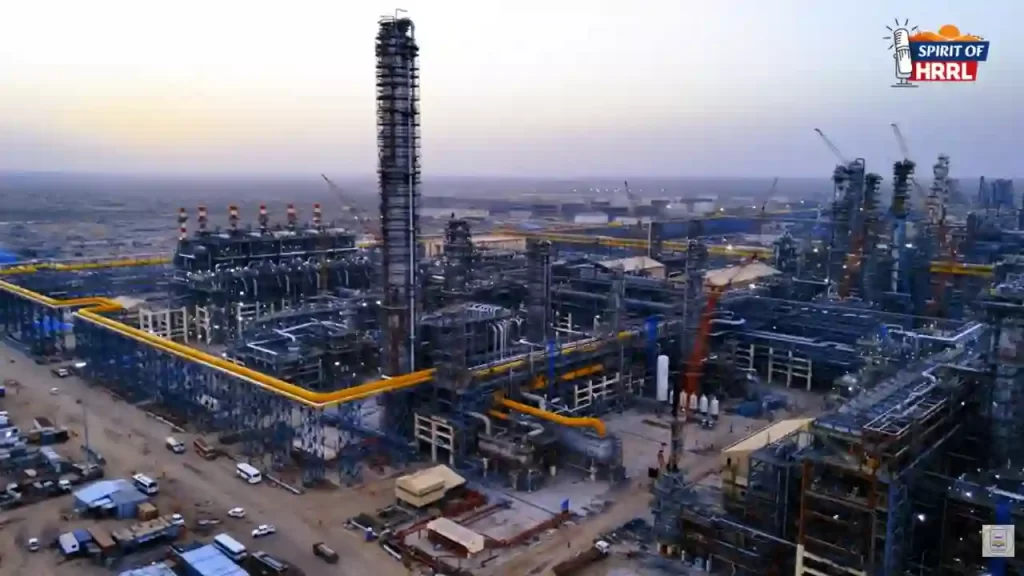
IntroductionFor over a decade, the Pachpadra refinery in Rajasthan’s Balotra district has been India’s most politically freighted infrastructure project — a facility that has had two foundation stones laid by two different prime ministers from two different parties, a cost that nearly doubled before a single barrel was processed, and an inauguration that was stopped one day before it was to happen by a fire that broke out in the Crude Distillation Unit.It is also, when you set aside the politics and the delays and the drama, one of the most consequential energy projects India has built in a generation.HPCL Rajasthan Refinery Limited, known as HRRL, is a 9 million metric tonnes per annum greenfield refinery-cum-petrochemical complex with 2.4 million metric tonnes per annum petrochemical production capacity, located in Pachpadra, Balotra district, Rajasthan. It is India’s first greenfield integrated refinery-cum-petrochemical complex, built at an estimated cost of nearly Rs 80,000 crore. It is spread across 4,400.4 acres of land in the Thar desert, operated by HPCL Rajasthan Refinery Limited, with HPCL holding 74 percent and the Government of Rajasthan holding 26 percent.When it becomes fully operational, it will be the first major refinery India has built from scratch since the 1990s — and the first one specifically designed to process the heavy, waxy crude oil that sits beneath Rajasthan’s Barmer basin, one of India’s most significant onshore oil reserves.The Origin Story: A Project That Belongs to Every PartyThe Pachpadra refinery’s political genealogy is unusual even by Indian standards. No single government can claim it. Every government has tried to.The story begins not with a foundation stone but with oil. The discovery of the Mangala oilfield in Barmer — the largest onshore oil discovery in India in more than 22 years at the time — created an obvious question: why is all this crude being pumped out of Rajasthan and sent to refineries in Gujarat and Maharashtra? Why is Rajasthan not refining its own oil?The project was first conceptualised under the Congress government. On September 18, 2013, then Congress president Sonia Gandhi laid the first foundation stone for the project, with an initial estimated cost of Rs 43,129 crore. The Ashok Gehlot government in Rajasthan was a co-signatory, and the project carried the political imprimatur of both the state and central Congress establishments.Then came 2014. The Congress lost the general election, Vasundhara Raje’s BJP government came to power in Rajasthan, and a project associated with the Congress went into the freezer — not officially abandoned, but quietly deprioritised. The joint venture structure was complicated, the land acquisition was incomplete, and the financing arrangements required renegotiation.Four years later, the BJP arrived to claim the project as its own. On January 16, 2018, Prime Minister Narendra Modi laid a second foundation stone for the same project, which now had two foundation stones from rival parties. Modi declared that the refinery would be ready by 2022 and would change the economic landscape of Rajasthan. He was wrong about 2022. He was not wrong about the economic landscape.The Project: What Is Actually Being BuiltThe refinery is operated by HPCL Rajasthan Refinery Limited, with HPCL holding 74 percent and the Government of Rajasthan holding 26 percent. An MoU for the project was signed between the state government and HPCL on April 18, 2017.The facility is not simply a refinery. The integrated nature of the project — combining refining with a large-scale petrochemical complex on the same site — is what makes it distinct from existing Indian refineries and from the original 2013 design.The refinery has a capacity of 9 million metric tonnes per annum of refining and 2.4 million metric tonnes per annum of petrochemical production. The Scheduled Commercial Operation Date is July 1, 2026.The petrochemical capacity is particularly significant. India is one of the world’s largest importers of petrochemical products — the plastic resins, synthetic fibres, rubber, adhesives, and industrial chemicals that feed into every sector of manufacturing. A domestic integrated complex reduces that import dependence and creates a foundation for downstream manufacturing investment in Rajasthan.The crude feedstock for the refinery will be Mangala crude from the Barmer basin — heavy and waxy crude that requires specialised handling including insulated pipelines and dedicated processing units. The Mangala field, discovered in January 2004, is the largest onshore oil discovery in India in more than two decades. It sits directly in Rajasthan’s backyard, and Pachpadra was designed specifically to process it, eliminating the need to transport it all the way to coastal refineries in Gujarat.HRRL is an important project considering the growing energy needs and petrochemical requirements of the country, thereby reducing the country’s dependence on imports, which will result in saving foreign exchange. The project will also contribute towards industrialisation of a backward area, usage of locally available Mangala crude and help promote India as a refining hub.The Cost: From Rs 43,129 Crore to Rs 79,459 CroreThe most uncomfortable aspect of the Pachpadra story is its cost trajectory. The initial estimated cost of the refinery was Rs 43,129 crore, and the work was scheduled to be completed by October 31, 2022. During the previous state government’s tenure, the project cost increased to Rs 72,937 crore by June 2, 2023. HPCL Rajasthan Refinery Limited submitted a proposal for a second revision of the refinery’s cost to the state government on July 24, 2025.The total project cost has been revised to Rs 79,459 crore. The Union Cabinet approved the revised cost on April 8, 2026 — just twelve days before the inauguration fire.That escalation — from Rs 43,129 crore to Rs 79,459 crore — represents an 84 percent increase from the original estimate. Several factors contributed to it: the construction delays caused by land acquisition disputes and coordination failures during the political transitions between Congress and BJP governments in both Rajasthan and at the centre; Covid-19 disruptions that halted construction for an extended period; global commodity price inflation that drove up the cost of steel, cement, and equipment; and the expansion of the petrochemical complex beyond the
Borivali–Thane Tunnel Project: Mumbai’s Underground Connectivity Revolution
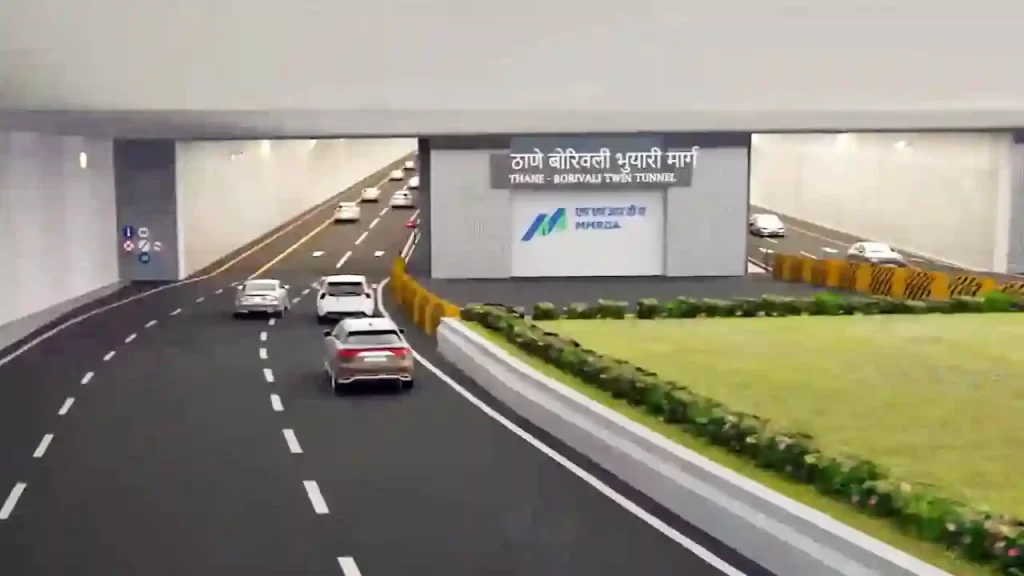
IntroductionThe Borivali–Thane Tunnel Project has emerged as one of the most ambitious urban infrastructure initiatives in India, promising to redefine mobility across the Mumbai Metropolitan Region (MMR). Designed to establish a direct underground road link between Borivali in Mumbai’s western suburbs and Thane city, the project aims to address one of the region’s most persistent transportation challenges—long travel times caused by severe traffic congestion.For decades, commuters travelling between Mumbai’s western suburbs and Thane have depended largely on Ghodbunder Road, a corridor that has become synonymous with bottlenecks, delays, and increasing traffic pressure. As residential development expanded rapidly in both Thane and the western suburbs, existing road infrastructure struggled to keep pace with growing demand.The Borivali–Thane Tunnel Project was conceived as a transformative solution to this problem. By creating a direct underground route beneath the Sanjay Gandhi National Park, the project seeks to reduce travel time dramatically while enhancing regional connectivity and supporting future urban growth.Infrastructure experts have described the tunnel as a game-changing project that could reshape commuting patterns across the Mumbai Metropolitan Region in much the same way that metro rail networks and expressways have transformed mobility in other major cities.Why the Project Became NecessaryMumbai and Thane together form one of India’s largest urban agglomerations. Every day, lakhs of people travel between the two cities for employment, education, business, healthcare, and other purposes.However, despite their geographical proximity, road connectivity between Borivali and Thane has historically been inadequate.The primary route connecting the two locations passes through Ghodbunder Road, a stretch that experiences some of the highest traffic volumes in the region. During peak hours, commuters often spend more than an hour travelling between the two destinations, with travel times occasionally extending beyond ninety minutes due to congestion.The situation has worsened over the years because of rapid urbanisation. Areas such as Thane, Mira-Bhayandar, Borivali, Kandivali, and Dahisar have witnessed substantial residential and commercial growth, leading to a significant increase in vehicular traffic.Urban planners recognised that simply widening existing roads would not be sufficient to address future transportation needs. A new high-capacity corridor was required—one that could bypass congested surface roads while preserving environmentally sensitive areas.This led to the concept of an underground tunnel connecting Borivali and Thane.Project Design and Technical SpecificationsThe tunnel system will be equippeThe project is being implemented by the Mumbai Metropolitan Region Development Authority (MMRDA) and represents one of the most technically complex road infrastructure projects currently underway in India.The tunnel will consist of twin underground tubes carrying traffic in opposite directions. Each tunnel has been designed to accommodate multiple lanes, allowing a large volume of vehicles to move efficiently between Mumbai and Thane.The alignment has been planned carefully to minimise disruption to existing urban areas while ensuring the shortest possible route between the two destinations.One of the most notable features of the project is that it passes beneath the Sanjay Gandhi National Park, enabling a direct connection without disturbing large portions of the protected forest at the surface level.The tunnel system will be equipped with state-of-the-art infrastructure, including: Modern ventilation systemsIntelligent traffic management systemsHigh-definition surveillance camerasEmergency communication networksFire detection and suppression mechanismsDedicated evacuation passagesAdvanced lighting systemsReal-time monitoring and control centresThese features are intended to ensure both operational efficiency and passenger safety. The Engineering Challenge Beneath a National ParkConstructing a tunnel beneath a protected national park presents extraordinary engineering challenges.The Sanjay Gandhi National Park is one of the few national parks located within a major metropolitan area and serves as an important ecological zone. It is home to diverse flora and fauna, including leopards and numerous bird species.Engineers must therefore ensure that tunnelling activities do not adversely affect wildlife habitats or destabilise the geological structure of the region.Extensive geotechnical surveys were conducted before finalising the alignment. These studies examined rock formations, soil characteristics, groundwater movement, and seismic conditions.The project is expected to rely on advanced Tunnel Boring Machines (TBMs), which allow underground excavation with minimal surface disturbance. These machines can cut through rock and soil while simultaneously installing tunnel lining segments, making construction safer and more efficient.Experts have noted that the project represents one of the most sophisticated applications of underground transportation engineering in India.Travel Time Reduction: The Biggest BenefitPerhaps the most significant advantage of the Borivali–Thane Tunnel Project is the dramatic reduction in travel time it promises.At present, a journey between Borivali and Thane can take anywhere between 60 and 90 minutes depending on traffic conditions.Once operational, the tunnel is expected to reduce travel time to approximately 15–20 minutes.This reduction will fundamentally change commuting patterns across the region.For daily commuters, it means:Less time spent in trafficReduced fuel consumptionLower transportation costsImproved productivityBetter work-life balanceFor businesses, faster connectivity translates into improved logistics, reduced delays, and greater operational efficiency.Environmental Debate and ConcernsDespite its expected benefits, the project has attracted considerable environmental scrutiny.The Sanjay Gandhi National Park is regarded as one of Mumbai’s most important green lungs, and environmental groups have raised concerns regarding potential impacts on biodiversity and ecological balance.Project authorities have argued that the underground alignment was specifically chosen to minimise ecological disruption.Compared with conventional road construction through forest land, tunnelling offers several advantages:Reduced tree cuttingMinimal disturbance to wildlife movementLower land acquisition requirementsPreservation of surface ecosystemsNevertheless, environmental clearances were subject to detailed assessments, and various mitigation measures have been incorporated into project planning.Balancing infrastructure development with environmental conservation remains one of the most closely watched aspects of the project.Economic Significance for the Mumbai Metropolitan RegionThe Borivali–Thane Tunnel is expected to generate substantial economic benefits extending far beyond transportation.Improved connectivity often acts as a catalyst for economic activity. Regions that become easier to access typically attract higher levels of investment, commercial development, and real estate growth.The tunnel is expected to strengthen economic integration between Mumbai’s western suburbs and Thane, creating new opportunities for businesses and industries.Real estate experts anticipate that enhanced connectivity could increase demand for residential and commercial properties in both regions.The project is also expected to create employment opportunities during construction and operation, benefiting multiple sectors including engineering, construction, materials manufacturing, and services.Integration with Mumbai’s Expanding Infrastructure NetworkThe tunnel
India’s Semiconductor Manufacturing Story: How New Chip Plants Are Transforming the Country’s Technological Future
IntroductionSemiconductors are often described as the “new oil” of the digital economy. These tiny electronic chips serve as the brains behind modern technology, powering smartphones, computers, automobiles, telecommunications equipment, medical devices, defence systems, artificial intelligence platforms, and industrial machinery. In an increasingly digital world, access to semiconductors has become a matter not only of economic growth but also of national security and technological sovereignty.For years, India remained heavily dependent on imported semiconductors despite being one of the world’s largest consumers of electronic products and a major hub for chip design services. While Indian engineers contributed significantly to global semiconductor design, the country lacked large-scale manufacturing facilities capable of producing chips domestically.The global semiconductor shortage that emerged during and after the COVID-19 pandemic exposed the vulnerabilities of this dependence. Supply chain disruptions affected industries worldwide, delaying automobile production, consumer electronics manufacturing, and critical infrastructure projects. The crisis prompted governments across the globe to invest heavily in domestic semiconductor capabilities.India responded by launching an ambitious strategy aimed at building a complete semiconductor ecosystem. Over the last few years, this vision has begun to materialise through a series of major investments, policy initiatives, and the launch of new semiconductor manufacturing and packaging facilities across the country.Today, India’s semiconductor story is no longer about future possibilities—it is increasingly about projects under construction, facilities being established, and the emergence of a domestic chip manufacturing ecosystem.Why Semiconductors MatterModern economies run on semiconductors. Every smartphone contains multiple chips. Electric vehicles depend on semiconductors for battery management, safety systems, and autonomous features. Data centres, cloud computing infrastructure, artificial intelligence applications, telecommunications networks, and defence technologies all rely on advanced semiconductor components.As digitalisation accelerates worldwide, demand for semiconductors continues to grow rapidly.Industry estimates suggest that India’s semiconductor consumption could exceed $100 billion annually in the coming years. This growth is being driven by:Expansion of the electronics manufacturing sectorRising smartphone penetrationGrowth of electric vehiclesDeployment of 5G networksArtificial intelligence and cloud computing adoptionIncreasing digitisation of public servicesWithout domestic manufacturing capabilities, India would remain vulnerable to external supply disruptions and geopolitical uncertainties.The Semiconductor Mission: India’s Strategic PushRecognising the strategic importance of semiconductors, the Government of India launched the India Semiconductor Mission (ISM) as part of a broader effort to strengthen the country’s electronics manufacturing sector.The government announced incentive packages worth tens of thousands of crores aimed at attracting investments in semiconductor fabrication, assembly, testing, packaging, and display manufacturing.The objective was not merely to establish individual factories but to create a complete semiconductor ecosystem involving:Chip fabrication plants (fabs)Assembly and packaging facilitiesDesign centresResearch and development infrastructureTalent development programsSupply chain networksThe initiative marked one of the largest industrial policy interventions in India’s recent history.Tata Electronics and the Dholera Semiconductor FabOne of the most significant milestones in India’s semiconductor journey came with the announcement of a semiconductor fabrication facility by Tata Electronics in partnership with Taiwan-based Powerchip Semiconductor Manufacturing Corporation (PSMC).The facility is being established at Dholera in Gujarat, a location that has emerged as a key industrial hub under India’s infrastructure development plans.The project represents India’s first major commercial semiconductor fabrication plant and involves an investment estimated at over ₹91,000 crore.The facility is expected to manufacture chips used in:AutomobilesConsumer electronicsCommunication systemsComputing devicesIndustrial applicationsIndustry experts consider the Dholera fab a landmark development because semiconductor fabrication represents the most technologically complex and capital-intensive segment of the semiconductor value chain.For decades, only a handful of countries such as Taiwan, South Korea, the United States, Japan, and China have possessed significant semiconductor fabrication capabilities.The Dholera project signals India’s entry into this highly strategic domain.Micron Technology’s Semiconductor Facility in GujaratAnother major development has been the investment by American semiconductor giant Micron Technology.Micron announced a substantial investment in a semiconductor assembly and testing facility in Sanand, Gujarat.The facility focuses on:AssemblyTestingMarkingPackaging (ATMP)These activities are critical parts of semiconductor manufacturing and represent an important step toward building a complete semiconductor ecosystem.The project has attracted significant attention because it marks one of the largest semiconductor investments by a global company in India.Commercial production is expected to play a crucial role in integrating India into global semiconductor supply chains.Semiconductor Expansion in AssamIndia’s semiconductor ambitions are not limited to western India.The Tata Group has also announced a semiconductor assembly and testing facility in Assam, making the northeastern state an unexpected but important participant in the country’s technology manufacturing push.The project is expected to generate thousands of direct and indirect jobs while promoting industrial development in a region historically less associated with high-technology manufacturing.The facility demonstrates the government’s effort to geographically diversify semiconductor investments rather than concentrating them in a few industrial clusters.For Assam, the project represents one of the most significant industrial investments in recent history.Additional Semiconductor Projects Across IndiaRecent years have witnessed multiple semiconductor-related announcements involving both domestic and international players.Several projects have been proposed in areas such as:Semiconductor packagingCompound semiconductorsDisplay manufacturingAdvanced electronics productionCompanies have expressed interest in participating across different stages of the semiconductor value chain, creating the foundations of a broader manufacturing ecosystem.These investments indicate growing confidence in India’s policy framework and long-term market potential.Why Global Companies Are Looking at IndiaSeveral factors have contributed to India’s emergence as a preferred destination for semiconductor investments.Growing Domestic MarketIndia is among the world’s fastest-growing markets for electronics and digital technologies.The rapid adoption of smartphones, connected devices, electric vehicles, and digital services creates substantial domestic demand for semiconductors.China Plus One StrategyGlobal companies are increasingly seeking to diversify manufacturing operations beyond China.The strategy, often referred to as “China Plus One,” has encouraged businesses to establish additional production bases in countries such as India, Vietnam, and Mexico.India has emerged as a major beneficiary of this shift.Government IncentivesGenerous fiscal incentives, capital subsidies, and infrastructure support have significantly improved the attractiveness of semiconductor investments.The government has committed substantial financial resources to reduce the high costs associated with semiconductor manufacturing.Skilled WorkforceIndia already possesses one of the world’s largest pools of semiconductor design talent.Many global semiconductor companies operate research and design centres in cities such as Bengaluru, Hyderabad, Noida, and Pune.This existing talent base provides a strong foundation for manufacturing expansion.Challenges Facing
Noida International Airport Officially Opens: Commercial Flights Begin June 15, Marking New Era for Viksit UP and Viksit Bharat
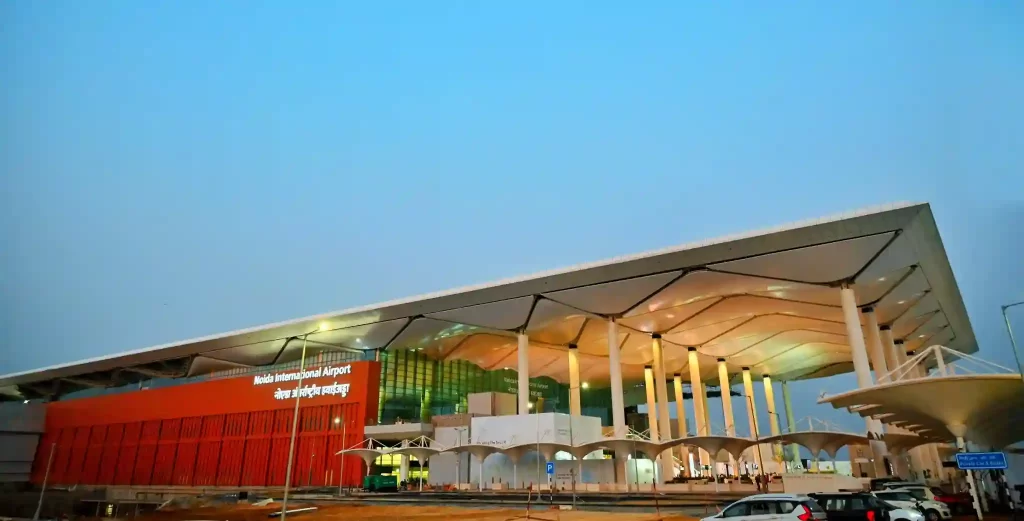
Noida, May 27, 2026 — Prime Minister Narendra Modi officially inaugurated Phase I of the Noida International Airport at Jewar in Gautam Buddha Nagar district of Uttar Pradesh on March 28, 2026, marking a transformative moment for India’s aviation sector and northern India’s connectivity. Noida International Airport at Jewar has officially opened for commercial operations, with flights scheduled to commence from June 15, 2026, marking a transformative moment for India’s aviation sector and northern India’s connectivity. Prime Minister Narendra Modi inaugurated the first phase of the airport earlier this month at Jewar in Gautam Buddha Nagar district of Uttar Pradesh, and the facility has now received final security clearance from the Bureau of Civil Aviation Security. The Prime Minister also laid the foundation stone for 40 acres of Maintenance, Repair, and Overhaul (MRO) facilities at the site during the inauguration ceremony. Speaking on the occasion, Modi declared this a new chapter for the Viksit UP and Viksit Bharat campaign, emphasizing that Uttar Pradesh has now emerged as one of the states with the highest number of international airports in India.Noida International Airport stands among the largest greenfield airport projects in the country, with Phase I developed at a total investment of approximately ₹11,200 crore under a Public-Private Partnership model. The airport will initially handle 12 million passengers per annum, with scalability up to 70 million passengers annually upon full development. Commercial flight operations officially begin June 15, following receipt of approval for its Aerodrome Security Programme from the Bureau of Civil Aviation Security, which certified that the airport’s security framework meets regulatory requirements for commercial operations. IndiGo will operate the first flight from NIA, marking the start of scheduled passenger services, followed shortly by Akasa Air and Air India Express.From Vision to Reality: A 23-Year Journey to CompletionThe airport project was first approved in 2003 during the tenure of former Prime Minister Atal Bihari Vajpayee, making this operational launch the culmination of a 23-year vision. Prime Minister Modi recalled that as soon as the current government was formed, the foundation was laid, construction happened, and now it has started operations. He expressed feeling doubly proud, first for having laid the foundation stone of this airport and now seeing it operational, and second because the name of this grand airport is linked to Uttar Pradesh, the state that chose him as its representative and made him a Member of Parliament.The airport will benefit numerous districts across western UP, including Agra, Mathura, Aligarh, Ghaziabad, Meerut, Etawah, Bulandshahr, and Faridabad, bringing new opportunities for farmers, small and medium enterprises, and the youth of the region. The site is positioned near freight corridors and logistics networks, supporting the movement of goods by air and rail. The area around Dadri, where freight routes converge, has been identified as a key logistics point for northern India. Prime Minister Modi pointed out that this area is becoming the hub of two major freight corridors with special railway tracks laid for goods trains, enhancing North India’s connectivity with the seas of Bengal and Gujarat.Economic Impact Connecting Western UP to Global MarketsPrime Minister Modi emphasized that airports are not just basic facilities in any country but give wings to progress. Due to the expansion of connectivity in the region, agricultural products of western UP will reach the global market in a much better way. The airport will bring numerous new opportunities for farmers, small and medium industries, and the youth of western Uttar Pradesh, with aircraft flying from here to the world, and the airport becoming a symbol of a developed Uttar Pradesh taking flight.The expansion of modern connectivity will further boost food processing prospects in western UP. Prime Minister Modi expressed gratitude to the farmers who gave up their lands to make this project a reality, noting that agriculture and farming hold great importance in the region’s economy. He highlighted that today, Noida is ready to welcome the entire world, and this whole area is strengthening the resolve of Aatmanirbhar Bharat. This multi-modal connectivity is making UP a major attraction for investors worldwide, as whatever farmers grow and industries produce here can now reach every corner of the world swiftly by land and by air.MRO Facility Lays Foundation for Aviation Self-RelianceAddressing a critical gap in India’s aviation ecosystem, Prime Minister Modi drew attention to the Maintenance, Repair, and Overhaul sector, noting that 85 percent of Indian aircraft still have to go abroad for MRO services. The government has resolved to make India self-reliant in the MRO sector, and the foundation stone of an MRO facility was laid at Jewar during the inauguration. When ready, it will serve aircraft from India and abroad, generating revenue for the country, keeping money within India, and creating numerous jobs for the youth.This facility will support aircraft servicing within India, where a significant share of such work is currently carried out overseas, reducing dependency on foreign MRO providers and saving foreign exchange. The government has decided to make India self-reliant in this sector as part of its broader economic policy framework, positioning India as a global hub for aircraft maintenance services.Operational Timeline and First Year ProjectionsThe airport will commence commercial flight operations from June 15 after appointing an Indian CEO, following the security regulator’s approval for its Aerodrome Security Programme. An airport official stated they are looking at 50-60 lakh passengers in the first year of operations. After domestic operations stabilize, they will launch international services, confident of going international before the end of 2026. The airport currently features one runway and one passenger terminal with a capacity to handle 12 million passengers annually, with its master plan including future expansion to accommodate over 70 million passengers each year.The launch follows the DGCA’s clearance granted in March, with PM Modi inaugurating the airport in late March. The airport said the June 15 start date marks the final stage of security clearance after regulatory concerns over a foreign CEO were addressed by appointing Chief Financial Officer Nitu Samra as interim CEO, replacing Swiss national
Mumbai to Have India’s First Pod Taxi: A Driverless AI-Powered Revolution in Urban Mobility
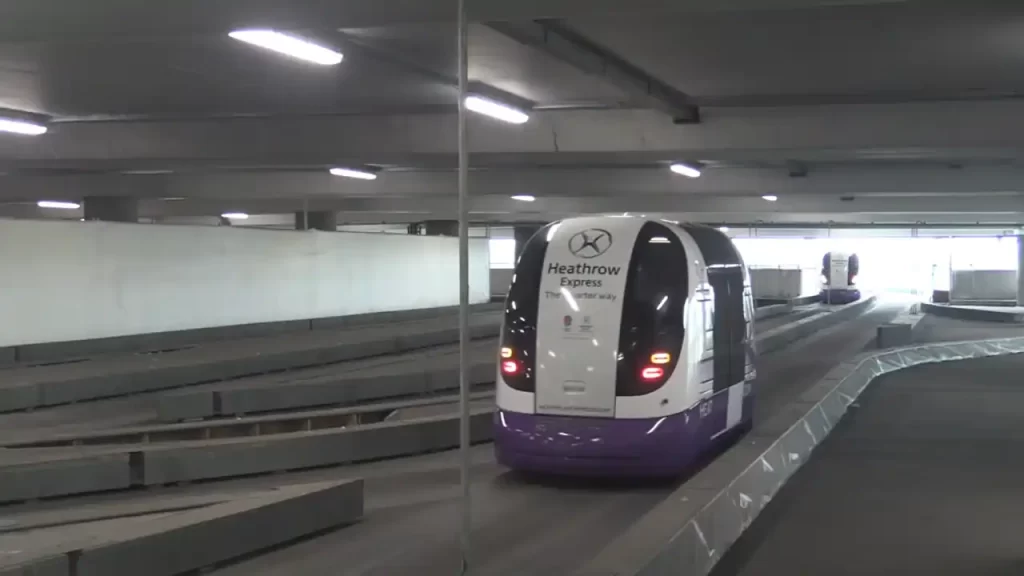
Maharashtra Chief Minister Devendra Fadnavis laid the foundation for India’s first Pod Taxi project, an Automated Rapid Transit System (ARTS), in Mumbai, marking a transformative moment for the city’s urban transport infrastructure. The groundbreaking ceremony was performed with Deputy Chief Ministers Eknath Shinde and Sunetra Pawar, formally launching work on this futuristic, driverless pod taxi system. The 8.85-kilometer elevated, driverless corridor will connect Bandra (East) and Kurla, providing seamless first- and last-mile connectivity to suburban rail and metro stations while aiming to decongest one of Mumbai’s busiest business districts, the Bandra-Kurla Complex (BKC).The project aims to provide seamless last-mile connectivity between Kurla and the Bandra Kurla Complex, serving an estimated four to six lakh commuters traveling to BKC daily. Planned with 22 air-conditioned stations spaced roughly 200 meters apart, the system will be implemented in phases, with Phase I covering 3.36 kilometers between Kurla Terminal and Bandra (East) terminals, expected to be completed within 20 months. Key stations in the first phase include Kurla (Terminal), LBS Marg, MMRDA Pay & Park (G Block), BDB Gate-11, Kalanagar, Old MMRDA Building, and the Excise Department, before terminating at Bandra (East).AI-Driven, Zero-Carbon Transportation SystemThe pods are driverless and AI-powered, running on battery power along a dedicated guideway. Each pod can carry up to six passengers with a maximum speed of 40 km/h and a headway of just 15 seconds, ensuring high frequency and minimal waiting time. Unlike conventional systems, pods stop only at stations chosen by passengers, bypassing others to reduce travel time through an innovative on-demand stop mechanism.Each pod measures 3.9 meters in length, 2.01 meters in width, and 1.8 meters in height, and will be fully air-conditioned for passenger comfort. Operations will be monitored from a central control room to maintain safety and efficiency, while a dedicated depot is planned at the RLDA Plot in Bandra East. Speaking at the foundation-laying ceremony, Chief Minister Fadnavis said, “The Pod Taxi project reflects Mumbai’s move towards future-ready, sustainable transport solutions. It will ease congestion in BKC and offer fast, eco-friendly connectivity to thousands of commuters.”Transforming Urban Mobility in Mumbai’s Business HubDescribing the project as a “game-changer for urban mobility,” a senior official from the Mumbai Metropolitan Region Development Authority (MMRDA) said, “The Pod Taxi will transform the way people move within BKC. It is designed to provide fast, predictable, and green transport while significantly reducing pressure on roads.” The fully automated system will operate on AI-based, driverless technology, representing a major advancement in Mumbai’s transformation into a smart city and aligning its urban mobility with tech-savvy global centers such as London and Dubai.Urban transport experts believe the system will drastically cut short intra-BKC travel times that often stretch due to heavy vehicular congestion. By offering a zero-carbon, battery-operated alternative, the project is also expected to contribute to sustainable mobility goals and improved air quality in one of India’s most polluted metropolitan areas. An MMRDA official added, “This is not just a transport project; it is a step towards smart, future-ready infrastructure for Mumbai. The Pod Taxi will strengthen connectivity between Bandra and Kurla stations while making travel within BKC smooth, quick, and environmentally friendly.”Strong Metro Integration Creating Multi-Modal Transport GridThe Pod Taxi corridor will integrate with Mumbai Metro Line 3 at the BKC metro station and connect with ITO and IL&FS stations on Mumbai Metro Line 2B, creating a multi-modal transport grid in the commercial hub. This integration will improve multimodal access for commuters, allowing seamless transfers between different modes of transportation and reducing overall travel time for daily commuters navigating Mumbai’s complex transport network.Officials said the service will cater to 1.09 lakh daily commuters by 2031, with fares proposed at ₹21 per kilometer (2022 rates). The project is being implemented under a Public-Private Partnership (PPP) model, with no financial burden on the state government or MMRDA, while still generating revenue for the authority. With an estimated budget of approximately ₹1,017 crore, this project is set to transform daily commuting for the estimated four to six lakh commuters traveling to BKC.Implementation Timeline and Phased DevelopmentThe project in Mumbai is being executed by the Mumbai Metropolitan Region Development Authority (MMRDA) to strengthen urban transport. The project will be developed in phases, with the first phase covering 3.36 kilometers between Kurla Terminal and Bandra East terminals. CM Fadnavis directed officials to immediately escalate any hurdles posed by government agencies or departments, assuring such issues would be resolved at the highest level to ensure the project is executed in a hassle-free environment and within the deadline.Once completed by 2031, the Automated Rapid Transit System is expected to redefine short-distance urban commuting in Mumbai, positioning the city among global adopters of next-generation personal rapid transit solutions. The full system will span approximately 8.85 kilometers, establishing Mumbai as a pioneer in India’s urban mobility landscape and setting a precedent for other metropolitan cities to follow.A Vision for Future-Ready Sustainable TransportChief Minister Fadnavis described the project as reflecting Mumbai’s move towards future-ready, sustainable transport solutions that will ease congestion in BKC and offer fast, eco-friendly connectivity to thousands of commuters. The Pod Taxi represents India’s entry into advanced personal rapid transit technology, demonstrating the country’s commitment to adopting cutting-edge urban mobility solutions that combine sustainability, efficiency, and technological innovation.
Indrajaal Ranger: India’s First Mobile Anti-Drone Patrol Vehicle Launched to Secure Borders

India faces a growing invisible threat from the skies. Drones smuggling drugs, weapons, and explosives across borders have become a major security challenge. On November 26, 2025, Hyderabad-based Indrajaal Drone Defence unveiled a game-changing solution: the Indrajaal Ranger. This is India’s first fully mobile, AI-powered Anti-Drone Patrol Vehicle (ADPV). Unlike traditional systems that only work when parked, the Ranger detects, tracks, and neutralizes hostile drones while driving. Built on a rugged Toyota Hilux 4×4 platform, it brings real-time air defense to borders, cities, and critical areas. Founder Kiran Raju says every drone stopped saves lives and strengthens India’s security.Born from Real Border ThreatsThe Ranger’s launch comes at a critical time. Government data shows over Rs 25,000 crore in drugs seized in 2024, up 55% from before. The western border alone accounts for 44.5% of heroin hauls. BSF neutralized 255 Pakistani drones in one year, the highest ever. These drones drop heroin, meth, Turkish pistols, ammo, and IED parts deep into Punjab, Haryana, UP, and Delhi NCR.Recent busts exposed ISI-linked networks using drones like highways for guns and narcotics. Farmers near borders live in fear of explosives. Smugglers recruit youth into crime, funding terror. Indrajaal built the Ranger to break this chain. As Raju puts it: “Smugglers no longer cross on foot; they fly in minutes. Ranger is our answer.”How It Works: On-the-Move Drone HuntingThe Ranger patrols actively, no stopping needed. It spots drones up to 10 km away, locks on with AI, and acts fast:Detection: RF sensors, protocol analyzers, computer vision for 360° coverage.Tracking: AI “track-lock” follows targets continuously.Neutralization (layered, up to 4 km):RangeMethodDescription10 kmDetectionSpots drones early.4-5 kmSoft Capture (Retractor)Cyber takeover guides drone to safe landing.3 kmSoft Kill (Repulsor)GNSS spoofing/jamming disrupts navigation without damage.2 kmHard Kill (Zombee)Launches interceptor drone for takedown.Powered by SkyOS autonomy engine, it fuses sensors, decides autonomously, and links to command centers. Two operators run it off-grid with battery backup. All-terrain wheels handle borders, India faces a growing invisible threat from the skies. Drones smuggling drugs, weapons, and explosives across borders have become a major security challenge. On November 26, 2025, Hyderabad-based Indrajaal Drone Defence unveiled a game-changing solution: the Indrajaal Ranger. This is India’s first fully mobile, AI-powered Anti-Drone Patrol Vehicle (ADPV). Unlike traditional systems that only work when parked, the Ranger detects, tracks, and neutralizes hostile drones while driving. Built on a rugged Toyota Hilux 4×4 platform, it brings real-time air defense to borders, cities, and critical areas. Founder Kiran Raju says every drone stopped saves lives and strengthens India’s security.Born from Real Border ThreatsThe Ranger’s launch comes at a critical time. Government data shows over Rs 25,000 crore in drugs seized in 2024, up 55% from before. The western border alone accounts for 44.5% of heroin hauls. BSF neutralized 255 Pakistani drones in one year, the highest ever. These drones drop heroin, meth, Turkish pistols, ammo, and IED parts deep into Punjab, Haryana, UP, and Delhi NCR.Recent busts exposed ISI-linked networks using drones like highways for guns and narcotics. Farmers near borders live in fear of explosives. Smugglers recruit youth into crime, funding terror. Indrajaal built the Ranger to break this chain. As Raju puts it: “Smugglers no longer cross on foot; they fly in minutes. Ranger is our answer.”Key Use Cases: From Borders to CitiesBorder Security: Patrols roads/canals, stops smuggling/terror drones. Protects BSF convoys, villages.Urban Policing: Guards events, airports; geofences no-fly zones.Critical Infra: Shields refineries, ports, temples, VIP routes with mobile “security domes.”It reduces manpower strain, police/BSF focus on ground while Ranger owns the air.Launch Highlights and PraiseAt the Hyderabad event, Lt Gen Devendra Pratap Pandey (Retd) (former Chinar Corps commander) called it a “shield for our children, farmers, and future.” He praised Raju’s innovation. Indrajaal has ARDTC certification, proven intercepts with armed forces.Partners like Grene Robotics (AI autonomy), Sigma Advanced Systems (avionics/C-UAS), India Accelerator, and Finvolve back it.Why Ranger Stands OutCounter-drone defense vehicle Traditional vehicle mounts? Park-and-defend only. Ranger fights moving:Patrol Mode: Constant sky watch.Mesh Network: Multiple Rangers team up.Plug-and-Play: Works with existing gear.It cuts smuggling funds, terror logistics, drug addiction (7% Indians affected per Home Minister Amit Shah). Border families sleep safer.Indrajaal leads India’s counter-UAS push, from fixed domes to mobile hunters. As drone wars evolve, Ranger patrols ahead, protecting skies and securing tomorrows.
Mumbai’s Mahalaxmi Racecourse Transforms into a Giant Central Park
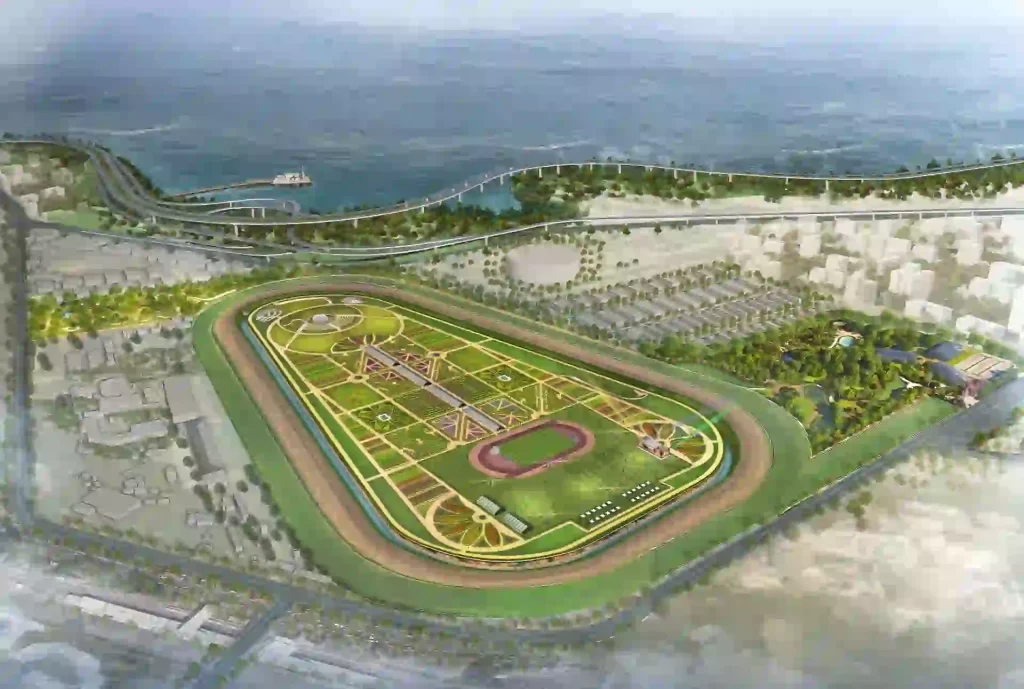
Mumbai, a city famous for its crowded streets and tall buildings, is about to gain a massive green escape. The historic Mahalaxmi Racecourse, a 211-acre colonial-era landmark leased to the Royal Western India Turf Club (RWITC), will become Mumbai Central Park. This ambitious project promises to create India’s largest urban park at 295 acres, blending vast green spaces, world-class sports facilities, and entertainment hubs. Deputy Chief Minister Eknath Shinde announced the plan, calling it the “biggest central park in Indian city history.” The now controls 120 acres of racecourse land after the old lease expired, adding 175 acres from the nearby Coastal Road project. No buildings will rise on the surface, just eco-friendly greenery modeled after New York’s and London’s iconic Central Parks.A Historic Site Gets a Green RebirthThe Mahalaxmi Racecourse opened in 1883 as Mumbai’s premier horse-racing venue, facing the Arabian Sea with grandstands and stables. The BMC owns the land but leases it long-term to RWITC. That lease ended recently, sparking a new 30-year deal from June 2023 to May 2053 for RWITC’s 91 remaining acres, keeping the racing track, stables, and heritage clubhouse intact. Architect Hafeez Contractor submitted the blueprint to BMC in August 2025, envisioning a park that honors history while serving millions.The park expands Mumbai’s green cover from 3,917 acres to 4,212 acres. Shinde stressed: “No construction on the racecourse. It will be a pure oxygen park for Mumbaikars.” An underpass links it to Annie Besant Road at Haji Ali, making it walkable from Worli to Breach Candy.Vast Green Spaces and Themed GardensAt the heart lies 125 acres of racecourse greens turning into lush landscapes:70-acre Topiary Garden: Artfully clipped shrubs, hedges, and sculptures.31-acre Botanical Garden: Medicinal trees/herbs, giant water-lily pond, palm grove, hillock, arboretum, kids’ play area, food kiosks.Diverse gardens: Perennial, annual, monsoon, seasonal, aquatic, succulent, organic farm, and a fun maze.Add an amphitheatre for 900 people, events lawn, stage, perfect for festivals, yoga, concerts. Coastal Road land adds wetlands, lakes, jogging tracks, and cycle paths. Imagine families picnicking under banyans, seniors strolling shaded paths, amid Mumbai’s concrete jungle.Underground Wonders: Sports and Parking GaloreSurface stays green, but below ground? High-tech action:10 lakh sq ft Sports Complex (Olympic-standard): 11 volleyball courts, 4 basketball/handball, 14 cricket nets, 2 gymnastics, 6 kho-kho, 14 badminton, 18 squash courts, 2 skating rinks, velodrome.Three-level Parking: Space for 5,000 cars, easing traffic.9-acre Convention Centre: Three 7,440 sq m halls, 50,000 sq ft pre-function area for expos, weddings, global summits.These stay hidden, preserving open skies. RWITC gets Rs 100 crore from the government for stable upgrades, no BMC burden.Political Fire and Public DebateNot everyone cheers. Shiv Sena (UBT) leader Aaditya Thackeray slammed it as a “BJP-mindhe regime” ploy to favor builders. He accused forced terms on RWITC’s 1,718 members, vowed probes if MVA returns: No underground builds, protect heritage, scrap “bribe-like” membership clauses, BMC-free stables. RWITC’s January 2025 vote approved a new clubhouse and repairs, but critics fear open-space grabs.Why Mumbai Needs This Oxygen BoostMumbai’s air chokes on pollution; lungs like Shivaji Park strain under 2 crore people. This park fights climate change, cools heat islands, and boosts biodiversity. Health perks: Sports for youth, walks for elders. Economy: Conventions draw business; tourism spikes with sea views. RWITC races continue uninterrupted.Hafeez Contractor’s vision: “A game-changer.” From horses to habitats, Mahalaxmi evolves, green, active, alive. If built right, Mumbai Central Park becomes the city’s beating heart, rivaling global icons.