


Gurindervir Singh Becomes India’s Fastest Man: The Next “Flying Sikh” Emerges with Historic 10.09 Seconds Record
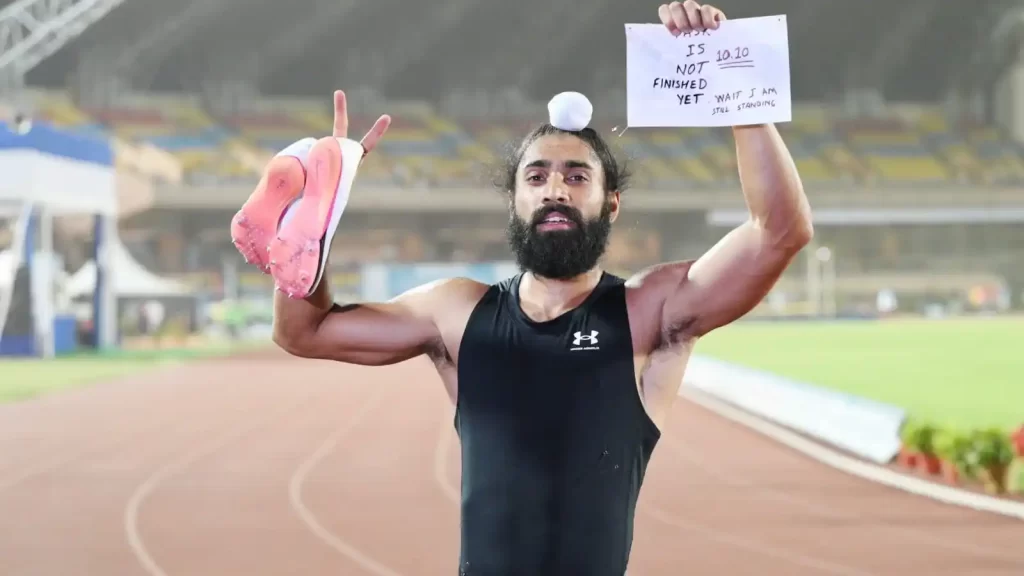
Gurindervir Singh has captured the nation’s attention after becoming the fastest Indian ever, with many already calling him the next “Flying Sikh” following his historic performance on the track. On Saturday at the National Senior Athletics Federation Competition in Ranchi, the Indian Navy officer ran as if his life depended on it, setting a new 100m national record of 10.09 seconds and beating the previous 10.15 seconds record held by fellow sprinter Animesh Kujur. Within moments, he became the fastest man in India, sparking fresh belief that the country could finally be inching closer to elite global standards in sprinting. For decades, India’s sprinting ambitions rarely entered conversations dominated by Olympic legends and world record holders, but Gurindervir’s blistering run has now ignited hope that India may genuinely have what it takes to compete with the fastest runners in the world.Industrialist Anand Mahindra joined the growing chorus of excitement, calling Gurindervir’s recent performances a sign of India’s sprinting progress. Taking to X, Mahindra reflected on India’s athletics future, beginning his post with a nostalgic reference to the legendary Milkha Singh, who earned the iconic “Flying Sikh” nickname for his extraordinary speed. Historic Night for Indian Sprinting in RanchiThe Ranchi competition became a historic evening for Indian athletics as Gurindervir reclaimed the record emphatically after briefly holding it with 10.17 seconds in the semifinals before Animesh Kujur eclipsed it minutes later with 10.15 seconds. Both sprinters secured qualification for the Glasgow Commonwealth Games, where they will represent India in the men’s 100m. Notably, Vishal Thennarasu Kayalvizhi also made history on the same day, becoming the first Indian man to break the 45-second barrier in the 400m with a sensational national record time of 44.98 seconds, claiming victory at the Federation Cup.The Indian Navy heaped praise on Gurindervir’s achievement of clinching the gold medal in the 100-metre race at the Federation Cup in Ranchi, officially calling the sprinter “the fastest man in India.” The moment Gurindervir broke the record, he tore off his race bib and later turned it around to reveal words written in his own handwriting: “Task is not finished yet. 10.10. Wait, I am still standing.” Written the night before the race, this manifestation showed how Gurindervir had visualized history in the making before going out and doing one better. “I wanted to write down my goal and the reason I took it out was to show that I had visualised this moment,” he explained. “Gurbani and my thoughts guide me… If in my head I can see myself achieving something, I get the power to go out and do it.”The Discipline Behind the Record: A Life Built on Small WinsBehind the result and accolades lies years of grind, blood, and sweat, because to be the fastest man in India, you must be doing something out of the ordinary. Gurindervir calls his routine “a loop” with precision leaving little room for error. “Before the sun sets, I already know what time I am waking up the next day. If I have to be awake at 5:30am, it has to be that time, not 5:31,” he says with military precision befitting his Navy background.His training schedule is grueling: Monday features sprint training with gym work lasting four to five hours, while some days include morning gym sessions followed by tempo runs for two and a half hours. After training, he eats lunch, takes a one-hour nap, wakes up, tidies his room, reads a book, has dinner, and gets on a call with his family. By 10pm, he’s asleep, and the next day follows the same pattern. “It’s the little wins that win you the big moments,” Gurindervir emphasizes.From Milkha Singh to Gurindervir: The Flying Sikh Legacy ContinuesAnand Mahindra’s reflection on India’s sprinting progress highlighted why the recent performances of Gurindervir Singh and fellow athlete Animesh Kujur left him optimistic about the future of Indian athletics. Beginning his post with a nostalgic reflection, Mahindra wrote that the idea of an all-new “Flying Sikh” naturally captured headlines over the weekend, referencing the legendary Milkha Singh whose extraordinary speed on the track earned him the iconic nickname that became synonymous with Indian sprinting excellence.The comparison to Milkha Singh is significant because for decades after the Flying Sikh’s era, India’s sprinting ambitions rarely entered global conversations dominated by Olympic legends and world record holders. Gurindervir’s 10.09 seconds run represents more than just a national record, it signals that India may be finally approaching elite global standards in the sport that most defines human speed. Watching him run was described as a flashback to the days when legendary sprinter Milkha Singh used to light up a track, suggesting the torch of Indian sprinting excellence has found a worthy successor.What It Takes to Be India’s Fastest ManGurindervir’s journey to becoming the fastest man in India demonstrates that discipline matters more than talent alone. His Navy background has instilled military-level precision in his approach to training, recovery, and competition. The fact that he briefly held the record with 10.17 seconds in semifinals, lost it minutes later, then reclaimed it emphatically with 10.09 seconds shows mental resilience under pressure, a crucial quality for elite competition.Both Gurindervir Singh and Animesh Kujur qualifying for the Glasgow Commonwealth Games represents a breakthrough moment for Indian sprinting, with two Indian men representing the country in the men’s 100m at a major international championship. This dual qualification, combined with Vishal Thennarasu Kayalvizhi’s historic 44.98 seconds in the 400m, caps off a memorable evening that suggests Indian athletics is entering a golden era of sprinting excellence.The Future of Indian Sprinting Looks BrightAs Gurindervir Singh prepares for the Glasgow Commonwealth Games carrying the hopes of a nation, the question is no longer whether India can produce world-class sprinters but when this new generation will break into global top tiers. The combination of military discipline, spiritual guidance through Gurbani, visualization techniques, and unwavering commitment to small daily wins has created a formula for success that transcends athletic achievement.The nation now watches with renewed optimism as the potential
Leadership Turmoil in India’s Aviation Sector: IndiGo and Air India CEOs Exit Amid Crisis
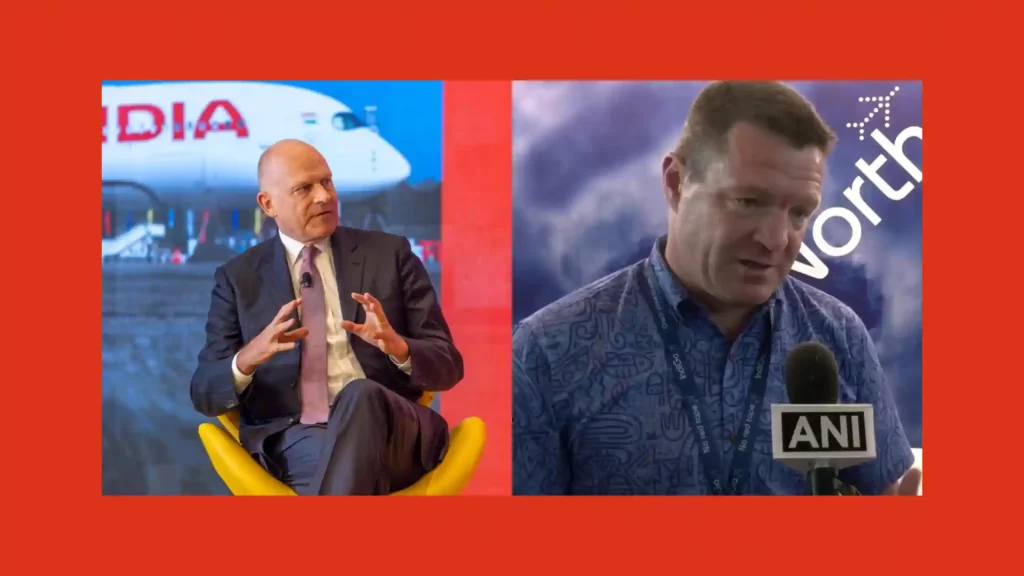
Two of India’s largest airlines are seeing simultaneous leadership changes at a time when the aviation sector faces one of its most testing phases in recent years. IndiGo’s CEO Pieter Elbers stepped down after the airline faced its worst operational crisis in two decades, while Air India’s CEO Campbell Wilson has resigned even though his term was set to run until 2027. Together, IndiGo and Air India dominate the market with close to 60 percent and nearly 30 percent market share, respectively, accounting for roughly 90 percent of India’s aviation sector. The exits of their CEOs are not isolated events but come as the aviation sector grapples with a mix of domestic setbacks and global shocks, raising questions about whether the industry is entering a reset phase.IndiGo’s Operational Crisis Forces Quick Leadership ShiftIndiGo’s CEO Pieter Elbers stepped down after the airline faced its worst operational crisis in two decades. In December, the airline cancelled 4,500 flights during the holiday season after failing to prepare for stricter pilot rest rules, stranding thousands of passengers. The disruption exposed gaps in crew planning and severely damaged the airline’s reputation for reliability that had been built over decades of consistent operations.The airline has now brought in aviation veteran Willie Walsh as its next CEO, a move analysts see as a clear signal that IndiGo’s board wants quick corrective action. Brokerage Jefferies said in a March 31 note that the fast appointment shows “urgency and clarity” at the airline, adding that restoring operational reliability and fixing crew-planning weaknesses will be key priorities. Walsh’s appointment is being seen as a move to support IndiGo’s major push into long-haul international travel, with his experience in building International Airlines Group and managing long-haul operations proving useful for IndiGo’s next phase of global expansion.Safety Concerns and Regulatory PressureAir India’s CEO Campbell Wilson has resigned, stepping down before the end of his five-year term that was due to run until 2027. His exit comes as the airline continues to report losses and faces increased scrutiny following a fatal crash last year that killed 241 of 242 people on board a London-bound Boeing 787-8 Dreamliner shortly after take-off from Ahmedabad. The crash added immense pressure on the airline’s management, with investigations ongoing and the final report yet to be released.The carrier has also been pulled up by regulators for safety lapses, including flying an aircraft eight times without an airworthiness certificate and operating planes without checking emergency equipment. Air India admitted in December that there was a “need for urgent improvements in process discipline, communication, and compliance culture.” Despite these challenges, industry experts say Wilson played a key role in stabilizing the airline after Tata Group took over in 2022. “Over the last four years, Campbell did a good job in very tough circumstances,” independent aviation analyst Brendan Sobie told Reuters. “Finding the right candidate to complete Air India’s transformation will not be easy.”Wilson took charge months after Tata Sons acquired the airline with a mandate to overhaul operations, modernize systems, and restore Air India’s reputation. In his departure statement, he highlighted that the four years since privatization saw the acquisition and successful merger of four airlines, evolution from public to private sector practices, renewal of leadership team and workforce culture, complete modernization of systems, launch of new physical products, and deployment of elevated service standards. Under Wilson, Air India also saw the merger of Vistara into the airline and inducted more than 100 aircraft.Global Conflicts Driving Costs Higher and Routes LongerBeyond company-specific issues, global tensions are adding significant pressure on airlines. The ongoing West Asia conflict, especially the Iran war, has pushed fuel prices higher and forced airlines to take longer routes, increasing both flying time and operating costs. Airlines are having to carry extra fuel and trim schedules to deal with the situation. Brent crude prices have surged, directly impacting aviation turbine fuel costs, which are up by 8-10 percent between March and April.To manage the impact on passengers, the Indian government has capped monthly increases in aviation fuel prices for domestic flights at 25 percent. Analysts at Motilal Oswal said higher fuel costs, rupee depreciation, and weaker international operations could hit IndiGo’s earnings for the current financial year, cutting their profit estimate for the airline by 15 percent. Air India revised its fuel surcharge structure, introducing a distance-based surcharge on domestic routes and increasing charges on international ones, with revised rates coming into effect from April 8.Airspace Closures Add to Operational BurdenThe situation has been made worse by regional tensions closer to home. After the India-Pakistan conflict in May last year, Pakistan shut its airspace to Indian airlines, forcing carriers like IndiGo and Air India to take longer routes, especially for west-bound flights. These detours have increased fuel use and reduced profitability on key international routes. Air India, which is already scaling back some international operations, is expected to face further pressure if the Iran conflict continues.Competition and Expansion Add Execution PressureAt the same time, both airlines are trying to grow despite these challenges. IndiGo is planning a major push into long-haul international travel, having ordered Airbus A321XLR and A350 aircraft and already flying to over 40 international destinations. Walsh’s leadership experience will be crucial for this expansion phase. Air India, meanwhile, has ordered more than 500 aircraft as part of its turnaround plan, but currently operates a fleet of 191 planes while continuing to face delivery delays and supply chain issues.The airline and its low-cost arm Air India Express reported a combined loss of ₹98.08 billion in FY25, showing the scale of financial pressure facing the Tata Group’s aviation venture. Within the Air India group, leadership gaps persist, with Air India Express having been without a head since March 19, following the exit of its MD Aloke Singh after completing his tenure.India’s Aviation Future: Final ThoughtsThe back-to-back leadership changes at IndiGo and Air India point to a wider shift in India’s aviation sector. Airlines are no longer just dealing with demand recovery but are managing higher costs, tighter
Noida International Airport Officially Opens: Commercial Flights Begin June 15, Marking New Era for Viksit UP and Viksit Bharat
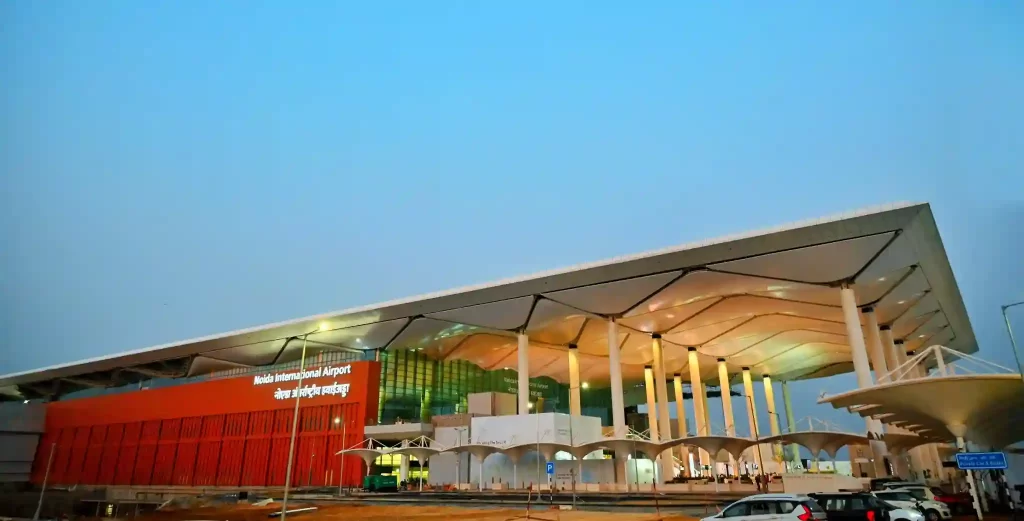
Noida, May 27, 2026 — Prime Minister Narendra Modi officially inaugurated Phase I of the Noida International Airport at Jewar in Gautam Buddha Nagar district of Uttar Pradesh on March 28, 2026, marking a transformative moment for India’s aviation sector and northern India’s connectivity. Noida International Airport at Jewar has officially opened for commercial operations, with flights scheduled to commence from June 15, 2026, marking a transformative moment for India’s aviation sector and northern India’s connectivity. Prime Minister Narendra Modi inaugurated the first phase of the airport earlier this month at Jewar in Gautam Buddha Nagar district of Uttar Pradesh, and the facility has now received final security clearance from the Bureau of Civil Aviation Security. The Prime Minister also laid the foundation stone for 40 acres of Maintenance, Repair, and Overhaul (MRO) facilities at the site during the inauguration ceremony. Speaking on the occasion, Modi declared this a new chapter for the Viksit UP and Viksit Bharat campaign, emphasizing that Uttar Pradesh has now emerged as one of the states with the highest number of international airports in India.Noida International Airport stands among the largest greenfield airport projects in the country, with Phase I developed at a total investment of approximately ₹11,200 crore under a Public-Private Partnership model. The airport will initially handle 12 million passengers per annum, with scalability up to 70 million passengers annually upon full development. Commercial flight operations officially begin June 15, following receipt of approval for its Aerodrome Security Programme from the Bureau of Civil Aviation Security, which certified that the airport’s security framework meets regulatory requirements for commercial operations. IndiGo will operate the first flight from NIA, marking the start of scheduled passenger services, followed shortly by Akasa Air and Air India Express.From Vision to Reality: A 23-Year Journey to CompletionThe airport project was first approved in 2003 during the tenure of former Prime Minister Atal Bihari Vajpayee, making this operational launch the culmination of a 23-year vision. Prime Minister Modi recalled that as soon as the current government was formed, the foundation was laid, construction happened, and now it has started operations. He expressed feeling doubly proud, first for having laid the foundation stone of this airport and now seeing it operational, and second because the name of this grand airport is linked to Uttar Pradesh, the state that chose him as its representative and made him a Member of Parliament.The airport will benefit numerous districts across western UP, including Agra, Mathura, Aligarh, Ghaziabad, Meerut, Etawah, Bulandshahr, and Faridabad, bringing new opportunities for farmers, small and medium enterprises, and the youth of the region. The site is positioned near freight corridors and logistics networks, supporting the movement of goods by air and rail. The area around Dadri, where freight routes converge, has been identified as a key logistics point for northern India. Prime Minister Modi pointed out that this area is becoming the hub of two major freight corridors with special railway tracks laid for goods trains, enhancing North India’s connectivity with the seas of Bengal and Gujarat.Economic Impact Connecting Western UP to Global MarketsPrime Minister Modi emphasized that airports are not just basic facilities in any country but give wings to progress. Due to the expansion of connectivity in the region, agricultural products of western UP will reach the global market in a much better way. The airport will bring numerous new opportunities for farmers, small and medium industries, and the youth of western Uttar Pradesh, with aircraft flying from here to the world, and the airport becoming a symbol of a developed Uttar Pradesh taking flight.The expansion of modern connectivity will further boost food processing prospects in western UP. Prime Minister Modi expressed gratitude to the farmers who gave up their lands to make this project a reality, noting that agriculture and farming hold great importance in the region’s economy. He highlighted that today, Noida is ready to welcome the entire world, and this whole area is strengthening the resolve of Aatmanirbhar Bharat. This multi-modal connectivity is making UP a major attraction for investors worldwide, as whatever farmers grow and industries produce here can now reach every corner of the world swiftly by land and by air.MRO Facility Lays Foundation for Aviation Self-RelianceAddressing a critical gap in India’s aviation ecosystem, Prime Minister Modi drew attention to the Maintenance, Repair, and Overhaul sector, noting that 85 percent of Indian aircraft still have to go abroad for MRO services. The government has resolved to make India self-reliant in the MRO sector, and the foundation stone of an MRO facility was laid at Jewar during the inauguration. When ready, it will serve aircraft from India and abroad, generating revenue for the country, keeping money within India, and creating numerous jobs for the youth.This facility will support aircraft servicing within India, where a significant share of such work is currently carried out overseas, reducing dependency on foreign MRO providers and saving foreign exchange. The government has decided to make India self-reliant in this sector as part of its broader economic policy framework, positioning India as a global hub for aircraft maintenance services.Operational Timeline and First Year ProjectionsThe airport will commence commercial flight operations from June 15 after appointing an Indian CEO, following the security regulator’s approval for its Aerodrome Security Programme. An airport official stated they are looking at 50-60 lakh passengers in the first year of operations. After domestic operations stabilize, they will launch international services, confident of going international before the end of 2026. The airport currently features one runway and one passenger terminal with a capacity to handle 12 million passengers annually, with its master plan including future expansion to accommodate over 70 million passengers each year.The launch follows the DGCA’s clearance granted in March, with PM Modi inaugurating the airport in late March. The airport said the June 15 start date marks the final stage of security clearance after regulatory concerns over a foreign CEO were addressed by appointing Chief Financial Officer Nitu Samra as interim CEO, replacing Swiss national
India’s Reverse Brain Drain Gathers Pace: Why Skilled Professionals Are Choosing to Return Home
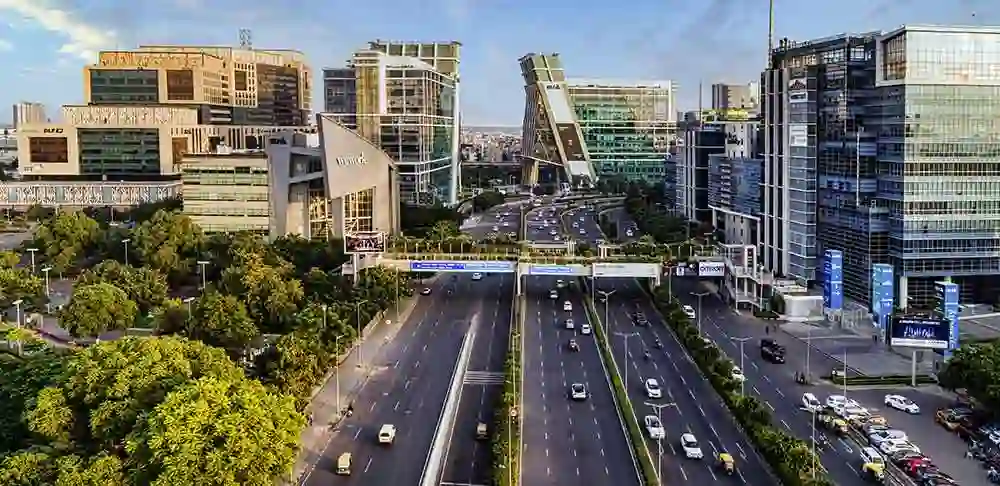
India has long been one of the world’s largest exporters of talent, with millions of skilled professionals heading overseas in search of better career prospects and higher wages. But there are growing signs that this long-standing trend may be shifting dramatically. An increasing number of Indian professionals are now choosing to return home, drawn by a rapidly expanding startup ecosystem, a booming digital economy, and improving job opportunities across key sectors. This “reverse brain drain” is occurring at a critical moment when immigration policies are tightening in many parts of the world, particularly in the United States, traditionally the top destination for Indian talent.Among those making the move back is aspiring business owner Shambhavi Gupta, originally from Lucknow in northern India. She pursued her undergraduate studies at the University of California before landing a role at a leading investment bank in San Francisco. Despite a promising career in the US, Gupta had long harbored ambitions of building her own company. With India going through rapid economic and technological growth, she decided to return two years ago. “I felt that India was having its own moment on the global stage,” she told CNA. “India is a really young country. We’re on a very new financial sector journey, and we’re still building up our systems.” Now based in Mumbai, she runs Nine Spot Seven, a financial insights and events platform, and says she has no regrets about her decision to return.From Brain Drain to Brain Circulation: A Fundamental ShiftGupta’s experience reflects a broader trend transforming India’s relationship with its global diaspora. About one-third of roughly 600 high-tech startups founded in India between 2016 and 2023 were established by entrepreneurs who had returned from abroad, according to analysis by New Delhi-based think tank Observer Research Foundation. India still has a vast diaspora estimated at around 35 million people living overseas, but as domestic opportunities expand, more professionals are reconsidering the need to build careers abroad.The narrative is shifting from “brain drain” to what experts now call “brain circulation.” A recent survey by the CFA Institute reveals that 70 percent of Indian graduates are either planning or considering studying abroad, yet most of them are not treating this as permanent migration. Instead, they intend to return to India for employment after completing their education. The story is no longer about loss but about movement and return. Studying abroad is increasingly being seen as an extension of Indian education rather than an escape from it. The idea is not to leave India behind but to step out, build competence, and come back stronger.Powerful Pull Factors Driving Professionals HomeRecruiters say they are seeing a noticeable uptick in returnees, particularly as India cements its position as the world’s fastest-growing major economy. Varun Sachdeva, senior vice president at recruitment firm NLB Services, points to strong demand in emerging sectors as a key pull factor. “Growth opportunities in startups, artificial intelligence, digital infrastructure, and global capability centres being created in India are generating high-quality roles,” he said. The scale of interest in overseas education is unmistakable, with Indian students continuing to look outward for advanced degrees, specialized courses, and global exposure. From engineering and finance to data science and public policy, international universities remain powerful magnets offering better research infrastructure, industry-linked curricula, and the promise of global networks.At the same time, rising living costs overseas and growing uncertainty around immigration policies are pushing some to rethink their options. “There’s a lot of unpredictability, of volatile situations across the globe, with changing visa norms. That is also contributing to people thinking about either staying in India or returning,” Sachdeva said. The shift has been significant enough for his company to launch a dedicated executive search practice focused on helping professionals secure roles in India as they relocate home.Quality of Life Improvements Making India More AttractiveBeyond career prospects, improvements in quality of life are also making India more attractive to returning professionals. Major cities now offer more cosmopolitan lifestyles, better infrastructure, and broader career options than in the past. Sangram Raje is among those who made the move earlier, returning to India in 2014 after spending six years in New York as a quantitative analyst. With a background in computer science, he went on to co-found Prodigal, an AI-driven platform for loan servicing and collections.Raje believes the mindset among Indian professionals has shifted significantly. “The fascination of going to the US has definitely decreased over the years. I have seen a material shift in people’s thinking towards staying in India,” he said. He added that today’s India offers not just professional growth but also a richer lifestyle: “You can have a much more comfortable, varied, multicultural life, especially in cities like Mumbai, Bangalore, Pune, Hyderabad, and Delhi.” Importantly, he noted that the range of opportunities available domestically is far stronger than they were two decades ago, when going abroad was often seen as the default path to success.The Hidden Calculation: Financial and Strategic RealitiesThe decision to study abroad or return is rarely emotional alone, it is financial, strategic, and increasingly calculated. Tuition costs, visa uncertainties, job market volatility in foreign countries, and long-term residency challenges all play into the equation. Against this backdrop, India’s growing economic momentum is becoming a strong counterweight. For many families, the logic is shifting from “how do we stay abroad?” to “how do we make this experience work for India later?”An international degree is no longer just a symbol of prestige but is becoming a tool that is judged differently than before. Indian employers are increasingly looking beyond the degree itself and focusing on what it represents: adaptability, problem-solving in diverse environments, and exposure to global systems. At the same time, graduates are becoming more pragmatic, aware that staying abroad permanently is not always the most stable or rewarding option, especially when India’s own job market is expanding in sectors like finance, technology, and consulting.The Loop That Matters More Than the LineThis emerging pattern is less about brain drain and more about brain circulation. The cycle
V.D. Satheesan Sworn In as Kerala’s 13th Chief Minister, Leading Congress-Led UDF to Landslide Victory
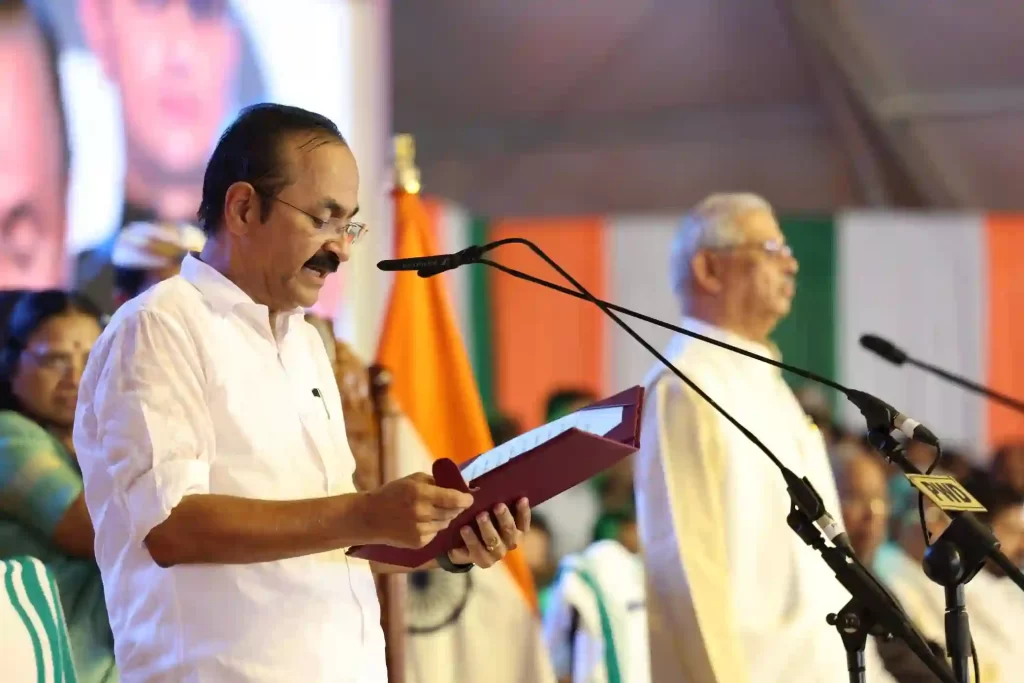
V.D. Satheesan was sworn in as the 13th Chief Minister of Kerala on May 18, 2026, at a grand ceremony held at the packed Central Stadium in Thiruvananthapuram. Governor Rajendra Vishwanath Arlekar administered the oath of office and secrecy to Satheesan and his 20-member council of ministers over a one-hour ceremony that commenced around 10:15 a.m. The Congress-led United Democratic Front (UDF) scripted a landslide victory over the CPI(M)-led Left Democratic Front in the April 9 Assembly elections, winning 102 of the 140 seats in the State Assembly, ending a decade of LDF rule and marking the UDF’s return to power.Satheesan, 61, who served as Leader of the Opposition during 2021–2026, became the first to be sworn in. The ceremony concluded around 11:30 a.m. with the recital of Vande Mataram followed by the National Anthem. Congress president Mallikarjun Kharge, senior leaders Rahul Gandhi and Priyanka Gandhi Vadra, along with several leaders from Congress-ruled states, including Karnataka Chief Minister Siddaramaiah, Telangana Chief Minister Revanth Reddy, and Himachal Pradesh Chief Minister Sukhvinder Singh Sukhu, attended the event. Outgoing Chief Minister Pinarayi Vijayan, who is set to become Kerala’s new Opposition Leader, was also present on stage along with BJP State president Rajeev Chandrasekhar.From Student Politics to Chief Minister: A Five-Decade JourneyV.D. Satheesan was born on May 31, 1964, at Nettoor in Ernakulam district (Maradu Municipality) as the fourth son of Vadassery Damodara Menon and Smt. V. Vilasini Amma. He entered public life through the Kerala Students Union (KSU), the student wing of the Indian National Congress, during his college days and rose to leadership ranks through student politics in Kerala. He served as University Union Councillor at Rajagiri College, Kalamassery, and later as Chairman of the Mahatma Gandhi University Union during 1986–1987. He was also actively associated as a Union Councillor in both Mahatma Gandhi University and the University of Kerala.Satheesan completed his primary education at Nettoor S.V.U.P School and passed SSLC from Panangad High School. He completed his Pre-Degree and Degree studies from Sacred Heart College, Thevara, and later obtained an MSW degree from Rajagiri College, Kalamassery. He earned his LL.B degree from Thiruvananthapuram Law Academy and obtained a Master’s Degree in Law from Government Law College. Alongside political activities, Satheesan practiced as an advocate in the Kerala High Court for nearly ten years and held leadership positions in several trade unions affiliated with the Indian National Trade Union Congress (INTUC).Historic Distinction: Sixth Leader to Become CM Without Prior Ministerial ExperienceSatheesan was first elected to the Kerala Legislative Assembly in 2001 from the Paravur Assembly Constituency and has been continuously re-elected in the Assembly elections held in 2006, 2011, 2016, 2021, and 2026. He holds the distinction of being the sixth political leader in Kerala to assume the office of Chief Minister without previously serving as a Minister in the State Cabinet. He is also the first Congress Chief Minister from Ernakulam district, representing a significant shift in the party’s leadership geography.In the 12th Kerala Legislative Assembly in 2006, he served as the Chief Whip of the Indian National Congress. In 2013, he was appointed as the AICC Secretary in charge of Tamil Nadu, and in 2014, he was appointed Vice President of the Kerala Pradesh Congress Committee (KPCC). Satheesan has emerged as a prominent public leader through his active involvement in student politics, the legal profession, organizational activities, and legislative responsibilities. Through his commitment to democratic values, social justice, and people-oriented development, he has secured a significant place in the public life of Kerala.A Complete Cabinet After 60 Years with Focus on AusteritySatheesan announced that a “complete Cabinet” was being sworn in at one go for the first time in 60 years. The Cabinet includes two women and two ministers from the Scheduled Castes, reflecting a commitment to social representation. The Congress has 12 members in the Cabinet, including the Chief Minister. The Indian Union Muslim League (IUML) has five Ministers, while Kerala Congress (Joseph), Kerala Congress (Jacob), RSP, and CMP have one each. As many as 14 members of the cabinet are new faces, bringing fresh energy to the government.Senior Congress figures in the cabinet include Ramesh Chennithala, K Muraleedharan, and Kerala Pradesh Congress Congress chief Sunny Joseph. The IUML ministers include P.K. Kunhalikutty, K.M. Shaji, P.K. Basheer, N. Shamsudheen, and V.E. Abdul Gafoor. Other ministers include Mons Joseph, Shibu Baby John (Revolutionary Socialist Party), Anoop Jacob (Kerala Congress-Jacob), C.P. John (Communist Marxist Party), A.P. Anil Kumar, P.C. Vishnunadh, Roji M. John, Bindu Krishna, M. Liju, T. Siddique, K.A. Thulasi, and O.J. Janeesh. All except Shibu Baby John and C.P. John took the oath in the name of God, with the two making solemn affirmation of their commitment.In keeping with austerity measures for the state, Satheesan has ordered that there be no convoys, security vehicles, or ambulances. He has also said he would not require a new vehicle, setting an example of frugal governance. The portfolios of the Chief Minister and Ministers were made public later on Monday, with Thiruvanchoor Radhakrishnan announced as Speaker and Shanimol Usman as Deputy Speaker.Building Puthuyuga Keralam: Vision for a New EraSatheesan stated that the UDF government was committed to working towards building a “Puthuyuga Keralam” (New Era Kerala). Following the declaration of election results on May 4, the Congress party took ten days to pick Satheesan over Ramesh Chennithala and AICC General Secretary K.C. Venugopal as the Congress Legislative Party leader and CM-designate. After that, the entire focus shifted to Cabinet formation, with discussions stretching into Sunday afternoon before Satheesan presented the list of ministers to the Governor on May 17 evening.The swearing-in ceremony witnessed huge crowds gathering at Central Stadium since early morning. Extensive arrangements, including traffic regulations, were in place across the State capital. Among those present were AICC General Secretaries K.C. Venugopal and Deepa Dasmunshi, CPI State secretary Binoy Viswam, and numerous other dignitaries. Rahul Gandhi greeted the new Chief Minister with a warm hug after Satheesan repeated the oath and signed the oath books.Satheesan’s Rise Reshapes Kerala Political
IPL 2026: Key Takeaways from the 19th Season of the Indian Premier League
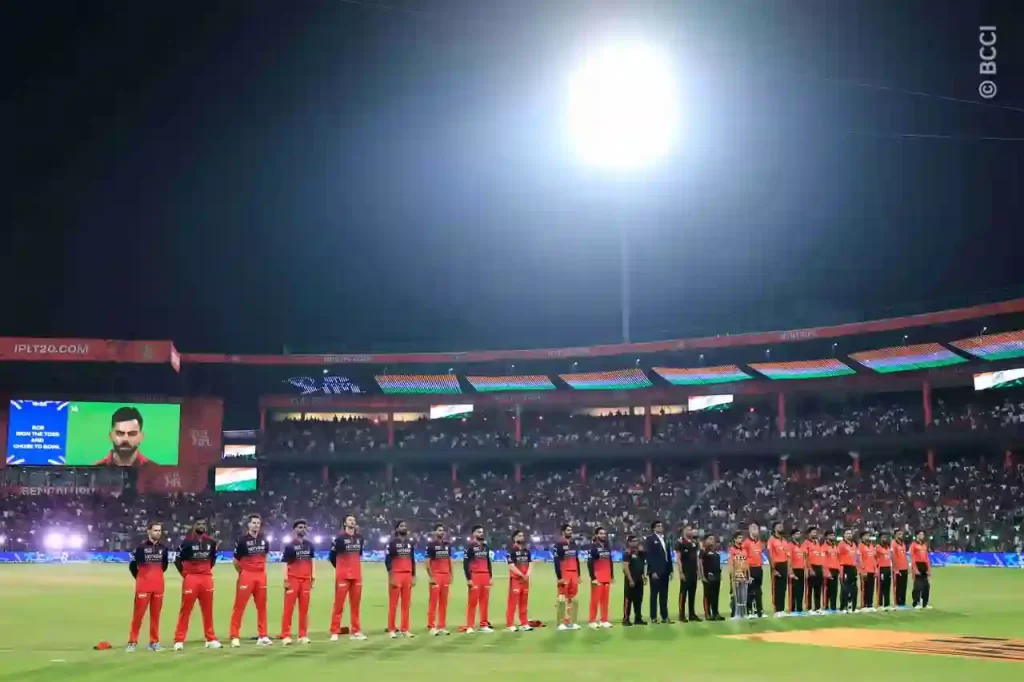
IntroductionForty-six matches into the Indian Premier League’s 19th season, and the narrative is already impossible to summarise in a single sentence. A 15-year-old schoolboy from Bihar is rewriting record books that veteran observers thought would stand for decades. A veteran pacer past his peak has rediscovered his best. A Sri Lankan teenager born into one of cricket’s most recognisable surnames is proving he belongs at the highest level. The defending champions are in the mix but not yet in command. And the points table, with barely half the league stage played, is as compressed and volatile as any in the tournament’s history.IPL 2026, which began on March 28 and runs through to the final on May 31, features 74 matches across 70 league-stage games and four playoff fixtures. Royal Challengers Bengaluru enter as defending champions, having won the title in 2025. All 10 teams are in action: RCB, Chennai Super Kings, Mumbai Indians, Kolkata Knight Riders, Sunrisers Hyderabad, Rajasthan Royals, Punjab Kings, Gujarat Titans, Lucknow Super Giants, and Delhi Capitals.This article covers everything of significance from the season so far.Points Table: Where Things StandAs of May 4, 2026, after 46 matches have been played, Punjab Kings lead the standings with 13 points, having won more games than any other team at this stage. The table behind them is extremely tight, with RCB, Sunrisers Hyderabad, and Rajasthan Royals locked in a three-way tussle for the second, third, and fourth positions. Gujarat Titans sit fifth with 12 points after a sequence of results that has revived their playoff push.Below the top five, Delhi Capitals, Chennai Super Kings, Kolkata Knight Riders, Mumbai Indians, and Lucknow Super Giants are all scrambling to stay alive in the race for the top four. Net run rate is already a significant factor in several of these positions, with margins between teams separated by points often being decided by run-rate differentials from earlier matches.The race to qualify for the playoffs via Qualifier 1, Qualifier 2, and the Eliminator has never looked more open at this point in the season. With each team still having several games to play, no team has mathematically sealed their place, and no team outside the bottom three has been mathematically eliminated.The Season’s Defining Story: Vaibhav SooryavanshiNo individual narrative in IPL 2026 comes close to matching the story of Vaibhav Sooryavanshi. Born on March 27, 2011, the Rajasthan Royals opener is 15 years old and still attending school. He has, in under two months of this IPL season, established himself as the most statistically remarkable young batter in the recorded history of T20 cricket.Sooryavanshi’s IPL 2026 numbers through 10 matches: 404 runs at a strike rate of 237.65, including one century, two fifties, and 37 sixes. His strike rate of 238 across 300-plus runs is, according to ESPNcricinfo’s Smart Stats analysis, the best among all batters to have scored 300 or more runs in any IPL season across 460 instances throughout the tournament’s history.His century against Sunrisers Hyderabad on April 25 was a 37-ball 103, which became the third-fastest hundred in the history of the IPL. He hit 12 sixes and 5 fours in that innings alone. That knock broke his own record of 11 sixes in a single IPL innings, which he had set against Gujarat Titans the previous season. The 12-six innings is now the highest by any Indian batter in a single IPL match.He also achieved a milestone of extraordinary rarity during that knock: at 15 years and 29 days, Sooryavanshi became the youngest cricketer in history to reach 1,000 T20 runs. He reached the milestone in 473 deliveries, also the fastest anyone has ever done so, beating the previous record held by Mitchell Owen of 533 balls.He became the youngest centurion in men’s T20 cricket the previous season, when he hit 101 off 38 deliveries against Gujarat Titans, with his hundred coming off 35 balls, the second fastest in IPL history. He is now one of two players this season to score two IPL centuries, making him the first teenager in IPL history to do so. He is one six away from becoming the first teenager ever to hit 100 sixes in T20 cricket, and six sixes away from Abhishek Sharma’s all-time IPL record of 42 sixes in a single season, a mark he appears likely to break before the league stage ends.ESPNcricinfo’s Smart Stats has named Sooryavanshi the Most Valuable Player of the season so far, noting that he has contributed more than 58 percent of runs scored by Rajasthan Royals while he is at the crease.His path to IPL 2026 reads more like fiction than biography. He debuted in the Ranji Trophy at 12 for Bihar. He set a record with a 58-ball century against Australia Under-19s. He became the youngest player to earn an IPL contract when Rajasthan Royals picked him up for INR 1.1 crore at the 2025 Mega Auction. He then captained India Under-19 to the Under-19 World Cup in early 2026, finishing as Player of the Tournament after a 175 off 80 balls in the final against England Under-19.Sooryavanshi has also hit three separate 15-ball fifties in IPL 2026, an extraordinary record, and leads the six-hitting chart for the season with 37 maximums in 10 games.Orange Cap Race: Abhishek Sharma Leads, But the Gap Is MinimalThe Orange Cap battle in IPL 2026 is the most fiercely contested in recent seasons, with the leader having changed multiple times and the top five separated by fewer than 40 runs as of May 4.After 10 matches, SRH opener Abhishek Sharma leads the Orange Cap standings with 440 runs at a strike rate of 206.57. He has scored one century this season, matching Sooryavanshi’s total. KL Rahul of Delhi Capitals sits in second place with 433 runs. Heinrich Klaasen of SRH, another explosive presence at the top of the Sunrisers batting order, is third with 425 runs at a strike rate that regularly exceeds 200. Vaibhav Sooryavanshi is fourth with 404 runs, and B Sai Sudharsan of
N. Rangaswamy: The Man Who Came Back Five Times
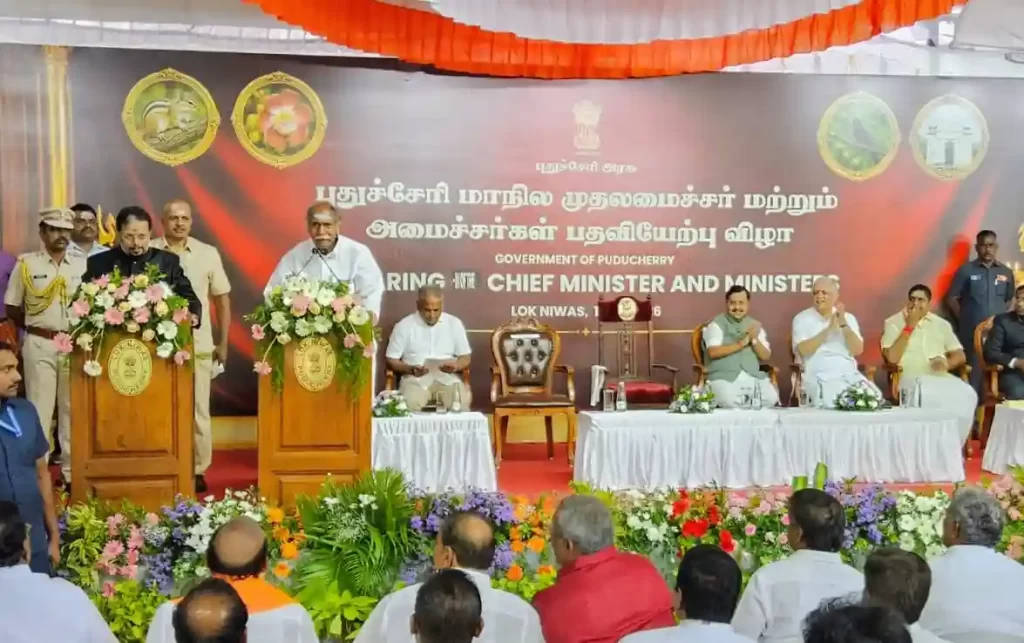
IntroductionIn a country where political careers are won and lost in single terms, N. Rangaswamy has done something that no other leader in Puducherry’s history has managed, and very few across India can claim. At 75 years old, he has been sworn in as Chief Minister of the Union Territory for the fifth time.Following the victory of the AINRC-led NDA combine in the recent assembly elections, N. Rangaswamy was sworn in as the Chief Minister of Puducherry for a record fifth term at Lok Nivas on May 13, 2026. The swearing-in ceremony was held at the Puducherry Lok Bhavan, where Lieutenant Governor K. Kailasanathan administered the oath of office and secrecy to Rangaswamy and the newly inducted ministers.PM Modi, in his message, said: “Congratulations to Thiru N. Rangaswamy on taking oath as Puducherry’s Chief Minister. He has made a mark as an experienced and effective administrator who has strengthened Puducherry’s growth journey. Looking forward to working with him for the people’s well-being.”Five terms. Two different parties. Three different political eras. One relentlessly resilient man. The story of N. Rangaswamy is, in many ways, the story of Puducherry itself.The Beginning: Born in Puducherry, Rooted in Its PeopleNatesan Krishnasamy Gounder Rangaswamy was born on 4 August 1950 in Puducherry to parents Natesan Krishnasamy and Panchali. He completed his Bachelor of Commerce from Tagore Arts College and Bachelor of Laws from Dr. Ambedkar Government Law College.He is a trained lawyer who never lost the habits of the courtroom: patience, precision, and the ability to read a room. Those qualities would serve him far better in the chamber of the Puducherry assembly than in any court.Rangaswamy began his political journey with the Congress, winning from Thattanchavady in 1991. He served as a cabinet minister for nearly a decade before becoming Chief Minister in 2001. He was elected again from the same constituency during the 1996, 2001, and 2006 assembly elections. In 1996, Rangaswamy was appointed as Co-operative Minister. In 2000, he became Education Minister.Those ministerial years were not glamorous. Education and cooperative affairs are not the portfolios that attract headlines. They are, however, the portfolios that build grassroots credibility. Rangaswamy used them to do exactly that, cultivating the kind of direct public relationship — house visits, welfare distributions, personal accessibility — that would sustain him through every political crisis that followed.The First Two Terms: Congress and the Dawn of Welfare PoliticsDuring his long stint as Chief Minister from 2001, Rangaswamy brought in developmental reforms in the tiny Union Territory. Housing subsidy for hut dwellers, free breakfast for school children, financial assistance for students in professional colleges, and a host of other infrastructural reforms consolidated his popularity.His approach was simple and had a clear logic: Puducherry is small. What it lacks in size, it compensates with the intensity of its political engagement. Welfare programmes that deliver tangible benefits directly and visibly to voters work here with a directness that is harder to achieve in larger states. Rangaswamy understood this instinctively and governed accordingly.He served as Chief Minister from 2001 to 2006 and again from 2006 to 2008 as a Congress leader. The back-to-back terms were a sign of confidence from both the Congress leadership and the Puducherry electorate. But the Congress gave, and the Congress could also take away.The Fall and the Reinvention: From Congress to AINRCRangaswamy stepped down as Chief Minister in August 2008 after internal issues within the party. Citing irreconcilable differences, he formed his own party, the AINRC.The departure from Congress was not merely a political move. It was, by every account of those who witnessed it, a deeply personal rupture. Rangaswamy had given the Congress party in Puducherry his best years, built its base, and won it elections. To be pushed out by internal maneuvering — by colleagues within his own party rather than by voters — was a humiliation that would have broken less resilient politicians.Instead, it produced something remarkable. He formed his own party, AINRC, and on 7 February 2011 launched the All India N.R. Congress as a breakaway from the Indian National Congress.The audacity of the move should not be understated. Puducherry’s political landscape at the time was dominated by the Congress and the DMK-aligned AIADMK. Breaking away from the Congress in a territory where it had deep roots, building a new party from scratch, and then winning an election within months — this is what political resilience looks like in practice.In the assembly elections held in April 2011, AINRC contested the elections in an alliance with the Jayalalithaa-led AIADMK and won 15 out of the 17 seats it contested. AINRC formed the government independently, with the support of an Independent, which enabled it to get a majority in the 30-seat assembly. Rangaswamy won from the Kadirkamam Assembly constituency and was sworn in as Chief Minister of Puducherry for the third time on 16 May 2011.The Setback of 2016 and the Road BackThe 2016 election was the low point of Rangaswamy’s career. AINRC, no longer in alliance with the AIADMK, contested alone. Though Rangaswamy won from the Indira Nagar Assembly constituency, the party won only eight seats in the assembly. Hence, Rangaswamy resigned as Chief Minister on 6 June 2016. He later served as the leader of the opposition in the Puducherry assembly from August 2016 to February 2021.Five years in opposition. For a man who had been Chief Minister three times, the leader of the opposition bench is a dramatically different vantage point. He used those years the way he had always used difficult periods — to rebuild the ground-level network, to remain accessible, and to wait.The wait ended in dramatic fashion. After the Puducherry government led by V. Narayanasamy lost a trust vote in the assembly in February 2021, the 2021 legislative assembly elections were held in April 2021. AINRC became part of the National Democratic Alliance and allied with the Bharatiya Janata Party and the AIADMK. The NDA won 16 seats, with AINRC winning 10 of the 16 seats it contested.Rangaswamy was sworn in
Trump’s China Visit: Big on Pageantry, Short on Specifics, Long on Consequence
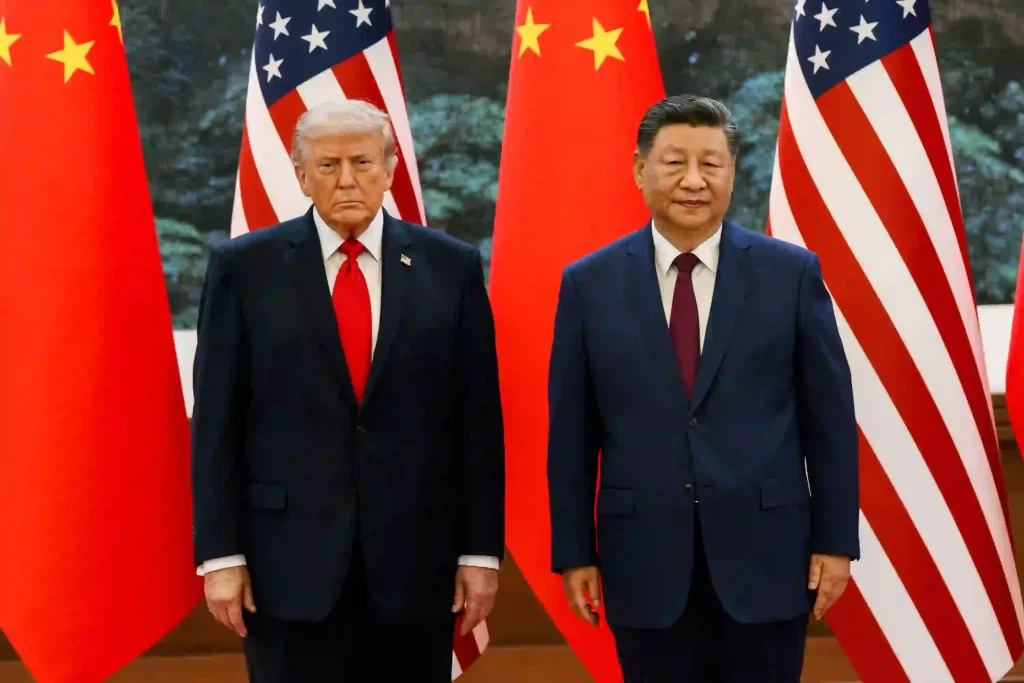
IntroductionFor three days in May 2026, the most consequential bilateral relationship in the world was conducted in person, on Chinese soil, for the first time in nearly nine years. President Donald Trump’s state visit to China — the first by an American president since his own November 2017 trip during his first term — was equal parts diplomatic theatre and strategic test, wrapped in the symbolism of Zhongnanhai gardens, Peking duck, and the careful grammar of superpower summitry.Trump called the trip “incredible,” but while it was big on pageantry, it fell short on concrete agreements. Still, Trump hailed business deals for American companies and farmers, while Chinese leader Xi Jinping touted a new era for the stability of China-US relations.The gap between those two descriptions — one transactional, one strategic — captures the essential character of what happened in Beijing. Enough was accomplished to make the visit a diplomatic success by the standards of the moment. Not enough was accomplished to resolve the crises that brought both leaders to the table.The Road to Beijing: How the Visit Was MadeThe roots of this visit go back to the Busan Summit of October 30, 2025, held on the sidelines of a regional gathering in South Korea. Trump and Xi held their first meeting during Trump’s second presidency at the Busan Summit. At the meeting, Trump announced plans to visit China in April of the following year and invited Xi to visit the United States at an appropriate time.The April timeline did not hold. The state visit was planned for the first week of April, but the meeting was postponed to May due to the 2026 Iran war. The conflict that had closed the Strait of Hormuz and sent oil prices to record highs became both the reason for delay and the dominant agenda item when the visit finally happened.The diplomatic preparation was extensive. On April 16, Defense Secretary Pete Hegseth announced that Beijing had provided high-level assurances to the White House that it would not send weapons to Iran, explicitly ruling out the potential transfer of surface-to-air missiles to the Iranian military. Hegseth attributed this breakthrough to the “strong and direct relationship” between President Trump and Xi Jinping. Secretary of State Marco Rubio had met Chinese Foreign Minister Wang Yi in February and held a further phone call on April 30 to prepare the ground for the summit.The Chinese Foreign Ministry confirmed Trump would pay a state visit to China from May 13 to 15 at President Xi Jinping’s invitation. It marked the first visit to China by an American president in almost nine years, coming at a time of heightened bilateral tensions over a range of issues, including trade, technology, and defence, and intersecting with a precarious US-Iran ceasefire and a dual blockade of the Strait of Hormuz that was driving up energy prices and weighing on global economic growth.The Arrival: Red Carpets and 300 Waving ChildrenBeijing rolled out the literal and figurative red carpet for Trump as he arrived in China on Wednesday evening local time. Three hundred Chinese children dressed in blue and white uniforms waved American and Chinese flags as Trump descended the steps of Air Force One. He was also joined on the tarmac by his son, Eric Trump, and daughter-in-law, Lara Trump.Trump was greeted at the airport by Chinese Vice President Han Zheng, Chinese Ambassador to the US Xie Feng, Executive Vice Foreign Minister Ma Zhaoxu, and US Ambassador to China David Perdue, as well as a military honour guard, a military band, and around 300 Chinese students waving Chinese and American flags. Trump and his entourage then boarded a motorcade to the Four Seasons Beijing Hotel.The visual grammar of this welcome was deliberate. Han Zheng, as China’s Vice President, is a figure of considerable standing, and his presence on the tarmac signalled the importance Beijing attached to the visit. The children chanting in Mandarin “Welcome, welcome, enthusiastically welcome” was choreography, but choreography that conveyed a message: China wanted this summit to succeed, or at least to be seen to succeed.The last time Trump visited Beijing — in November 2017 during his first term — he was given a tour of the Forbidden City and a dinner inside it, an honour granted to no other foreign leader since 1949. It remains to be seen whether this trip matched the pomp and circumstance of last time, but already there were significant events on Trump’s schedule: a welcome ceremony, a tour of the Temple of Heaven, a UNESCO World Heritage Site, and a state banquet.The Summit: The Great Hall, the Temple, and ZhongnanhaiAt 10 AM, Trump arrived at the Great Hall of the People, where he was greeted by Xi Jinping and received an opening ceremony featuring the national anthems of the United States and China, after which they inspected troops of the People’s Liberation Army and then greeted children waving Chinese and American flags.The formal bilateral meetings between Trump and Xi took place across two days, with the agenda covering trade and economic relations, the Iran war and the Strait of Hormuz, Taiwan, North Korea, rare earths and technology, and the broader structure of the bilateral relationship.On the final day, Trump headed back to the US after having lunch with Xi at Zhongnanhai, a rare visit to the Beijing compound where top Chinese officials live and work. Xi said it was meant to reciprocate Trump’s hosting him at Mar-a-Lago during his first term. “It means that China attaches great importance to this visit by President Trump to China,” said one analyst who attended the dinner banquet. “It also reflects the positive personal relationship between the two leaders.”At their last meeting, the two leaders toured the gardens at Zhongnanhai, with Trump admiring the roses. “These are the most beautiful roses anyone’s ever seen,” Trump said. Xi said he would share some Chinese rose seeds for Trump to have planted in the White House Rose Garden.The menu of the state banquet was circulated online afterward. It included cold
BRICS Foreign Ministers’ Meeting, New Delhi: A Bloc Divided by the War It Could Not Name
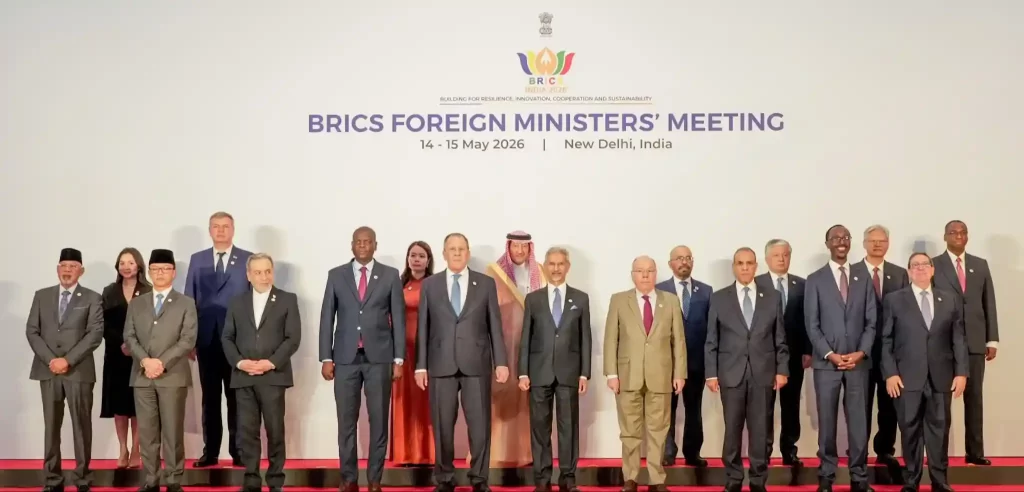
IntroductionWhen India’s External Affairs Minister S. Jaishankar took the chair at Bharat Mandapam in New Delhi, he was presiding over the most consequential BRICS Foreign Ministers’ Meeting since the bloc’s expansion. Eleven member states sat around the table. The agenda was India’s: global institutional reform, South-South cooperation, economic resilience, and the priorities of the developing world. The problem that arrived uninvited was the Iran war.Top diplomats from BRICS nations, including rivals Iran and the United Arab Emirates, failed to issue a joint statement after a two-day meeting in New Delhi, exposing divisions within the bloc over the war in Iran. Host nation India instead released a Chair’s Statement and Outcome Document, saying there were “differing views among some members” as regards the situation in the West Asia and Middle East region.The inability to produce a joint declaration — the standard diplomatic deliverable of any ministerial meeting — was not a procedural failure. It was a substantive one, and it went to the heart of what BRICS is, what it has become after its 2024-2025 expansion, and whether it can function as a coherent voice for the Global South when its own members are on opposite sides of an active war.The Meeting: Who Was There and What Was PlannedThe meeting was held at Bharat Mandapam under India’s 2026 chairship. It followed a preparatory ministerial held on September 26, 2025, on the sidelines of UNGA 80, where India as the incoming chair had set out its agenda.Those in attendance included Indonesia’s Foreign Minister Sugiono, Iran’s Foreign Minister Abbas Araghchi, South Africa’s Foreign Minister Ronald Lamola, Russia’s Foreign Minister Sergei Lavrov, India’s External Affairs Minister S. Jaishankar, Brazil’s Foreign Minister Mauro Vieira, Egypt’s Foreign Minister Badr Abdelatty, Ethiopia’s Foreign Minister Gedion Timothewos, China’s Ambassador to India Xu Feihong, and UAE’s Minister of State for Foreign Affairs Khalifa bin Shaheen Al Marar. Uganda’s Foreign Minister Odondo Jeje Abubakha was also present as a representative of the bloc’s outreach partners.India’s intended agenda was carefully constructed to avoid precisely the kind of confrontation that ultimately occurred. India’s chairship theme — Building for Resilience, Innovation, Cooperation and Sustainability — framed the meeting. Ministers reaffirmed BRICS’s three pillars: political and security cooperation, economic and financial cooperation, and people-to-people exchanges. They repeated the bloc’s commitment to openness, equality, and consensus.What the Chair’s Statement CoveredDespite the headline failure to produce a joint declaration, the Chair’s Statement and Outcome Document ran to 63 paragraphs covering a wide range of issues where agreement was possible.The Chair’s Statement gave most space to reform of global institutions: the United Nations and its Security Council, the IMF, the World Bank, and the WTO. Members argued that present structures do not reflect contemporary realities and favour developed Western powers. The statement reiterated support for a multipolar order and for greater representation of Africa, Asia, and Latin America in global decision-making.On economic matters, the ministers called for resilient supply chains, fair trade, reform of the global financial architecture, expansion of local-currency trade, and stronger South-South cooperation. The bloc opposed unilateral sanctions, protectionism, and trade barriers, and backed a rules-based multilateral trading system centred on the WTO.The document also covered cooperation on artificial intelligence, digital infrastructure, cybersecurity, climate change, energy transition, health security, food security, and innovation-led growth. Initiatives endorsed included the BRICS Grain Exchange, cross-border payment systems, and a stronger role for the New Development Bank and the Contingent Reserve Arrangement.On geopolitics, the ministers discussed West Asia, Gaza, Lebanon, Sudan, Syria, and Yemen, but could not agree on language for the Iran war. The text instead set out general principles: diplomacy, humanitarian access, ceasefires, protection of civilians, and respect for international law. The ministers strongly condemned terrorism, including the Pahalgam attack of April 22, 2025, and called for closer counter-terrorism cooperation.On Palestine specifically, the Chair’s Statement had four paragraphs on Palestine, including one recognising a two-state solution with East Jerusalem as the capital of an independent Palestine. The ministers recalled that the Gaza Strip is an inseparable part of the Occupied Palestinian Territory and reaffirmed the right of the Palestinian people to self-determination, including the right to an independent State of Palestine.The Fault Line: Iran vs. the UAE Inside the Same BlocThe meeting’s collapse into a Chair’s Statement rather than a joint declaration had a specific cause, a specific pair of actors, and a specific set of paragraphs that could not be reconciled.The central dispute was over how BRICS should describe the war involving Iran, the US, and Israel. Iran wanted the grouping to condemn US-Israeli attacks on it, while accusing the UAE — a fellow BRICS member and US ally — of direct involvement in military operations against Iran.On the first day of talks, Iranian Foreign Minister Abbas Araghchi called upon BRICS member states and the international community to explicitly condemn violations of international law by the United States and Israel, including their illegal aggression against Iran, to prevent the politicisation of international institutions, and to take concrete action to halt warmongering and bring an end to the impunity of those who violated the UN Charter.Araghchi explicitly accused the UAE of being “directly involved in the aggression against my country.” Tehran views the UAE and Saudi Arabia not as neutral neighbours but as “hostile bases” because they host critical US military infrastructure and failed to condemn the initial US-Israeli strikes on Iran.The UAE’s response was unequivocal. UAE’s Minister of State for Foreign Affairs Khalifa bin Shaheen Al Marar categorically rejected the allegations levelled by Iran and condemned what he termed “unjustified attacks” on civilian infrastructure. He defended UAE sovereignty against Iran’s charges in his national statement. “Despite numerous international and regional resolutions and condemnations, Iran has continued its terrorist attacks against the UAE and other countries in the region, in clear disregard of the international consensus,” he said.It is learnt that Iran had an issue specifically with paragraphs 26 and 29 of the proposed joint statement — the paragraphs covering Palestine and the Red Sea respectively. However, Araghchi, without naming the UAE, blamed a country
South Korean President Lee Jae Myung Ushers in New Era of India–ROK Partnership
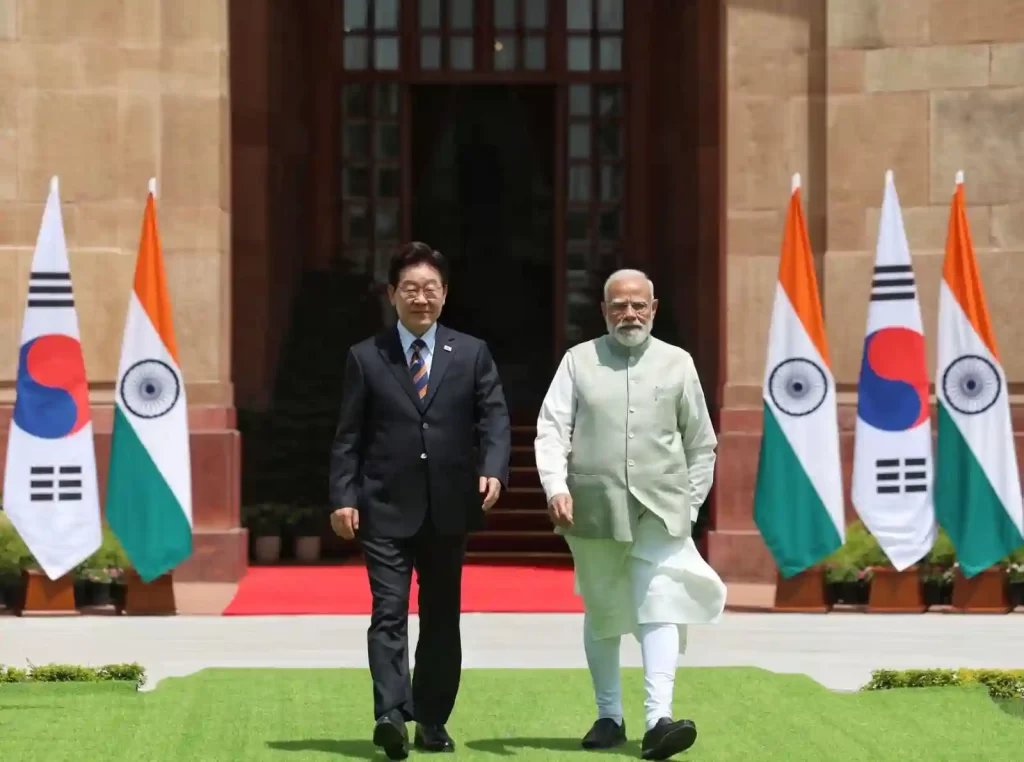
South Korean President Lee Jae Myung arrived in New Delhi on April 19, 2026, for a historic three-day state visit marking the first time a South Korean head of state has visited India in eight years. At Prime Minister Narendra Modi’s invitation, President Lee traveled with First Lady Kim Hea Kyung and nearly 200 business executives, including chairs of Samsung, Hyundai, LG, POSCO, and HD Hyundai. The visit centers on elevating the India–ROK Special Strategic Partnership across trade, technology, defense, and maritime cooperation. Both leaders agreed to nearly double bilateral trade from $27 billion to $50 billion by 2030 while launching a comprehensive five-year strategic roadmap for 2026–2030.President Lee described India as no longer just a consumer market but a key country driving global production. He called this visit a turning point, transforming a trusted partnership into a futuristic one spanning chips, ships, talent, technology, entertainment, and energy. The outcome includes 25 substantive agreements anchored in a Joint Strategic Vision that institutionalizes annual summits and creates structured cooperation mechanisms.The Preface: Economic Cooperation Economic cooperation forms the heart of the visit, with both countries setting an ambitious target of nearly doubling bilateral trade from $27 billion to $50 billion by 2030. At the joint press conference, President Lee stated that they aim to increase annual trade volume to around $50 billion within four years. Both sides agreed to fast-track an upgrade of the Comprehensive Economic Partnership Agreement (CEPA) to address non-tariff barriers and boost services exports.Modi announced the establishment of a Korean Industrial Township to ease market entry for Korean small and medium enterprises. President Lee expressed surprise that only 700 Korean companies are currently present in India, suggesting this figure could realistically be ten times higher. Both sides launched the India–Korea Financial Forum and an Economic Security Dialogue to support these goals, facilitating cross-border investment and supply chain resilience.Shipbuilding Emerges as Flagship CooperationShipbuilding emerged as the most significant flagship area with both sides adopting a Comprehensive Framework for Partnership on Shipbuilding, Shipping, and Maritime Logistics. In the headline commercial agreement, HD Korea Shipbuilding and Offshore Engineering, supported by India’s Maritime Development Fund, will develop a large greenfield shipyard in southern India. This facility will focus on block fabrication and construct a new dry dock for large specialized vessels.The partnership combines India’s labor, land, and strategic location with South Korea’s advanced technology and design expertise. Together, they can compete with Chinese shipyards dominating global orders. The shipyard will create thousands of jobs while building India’s capacity to construct vessels for defense, commercial, and research purposes. Technology transfer will enable Indian yards to move from repair work to complex vessel construction.Technology and Defense Cooperation DeepenBoth leaders launched the India–Korea Digital Bridge, combining India’s AI and engineering talent with South Korea’s semiconductor fabrication and precision manufacturing. NPCI International and the Korea Financial Telecommunications and Clearings Institute signed an MoU for the phased integration of digital payment systems, enabling seamless cross-border payments between India’s UPI and South Korea’s digital infrastructure.On defense, both sides reinvigorated the 2020 MoU on Defence Industry Cooperation with the K9-Vajra howitzer joint venture serving as a model. A Korea–India Defence Accelerator (KIND-X) was launched to connect businesses, incubators, investors, defense startups, and universities. ISRO and the Korea Aerospace Administration (KASA) agreed to form a Joint Working Group and held an India–ROK Space Day in Bengaluru, discussing satellite development and launch services.Indo-Pacific Strategic Convergence Strengthens SecurityBoth countries reaffirmed their commitment to a free, open, and rules-based Indo-Pacific. South Korea joined the India-led Indo-Pacific Oceans Initiative (IPOI), signaling growing strategic engagement beyond economic interests. Both sides agreed to hold the inaugural Defence and Foreign Affairs 2+2 Dialogue at the vice-ministerial level to coordinate security policies.President Lee described the two nations as the most ideal partners for comprehensive cooperation, promoting mutual growth and innovation in an era of uncertainty. Modi added that in this period of global tensions, India and Korea together convey a message of peace and stability. This strategic convergence addresses shared concerns about North Korea’s nuclear program, China’s maritime assertiveness, and supply chain vulnerabilities.Five-Year Roadmap Provides Clear DirectionThe visit produced 25 outcomes anchored in the Joint Strategic Vision for 2026–2030. Both sides launched an Industrial Cooperation Committee, chaired by respective industry ministers, to monitor implementation and resolve bottlenecks. Ministerial dialogues will expand across finance, science, technology, energy, and environment sectors.The roadmap includes specific targets for trade, investment, and technology transfer. Both countries are committed to increasing two-way investment to $20 billion by 2030. Student exchange programs will increase to 10,000 annually by 2030. The 2028–29 Year of India–Korea Friendship will celebrate shared heritage while promoting modern connections through film festivals, art exhibitions, and sports tournaments.Partnership Positions as Asia’s Consequential Middle-Power AlliancePresident Lee’s visit establishes a clear five-year direction integrating economic scale, industrial capability, and strategic coordination. With a structured roadmap, $50 billion trade target, and deepened cooperation across shipbuilding, semiconductors, and defense, the relationship ranks among Asia’s most consequential middle-power partnerships. This partnership demonstrates how democracies can cooperate effectively without formal alliances.The structured outcomes ensure accountability and measurable progress. Annual summits provide opportunities to review achievements while ministerial committees maintain momentum between leadership visits. The India–Korea partnership now has institutional depth that withstands political changes in either country, attracting long-term investment and facilitating multi-year projects.As Asia’s economic center of gravity shifts, India and South Korea position themselves as complementary powers driving innovation and growth. Their partnership combines India’s demographic strength and digital capabilities with South Korea’s technological mastery and industrial efficiency. Together they represent a model of South–South cooperation benefiting both nations while contributing to global stability. The visit marks not just a diplomatic event but a turning point shaping Asia’s future for generations.